20 Looks at The Lamb, 2: Shoot Out the Lights and Listen

Landmark album/CD releases – whether landmark in positive or negative ways – gather layers of lore as each one rolls across the terrain that is its “public,” or its “audience.”  That audience is no static landscape, of course.  It changes, and is changed by such albums.  Such albums seem to settle over time into the status of “signposts,” marking ways through the landscape, though they are also partly responsible for blazing the very trails that they mark.

Tales_from_Topographic_Oceans_(Yes_album)If we stop at a crossroads where one of these markers is now set, if we look closely at the ways in which the marker has weathered, eroded, and perhaps even been defaced by other passersby, don’t we always love to see the cleavages, the conflicts, the signs of fragmentation or disintegration that we have been told are there?  Don’t we often look for them with a sort of sadomasochistic nostalgia?  We listen to the Beatles’ “White Album,” and we “hear” the disruptive, threatening presence of Yoko, the creative divergences that are opening between the four discernible musical personae.  For many progressive rock fans, Yes’ Tales from Topographic Oceans (1973) has this feel.  Whether hated or cherished, the music captured on its four vinyl faces embodied deepening tensions that we know were lurking just beneath its surface, manifest soon after most clearly in Wakeman’s departure.

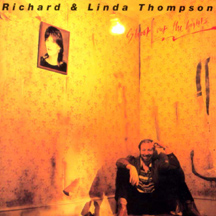
To consider a non-prog example, I remember my introduction to the album, Shoot Out the Lights (1982) by Richard and Linda Thompson, several years after its release.  Via Rolling Stone‘s enshrinement of that album as #1 of its release year and in its top 500 of all time, I learned the mythology regarding how the album amounts to documentation of the disintegration of the Thompsons’ marriage, and how it was followed by “The Divorce Tour.”  RT_SotlI bring up the example of the Thompsons’ exquisitely painful album precisely because “mythology” is the appropriate term in that case.  While it is clear that the Thompson’s marriage was a tempestuous one, the idea that one can literally hear the demise of the marriage taking place in the recordings for SOTL has been disputed by a number of commentators, who have claimed that their relationship was relatively good at the time of the recordings, and did not actually fall apart until after they were completed.  Whatever the truth of the matter, the fact that there is dispute about events serves to underline the mythological character of the common narrative, “myth” here meaning precisely narrative that has solidified into a tradition, a tale that is passed on much more for its poignancy and its authentic “ring” than for its truth in the sense of historical accuracy.
There can be a properly “mythic” ring to an album more in connection with its critical drubbing (as with Tales), or more for its acclaim (as with SOTL).  The reason why I bring up all of this, of course, is in order to bring it to bear in the service of this second look at The Lamb Lies Down on Broadway.  We have all heard the stories of diverging visions, of deep tension, of a near-split during recordings, all leading to Peter Gabriel’s actual departure after the tour.  One may take the divergence, tension, and dissension as directly connected to how absolutely awful the album is (reportedly helping to push at least one of my Progarchy colleagues, in disgust, in the direction of punk), or one may take the same as the key to its sublime character, its poetic and musical superiority to most other “concept albums” of the time (the latter often being my own temptation).

But here is what I most want to suggest to you here as a regard, as a possible “gaze” upon The Lamb:  Is it possible to put aside myth, to bracket the normative narrative, and listen to the album as if none of that is what really matters?  I believe that it is possible, because it is how I first heard the album.  I’ve already noted how The Lamb is the first Genesis album to which I paid careful and sustained attention, and at the time I had almost no clue regarding the band’s history or contemporary situation.  I was largely unaware of the dramatic shift from prior cooperative writing to Gabriel’s emphatic assertion of narrative and lyrical dominance.  I first encountered The Lamb as the Gesamtkunstwerk that it presented itself as being.  It was only later that I learned about the negative press regarding the album, and even more regarding the supposedly disastrous tour.

When I encounter listeners who otherwise appreciate Genesis, but who despise (or at least mostly ignore) The Lamb, I often wonder whether any of these listeners have had the chance to experience the album without being encumbered by the mythology.  Perhaps some of them have.  But I expect that there are many who have not.  My recommendation today is that you at least attempt such a look at The Lamb (admittedly difficult, but surely not simply impossible).  Listen to the way in which the band melds together like a single complicated voice, having its own “feel,” its own musical texture that can be attended to without insistently comparing it to prior recordings by the same players.  This is an auditory parallel to the sort of impact that I hoped to evoke before with regard to the packaging

My own sense is that listening to The Lamb as a singularity (rather than as an instance of…) gives little ground for the standard sorts of disparagement of the “self-indulgence” of its scope, or of the “incomprehensibility” of its story.  I may be asking the impossible, which was only possible in my case because of my idiosyncratic listening history.  But surely there are times when it is possible largely to “bracket” context for the sake of one particular look (or in this case, listen).  Can’t we sometimes briefly “forget” what an artist’s other paintings look like, how her style developed, etc., and allow ourselves to be struck anew by what this particular painting looks like?  Doesn’t the religious believer sometimes deliberately try to see a scriptural text as strange, even though it is familiar?

Try (if you’re willing to indulge me) to listen to The Lamb again in this way.  It’s the debut album by an unknown band.  Rael has nothing to do with the man who will portray him onstage in a tour to follow.  There is no genre into which either the music or the story must fit.  There are no such things as “concept albums” or “rock operas.”

“Don’t be alarmed at what you see…”

It may not work, naturally, but I invite you to try.

The lights by which we often hear (to mix metaphors with way too much boldness) are the lights that shine before and after an album in the output stream of an artist.  And it is often the case that it is precisely those bright lights that we want to see.  But can we sometimes shoot out those lights, and try listening again, as if for the first time?

Contextual considerations will loom large in most of the looks to follow.  (Coming soon, for example, is an explicit consideration of how The Lamb may be seen/heard “religiously,” especially as it is served after “Supper.”)  But don’t neglect kinds of looking/listening that resist contextualization, that try to hear a well-aged and myth-laden message as fresh and new.
<—- Previous Look     Prologue     Next Look —->

Short reviews of new music from Asia, Proto-kaw, Mystery, and Godstick

I’ll skip my usual apologia attempting to explain my long absence from this fine blog and instead spend my limited, if not valuable time, remarking on four recent prog and proggy albums that have been found a home on my regular iTunes rotation. I may write longer reviews of a couple of these albums, but some short remarks are better than none.asia_resonance

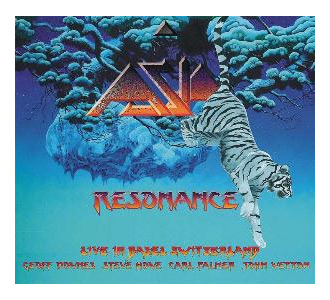
Asia — Resonance (The Omega Tour, 2010; released 2012): After Kansas, Asia was the group that first introduced me into the world of prog, back in the early to mid-1980s, when I was an innocent small town Montana boy making my way through high school. I recall seeking out books and magazines that explained the musical pedigree of Downes, Howe, Palmer, and Wetton, and thus being introduced to early King Crimson, ELP, Yes, and more. I know that Asia has been a source of debate among prog fans, some of whom dismiss and even deride the group; I’ll just say that I really liked and still do like the first two albums, Asia and Alpha, and make no excuses for the warm and gratifying nostalgia they bring to the surface whenever I play them. And, truth be told, I’m partial to the third album, Astra, which marked the first of two billion line-up changes (Mandy Meyer took over guitar from Howe, who had departed), as it is actually a good, hook-heavy example of what might be call “arena prog” or “pop prog” or something similar. Anyhow, the original line-up has been back for a while—and getting solid to excellent reviews—and this live album documents the group’s 2010 tour. I’ve heard cuts from earlier live albums by Asia, and have found most of them disappointing, especially in the vocal department. But this album, dare I say it, is rather stunning, both in terms of the outstanding sound quality and the amazing power and clarity of Wetton’s voice. Wetton, to my ear, sounds just as good as he did on the studio cuts from the early and mid ’80s, which is saying something. The playing is excellent, of course; my only small beef is that the drums seem a bit back in the mix, although there is an extended and fine drum solo on “The Heat Goes On”. Otherwise, a great mix of cuts, with some nice acoustic-oriented variations of old hits such as “Don’t Cry” and “The Smile Has Left Your Eyes”.

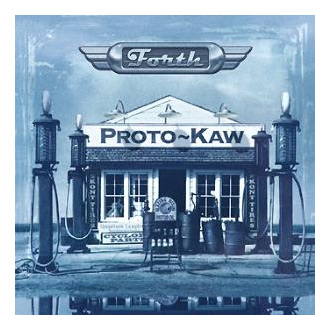
• Proto-kaw: Forth (2011): Speaking of Kansas, the group Proto-kaw was the second of three early incarnations of what eventually became simply “Kansas” in 1973. The key constant in protokaw_forththose groups was songwriter, lyricist, guitarist, and keyboardist Kerry Livgren, who conquered the world with Kansas in the 1970s (“Dust in the Wind”, anyone?), had a run of contemporary Christian rock albums in the 1980s (both solo and with the group AD), and then reformed Kansas and Proto-kaw in the 1990s. (Fun fact: metal legend Ronny James Dio sang lead on two songs on Livgren’s first solo album, “Seeds of Change”, in 1980.) All three of the newer Proto-kaw albums are worth checking out, and that is especially true of Forth, the most cohesive and fully realized album yet by the group. What strikes me, as a longtime fan of Kansas, is how much classical influence there is in Livgren’s writing, as his songs often have a suite-like quality that builds on either strings or keyboards/guitars that act as a strings section. Proto-kaw, like all Livgren-led bands, has dual lead singers (yes, Steve Walsh was a the primary singer in Kansas, but Robby Steinhardt sang lead or co-lead on numerous songs), and features excellent and often complex harmonies, masterfully constructed arrangements, and strong songwriting. One distinctive element is the presence of saxophone and flute (John Bolton), used to great affect in song such as “Pilgrim’s Wake”, one of my favorite cuts on Forth. A must listen for anyone with a soft spot for 1970s Kansas. And, speaking of Kansas (again!), this year marks the 40th anniversary of the group’s founding; I plan a couple of posts about the group and some of my favorite Kansas albums and songs.

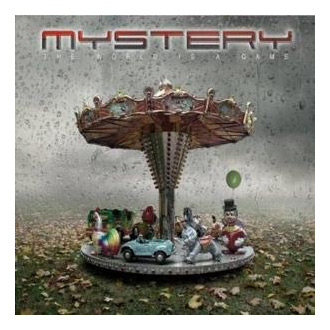
• Mystery: The World Is a Game (2012): How embarrassing it is to admit that prior to the Yes album, Fly From Here (2011), I had no idea who Benoît David was. Having replaced Jon Anderson and toured with Yes—and then having himself been replaced due to his own respiratory issues—the talented vocalist worked on his third album with veteran Canadian proggers mystery_worldMystery, a group he had joined in 1999. Having not heard any of his work with Mystery (which my iTunes annoyingly tagged as “The Mystery”), I was surprised—in a good way—that David did not sound like Anderson and that the group does not sound much like Yes, although the influence is present. In fact, at times David sounds more like another great Canadian singer, Geddy Lee. The two words that keep coming to mind after repeated listens of this exceptional album are “melodic” and “soaring”. The vocals soar, the guitars (by band founder, guitarist, lyricist, and producer Michel St-Père) soar, and the songs soar with a wonderful sense of discovery, melancholy, joy, and introspection, a not-so-easy mixture to navigate. And then there is the drumming of Nick D’Virgilio, who is rightly revered as one of the finest drummers in the prog/rock world. His drumming is, in a word, orchestral, and it is reason alone for buying this fine release. But, for me (a vocalist junkie), it is David who is the revelation here, especially after hearing his solid but rather emotionless performance on Fly From Here. In the words of a reviewer on ProgArchives.com, “Finally vocalist Benoit David proves what a versatile and commanding singer he is, a million miles away from the Yes/Jon Anderson clone dismissals. It’s also great to hear his voice so full of human feeling and compassion again after being so over-produced and rendered mostly lifeless on the Yes album `Fly From Here’!” Exactly right.

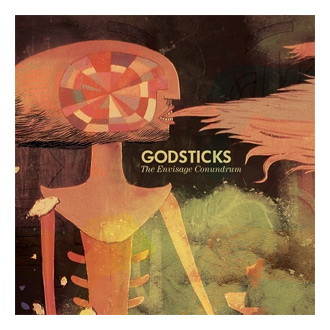
Godsticks: The Envisage Conundrum (2013): Here is a group (from South Wales) I knew nothing about a week ago, but has captured my attention in a way that only a few groups have on first listen. Explaining why is a bit difficult; the difficulty arises, in part, from the most enjoyable fact this is a group that is very hard to describe or label or situate in the universe of godsticks_conundrumprog/rock music. Nearly every review I’ve read says the same, and rightly so. One of those reviews, by Adrian Bloxham, puts it well: ” The world of Godsticks is not straightforward; they seem to have baffled other reviewers trying to pigeon hole them. They make their own brand of what they describe as ‘progressive rock/pop, but it is very much their own take on the sound. You get the idea that this is exactly the music they have inside their heads trying to get out and if you like it they will be pleased but that’s not why they do what they do.” The one influence I hear is later King Crimson, but even that is hard to pinpoint, although the angular, often astonishing guitar work by guitarist/singer Darran Charles brings it to mind in several places. None of the songs are longer than seven minutes in length, but some of them pack in more twists, turns, veers, swerves, and surprises in five or six minutes than many bands can pack into songs three times as long. The title cut is a perfect example. It begins with a chugging, almost “boogie” riff out of which emerges a spider-like flurry of notes, leading into a wall of harmonized vocals over a heavy, grunge-like riff backed by the tight, slightly funky, never quite straight forward rhythm section of Steve Roberts (drums, keys) and Dan Nelson (bass). Charles’ voice is part of the mystery here, a strong, clear instrument that manages to be intense, detached, soulful, and slyly humorous (and occasionally darkly smirking) all at once. There is an abundance of odd chords, meters, notes, and harmonies, sometimes, to my ear, sounding like a Robert Fripp-inspired space alien sibling of Soundgarden. And did I mention the album features a 3:49 piano solo by Roberts that could easily have made it onto one of Keith Jarrett’s solo albums? Followed by a three-part suite—”Borderstomp”, parts 1-3—that sometimes calls to mind Steve Vai? Not straightforward, indeed!

Interview with Tim Friese-Greene (2006)

Wallace references this interview with Talk Talk’s Tim Friese-Greene.  Very good and worth reading.

http://www.pennyblackmusic.co.uk/MagSitePages/Article.aspx?id=3930

Talk Talk’s Laughing Stock, 20 years on

I’ve become quite enamored of Wyndham Wallace’s writings over the past several days.  Here’s a wonderfully insightful piece he wrote on the 20th anniversary of the release of Talk Talk’s Laughing Stock.  Enjoy.

There are many remarkable aspects to the story of Talk Talk’s fifth and final album, Laughing Stock. It took a year to make, and most of what was put to tape ended up on the scrapheap. In London’s Wessex Studios, where it was recorded, windows were blacked out, clocks removed, and light sources limited to oil projectors and strobe lights. Around fifty musicians contributed to its making, but only eighteen ended up on the finished album. It was a commercial failure, critically reviled as much as it was praised, and was impossible to perform live. Then the band broke up, forcing fans to wait seven years before its central protagonist released any new music, something followed by almost complete silence. Laughing Stock is also shrouded in mystery: apart from limited comments made during brief bursts of promotional activity to promote their own even more limited work since, the three authors of the record – Mark Hollis (songwriter and founder), Tim Friese-Greene (producer and co-songwriter since their third album, The Colour Of Spring) and Lee Harris (drums, and the only other remaining member of the band’s original line up by the time of Laughing Stock) – have refused to discuss it for years. But the music remains, its reputation growing with each passing year since its release two decades ago: stark, bold, indefinable and the greatest testament to the band. . . .

To keep reading the article at The Quietus, click here.

Here She Comes, Laughter Upon Her Lips: Talk Talk’s 1986 Masterpiece

IMG_1425Years ago–maybe as many as 25 years ago–fellow Progarchist and classical musician Kevin McCormick and I vowed to listen to Talk Talk’s The Colour of Spring every April 5th, in honor of what is arguably the first post-rock track ever released, entitled, appropriately enough, “April 5.”  I’ve tried to live up to this agreement every year since, and I don’t think I’ve missed an April 5th listening yet.

Last year, before Progarchy even existed, I wrote a piece asking Mark Hollis to call his legitimate successor, Greg Spawton, and the members of Big Big Train.  I mean really.  Imagine Mark Hollis working with Spawton, Poole, NDV, Longdon, Manners, Gregory, and Aubrey.  What a match made in heaven.  After teasing Greg about this a few times, he admitted that if he ever runs into Hollis, he’ll invite him to join BBT.

Amen, Greg, amen.

But, back to Talk Talk.

Though I’d seen Talk Talk’s earlier pop songs/videos on MTV in the early to mid 1980s, I wasn’t taken with the group until I came across 1986’s “The Colour of Spring,” an album that, without much exaggeration, not only opened my eyes to artistic possibilities but also caused me to claim my second music obsession: first, Rush; second, Talk Talk and Mark Hollis.

Everything else I treasured at the time such as early Yes and early Genesis paled next to The Colour of Spring.  Please don’t get me wrong.  I still adored Yes and Genesis, and I always have and probably always will.  But, The Colour of Spring was something beyond.  Beyond rock.  Beyond prog.  I heard lots of Traffic and Spooky Tooth in it, but I also heard a lot of experimental jazz from the 1950s and 1960s.

This album, frankly, seemed like the best prog album since 1977’s Going For the One, but still bettering anything that had come before it.

I studied the art work of James Marsh–those brightly colored moths forming some kind of order as they hovered around droplets of water.  I listened repeatedly to the music.  Too many times over the past twenty-six years to count now.  And, I have dwelt lovingly over the lyrics, which have, in their own way, brought me so much comfort during the good and bad of my life as to rival my love of the words of T.S. Eliot and of St. John the Beloved.  When I first purchased the American version of The Colour of Spring, no lyrics came with it.  Part of Hollis’s charm is his ability to muffle his words in a mysterious but artistic fashion.  I had all kinds of ideas about what Hollis was singing, but I later found I was mostly wrong in my interpretation and translation of those words into song lyrics.

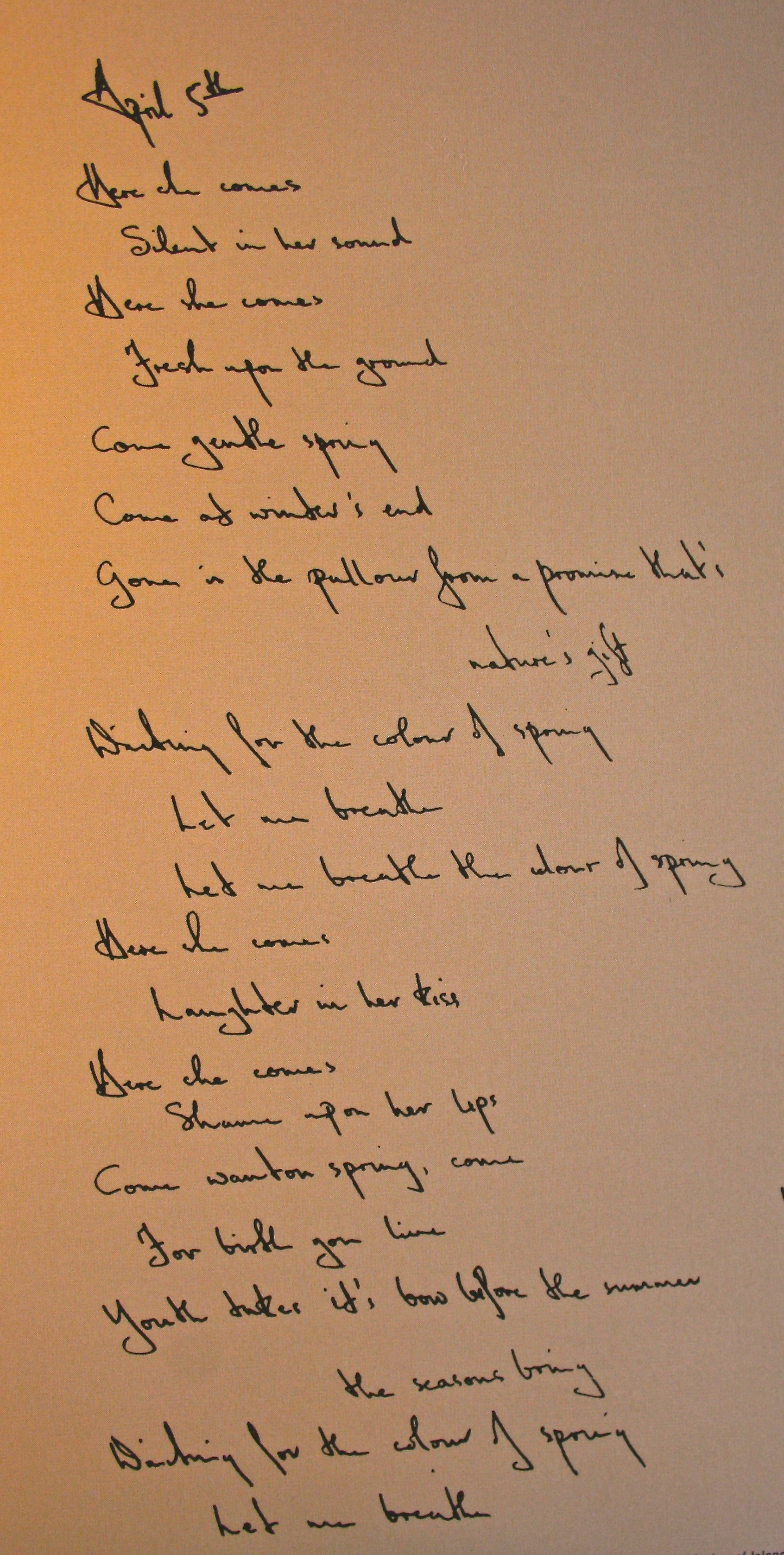
In March 1988, Kevin and I found a copy of the British release of the album in a London music shop.  There, on a brilliant spring day–I can still remember the sun streaming through the windows into that rather dark shop–I read the lyrics as Hollis had written them (even printed in his handwriting) for the first time.

I was, needless to write, emotionally overcome as my mouth dropped open and my eyes teared up.

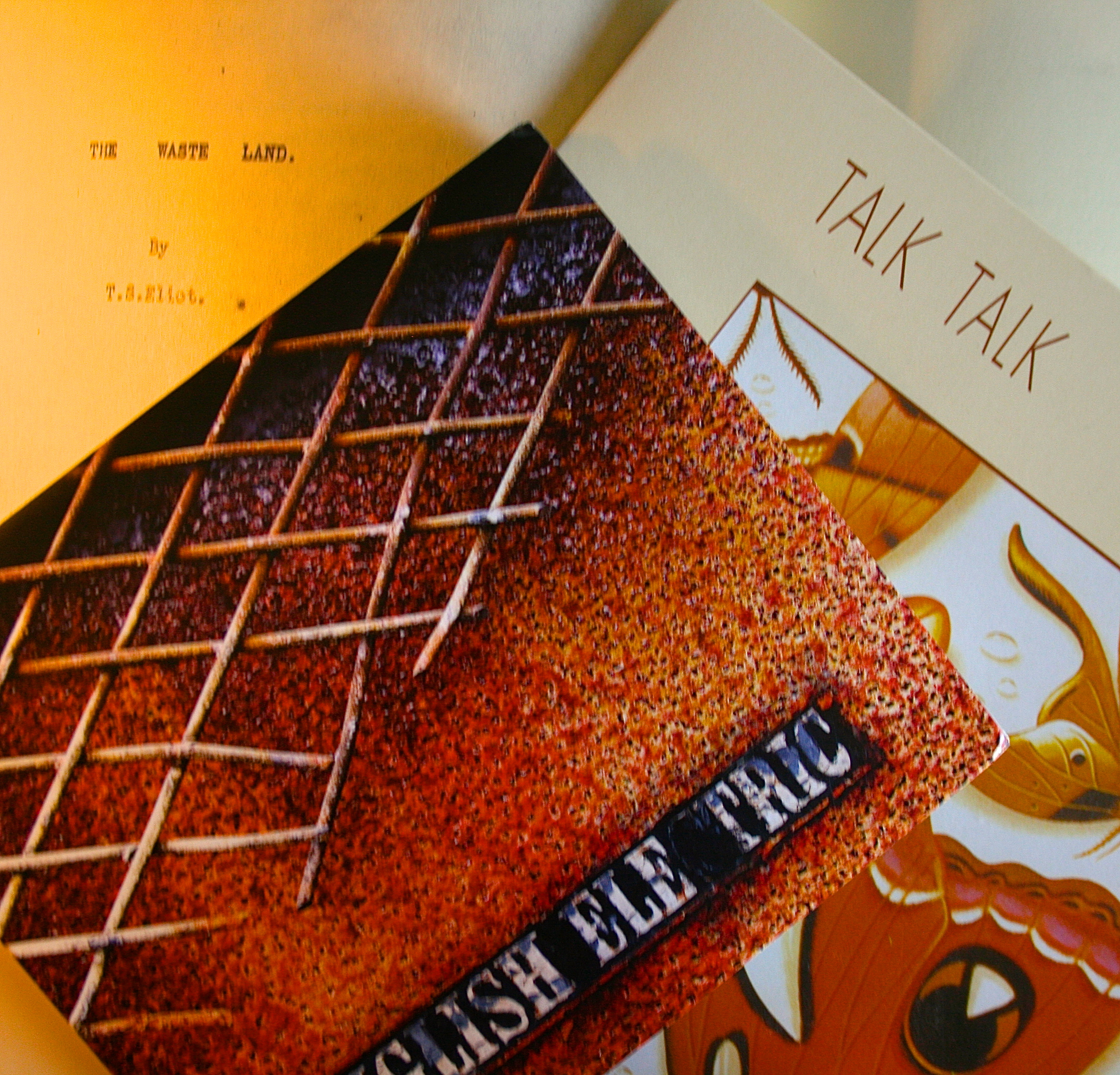
The lyrics were far better than I’d imagined, in meaning and in form.  I shouldn’t have been in the least surprised.  Though, every listening from that point forward has meant more to me than each and any previous listening.  Only a few other albums in my life have stuck with me as long as has The Colour of Spring.  It has remained my gold standard, surpassed only by its immediate successor, The Spirit of Eden, and (finally–twenty-five years later) by Big Big Train’s English Electric vols. 1 and 2.

In every aspect of The Colour of Spring, Mark Hollis offered not only his genius, but his very being.  That is, he was the music, and music reflected him.  But, really, it did far more than reflect him.  Without trying to become too metaphysical, I must state, the music seems to be coming from somewhere beyond anything known in this world, with Hollis merely reflecting the Divine itself, but putting his own personality on what was given to him.  This is much like the way Tolkien claimed to have written his mythology–not as a creator, but as a discoverer and as a recorder.

Hollis expressed so much love of the world (its physical nature) and a profound respect for religion in interviews–along with his despising of the corporate media culture of the 1980s–that one can easily envision him in Rivendell, the Last Homely House, recording his work among the greatest artists of Middle-earth, lost somewhere in a timeless realm.  Or, more classically, Hollis’s love of the created order makes me wonder if he somehow heard (or felt) the revolving of the Platonic spheres.

Back in 1986, Hollis admitted in interviews that the concept behind the album and the theme were quite simple: religion is wonderful, and war is horrific.  An alliance of the two, however, makes for the worst of all possible worlds.  Ultimately, Hollis claimed, the lyrics reflect the ideals of “life and morality.”

Prog fans, take pride: The Colour of Spring was a concept, to be sure.

The aim of ‘The Colour of Spring,’ he explains ‘is to present great variety in terms of mood and arrangement, treating the whole thing as a concept.  An album shouldn’t be something from which a single is pulled, leaving the rest filled up with rubbish. [New Music Express, Feb. 22, 1986]

The theme, however, must be the only thing that was simple about the album.  Certainly not the actual lyrics, or its song structure, or its production, or, even, its reception.

The album took Hollis exactly one year and two days to write and record.  Having made an enormous sum of money with the first two Talk Talk albums, The Party’s Over (1982) and Life’s What You Make It (1984),  Hollis fulfilled his dreams of moving everything toward the real and organic, away from the synths of the previous albums, there only because he couldn’t afford to hire a rock ensemble.  Now, with The Colour of Spring, he could.

Interestingly enough, Hollis considered “It’s Getting Late in the Evening” to be the core of the album.  For those of you who know The Colour of Spring, you’re probably scratching your head, as this song didn’t make it onto the final cut, and appeared at the time only as a b-side.  Haunting to the extreme, “It’s Getting Late in the Evening,” presents an impressionistic look at American slaves discovering their freedom following the American Civil War.

The tide shall turn to shelter us from storm/The seas of charity shall overflow and bathe us all.

IMG_1428Today, though, we at Progarchy remember the last track of side one, “April 5,” perhaps the first post-rock, post-prog track ever released.  At only 5 minutes and 52 seconds, it is a masterpiece of meandering brevity, a creative breath of freedom and beauty, a reaching and striving as well as a reflection.

Thank you for everything, Mr. Hollis.  If you read this, I only request of you the same thing I requested of you a year ago.  Please call Mr. Spawton.  If you need his number or email, just let me know.

***


I dedicate this post to the genius and friendship of Greg Spawton.

Sources: Talk Talk, The Colour of Spring (EMI, 1986); “A Chin Wag with Talk Talk,” Number One (Feb. 8, 1986); “Talk Talk,” Record Mirror (Feb. 1, 1986); “Communication Breakdown,” New Music Express (Feb. 22, 1986); Rachael Demadeo, “Mark Hollis Interview,” Britannia Hotel in Manchester, May 5, 1986, posted at Within Without.

Nice Piece on Talk Talk’s THE COLOUR OF SPRING

It was, in retrospect, what people call a “pivotal album.” The Colour of Spring, Talk Talk’s third full-length release, appeared initially to be a straightforward development from the band’s previous recordings – artfully crafted pop delivering global hits – and yet pointed bravely towards something unexpected, something decidedly un-pop. One could see the footprints the band had left along the trail from their 1982 debut single, “Mirror Man”, to the 1986 release of this, their biggest selling record, but there were also signs they were heading into new, uncharted territory. Life’s What You Make It was the calling card, a bold burst of vibrant, optimistic acceptance, driven by a rolling piano line and drums inspired by Kate Bush’s Running Up That Hill, and Living in Another World stood proudly beside it, distinguished by Traffic’s Steve Winwood’s exuberant organ cameo. But April 5th and Chameleon Day were intimate, lingering slices of abstract sound that were as baffling as they were haunting.

To keep reading this excellent article by Wyndham Wallace, click here.

20 Looks at The Lamb, 1: The Not-So-Lifeless Packaging

If it’s going to be a “look,” then it’s always going to be personal to some extent.  It may vary to what extent.  But this first look feels very intensely personal.  My first experience of The Lamb Lies Down on Broadway was not yet of its music, but of its packaging.

“Keep your fingers out of my eye.”

I read that sentence after having stared for several minutes (if I’m remembering correctly, which is always iffy) at those amazing pictures on the front and back of that Hipgnosis jacket.  The largely black-and-white design ushered me into a kind of solemnity and grave expectation, which set me up to feel  as though something cold and sharp was pressing into the side of my mind when I began reading the story.  It wouldn’t even be until much later that I saw the connection of that first sentence to the way in which I was physically holding the cover.  If I may rather lamely borrow from the album itself, I was the fly on the windshield.

The personal element here lies in the timing of my introduction to the album, relative to my general familiarity with prog.  I don’t remember exactly when it was, especially in relation to other major albums to which I was introduced in the middle 70’s.  But here’s the most significant thing:  I was not really familiar with Genesis’ work in general yet.  A friend had talked about them, and I had seen a couple of the other album covers, but The Lamb was the first one that I looked at closely, and listened to attentively.

This element of personal history is important because of how I would like this look to come across to you, how I hope it “hits” you if you’re willing to think about it.  Imagine knowing nothing at all about the history of the band.  Imagine being unaware of the tensions that haunt them at this point in their career, of the hesitations other members may have had about the direction that Gabriel’s vision was taking them.  Imagine being oblivious to any expectations that might have been fed by the band’s earlier work, or by Gabriel’s onstage antics.  Imagine not even knowing who these guys are at all, aside from knowing that they are an important exemplar of a newly discovered world of genre-defying beauty.

I’ve been noticing how much my entire life has been rather like this, discovering things in medias res, often experiencing them in a kind of synchronic clearing in an otherwise dense wood, with little (if any) awareness at the time of what came before, or what will come after.  As I think about this first look, a look at “packaging,” including not only the graphic design but also the whole story, the liner notes, the printed lyrics, etc., I emphasize this personal element not only to make you aware of it, but also to recommend it.

It would be tempting to think that ignorance of the whole Sitz im Leben of the album would make that first look bereft of context, and hence, lifeless.  (The first song title that jumped out at me at an affective level was “The Grand Parade of Lifeless Packaging.”)  Whether or not my memory of this first look is partly a function of subsequent layering-on of meaningful associations is an open question.  But what comes back to me is the way in which that packaging was so emphatically not lifeless.  Perhaps it was precisely my lack of context that allowed the packaging of the album to cast its own contextual aura.  I didn’t even have any idea what Peter Gabriel looked like, so the images of Rael on the cover gave me my first encounter with a visual figure, an embodiment that would (for a while) be the embodiment that accompanied Gabriel’s voice when I listened.

The first time I read (was absorbed by) Rael’s story, I had not yet seriously encountered the earlier work that in so many ways foreshadowed its narrative and musical gestures.  It now seems especially important to me that I was not familiar at that time with “Supper’s Ready” from Foxtrot.  My primary reference points in prog at the time were ELP and Yes, and I was still only beginning the voyage beyond the coolness of synthesizers and Mellotrons into the wonders of musical creativity that would refuse to be contained by a category.

The packaging pulsated and breathed with life.  A living context for the sounds I would hear was already radiated around me as I opened and perused, drinking in a rich trajectory for which I had some literary benchmarks (maybe most prominantly some of the science fiction and fantasy that I had read), but even those benchmarks were only vaguely understood then.  But I encountered the opening of that context without context as an invitation.  Even before I had read through the story, I think that some part of me understood that this was a tale that I could inhabit, that I could live rather than just following it like a spectator.

Yes, of course, packaging can be lifeless.  It’s tempting to say that it usually is so.  And when it is not lifeless, I cannot assure you that this is a matter of the packaging itself, as opposed to a personal, “subjective” response to it.

But I do recommend that you look.  And if you can, I recommend that you try to look for the context that the work itself radiates, by way of its packaging.

<—- Previous Look     Prologue     Next Look —->

About as good as pop gets: Songs from the Big Chair (1985)

tff sftbcOk, so it’s not a perfect album, but it’s about as good as pop gets.

***

As I finished my junior year of high school, Tears for Fears released its second album, the first to make it huge in the U.S., Songs from the Big Chair.

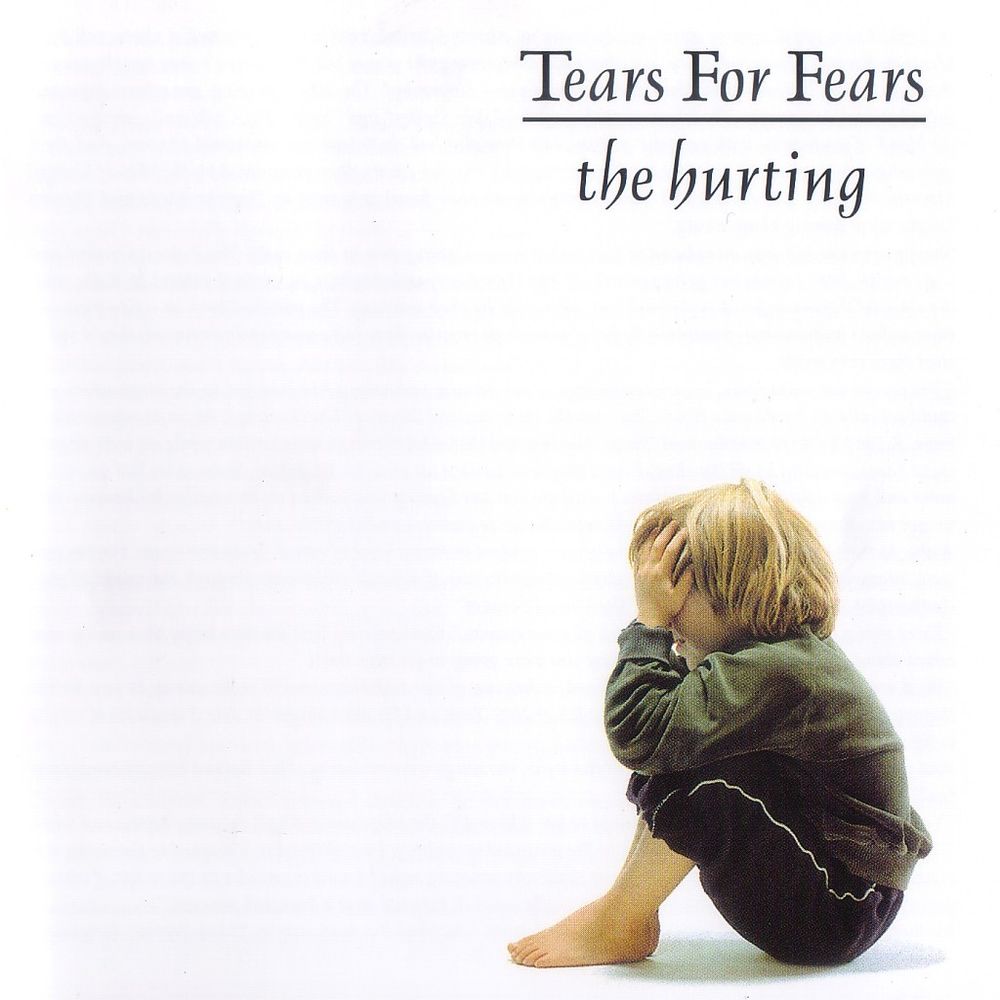
The hurtingThe first album, The Hurting, proved the sheer brilliance of Orzabal and Smith, but it also felt very, very, very, very (ok, I’ll stop–but, really, very) constricting.  As Orzabal and Smith released their primal screams and healed their own hurts, the listener entered into a sort of padded but rhythmic asylum for 41 minutes and 39 seconds.

Possibly the breath would simply disappear if that album went on 21 more seconds.  Imagine Andy Summers shouting “mother!” or Phil Collins begging for his “mama” but with serious prog sensibilities.  Well, you get The Hurting.  Enough.

In contrast, Songs from the Big Chair, though still thematically dealing with emotional and mental trauma, sends the listener into realms of openness and euphoria.  The entire album is full of possibilities, full of what might have beens–all of them good, a cornucopia of aural pleasures.  For the listener, Songs from the Big Chair is one huge intake of morning air in the Rocky Mountains.  This is pop at its purest, achieved, really, only by the Beatles and XTC.  Rarified.

Side one (yes, I’m old enough to remember sides).  Frankly, the two American hits, “Shout” and “Everybody Wants to Rule the World”, are the weakest tracks on the entire album.  But, that said, they’re still brilliant.  “Shout” is righteous pop, filled with a soaring guitar that might fit nicely on a Big Country album.  “Everybody Wants to Rule the World” is a clever dig at oppression and imperialism, dressed in a sunny tune.

Both of these songs played so often on radio and MTV in the mid 1980s in the United States that it’s impossible for me to avoid thinking about Apple Computer, Ronald Reagan, the Icelandic summit, or John Hughes when hearing even a few notes of either.

“The Working Hour,” track two, rings with jazz flourishes and an urgency lyrically and musically.  It begins with pure taste, as brass and keyboards gently dance around one another.  Though only one second shorter than “Shout”, the song has much more depth to it.  It’s Orzabal’s guitar work, however, that makes the song so beautiful.  That, and his voice–the depth and anguish of it all.  It all ends up being a song that never ages, never becomes tiresome.

Track four on side one, “Mother’s Talk,” has the percussive feel of much of The Hurting but without the claustrophobia.  Indeed, it feels far more Latin American and than it does European.  Or, perhaps, it has a bit of Peter Gabriel in it.  Whatever it is, it works wonderfully, a perfect way to end side one.  As with The Hurting, the lyrics are gut-wrenching and desperate, dealing with the fears of conformity and the inability to resist what is clearly dangerous in a community.  In the end, the weak person destroys not only his own soul but the very integrity of society as well.

tff 80sSide Two, a dramatic tale from beginning to end.  Starting with ominous notes from a grand piano, Orzabal picks up lyrically from the previous album.  “I believe,” he cries in his best croon, an affirmation that the therapy expressed in The Hurting has accomplished something.  Well, at least that’s his hope. By the end of the song, however, Orzabal expresses nothing but doubt.  Who are you to think that you can shape a life?  No, too late.

The song slides perfectly into “Broken”–less than three-minutes long, but full of 80s production–with big and angry guitar, a relentlessly driving bass, and intricate keyboards.  “Between the searching and the need to work it out,” Orzabal laments, he deceived himself by believing all would be well.  Impossible.  “Broken.  We are broken.”

Then, the haunting line: a moment only between being a child and being a man, seeing one’s life in continuity, all that is good and all that is wrong.  Tempus fugit.  A moment.

Back to full-blown, over the top, crooning pop: “Head over Heels.”  Sheesh, Orzabal explains, I just wanted to talk, to enjoy your company.  I didn’t realize this was going to get so deep, so quickly.  He then explains that his family desired so much of him and for him.  He.  Well, he just wanted some freedom to find his own path and his own creativity.  So hard to do.  “I’m on the line, one open mind.”

As the song fades out with a chorus of “la-la-la-la (repeat x20),” Orzabal’s voice twists and the album returns to “Broken,” ending, strangely, with a live audience cheering wildly.  As the audience’s applause dies down, swirling, psychedelic keyboard and hypnotic voices emerge.  Again, with the tasteful guitar of side one.  The final six minutes of the album seems like something that might have appeared on a pre-pop Simple Minds or a Tangerine Dream album.  Electronica not for dance, but for centering and psychic probing.

The lyrics to the final song, “Listen,” conclude nothing but add a certain mystery to the whole album.  Only a few lines repeat: Russia attempts to heal, while the pilgrims head to America.  Meanwhile, Orzabal chants his desire to soothe feelings and bring mercy.  Spanish voices cry in bewilderment.

The final noise of the album: percussion that sounds as though an ocean wave has overcome all.

*** 

For me, the album is the sound track to my senior year of high school.  My debate colleague and one of my life-long friends, Ron Strayer, and I listened to the album over and over again, adding the b-side “Pharaohs.”

Frankly, I think the overwhelming popularity of Tears for Fears in the 1980s and some of the pretentiousness of their lyrics has relegated them merely to 80’s status, locked in that decade as though a museum piece.  They deserve more applause and attention from those of us who love music.  I never particularly liked The Seeds of Love (1989), but I think Elemental (1993) and Raoul and the Kings of Spain (1995) are some of the most creatively crafted rock/pop albums ever made.

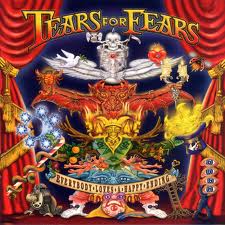
tff everybody lovesThough, the final Tears for Fears album, Everybody Loves a Happy Ending, could be an XTC-style Dukes of Stratosphere paean to the Beatles, it works.  It has some of the best pop written. . . well, since Abbey Road.  “Who Killed Tangerine?” especially has to be one of the most interesting pop songs of all time.

But, these are topics for other posts.  For now, enjoy a rediscovery of Songs from the Big Chair.

Castoriadis on Music

I’d like to share these words regarding music, from a rather underappreciated philosopher/social and political theorist/psychoanalyst named Cornelius Castoriadis (1922-1997).  Castoriadis, for whom the idea of creation was of central importance, was greatly admired by Ornette Coleman, among other musicians.

In truth, the ground against which the musical figure rises up, its proper ground, is a silence such as would not exist in its absence, and which it creates by its being: a silence which is, for the first time perhaps in the history of the world, Nothingness. Everything which surrounds music, conditions it, everything which it presupposes, remains laughably exterior to it. Even if, as is almost inevitable, we only ever listen to it ‘impurely’, still the musical figure rises up through an abolition of the world. Its only ground is nothingness, silence — a silence which it does not even bring into existence as its background, for it annexes it without violence and makes it be as its own part. And, listening, we can have only one wish: that this should never end or that everything else should end, that the world should never be anything other or that it should be this very Nothingness.

Cornelius Castoriadis, Crossroads in the Labyrinth (MIT Press, 1984), p. xxvi.

20 Looks at The Lamb, Prologue: “Regards”

LoriodVingtMy favorite work by composer Olivier Messiaen is Vingt regards sur l’enfant-Jésus, which translates as something like “twenty looks at the infant (or child) Jesus.”  “Regard” in French suggests a way of looking, a perspective, a “gaze,” as it has been rendered in some philosophical translations from the French.  Messiaen ‘s work consists of twenty pieces for solo piano, each of which is a musical regard (gaze, contemplation, way of looking) of a devoted Catholic Christian directed toward Jesus Christ.  The entire work requires a couple of hours for a full performance.  It was written for Pianist Yvonne Loriod, Messiaen’s second wife.

What I wish to begin here could seem rather sacrilegious or blasphemous to some, or perhaps overly loaded with religious baggage to others, but I’ve decided to try it anyway.  Inspired in part by Messiean’s approach, I want to direct twenty regards toward the album, The Lamb Lies Down on Broadway (1974) by Genesis, which is probably my very favorite album that gets classified as “prog.”  I’ve found that it’s an album to which few listeners are indifferent.  It seems to be one of those albums that is loved by a great many, but also dismissed or even vilified by significantly more than a few.  For some (including me, I believe) it is the pinnacle, for others it is a paradigm case of narcissistic excess, or perhaps just a “dud” after the sometimes-preferred pinnacle of Selling England by the Pound (1973).  I hope to show (performatively, so to speak) that it is worth at least twenty looks.

One of the ways in which the French word ‘regard‘ has gained prominence in philosophy has been through its usage by “existentialist” thinkers, especially by Jean-Paul Sartre.  Sartre famously writes about “the look” of the Other that falls upon me (in his book, Being and Nothingness).  In that discussion, the suggestion is that what I see is not just the Other, who then sees me.  Rather, I see the Other’s seeing of me.  A regard, in this sense, for some philosophers and social theorists, is part of what makes it possible for me to see myself, or to be in any sense an object of my own gaze.  In that context, the idea of a regard includes not just a “beholding” or a mere “looking-on,” but a seeing-as…  It implies judgement, valuation, potential accusation, potential responsibility.  A regard is not the occurrence of physiological vision; it is a seeing that is pregnant with significance.  The more recent French thinker, Michel Foucault, titled one of his books Naissance de la clinique: une archéologie du regard medical, which is rendered by the English translator as The Birth of the Clinic: An Archaeology of Medical PerceptionRegard is “perception” not in a narrow physiological or psychological sense, but in the sense of a wholistic sense-making perspective, a whole framework from which, within which, or in terms of which one sees.

Lamb74It is in this rich sense that I believe Messiaen “gazed” musically, and that I wish to “gaze” at a double album’s worth of music.  I share the beginning of this “essay” (attempt) before actually composing its twenty movements.  I’m not sure why it seems important to me to stick to that format of twenty movements, but it does.  It will be a kind of discipline, helping me to think rather carefully as I go along about how my regards should be individuated, and how they should be distinguished from each other.  The object of all of the gazes will be a work of art (Genesis’ album), but I want to give free reign to the problematic way in which the writing that I do is also a work of art.  (I’m dancing about architecture, as the saying goes.)

I’ll number the looks as I present them, though of course it might become clear later that they should be placed in a different order, assuming that the order matters at all.  I recognize that a lot will be at stake, for some others as well as for myself.  I recognize that what will be at stake may be positive or negative, or may sometimes be difficult or impossible to fix as positive or negative.

I hope that readers who are not as favorably disposed to “religious” or “spiritual” matters (however you define those overused terms) can be patient with me in this endeavor, or at least that you are able to ignore me if you wish.  There is no ulterior motive here either to subtly coerce or to argumentatively convince you to embrace anything in particular of a “religious” or “spiritual” sort.  But I can no more prevent my regards from being saturated by struggles with faith than could Messiaen (or, I am inclined to think, Peter Gabriel).

I invite you to accompany me, but only if you want to.  Let us look.

First Look —->