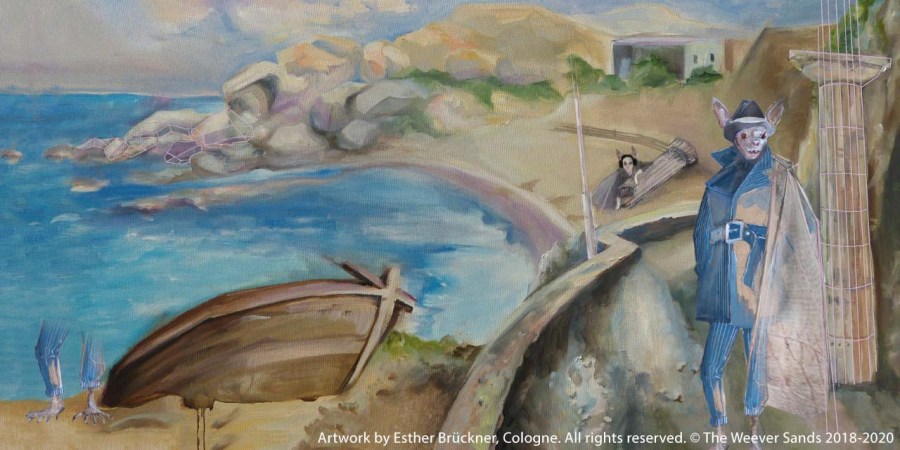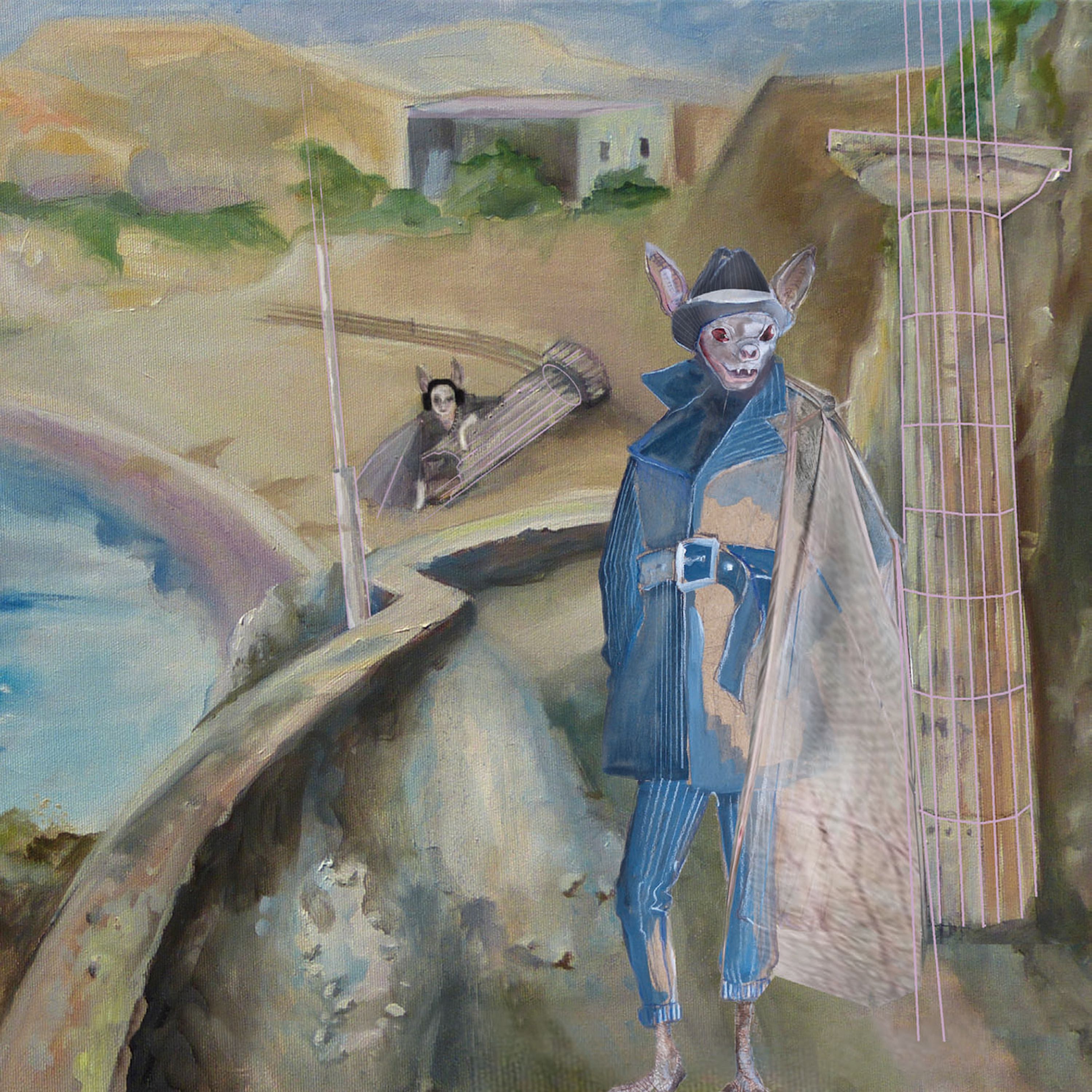
Big Big Train Release Companion Track to Go With Upcoming “The Underfall Yard” Re-issue

Today the mighty Big Big Train released a new single entitle “Brew and Burgh.” The song is a companion track that will be the final song on the special second CD (or third LP) of their upcoming reissue of 2009’s The Underfall Yard. The song also features an animated film by Love Fagerstedt, who has worked with Rikard Sjöblom in the past.

You can pre-order the reissue on CD or vinyl from Burning Shed (UK): https://burningshed.com/store/bigbigtrain
Or from The Band Wagon (USA): https://thebandwagonusa.com/collections/big-big-train

High Resolution digital download pre-order: https://bigbigtrain.bandcamp.com/album/the-underfall-yard-2

More info on the upcoming reissue: https://www.bigbigtrain.com/underfall-yard/

Long live Big Big Train!

Weekend Roundup – Three Album Reviews – Prog Metal, Blues, and Alt Rock

Happy Friday! Today we’ve got a special review edition of three prog metal, blues, and alt rock albums: What Lies Ahead of Us by Brazil’s Pentral; Loss & Love by El Salvador’s Steady Rollin; and the self-titled debut album by Glasgow, Scotland, duo der Mist. All reviews written by Chloe Mogg.

Pentral – What Lies Ahead of Us – Out May 7, 2021

Pentral are the explosive trio you need in your life. Having released their first single ‘Silent Trees’ from their forthcoming album, the band have gained support from New Noise Magazine, Prog Magazine and many other outlets across the web. “What Lies Ahead of Us” is an exhilarating album that’s best served with a clear mind and your full engagement. Known for creating music without boundaries, this hard rock outfit are heavily influenced by the metal industry too.

“What Lies Ahead of Us” features lyrical content that should never be pushed into the shadows. Speaking about their views on environmental protection, equality and the fight against racism, the important topics that Pentral cover within the album need to be heard. Exploring different relationships between people from mixed background and cultures, ‘What Lies Ahead of Us’ is reality and details what it’s like to be a human in today’s modern world.

From lead single ‘Silent Trees’ and it’s hindu like mantro introduction, to fierce anthem ‘Aiming for the Sun’ – this album is best described as iconic and refusing to sit down. As for stand out tracks, ‘The Shell I’m Living In’ is easily up there with the best on the album. Using an addictive guitar melody to enter the full band arrangement, ‘The Shell I’m Living In’ is fuelled with attitude and hard-hitting drums.

Twelve tracks that could easily cement this outfit with a legendary status, ‘What Lies Ahead of Us’ steals your attention with it’s rebellious aura, yet comforts you in times of darkness. A stand out moment in Pentral’s career so far.

Continue reading “Weekend Roundup – Three Album Reviews – Prog Metal, Blues, and Alt Rock”

Luke Simpson’s Null Terminator – “Zero Integration”

Null Terminator - Zero IntegrationNull Terminator, Zero Integration, 2021
Tracks: Electrotechnics (4:15), Intercorporeal Kinetics (6:23), Transeuphonic Gnosticonduction (8:29), Atmophysical Mobilogics (10:44), Invisible Panmechanicosophy (14:35), Integration (7:20)

In computer coding, a null terminator is a control character representing the value zero. It can also signify the end of a string of code. At least that’s what Wikipedia tells me. I’m an historian, not a computer programmer. Anyways, that California musician Luke Simpson chose to name his music project after this comes as no surprise when you look at his background. While he studied music in college, he ended up spending a decade as a software engineer, so it seems logical to blend the two into an instrumental album.

Despite the absence of lyrics, Zero Integration is a concept album, and a darn good one at that. Simpson describes the concept, 

In the far future, the Catholic Church has developed over the centuries into a galactic government body. Null Terminator is an agent in their employ, flushing out evil wherever it hides in the darkest corners of the cosmos. The recording on this album is a personal reflection by Null Terminator on the process of perfecting himself for service in this eternal project.

The album is a healthy balance of keyboards and guitars, and it has an energy to it that reminds me of an 80s movie where the character is preparing for something while some sort of hype music plays. That isn’t to say the music sounds like it’s from the 80s, although I think Simpson may have been influenced by the synth sounds of the 1980s sort of like Haken with their album Affinity. The production here is definitely contemporary, and the guitars keep the keyboards from dominating. The music can range from that hype-me-up energy to a more foreboding sound, such as on “Invisible Panmechanicosophy.” Say that ten times fast. 

Parts of “Transeuphonic Gnosticonduction” could be from a soundtrack to a scene from a sci-fi movie or tv show. It starts off with a rather mysterious ethereal sound before transforming into prog keyboard heaven with touches of early 70s Deep Purple and early Mannheim Steamroller thrown in. It all comes together with the guitar by the end. 

There are moments that remind me of ELP and others that remind me of Dream Theater, especially Jordan Rudess-era DT. I think Simpson’s style of keyboard playing reminds me the most of Rudess, if I had to pick any particular player to compare him to. The guitars have a bit of a Petrucci flair as well, and the combo of keyboards, guitar, and bass shredding together definitely gives a Dream Theater vibe, even if it isn’t quite as heavy. 

Luke Simpson shows off an incredible amount of talent on this album. The melodies and soundscapes are well-developed without being overworked. The songs tell a story without words. And the beautiful artwork – both the cover art and the other pieces inside the CD’s sleeve packaging – helps further tell that story. If you can make your way through the big words in the tracklisting, you’ll find Zero Integration has a lot to offer. 

Follow Luke on Facebook
Buy Zero Integration on BandCamp: https://lukesimpsonmusic.bandcamp.com/album/zero-integration

The Grammys Suck… What Else Is New

Normally I wouldn’t even bother sullying this site with a mention of the Grammys, but Pete Pardo over at the Sea of Tranquility put out an amusing and accurate video about how much they suck. He wisely didn’t watch the Grammys, but enough people wanted him to rant about how they disrespected Eddie Van Halen (and Chick Corea for that matter) that he decided to do so. Perhaps his best line is when he goes over the genres and winners – “Best dance recording: who cares.” 

The Grammys, which I’ve never bothered to watch, have sucked for a long time, but now they’ve turned into a woke hellscape. They don’t give awards based on talent but rather based upon what meaningless diversity and political boxes an “artist” checks. To hell with talent. In my opinion the best metal album from 2020 was Pain of Salvation’s Panther. Real innovation with lyrics about real issues that all humans face, but why on earth would we want to recognize that and hold it up as something to respect and emulate. What’s truly sad is how many people listen to the garbage the Grammys push on them. Beyonce has won something like 28 Grammys now. That’s absurd. If Bach were alive today, I’m sure the Grammys would hate him. I’ll never forget the demeaning interview someone in the media did with Dream Theater several years back when they were nominated for a Grammy. No effort to do some research beforehand on the most talented musicians in the beginning. And they didn’t even win. 

If you read Progarchy regularly then you’re awake enough to already know the Grammys suck, so I’m just preaching to the choir. But enjoy Pete Pardo’s rant anyways:

Shining Pyramid’s Atmospheric Triumph

Shining Pyramid, Tree, December 29, 2020
Tracks: Transmitter C (9:18), Triskel (4:11), Campfire (3:03), Rain (4:58), Like Katriona (10:20), Weird Science (6:15), Joy? (5:32)

London’s Shining Pyramid released their third album back at the very end of December 2020. This follows 2015’s self-titled debut, loosely based on the 1895 Arthur Machen of the same name, and 2018’s Children of Stones. Their latest album, Tree, was my introduction to the band, as they generously sent me a CD to review. I was hooked from the opening electronic notes, which reminded me a little bit of Oak, who I seem to mention a lot around here. The duo is comprised of Nick Adams on guitars and Peter Jeal on keyboards. A page on their website offers a breakdown of the guitars and keyboards used on the album. I’m not a musician, but I found it interesting that Adams used such a wide array of guitars and basses on the record. They all sound wonderful.

Swirling synths set the stage on Tree, but the spacey guitar quickly steps into the spotlight, taking on a Floydian tone with a bit of the late Piotr Grudziński (Riverside) thrown in for good measure. It would be a mistake to describe this album as only ambient, or only atmospheric, electronic, or space rock. It contains elements of those things, but the guitar keeps the album rooted in rock territory, even if the album is on the sedate side of the rock spectrum. 

Shining Pyramid

Perhaps what I like most about Tree is the variety it contains, even though it’s only 44 minutes long. The opening track, “Transmitter C,” centers around a very spacey guitar with electronic synth sounds swirling around it. “Campfire” places an undistorted guitar seemingly just behind the bass in the mix, giving it a bit of a distant feel before the keyboards build and take the main spot in the mix. It isn’t particularly atmospheric. The next track, “Rain,” offers an ambient sound centered on a simple repeated piano refrain. That refrain, along with the bass, serves as a framework to support the varying synth sounds that keep the track interesting as it proceeds. Each track on the record sounds unique. They share common elements, but the band approach them in different ways. 

My favorite tracks are “Transmitter C” and “Like Katriona.” They’re both the longest songs on the album, allowing the music to build and grow. They also both feature a spacey Floydian guitar tone and appropriately proggy keyboards. These tracks sound the most musically focused and cohesive as well. A fun fact from their website: the ring of sound waves printed on the physical CD was taken from Adams’ guitar on “Like Katriona.” That’s a pretty cool little thing to throw into the physical product. 

I couldn’t help but feel a calming sense of peace when I listened to Tree with undivided attention. The music is calm and almost hypnotic at points. Frankly it was just what I needed. It gives you space to reflect, but it does so with interesting musical textures that make you want to return to it. For those into the atmospheric and ambient sides of prog, give Shining Pyramid a listen. They won’t disappoint. 

http://shiningpyramid.org
Bandcamp
Facebook
Twitter

Album Review – Rain’s “Singularity”

Rain, Singularity, November 23, 2020
Tracks: Devils Will Reign (7:02), Dandelion (7:01), Walkaway (12:51), Magician (11:17), Singularity (9:24)
Band Members: Rob Groucutt: Vocals, Guitar, Keys
Mirron Webb: Vocals, Guitar
Andy Edwards, Drums plus additional instruments
John Jowitt: Bass

Digging back into the end of 2020, we’ve come across another album from last year that’s not to be missed. UK-based Rain feature unique vocal harmonies, lush musical textures, and compelling lyrics. The band features two well known prog musicians in John Jowitt of IQ, Arena, *Frost, and Jadis and Andy Edwards of IQ and *Frost. Vocals and guitars are handled by Rob Groucutt and Mirron Webb, who both excel on the album. The talents of these four member mesh masterfully on Singularity

Right from the get-go on “Devils Will Reign” the band makes it clear that they aren’t going to limit themselves to any pre-cut style or expectations. The vocal harmonies are beautiful, and the musical shifts mirror the vocal shifts as the song bounces back and forth between Groucutt and Webb on vocals. The Spanish guitar passage was both unexpected and thoroughly enjoyable. Lyrically they pull no punches, but I’ll leave my interpretation out of it and let you absorb it for yourself.

“Walkaway” sounds like it could be a Haken b-side. It isn’t metal, but it sounds very much like Haken’s quieter moments, particularly on The Mountain. The combination of vocal harmonies and the abrupt way in which they sing the lyrics sounds very similar to Haken. Musically the song is more reminiscent of pre-pop Steven Wilson. Some instrumental passages remind me of Steven Wilson’s “Transience” off Hand. Cannot. Erase. Lyrically the song appears to rail against growing totalitarianism that many western countries are engaging in using the Covid-19 pandemic as an excuse. No conformity here. Rain think for themselves. The vocals take on a layered robotic sound about ten minutes in, which brings in the theme of growing technocracy that appears elsewhere on the album.

Your freedoms are old news
And lying is double truth
Your freedoms are old news
You’re missing the good times

You’re craving human connection
A new world is here before you
And no one knows what to do – no
 – Walkaway

“Walkaway” builds to a soaring guitar solo backed by a simple yet prominent bassline. The song then returns to the Haken-like chanting “walk away, hesitate, take a day, isolate, walk away, hesitate…” At just under 13 minutes, the song is epic in the traditional progressive rock sense. It has the space to move through different musical and lyrical themes. 

Rain shines with a truly unique sound on”Magician.” I suppose the vocal harmonies are a nod to Gentle Giant, but the varying musical styles the band moves in and out of throughout the song keep it sounding fresh. Lyrically the song seems to tap into that theme of growing technological overreach, and that gets reflected in the music as well through various keyboard sounds. Even the guitar work at points reminds me of a computer with a simple back and forth that could be interpreted as the 1s and 0s of a computer. The guitar takes on a bit of a Robert Fripp tone in those moments. 

The final track, “Singularity” is the most atmospheric and experimental song on the album. The vocals again remind me of Ross Jennings from Haken, but the music is much softer with swirling keyboards, airy guitar sounds, smooth jazzy drums, and steady bass. In the second half it start to sound experimental with various sampled sounds and lyrics repeated from earlier in the album – almost as if the band are sampling themselves.

In some ways the final song is a departure from the rest of the album, but at the same time it really isn’t because the band never limited themselves to any one sound. They try different things, and careful listenings will pick up new musical and vocal sounds on repeated listens. I appreciate the band’s courage in their lyrical content. In an era of mass conformity, Rain throw conformity out the window in both their stated words and their music.

Singularity would definitely have made my best of 2020 list had I heard it when it came out. It is incredibly interesting on all levels. The vocal harmonies really lift their sound by adding an extra layer of complexity to their already-complex musical soundscape. This band works really well together, and I hope they continue to release new music in the future. 

Buy the cd from: 
https://www.lasercd.com/cd/singularity
https://rainprogband.bandcamp.com/album/singularity

Youtube playlist of whole album: https://www.youtube.com/watch?v=hRM7BpZzvD0&list=PLp87vn7bPFfSYuGAvyaJSZYwwetwssmeg

Metal Mondays: Iran’s Atravan – “The Grey Line”

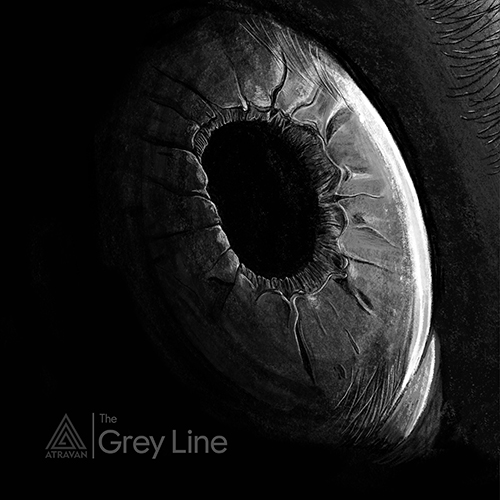
Atravan, The Grey Line, 2021
Tracks: 
The Pendulum (2:35), The Perfect Stranger (6:45), My Wrecked House (6:05), Vertigo (5:09), Dancing on a Wire (6:01), The Grey Line (9:12), Uncertain Future (3:35)
Line-up:
Masoud Alishahi – Vocals
Shayan Dianati – Guitars
Arwin Iranpour – Bass
Marjan Modarres – Piano, Keyboards
Shahin Fadaei – Drums
Pedram Niknafs – backing vocals (tracks 2, 4) 

There’s a first time for everything, folks, and I think today’s Metal Mondays review is the first time we at Progarchy have ever reviewed an album from an Iranian band. I know it’s the first time I have. Tehran’s Atravan released their latest album, The Grey Line, about a month ago, and it has quickly become my favorite new release of 2021. It’s absolutely phenomenal.

Atravan can be best described as a progressive metal band with atmospheric elements. The songs are incredibly well-written, with the instruments all played expertly. The bass plays a prominent role – arguably more prominent than the guitars. The Grey Line isn’t particularly heavy, although it has its heavier moments. “Dancing on a Wire” for instance leans on a synth sound with acoustic guitars and soaring vocals. “My Wrecked House” has the same elements, but it has a much heavier sound with heavier drums and electric guitars. By the end of “The Perfect Stranger,” the band is pounding away in full-blown metal.

All of those elements remind me most of Riverside, especially on the aforementioned track. The bass and keyboards also play a central role in Riverside, with spacey guitars layered over the top. There are also moments that remind me of the atmospheric aspects of Porcupine Tree or even Devin Townsend (think “Deadhead”), but Atravan strike me as being rather unique at the same time. Maybe it’s the warmth and depth of Masoud Alishahi’s vocals (yes, the lyrics are in English). Maybe it’s the stunning Floydian keyboards. Maybe it’s the way the band builds a song gently but gradually through the combination of guitars, bass, drums, keyboards, and vocals. The drums are intricate throughout. Shahin Fadaei always plays to whatever the song requires in the moment. Sometimes that requires rapid-fire double-bass pounding, and sometimes it requires a more sedate Nick Mason-style beat. Careful with that axe, Atravan.

The keyboards provide unique sounds throughout the album that set a melancholic and contemplative mood. The opening of the nine-minute title track is all keyboards. The song slowly builds with added vocals before a loud but simultaneously gentle bass takes center stage. The song continues to build with additional instruments picking up. It takes about five minutes before they return to a really heavy sound, but everything works so perfectly that you end up appreciating whatever and however the band plays. None of the songs feel rushed, which is rather surprising in an album that’s only forty minutes long.

The electric guitars on the opening of the final track, “Uncertain Future,” have a spacey Gilmour-esque sound to them. They’re used sparingly as the bass, drums, and keyboards begin to take over. It’s a three and a half minute-long track, yet it still doesn’t hurry. It asks the listener to slow down with it and just enjoy the moment. It’s an instrumental track to help you unwind at the end, even though the album is on the short side. In closing it out this way, Atravan bookend the album, since the opening track was also a spacey instrumental piece that served to warm up the listener for the rest of the record. 

Definitely give The Grey Line a listen. I’m so glad the band reached out to us, because I probably wouldn’t have come across this album otherwise. I certainly wasn’t expecting it to become my favorite album of the year thus far. There’s a lot of 2021 left to go, but Atravan have set a very high bar for everyone else in the prog world to hurdle. Every track on this album is fantastic. I look forward to more from the band in the future. 

https://www.facebook.com/atravanband
https://atravan.bandcamp.com
Apple Music
Spotify


In Concert: Todd Rundgren’s Clear Humanity

With multiple attempts at a 2020-21 tour yanked out from under him, Todd Rundgren has pulled a fresh concept out of his back pocket in turn. In lieu of a one-off worldwide livestream, Rundgren kicked off the “Clearly Human Virtual Tour” on February 14.

Sporting a setlist focused on the ambitious 1989 album Nearly Human, Rundgren and his 10-piece band (including bassist Kasim Sulton and synthesist Gil Assayas from the 2018 Utopia reunion tour) are now midway through a 25-date residency in Chicago; original talk of limiting each show’s streaming market via “geofencing” quickly gave way to a few visual and verbal nods to a different city each night. Intrigued, I ponied up $40 for February 25’s “Indianapolis” show; for more cash, you could control what camera angle you were seeing, order the usual merch, have your face projected onto video screens the band can see, or even attend in person (the last option subject to being one of 19 people to pay VIP prices, then pass a COVID test within 72 hours of the show).

It’s a great concept: cutting down overhead by staying in one place, Rundgren has added a horn section (Steven Stanley on trumpet and Nearly Human sax man Bobby Strickland), three backup singers (Nia Halvorson, Grace Yoo and Todd’s wife Michele), guitarist Bruce McDaniel and second keyboardist Elliot Lewis to his usual rhythm section of Sulton, Assayas and drummer Prairie Prince. The musical results all night were pretty marvelous, ranging from a smooth purr to a raucous roar, with lots of guts and grace to spare. Pin-sharp after two weeks with the material, the band eagerly powered through most of Nearly Human plus selected classics from the 1970s (the 10-part vocalese in “Can We Still Be Friends” was downright awe-inspiring), a few Utopia tunes and later R&B-inflected gems (with the precision funk of 2nd Wind’s “Love Science” and the slow burn of “God Said” from 2004’s Liars proving especially effective). Rundgren’s occasional forays into lead guitar on his iconic green instrument “Foamy” were spaced out for maximum impact; the rest of the time he stalked the lip of the stage, strutting his stuff while the players did their thing. His obvious delight in his “nebbish as soul man” persona was utterly endearing — and once he shucked his suit jacket to reveal a bit of a pot belly and comfy athletic shoes, you were in on the joke as well.

The only weak link, for this show at least, was Rundgren’s voice. His melodies, especially on his soul material, are fairly fearsome, multi-octave constructions; they require a sturdy vocal instrument, a comprehensive range, consistent breath support, and lots of stamina! On this night, Rundgren’s bottom and top were strong, but a little phlegmy and forced, and the midrange between the two was unsteady to the point of outright disappearance at times — including during the opener “Real Man”. (l’ve had to sing for numerous worship services or concerts with a dry throat, sinus congestion or a cold, and I think that’s what may have been going on. Take it from me, it ain’t much fun.) Previous reports have found Todd in great vocal form on this tour (and Cirdec Songs’ Cedric Hendrix reported that he was up to snuff for the next night’s show); hopefully, this was a one-time glitch that some rest — or maybe hot tea and honey — fixed! And in my book, Rundgren earned “show must go on” bonus points for his perseverance in difficult circumstances.

In short, Todd Rundgren’s come up with an enjoyable cure for the no-concert blues — one that, even on a bit of an off night, was highly effective, impressive and fun! If it’s been too long since you rocked out in your favorite venue, I recommend you check out the remaining livestream dates for the “Clearly Human Virtual Tour” at NoCap Shows.

— Rick Krueger

Setlist:

  • Real Man
  • Love of the Common Man
  • Secret Society (Utopia)
  • Something to Fall Back On
  • Parallel Lines
  • Unloved Children
  • Love in Action (Utopia)
  • Compassion
  • Can’t Stop Running
  • The Waiting Game
  • The Smell of Money
  • God Said
  • Love Science
  • Feel It
  • Sweet
  • Change Myself
  • Can We Still Be Friends
  • Lost Horizon
  • Rock Love (Utopia)
  • Hawking
  • The Want of a Nail
  • Hello It’s Me
  • I Love My Life

Album Review: Morpheus Project’s “Mozaick”

Guest Review by Chloe Mogg

Coated with elements to make this one of the best progressive albums of the year, Morpheus Project are set to release their elevating new album ‘Mozaick’ on March 19th. With previous singles ‘Cry for Freedom’ and ‘Nights to Remember’ on the release, the highly anticipated debut album is an energetic introduction into the mind of musical director Mustafa Khetty. Receiving rave reviews from the likes of Prog Magazine, Scala Radio, Classic FM and BBC Introducing, ‘Mozaick’ is a force to be reckoned with in the industry and issues itself with importance to be heard. 

An expansive release that showcases Morpheus Project’s diversity, the musicianship within the album is breathtaking. Featuring talented musicians throughout the release, Morpheus Project are a collective specialising in creating music without boundaries. Exceeding any expectations and walking with it’s head held firmly high, ‘Mozaick’ has something for everyone. Showcasing Mustafa’s Indian classical roots, a progressive rock side, a realm of experimental juices and fusion thrown into the mix too, ‘Mozaick’ is unapologetic and free-spirited. 

A reflection of Mustafa’s personal endeavours, life experiences and observations as a whole, there’s elements of intimacy within the album that draws listeners in even further. A reflective album that will make you sit and think, ‘Mozaick’ doesn’t follow your typical rulebook – and that’s what makes it even more impressive. 

http://www.mustafakhetty.com

Jarrod Gosling and Cecilia Fage

Album Review: Cobalt Chapel’s “Orange Synthetic”

Cobalt Chapel, Orange Synthetic, Klove Recordings, January 29, 2021
Tracks: In Company (4:27), The Sequel (3:49), Message To (3:18), A Father’s Lament (3:41), Our Angel Polygon (4:32), Cry A Spiral (4:53), It’s The End, The End (5:26), Pretty Mire, Be My Friend (4:04), E.B. (2:15), Orange Synthetic (6:21)

Yorkshire, UK, duo Cobalt Chapel recently released their second album, Orange Synthetic, and it’s a wonderful contemporary progressive take on the psychedelic music of the 1960s. It has fresh production values with lush textures and glowing vocals. So who are Cobalt Chapel? Cecilia Fage (from Matt Berry & The Maypoles) and Jarrod Gosling (from I Monster). Gosling also happens to make the album artwork for Tim Bowness‘ solo albums. 

Fage’s vocals are the clear centerpiece of the album, and her voice is absolutely stunning. It’s treated with some echoey effects that give it a choral feeling, which matches the aesthetic implied by the band’s name. The album sounds fantastic, with the vocals and music clear, clean, and distinct. The various organs and keyboards are the primary musical sounds, with their textures swirling around the listeners head as Fage sings in the center. The guitar, drums, and soft bass complete the psychedelic sound. You’ll be hard-pressed to find a better-sounding album out today. It is mixed very well with everything easy to pick out. Nothing is muddled. You can even make out the clicking of keys or buttons on whatever instrument Gosling is playing at the end of “A Father’s Lament.” There’s a slight hum in the background at that point which makes you feel like you’re in the room with him as he closes out the song. The whole record is really a pleasure to listen to.

There are folk elements to the music, with the album being influenced by Yorkshire itself. The song “E.B.” sounds the most folky, with instruments kept to a relative minimum and Fage’s voice carrying the brief track. Overall though the music retains a psychedelic vibe through heavy use of keyboards and organs, along with very 60s-sounding drums and guitars. The music is much more upbeat than the type of psychedelic music I’m more familiar with, though. It isn’t as spacey, although there are times when it sounds like they’re about to launch into the spacier side of this corner of rock music. They never quite get there all the way, except for on “Cry A Spiral,” which is the spaciest track on the record. Even on that song the ending is heavier and more lush-sounding, ending with a light touch of saxophone and various organs. Melody takes a central position on the album, which is perhaps what makes this album so appealing on repeated listens. You’re left feeling refreshed after listening to Orange Synthetic

If I had to make one complaint, it’s that I would have preferred some longer extended instrumental sections. The end of the first track, “In Company,” breaks into what sounds like it’s going to be a wonderfully psychedelic Floydian soundscape, but then it breaks off suddenly. The second track similarly fades out as it enters an instrumental passage. The third track does the same thing. It drops into the beginning of a 1960s-style psychedelic mood, yet it cuts off after a few brief seconds. At about 43 minutes in length, I think there’s room on the album for some longer musical exploration. They set the listener up for it, but they leave me longing for that instrumental space to breathe.

The title track, which ends the record, is the longest on the album at over six minutes, and it has a longer instrumental passage in the middle that feels much more natural for this kind of music. When Fage’s vocals kick in again after that passage, I’m left satisfied. In that regard the song is the perfect ending for the album. I just wish more of the songs on the album more generously balanced the instrumental side of this style of music with Fage’s beautiful vocals by having more extended musical passages. 

I highly recommend Cobalt Chapel’s sophomore album, Orange Synthetic. It’s a refreshing blend of upbeat psychedelic music with stunningly beautiful vocals presented with choral overtones. The music is accessible, yet complex enough to reward on repeated listens. Cobalt Chapel have masterfully brought the psychedelic sounds of a bygone era into fresh territory for a contemporary audience. 

Buy the album on CD, vinyl, or digital download, including signed copies of physical media: https://cobaltchapel.tmstor.es/#main_menu

https://www.facebook.com/cobaltchapel/
https://twitter.com/cobaltchapel
https://www.instagram.com/cobaltchapel/