Part rock, part funk, part punk, Brussels-based InHibit’s debut is unique and fun. The simple but funky baseline on “Shadows of Fire” reminded me of days gone by in popular music, but it sounds extremely fresh and clear. Uk-based journalist Chloe Mogg has more below:
By Chloe Mogg
InHibit’s latest EP Blinded is an appetising hybrid attempt at an 80s classic rock record, embroiled with metal riffs and drums beats and in-your-face vocals. The artist also rightfully takes influence from some of the greatest rock bands of late, and throws into the mix familiar elements from some of the best to ever do it, ensuring his EP has enough proven musicianship that’s sure to win him some points.
“Shame On Humans” crosses between charismatic, full bodied riffs and a squeaky, whining sound that’s almost like a sinister laugh; a villainous mock giving nod to the poor societal state of humanity that has encompassed most headlines in the turmoil that was 2020. The eponymous chorus is not unlike a Foo Fighters verse at all, while the most noteworthy section of the EP’s opener is its unravelling into a power ballad of a guitar solo that’s met in unison with InHibit’s discordant vocals, which break form from the established singing style and bring an endearing passion. InHibit’s aggressive vocals also seen in ‘Settings’ further help to determine that this is the best style for the artist, who should take pride in singing in a full-hearted, no-holds-barred style, which is definitely his forte in contrast to his softened, more intricate attempts seen in ‘The Quest’.
A jazzy, funk-filled bassline provides a fitting backdrop throughout ‘Shadows of Fire’, and ties the tracks surprising choice of instrumental sound together. The simple snare, hi-hat drum beat in parts, combined with the prevalent bass and the different layers of backing in vocals, does genuinely draw some resemblance to Queen’s infamously distinct style seen on the likes of ‘Bohemian Rhapsody’, which is only furthered through the whispered vocals and call and response claps which come toward the end of the track. Though InHibit’s work on this EP is far from the mastery of both Dave Ghrol and Freddie Mercury, the fact that the artist has attempted to replicate their superior musical notoriety and has found a place for it amongst his own style is a massive compliment alone.
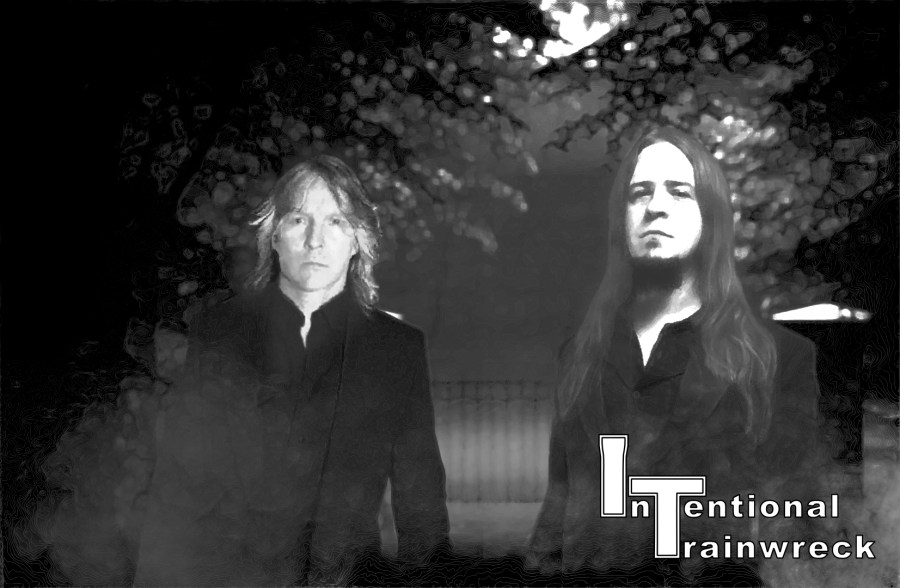
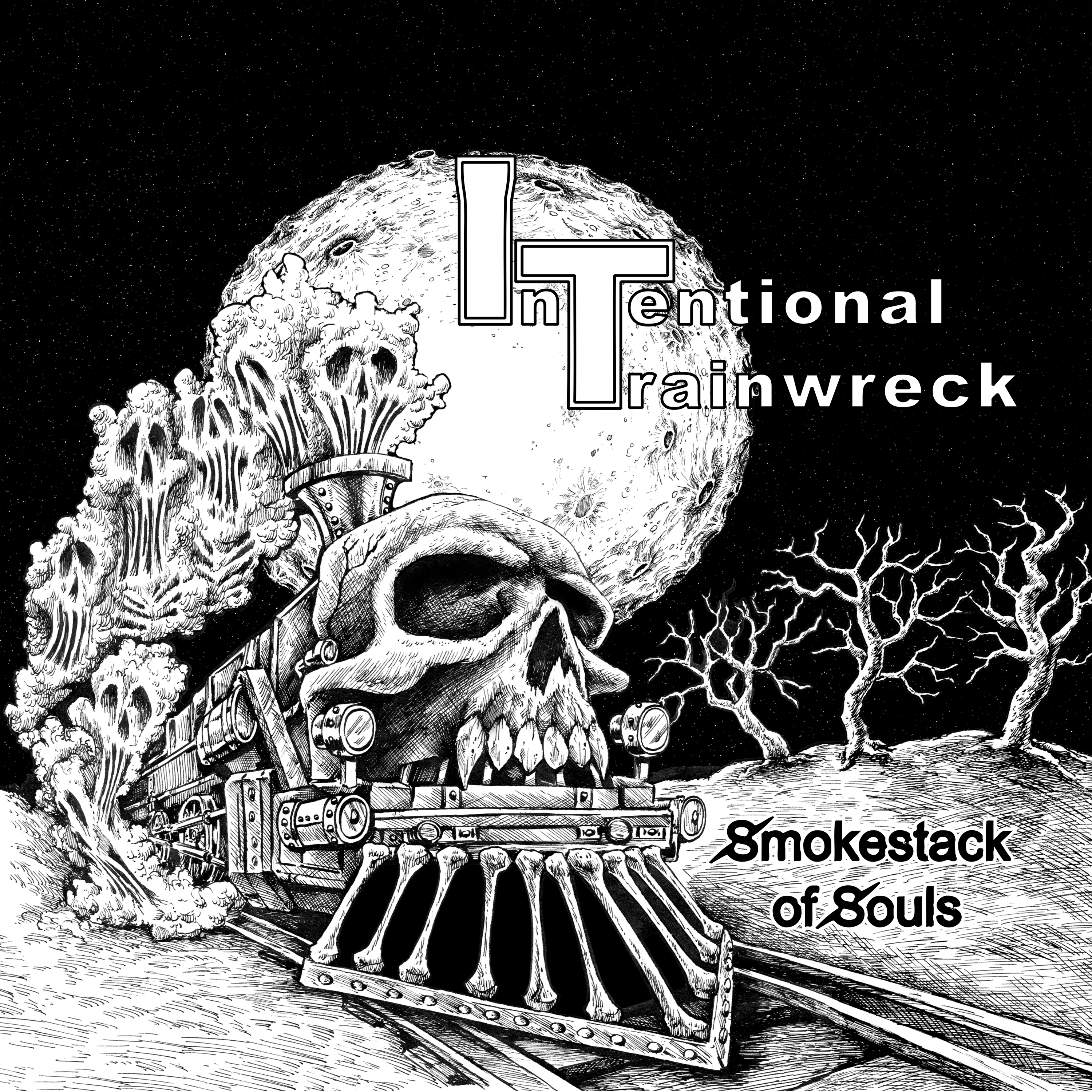
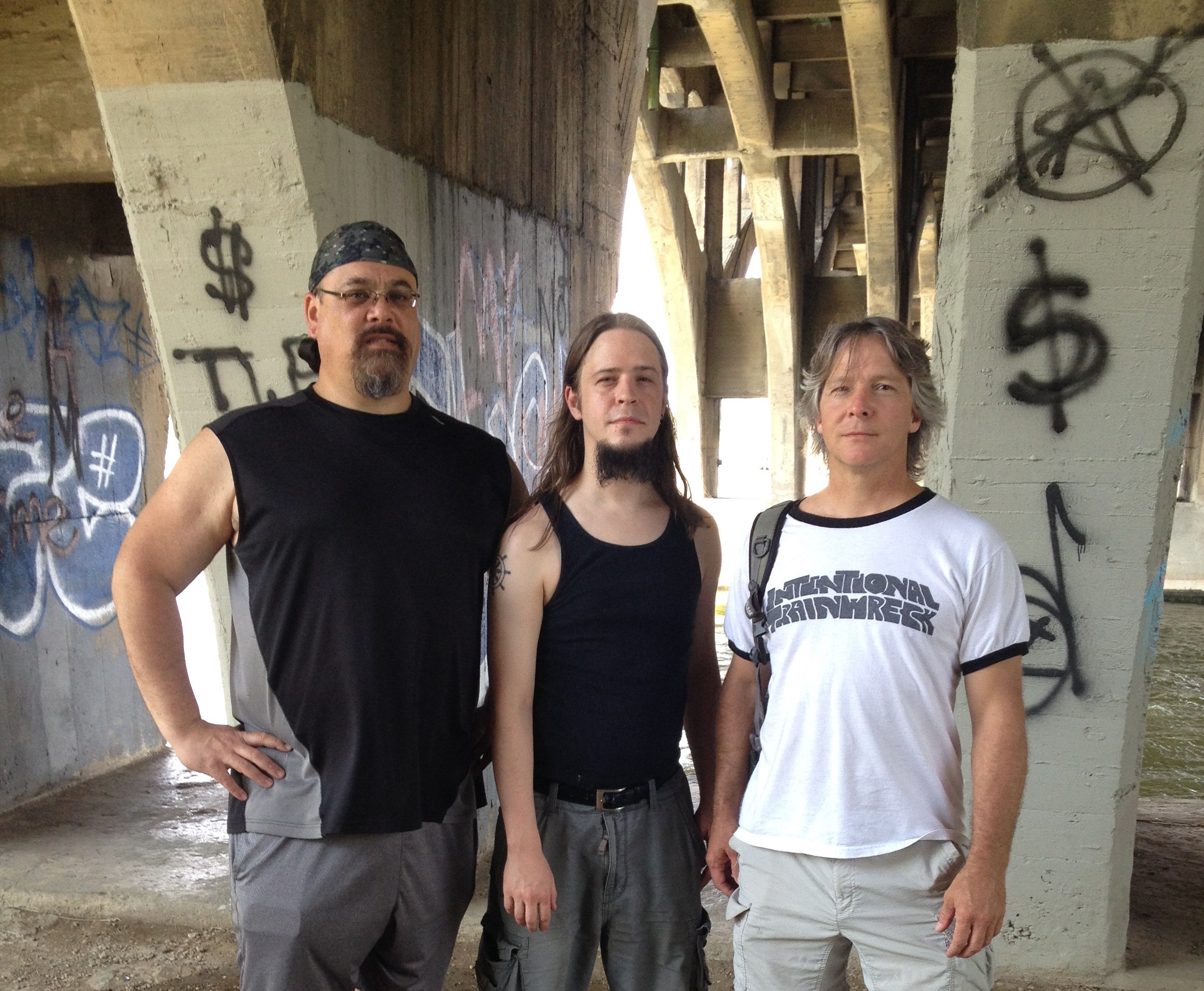
Baltimore, Maryland-based progressive metal duo Intentional Trainwreck return in May with the release of the sophomore studio album “Smokestack of Souls,” a follow-up to 2014’s “The Accident.” Singer and guitarist Pete Lesko and drummer Patrick Gaffney speak for Progarchy about the new material, challenges, prog scene in 2021, and more.
You are about to launch a new full-length album with Intentional Trainwreck entitled Smokestack of Souls. How do you feel about the release?
PL: I feel great about the release. The material on it is solid and none of the tracks are filler. Everyone I’ve played it for so far has had good things to say at worst. I write material for this band which, as a fan of music, I would like to hear. And I think that comes through strongly in the compositions, production, and performances.
PG: We are definitely stoked for the release of Smokestack of Souls. We’ve made massive improvements in our musicianship, songwriting, recording and production. We’re using more online resources as a mechanism to reach a wider, more-specific audience. This is exciting because we know there are a lot of people who enjoy new and interesting music. We believe in the music, stand behind it, and endorse it passionately.
Where does the new record stand comparing to the debut album—2014’s The Accident?
PG: Frankly, Intentional Trainwreck has left the Accident in a pile of its own rubble and dust. Unfortunately, we still love playing songs such as “Lunchbox” and “Metric” so we can’t be in complete denial of the Accident’s existence. In comparison, Smokestack of Souls has a production which towers over the Accident and there are obvious improvements in the vocals, musicianship, and technicality of the songwriting. Smokestack of Souls is heavier; it’s more aggressive; the songwriting is more mature and it is a new beginning. This is certainly a professional effort and we made sure it is something that average listeners as well as those with a trained ear will get into.
PL: I think the new record blows the debut album completely out of the water. The writing and production on this record is more cohesive overall. I stopped smoking just before the Accident was released and began to focus a lot more on getting better vocals down, which it turns out is a lot easier to do when you can breathe! In general, we were able to avoid a lot of the mistakes that we made the first time around.
How much of a challenge was it to work on Smokestack of Souls?
PL: A massive challenge was avoiding the production pitfalls of the Accident while doing most of the recording and all of the mixing and mastering for the new album. There were so many points when I just wanted to throw in the towel. In particular, during the last year as the album was on the precipice of release, I was working in the healthcare industry which was not getting less busy but rather the exact opposite. My family was mostly stuck at home and, on top of this, I was doing guitar tracks and some vocal recordings for Isenmor’s Shieldbrother. So, things became rather chaotic to manage. This coupled with the challenges of writing guitar parts, lyrics, vocal melodies, and even bass parts! Because Mike was unable to record a number of bass parts, there are a few of tracks on Smokestack of Souls featuring me on every instrument except drums.
PG: Intentional Trainwreck always challenges itself to write better and more interesting music. It’s not a big deal because we are creative and constantly have new ideas to share. But we still needed to make sure that we held ourselves to a high level of songwriting. And, we know our audience likes to have expectations met and surpassed.
Another challenge was improving listenability. We know the Accident should have sounded better and we owe it to everyone to improve the production and sound quality on Smokestack of Souls. Pete spent a lot of time on his studio techniques for mixing and mastering. He ended up doing a fantastic job. Also, we never stopped rehearsing the parts, so you’ll notice better vocals, drums, and guitars all around.
And, the global pandemic was a huge challenge which delayed everything from rehearsals to live shows. We are extremely lucky in that we still have our health, but it has made things very difficult for rehearsing and mixing the music. And we’ve missed seeing our friends and fans during live performances more than words can say.
Speaking of challenges, have you set any in the early phase of what has become the final result?
PG: The most noticeable challenge associated with the finished product has got to be the way in which music is distributed, marketed, and obtained by the listener. The traditional process of creating CDs, sending them off for review and making a lot of noise to get people to buy them is no longer the norm. The new model involves digital distribution via online submission of files and artwork which all needs to have codes assigned so that royalties can be tracked across a myriad of social media and distribution platforms. And, marketing through videos and playlists is ever more popular and unavoidable. So, in many ways it seems like we’ve gone from a band creating an album to social media entity associated with music. This isn’t necessarily a bad thing, but it increases the scope of work and schedule of an album release tenfold.
PL: That’s an interesting question, I don’t know that I had specifically or explicitly talked about it, but I certainly wanted to make sure is that the next album was going to be better than the first one. When I went into writing, I didn’t want to write songs that people say well that kind of neat, I went into the process with the intent of writing songs that hopefully would become some folks’ favorites that they slam on a loop.
Tell me about the topics you explore on these new songs.
PL: We explored a lot of dark places on Smokestack of Souls – the uglier parts of society that can crush a person into a tuna can. Inner-darkness tolls on a person. But we also explore some lighthearted subjects like the philosophical deconstruction of what quality is, and even one about playing dungeons and dragons.
PG: There are several topics presented in Smokestack of Souls, and they all come from places close to the heart. For example, the audience-friendly “Basilisk’s Gaze” is a story derived from one of Pete’s D+D games and takes the listener on an epic journey through a fantasy realm. The video for this song adds a level of surreal exploration. “Family and Friends” comes from real-life emotions and situations; some topics are based on political unrest (“Charismatic Agenda”) and some pertain to individual strife (“Kamikaze Tom”). “Phaedrus” involves metaphysical communication on the smallest levels. The subject matter of the songs usually comes about after the music has been written but the two become intricately tied together as a composition develops.
What is your opinion about the progressive rock/metal scene in 2021?
PG: The music scene in general is amazing. We are blessed to live in times when you can search for and find excellent new music in a matter of seconds. Sharing information and music is easier than it has ever been. The progressive rock/metal scene is alive and well albeit a slightly different one when compared to 20 or 30 years ago. There will always be extremely talented and innovative musicians out there; however, today you are more likely to hear music which is heavier and much faster at times than previously. Perhaps you’ll find new bands which are darker and edgier than before. And, the amount of technical shredding today seems to have surpassed that of the past prog-metal scene. But the classics won’t go away either. The founders of progressive rock and metal had something which, to this day, remains quite unique and inspiring.
PL: With the Internet these days, the number of options can be overwhelming! Lots of amazing music is being made right now and I have been trying to make a regular habit of listening to new music as much as I can. It’s a competitive field, but I’m hoping this is one that stands apart.
I’m well aware of Patrick’s involvement with Cerebus Effect, and one of my personal favorite acts in the last two decades—Deluge Grander. As someone who has been involved within the scene for a long time, would you say that the genre has progressed or did it reach its peak long time ago?
PL: Oh, that’s something I just don’t talk about, not since the accident.
PG: “Progress” can embed itself into music in many ways. And, what constitutes progress is subjective. Personally, I feel that progress lies more in whether things like your creativity, conceptual approach and efforts continue to grow and bring forth interesting results and likeable sonic passages. I feel there is an opulence of new music stretching the realms of progressive rock and metal. While certain bands and musicians may have reached their peak, in no way do I feel that progressive rock and metal are even close to stagnant. Sometimes, the distinction between music genres gets a little blurry but, in the end, there is a variety of thriving genres really close to and including prog rock/metal.
Let me know about your influences—the artists that in a way shaped and continue to shape the music of Intentional Trainwreck.
PG: This is a loaded question because I am continuously inspired. As mentioned, I believe the world of music is constantly presenting amazing works. None the less, when I was 11 or 12 years old, my older brother’s friend played Jeff Beck’s Blow by Blow, Dixie Dregs’ Freefall and Yes’ Fragile albums for me. That was the first time I’d heard anything outside of pop and classical music. I knew right away that my musical direction had changed forever. Since then, I am thankful for and motivated by so many. To name just a few drummers – Carl Palmer, Dave Kerman and Trilok Gurtu each took me to new levels of inspiration. I can’t say that my performances on Smokestack of Souls sound overtly like any other drummer; yet, without my influences I’m sure my drumming would sound less inspired.
PL: I draw in influences from bands like Mastodon, Gojira, and Devon Townsend Project, and the sound I try to go for is a cross between a few different guiding principles. I mean, it must be, if not heavy, something dark or scary or something like that. I want riffs that bring you time signatures, keys, and scales that you wouldn’t expect, but I like to find a solid grounding element in each song, a hook if you will. I like growly vocals sometimes, but only if they are decipherable? That’s important to me; I don’t want to be just another cookie monster sounding band, and most of the vocals on this album are melodic anyway. I like songs with a complex groove that follows something catchy enough that you could sing it around a campfire. That’s not to say that indecipherable vocals don’t have their place in the right context, but I think that’s not us for the most part. I have these bands that I listen to and I’d say that’s the kind of goal I’m going for, but I am all about pretty much every kind of music. My taste is eclectic in that I like pop, classical, metal, jazz, country, electronic, indie, soundtrack stuff, and more obscure outsider music. I try to do my best to pull from those influences and build that into what kind of strange, but digestible, heavy metal kind of music we do, because I want music that is… mmm, without boundaries, but still with boundaries? Quantum metal, if you may.
What are your top 5 records of all time?
PL:
Megadeth – Rust in Peace
Archspire – Relentless Mutation
Meshuggah – Destroy Erase Improve
System of a Down – Mezmerize
Alice In Chains – Dirt
PG:
Allan Holdsworth – Secrets
Univers Zero – Uzed
Watchtower – Control and Resistance
Jeff Beck – Blow by Blow
John McLaughlin with Shakti – Natural Elements
Besides the release of the album, are there any other plans for the future?
PG: Playing gigs is a huge future goal. We really have a connection to our audiences and want to get back in front of people. I love to play live because it gives me an opportunity to give back to all the musicians who have inspired me.
We have a ton of music just waiting to be formed into songs. So, technically, there is already an album in the works.
And, thanks to the hope of successful COVID-19 vaccinations, we will most likely be rehearsing and writing together…in the same room! There is a true element of brotherhood and comradery when we work together. It is indeed a friendship that also rocks out pretty hard.
PL: We’re hoping to eventually get back out and start playing some shows. But right this second, I’d like to reach into the riff box and start putting some new material together. The ideas have been sort of piling up. I just they just need some time to arrange them into songs instead of a heap of disorganized noodlings.
Any words for the potential new fans?
PL: Thanks for listening! I know that it’s not easy for everybody to find the time to listen to new things, and I appreciate them spending the time to check us out. We’ll be releasing some music videos, and I’ll be putting together some play through videos for social media once the album is released. Make sure to follow us on Instagram and subscribe to the Youtube channel!
PG: Please don’t judge us on our past so much as the present. We have come a long way and Smokestack of Souls is a perfect place for new listeners of Intentional Trainwreck to start. Write us an email or hit us up on a social media to let us know who and where you are. It’s nice to know your fan base and it gives us a good idea to where we might want to travel and perform. Also, if there are people reading this article who are unfamiliar with our Top 5 albums, listen to that stuff, too. Finally, be safe and take care of yourself.
“Smokestack of Souls” is out on May 15th. Follow Intentional Trainwreck on Facebook for future updates.
The hardest part about reviewing music is finding the time to dedicate to writing, listening, and looking for new music. We all do this for free in our free time. We’ve got day jobs, and that leads to some overlooked music. Like the debut album from French band, Esthesis, aptly titled “The Awakening.” Moody, brooding, atmospheric, Floydian – this is good stuff. So good that it earned the reader’s choice for best unsigned band in Prog magazine’s reader’s poll last year.
Nad Sylvan’s latest solo album, Spiritus Mundi, is one of the finest records released thus far in 2021, and I expect it to be one of the top albums of the year come December. Sylvan brought his vampirate trilogy to a close with 2019’s The Regal Bastard. Spiritus Mundi, which is Latin for “spirit of the world,” departs from the more classic prog sound on his previous three albums, but it hasn’t quite set sail for new genres. Rather it explores different musical territories, including classical, folk, acoustic, and rock, all befitting the beautiful poetry of William Butler Yeats which serve as the lyrics. The musical elements from his previous albums are all here, but they are interpreted in a different way. In an interview with Progarchy’s very own Rick Krueger, Nad expands upon the development of the record and his collaboration with Vermont-based musician Andrew Laitres, so I’ll direct you to that for more info about how the album came to be.
As it should be, Nad’s voice is the centerpiece on the record. All of the musical elements serve to frame his voice and the lyrics, bringing the poems to life through varying sounds. The baroque elements found on Nad’s vampirate trilogy pop up now and again, such as on “Cap and Bells” and “The Realists,” which I think adds a flavor that is uniquely Sylvan. Laitres also provides some lead and backing vocals, which adds some variety.
Musically the album is more open and relaxed than Sylvan’s previous records. It doesn’t have the heavier rock moments that those albums had, but the lyrics don’t call for it. Nad plays most of the keyboards, as well as some of the acoustic, electric, and bass guitars, and the orchestration. Jonas Reingold and Tony Levin also appear on bass, along with Steve Hackett on the 12 string. The Flower Kings’ Mirkko De Maio appears on drums. There are a few other guests too, but this should give you a sample of what to expect. It seems fitting that Nad, who’s become well-known for his work with Steve Hackett’s touring band, releases this sort of more acoustic and classically inspired record soon after Hackett released a beautiful acoustic album, Under a Mediterranean Sky.
I’ll readily admit I’m frequently skeptical when an artist says they’re going in a new direction on their next album. While I didn’t have particular reservations about this album going into it, I was admittedly curious about what that different sound might be. I didn’t expect him to move into some sort of techno-pop trash like Steven Wilson, and thankfully he didn’t. Instead he leaned more heavily into the folk and classical elements that already existed in his music. At times the music is reminiscent of Big Big Train, and at other times I hear bits that remind me of Jethro Tull. The rock is still there though, with a fantastic bass line and slide guitar on “The Fisherman.”
Spiritus Mundi is a well-rounded album that offers a breath of fresh air in a very dark time in our world. Perhaps that is fitting since many of Yeats’ poems offered a similar freshness to the broken and hurting world of the early twentieth century. Nad Sylvan may have taken an unusual path to rock stardom in his 50s and early 60s, but that seems to have brought a maturity to the music he makes. This album is well-crafted, and it is both a fitting tribute to Yeats’ poetry and a wonderful introduction of that poetry to new audiences a century after it was written.
Sylvan is one of the most creative people working under the broad umbrella of progressive rock today. He seems to get better with each passing record. I only hope he gets the chance to tour his own music someday. Check out Spiritus Mundi along with his other solo albums. You won’t be disappointed.
Atmospheric and brooding, LearingToDive bring a fresh sound to a synth sound. There are elements of rock and pop, but this is a subdued album with swirling and gentle sounds. UK-based journalist Chloe Mogg has more below:
By Chloe Mogg
Musical enigma LearningToDive are ready to rock the boat with the release of debut album Norweigan Pop. A true love letter to the 80s, Norweigan Pop is a lineup of 11 stunning tracks full of Synth-Pop sounds and Post-Punk style. Reminiscent of New Romantic giants such as Duran Duran, the eclectic Norweigan Pop project touches on hot topics from personal, political and societal ideas to themes of hope and betrayal.
LearningToDive is the latest project from musical maverick and New Zealand based Bravo Bonez. Bravo is a well rounded talent, proficient in production, composition and musicianship there’s few things Bravo Bonez has yet to try his hand at. The LearningToDive project is Bravo’s latest and possibly greatest musical identity, stylistically unique compared to his other ventures the LTD sound touches on the more serious aspects of Bravo’s life.
The Norweigan Pop album follows Bravo’s journey of self-reflection and discovery, a musical rollercoaster of deeply layered textures and melodies that form a backdrop to Bravo’s lyrical soul searching. The project was impacted by Bravo’s love for the 80’s greats, from Roxy Music, the Psychedelic Furs, Echo & The Bunnymen and even Iva Davies (Icehouse), It’s no surprise that the LearningToDive debut has a distinctly nostalgic feel to it.
Since bringing us the very first LearningToDive single “High & Dry” in November of 2020 Bravo has quickly established himself as one to watch on the scene. Bringing back a New Romantic sound from decades past, LearningToDive takes a new spin on modern music, and fans can’t get enough of it.
The debut album for Killing Kenny may be a bit on the fringes of what we do here at Progarchy, since there’s a strong country influence in the music. Going way back to our founding, the joke was our unwritten rule was no country allowed, but fortunately Killing Kenny’s music draws from atmospheric, electronic, and rock music more than it does from country. The result is rather stunning. UK-based journalist Chloe Mogg has more below:
By Chloe Mogg
Exactly Different is exactly what it says on the tin, a unique blend of 11-tracks transcending the boundaries of genre. Killing Kenny’s Exactly Different ventures into the world of Rock, Country, Indie and beyond, all whilst maintaining his signature of magical melodies and power packed lyricism.
Killing Kenny’s debut album features a host of polished original songs, along with two stand-out cover versions of Soft Cell classic “Say Hello, Wave Goodbye” and Bruce Springsteen’s infamous “Land of Hope and Dreams.” Killing Kenny comments on “Say Hello, Wave Goodbye,”
I remember this song from school in 1981, when the start of the 1980’s sound began to kick in. Always liked the tune and it brings back great memories of very happy times for me growing up. I wanted to keep the sound still very 1980’s with an uncluttered version of the tune.
Kenny is no stranger to the scene, having been playing in bands since the late 80s he has a wealth of experience and hard-earned skill under his belt. Yet latest project Exactly Different is perhaps his most authentic work yet.
Returning to the scene after a solid three decades absence, Kenny is once again at the helm and taking charge of his musical career. Exactly Different has been a journey of self-discovery and reflection, a chance to hone his sound and experiment with style. Kenny explains-
It feels strange at the age of 53 to be talking about a debut album, however, this collection of songs entitled “Exactly Different” is “exactly” that. A collection of 9 original songs each designed to reflect a style of music and drawn from a period in my life from the age of 13, when I first started playing music, to today. The album also includes two cover versions as a homage to artists I admire and times I enjoyed.
The making of this album has been all things. An opportunity to meet and work with some new very talented and established people, all of whom have been incredibly helpful, supportive and encouraging. A great therapy by immersing myself back into writing and recording new music. Above all a great sense of joy and inspiration to never stop doing what you enjoy and to always pursue what you love to do”.
Killing Kenny pours heart and soul into his sound, infusing his musicality with a raw passion for songwriting and love for his instruments.
With a love for sound that’s infectious to audiences, it will come as no surprise that Killing Kenny has already found himself on radio waves across the globe, and featured in publications such as The Daily Record and Sunday Post.
Album ‘Exactly Different’ will soon have you falling in love with Killing Kenny too.
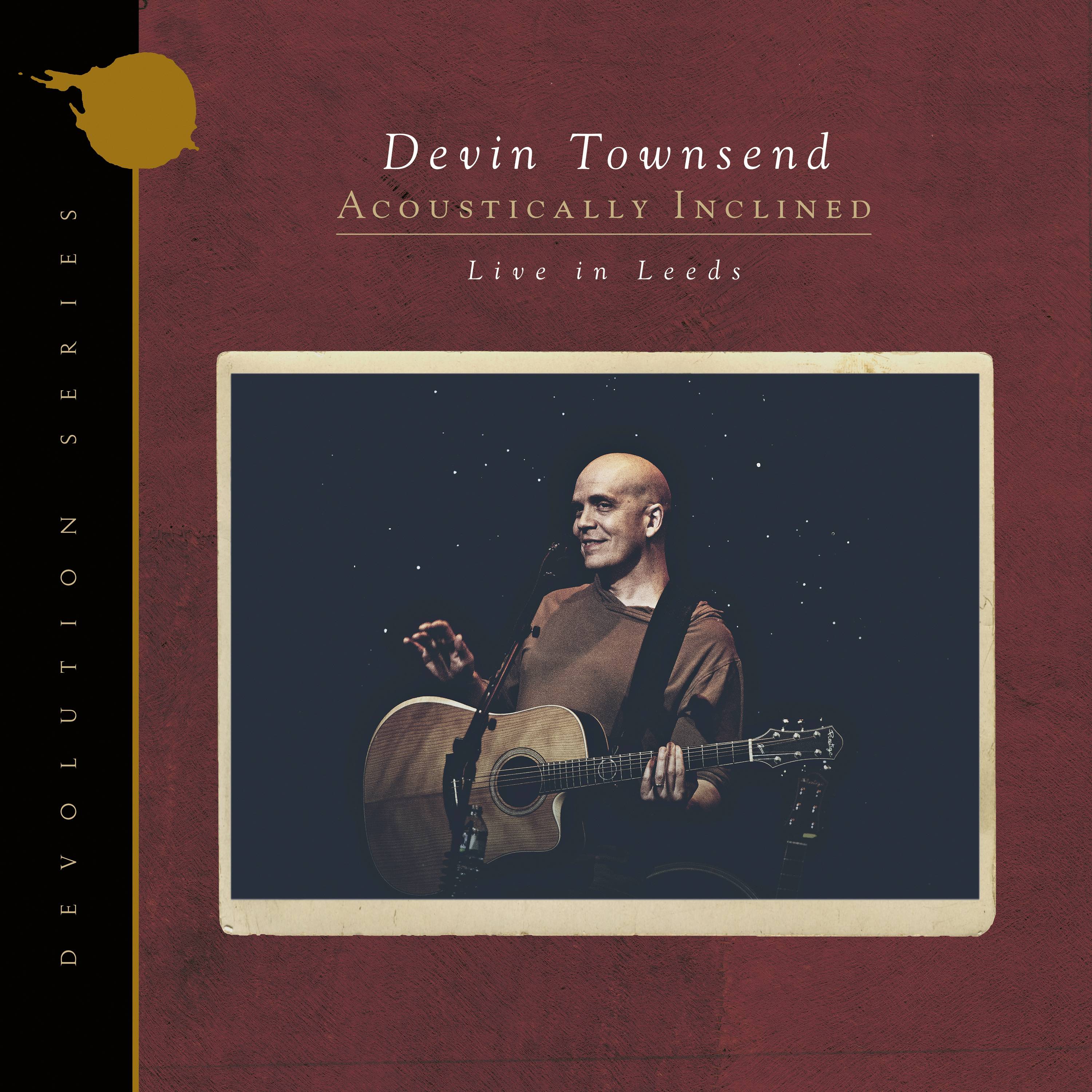
In the documentary for his album Empath, Devin Townsend commented that many people have trouble understanding much of his musical output because his albums vary drastically in style. His work with Strapping Young Lad was as extreme as metal can get. On other albums he shows prog, classical, country, and even pop influences. He explained that he doesn’t play only one type of music because he would get bored. He doesn’t listen to only one kind of music for the same reason.
I share Townsend’s sentiment. Why on earth would you want to listen to only one kind of music? Perhaps that’s why I’ve never really seen myself as a real metalhead, even though I really enjoy metal. You go to a metal concert, and many of the people in attendance only listen to metal. That’s fine – people can listen to what they like. I happen to get bored by listening to one kind of music, which is probably why I like progressive rock so much since it includes a broad array of sounds. But even within contemporary prog you’ll get those fans who will only listen to Spock’s Beard, Dream Theater, Marillion, etc., or those folks who still only listen to Yes, Genesis, Jethro Tull, etc. and haven’t bothered to dig into the music being made today.
To those people who aren’t familiar with Devin Townsend (which includes Steven Wilson, by his own admission), you’re missing out on perhaps the most creative genius working in the music industry today. In the Empath documentary he talked about working with Mike Keneally, who has worked with many brilliant people, including Frank Zappa. Townsend says he would never dream of comparing himself with someone like Zappa, but I would. Townsend is every bit as creative, albeit in different ways. That documentary, which I believe is only available on the super deluxe version of Empath that Devin released last year, helps shed some light on Devin’s creative process. It also shows him in a very open and honest way. His new acoustic live album, Devolution Series #1 – Acoustically Inclined, Live in Leeds, was his attempt to strip away all the fluff from his stage shows and connect with audiences in a very open way.
A prayer of the afflicted, when he is overwhelmed, and poureth out his complaint before the Lord.
Ascription for Psalm 102, King James Version
The Art of Losing, the second album by Catherine Anne Davies working as The Anchoress, hits where the listener lives. Lyrically erudite? You bet; Davies borrows the title from American poet Elizabeth Bishop, quotes a roster of literary titans from Julian of Norwich and C.S. Lewis to Margaret Atwood and Jorge Luis Borges in the liner notes, then depicted herself exhaling (vomiting?) her contribution to the conversation on the album sleeve. Musically sophisticated? Again, a slam dunk; beyond her compelling writing and powerful, nuanced singing, Davies plays most of the instruments with gusto, creates the unique sound world only a virtuoso producer could, and pulls influences from Depeche Mode to modern classicist Max Richter into the mix.
But that’s all secondary, picked up on repeated listens, trailing in the wake of this music’s overwhelming initial impact. Davies’ keenly honed portrayals of mayhem, trauma, loss and grief (reflections of her recent life) suck you into a maelstrom where happiness is barely a consideration. The question she seems to insistently ask on The Art of Losing is: how to endure?
How to endure being treated like a possession — by responding in kind? (“The Exchange”, duetting with Manic Street Preachers’ James Dean Bradfield) How to endure in a world where the wicked and unjust prosper and even gain greater influence (“Show Your Face,” rocking like a truck full of bricks as Davies snarls the chorus)? How to endure the ache of separation, the innumerable endings that life inevitably brings (the uneasily propulsive title track and “Unravel”)? The preternaturally quiet “5 AM” arrives at the abyss: just piano, cello and Davies’ unflinching vocal, recounting incidents of domestic abuse, sexual assault and baby loss, implacably inventorying the damage that comes for no reason, beyond what others think you are or owe them.
Groping for a path forward, Davies broods on the nature of sacrifice in “The Heart Is A Lonesome Hunter”, then explodes on the fierce incantation “My Confessor”. “With the Boys” brings another hushed, apocalyptic reckoning, as Davies tallies up the price of her choices– and concludes the outcome has been worth it:
All of my life I’ve been waiting for something I might call my own And learn to hold something inside A voice unworn that gets a little louder when you laugh at me And tell me not to speak
And she goes round and round Chasing circles with the palm of her hand She got to be good got to be certain if she wants to play With the boys . . .
But I can’t and I won’t shut my mouth this time Can’t control what you don’t know What was it you were hoping for guarding all the doors? Guarding all the doors?
The Anchoress’ answers to the inherent ache of life — of embodiment in a broken world where, seemingly beyond redemption, we choose to love things and use other people — aren’t cheap, easy or sentimental. But they are bracing and genuinely moving. At the end of The Art of Losing, endurance is the only viable solution (and quite possibly its own reward); the acceptance of time’s passage and the willingness to continue is the only possibility worth pursuing. Where the strength to do it comes from — yourself? Others? Someone you pour out your complaint to? — may remain a mystery. But by channeling her (and our) dilemma into 40 minutes of ambitious, unforgettable art-pop, Catherine Anne Davies has given us an undeniable gift. Open it for yourself and listen below:
Born in California and raised in Sweden, singer/songwriter/multi-instrumentalist Nad Sylvan is a music lifer who formed his first band in 1968, toured for the first time in 1975 and signed his first record contract in 1983. With three eclectic solo albums already under his belt, Sylvan’s 2008 collaboration with keyboardist Bonamici Unifaun caught the prog community’s ear; it’s a stunningly fine pastiche that goes beyond superficial gestures to embody the musical soul of Genesis’ progressive period. One thing led to another from that point: Sylvan joining Roine Stolt and Jonas Reingold in Agents of Mercy; his ongoing gig with Steve Hackett, providing a visually and vocally flamboyant focus for multiple Genesis Revisited tours since 2013; and the deliciously Baroque solo albums on Inside Out that constitute his Vampirate trilogy (2015’s Courting the Widow, 2017’s The Bride Said No and 2019’s The Regal Bastard).
Nad’s new effort Spiritus Mundi sees him joining forces with guitarist/songwriter Andrew Laitres to set poems by W. B. Yeats — including visionary classics such as “The Second Coming,” “Sailing to Byzantium” and “The Stolen Child.” This is a fresh, winning album, focused on Laitres’ acoustic guitar, shimmering orchestral colors — and Sylvan’s voice, ably navigating the spry melodies, inhabiting Yeats’ weighty words with grace, power and panache.
Nad Sylvan spoke with us last in 2019; after seeing him in concert with Hackett three times, it was delightful for me to chat with him about Spiritus Mundi and related topics. Recovering from a long day of shipping out preorders (roughly five times the amount he anticipated), Nad was nonetheless thoughtful, charming, and engaged throughout. The audio of our conversation is below, with a transcript following.
So, let’s talk about the new album, about Spiritus Mundi. How did you decide on a direction after you finished the Vampirate trilogy?
You got that one right! Vampirate — good! It’s my own invention; think of the vampire and the pirate combined into one character.
Well, to make a long story short, I was approached by Andrew Laitres, who I’ve done this record with. About two and a half years ago. And he asked me if I would be interested to track my voice for a song of his that was gonna go on one of his solo records. And that was a song called “The Lake Isle of Innisfree,” which turned out to be a bonus track on The Regal Bastard, my previous album.
So I asked him, “could I use this for this album?” ‘Cause I thought, it just went so well, it sounded so good, and I thought, “what a nice thing to use as a bonus track.” And so he granted me permission to do that!
So after I’d finished the trilogy, I immediately came to “where am I gonna go now? What should I do now? I feel like doing something completely different.” And then before you knew it, you had the pandemic as well come along. And I thought, well, spiritus mundi means sort of “the spirit of the world,” if you like. And that’s very much what we’re concerned about these days, more so than ever. It’s also a quote from the first song, “The Second Coming.” Where he sings about spiritus mundi. And it sounds so lovely, and it’s got some power behind those words. And I thought “why not use that as a title?”
And so I asked Andrew, “would you be keen to make a full album with these lyrics of Yeats? Let’s write these songs together.” I don’t have any prestigious thoughts about “I have to do everything.” I’ve already proven that I can write, ‘cause I’ve done three albums already. So he was enticed to go along with my idea, and then we started to work together – I would say it kicked off December of ’19. So during the whole pandemic, as I returned home from the tour with Hackett about a year ago – I would say mid-March of 2020 — I’ve been completely absorbed by this work. And it comes down to everything, even the artwork I’ve done for the album, so I could totally focus on this record, and I think it shows. It just sounds and comes across as being a bit more mature this time.
Well, that was one of the things that struck me, that you’re using Yeats’ poems for lyrics, because that strikes me as an amazing challenge. They’ve been set to music almost since the moment they were originally written.
Yeah, I know, but this was Andrew’s idea, you see. I wasn’t even that familiar with Yeats’ poems; I’ve heard of him. But once [Andrew] presented all his demos for me, I’d cherry pick: “Oh, this sounds nice.” And we started to mold the songs together, like “maybe this bit should be restructured” or “maybe we should change these chords” or stuff like that. It was very much a combined work effort. So, yes, Yeats has been covered by The Waterboys, back in the late 80s, I believe. But I didn’t even know that! I just thought, “what lovely poems! Let’s do it.”
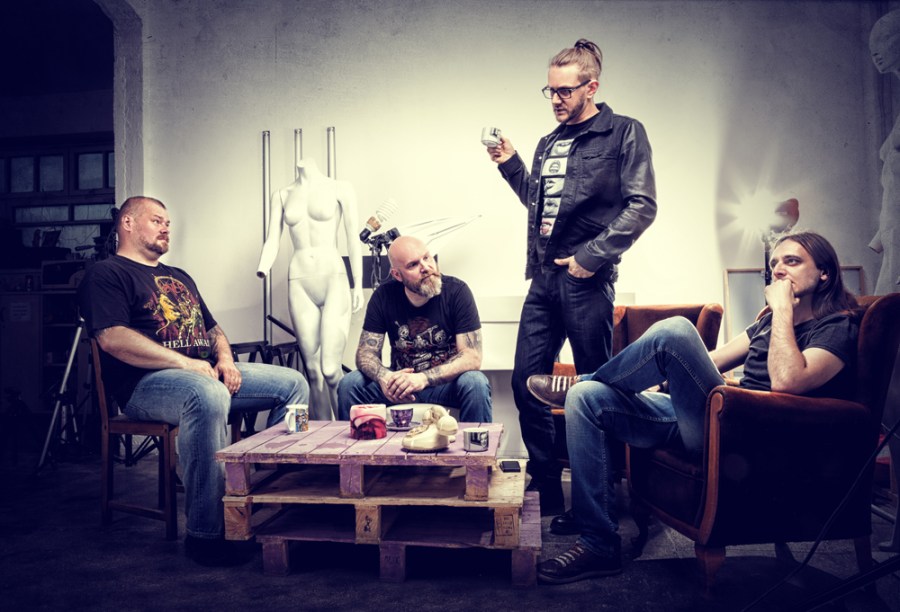
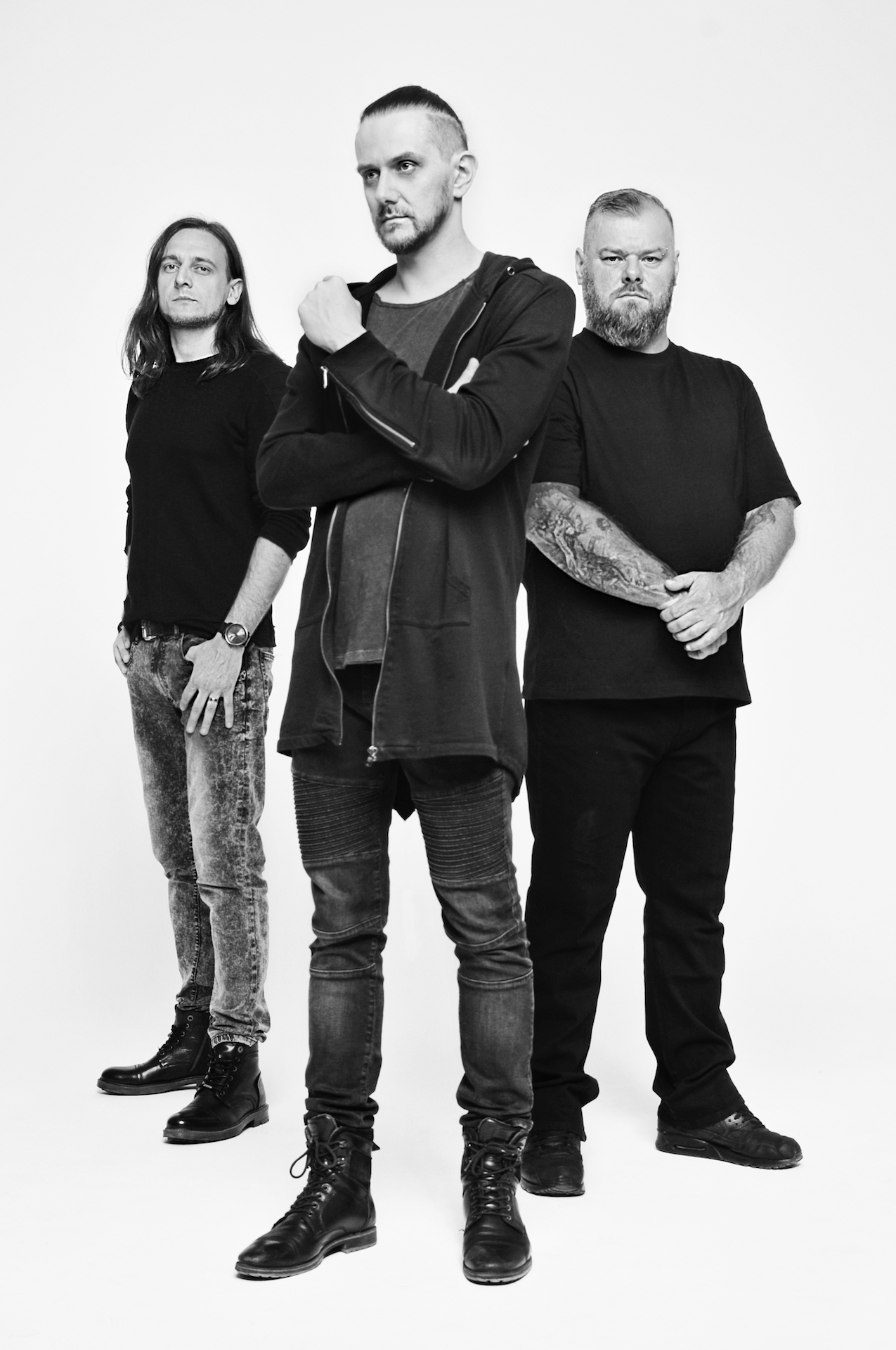
Over the last few weeks I’ve found it hard to find the motivation to dig into the growing pile of CDs I’ve received for review. Not that there’s anything wrong with those albums. They’re actually all quite good. It’s just that I keep finding myself returning to Riverside’s music. There are very few bands that have produced such high-quality music on every single one of their studio releases. Whether they’re playing metal or more atmospheric prog, everything Riverside does is brilliant.
Seeing them live on their Wasteland tour helped open my eyes to just how good they are. Everything about their performance was astounding: from the mind-blowing musicianship to the endearing way Mariusz Duda interacts with the crowd. They’re a band that should be playing in concert halls that seat thousands, yet here in the US they’re forced to play in bars with stages in the back with room for maybe 300 people. If someone un-initiated in the wonders of progressive rock asks me for new music recommendations, Riverside is one of my top recommendations.
Riverside jumped into the prog metal scene in 2004 with the extremely mature-sounding Out of Myself. This was a band with a developed sound right from the start. They didn’t have a sophomore slump either, releasing the moody and emotional Second Life Syndrome a year later. 2007’s Rapid Eye Movement completed the Reality Dream trilogy of albums, and taken together as a whole the three albums are some of the finest music in the history of progressive rock. The slow but steady build on “The Same River” to open Out of Myself showed that Riverside wasn’t afraid to take chances. Not many bands are willing to open their debut album with a 12-minute epic. Even fewer bands are able to pull it off so well with compelling melodies, storming bass, and a unique guitar tone.
The band’s 2009 album Anno Domini High Definition showcased their heavier tendencies, proving that they could go toe-to-toe with the heaviest bands in prog. Their next release, Memories in My Head (2011), foreshadowed lyrical themes they would cover at greater depth on 2018’s Wasteland, after the tragic passing of their brilliant guitarist Piotr Grudziński. Shrine of New Generation Slaves (2013) has some of their best and most poignant lyrics. “The Depth of Self-Delusion” and “We Got Used to Us” frequently run through my head… ha voices in my head. Love, Fear, and the Time Machine found them at perhaps their most Floydian. Wasteland found the band retaining their identity even after the loss of Grudziński in 2016. It also found them willing to experiment. The musical tribute to Ennio Morricone and the music of the spaghetti westerns on “Wasteland” was unexpected, but it fit the theme of the album so well. As a fan of those Clint Eastwood films, I absolutely love it.
Riverside’s music absolutely nails everything for me – the heavy, the quiet, the atmospheric. But without brilliant lyrics Riverside wouldn’t be what they are. Duda is one of my favorite lyricists. There’s no nonsense with him. He’s open and honest in his lyrics, but he’s also a cutting cultural critic. Not in the same way that Andy Tillison is, though. It’s much more subtle with Duda. New Generation Slave is a precise critique of modern society without being in your face.


 Nad Sylvan’s latest solo album, Spiritus Mundi, is one of the finest records released thus far in 2021, and I expect it to be one of the top albums of the year come December. Sylvan brought his vampirate trilogy to a close with 2019’s The Regal Bastard. Spiritus Mundi, which is Latin for “spirit of the world,” departs from the more classic prog sound on his previous three albums, but it hasn’t quite set sail for new genres. Rather it explores different musical territories, including classical, folk, acoustic, and rock, all befitting the beautiful poetry of William Butler Yeats which serve as the lyrics. The musical elements from his previous albums are all here, but they are interpreted in a different way. In an
 To those people who aren’t familiar with Devin Townsend (which includes

 Over the last few weeks I’ve found it hard to find the motivation to dig into the growing pile of CDs I’ve received for review. Not that there’s anything wrong with those albums. They’re actually all quite good. It’s just that I keep finding myself returning to Riverside’s music. There are very few bands that have produced such high-quality music on every single one of their studio releases. Whether they’re playing metal or more atmospheric prog, everything Riverside does is brilliant.
 Progarchy