Peter Banks (1947-2013), An Appreciation by Linda Dachtyl

The following is contributed by the Columbus Ohio area organist, drummer, educator, and recording artist Linda Dachtyl.  Thanks from the bloggers at Progarchy for her willingness to share it here!  (Pete)

====================

I was saddened to learn of Peter Banks’ passing when I read fellow eSkip bandmate Larry Smith’s Facebook entry this morning.  While I can’t say I have everything Peter ever recorded, I was always inspired and impressed with his playing, his contributions to the first two Yes LP’s, later with Flash, and the various solo works I had heard over the years.

peter-banks-yes-600-031213I am most familiar with his work with Yes as far as any “drop the needle” test is concerned. I became a fan of Yes and progressive music in general from hearing some radio hits and then being introduced to various other progressive bands by my grade school friend and fellow prog rock enthusiast, Pete Blum, who invited me to share some thoughts on Peter Banks.

Fragile was my first introduction to Yes, and to pieces developed beyond the single, or in the case of “Roundabout”, the “single edit”.  The purchase of The Yes Album soon followed, and then came the waiting for the release of Close to the Edge. I immersed myself in these three LP’s and couldn’t wait to hear more.

I recall seeing a couple of earlier Yes albums, which I was not familiar with at all, in various record stores. On a lark, I bought both and thus learned of the fine guitar work of Peter Banks, the original guitarist of Yes and originator of the group name.

One of Peter’s greatest strengths was his skilled improvisation, deeply influenced by jazz in his choice of timbre and linear playing. This was first evident to me on the creatively reworked cover of The Byrds “I See You” from the first Yes LP. Banks and Bill Bruford’s sensitive interplay put me in mind of a Wes Montgomery/Elvin Jones meeting, and opened my ears to free jazz improvisation.

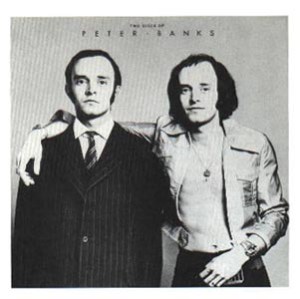
Two_Sides_Of_Peter_Banks_Cover

He added many tasteful guitar leads, accompaniments, and vocal harmonies to the first two Yes LPs. I can’t think of any more easily recognizable use of the minor 6th chord than in the opening of “Astral Traveller” from the Time and a Word LP.   There a single chord becomes the hook of the song, much like the opening chord to The Beatles “A Hard Day’s Night”.  I also always enjoyed his tasteful use of volume swells throughout both albums, and particularly on “Survival”.

The tremendously innovative cover of “Every Little Thing” shows genius. While these were group efforts in terms of finished product, I cannot imagine these tunes without Banks’ original innovative contributions.

Over the years, it’s been nice to see video of his earliest documented work with Yes live, especially on the selections from Time and Word without the orchestral layering.  While enjoyable to listen to on the studio recording, the layering was not necessary to complete any of the arrangements or compositions.

My collection of Banks’ works beyond his time with Yes is a bit spotty, but I enjoy Flash’s “Lifetime” in particular, again looking to the innovative musical arrangement. Peter’s acoustic work on “The White House Vale” is a favorite of mine from Two Sides of Peter Banks.

While I am not a guitarist myself, it was easy to appreciate the tasteful approach Peter had to his music, and he will be missed.

 ====================

Linda_Dachtyl-188x300Chicken Coup recording artist, Hammond B3 organist and drummer Linda Dachtyl is a member of the faculty of Kenyon College, teaching jazz piano and percussion.  She is a graduate of the Conservatory of Music at Capital University (B.M. in Jazz Performance) and The Ohio State University (M.A in Percussion Pedagogy).

Currently she leads a traditional soul/jazz B3 quartet along with her husband, drummer Cary Dachtyl.  She is a member of the eclectic rock group eSkip, drummer for the psychedelic power trio, The Walt James Band, and has appeared on festival dates as a Hammond B3 organist with saxophonist “Blue” Lou Marini, the late B3 organists Trudy Pitts and Gloria Coleman, and on studio recordings and festival appearances with blues singer Teeny Tucker.

(Author photo by LeeAnne Dauwalder-Heath.)

.

Big Big Train and the birds

I’ve been in love with a band called Big Big Train since late 2011. It was very many years since I got so moved by music as I have been by the music of BBT. Many great posts have been published here at Progarchy about the music and lyrics from the pens of David Longdon and Greg Spawton. So now it’s my pleasure to here in my blog premiere make a little detour to the world of birds… Why, you may think, is that? Well for starters I couldn’t add much new to what’s already been said about the themes in the music and lyrics and then I’m a birdlover and have been so delighted by the use of birds in the lyrics and even in songtitles (Brambling). It’s apparent that the songwriters are quite familiar with some of the common birds in Britain (they’re also common in Sweden. I mean the fantastic Hedgehoppers’ Chorus line where blackbird, redwing, song thrush and yellowhammer are mentioned is something that I can connect to as well. Those are birds that are typical for the Swedish countryside too. And they are all birds that signal springtime by letting us enjoy their melodic songlines from March onwards until Midsummer or something.

The thing that distinguishes Big Big Train from many other bands and artists is that they not only use the general expression “birds” in the lyrics but actual names of real species. You also find the partridge in the lyrics on Uncle Jack and Hedgerow. This precise way of describing what kinds of birds that inhabit their lyrical landscapes is something that put Big Big Train in the same league as literary giants such as our very own (Swedish giant) August Strindberg who was a keen naturalist and knew much about birds and plants. In his novels you always find the names of actual species as well, not only the general terms “birds” and “flowers” for instance. This way of namedropping species adds much to the feel of a very alive lyrical landscape within the musical landscape that is Big Big Trains. And for me who know what all those different birds look like, when they can be expected to come back from their winter quarters, when they start singing and also what they sound like when they do it, the picture widens and gets deeper colours so to speak.

So is birds in music a novelty then? Of course not. We all remember the second movement of Beethoven’s Pastoral Symphony (No. 6) where several birds lend their voices to the great master’s musical creativeness. There we can hear the nightingale, the quail and also the cuckoo.  Within the bird theme Big Big Train also connect in a very fine way with Vaughan Williams. How is that? Well, Mr Williams wrote that absolutely wonderful piece of music called The Lark Ascending which makes us think about the eighties masterpiece Skylarking by the wonderful band XTC whose guitarist Dave Gregory nowadays as we all know resides in…Big Big Train. Skylarking is by the way such a fantastic album title. For me the word skylarking doesn’t actually mean what it’s supposed to mean (playing boisterously or to sport or something like that) but to lie flat on the back in the sun on a green meadow watching the skylark hanging there on its invisible string singing its heart out about spring, love and joy underneath the deep-blue dome….but that’s a meaning I’ve made up all by myself. But the music of Big Big Train’s always makes me want to go skylarking – in my meaning of the word.

Words for a Time We’ll Wake on a Perfect Day

As I’ve listened to NdV-era Spock’s Beard, I’ve been reflecting on words, meaning, their problematic relationship, and how music swirls around that relationship, clarifying but never really clarifying.  Some things begin to come together as I listen again to the opening of the eponymous album (2006).  “Perfect Day” in the song title reminds me of Lou Reed, which in turn reminds me of a viscerality in rock music without which…  I guess I’d say: without which not.  That’s all.

And that viscerality is here, as much as on its predecessors.  Sure, I can hear the proggishness, but damn, it’s wonderful rock music.  Alan’s guitar leads on this album as much as Nick’s vocal, with a confidence that breathes.  I can feel the respiration, like I might notice the breathing of a companion, reminding me forcibly in a needed moment of the companionship even though nothing is said

SpocksBeardSelfTitledBut as I’ve been noticing, there are things that are said.  The words, I’m hearing here, are for another time.  YES!  Of course they are for another time.  A more “perfect” day, whatever that might mean.  Their meaning is deferred, but is not any less meaning for that.  It’s as though I do have the meaning, even though I don’t really have it, and may never have it.  Still, I have it.

And now I can read back the viscerality more clearly, read it back into the respiration that was Feel Euphoria and Octane.  Yes, I have to admit it, though I hate to…  There’s a profundity and an ecstatic cohesion to those two prior efforts that has retreated a bit here.  I lean in the direction of disappointment, but I’m surprised by how slight is that leaning.  Why?  Because, damn, this is wonderful rock music!  One of the things I remember about my seventies-self is the expectation I developed that there should be something sustained over the course of a whole album.  It became such a strong expectation that even the albums coming closest to perfection in this regard (many of which were NOT “concept” albums) were not without a pinch of that disappointment, a little of that leaning.

If there is something that the eponymous album does for me at a deep level, it is reinforce the viscerality, the album-long sustenance, of which these guys seem so consistently capable.  It makes the previous two discs shine even brighter across the current landscape of my listening.

“So, you’re saying it’s not quite as good as the last two, then?”

You could take that to be what I’m saying, I guess, and you wouldn’t really be wrong.  But I have to say it again…

Damn, this is wonderful rock music!

(Special mentions:  That exquisite transition, all piano, from the fading dischord at the end of “Wherever You Stand” into “Hereafter.”  And the very much up-to-snuff suite, where the textural high points of the album seem especially to lurk, beginning with the irresistible “Dreaming in the Age of Answers.”)

And this brings me to a scary place in the journey with SB.  One more studio effort with NdV (whom I’ve already shyly followed onto his next Train).  What will I think of that?  Yes, there’s the latest release too, and I WILL do SB the service soon of getting all the way to that place.  My resolve is still strong to remain something of a heretic, and wait a while yet before I go back to a serious sojourn with the earlier recordings with Neal.  I will get there, but I will risk irritating the true believers by refusing to hurry.

With Spock’s Beard, I very much recommend avoidance of hurry.

Rock Docs, Volume One – It Was Twenty Years Ago Today

In May of 1987 I had just finished my sophomore year at Texas Christian University, was one year away from getting my first computer, and had a fairly serious obsession with rock and roll, mostly of the classic variety and with a heavy dose of the Texas blues-rock revival thrown in.  I had maybe two dozen CDs at this point, my riches were all vinyl, and I read Rolling Stone and Spin voraciously.  No VH1 Behind the Music or Classic Albums Series, no 33 ⅓ books, Lester Bangs was dead, cultural interpretation of rock was in its infancy, and while MTV was redefining the visualization of music, there weren’t many filmed histories of rock’s great bands — I think maybe this was because the idea of a “rockumentary” as historical narrative didn’t occur to a lot of the era’s musicians, simply because they were still actively working.  There had been great rock documentaries, but they generally captured a moment in time, a tour or concert:  Martin Scorsese’s The Last Waltz, Albert and David Maysles’ Gimme Shelter, D.A. Pennebaker’s Monterey Pop and Don’t Look Back, Michael Wadleigh’s Woodstock.  Rather than tell a story of an artist or era, these films became a part of their respective subjects’ legends, and only occasionally, as with the movie Jimi Hendrix, released three years after Hendrix’s death, was there an attempt to provide historical perspective or commentary from contemporaries.

Derek Taylor in 1970, from Wikipedia

Into my 1987 world dropped the British documentary It Was Twenty Years Ago Today, which, as you might expect, looked at the Beatles album Sgt. Pepper’s Lonely Hearts Club Band, echoing in its title the first line of the first song on the album.  But, rather than profile just that record, or just the Beatles, the movie used Sgt. Pepper’s to explore the larger cultural shifts happening across the world in 1967.  By combining new interviews with vintage footage, and maintaining an appreciative but balanced perspective, It Was Twenty Years Ago Today manages in its 105 minutes to be both entertaining and speak with some authority on rock’s coming of age.  Produced by Derek Taylor, the Beatles’ press officer up until his death in 1997, the film is both an “inside job” and broadly illuminating, portraying 1967 through the lens of one of that year’s, and rock’s, greatest recordings.  Taylor also published an accompanying book. [It’s interesting that when the documentary came out none of the Beatles albums were yet on CD — Sgt. Peppers still had to be dealt with in its original linearity.]

Needless to say, the local public broadcasting station (KERA — also the first PBS station in America to broadcast Monty Python’s Flying Circus!) played this film through the summer of 1987, and on one occasion I managed to tape it.  The VHS cassette bounced around the country with me for another twenty years before I transferred it to a DVD, and now I bring it to Progarchy.  It exists in bits and pieces on YouTube, but it’s hard to upload there because of YouTube’s copyright protections — it “hears” the Beatles songs embedded in the video, god knows how — and returns a polite but firm notification that Apple Corp won’t allow the post.  Fair enough (I guess), but meanwhile the piece languishes in the dustbins, unavailable on any format commercially.  So with that said I’m posting it here, and if anyone objects I’ll take it down.

https://docs.google.com/file/d/0B0MgFPeY1q4HekFULUY5ZVh4MWM/edit?usp=sharing

Give Lobate Scarp some time and space—and volume!

January was incredibly busy. And February was incredibly surreal. When you edit a magazine titled Catholic World Report and the pope resigns while you are fighting the nastiest flu known to mankind, it is really surreal. And a new pope will soon be elected. Whew!lobatescarp_cover

But I’m putting all of that on hold for a few moments so I can write what is apparently my monthly—or is it bi-monthly?—post. I have grand plans to post much more often, but for now it is a monthly splurge. I intended (and promised, I’m ashamed to admit) to review the recently released Lobate Scarp album, “Time and Space”, several weeks ago. Russell Clarke has already penned a Progarchy.com review, but I wanted to also share a few thoughts about the album, in part because Russell and I have different takes on a few things about the album and because I have, at the moment, nothing to add to the many reviews of the excellent new Big Big Train album.

Upon first listening to “Time and Space”, my initial impression was quite positive. I’m happy to say that having now listened to it another 10 or 12 times, that impression remains and deepens.

Three things stand out. First, the production is exceptional. This album sounds fabulous: the sound is clear, warm, rich, and with a lot of depth and “room”, if that’s the right term. This album is worth getting just to listen to with headphones, volume up, in order to enjoy the variety of tones, the tasteful cello passages, the top-notch rhythm section, the robust harmonies, and lots of nifty details.

Now, beginning a review with praise for production values is usually the kiss of death, with a big, fat, “But…” to follow. But, no—there is no “but” to follow as, secondly, the music is also exceptional. Russell mentioned Spock’s Beard as a point of comparison, and I would add Neal Morse and Transatlantic. Considering that Adam Sears, the band’s leader, is the main lyricist, singer, and keyboardist, it seems apt that the group might draw some comparisons to Morse. The band’s site states, “From progressive rock influences like Genesis, Yes, and Phish, to the rock sensibilities of bands like Kansas, Muse, Faith No More and Styx, and a pop infusion of catchy vocals like Simple Minds, The Killers, The Police, Queen, and Foreigner; Lobate Scarp’s unique Progressive Space-Opera Rock music will surely take you on a musical journey you won’t forget.” That’s an interesting mix of musical influences and comparisons, and I can best hear Kansas, Styx, and Queen in the mix, as well as some Pink Floyd, especially in some of the guitar work by Hoyt Binder. The “space-opera” connection is, however, mostly lost on me; in fact, it is a bit confusing, because to my ears there isn’t much in the album—at least musically (more on they lyrics later)—that warrants such a description. Then again, I’m not exactly sure what a space opera is in a musical context, although the album that comes to mind for whatever reason is ELO’s “Time”, a personal favorite. While we at Progarchy.com rightly disdain most labels, or at least treat them as necessary evils, I would hazard that “Time and Space” is much more of a cross-over prog, or neo-prog, album, if only because the songs—while fairly complex and played with obvious skill—have an immediate accessibility. In fact, one of the real joys of this album is the presence of very good melodies, all of which stick with you and don’t become tired or stale after a few spins.

Third, and closely related to the first two, is the playing. The band’s promo material highlights the abundant contributions made to the album:

Over 50 musicians were involved in this progressive space-opera rock extravaganza. Guitars, Drums, Synths, Organs, Trumpets, Saxophone, Viola, Violin, Cello, Theremin, Glockenspiel, and a Latin singing choir were all recorded on this one. Peru Percussionist Alex Acuña (Weather Report) appears as a special guest percussionist and Rich Mouser (Spock’s Beard, Transatlantic, Tears For Fears) mixed and mastered the album.

One might understandably think the resulting album would be overly busy, with endless layers of keyboards, guitars, strings, and whatever else. Surprisingly—and happily—this is not the case, at least not until the climax of the final cut, “The Mirror”, which features a full-blown choir (and to good effect, I think). As mentioned, this album has a lot of room; it breathes well, and part of that is the restraint shown by Sears and Company, who are clearly aware that there is a time and place for a wall of sound approach (at the Big, Choral-Driven End!) and a time for a less-is-more approach. The majority of the album features a very tight four-piece rock group that uses proggy time changes and proggy solos, but without being overtly, relentlessly proggy. This approach, I suspect, might annoy the more purist prog fans, but I think the band demonstrates they know what they want to do, and they do it very well. Besides, the mastery of various styles—notably jazz, classic rock, and some Latin based motifs—is obvious and adds a lot of flavor to the proceedings.

For instance, “Save My Soul” begins with a prog-icized classic rock riff that eventually works into a muscular bass line before Sears enters with a steadily gaining vocal line that finally releases into a big, power-chorded chorus. Then, at about the 3:20 mark, the song breaks down into a funky, fusion-ish segue with vintage keyboards that brings to mind late ‘60s albums (“Bitches Brew”, etc.) by Miles Davis, before eventually works back into a ripping rock song with horns and organ joining the chaotic fray at the end.

And while all of the playing, again, is exceptional, I must single out Sears for his fine vocals (clean and pure in many places; rocking and more raw in others), Binder for his tasteful guitar playing (the sequence in the middle of “Beginning of Us” stands out), and Andy Catt for some dynamic, propulsive bass playing.

Finally, the lyrics. Contra Russell, I heard (and read) the lyrics as working on a couple of different levels: one inter-relational and the other spiritual, or metaphysical. This was confirmed by Sears, who shared the following in an e-mail regarding the song, “The Contradiction”:

I’m sure one may look at it and think that it is about a struggle in a relationship. While this can be true, the deeper meaning of “Contradiction” is about the connection of the spiritual world and the physical world. It is spoken from the point of view of the soul which exists in the spiritual/metaphysical world and this soul is talking to its physical world inhabiter, who is struggling with the contradictions of existing in both worlds. For instance, if there is indeed a spiritual or meta-physical world, this computer I’m typing only exists in the physical world and doesn’t exist at all in the meta-physical world. So it exists, yet doesn’t exist at the same time. If you respect and accept the contradiction your physical self and your soul will be brought together in a strong bond, but if you think too much about the contradiction or try picking it apart, it can drive you mad. “The Contradiction will bring us together or tear us apart.”

I’m not sure I’m on board with the metaphysics outlined here (they sound neo-gnostic, but that’s for another discussion), but the seriousness of the searching is hard to overlook (also readily evident in “Save My Soul”); this is not an ordinary love song. And I suppose the lyrics are what are most obviously “space opera” about the album. Regardless of the descriptive used, I think “Time and Space” is a very good album by a young and talented band that rewards repeated listens—especially loud and with headphones!

Listen to the Upcoming David Bowie Album (for free!)

You can stream it free for a limited time at iTunes. I think his last two, Heathen and Reality, are two of his best albums. See what you think of this one.

Here is the track listing:

01. The Next Day 3:51
02. Dirty Boys 2:58
03. The Stars (Are Out Tonight) 3:56
04. Love Is Lost 3:57
05. Where Are We Now? 4:08
06. Valentine’s Day 3:01
07. If You Can See Me 3:16
08. I’d Rather Be High 3:53
09. Boss Of Me 4:09
10. Dancing Out In Space 3:24
11. How Does The Grass Grow 4:33
12. (You Will) Set The World On Fire 3:30
13. You Feel So Lonely You Could Die 4:41
14. Heat 4:25

(Hat tip to wired.com)

A Desert Island Disc List of (Going For the) One

ImageOne of the hardest things a serious music fan is ever tasked with is coming up with a list of five or ten desert island discs, i.e. the albums without which he or she cannot live.  In fact, trying to put such a list together can be torture.  I’m pretty sure that somewhere in the Geneva Convention is a prohibition on forcing prisoners of war to assemble a desert island disc list under duress.  Such a thing could cause serious and irreversible psychological damage, and would thus be inhumane.


The trouble with desert island disc lists is that our moods – and thus our musical preferences at any given moment – are so incredibly varied.  One moment you might want to listen to the intricacies of a well-played classical guitar piece, the next moment you crave the audio testosterone known as AC/DC.  One moment you may want the sunny joy of Led Zeppelin tracks such as ‘The Song Remains the Same’ or ‘Over the Hills and Far Away’, the next moment you want the dark, brooding heaviness of early Black Sabbath.   One moment you want the folky feel of some acoustic Jethro Tull, while in another moment you want the cathartic release of an angry Tool song.  These examples are just the tip of an infinitely large iceberg.

While I would have to inflict great pain upon myself to assemble a definitive desert island disc list, there is one album I can say would be on any final version that I came up with  – Yes’s 1977 masterpiece, ‘Going for the One’.  

“Why ‘Going for the One’?” you ask.  The consensus on Yes albums like ‘Close to the Edge’ and ‘The Yes Album’ is that they are great albums, if not outright masterpieces.  On the other end of the spectrum, albums like ‘Union’ and ‘Open Your Eyes’ are generally considered somewhere between awful and God-awful.  And then there are those Yes albums that are lightning rods of controversy – ‘Tales from Topographic Oceans’, ‘90125’, and to some degree, ‘Drama’.  ‘Going for the One’, while generally viewed in a positive manner, doesn’t fall into any of these categories among the majority of Yes fans.  But if you ask me, it is a masterpiece as much ‘Close to the Edge’.  It crystallizes the essence of Yes – not to mention some artistic goals of first-wave progressive rock. 

To really ‘get’ this album, it helps to understand the context in which it was recorded, both within the band’s history as well as musical trends at large.  Recording for the album began in earnest in the fall of 1976 – the same year that the punk movement exploded onto the scene, in no small part as a reaction to progressive rock.  The genre of progressive rock itself was beginning to show some signs of wear and tear – Peter Gabriel had left Genesis, King Crimson had disbanded, and the general excesses of the genre were beginning to turn the music-buying public looking in other directions.  Meanwhile, punk was raging and stadium rock’ was beginning to step into the place formerly occupied by the proggers.

Within the band, Yes had gone through a tumultuous few years, including the release of the controversial ‘Topographic Oceans’, Rick Wakeman’s resulting departure, ‘Relayer’, a number of solo albums, a significant amount of touring, the easing out of Patrick Moraz and the eventual return of Wakeman.  There was a need for the band to catch its collective breath, to reflect.

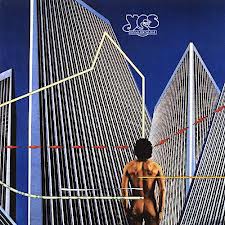
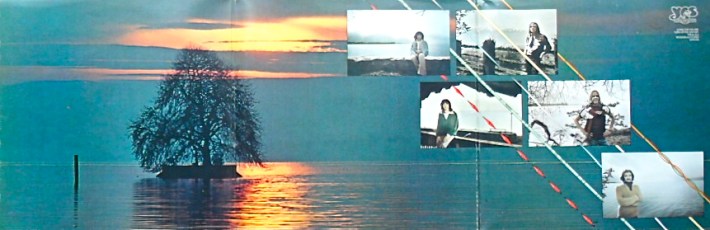
‘Going for the One’ has a very introspective feel to it.  This is borne out in no small part by the album artwork, including the cover (shown above) as well as the inner gatefold.
Image

A first thing to note is that none of the Roger Dean artwork is present –neither on the inner gatefold or the outside cover – save for the famous Yes logo.  The front cover shows the backside of a naked man, intersected by varying geometric shapes of different lines, against the backdrop of two modern skyscrapers, symbolic of standing naked against modern world.  On the inside gatefold is an idyllic scene of a lake at sunset.  From the liner notes of the re-mastered CD, I am taking an educated guess that this is Lake Geneva, Switzerland, not far from where the album was recorded.   Some sort of island (quite possibly man-made) having a rather large but bare tree sits in the middle of the lake.  Individual pictures of each band member are also shown, with all but Steve Howe’s having a lake (the same one?) as a backdrop.  The contrast between the front cover and the inner gatefold would suggest taking refuge of some sort, turning inward and reflecting. 

In addition to its introspective feel, ‘Going for the One’ also very much has a classical music-like sound as well.  In his excellent book ‘Rocking the Classics’, author Edward Macan describes progressive rock of the 1970’s as attempting to “combine classical music’s sense of space and monumental scope with rock’s raw power and energy.”  ‘Going for the One’ accomplishes this spectacularly, better than any other progressive rock album of the 70’s, other Yes masterpieces included.  The introduction of the harp and the church organ, the latter from St. Martin’s Cathedral in Vevey, Switzerland, are instrumental in the sound of this album.  The sound here exemplifies the term “symphonic progressive rock.”  Interestingly enough, this was the first Yes album since ‘Time and a Word’ that did not feature Eddy Offord in the role as a producer.  There is little doubt Offord’s absence affected the overall sound. 

The title track kicks off the album, and it is an outlier with respect to the remainder of the tracks – a straight ahead rocker.  In yet another “first in a long time”, the title track of ‘Going for the One’ is the first Yes song under eight minutes in length since Fragile.  Between ‘Fragile’ and ‘Going for the One’, the shortest Yes song was ‘Siberian Khatru’, clocking in at 8:55.  Musically, the song is propelled forward by Howe’s pedal steel guitar.  This is interesting in itself, as the instrument is most closely associated with country music, yet Howe makes it rock and rock hard here.  Wakeman’s keyboard work, both on the church organ and piano stand out here as well.  In general, every instrument here, as well as the vocals, proceeds at an up tempo pace that maintains itself from start to finish.

There are a two other things to note on the title track that are true for the entire album.  One is that the production here is very crisp and clean.  The second (which undoubtedly plays on the first) is that the soundscape is not as dense as on the album’s predecessor, ‘Relayer’.  Instead of choosing to fill up every available recording track, the band has scaled things down a bit from their previous effort.  This is done to good effect, as it gives the music a little more chance to breathe.

The classical-like sound referenced above makes its first appearance on the next track, ‘Turn of the Century’, and is prominent from here on out.  The music begins with some light, exquisitely played acoustic guitar work by Howe.  Jon Anderson has stated the song was inspired by Giacomo Puccini’s ‘La Bohème’, and lyrically it tells a story of a sculptor creating his lover in “form out of stone” after her death.  Both music and lyrics convey a sense of deep loss, making this the album’s most emotional piece.  The loss is most poignantly conveyed in the first half of the song, when the music is very melancholy.  Around the halfway mark, Wakeman’s piano makes an appearance, along with Howe’s pedal steel guitar.  This evolves into a very tumultuous transition.  But what emerges on the other side, in the latter half of the song is bright and joyful.  Howe takes over on a standard electric guitar with some very sunny lines, while Squire’s bass line does a great job of playing off of Anderson’s vocals.  Moreover, this portion of the music is very joyful, indicating that our protagonist has emerged from his grieving and can once again experience happiness.  Perhaps the sculpture of his lover has given him solace and peace, coming to life metaphorically if not in reality.  The ending of the song has a bittersweet feel to it, as if again to acknowledge the loss while also acknowledging the ability to find joy in life once again after such a tragedy.  All things considered, this is a very beautiful and delicate composition both musically and lyrically. 

‘Parallels’ is up next, and is an underrated gem of the Yes catalog.  This song features spectacular performances by Howe, Wakeman, and Squire, who take turns in showing off their chops on their respective instruments.  Still, they never descend into self-indulgence or stray from the song’s logical progression.  The song introduces itself proper with Wakeman’s billowing church organ from St. Martin’s Cathedral ( this is best played LOUD to get the full impact).  Squire and Howe then chime in, the former with a typically excellent bass line, the latter with some crisp, clean lead guitar.  From there, the song takes on a straightforward structure of two verses and two choruses, before transitioning into the middle section led by more of Howe’s crisp lead guitar.  After another verse, the song segues into an instrumental section in which Wakeman and Squire are at the forefront.  The interplay between Wakeman’s soloing on the church organ and Squire’s bass line is nothing short of brilliant.  The transition out of this instrumental section is announced by the return of Howe’s guitar.  After one final chorus, the song begins barreling toward its conclusion.  Howe again steps to the forefront, his guitar firing burst after burst of clean, high notes.  This is some of my favorite Howe guitar work in the entire Yes catalog – bright, sharp, and technically brilliant.  Squire and Wakeman remain in the mix here with some fantastic playing of their own. 

Another defining aspect of ‘Parallels’ is its conclusion – one of the best endings to a song I have ever heard.  That ending is more easily described in non-musical terms.  Imagine 18-wheeler, barreling down the highway at full speed.  Now imagine that 18-wheeler not just coming to a full stop, but stopping on a dime.  And imagine that 18-wheeler doing so with the grace and finesse of a ballet dancer.  That’s the ending of ‘Parallels’ right there.  It’s an extremely difficult combination to pull off, which makes its flawless execution here that much better.

If J.S. Bach had a rock band, it would sound like ‘Parallels’.

Moving on, we next come to ‘Wonderous Stories’.  It’s the shortest song on the album, but also the brightest.  It also marks the return of Howe on a guitar-like instrument called the vachalia, which last appeared on ‘I’ve Seen All Good People’.  Like ‘Parallels’ before it, the song includes a verse-chorus structure, with the choruses featuring some of Yes’s trademarked harmony vocals.  The middle section is marked by a rather vigorous Wakeman keyboard solo including synths that emulate a string section.  The song resumes its verse-chorus structure once again, while a thick bass line underneath propels the music forward.  Howe and Wakeman continue to supply the melodies on top.  The vocals, which include both harmonies and counterpoints here, are stunning.  As the vocals fade out, Howe enters the scene again, this time with some jazzy electric guitar to close out the song. 

Finally, we come to ‘Awaken’.  There are numerous superlatives which could be used to describe this piece.  All of them are inadequate.  Somebody will have to invent new ones.

Much like the album ‘Moving Pictures’ did for Rush, ‘Awaken’ brings together everything that is great about Yes and distills it into one coherent work of art.  It has the epic scope of pieces such as ‘Close to the Edge’ and ‘Gates of Delirium’.  It has the virtuoso instrumentation of numerous Yes classics such as ‘Heart of the Sunrise’, ‘Yours is No Disgrace’, and ‘Siberian Khatru’.  And it has the classical feel of the preceding tracks on the same album.  Moreover, it pares back some of the excesses of previous albums without paring back any of the artistic ambition.

To the uninitiated, Wakeman’s piano lines that open ‘Awaken’ could be mistaken for something from a piano concerto.  After a few vigorous runs, the music begins a dreamy sequence, as Anderson’s vocals begin.  As the introductory verses closes, a note of dissonance sounds before Howe takes over using a guitar riff that has a decidedly Eastern flavor (incidentally, the working title for ‘Awaken’ was ‘Eastern Numbers’).  Anderson begins a chant, and the music takes a more serious tone.  The most remarkable thing about this section is the drumming and the bass work.   Alan White’s drumming with Yes has never been better than on this album, and on this particular track.  Squire’s bass plays off of both White’s drumming and Howe’s guitar.  The odd time signature here keeps things more than interesting, as it is difficult to predict when the next bass note or next drum beat will fall, and yet it’s also clear that there is a logical pattern behind the playing.  It’s the kind of bass and drum work that sucks the listener in and keeps them hooked.

After two verses and two choruses of the chant, the music breaks into a blistering Howe guitar solo.  Much like the guitar work on ‘Parallels’, the soloing here is full of bursts of sharp, high-pitched notes.  However, the mood here is entirely different, expressing a sense of inner turmoil and urgency.  This is another section of brilliant virtuoso guitar playing that illustrates why this album is among Howe’s strongest, either in or out of Yes. 

As Howe gracefully exits the solo and returns to the main riff, another verse and chorus of the chant follow before the music begins a slow transition away from the Eastern motif.  Wakeman’s keyboards step to the forefront, first mirroring Howe’s riff before segueing into the “Workings of Man” portion of the song.  The church organ leads the way into this section, which has a much more European sound and texture, not to mention the lyrics.  The tension builds here to a peak before Wakeman puts the brakes on the whole thing with a series of ever quieter notes, effectively bringing the first half of ‘Awaken’ to a close. 
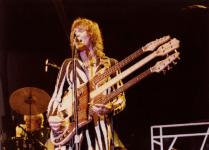
ImageThe transition to the second half of the song begins with a split-second of silence, before a single note of White’s tuned percussion blends into the first pluck of a harp by Anderson.   From an initial quiet beginning, the band begins to slowly and painstakingly build tension in what is a textbook example of the technique.  White’s percussion and Anderson’s harp start this section, soon to be joined by Wakeman, who is initially playing singular notes on the church organ. 


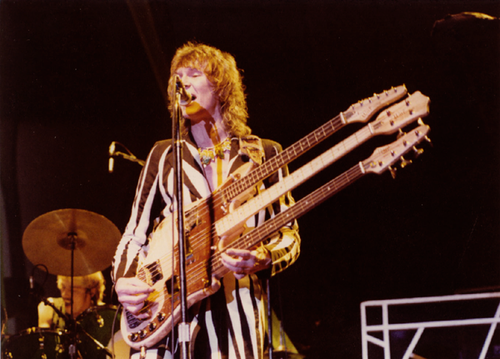
A layer is added to the tension when Wakeman begins playing slightly longer (but still relatively quiet) runs.  Squire also quietly enters, playing singular high bass notes, most likely on the six-string neck of the monster triple neck bass he uses for live performances of this song. These bass notes intensify and push the music forward, while Wakeman’s runs on the church organ slowly begin to lengthen, increase in volume, and sound more orchestral.   Choral singers also join the fray, further building the intensity, which builds like a wave to a first peak before receding somewhat.  At this point, Howe re-enters the picture on electric guitar, and leads the music to a second peak and a transition into what may be called the ‘Master of Time’ section of the piece.  The build-up from the initial plucks on the harp to this point is powerful stuff, very mesmerizing and very emotional. 

I have a personal anecdote I would like to share to illustrate the emotional punch of this section.  In 2002, I attended my sixth Yes concert at an excellent Austin venue called The Backyard.  I went with several former co-workers, including a friend of mine named Cheryl.  While Cheryl is not a prog rock fan per se, she is much more of an astute listener to music than the vast majority of people.  Musically, she is “switched in”.  Toward the end of the concert, Yes performed ‘Awaken’.  During the portion described above, I was mesmerized as normal, but for some reason I looked over at Cheryl standing next to me to gauge her reaction.  Tears were streaming down her face, which was transfixed to the stage as she was as absorbed in the music as I had been just before turning my head.  Amazing.  I remember thinking “she gets it”, and was very impressed at that.  Among my friends and acquaintances, I have musically usually been an outlier, as few of them have been interested in prog, and certainly not anywhere to the same degree as me.  Some of them have even heard ‘Awaken’ in my presence and have given me strange looks that say “what the heck is this?”  Yet here was Cheryl, on her first listen to ‘Awaken’, completely getting the gist of this incredible composition.  As someone who had known this little secret for a long time, I found it very gratifying to see her reaction with no prompting or no explanation from anyone else – only the music was talking.  It’s a moment I will not soon forget.

As the music progresses through the ‘Master of Time’ section, Anderson sings several verses and the tension continues to build, finally resolving itself with a shattering climax, with Wakeman’s church organ and the choral singers at the forefront.  The dreamy section from the beginning is then reprised, and the final line of lyrics is one of my favorites from the entire Yes catalog: “Like the time I ran away, and turned around and you were standing close to me.”  Howe then brings ‘Awaken’ to its final conclusion with some playful electric guitar lines.

Wow.  What a piece of music.  In my opinion, the finest fifteen minutes plus of music Yes ever committed to any recording medium.  This is not to take away anything from some of their other masterpieces (and there are several), but to extol the virtues of this incredible piece of music.  And by the way, I am in some good company when I surmise that this is Yes’s best work.  None other than Jon Anderson himself has stated “at last we had created a Masterwork” with regard to Awaken.  On the 1991 documentary ‘Yesyears’, Anderson refers to “the best piece of Yes piece of music, Awaken” and further states that it is “everything I would desire from a group of musicians in this life.”  I’d say that’s a pretty strong endorsement.

In progressive rock circles, many references are made to the various sub-genres. Yes music (at least their 70’s output) is most often classified as symphonic progressive rock.  No album exemplifies this term more perfectly than ‘Going for the One’, and no song exemplifies it more than ‘Awaken’.  Other Yes works, such as the previously mentioned ‘Close to the Edge’ and ‘Gates of Delirium,’ possess the same scope but not the same instrumental timbre.  ELP had some symphonic works that were their own interpretations of existing classical compositions while their own magnum opus, ‘Karn Evil 9’, sounded high tech for its time.  ‘Thick as a Brick’ by Jethro Tull is certainly symphonic in its scope, and while great in its own right, has more of a folky feel than symphonic.  In contrast to all of these, on ‘Going for the One’, Yes has created original compositions that, in many parts, could be easily mistaken for classical symphonic music by those not otherwise familiar with this type of music.   A perfect fusion, you might say.

I’m still struggling to come up with the other four or nine or however many albums I need to complete my desert island disc list.  And being immersed in the midst of a second golden age of progressive rock as we are now, completing that list will only get tougher due to the cornucopia of excellent new releases.  But I can say without any hesitation, without any equivocation, whatever final form that list takes, it will most definitely include ‘Going for the One.’

Kingsbury Manx – Bronze Age

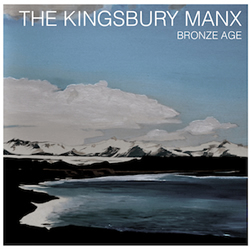
KingsburyToday the Kingsbury Manx, a band from Chapel Hill, NC that have been around now for over a dozen years, release Bronze Age, their sixth album.  Listening to Bronze Age for me is a little like going back in time, and like coming home, for a couple of reasons.  I bought their first album (first on CD, then on vinyl) when it was released, and saw them live, in 2000.  It was just so impressive, from tunes to words to cover art, a baroque folk rock effort with a vibe that can only come from a certain protectiveness of sound — this was a local band with a ton of creativity and a unique, wholly-formed voice who knew how to use it.  For me they were a sort of an end, and among the greatest, of a continuum of North Carolina bands I had familiarized myself over the previous seven years, and a distillation of some of the best of 90s chamber pop.  Every part was developed, and there were no weak links.  Sean McCrossin, then owner of Chapel Hill’s best record shop, CD Alley, made me buy their first record because he knew my tastes (and, okay, because Ryan, Kingsbury Manx’s drummer worked at the shop, which he bought from Sean some years back and now sustains with the same completeness that Sean created).

I lost track of what was happening in the local scene after the Kingsbury Manx released their second album, which didn’t quite capture me in the same way as their debut.  I got caught up, like one does at that age, in a blur of personal and professional development, had kids, moved away.  Good things, but there’s a losing of touch.  And some things that I may not have realized were as essential as they turned out to be — vinyl LPs for instance, with beautiful cover art — return to focus with reminders like unpacking the LPs upon moving back, and listening to new records like Bronze Age.

For maintaining the imprint of its own style throughout, this album, like the Manx’s debut, covers a remarkably broad territory of sound and feeling, ranging from a kind of Grateful Dead loose-ness on “Handsprings” to the majestic, motorik psych pulse of “Custer’s Last”, which calls to mind the Dusseldorf bands of the 1970s.  There is a slight nod to early Pink Floyd here and there, but not an over-reliance and more as an acknowledgement from the American South.  Guitarist Bill Taylor’s relaxed voice and words, and Paul Finn’s keyboard work (with heavy doses of Farfisa, but not used as you might expect) are dominant, with guitar and bass coloring and filling the songs more than guiding them.  I mentioned Ryan Richardson, the drummer.  His work is astounding, restrained — not merely timekeeping and not fussy or busy either, but riding the tune and at times turning its direction.

The lyrics are oblique vignettes, working like a stack of a disarranged photographs rather than as narrative — and this is not to cheapen them or do them an injustice, because while songs resist forced poetry, the writing here molds itself to the song, and achieves a necessary structure complementing words and sound.

I’ve listened to this record through three times now, and, believe me, it’s a gift.

Band website: http://kingsburymanx.com/

Order via the usual outlets or here: http://www.odessarecords.com/artists/manx/

Y-Prog Cancelled

Sad news tonight from organiser Kris Hudson-Lee of the cancellation of the weekend part of Y-Prog here in the UK, intended to be Yorkshire’s first progressive rock festival.

Saturday 15 March was to feature Dec Burke, Also Eden, IOEarth and The Enid; Sunday 16 March had Crimson Sky, Knifeworld, Manning and It Bites on the bill. Thankfully, the Friday night show featuring the mighty Riverside goes ahead.

I have no further information on the reasons for cancellation, but I presume poor ticket sales are at the heart of it. Y-Prog may have been hit by the subsequent announcement of HRH Prog, a bigger festival at a more glamorous venue a few miles away, just three weeks later.

It’s a salutary reminder that, despite prog’s resurgence, the audience remains finite. Too many events in too short a span of time and some are going to struggle.

This Was Blodwyn Pig

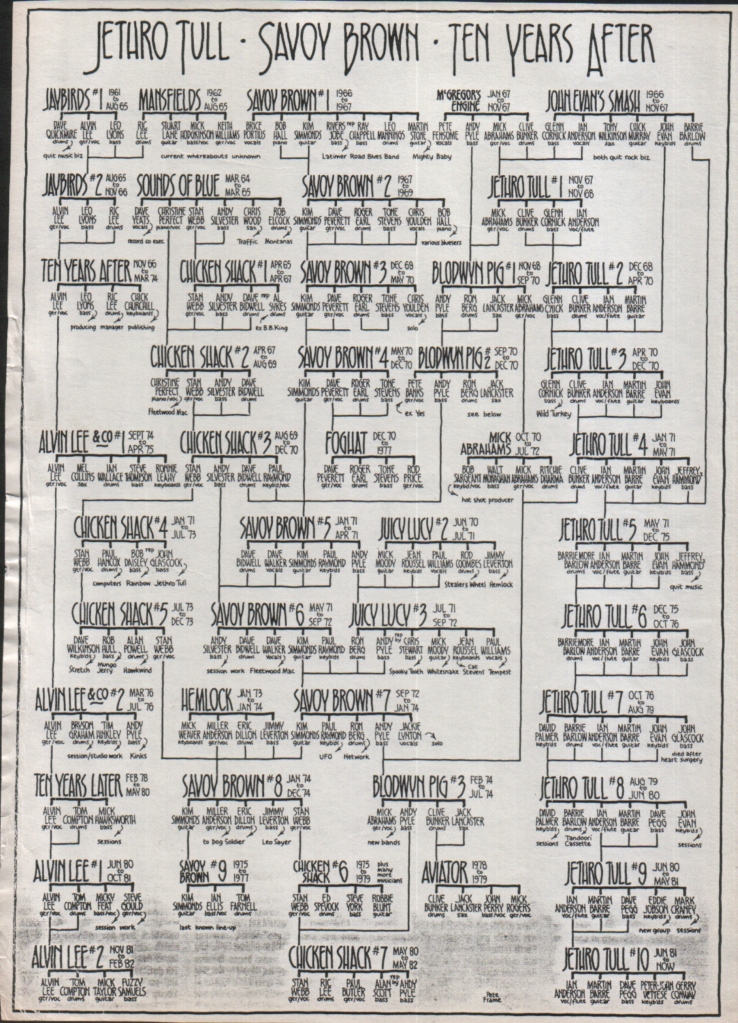
There are gateway albums, records that lead to others, elaborations that must be followed until time or economics interrupts.  I could name dozens of them that functioned like this for me over the years.  Aided and abetted in the Web-less years by the Rolling Stone Record Guides (mainstream rock/punk/singer-songwriter), the Trouser Press Record Guides (alternative and indie), and Pete Frame’s monumental Rock Family Trees,

Image
Rock Family Tree for Tull, Blodwyn Pig,  et al.

I would often spare no effort in tracking down an LP or CD I was interested in, IF the gateway record that connected me to it spoke to me in tongues, the way such records should.  So Syd Barrett’s Madcap Laughs would eventually lead me to the Television Personalities’ Chocolat Art and the Soft Boys’ Underwater Moonlight, Julian Cope’s Peggy Suicide and his contribution to a Roky Erickson tribute would lead me to the Thirteen Floor Elevators and on to Thin White Rope, and Rainbow led me back to Deep Purple and forward to Dio.  If I were to name one album, though, that really blew the doors off, it would be a greatest hits compilation, and not a great one at that:  M.U., The Best of Jethro Tull.  While Jethro Tull is often lauded for its prog side, which is substantial, M.U.was my introduction to Tull’s sympathy for folk music, opening for me the British folk revival by making me care to know about the use of traditional folk song forms in modern music.  By leading me to Steeleye Span and Fairport Convention, with whom Tull had some connection, particularly later in the 1970s, Jethro Tull created trails for me to follow that are seemingly endless and that I’m still following thirty years later.  That’s not the end of it.  Jethro Tull also took me on the short, worthwhile journey to Blodwyn Pig.

But first there was “Aqualung.”

Two significant things happened to me in 1982.  My family moved back to Texas, after a 10-year absence.  I was 15 and completely lost, having spent the decade and my impressionable childhood growing increasingly fond of my Rocky Mountain home of Salt Lake City.  As important, I also discovered Jethro Tull, via the now (less so then) classic rock perennial “Aqualung.”  To my young ears it sounded like nothing else on the radio — it still doesn’t, come to think of it — and I spent probably a couple of months trying to figure out who the band was that could conjure such riffs, dynamics, and lyrical weirdness.  At that time the song was a little over a decade old, which is not much more than one rock generation (consider that we’re over two decades removed from Nirvana’s Nevermind, and that lends some perspective).  And it was well-known enough, of course, that FM djs didn’t feel compelled to announce it.  So who was this band, and how could I find out? Pre-internet this was a challenge, you know? Particularly in a new town, with no friends, no car, and a sister whose idea of rock was the Flying Lizards’ remake of “Money.”  I may have finally resorted to going into one of Ft. Worth’s vast record stores — Peaches or Sound Warehouse — and singing the first line to one of the clerks.  I can’t remember how, but I got ahold of M.U. The Best of Jethro Tull, and spun it endlessly (although it still sits on my record shelf and is quite playable — viva La Vinyl!).  In fairly short order I bought Tull’s first four LPs, and to this day I think them the single strongest, consistently interesting run of albums produced by any of the “classic rock” bands (I’m arguing this in my head — maybe Zeppelin matched it — also, while I like their fifth album, Thick as a Brick, it saw Tull make a major departure into its second phase).  The fourth record, Aqualung, is the capstone of the band’s first phase, an unintentional concept album that hangs together because of the wholeness of its sound and approach.  For my taste, this is the perfectly produced rock record, big but not slick.  Its feel is its concept, there is a rustic electricity to it, a Hendrixian Elizabethanism, with the down-and-out character of Aqualung rattling his last locomotive breath.

BLODWYN_earlyTull
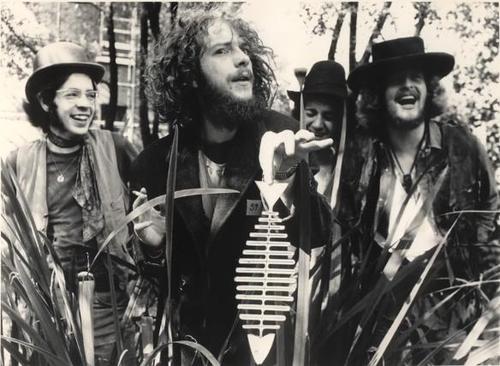
Glenn Cornick, Ian Anderson, Clive Bunker, and Mick Abrahams in Jethro Tull’s This Was lineup.

The same could be said, to a lesser degree, of each of the previous three albums, which were bluesier, jazzier, and indebted as much to the initial influence of guitarist and singer Mick Abrahams as to flautist/guitarist and singer Ian Anderson.  While Anderson became Tull’s guiding spirit and remains so to this day, Abrahams only hung around for This Was, an engagingly odd, loose take on the British blues boom defined in large part by Abrahams’ “Move on Alone” and his take on “Cat’s Squirrel.”  That his replacement, the wonderful Martin Barre, took the next two records to shrug off Abrahams’ influence on the band and find his sound, while still producing great music, is a testament to both Abrahams and the strength of Tull as a band during its 1968-1971 period.

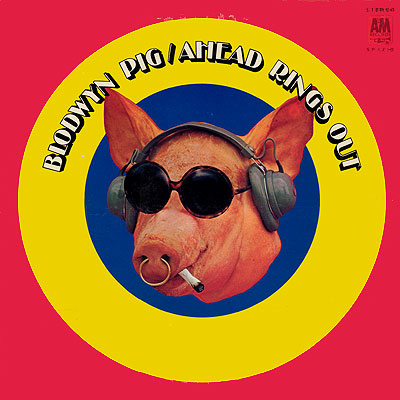
Why Abrahams left has always been chalked up to a disagreement with Anderson over the direction of the band, but this direction didn’t change significantly on Tull’s Stand Up or Benefit, at least to my ears (as others point out, folk themes and progressive structures were increasingly adopted, but slowly).  Abrahams, I think, saw his chance to be sole band leader following the success of This Was, and took it.  He formed Blodwyn Pig, and produced 1969’s Ahead Rings Out and 1970’s Getting To This, both minor classics that are the equal of Tull’s first two albums.  In the catalog of sadly overlooked records, they are also prime examples of what happens to albums by musicians who leave their hugely successful bands after one record, thinking they were the prime movers.  Whatever was in Ian Anderson’s tea, he gave Tull the hits that eluded a solo Abrahams, despite Blodwyn Pig’s moderate success in England and America.  But Blodwyn Pig and Abrahams cannot be denied what they achieved apart from Tull.

BLODWYN_AheadRingsOutCover
Cover of Ahead Rings Out, in all its, um, glory.

Ahead Rings Out begins with the jump’n’jive of “It’s Only Love,” a horn-inflected piece of dance blues straight out of B.B. King.  Right away it is apparent that, while he stamped Jethro Tull’s first record with his playing and singing, in Blodwyn Pig Abrahams is going for a fuller sound, and up against the other comparable British blues rock guitarists/vocalists/bandleaders of the period — Eric Clapton, Peter Green, et al. — Abrahams holds his own.  Reed man Jack Lancaster, meanwhile, creates his own horn section (he’s pictured on the inside cover playing soprano and tenor simultaneously), which he elaborates on more elegantly in the slow blues “Dear Jill,” again featuring thoughtful, tasteful soloing by Abrahams and a heavy bottom from bassist Andy Pyle.  “Walk on the Water” could be off of Tull’s Stand Up, and continues the rock and brass.  Jack Lancaster’s work gives Ahead Rings Out its signature, and to my ears creates, in some fashion, the template for Gong’s admirable Radio Gnome trilogy, minus the ambient stoner bits (“What’s left after the ambient stoner bits?” you could justifiably ask).  That Abrahams could create Blodwyn Pig and open up space for Lancaster, where Ian Anderson’s flute would have played this role in Tull, is a testament to Abrahams’ care for the sanctity of the song — whatever ego drove him from Tull is not driving this record.  It isn’t just the Mick Abrahams’ show.

“See My Way” is the album’s center, its Bolero break a nod to other blues rock albums of the period, for what self-respecting band didn’t riff on that chestnut at the time? The balance of the record is a sampler of British country blues and jazz of the period, strongly reminiscent of Peter Green’s Fleetwood Mac, with pastoral acoustic slide pieces like “Change Song” paired with riff rockers like “Summer Day.”  Again, though, Lancaster’s layered sax work sets the album apart, driving, charging, soloing.  It’s a voice that was often lost in rock bands evolving out of the British jazz/blues scene, and it’s agile use here is in welcome contrast to strictly guitar-centric albums of the period.

BLODWYN_groupPic
Blodwyn Pig: Jack Lancaster (sax), Mick Abrahams, Ron Berg (drums), and Andy Pyle (bass)

It becomes clear on Getting to This, which is a respectable second effort, that while the sound has gotten heavier, Abrahams has perhaps run out of ideas.  The album opens strong, with “Drive Me,” and throughout offers the same guitar-and-horn driven rock that made Ahead Rings Out so satisfying.  But…the soaring, Tull-ish “Variations on Nainos” is spoiled in its final moments by a joke-ishly gargled vocal — I appreciate a sense of humor, but why bring it to such a gem of a song —   “See My Way” is inexplicably included again, and Abrahams revisits his signature take on “Cat’s Squirrel” with “The Squirreling Must Go On,” which is expertly wrought and totally unnecessary.  Nonetheless, I think Getting to This can be considered of a piece with Ahead Rings Out, and even if Abrahams betrays an over-fondness for the template he hammered out with Tull on This Was, there is no denying the strength of the blueprint.

Abrahams has soldiered on through the years, recording off and on, reviving Blodwyn Pig here and there, and even re-recording the entirety of Tull’s This Was.  Living in the Past indeed.  Yet it’s hard to argue with such spirit, and, having the opportunity to see Abrahams play in a London pub in 1991, I can say that it appeared the man was having a good time.  He also enjoys what seems to be an amiable relationship with his old bandmates in Jethro Tull, a group he defined before moving on alone.

On the band’s website, he is profiled with a warm, respectful humor: “Mick was born in Luton, England, on the 7th April, 1943, which was a very long time ago. There was a war still going on at the time, which may explain why Mick can be a cantankerous old git and a right, proper and loyal gent at one and the same time…. Mick is now very, very old — even older than Martin Barre — and likely to out-live all of them.”