The Moral Law of Big Big Train

by Craig Farham

Music is a moral law. It gives soul to the universe, wings to the mind, flight to the imagination, a charm to sadness, and life to everything. (Plato)

The members of Big Big Train with Dutch photographer, Willem Klopper.

Is it possible that Plato was writing about Big Big Train’s latest masterclass of musical wonder, English Electric, Part 2 (EE2)? Probably not, but two millennia before locomotives, social networking, digital recording, the global network, or austerity measures in his beloved city state, Plato certainly knew a thing or two about the power of oscillating waveforms to connect people.

Did the members of Big Big Train read Plato before embarking on their epic journey to morph their observations of contemporary and historical people and events into oscillating waveforms of power and beauty? Again, probably not. But EE2 certainly fits Plato’s moral law to a tee.

Beautifully crafted from the opening piano chords to the final fade out of a single piano note, EE2 continues the journey begun on EE1, my album of the year in 2012, into the heart and soul of industrial England, its people, and the surrounding countryside. The album weaves tales of steam trains, ship-building, coal miners, a second chance at love, the custodian of a historical monument, the British landscape, and butterfly collections as a metaphor for life and death, with musical arrangements that range from sparse to massive, light-hearted to intense, but are always melodious and warm. The album has the same lush production and attention to detail as EE1, with exquisite use of brass band and strings beautifully complementing the electric instruments. The songs range in length from just under 4 minutes to nearly 16 minutes, and every song is exactly as long as it needs to be – no filler, bloat, or needless noodling.

The addition of Danny Manners as a full-time band member on piano, keyboards and double bass has lifted an already impressive ensemble another notch, and I’m delighted that the compositions on EE2 have given David Gregory more scope to develop his exceptional guitar solos. The rest of the band are also in fine fettle – Greg Spawton’s basslines are on a par with those of Gentle Giant’s Ray Shulman (and his compositional skills are equally impressive), Nick D’Virgilio’s drumming is peerless (he recorded the drum parts for both EE1 and EE2 in three days…!), Andy Poole has stepped forward from the producer’s chair to contribute backing vocal, guitar and keyboard parts, and Dave Longdon, who I think has the best voice in modern prog, contributes massively with his flute work and a wide array of sundry instruments, including banjo, keyboards, guitar, cutlery and glassware(!), in addition to his great songwriting. There is also a large cast of supporting musicians, including Dave Desmond, whose marvelous brass band arrangements are an integral part of the unique BBT sound, Rachel Hall on violin, and The Tangent’s Andy Tillison on keyboards.
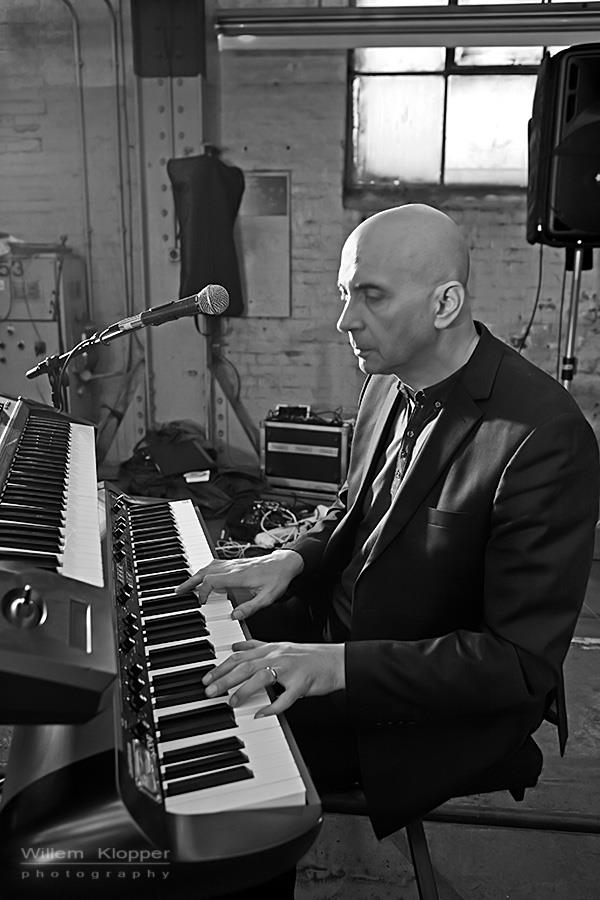
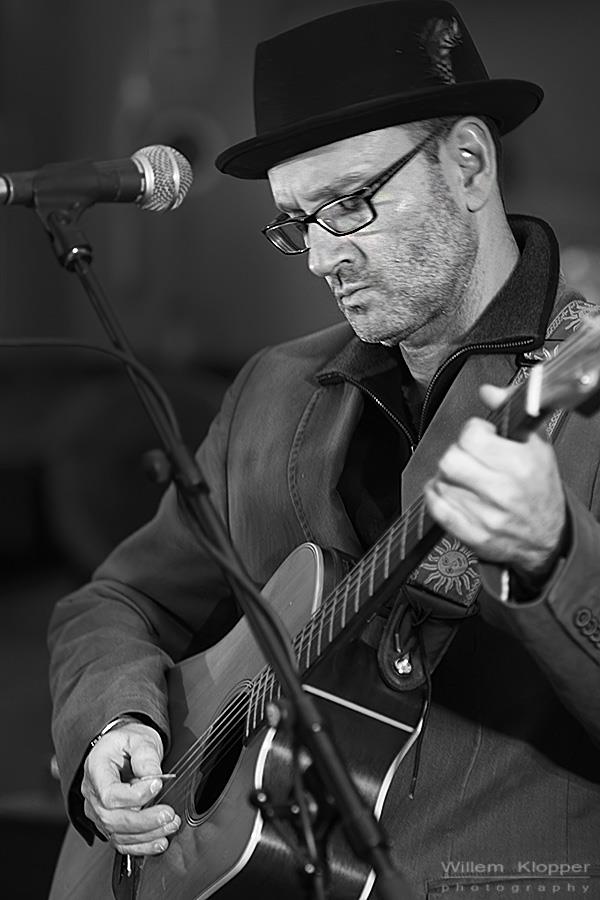
The newest member of Big Big Train, the extraordinary Danny Manners.  Photo used by kind permission from Willem Klopper.
The newest member of Big Big Train, the extraordinary Danny Manners. Photo used by kind permission of Willem Klopper.

Although EE2 is the second half of a double album released in two separate parts, it stands on its own as a superb example of the vibrance of the new wave of progressive music, which is finally lifting itself out of the shadow of the so-called “golden age of prog” in the 1970s. To listen to EE2 on its own, however, is to miss out on half the fun. EE1 and EE2 should be seen as a single body of work, a superb collection of songs and an important milestone in the history of modern music.

English Electric by Big Big Train is a moral law that demands to be upheld. To paraphrase a comment I made on the BBT Facebook site, these are albums to cherish – I’ll be listening to this music as long as my cochlear apparatus is capable of responding to their oscillating waveforms and connecting my soul to the universe…

***

[Dear Progarchists, thank you so much for letting us enjoy this four-day love fest of all things Big Big Train.  It’s been quite an honor.  Craig’s post–his inaugural post as an official citizen of the Republic of Progarchy, by the way–concludes our roundtable reviews of the latest BBT masterpiece, English Electric V. 2.  To order it directly from the band, go to www.bigbigtrain.com/shop.–Yours, Brad (ed.)]
What’s in a Name?: Quite a lot when it comes to Big Big Train

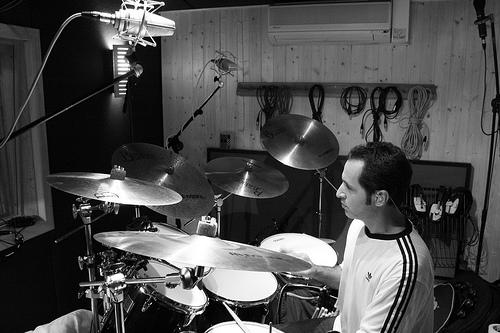
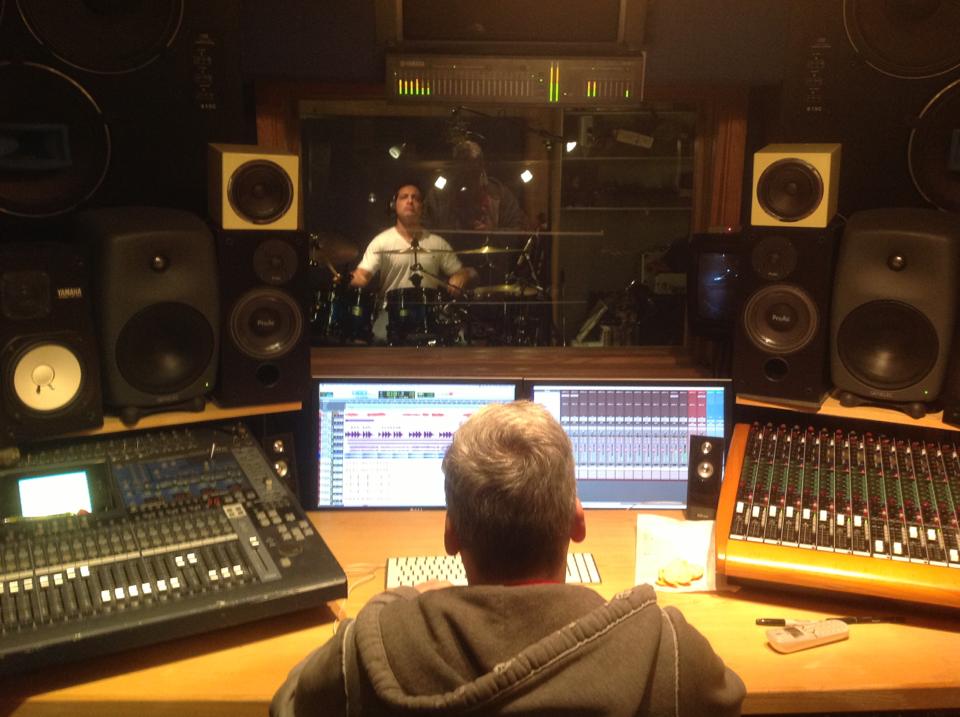
Aubrey and D'Virgilio, courtesy of the uber-great Willem Klopper.
Aubrey and D’Virgilio, courtesy of the uber-great Willem Klopper.

by John Deasey

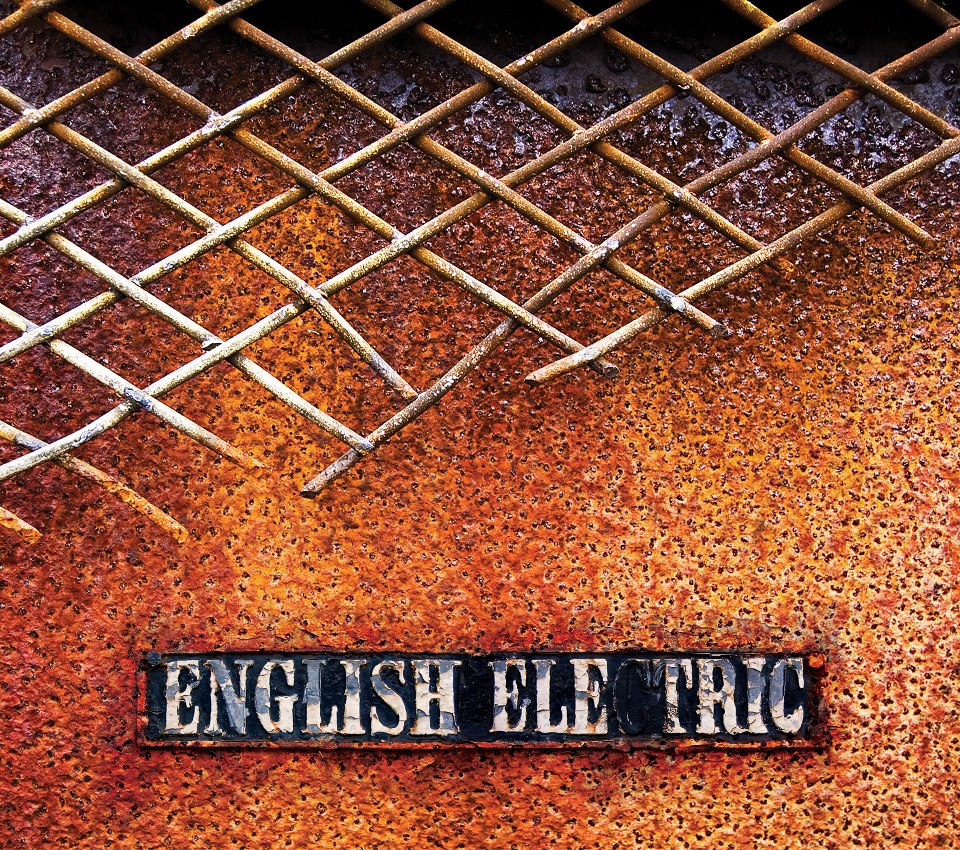
Just looking at the artwork of EE2 and taking in the song titles is a pleasure all of it’s own.

I savour the industrial art and the titles such as ‘Swan Hunter, ‘Keeper of Abbeys’, Curator of Butterflies’, ‘East Coast Racer’ ……

To those with a passing knowledge of English industrial heritage, it goes without saying we are back in the land of The Underfall Yard, back to The Last Rebreather and back to the land and communities that so shaped our country.

Big Big Train with this, the second part of English Electric,  take us further into the arms of working fathers, loving sons and warm families to extract beauty from industry and agriculture like no other art I know.

With a gentle piano introduction along with a typical BBT signature motif that will be repeated, we are soon driven by Nick d’Virgilio’s intricate drum patterns along the same tracks the famous Mallard steam train once flew. A stunning tour de force restlessly moves along evoking the men who rode the plates of this famous flying machine. The overall sound returns to the rich warm tones of The Underfall Yard, beautiful bass patterns underpinning a whole host of instruments including viola, tuba and cello.

David Longdon has never sounded better and the guitar fills from Dave Gregory are typically tasteful and restrained.

Big Big Train are masters at creating great soundscapes that swell and build and finally spill over into something quite beautiful.  Think of the Victorian Brickwork ending where I defy anyone not to shed a tear as the guitar overplays the brass section to create a crescendo of beauty.

Well, at 9.24 into ‘East Cost Racer’ they only do it again, and do it better, and do it in such stunning style it really is hard not to find a tear escaping …..

If the album finished at the end of this 15 minute track I would be more than delighted – I would be ecstatic. But you know what ?  The beauty just keeps on coming …..

Just as we’ve finished the great Mallard story we taken into the magical and harsh world of ship building at the Swan Hunter shipyard

A melodic and rather gentle opening, reminiscent of the whole feel of EE1, tells of the father to son continuity of such industries but with the sad caveat

Tell me what do you do

When what you did is gone

No one throwing you a lifeline

How do you carry on?

‘Swan Hunter’ is a stately track that has simple elegance in it’s phrasing and tones and once again has a gorgeous build-up and release towards the end combining brass, guitars and vocals.

From the shipyards we move to the coal face with ‘Worked Out’ and again we have this magnificent connection with time, place, community and industry. Father and son, working together, regular shifts, routine, warm and generous folk who forged communities but realise “.. we had our day, our day is over”

Despite the subject matter there is a real drive to this track with some sublime moments where viola, cello and guitar inter-act to build a warm wall of sound. Flute interjections from David Longdon lead into a real jam type session where Dave Gregory adds subtlety and skill proving that a masterful guitar solo does not need a million notes.

After such an astonishing triumvirate of tracks, some space is needed and breathe needs to be drawn.

We are given this chance with ‘Leopard’ which, if I am honest, does not work for me just yet.  As a breathing space though, it is perfect ….

The pace picks up again with ‘Keeper of Abbeys’ – a joyous and infectious track in the style of Judas Unrepetant with a drive, vigour and melody to die for which at 2 minutes in, goes places where other musicians must dream about. A typically sweeping refrain with soothing organ and cello sweeps into a section where you could be forgiven for thinking you had stumbled into a Greek taverna or a Russian vodka bar. Stoccatto guitars, flutes, viola and an incessant drum beat will have you tapping along infectiously then you are swept up unknowingly into the most beautiful choral-backed guitar solo you have heard which builds and builds into something far greater than I have words for.

The next track, ‘The Permanent Way’ is a real surprise.

Big Big Train have a knack of returning to refrains throughout their albums – think of the opening to The Difference Machine, or Evening Star for example

A pastoral opening about the farmer working in the fields soon gives way to a soaring re-working of Hedgerow which takes you by surprise on first listen as you are suddenly thrown back to EE1 and thinking ‘Blimey – where did that come from !”  It’s stunning.

And then – wow – we suddenly have the fantastic soaring refrain from The First Rebreather.

This is like a celebration of everything that is so warm, honest and true about Big Big Train. They are making music they love and it shines through like the brightest light.

‘The Permanent Way’ is an encapsulation of everything that is so perfect about Big Big Train – recurring motifs, connecting with land and industry, streams, hills, high moors, dry stone walls, far skies, the mark of man.

I cannot recall music that so connects with time, place or community that this does. As I live in an old industrial town surrounded by beautiful countryside filled with relics of a bygone age it maybe resonates clearer for me as it seems the music was set to to the sights and sounds that surround me.

From the BBT EEv2 booklet.  Photo by Matt Sefton.
From the BBT EEv2 booklet. Photo by Matt Sefton.

Now if you thought ‘Hedgerow’ on EE1 was a good album closer, wait till you hear ‘Curator of Butterflies’

I cannot think I will hear any music more moving, relevant and genuine than this superb album for a long time.

That is all I can say. Simply stunning and beautiful.

A Peerless Evocation of English History: BBT English Electric Vol. 2

by Ian Greatorex

A joy to listen to and, as always, a peerless evocation of English history, both rural and industrial.

The musicianship is impressive and the arrangements for woodwind, brass and strings are excellent.

David Longdon’s vocals are superb, so smooth and pitch perfect, but there are also many beautiful harmonies on this release.

BBT have an uncanny grasp of when and where to add the astonishing array of instruments being used; we have harp, violin, viola and cello; we have trumpet, trombone, euphonium, tuba and cornet; we have recorder and flute; we have piano, organ, mellotron and synthesizer; we have accordion, dumbek, cajon, marimba, vibraphone and tambourine; we have 6 and 12 string guitars, sitar and mandolin, banjo, bass and double bass. And even cutlery and glassware are played . It’s no wonder they never play live!!!

ee2So what do the tracks bring us:

East Coast Racer – an epic 16 min track about the railway industry. I love the way the music captures the ‘feel’ of the workers at their craft and the sense of the Mallard’s speed. It’s almost as though you are on the train itself, racing through the English countryside.

Swanhunter – a story about the community impact of the shipbuilding industry on the Tyne. A very mellow track with stunning harmonies and beautifully arranged brass band.

Worked Out – we move to the coalmining industry; step up the marimba and flute; unusually rocky guitar and keyboard solos.

Leopards – a song about love, people and change. This is my favourite track on the album. At under 4 minutes, short by BBT standards. Arise the violin followed by acoustic guitar. This upbeat song is beautifully soft and gentle and includes some more marvellous harmonies. A magnificent piece of music. In the ‘70s this would have been a great single.

Keeper of Abbeys – based upon a real-life guardian. An accordion intro draws one in nicely (I love the accordion!); there’s a classic fast, folksy fiddling about in the middle section; and is that a sitar?….lovely stuff.

The Permanent Way – covering the everlasting and essential importance of people working on the land. A charming mix of song and narration; very atmospheric with some great mood changes.

Curator of Butterflies – with an exquisite piano opening and full of delightful melodies. This track has palpable emotional power and intensity (it’s a bit of a ‘hairs standing up on the back of the neck’ moment for me). Making this the concluding track was a masterstroke…a perfect ending.

Another wonderful journey into the world that is Big Big Train. One senses on every track a meticulous attention to detail in what are dense arrangements. It takes a number of listens for the beauty of this album to be revealed. Rob Aubrey’s production mix is superb with the ‘cornucopia’ of instruments all getting their fair share of the sound pie. A good hi-fi system or a set of quality headphones is essential. And don’t download as mp3 files as this music demands lossless format only!

There are exceptional musical skills on display on EE Part 2 and the story-telling is worthy and beautifully told. From a purely objective point of view this is an astounding piece of work, just like Part 1 and I found it an emotionally compelling experience. I am in no doubt it will be a contender for the Prog album of the year. If you liked Part 1 and wanted more of the same then it’s a huge understatement to say that this will appeal. Usually I like music that is both heavy and ‘edgy’ and explores the ‘dark side’ of human nature (I’m more an Oceansize man) but I was captivated by this album.

Music is an intensely personal experience and EE Part 2 pressed almost all of my buttons.  However, I was hankering for something slightly different; a musical and lyrical progression of sorts. English Electric generally uses past events to discuss universal themes such as love; work; communities; unsung heroes; the importance of maintaining monuments of our past. I would really like the band to lyrically explore more contemporary social and political themes such as the internet age; globalisation; the aging population; business ethics etc. and hence produce an album that would naturally have a harder, ‘edgier’ feel. Of course they have the talent to do this and I believe this would attract a wider fan base by making their music more relevant to a younger audience.

None of my comments above can detract from the superb quality of this release. Lock the door, turn the off the lights and even close your eyes. Let nothing disturb you from enjoying the astonishing beauty of this album.

It just gets better. . . BBT EEv2

ndvby Erik Heter

It Just Gets Better …

As great as EE Pt. 1 was, BBT might have exceeded its excellence with EE Pt. 2.  The second half of this double album opens with the fantastic ‘East Coast Racer’, which is the only epic-length piece of the entire set.  It’s a doozy too, with a lot of great dynamics and enough change to keep it interesting over its entirety.  It’s my favorite piece of the EE set.

The next track, ‘Swan Hunter’, has a very melancholy feel, but also has some of the best lyrics on the album.  This is one of the more emotional pieces on the album.

‘Worked Out’ follows, and has a more upbeat feel, and a great chorus.  It also has a great instrumental break that includes some great flute playing and a Tull-like feel, and closes out with some good old fashioned proggy synth.

‘Leopards’ has a chamber music-like beginning before settling into acoustic guitar on top of some violin.  It has a very lazy, easy feel too it, and gives me an image of lounging outdoors under a tree on a sunny and mild spring day.

The instrumental portion toward the end of ‘Keeper of Abbeys’ has an excellent mix of sitar and violin, and illustrates something at which BBT excels like no other – taking instruments not typically associated with music coming from England (e.g., the sitar here, the banjo on ‘Uncle Jack’) and integrating them into something that has an unmistakably English sound.

‘The Permanent Way’ reprises a few themes and lyrics from ‘Hedgerow’ and ‘The Great Rebreather’ and serve as a good reminder that EE Pt. 2 is part of a larger whole.  In between there is some great proggy organ playing,

‘Curator of Butterflies’ closes out the album.  Slow and mellow with a lot of string, it includes some nice guitar work to close out the song.

bbt ee2Overall, this is another outstanding effort, and will be at or near the top of many “Best of 2013” lists before it’s all over.  I might quibble with ‘Curator’ being the closing track instead of its predecessor, but that’s a minor quibble to be sure.  For me, this is at least as good as EE Pt. 1, and with the inclusion of ‘East Coast Racer’ at the beginning, I’d have to say its maybe a bit better.  In either case, it’s a must-own, along with its counterpart.

Chronometry, Cosmograf, and Perfection: The Man Left in Space

By Brad Birzer

cosmografAs you’ve probably noticed, we’ve been having a Big Big Train-love fest for the past several days at Progarchy.  Even our criticisms (well, not mine; but I won’t point fingers) have been written out of love and respect.

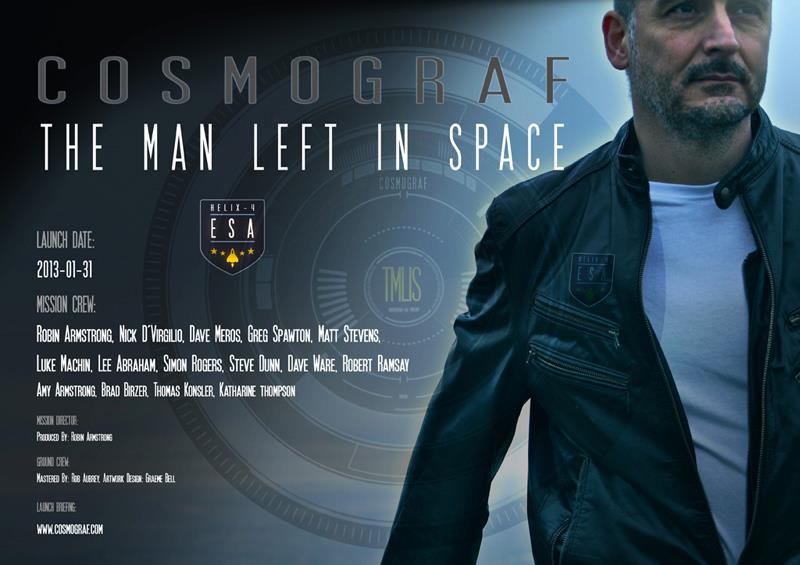
Another recent release that deserves a massive amount of attention is the fourth cd by Robin Armstrong, writing under the name, Cosmograf.  Yes, it deserves a MASSIVE (Ok, I’m yelling at you, fair reader; it’s not personal, I promise!) amount of attention.  Massive.

Following Cosmograf’s history, it comes across far more as a project than a band.  I’m not sure Robin would put it this way, but this is how it strikes me.  Each album has been a concept with a variety of guest musicians.  For this current album, The Man Left in Space, Robin has chosen the best of the best: Greg Spawton (who wouldn’t love this guy), Nick d’Virgilio (giving Peart a run for his money since 1990!), Matt Stevens (a young guy already inducted in the Anglo-Saxon pantheon of guitar gods), and other brilliant folks such as Dave Meros (ye, of the Beard!), Luke Machin, and Steve Dunn.  Robin knows how to get the absolute best, and he knows how to bring the best out of his guests.  Then, add the additional production of the ultimate audiophile of our time, Rob Aubrey.  Can it really get much better than this?  Not really.

By profession, Robin is a master of all things time-related.  He’s a watch dealer and a watch repairman.  I find this so very appropriate.  What better thing for a musician and composer to be than to be a master Chronometer (I have no idea if this is the proper term, but I like the sound of it).  Chronometrician?  Ok, I’m floundering here, but I assume you get the point.  Precision, mystery, time, eternity, space, place, humanity. . .  Robin Armstrong. Continue reading “Chronometry, Cosmograf, and Perfection: The Man Left in Space”

A Movie Soundtrack: BBT’s English Electric V2

Nick d'Virgilio, courtesy of Willem Klopper.
Nick d’Virgilio, courtesy of Willem Klopper.

by Craig Breaden

Bedeviled or blessed, progressive rock’s classic bands took it upon themselves to discover what can happen when rock frees itself from the restraint of the three-minute single.  And because Procol Harum, Yes, Genesis, King Crimson, and ELP didn’t merely see what would come out of jamming, but meticulously planned and executed album sides worth of material, there was an idea that these bands were making some sort of…progress.  Codified as “prog rock,” the body of work that emerged from the late 60s and early 70s continues to inspire failure and success in groups intent on recapturing the form, if not always the spirit, of progressive rock.

Forty-some years on, and thirty years after most of the original prog bands found that trimming their sound back to that three-minute (or so) mark could bring substantial commercial success, progressive rock is in the middle of a full-blown and full-length revival, international in scope and as layered and interesting as the first generation.  Many of the musicians associated with prog today are less revivalists than rock veterans, pursuing for years their passion with little fanfare but with fierce fandom.  One of their leaders appears to be Big Big Train.

A disclaimer:  I am one of the few Progarchist writers who was not familiar with Big Big Train during the genesis of Progarchy, which owes its existence at least partly to the enthusiasm Big Big Train inspired in its editors.  I tend to watch prog from the edges, my tastes running to the rougher cuts, the drones, freakouts and new music noise-fests.  Classically-inspired keyboard soloing — noodling — isn’t really my thing.  I like the dirty-ness of art’s residue, big messy riffs that fray at the edges with some punk abandon, like you might hear in King Crimson’s “Starless” or Amon Duul II’s “Archangels Thunderbird.” In other words, I probably lean more towards the rock than the prog in prog rock.  Which is why early listens to BBT impressed me with the musicianship I heard and the obvious dedication of the group, but left me wanting…something. Continue reading “A Movie Soundtrack: BBT’s English Electric V2”

Beyond Prog: The Authentic Voice and Art of Big Big Train

by Brad Birzer

To me, ‘progressive’ is a term which describes a genre of music. That genre emerged from the rock and pop music of the 60’s and became fully defined in the early 70’s. But what I think may be the sub-text behind your question is whether bands writing and performing music in the progressive genre need, by definition, to be striving for some sort of statement of originality in everything they do. I think not, but I am aware that many others take a more absolutist view of things and this has caused an endless debate. In The Music’s All That Matters, Paul Stump makes some very interesting observations. Early on in the book, he correctly identifies that the main problem with progressive rock is its name (he calls it ‘the most self-consciously adjectival genre in all rock’.) Another point that Paul Stump makes is about what unites the musicians of the genre. He says they have ‘a hankering after the transcendent’. I really like that phrase as it can take on a broader meaning than ‘progressive’. In Big Big Train, we combine our influences in a way, which is often original. But trying to do something different isn’t the be-all-and-end-all. What we are really trying to do is to make extraordinary music.–Greg Spawton, Summer 2012

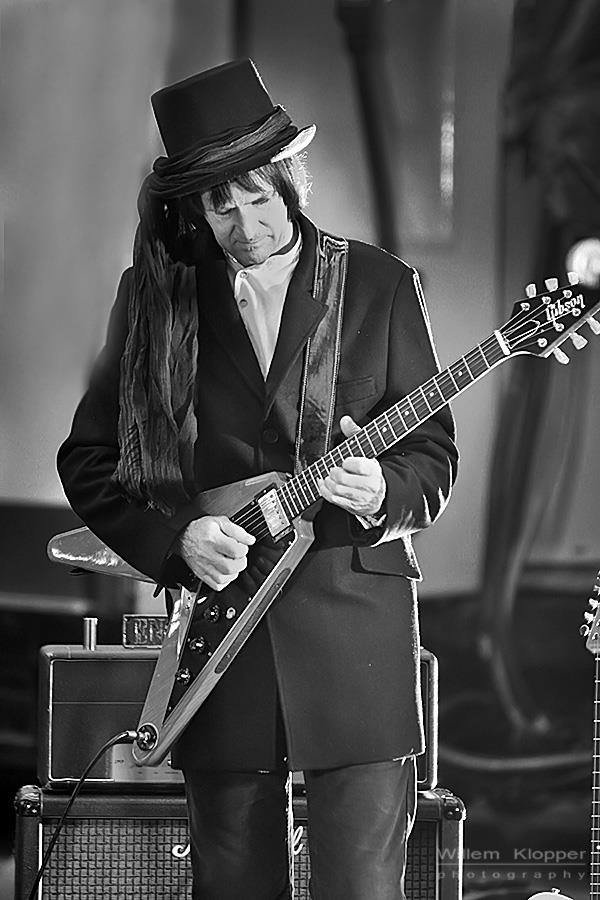
wk gregory
Photo of Dave Gregory, courtesy of the excellent Willem Klopper.

I must admit, I’m a little lost for words when it comes to reviewing the new release from Big Big Train, English Electric Vol. 2 (officially out today).  And, as my wife, my kids, my friends, and my students can attest, I’m almost never at a loss for words.  I’m sure there are times when they’d like me to be!

My problem is this.  The music is so very good, so very much beyond the bounds of normal description and descriptives, and I want in the worst way for the quality of my writing and my thoughts to do it justice.  Frankly, I’m not sure I’m capable.  Not being shy enough or humble enough, I will just jump in. . .

When I first heard The Underfall Yard, I thought music could get no better than this.  Especially listening to Longdon’s voice.  Schnikees.  Could that guy get any better?  And, those lyrics.  Who wouldn’t want to visit the Victorian Brickyard, meet Mr. Delia, dive into that watery purgatory below Winchester Cathedral, or watch electrical storms moving away from England?

Then, I heard Far Skies Deep Time.  Ok, they’d reached the top this time, for sure.  They have to have done so.  Where could they go after this?  Again, such wonder.  If I caught a plane to England, might I still be able to see Fat Billy just before he died on that beach, a bloated alcoholic with the waves calling him home?   Or, how about that English girl who tore my heart out or that other one with the berry-stained lips?  No, too late.  But, maybe, just maybe, I can be reminded that if we only have love, we have enough.

Then, I heard English Electric Vol. 1.  Ok, what to do was my first thought?  Everything I’d known and believed about music was blown apart.  Nothing had so moved me since I’d first listened to an advanced copy of Talk Talk’s Spirit of Eden back in September 1988.  Oh, Mark Hollis, where art thou?

I try to walk at least four miles a day.  I’ve been doing this much of my life, and I find the time walking absolutely necessary to keep my mind focused when I’m writing, to de-stress when I need to de-stress, to listen to fiction on my ipod, and, especially, to have alone time with my favorite music.

Continue reading “Beyond Prog: The Authentic Voice and Art of Big Big Train”

Modern Rock at Its Finest: English Electric Vol. 2

wk poole
Photo of Andy Poole, co-founder of BBT, by the brilliant Willem Klopper. Used with his kind permission.

by Frank Urbaniak

Reviewing Part Two of Big Big Train’s English Electric presents an interesting challenge-should this be considered as a Magnum Opus song cycle that just happened to be released in two sections, or should we consider EE2 as a separate and distinct release?

The good news is that EE Part Two stands on its own as a great collection of incredible compositions, interesting lyrics, and outstanding performances with more ‘space’ to develop the songs than on EE1.  The band is not afraid to wear its influences proudly on their sleeves-suggestions of Elbow, Genesis, PreFab Sprout, Radiohead and others appear and are gone in a flash, hinted at but never copied.  The instrumentation is again diverse but is not a repeat of EE1, and there is more room for Dave Gregory to stretch and embellish the song’s melodies, especially the sitar/guitar in Keeper of Abbeys playing counterpoint to the violin, Worked Out’s Tull feel, and the biting melancholy of The Permanent Way.  The production is impeccable and a delight through headphones, although there are moments I might wish for just a tad ‘less’ in the future.

EE Part Two continues to create a compelling argument for challenging the classification of BBT as ‘prog’.  The songs are so well composed and universal in themes that they could/should appeal to a wider listening audience.  On the other hand, the ‘proggers’ who summarily dismissed EE1, perhaps favoring metal/experimental or one of the other prog sub classifications (typically meaning heavier), will be hard pressed to embrace this one as well.  As an example, while Curator of the Butterflies is one of the finest ballads I have ever heard, the opening vocal ‘she likes to walk’ sound strangely like a Simon and Garfunkel tune, which won’t win over the gang who prefer their prog a bit heavier.

Continue reading “Modern Rock at Its Finest: English Electric Vol. 2”

The Permanent Way: The Music of Big Big Train

IMG_3725by Tad Wert

The long-awaited release of the second part of Big Big Train’s English Electric does not disappoint. It continues the band’s reverence and celebration of the unsung heroes of Great Britain’s past, beginning with the first track, the epic “East Coast Racer”. After a beautiful, elegiac opening featuring new member Danny Manners’ piano, the listener is suddenly hurtling down a railroad track on the exhilarating 1938 record-setting run of the famous Mallard steam locomotive. True to its subject, this 15+ minute song speeds by in no time, thanks to the propulsive drumming of Nick D’Virgilio. His stick-work evokes to an uncanny degree the clackety-clack rhythm of a train running full-bore across the countryside.

Another excellent song is “Worked Out”, a tribute to the millions of coal miners who labored underground to provide the fuel for the industrial revolution. It’s quite a rocker with a catchy sing-along chorus. David Longden’s “Leopards” is a nice change of pace, as the album turns inward to examine the conflicted emotions of two former lovers tentatively reconnecting. “Keeper of Abbeys” has one of the catchiest melodies ever written by the band, and it includes a hoedown featuring some delightful fiddle.

Continue reading “The Permanent Way: The Music of Big Big Train”

Master of All Things Spock’s Beard: Glenn Fitzgerald

ImageA huge massive gargantuan Progarchist thanks to Glenn Fitzgerald, “Master of all things Spock’s Beard,” for his incredible service to and work for the prog community yesterday.  I have no doubt that Glenn is now exhausted, and is, I hope, enjoying a weekend full of rest and leisure.  He deserves it.  Thanks, Glenn–from the Progarchists.

http://spocksbeard.com/