Virtual liner notes for English Electric—Part 2

ee2

Big Big Train is keeping the art of the album alive. We may not buy gatefold vinyl anymore, but in conjunction with our CDs or digital downloads, we can nevertheless read blog posts which function to create a set of virtual “liner notes.”

To aid you with your forthcoming enjoyment of the masterpiece that is English Electric—Part 2, here is a compilation of the virtual “liner notes” that Greg Spawton [GS] and David Longdon [DL] have made available on their blogs. And for the last three songs, I also quote from the recent Progarchy interview with the band:

English Electric—Part 2

1. East Coast Racer is about how “75 years ago, on 3rd July 1938, a streamlined locomotive called Mallard set the world speed record for steam trains, travelling at 126mph on a straight, downhill stretch of the East Coast Mainline.” Greg Spawton observes that “it wasn’t so much  Mallard but the people who designed, made, fired and drove her that interested me. And it is their tale we tell over the 15 minutes or so of East Coast Racer.
It is a story with a wonderful list of main characters; designer Sir Nigel Gresley, his assistant Oliver Bulleid, fireman Tommy Bray and driver Joe Duddington. Alongside those with starring roles was a community of engineers and railwaymen who all played a part in the making of a legend.
But, in the end, we come back to Mallard.
Émile Zola said: ‘Somewhere in the course of manufacture, a hammer blow or a deft mechanic’s hand imparts to a locomotive a soul of its own’.
In this short sentence, Zola puts his finger on the connection between the maker and the machine. Mallard has outlived its creators but in it, this company of men and the work they carried out, lives on.” [GS]

2. Swan Hunter is “a song about the inevitable changing world and how these changes impact directly upon local communities.” Inspired by a letter from BBT artist Jim Trainer to Greg Spawton, the song is an evocation of the men in Jim’s family, many of whom shared the same name; the song thus imaginatively “centres around a main character. Let’s call him Jim. Jim is now an old man and he is reflecting back on his life as a shipbuilder who worked at Swan Hunter in the Neptune Yard. Imagine Jim, sitting by his fireside and recounting tales to his son about how it all once was and how much life has changed. Jim accepts the impermanence of material things and the inevitable passing of time.” [DL]

3. Worked Out is about “the mining industry of the Midlands (which featured as a setting in Uncle Jack, Hedgerow and A Boy in Darkness on Part One).
It is difficult to contemplate the immense scale of coal mining in Britain before its relatively recent decline. In the 1920s, there were more than a million coal-miners and the number was still at around 700,000 into the 1950s. By 1994, there were just 20,000 coal-miners.
The loss of so many mines was a disaster for communities which relied on the industry for work. Some have recovered but others still suffer very low levels of employment with all of the problems that lack of work brings.
Worked Out tells the story of a community from a mine which lasted longer than most. The colliery was called Birch Coppice and mined the Warwickshire coalfield until 1987. In the end, the colliery was closed because of a faultline in the coalface rather than for political or economic reasons.” Greg Spawton reflects on the changing landscape, as nature reclaims the sites and greens over the hills, covering up what lies beneath: “Underneath the ground are the remains from over 150 years of mining. … The same type of story can be found in the landscape all over Britain as the physical remnants of the gigantic undertaking that was the Industrial Revolution are lost. Worked Out is a song about the miners of Birch Coppice but it could be about any of the mining communities which have seen the closure of the pits and the loss of a way of life.” [GS]

4. Leopards is a love story “about two people who had gone their separate ways after the end of their relationship. Years pass until one day, by chance, the pair meet again. Their mutual feelings are rekindled and they carefully begin to rebuild their relationship. Inevitably, they both have their insecurities, their baggage and fears.
On the eve of her birthday, he presents her with a small ornate jewellery box which when opened, contains a beautiful Cartier Panther brooch. The jewelled body of the beast sparkles in the light. It must have cost a fortune. She pins the bejewelled feline to the lapel of her dress and as she stands to admire it in the large mirror above the mantlepiece, he drapes her shawl around her shoulders. He gently kisses the nape of her neck as he does so. It may be the champagne or the high emotion of the moment but she finds herself lost for a while in her reverie.
‘Happy birthday darling’ he whispers.
But she is troubled by her rekindled love towards her former lover. Back then she loved him dearly and afterwards she then had to learn to live without him. She remembers her terrible sorrow and it has taken time and courage to learn to trust and to give again.
Her dilemma is this:- He tells her that he was a fool to leave her. He says that not one single day had passed since they parted without him thinking of her and regretting his selfish act. He also says that he has changed but the question she asks herself is this:- Are we really able to change?
On one hand, if she does not surrender herself, she will never know what could be. On the other, will her fear of being hurt all over again outweigh her overwhelming desire to love him and be loved by him? …
The leopard metaphor within the title concerns itself of course with the old proverbial question ‘can a leopard change its spots?’” [DL]

5. “Keeper of Abbeys is about a chap I met at a ruined abbey in the north of England. This man worked from dawn until dusk every day, tending to the stones. I got to know him a little bit but used my imagination to join up the missing parts of his story.” “A few years back we visited the North Yorkshire Moors. We stayed for a few days at an English Heritage cottage within the grounds of an abbey at Rievaulx.” [GS]

6. “The Permanent Way is the pivotal track where we try to bring everything together.” The title phrase “is a Victorian expression which means the finished track and bed of a railway. … On The Permanent Way, which is the penultimate track on the album, we have brought together the stories of the individuals and communities working on and under the land who, along with inescapable geological forces, helped to forge the British landscape. … Where people have helped to shape the landscape it is at the hands of ordinary folk that this has been done. Sometimes this has been at the behest of powerful land-owners and at other times it has been due to the vision of those far-sighted men-of-iron. But in the end it all comes down to ordinary men and women, in communities past and present, working on the land.” [GS]

7. “Curator of Butterflies is inspired by a woman called Blanca Huertas who is the Curator Lepidoptera at the Natural History Museum. I read an article about her where she said the study of butterflies can allow so many tales to be told. The song is about how narrow the line is between life and death. I was very anxious about it sounding trite and so I wove a character into it to make it a story and tempt me away from spouting platitudes.” Life and death: “The song is about the fine line between those two extremes. As I grow older I become more aware of my mortality and the mortality of my family and friends. The knowledge that we hold about our mortality means that life can be a beautiful burden.” [GS]

Wind-blown Notes: Rush and Grace Under Pressure

graceunderpressure-cover-sMy favorite Rush album has been, at least going back to April 1984, Grace Under Pressure.  I realize that among Rush fans and among prog fans, this might serve as a contentious choice.  My praise of GUP is not in any way meant to denigrate any other Rush albums.  Frankly, I love them all.  Rush has offered us an outrageous wealth of blessings, and I won’t even pretend objectivity.

I love Rush.  I love Grace Under Pressure.

extrait_rush-grace-under-pressure-tour-1984_0

I still remember opening Grace Under Pressure for the first time.  Gently knifing the cellophane so as not to crease the cardboard, slowly pulling out the vinyl wrapped in a paper sleeve, the hues of gray, pink, blue, and granite and that egg caught in a vicegrip, the distinctive smell of a brand new album. . . . the crackle as the needle hit . . . .

I was sixteen.

From the opening wind-blown notes, sound effects, and men, I was hooked, completely.  I had loved Moving Pictures and Signals–each giving me great comfort personally, perhaps even saving my life during some pretty horrific junior high and early high school moments.

But this Grace Under Pressure.  This was something else.

If Moving Pictures and Signals taught me to be myself and pursue excellence, Grace Under Pressure taught me that once I knew myself, I had the high duty to go into the world and fight for what’s good and right, no matter the cost.  At sixteen, I desperately needed to believe that, and I thank God that Peart provided that lesson.  There are so many other lessons a young energetic boy could have picked up from the rather fragile culture of the time and the incredibly dysfunctional home in which I was raised.  With Grace Under Pressure, though, I was certainly ready to follow Peart into Hell and back for the right cause.  Peart certainly became one of the most foundational influences on my life, along with other authors I was reading at the time, such as Orwell and Bradbury.

Though I’m sure that Peart did not intend for the album to have any kind of overriding story such as the first sides of  2112 or Hemispheres had told, GUP holds together as a concept album brilliantly.

The opening calls to us: beware!  Wake up!  Shake off your slumbers!  The world is near its doom.

Or so it seems.

Geddy’s voice, strong with anxiety, begins: “An ill wind comes arising. . .”  In the pressures of chaos, Pearts suggests, we so easily see the world fall apart, ourselves not only caught in the maelstrom, but possibly aggravating it.  “Red Alert” ends with possibly the most desperate cry of the Old Testament: “Absalom, Absalom!”  Certainly, there is no hope merely in the self.  Again, so it seems.

The second song, gut wrenching to the extreme, deals with the loss of a person, his imprint is all that remains after bodily removed from this existence.  Yet, despite the topic, there is more hope in this song than in the first.  Despite loss, memory allows life to continue, to “feel the way you would.”  I had recently lost my maternal grandfather–the finest man  I ever knew–before first hearing this album.  His image will always be my “Afterimage.”

It seems, though, that more than one have died.  The third song takes us to the inside of a prison camp.  Whether a Holocaust camp or a Gulag, it’s unclear.  Frankly, it’s probably not important if the owners of the camp are Communists or Fascists.  Either way, those inside are most likely doomed.  Not only had I been reading lots of dystopian literature in 1984 (appropriate, I suppose, given the date), but I was reading everything I could find by and about Solzhenitzyn.  This made the Gulag even more real and more terrifying.

Just when the brooding might become unbearable, the three men of Rush seem to offer a Gothic, not quite hellish, smile as the fourth song, “The Enemy Within” begins.  Part One of “Fear,” the fourth track offers a psychological insight into the paranoia of a person.  Perhaps we should first look at our own problems before we place them whole cloth upon the world.

Pick needle up, turn album over, clean with dust sponge, and drop needle. . . .

Funk.  Sci-fi funk emerges after the needle has crackled and founds its groove.  A robot has escaped, perhaps yearning for or even having attained sentience.  I could never count how many hours of conversation these lyrics prompted, as Kevin McCormick and I discussed the nature of free will.  It’s the stuff of Philip K. Dick, the liberal arts, and the best of theology.

More bass funk for track six and a return to psychological introspection, “Kid Gloves.”  But, we move out quickly into the larger world again with the seventh track, “Red Lenses,” taking the listener back to the themes of paranoia.  When the man emerges for action, will he do so in reaction to the personal pain he has experienced, or will he do so with an objective truth set to enliven the common good?

grace_under_pressure_0In the end, this is the choice for those who do not lose themselves to the cathode rays.  Is man fighting for what should be or he is reacting merely to what has happened, “to live between a rock and a hardplace.”

Unlike the previous albums which end with narrative certainty, Grace Under Pressure leaves the listener with more questions than it does answers, though tellingly it harkens to Hemingway and to T.S. Eliot.

Given the album as a whole, one might take this as Stoic resignation–merely accepting the flaws of the world.  “Can you spare another war?  Another waste land?”

Wheels can take you around

Wheels can cut you down. . . .

We’ve all got to try and fill the void.

But, this doesn’t fit Peart.  We all know whatever blows life has dealt Peart, he has stood back up, practiced twenty times harder, and read 20 more books.  That man does not go down for long.  And, neither should we.

In the spring of 1987, much to my surprise, one of my humanities professors allowed me to write on the ideas of Peart.  I can no longer find that essay (swallowed up and now painfully lonely on some primitive MacPlus harddrive or 3.5 floppy disk most likely rotting in a landfill in central Kansas), but it was the kind of writing and thinking that opened up whole new worlds to me.  My only quotes were from “Grace Under Pressure,” drawing a distinction between nature of the liberal arts and the loss of humanity through the mechanizing of the human person.  It dealt, understandably, with environmental and cultural degradation, the dangers of conformist thinking, and the brutal inhumanity of ideologies.  It was probably the smartest thing I’d written up to that point in my life, and even my professor liked it.

Of course, the ideas were all Peart’s, and I once again fondly imagined him as that really great older brother–the one who knows what an annoying pain I am, but who sees promise in me anyway, giving me just enough space to find my own way.

I’m forty five, and I still want Neil to be my older brother.

Remembering: Rick Wakeman, The Six Wives of Henry VIII (1973)

All those discoveries, all those revelations.  The heady seventies seemed, to this newly addicted progger, a time when music was becoming something very important, and something very Other than whatever it had been before.  It was as though my listening knew a simple filing system reflected in the arrangement of bins in the store where I bought most of my records.  Classical, Jazz, and something like “Pop/Rock,” where the prog seemed mostly to fall back then.  January of 1973 had not yet been shaken by Oldfield’s Tubular Bells (coming later that same year), which would bash against the sides of the existing bins even more forcefully.

Wakeman6wives

But then there was Wakeman’s The Six Wives of Henry VIII.  The historical record now seems to show that marketers and critics often didn’t have much of a clue what to make of it.  I remember the first time I saw it at the store, displayed prominently among “recently released” titles.  I thought of myself as being hooked on almost anything that involved synthesizers, and being very much under the spell of Fragile, I bought it without hesitation.  I knew that Henry VIII had been a King, but not much more than that.

I remember listening multiple times, and being convinced that I liked what I was hearing.  In retrospect, however, I think it was a fairly long time before I had anything that would qualify as an understanding of what I was hearing.  The continuities with Yes were palpable enough to confirm my favor immediately, but I know that I first heard them as something like isolated moments.  It was as though I had to wait between them, and I didn’t notice for a while how impatient and superficial was that waiting.  I also didn’t notice until later how momentous an impression was growing within me of that music through which I initially “waited.”

Keyboards!  KEYBOARDS!!

I cradled the album cover so reverently in my lap, poring over that center picture of Rick looking so cool and so totally at home in that nest of keyboards.  I’m quite sure that I had looked at it more times than I could count before I really noticed one day that there, so dominant in that nest, was the keyboard of a grand piano, the most-emphatically-NOT-a-synthesizer presence once I had really perceived it there.  Indeed, it may not have been until after a few spins of Tubular Bells (with that very British voice, announcing: “Grand Piano!”) that I went back and really saw it.

WakemankeyboardsI now see my belated noticing of the grand piano as a sort of marker for my beginning to notice just how rich was the instrumentation, how complex and layered were ALL of those keyboards, and how they were layered with ALL of the other instruments.

I’ve already alluded here a number of times to the “between” character of what we were then calling “progressive.”  It was with Six Wives, its completely unapologetic thematic immersion in the grandeur and tradition of British monarchy, and its continuity with Fragile‘s explicit embrace of “classical,” that I really began to find my feet in what became a lifelong love of what anthropologist Clifford Geertz called “blurred genres.”

Yeah, I was just as taken with Journey to the Centre of the Earth when it came out in 1974.  But now I would say that Six Wives has held up much better with the passage of time.  Compared to Journey, it seems not to have aged.  In fact, if anything sounds a bit dated now, it’s those synthesizer moments that first stood out to me, for which I found myself “waded” at first.

Wakeman’s output has been huge, and I’ll confess to not having heard ALL of it.  But it’s difficult for me to imagine him ever really topping this masterpiece.  When I saw Wakeman live with Yes in 2004, and they played that wonderful acoustic “shuffle” version of “Roundabout,” I felt like I was back in Henry’s court.

The European Perspective #176–Cosmograf

Make sure to download David “Amazing Wilf” Elliott’s latest podcast, an interview with Master of Time and Chronometers, Robin Armstrong.  An excellent insight into the making of a truly stunning work of art, The Man Left in Space.

http://www.thedividingline.com/podcasts/european-perspective/

It’s an episode that I will probably revisit.

Mass x Velocity = Band on Fire

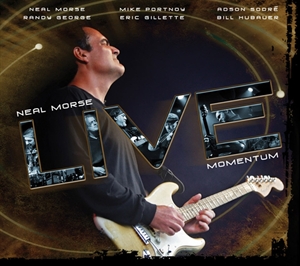
Live MomentumHot on the heels of his Live Momentum Tour, Neal Morse has released a 5-disc set (3 CDs, 2 DVDs) that is a worthy alternative for those of us who didn’t get a chance to see this band live. You always get your money’s worth when Neal is involved, and this release is no exception. The DVDs (available in Blu-ray, as well) and CDs document the entire 3-hour set, and what a performance it is!

Recorded and filmed in HD on October 11, 2012, at the Highline Ballroom in New York City, Neal and the band turn in an incredibly tight, high-energy set for an enthusiastic audience. Neal’s long-time collaborators Mike Portnoy (drums) and Randy George (bass) are joined by Bill Hubauer (keyboards, violin, sax, vocals), Eric Gillette (guitar, keyboards, vocals), and Adson Sodré (guitar & vocals).

I’ve been a fan of Neal Morse since his days in Spock’s Beard – keeping up with Transatlantic and his solo efforts. He is an amazingly prolific songwriter, but of late his work seemed to be suffering from a “sameness”. Then came last year’s Flying Colors and Momentum albums, where it was clear something lit a roaring fire to his creativity. Momentum is his finest solo work since the Question Mark album.

In the liner notes to this release, Neal mentions that he found Hubauer, Gillette, and Sodré through YouTube auditions, so I before I popped in the first DVD, I was a little apprehensive regarding their ability to keep up with Morse, Portnoy, and George. My fears were completely unfounded, as Adson lays down a jaw-dropping guitar solo in the opening song, “Momentum” (you can see the performance of the song in the promo video below). Eric Gillette shines on guitar, vocals, and keyboards throughout the entire show, and Hubauer adds wonderful depth with his keyboard pyrotechnics and fine violin and sax work.

Basically, what Neal put together is a three-keyboard/three-guitar front lineup that is incredibly versatile. Add in their ability to execute complicated vocal harmonies on songs like “Thoughts Part 5”, and this is one of the best live outfits I’ve ever seen. Mike Portnoy is the hardest working drummer in showbiz, and he is obviously having a blast propelling this group through epic after epic. The avuncular Randy George is the anchor on stage, nimbly laying down rock-solid yet melodic basslines, while eschewing the spotlight.

Neal himself is, of course, the center of attention as he moves back and forth between keyboards and guitar, conducting the band (and the audience) from one emotional peak to another. It’s clear he’s delighted with the tight rapport between himself and the band. They are able to shift from a delicate flamenco-style acoustic interlude to crushing hard rock in the blink of an eye and make it look easy.

The set includes four major epics. “Testimony Suite” clocks in at 21 minutes, and it  includes highlights from Morse’s 2003 album, Testimony. Neal is upfront and open about his Christian faith, and it is a genuinely emotional moment for him as he sings this account of his conversion. “The Conflict (From Sola Scriptura)” is 27 minutes long. Initially, I was put off by Sola Scriptura, but this performance illuminated aspects of it that I hadn’t heard before. It’s a beautiful piece.  “Question Mark Suite”, at 21 minutes, is an outstanding distillation of Neal’s exploration of the symbolism behind the Exodus and the Hebrew Tabernacle. After a change of pace with the relatively brief “Fly High” (I would have preferred something like “Absolute Beginner” here; “Fly High” isn’t that strong a song, IMO), Neal and the band wrap up the show with the 33 minute magnum opus “World Without End” from Momentum. It’s an incredible performance that outdoes the original, and leaves the audience yelling for more.

The band fulfills that request with a three-song encore: “Crazy Horses” (yes, the Osmonds oldie!) sung by Mike Portnoy while Neal takes over the drums; “Sing It High” (which features every member taking a solo turn), and finally, “King Jesus”. As the exhausted musicians leave the stage, you can clearly hear a member of the audience call out, “Neal! Neal! Thank You!”

The second DVD disc includes an hour-plus tour documentary. Beginning with rehearsals in Tennessee, we follow the band from their first show in Nashville on October 2, 2012 (which, to my eternal regret, I had to miss) to their last in Chicago on October 12. In the space of ten days, they perform shows in Nashville, Jacksonville, Mexico City, Los Angeles, Seattle, Denver, New York City, and Chicago, all the while practicing and continually refining their parts. It’s a marathon run at a sprinter’s pace. There is video footage of every performance, and much of it is quite good. One definitely gets an appreciation for how much hard work and how many hours it takes to make a live performance look easy. As Mike Portnoy says, “This band kicks ass! I mean, the second gig – it’s tight; a really tight second gig.” Neal himself describes them as “A band on fire”. I can’t disagree.

You can order this CD/DVD set direct from Radiant Records.

Here’s the promo video for “Momentum”:

New interview with Leah

Remember Leah? There’s a great new interview with her over at Louder Than Hell.

Here’s a sample, from which you can get an idea of what she’s currently up to:

LTH: What can your fans expect from your shows?  What aspect of your band brings in crowds?

In the future, fans can expect to see more records from me, and special projects. I’m very experimental, so you may see medieval Christmas songs, or electronica, or symphony orchestras. Nothing is off the table with me. I do hope to tour in the future, and I know it will be an amazing show, though I can’t promise any dates at this time.

LTH: Chemistry within a band very is important. When the band originally formed, what was it about playing with the other musicians that made you the most impressed? What is it about the chemistry between the members that makes the band unique?

In my particular music career, the songs came first, and the players came after. Most of the musicians on my record were people I brought in specifically for my project. And because I’ve mainly been a recording artist, not a performing artist, I haven’t had a solid band line-up. As of now, I am putting together my band for special performances. In the future I’d love to have a solid, long-term band that will collaborate with writing and create a whole new sound together. In any band, chemistry is important. It’s amazing how you can connect with players musically, but you might not connect with them in other areas of life. That’s what I love about music: it brings down barriers and brings people together.

LTH: Thank you for taking the time to speak with us about your music. Do you have a special event like a concert or tour coming up that you’d like to discuss? What’s next for the band?

What’s next for me is developing my live show, writing and recording more albums, hopefully doing some music videos, and a little side project I have with Eric Peterson from Testament and Dragonlord! I’m very excited about that project and am looking forward to beginning our writing sessions for that very soon!

Self-Imposed Slavery: Riverside’s ‘Shrine of New Generation Slaves’

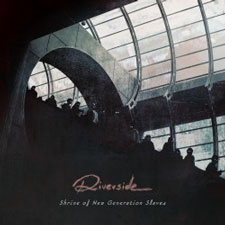
Image    Riverside’s recorded output began with three albums that are collectively known as the Reality Dream Trilogy (‘Out of Myself’, ‘Second Life Syndrome’, and ‘Rapid Eye Movement’).  These are all very good albums, although I wouldn’t call any of them great albums.  However, in 2009, Riverside took a big leap forward with ‘Anno Domini High Definition’ (ADHD).  The music took a noticeably different direction from its three predecessors, and reflected well on the album’s subject matter, i.e. the frenetic pace of modern life and accompanying dissatisfaction that sometimes goes with it.  After a two-and-a-half year wait (with the EP ‘Memories in My Head’ thrown in during the meantime), Riverside has returned with ‘Shrine of New Generation Slaves’ (SONGS).  And once again, they have taken a big – no, huge – leap forward.  Quite simply, this is Riverside’s best album to date.

Conceptually, the album relates to dissatisfaction with modern life, so much so that many people feel that they are slaves to something beyond their control.  Thematically, there are some common threads with various lyrics on SONGS predecessor, ADHD (in particular, the lyrics on the excellent ‘Driven to Destruction’).  Nevertheless, the lyrical (and thus conceptual) content extends beyond that to into areas such as stagnant relationships, the depravity of celebrity culture, surrender to nihilism, and ultimately, redemption.

Musically, the album is just fantastic.  In contrast to its predecessor, it does not feature a barrage of notes and thus gives the listener a little more space to contemplate the lyrics. That being said, I wouldn’t call it dimensionally sparse either, as there is plenty going on.  The music is probably the result of a different approach.  Bass player Mariusz Duda stated in a recent interview:

I had some problems before as I was a little bit tired of the formula that we had in the past and I didn’t want to do another album with complicated structures. I just wanted to finally focus more on the arrangements and the composition. To focus on some details, like a way for playing drums, a way of playing guitar. I really, really wanted to focus simply on songs. Simply songs, ambitious songs should be the foundation of this album. The metal parts I skip and replace them with hard rock elements.

Confident in the chops honed on previous albums, the band has taken more of a big picture approach to the music on this album – an approach that seems to have served them very well.

‘New Generation Slave’ opens up the album, featuring a heavy guitar riff interleaved with verses of Duda’s protagonist lamenting his life and dissatisfaction with it:

Ain’t nothing more to say

Your Honor

Don’t look at me like that

The truth is

I am a free man

But I can’t enjoy my life

The tempo then picks up, and keyboardist Michał Łapaj announces his presence in this piece by getting in touch with his inner Jon Lord (RIP), and repeats this a number of times throughout the album.  The opening track segues into ‘The Depth of Self Delusion’, which is less heavy and a bit slower, but no less good.  The use of acoustic guitar and atmospheric keyboards make their first appearance.  I don’t recall this much use of acoustic guitar on any previous Riverside release, and it’s great to hear them expand their sonic palette in this manner.  The song includes some interesting bass work in the latter half and closes with light acoustic guitar.  The band then blasts into ‘Celebrity Touch’ as Duda offers his critique of our Kardashian-ized culture and the pathological need some have for attention and approval from others:

I can’t afford to be silent

I can’t afford to lose my stand

What matters is to be in view

I am seen therefore I am

I can satisfy my hunger

I can satisfy my thirst

What about the feeling of importance

Now I’ve got my chance

In the center of attention

TV
Glossy magazines

My private life is public

I sell everything

Days are getting shorter

They’ll forget about me soon

So I jump on the bandwagon

With no taboos

The song includes a nice juxtaposition between a heavy riff that accompanies the above lyrics, to a less heavy, more reflective section:

But what if we start to talk

Not only say out loud

What if we sift the babble

From what really counts

What if we disappear

Go deeply underground

What if we hide away

From being stupefied

‘We Got Used to Us’ follows, and is yet another slower track that has somewhat of a Porcupine Tree-like vibe as our protagonist ponders a stagnant and dissatisfying relationship.  This one is pretty emotional.

Next up is the punchy ‘Feel Like Falling’, a song with crossover appeal having upbeat music that belies the lyrics, as our protagonist begins to realize the path he has chosen in life has led him astray and left him wanting to simply give up:

Had allowed that life to drift

For I’ve chosen a different trail

When light fades

I feel like falling into blank space

‘Deprived (Irretrievably Lost Imagination)’ is up next with music that is slower, mellower, and decidedly more melancholy than the previous track.  The music includes a nice, Floyd-ian interlude at about the halfway mark leading into a jazz-infused instrumental section in the latter half featuring some excellent sax playing.   Our protagonists dissatisfaction seems to be so intense at this point that they have gone beyond the mere desire to give up as in ‘Feel Like Falling’ – now we have a full fledged surrender to despair:

Curled up

Deprived
Curled up

Deprived
I shut away

Please don’t call my name

‘Escalator Shrine’ begins as another slower track, but picks up the pace after a few minutes.  Once again we hear the Hammond organ with the Leslie cabinet, some excellent bass playing, and some heavy (but not necessarily metal) guitar.  Like the previous track, it includes another Floyd-ian interlude at about the halfway mark.  Lyrically, ‘Escalator Shrine’ approaches the new generation slavery from more of an intellectual level than an emotional one, as our protagonist channels Albert Camus and the Myth of Sisyphus:

Dragging our feet

Tired and deceived

Slowly moving on

Bracing shaky legs

Against all those wasted years

We roll the boulders of sins

Up a hill of new days

‘Coda’ is the final track on the album, and maybe the most emotionally heavy, even though it is instrumentally the lightest – a single acoustic guitar.  Perhaps our protagonist has read some Epictetus, or maybe the serenity prayer, but it appears he has realized that his happiness and satisfaction with life is ultimately in his control and his own responsibility:

Night outside grows white

I lie faceup in my shell

Open my eyes

Don’t feel like falling into blank space

Indeed, for all of its darkness and all of its sadness, SONGS ends on an upbeat note, as our protagonist casts off his self-imposed chains:

I won’t collapse

I’m set to rise

It’s interesting to note that, although ‘Coda’ is the final track on the album, it is also numbered as Track 1, as is ‘New Generation Slave’.  Indeed, our protagonist has hit the reset button and is starting over.

I simply cannot say enough good about this album.  As thrilled as I was with ADHD, my response to SONGS is in a completely different realm.  Musically, the album has a perfect blend of heavy and light, of complex and simple, emotional and intellectual.  Nothing is overdone, nothing is incomplete.  The lyrics have a strong message, and as dark as the album’s atmosphere, it’s ultimately a message of hope for those that get it.  And if this album is an indication of what we can expect in the future from Riverside, then it’s another strong piece of anecdotal evidence that we are in the midst of a progressive rock golden age heretofore unseen.

Oh, and in case you didn’t get it, I strongly recommend this album 🙂

The Stranglers, A Retrospective

About 5 or 6 years ago my son’s guitar teacher, a young dreadlocked guy into hard rock and grunge, asked me who was my favourite band. I surprised myself when I immediately answered “The Stranglers”. “Oh” he replied, “The band who sung Golden Brown?”  “Yes” said I “but haven’t you heard the early stuff from the punk-era like Hanging Around, Grip, Peaches?”……

I’ve asked a few from the younger generation about the Stranglers and many either haven’t heard of them or they are remembered for some of their 80’s pop hits like the aforementioned ‘Golden Brown’, ‘Strange Little Girl’, ‘Always The Sun’ etc. Indeed they did write some superb ‘pop’ songs but I remember them for their uncompromising attitude; their clear desire to ‘progress’ their musical style and their unique sound, driven along by thumping bass lines and swirling keyboards.

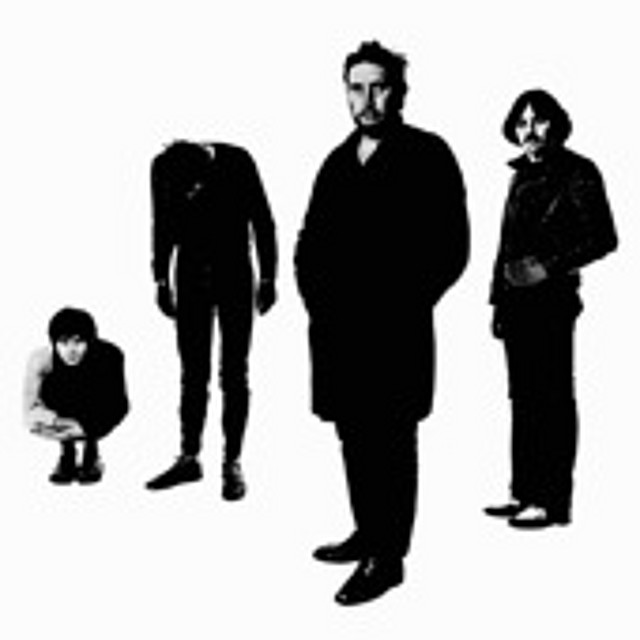
In 1977 and 1978 the Stranglers produced certainly one (Rattus Norvegicus), if not two (Black and White) of the great albums to come out of the Punk Era. Whilst not considered punk, these albums stand alongside the great Punk albums of the period: The Clash and London Calling by The Clash; NMTB by the Sex Pistols; Fresh Fruit for Rotting Vegetables by The Dead Kennedys; Machine Gun Etiquette by The Damned; The Ramones by The Ramones; Love Bites by the Buzzcocks and Pink Flag by Wire, to name a few. But you won’t find Rattus or B&W featuring highly, if at all, on any Top list of Punk albums.

Rattus Norvegicus

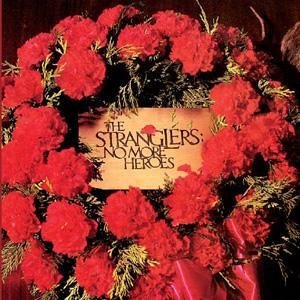
No More Heroes

Black and White

Many at the time said they had jumped on the punk bandwagon. Certainly they had been playing as an unsuccessful pub-rock band for a couple of years as the Guildford Stranglers. But by opening for the 1976 tour of the Ramones and Patti Smith they got noticed and signed a deal with United Artists.

From a punk perspective they were considered outsiders, both in terms of their age, being older than their peers (Jet Black was in his late thirties when Rattus was released) and musically different. Their sound was unusually melodic (helped by the fact they were ‘relatively’ musically accomplished); their lyrics could be clearly heard (!) and even solos were allowed (!).

The band certainly took advantage of the musical zeitgeist but never truly embraced the punk culture. They did adopt the aggressive and abrasive punk attitude on stage; they delivered their lyrics with snarling brute force. Their dealings with the musical press were notorious leading to JJ Burnel punching a music journalist. Some of their lyrical output reflected the punk-spirit. They exhibited a total disregard for political correctness at times, highlighted by bringing strippers on stage at the Battersea festival in the summer of 1978 (strangely the main support act was a man by the name of Peter Gabriel !).

Led by two charismatic front men, Hugh Cornwell on lead guitar and Jean-Jacques Burnel on bass, they delivered an incredibly varied output over the years. From the simply arranged punk anthems of ‘No More Heroes’, ‘5 Minutes’ and ‘Something Better Change’; through the reggae-inspired ‘Peaches’; to the dark more complex and experimental ‘Black’ side of the Black and White album; and they even wrote the 4 part and 8 minute long ‘Prog-structured’ classic, ‘Down in the Sewer’.  They broke away from the punk scene totally in 1979, their early success giving them the confidence to release their avant-garde fourth album, The Raven. They followed this with the unusual but ultimately disappointing concept album, The Gospel According to the Men In Black (which lost me and many others as fans for a while). The Stranglers were definitely not derivative and did not want to be pigeon-holed. Their musical and lyrical diversity on a track by track basis is rare and a testament to their originality and innovative skills.

Their signature sound was driven along by the ‘rough’ and a chest-filling bass lines of Jean-Jacques Burnel, usually followed by the swirling Hammond organ and mini-moog keyboards of Dave Greenfield. Unusually the guitar melodies were shared between lead and bass and there are an astonishing number of catchy riffs in their early output. Dave Geenfield’s psychedelic keyboards are hugely inspired by Ray Manzerek of the Doors, particularly on their brilliant cover of Bacharach and David’s ‘Walk on By’. Jet Black’s drums ties everything together nicely with competent drumming. Martin Rushent’s production on the early albums superb.

Their musical style and structure was initially quite basic  but over time became more intricate with the use of complex time signatures; effects to slow and speed up sound and, from Black and White onwards, the more frequent use of synthesizers to create weird vocals and soundscapes.

The band’s lyrical themes were hugely diverse. Songs about boring lives, disenchantment, alienation, and the breakdown of political and social order were laced with biting political and social comment and par for the course at the time. But they were also inspired by the writings of Nostradamus, Japanese and Viking culture and even by a Victor Hugo novel.

Their lyrics quite often pushed the boundaries of what was acceptable. ‘Peaches’ is the only song I know that has the word ‘clitoris’ in it (changed to ‘bikini’ for the UK’s Top of the Pops). Clearly their lyrics were at times sexist and whilst unacceptable they were tame compared to today’s rap music and I believe ignore the playful irony and satire inherent in much of the band’s output. Most controversial was the misogynistic ‘Bring on the Nubiles’, about the obsession of older men for younger girls. The song comprises ‘in your face’ vulgarity and alludes to incest. Were they serious or just exploiting the times? What we do know is the band was deliberately antagonistic and courted controversy to increase their profile and this was indirectly supported by their record company who saw no reason to censor their lyrics or curtail their behaviour (it sold records for God’s sake!!!).

Here are some of my favourite lyrics:

From the punk anthem ‘No More Heroes’, the witty:

Whatever happened to Leon Trotsky?
He got an ice pick
That made his ears burn

From ‘Grip’ the truly memorable:

Stranger from another planet welcome to our hole
Just strap on your guitar and we’ll play some rock ‘n roll

Visceral social commentary from ‘Hanging Around’:

I’m moving in the Coleherne
With the leather all around me
And the sweat is getting steamy
But their eyes are on the ground
They’re just hanging around

(The Coleherne was an infamous gay leather bar in Earls Court, London in the 70s and 80s frequented by many famous clientele).

Here’s a typically aggressive live, albeit shortened, version…

Acerbic criticism of the educational system in ‘School Mam’:

http://www.lyricsbox.com/stranglers-lyrics-school-mam-1vprfx3.html

In the free-form, abrasive and controversial ‘Ugly’, only the Stranglers could juxtapose a reference to Ozymandias, a poem by Shelley about folly in the pursuit of power, with the shallowness of mankind’s attitude towards aesthetics:

I Could Have
Read A Poem Called
Ozymandias
To Her Instead
I Lived For The Moment
It Was A Futile
Gesture Anyway
I Was Here
And She Was Here
And Being Broad
Of Minds And Hips
We Did The Only Thing Possible

I Guess I Shouldn’t Have Strangled Her To Death But
I Had To Go To Work And She Had Laced My Coffee With Acid

Normally I Wouldn’t Have Minded
But I’m Allergic To Sulphuric Acid
Besides She Had Acne
And If You’ve Got Acne, Well,
I Apologise For Disliking It Intensely,
But It’s Understandable That Ugly People Have Got Complexes
I Mean It Seems To Me
That Ugly People Don’t Have A Chance

It’s Only The Children Of The Fucking Wealthy Who Tend To Be Good Looking

An Ugly Fart
Attracts A Good-Looking
Chick If He’s Got Money
An Ugly Fart
Attracts A Good-Looking
Chick If He’s Got Money
An Ugly Fart
Attracts A Good-Looking
Chick If He’s Got Money

It’s Different For Jews Somehow.

I’d Like To See
A Passionate Film Between
The Two Ugliest
People In The World.
When I Say Ugly
I Don’t Mean Rough Looking
I Mean Hideous.

Don’t Tell Me That
Aesthetics Are
Subjective You
Just Know The Truth
When You See It
Whatever It Is

Powerful stuff indeed.

In 1990 Hugh Cornwell left the band and it appeared to be the end of an era. Over the subsequent years they continued to release albums with little mainstream success but were (and still are) supported by a fanatically loyal fan base. However, with the addition of Baz Warne, whose energy and snarling aggression making him a worthy replacement to Hugh Cornwell, they have become a superb live act. Their latest album ‘Giants’ released in 2012 is a huge return to form, echoing their halcyon period of the late 70s. It seems ironic that I saw them headline a predominantly ‘Prog’ festival, Weyfest, in 2010 but it’s a clear indication of their popularity amongst a wide cross-section of music lovers.

The Stranglers are arguably the greatest and certainly the most enduring band to emerge from the punk era. I look forward to another brutal encounter with them later this year in Guildford, their spiritual home and fortunately only a few miles away from chez moi.

Final words though must go to Hugh, JJ, Dave and Jet from the epic ‘Down in the Sewer’

I tell you what I’m gonna do
Gonna make love to a water rat or two
and breed a family
they’ll be called the survivors
You know why ?

No
Coz they’re gonna survive

Nearly 40 years on and they are surviving remarkably well 🙂

Psychoanorexia by t (Thomas Thielen)

by Frank Urbaniak, Progarchist

Symphonic Modern Progressive Rock (we will skip the word Neo) with rich, dense instrumentation and melancholy lyrics/melodies for fans of Marillion-Brave Era, PG, Radiohead, Porcupine Tree (SD, LBS Era), Bowie, Floyd, VDGG.  

PsychoanorexiaRecommendation:  Highly Recommended

Art is a bitch, and so is literature – and music. They always present us worlds well out of reach – pipedream kingdoms of epic journeys, heroism, boundless yearning and lots of all the things we are, well, let’s face it, not. Art is, insofar, simply destructive for your everyday middle class John Doe. It makes him long for things he neither really wants or needs: danger, uncertainty, lovesickness, bleeding hearts, je ne sais quoi. – t on anti-matter poetry.

2013 is looking to be another great year for progressive music with Steve Wilson, Lifesigns, BBT, Riverside and Cosmograf all released by mid-March.  The sheer volume of quality releases makes it easy to overlook an artist who cannot easily be googled ( t ), has long gaps between releases and does little or no touring.  t /Thomas is classically educated in piano and voice, but switched to guitar early in childhood when he realized that ‘most girls in his class fancied guitar players’. Psychoanorexia is his fourth solo CD since leaving German art rock band Scythe, and he plays all instruments, sings, arranges, produces and mixes his work. His two most recent CDs, Voices and Anti-Matter Poetry, each about 3 years in the making, received critical acclaim in some quarters but failed to achieve the overall recognition they deserved. This is likely a result of two factors:

  • t music is not always an easy listen, but as Kinesis said, ‘t takes the listener into an alternate musical reality, and after the album concludes, you may need to pause and take several deep breaths before returning to waking reality’.  The music is sometimes dark and moody, offset by beautiful, melancholy melodies often delivered through heavily processed vocals and dense instrumentation so it is not a easy casual listen.
  • t is a deep thinker and a poet.  He focuses on the alienation we experience as society and technology advance, the impact on our relationships and our ability to stay linked and loved. Lost loves, disconnected lovers, feeling alone and alienated while being with someone, the multiple influences that affect our everyday lives and therefore our relationships is not always happy stuff.

From t:

“This is the time when ringtone applicability equals musical quality. This is the place where the greed of being a pop star has replaced the sublime experience of creativity. This is the era in which democracy means mass phenomena, not choices. When we have become too lazy even for subterfuges. And too busy to feel the loss.”

Psychoanorexia consists of only 4 songs, three epics and one shorter track. His lyrics –which fill several pages of the CD insert, are complex and interesting but not always easy to understand due to the amount of vocal processing. The opening track, the three-part The Aftermath of Silence, is a beautiful seventeen minute love story with very accessible melodies. Aftermath begins with a long and haunting instrumental passage leading to the refrain

‘ So this is the day, the sky too blue.’

Slow and sad, the opening moves through an interesting set of musical progressions reminiscent of Marillion, concluding with:

‘We came back, but we never recovered

We always reminded ourselves of each other’.

Kryptonite Monologues, the most complex and challenging track, continues the theme of love lost by abandoning the mood of the previous track with a frantic opening section named ‘Breakfast Cataclysm’. This is the most symphonic track, with hints of Yes, Van Der Graaf Generator and Crimson.  After a soaring instrumental section with some pounding drums and heavy guitar lead t moves to a bombastic operatic interlude he describes as part comedy (Monty Python), hinting at the absurdity of it all, collapsing into a lovely classical section named ‘Borrowed Time ‘with soaring strings.  Driving percussion builds to the haunting climax ‘The End of the World’ with echoes again of Marillion’s Brave.

The third track, The Irrelevant Lovesong could be a lost track from somewhere between Peter Gabriel’s Scratch and Us periods, and is a short, moving poem describing the growing gulf between two people:

‘All through the nights

Though cold and blind

I hold you here

But no, I love you not

No, I love you not’.

The CD concludes with Psychoanorexia in two movements, ‘Bedhalf Exiles ‘and ‘The Stand’.  The music again alternates between attack and reflect, the gates are locked and defenses up in an effort to save all that is worth saving.

‘Save our souls

And guard all the doors we closed

And promise to stake our hearts

Lest one of our oaths could last’.

The song ends with a barrage of frantic drums and a vocal chant reminiscent of mid-70’s Genesis in tone.   The journey is tiring but rewarding, challenging but gratifying.  I thought that his previous were highly personal stories, but here t seems to be more of an observer, reporting on the irony of our (or his) existence, the decay that comes with progress.

Psychoanorexia is modern symphonic rock at its finest, rich, inventive and always interesting. I love the dense instrumentation, vocal effects and overall presentation.  t’s biography mentions his obsession with sound and he is obviously proficient at all instruments, but it is his keyboard prowess and engineering skills are what enables him to deliver on his vision. t also uses electronic drums more effectively than most, and in many cases you are hard pressed to recognize them as electronic except the cymbals, which at times sound too separated (crash cymbals should not be left or right speaker only) and a minor quibble, sound a bit ‘spitty’.  Psychoanorexia  is an obvious labor of love by a unique musical poet and this outstanding effort by t is one I highly recommend.