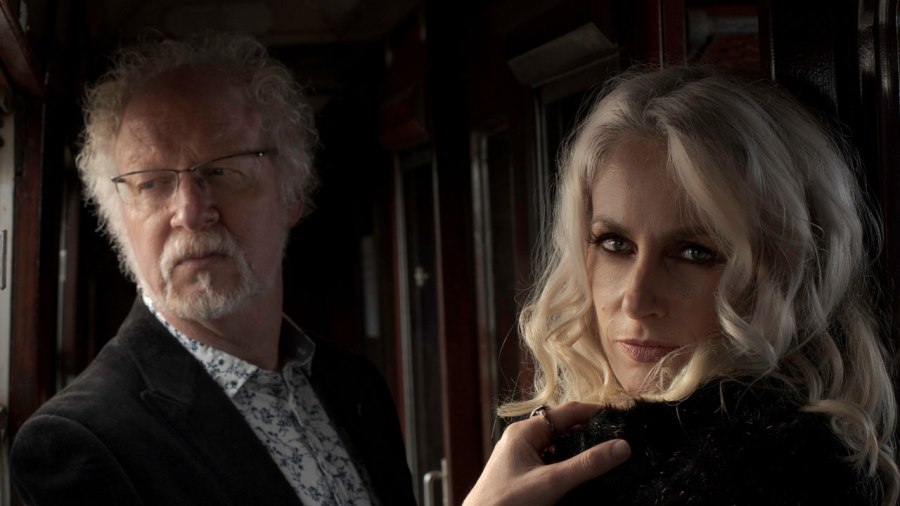
Pattern-Seeking Animals 2- A Conversation with Dave Meros and Ted Leonard

Pattern Seeking Animals will be releasing their sophomore album Prehensile Tales, May 15th on InsideOutMusic. The band consists of current and former Spock’s Beard members Ted Leonard (Guitar and Vocals), Jimmy Keegan (Drums), Dave Meros (bass) and Spock’s long-time contributing songwriter John Boegehold (Keys and Producer).   I had fun speaking with Ted and Dave about the new album, as well as their side-projects and how they’ve been keeping occupied during quarantine life.

Press_Cover_01

Congrats on the new album. I’m really digging it, It’s quite different than the debut. I like the first one, but I definitely like this one better. It has more interesting ideas and sounds.

DAVE – I think that’s the general consensus with us too.

TED-  For me, I don’t know, actually. There are certain songs I really connect with, but there’s definitely a broader sound palette on this one for sure, which a lot of reviewers have pointed out as well. There’s also a lot of real instrumentation which sounds more authentic. It’s a bigger sound. It’s a bigger band than we are.

What’s your favorite track on the new album?

TED-  “Soon But Not Today”- It’s between that and “Lifeboat”.

DAVE-  It’s kind hard to pick one on this album for me, but mine is kind of a tie between “Lifeboat” and “Why Don’t We Run”. I really like that song for some reason.

TED-  That one appeals to me too. It’s super different. I played it for my daughter and she thought it was really cool, and I’ve played it for my boss who’s a super prog-head and he said  “That was different.” Haha. Like many of the songs on this album, it incorporates so many feels and in this case, it’s like a spaghetti western, instead of being filmed it Italy, it was filmed in South Korea.

Did you record this album, in the same fashion as the first, or was there a different technique or anything unusual for these sessions?

DAVE-  It was pretty much the same, except for John writing all of it this time. We’re all up here in our little man-caves recording our parts.

TED-  Everything’s isolated except for Jimmy, but that’s the same as the first album. The only instrument these days that really require a great sounding room is drums. So he records it at Rich’s (Mouser) studio.

    “Here in My Autumn” is the first single from Prehensile Tales:

RoSfest 2020 in May was supposed to be Pattern Seeking Animals’ debut live performance.  Since RoSfest 2020 was cancelled due to the pandemic, how is PSA coping with the cancellation or changing their plans?

TED-  Yeah, we were bummed about that, but of course no one’s making plans. Obviously we’d like to perform for people in a live scenario. It’s going to be a fun line-up, especially with the two guys we have in mind to fill out the roster. We have Dennis Atlas, who we would bring on as the primary keyboardist, because John’s not going to come out and play live with us, and then we would require someone who can wear many hats, and that would Walter Eno. He’s a local scene dude who’s a really good guitar player, keyboardist, he plays some sax, and he apparently can sing very well too.

What’s the main reason John can’t perform live with you guys?

TED-  It’s just not in his interest.

DAVE-  Yeah, he doesn’t want to and he would have to develop a whole rig. He’s never played keyboards in a band live before, so that’s a whole different animal. You have to get all your patches all organized and split keyboards- I don’t blame him.

TED-  Yeah, I have nightmares about that sometimes. I’ve actually had real nightmares about someone sticking an instrument in my hands, repeatedly it’s Ed Platt from Enchant.  He says “You know what key it’s in, just go out there and play it!”  And I’m like “I don’t fuckin’ know this song!” Haha, yup just a weird dream I have.  But I’ve lived the nightmare of having to become a keyboardist- a better keyboardist than I am- very quickly. I’m glad it happened- it gave me a broader understanding. It’s a little easier to find my way around, if I have to.

I was super impressed when you did the keys for Transatlantic on the ship (Progressive Nation at Sea 2014).

TED-  Yeah, that was fun! That was a crash course! I’ve always been able to play chords and single-note parts, I know my scales and I know chordal theory well enough, but when Neal called me up and said “You’re gonna play this part and that part”, and I was like “Wait a minute- that’s a piano part!  My left hand doesn’t even touch this instrument!”

I know not much is happening as far as plans go right now, but is there anything you guys are hoping to get started with once the dust settles?

DAVE-  Nothing finite, but we’re always fielding offers.

TED-  Yeah, nothing specific, but we’d like to get in on some festivals, maybe get in on the cruise, if there ever is a cruise again. Of course we would entertain the idea of touring if we could find a way that was financially feasible. I think the only way to do that is to pair up with a band that makes for a good bill.

Press_Photos_02

What’s going on in Spock’s Beard world?

TED-  So much! Haha

DAVE-  It’s kind of the same thing. Just seeing what comes up. We do have the cruise booked for 2021.

TED-   There’s that, and we just played a couple shows in San Pedro, but that was just a keep-the-wheel-greased gig. But that was fun.

Ted, what’s going on with Enchant these days?

TED-  Enchant’s supposed to be writing right now, and they were writing on a weekly basis as a group,  I live further away from them now, so I can’t really be a part of the group writing. But usually I’ll get demos which will or will not already have vocals on them. Or if we’re going to take a song of mine, it’s usually submitted as a completed piece, then they just sort of embellish or whatever. I can’t even say usually when you’re talking abut a band whose most recent album came out like 4 years ago, and the prior one was 10 years before that.

Dave, still working with Iron Butterfly?

DAVE-  That’s another one of those handful-of-gigs-per-year bands. We have stuff booked in July which I’m hoping works- fingers crossed.  We might all still be locked up in our houses then, who knows.

Is there a musician you haven’t got a chance to work with, but would like to?

TED-  Yeah.

Haha… and who might that be?

TED-  Sure, yeah! Most of them are dead. I would love to lure Casey McPherson out of the band [Flying Colors], and let me take over that spot. Haha, I was going to start with saying I love anytime I get to do anything with Neal Morse, and I would love to do something with Steve Morse someday. Anybody from Kansas, past or present. I would love to sing on something that Kerry Livgren wrote. There are a ton of guitarists I’d love to have on one of my future solo albums. Or just someone to be the guitarist, and I’ll just do my thing.  One of those guys is James Santiago who’s been a friend of mine since we were in our twenties and I just always wanted to have him be in a band with me. We did a Jellyfish video a few years ago. I’ve always fantasized about having that guy in a band. A lot of people know who he is because he’s been part of the build process for certain popular Line 6 products, but they haven’t gotten to hear how good he is as a guitar player. I would like to make a band for the sole purpose of getting that guy some visibility. Plus he’s the coolest guy in the world.

DAVE-  You know, I always say “no” to that kind of question and the reason is I can pick Peter Gabriel or Jimmy Hendrix or any of those guys; there are hundreds of them. But if I played with them, it wouldn’t be the same and I would probably end up being really embarrassed. So I’d rather not, haha.

TED-  Yeah, it’d be like when you’re talking about someone’s bass player you probably esteem as better than yourself, like Peter Gabriel’s, it’s kind hard to want to fill some of those shoes. That would be like me wanting to play with the members of Queensrÿche– yeah no, I’m not going to do that.

DAVE-  Yeah, and let’s say you get to play with Jimmy Hendrix and it turns out he’s just tripping on acid or something and it’s just really weird just to be there- your whole mystique about him would be gone then. It just wouldn’t be the same. Never meet your idols, I guess.

TED-  Same reason I’ll never have sex with a porn star, haha

Dave, have you met an idol you were disappointed in meeting?

DAVE-  Actually the ones I’ve met have been really nice. I’ve never met anyone who blew me off… oh wait! I actually I did! One of my big bass idols is Percy Jones, and on the last cruise when Brand X was playing and I was all tongue tied like you get with your idols, he just kinda blew me off-  that was really depressing, giving me a look like “oh no, here’s another asshole telling me I’m great- just let me go back stage and have a beer… come on!” you know?  But then I met him later that night, had a cocktail with him and talked to him for quite a while and he was super nice.

What have you been doing differently these days because of the pandemic stay- at -home orders? You guys picking up any new activities or skills?

DAVE-  I got some work actually. There’s this guy I play for, and he just records stuff all the time, so I have another album from him to record, so I have that, which is really good timing. And I’ve been working on my basses and building a speaker cabinet. I’m kind of a hermit anyway, so my life hasn’t really changed that much.

TED-  I work from home, so in many ways, it hasn’t changed much for me either, apart from the fact that I’m never home alone anymore. My wife just finished her masters-  she was seeing a bunch of clients, but she obviously hasn’t been able to see them now, but she has some physiology clients that get on the phone with her to do FaceTime, but a lot of them aren’t comfortable with that… yeah she’s been home a lot. All that means is… yeah… my life has… improved.

DAVE  Haha…  I know what that means.

What made you want to become a musician? Was there a moment in time that lead you there or a musician that influenced you to say “I wanna do that”? (Listen to soundclip below)

I’m on a Rush kick right now. I’ve been trying to listen to an album a day.  What is your favorite Rush album?

TED-  You’re gonna hate me.

Oh yeah?

TED-  Just by having said that, what would you guess?

Probably something in the late 80’s, early 90’s? Roll the Bones?

TED-  Presto

Nice! Actually, the very first Rush album I ever heard. So I actually like that album quite a bit!

TED-  Yeah, that was the first one I ever owned, but I listened to rock radio growing up, so I heard everything prior to that, that was a release. But when “Show Me Don’t Tell Me” came out, and I heard it, I just remember going “OK, I gotta get that album.”

DAVE-  The only album I’m familiar with, front to back, is 2112. All the rest of them I just heard bits and pieces from, which is really weird, because I really like Rush, but I’ve never been a person to buy all of their records. So I’d say 2112, that’s the only one I owned and used to play all the time.

TED-  I wasn’t familiar with the deeper cuts until I joined Enchant, and those guys were Rush freaks, so it was almost like required reading. The original drummer of Enchant, Paul Craddick, was especially a die-hard fan. Personally it was hard for me to get into Rush. If we talk through a list of bands that I’ve liked over the years, the one commonality is usually the lead singer. Not only do they have to strike my ears as something I like, a lot of time they have to be someone I can sing along with, otherwise it just loses my interest- part of being a lead singer, I guess.  It was always hard for me to get into Jon Anderson, which I know, that’s heresy, but his voice is unapproachable. Trevor Rabin is right in my wheel house, but Jon Anderson, not so much. I was more into the arena rock growing up, buying Triumph albums. Rik Emmett, has the same kind of voice as Geddy, but I think he’s technically a better singer, personally.

The last interview I did for PSA, I asked John and Jimmy what was their favorite food, so I’d like to get your answers for that as well.

DAVE-  Man, that is a hard choice for me.

TED-  Dave really likes cock.

Haha!

DAVE-  I like cock prepared anyway. Anyway you prepare a nice cock, I’m there.

TED-  Especially filleted.

Wrapped in Bacon?

DAVE-  Wrapped in bacon for sure!

TED-  Everything is good wrapped in bacon!

That’s right!

TED-  There’s a street near me, and apparently it’s a guy’s name, but it’s called Dick Cook Lane. Every time I drive by it, a whole scenario goes off in my head.

DAVE-  I have a hard time decided between three- Indian food, Thai food, and Mexican food. They all tie for my #1 spot.  For Mexican, I’ll eat anything. For Thai food, I always gravitate toward the spicy mint noodles. For Indian food, I really like Saag Paneer.

TED- Before Spock’s Beard, I would have said something completely different, but everyone would be going out on a night off or whatever, and we ended up at an Indian food in England,  which is the best place to get Indian food. And I didn’t want to be a dick or anything, so I said, ok I’ll go, and it was the best thing I ever tasted. So I’ve been on an Indian kick for a few years now. We made Chicken Tikka Masala at home a few times. It’s quite a process, but I love pretty much anything Indian. And with Thai, I hated curry as a kid, but now I just can’t get enough of it.

Thank you so much for meeting up with me! Congrats on the album! It’s really great!

Anything you’d like the Progarchy readers to know about about it?

TED-  It’s definitely going to be a step in a different direction. It has a big appeal for prog fans; it has a lot of prog moments, but also doesn’t shy away from non-prog moments. I think it will attract the mature prog fan. Not the ones that say, “If it’s not prog, I can’t like it”.  If it’s not Scottish, it’s crap! hehe. It has appeal for all the masses, including the North Koreans.

DAVE-  It’s very melodic. Like John said with the first release, you’re never more than like 30 seconds away from some kind of a hook.  If you’re into musical rather than shredding, this is for you.

Pre-order Prehensile Tales on CD, Vinyl, or Digital at this link!

Press_Photos_01

Glass Hammer’s Dreaming City

Little did Glass Hammer masterminds Fred Schendel and Steve Babb know the uphill climb their new effort Dreaming City would face.  Not only has the album’s release taken a hit from the coronavirus pandemic’s overall toll on the music industry— Schendel and Babb have also been dealing with the aftermath of a 1500-yard wide tornado that hit Chattanooga, Tennessee on Easter Sunday.

Nevertheless, they’re persisting — and well they should.  Dreaming City is another fine, fine Glass Hammer album; its thrilling musical voyages mesh marvelously with an unexpectedly apropos narrative, and the result is surprisingly suited for these unprecedented times.

The big news here (and the big hook for me) is how Dreaming City’s concept channels a very specific vibe — the vintage fantasy paperbacks that glutted newsstands and drugstores in prog rock’s golden era.  No, not the thick multi-part epics that sprouted like kudzu after The Lord of the Rings’ mass market breakout — I’m talking about the 200-pagers (frequently mash-ups of short stories) that leaned toward the grittier “sword and sorcery” end of the genre.  Steve Babb’s story steers directly for the classic archetypes of Michael Moorcock’s Elric saga and Robert E. Howard’s Conan tales: an alienated adventurer battling beastly creatures and fiendish wizards, racing against time to save a damsel in distress from a horrific fate — and armed with a mystical sword, no less.  Books like these were a major thrill of my middle school years (and still provide the occasional pleasurable re-read) , so I’m delighted by Babb’s tapping into them for inspiration here.

The varied musical palette pairs perfectly with the ups and downs of the story; especially compared to the winning, poppy sheen of 2018’s Chronomonaut, Dreaming City is a moodier, more ferocious beast.  The core team of Babb (bass, keys, lead and backing vocals) Schendel (keys, guitars and backing vocals) and Aaron Raulston (drums) rock hard from the start, summoning the ghosts of synth-heavy Rush (the title track, “Cold Star”) and Hydra-era Toto (“Terminus”) but giving each multi-sectioned tune an up-to-date spin.   The menacing drone of “The Lurker Beneath,” the monstrously heavy “Pagarna” and the Floydian soundscape “At the Threshold of Dreams” downshift into the spacious mid-tempo reveries “This Lonely World” and “October Ballad” (the latter featuring yet another standout Susie Bogdanowicz vocal).  Ramping up via the tangerine-dreamy “The Tower” and the menacing doom-synth crescendo of “A Desperate Man”, the stage seems set for a stereotypical final confrontation.  But the riff-go-round of “The Key” doesn’t just upend musical expectations (check out Barry Serroff’s stunning flute work), it serves up a deft, unlooked-for plot twist, leaving the protagonist bereft in a way you’d least expect.

And that’s where the final, towering epic “The Watchman on the Wall” builds from.  Musically, it pulls off another nifty Rush tribute — kicking off as a long-lost Moving Pictures outtake, but somehow winding up in 2112/A Farewell to Kings territory before its big finish.  Lyrically, it’s a classic Glass Hammer closer, retconning the hero’s adventure into an ongoing spiritual quest: heading into an uncertain future, but ready to “Find hope in the morning/Even in the dark of night”.

There are plenty of other cool moments to enjoy on Dreaming City — guest shots from vocalists Reese Boyd, John Beagley and Joe Logan, guitar work by Brian Brewer and James Byron Schoen, Schendel’s delightfully spindly organ and synth solos.  All these details slot into a powerful portrait of determination and hope in the face of adversity and devastation.  That’s what makes Glass Hammer’s latest not just another winning album, but — just maybe — a work of art to inspire everyone with ears to hear during this strange season.

Dreaming City is available directly from Glass Hammer.


-Rick Krueger

The Future Postponed

Thanks to the coronavirus pandemic, Steven Wilson’s army of fans will have to wait another seven months for forthcoming album The Future Bites. Steven writes

As with many of my albums, The Future Bites is not just about the music, it’s a high concept project which involves design, artwork, video and a tour production, all on a grander scale than anything I’ve attempted before. However, due to the pandemic, there are unprecedented challenges, ranging from manufacturing issues (particularly in relation to the elaborate deluxe edition) and the uncertainty facing record stores as the coronavirus forces them to close their doors, to being unable to shoot most of the video material I planned. It’s therefore with a very heavy heart that I reluctantly need to postpone the release of The Future Bites until such time everything can happen as intended. This will now be January next year, with new music and video starting to be issued again around October. In the meantime the pre-order page for the various editions of the album will remain online. Myself, management, agent and promoters are monitoring the situation regarding the live shows scheduled for this autumn. Should events change we will let everyone know as soon as we do.

I understand that this may be disappointing news, and to no one more that myself, believe me. I worked on the music and background of this project for the last two years and was thrilled to finally be able to launch it. The response to the Personal Shopper track released last month has been phenomenal, and I was looking forward to unveiling more over the next few months in the build up to the release of the album. But alas due to the current circumstances it was not to be.

I sincerely send everyone reading this a message of good health, and I hope that one day in the not too distant future we can once again focus on things like music, which even if it isn’t strictly essential seems to somehow makes life more worthwhile.

SW

It’s unfortunate but entirely understandable. Steven has always paid close attention to the production values of his work, from the quality of the recording through to artwork and packaging. He would not want to release something that didn’t live up to the high standards that he sets for himself, and most of us, I’m sure, would rather wait than see his unique vision compromised.

He stops short of confirming it here, but the live shows scheduled for September in the UK and Europe seem certain to be postponed also. (It would be decidedly odd to tour an album four months before its release…) An announcement will no doubt be made once new dates have been arranged.

All Time Top Ten Rush Albums Revealed by Podcast


640x640_14741819

“In our hour of need, we look to Canada for guidance. Canada has brought the world so many wonderful things, for example Martin Short, ice hockey, and Rush. Neil, Alex and Geddy have given us so much over the years, and we thought it was a good time to take a look at their rich discography and count down the greatest albums of their storied career. Resident Prog Boy Adam Sears and the greatest Rush fan on the planet Etan G take over the show for an episode and help us get to the bottom of what makes Rush the band that deserves all of the accolades and fandom they get.” – All Time Top Ten


Listen here: https://www.podomatic.com/podcasts/alltimetopten/episodes/2020-04-13T04_00_00-07_00

A Pastoral Trek through “Hedgerow”

Maybe this isn’t everyone’s experience, but it seems that as I get older, the magic of discovering a great new band becomes less frequent.  This makes some sense, because assuming you’re a reasonably curious listener, you’ve already heard a lot of different music, been surprised many times, and the probability of something making you really sit up and take notice would naturally become smaller. But on a song-by-song basis, perhaps the opposite might be true—with more life experience, there’s more opportunity to relate personally to a song and its lyrics, even if it first seems quite foreign—sometimes literally foreign, as in the case of the British band Big Big Train, and their song “Hedgerow”, from the 2012 album English Electric (Part One).

Big Big Train is a progressive rock group, meaning, in this case, that they exhibit the odd time signatures and longer songs that characterize the genre in many people’s eyes (and ears). But the band also benefits from a strong sense of melody, which sometimes gets forgotten or left behind as “boring” among high-level musicians. 

I bought the album on the basis of several positive reviews I’d seen, and wasn’t disappointed—there’s not a song on it that I don’t like—but the final track in particular made quite an impression, as it seemed to relate to my own life…  at least, as much as a song about the English countryside could, for a guy living in New Jersey, U.S.A.

After an intro of twangy guitars and thumping drums, the song begins:

Tell me do you know
The song of the hedgerow?
Coal for the winter
Ashes and cinders

The contrast established in these first four lines, between outdoors and in, exterior versus interior, is key to the song, and is carried on throughout. The next lines are:

Hey
Come on and see what I’ve found
Too many hours spent under the ground
Hey
Come on and see what I know
Get out in the fields
And out of the town, oh

“Coal for the winter” and “Ashes and cinders” pass by easily enough, seeming to recall a familiar (though not modern) indoor setting. But “Too many hours spent under the ground” was a lyric that first perplexed me—who spends too much time under the ground?

It turns out the song isn’t just about the English countryside—as David Langdon, singer and writer of the song, explained in his blog (http://soundemporium.blogspot.com/2012/09/hedgerow.html):

“My uncle was a collier who spent his working life below the ground which gave him a deep appreciation for the natural world, nature, seasons and wildlife. He would walk his dog ‘Peg’ and spend as much time outdoors as possible.”

The song continues:

Hedgerow do you know
Which way the wind blows?
Stoking the fire
Bramble and briar
(Springtime)
Come on and see what I’ve found
(Summer)
Too many hours spent under the ground
(Autumn)
Come on and see what I know
(Winter)
Get out in the fields
And out of the town

The lines “Come on and see what I’ve found” and “Come on and see what I know” express a joyful, childlike wonderment that’s often lacking in song lyrics. Not only refreshing, it accomplishes the task of getting listeners to hear and “see” the story from a different perspective than their own. From this point of view, the urging of “Get out in the fields/And out of the town” comes across not as didactic, but as an urgent compulsion of the narrator, voiced aloud.

Then, as the music seems to be wrapping it all up into a short, neat, radio-friendly package, come the last (official) lyrics we’ll hear for a while:

That is where you will find me
Out there
Waiting, oh
Hedgerow

If “Hedgerow”ended at three and a half minutes or so, it might be considered a pleasant song with a straightforward message. What makes the song more complex, and much more interesting, is the musical interlude that begins at  that point, the wordless bridge to something much bleaker. The drums pound away before a gentle keyboard transition, and then we hear a man calling his dog, whistling to her, and the dog barking in response. By the time the violin shows up and takes the lead with a beautifully sad and somewhat ominous tone, it’s clear there’s much more to come.

In terms of meaning and emotion, this, for me, is where the song becomes more than just the sum of its lyrics. There’s poetry in good music, and there’s music in good poetry—but a song combines the two elements into a new, distinctly unique entity.

I imagine the music’s two-minute turn toward the dark as the collier catching sight of his mine in the distance during his recreational walk, or any sort of infringing reminder that life’s not all a bed of roses, or in this case, a hedgerow of delights. Perhaps it’s the enfeeblement of his faithful but aging dog, or his own health problems —black lung or the constant threat of more immediate injury in the mine. Or romantic disappointment, money woes, depression—fill in the life obstacle of your choice—anything that might put a damper on the otherwise enjoyable habit of walking the English countryside.

Out of this bleak musical landscape, however, re-emerges the guitar theme, like spring resurgent after a long winter. The drums re-emerge,  and the guitars shift to a sunnier disposition for a several-verse reprise of the final lyrics:

That is where you will find me
Out there
Waiting, oh
Hedgerow

Near the end, as the lines above are repeated, they’re overlapped with a  bit of good-natured (pun intended) fun as a soft chorus of women’s voices recite a list of outdoor mainstays:

Rose Hips,
Haw Berries
Hedgerow
Dry Stone

Dog Rose
Honeysuckle
Blackbirds
Red Wings

Song Thrush
Yellowhammer
Lacewings
Ladybirds

Fox Earths
Rabbit Warrens
Badger’s Sets
Partridge Nests

The nomenclature offers enough common ground for a typical listener to relate, and enough of the slightly exotic to titillate—uncommonly used terms (unless you’re an entomologist, horticulturist or bird-watcher already) like “Lacewings”, “Dog Rose”, and “Yellowhammer” that might send people to Wikipedia for further explanation, plus an additional bonus for Anglophiles: “Ladybird” instead of “Ladybug”.  And who knew the proper names for fox, rabbit, and badger holes?  

There’s also a nice touch, in that the list-lyrics hearken back to another song earlier on the album, “Uncle Jack”—yes, in the finest prog-rock tradition, English Electric could be considered a concept album of sorts, with many of the songs keeping to the theme of “outdoor appreciation”.

I would propose the two main reasons a song might be considered personally meaningful to be: 1) memory (or nostalgia)—you associate the song with a particular significant time or event in your life; or 2) reflection—upon analysis, the lyrics can be related to something in your own life, in a wider, figurative sense. There are catchy songs, there are well-written songs, there are just plain beautiful songs, but to really make a mark, a personal connection with the listener is required. Sometimes, the most important ingredient is chance, fate, timing—the difference between older listeners hearing  Meatloaf’s “Paradise by the Dashboard Light” as a light-hearted reminder (or perhaps, narrative) of their own adolescence, versus the following (resulting?) generation, who might view the song as an intriguing sociological study of the mating rituals of their parents… or maybe just a fun track to dance to at weddings.

For me, appreciation of “Hedgerow” involves both memory and reflection. After fifteen years of dog ownership, I’d spent the previous year without one. That year had been quiet, devoid of the everyday responsibilities of caring for a pet, and in a way it was a welcome relief from the demands of tending to an old, diabetic dog who required two insulin shots daily. But there was also a cost, and that cost (aside from the obvious loss of companionship) had been the lack of daily prodding to go outside. I didn’t become a hermit, exactly, but I was never a person who ran or walked for fun, and having a dog gave an irrefutable (and irrefusable) purpose to those activities.

For anyone—but perhaps especially a writer—there’s a fine line between productive solitude and unhealthy, antisocial isolation. I got a lot done during that year, but there were times I spent the entire day inside and talked to no one but my immediate family. When it comes to greeting neighbors and meeting new people, dogs are great conversation starters. And again, especially for a writer, it’s important to get out of one’s own head and see what’s going on outside. There’s a kind of self-imposed confinement in a life that takes place almost entirely under roofs of cars and buildings; even back in the early days of coal mining, they knew the importance of clean air and “exercising the lungs”. 

September 10, 2013 is when I first listened to the song “Hedgerow”—internet shopping produces handy records of such things. November 8, 2013 is the date we got our new dog, the result of an adoption process that began back around the first week of October. It’s only now, analyzing this song, that the close connection between the two, whether subconsciously motivating or completely coincidental, is evident. 

The album quickly became a constant in the car, where most of my music listening now took place; in the past, I had indulged in the more intimate (and to my mind, far superior) experience of listening via headphones, while running or walking with the dog.

The new dog, Ramona, was about 9 months old when we got her, but I’ll always remember how, on her first few walks around the neighborhood, she seemed to be seeing everything for the first time—leaves falling from trees, rain, people, cars,  other dogs. Her exuberance was delightful, and contagious. The structure and theme of “Hedgerow” seemed to almost perfectly parallel my many years of outdoor enjoyment with one dog, the bleak interlude that followed, and the happy return to nature with a curious and energetic new dog. In a way, this time also marked a return to music for me, as I once again traversed the neighborhood or wandered in parks, my motions set  to the sounds of an iPod.

For me, there’s a personal connection to “Hedgerow”, but there’s a larger, universally instructive metaphor to be found in the idea of a coal miner, cut off from the natural world, and our own reliance on television, technology, and the “indoor” world. Luckily, there’s an easy solution—a walk through the nearest hedgerow, or whatever your local substitute might be.  

Assuming that “Hedgerow” and Big Big Train are still unfamiliar to some readers, I’m hopeful this essay might send a few people in search of the album, or the song. If so, be sure to listen for what I consider a “happy ending” in its fading seconds—the sound of a dog barking, perhaps beckoning its master to hurry the heck up and get outside.

https://bigbigtrain.bandcamp.com/track/hedgerow

A New Progarchist Joins the Team

In this Progarchy Public Service Announcement I would like to welcome Peter Dabbene to the team of writers here. Pete is a New Jersey-based writer and poet, and we are very happy and excited to have him join us. He has a couple of articles coming out shortly on Big Big Train and the Cardiacs, so stay tuned for that.

In Cauda Venenum

Post-Watershed, Martin Lopez and Peter Lindgren were conspicuously missing, but so was that musical coherence! It was complex progressive rock, but reflected very little of Opeth’s signature aesthetics. Even though all those vibrant influences were still present, a certain noticeable imbalance, especially in how they were composed! This is easily audible relative to In Cauda Venenum, here they bring back that all-immersive-experience of Blackwater Park and Still Life.

Their signature is exactly that ability to harmonize divergent strands. Funk to folk, jazz fusion to goth, all peacefully coexisting, a splendid harmony across discordant influences. It’s that harmony in discord when proggy riffs flawlessly transitions to strange ramblings in “Charlatan”, or when that further moves on to gothic blues of “Universal Truth”. That rich consistency in musicianship is also complemented by vocals– Åkerfeldt evokes a spectrum of emotions, almost reminiscent of Damnation.

Seems like Opeth was testing the waters with their first three prog rock records, and In Cauda Venenum is the consequence. Quite like an evolving organism, they are adding layers to their prog skeleton, bringing higher levels of coherence and texture. So, those underlying influences remain the same, but now they are gently cloaked beneath few exquisite layers of artistic splendor.

MrPanyGoff / CC BY-SA

Algorythm

Beyond Creation’s death illustrates the same old influences, but in a remarkably novel way. With jazz fusion and layered signature progressions, these Canadians craft an atmosphere often too poignant for tech death. Channeling that proficient lineage running from Mahavishnu Orchestra to Atheist, Algorythm is tech death at its refined best. Demanding bass lines, odd drum patterns, and deathly grows — the band simply marvels in their unquestionable extreme metal territory.

With a structured ease and sophistication, songs bridge jazz rock segments with pristine death. Whether it’s “Surfaces Echoes” or the title track, these transformations are frequent, and happens with an Opeth like finesse. So it’s quite possible, when that atmospheric jazz fusion harmony fades into a passage as brutal as Suffocation’s, the listener might be too captivated to even realize the subtle, vital and stunningly unique nature of this symphony.

Image Attribution: https://beyondcreationofficial.com/gallery/

Happy Easter


Have a blessed Easter, fellow prog-lovers.

Stay healthy, my friends.

“Bread and Yarn” @District97 & a Progarchy video essay

“Bread and Yarn” is my favorite track from District 97’s Screens album.

Just now they have released a killer high-concept video to complement it.

As a live band, District 97 is a riveting thrill ride, always fully seizing your attention.

For example, check out this tight and nimble cover of Genesis at RoS fest:

Just like all the best bands (for example, Rush, Yes, Genesis, etc.), District 97 is so skilled as musicians that they will impress you equally both on disc and live in concert.

For example, “Snow Country” is a brilliant track, whether you listen to a live version or to the studio version on In Vaults.

Then again, you may just say of anything by them that you love it even better live, because of the breathtaking musicianship wondrously displayed in real time.

Whether they are covering King Crimson, or anything by Bruford, you are presented with definitive proof that District 97 is today’s upper-echelon prog band.

Leslie Hunt’s vocals are always stunning, as she is consistently one of the best rock and jazz singers on the planet.

Thankfully, District 97 leaves plenty of room for her to rock hard.

Open you eyes, and open your ears, to one of today’s greatest bands.

Prog on, District 97.

You are truly contemporary prog’s rara avis.