

Are you ready for… Jazz Sabbath?
Are you ready for… Jazz Sabbath?
Groovy tunes for chillin’ inside during a pandemic…
Check out the hilarious documentary too…
Haken Announce New Album
|

|
|

|
|
|

|
|
|
INSIDEOUTMUSIC Spotify Playlists:
Best of Haken – InsideOutEssentials
Prog Rock Essential
Prog Metal Essential
The Passing of a Legend: Krzysztof Penderecki (1933-2020)

Penderecki, one of the great modern composers, shuffled off this mortal coil today at the age of 86. Known for his avant-garde style, Penderecki established himself as arguably Poland’s greatest contemporary composer. Several of his works were featured in two of the more influential horror films of the twentieth century: The Exorcist and The Shining.
Requiescat in pace.
Bob Dylan: “Murder Most Foul”
What the fork?? Bob Dylan releases a song 17 minutes long… “Murder Most Foul“… Holy prog, Batman!
BTW: You can assemble the original “Blood on the Tracks” from “More Blood, More Tracks”: select tracks 69 (CD5, No.3), 71 (CD5, No.5), 34 (CD3, No.3), 76 (CD5, No.10), 48 (CD4, No.2), 16 (CD2, No.5), 11 (CD1, No.11), 59 (CD4, No.13), 46 (CD3, No.15), & 58 (CD4, No.12).
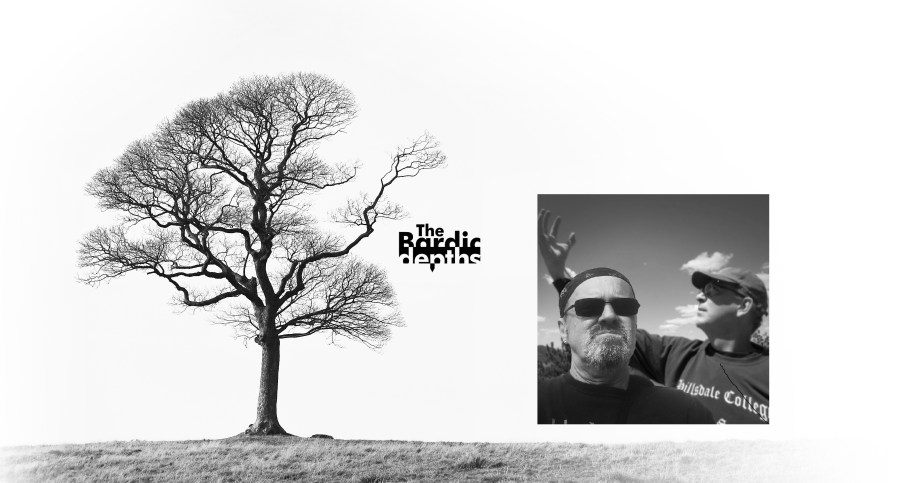
Brad Birzer and Dave Bandana Talk The Bardic Depths… With Each Other
The wonderful Brad Birzer just interviewed his bandmate Dave Bandana to discuss Dave’s background and their new album, The Bardic Depths. The interview doubles as their first time talking to each other “face-to-face” via video chat. This is their third collaboration, and they’ve only interacted by email before this. What an amazing era in which we live… minus the plague of course.
The Bardic Depths is a brilliant album – one you need to listen to. Check out my review and Rick Krueger’s review.
We Need Contact!

I believe I have found the perfect song for these times….
Something to consider as we lose contact:
“Earlier generations understood that institutions anchor our lives. That’s why German children went to school throughout World War II, even when their cities were being reduced to rubble. That’s why Boy Scouts conducted activities during the Spanish flu pandemic and churches were open. We’ve lost this wisdom. In this time of crisis, when our need for these anchors is all the greater, our leaders have deliberately atomized millions of people.
Society is a living organism, not a machine that can be stopped and started at our convenience. A person who is hospitalized and must lie in bed loses function rapidly, which is why nurses push patients to get up and walk as soon as possible after sicknesses and operations. The same holds true for societies. If the shutdown continues for too long, we will lose social function….” – R. R. Reno
Read the full article here.

The Progarchy Interview: Pure Reason Revolution’s Jon Courtney
When Pure Reason Revolution’s The Dark Third was released in 2006, it hit like a bolt from the proverbial blue. At a time when the progressive rock renaissance was still thin on the ground (Porcupine Tree, Neal Morse, Spock’s Beard, and not much else), here was a band that specialized in effortlessly evolving long-form suites, set off by a sweet-and-sour pairing of lush harmonies and aggressive grooves. Signed to InsideOut after the debut album on Sony, PRR added hardcore electronica to their palette on 2009’s Amor Vincit Omnia and 2011’s Hammer and Anvil, after which band mainstays Jon Courtney (vocals, guitars, keyboards) and Chloë Alper (vocals, basses, keyboards) went their separate ways.
Come 2020, PRR is back with Eupnea (a medical term for quiet, normal breathing) — which gave us the opportunity to check in with Jon Courtney. In this expansive interview (lightly edited for clarity), Jon talks about what makes a song a Pure Reason Revelation song, reveals the inspiration behind the new album’s lyrics and artwork, and unravels the unlikely tale of the debut album’s out-of-nowhere success.
So, you have a great new album from Pure Reason Revolution! How did this album happen?
So, If I rewind a little bit … I had this project Bullet Height and that happened after Pure Reason Revolution the first time. So, we made the record and then we toured it a little bit in the UK and did a few shows in Germany. And then it got to the time of “well, I guess it’s time to make another record!” And I think sort of around this time I sort of … I took quite a big break from music anyway, cause I wasn’t too sure what the direction was gonna be and exactly what I wanted to do.
So, I took a break for maybe three to six months and then when I finally did come back into the studio and started recording demos, the demos didn’t really sound like Bullet Height. They sounded more progressive and sounded more like Pure Reason Revolution. And then as these demos progressed a little more, I thought: “Well, you know, this is definitely sounding like Pure Reason Revolution, and if it’s gonna do something and come out as Pure Reason Revolution, then I need to speak to Chloë!”
So that’s when I sent Chloë a message and said, “Look, I’ve been working on these demos … are you free to meet up and have a talk about them?” And then she said, “Yes, it sounds like a great idea to do Pure Reason Revolution again.”
To your mind, what do you see as making a track, a piece of music, a Pure Reason Revolution track? What do you think are the essential ingredients?
(Laughs) The essential ingredient is definitely sort of the vocal interplay with Chloë and I. So that’s a big part. And then, if one of us is doing a lead, then the harmony parts. That’s sort of an essential part of PRR.
What else is essential with a PRR song? I think sort of unexpected moments. I mean, some of the songs do sort of take on a traditional songwriting form, of sort of verse, chorus, verse, chorus, middle eight, blah blah. But you’re always gonna get other surprises on an album, where the songs are more sort of journey songs – there’s ups and downs, there’s light and shade, there’s heavy aggressive moments, and then there’s moments of beauty, really, with light piano parts. So, we always like to take the listener on a journey and have these surprises along the way.
As you say, the way you and Chloë harmonize is a core piece of the PRR sound. What else does she bring to the party?
On this record … the initial demos, it was me sort of jamming away in my studio in Berlin, just with the computer, just recording … I’d come up with some ideas on guitar and piano, then I’d record them in, and then the tracks just developed from there and built and built.
I had Greg Jong, who was the original guitarist from PRR. He came over to Berlin for a couple of weeks; he’s based actually in Portland in your country, and we collaborated on a couple of tracks. And, while recording, stuff would get sent over to Chloë.
I think Chloë and I, she did a couple of vocal sessions together; we did a UK session and then a Berlin session on vocals. But a lot of the vocals were sort of sent via Internet; I’d send her some parts, and she’d have a play around with those, singing those parts, and then send them back to me. Then there would new stuff to sing, new harmony parts, all that kind of thing. So, a lot of Chloë and I’s collaboration was not in the same room, if you like, but via Internet. The main collaboration on the music was when Greg came over here for a couple of weeks.
I’ve always found her bass playing to be a very powerful part [of the sound]; it really gives [your music] that low end drive.
On the album, there’s various basses: there’s bass guitar, there’s programmed bass as well. There’s a brilliant bass module I use called Trillian. It’s basically a software instrument for all things bass: you can dial up things like Fender Precisions or Stingrays; you can put them through different amplifiers. But there’s also things from Moog Prodigys through to Prophets to just loads of cool synthesizers – but all sort of based around the bass sounds.
So, I think the album’s a real mix of the bass guitar and this bass module Trillian. But yeah, the bass is obviously a big part of the music.
And it also strikes me that the integration of the vintage sounds with the more modern structures and beats – and then you throw you and Chloë’s harmonies on top – that’s really what makes the whole pudding come together, so to speak.
Yeah, the vintage sounds … we unashamedly have progressive rock influences, be that from Pink Floyd to King Crimson to Yes or whatever. But through to bands like Air as well, or Massive Attack or whatever. There’s a real mix of influences in there, from ’60s/’70s stuff through to modern productions now. And we do take influence from some of these ’70s bands.
But we always want to make it sound like a modern production; we don’t wanna make records that sound like they were made back then. We take influences from multiple genres and areas, and then it goes into sort of this bubbling pot, and then you get Pure Reason Revolution.
So, your new album is called Eupnea – how does that word portray the album? What does it say about what we’re gonna hear or what you’re trying to convey?
I’m not too sure! I heard this term when – so, lyrically, a lot of the album comes from an era just after my daughter was born. Because she was born very early. So, we went into intensive care, ‘cause she came at 32 weeks. And she needed this stuff to go into the lungs to open up the lungs, and she had these breathing issues. And this was one of the terms I heard when we were in hospital.
So, yeah, I heard this word and then the album’s lyrical content reflects a lot of the highs and lows we had, the uncertainty that we went through as parents, totally helpless to do anything. We had this magical moment of her arriving, and then steps forward, steps back.
I think the album sort of reflects these highs and lows, and some of the sort of more heavy, more doom moments reflect the worry, uncertainty and some of the chaos. And then there’s moments of beauty as well, where a bit more light came onto situations, and we had more hope about how things were gonna go. And she is now a healthy 2 ½ year old, so we’re very, very grateful for what happened.
I’m so glad to hear she came through. From my initial listen to the album, what you say about the content, that makes a lot of sense; that locks in the emotional content for me. How does the cover art play into the picture? Was it just, “Hunh, this is a cool-looking picture,” or is it related to the content?
 It is absolutely! So, this connects directly to what I was just talking about. So, one day I was in the hospital late with Jessie and she was in this incubator, and I could put my hands through and just put my hand on her. I was sitting by this incubator and one of the nurses came over, and she said, “Jessie, she’ll make it through; she’s strong like a little lion.”
And that night when I got home, I was flicking through some social media, just trying to switch off. And then I saw this painting, and it was by a friend of mine, Jill Doherty. And so, soon as I saw it, I just thought “Wow! This connects with this lion thing earlier.” And to me it was a lion breathing.
So, I then sent Jill a message saying, “Look, I had this experience today, and then I saw your painting, which I think is amazing, by the way.” And I had a screenshot of this picture and it was in my mind. But then as the material progressed, I thought, “You know, this painting really connects with the material.” So then I got in touch with Jill and I said, “Look, Jill, I’d really love to use this for the album.” And she said, “Yeah! I’d love you to use it.” She said it’s actually a lion roaring, not a lion breathing, but that doesn’t matter, and she really loved that that was my interpretation of it.
And again, that helps that piece of the puzzle fall into place. It’s a powerful, dramatic painting; it’s not a take it or leave it circumstance. And again, it ties in with your subject matter and what you’re trying to convey.
And what I also liked about the painting is that, if you look at the detail, if you sort of scan in on the mane of the lion, it shows real skill, it shows real craftsmanship. And I really like the way that, with the music — we didn’t sort of record this album in an afternoon. It took a long time to work on this record, to layer up the harmonies, to play things in precisely, to get it mixed really nice. I like the way that [the painting] slightly mirrors that; there’s a lot of craftsmanship and you can see there’s time spent on both things. And that’s what I like.
Continue reading “The Progarchy Interview: Pure Reason Revolution’s Jon Courtney”
Progressive Music in a Time of Pandemic
In the era of Napoleon, the Prussian diplomat Klemens Wenzel Furst von Metternich coined the phrase, “When France sneezes, the whole of Europe catches a cold.” Like all good clichés, it’s been re-purposed endlessly since the 1800s. Which leads to today’s question: when the music industry of 2020 catches COVID-19, what does the progressive music scene come down with?
In the last few weeks, the toll of the current pandemic has been steadily mounting, with the postponement or cancellation of tours by Yes, Steve Hackett, Tool and Big Big Train (plus this year’s Cruise to the Edge) at the tip of the iceberg.
The tale of Leonardo Pavkovic, impresario of MoonJune Records and MoonJune Music (Bookings and Management) is all too grimly typical; since the outbreak of coronavirus, eight MoonJune-booked tours have been cancelled at a loss of about $250,000 to the artists, with many more tours now in jeopardy. MoonJune artists Stick Men lost 8 of 9 concerts in Asia, plus their US spring tour; touch guitarist Markus Reuter resorted to GoFundMe in order to make up for the loss of six months’ income.
So where’s the good news?
For one thing, the plight of progressive musicians has resonated strongly with their fans. Reuter’s GoFundMe goal was met in just over a day; Pavkovic has had a newly positive response to MoonJune’s digital subscription program and discount offers. (Full disclosure: I’m a digital subscriber and I love it!) And now Bandcamp is getting into the act:
To raise even more awareness around the pandemic’s impact on musicians everywhere, we’re waiving our revenue share on sales this Friday, March 20 (from midnight to midnight Pacific Time), and rallying the Bandcamp community to put much needed money directly into artists’ pockets.
So (if your situation allows it), who can you support via downloads, CDs, LPs and merch bought on Bandcamp this Friday? Well, you could start with four fine new albums I’ve reviewed this year:
- The Bardic Depths (as well as the Birzer Bandana back catalog)
- Pat Metheny’s gorgeous From This Place
- Fernando Perdomo’s Out to Sea 3 (as well as the first two albums in the series)
- Markus Reuter’s devastating Truce
Then move on to other artists well loved on this blog:
- Big Big Train
- Cosmograf
- John Holden
- iamthemorning
- (plus Gleb Kolyadin’s 2019 solo smash & Mariana Semkina’s delectable new album Sleepwalking)
- Dave Kerzner
- Schooltree
- Sonar
- Stick Men
- Bent Knee lead vocalist/keyboardist Courtney Swain
- Tiger Moth Tales
- Andy Tillison/The Tangent
Best of all, the music keeps on giving. Leonardo Pavkovic is already sharing details about his next MoonJune albums: a live set from Stick Men’s only uncancelled Asian concert, plus an album of improvisational duets by Markus Reuter and pianist Gary Husband recorded during down time in Tokyo. And jazz-rock master John McLaughlin has made his most recent album (Is That So with vocalist Shankar Mahadevan and tabla player Zakir Hussain) available as a free download.
Whither the music industry in time of pandemic? As with everything else, it’s way too soon to tell. But, if all of the above is any indication, progressive music — due to the indefatigable, awe-inspiring musicians who make it — will survive.
— Rick Krueger

The Bardic Depths – A Prescient Album
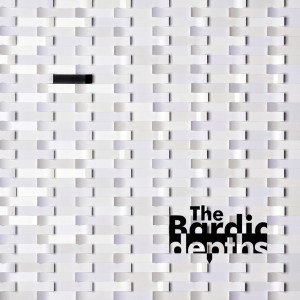 The Bardic Depths, The Bardic Depths, 2020 (Gravity Dream)
Tracks: The Trenches (8:36), Biting Coals (7:50), Depths of Time (12:35), Depths of Imagination (5:01), Depths of Soul (6:40), The End (7:38), Legacies (9:28)
Longtime readers of Progarchy are well aware that just about everything written by Dr. Bradley J. Birzer is brilliant. The previous two album collaborations between Brad and Dave Bandana, 2017’s Becoming One and 2018’s Of Course It Must Be, were both great. I noticed strong strides forward in the second album, and I hear a huge leap forward in this third collaboration in the form of a more formal band called The Bardic Depths.
Birzer still handles the lyrical output and Bandana acts as the musical director, but 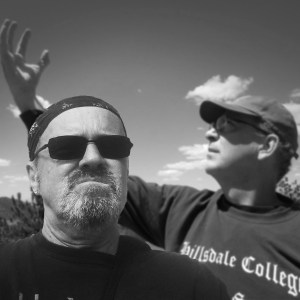 the cast of characters has broadened greatly. Cosmograf maestro Robin Armstrong realized the brilliance in the demos and decided to both mix the album and make it the first release on his new record label, Gravity Dream. Along the way Bandana began asking people here and there to contribute to the album, and before he knew it a more refined sound had emerged. The Big Big Train facebook group became a means of connection for Bandana and the extraordinary Peter Jones (Tiger Moth Tales, Red Bazar, Camel). Jones contributed a couple soulful and beautiful saxophone solos. Gareth Cole and Robin Armstrong contribute some blistering guitar solos, and a host of other talented people contribute their musicianship and vocal talents (including spoken word). Sir Brad himself makes multiple appearances with the spoken word. Having had the fortune of taking one of his courses when I was in college, I can tell you he was blessed with a fantastic speaking voice, second to only Dr. Tom Conner in the Hillsdale College History Department.
 Progarchy