Well, are you really who we think you are?
Or does that smile seem to wear you down?
Is the girl who you once were screaming to jump out?
And the dream that you must live
a disease for which there is no cure?
This roller coaster ride you’re on…
Won’t stop to let you off…
Well, aren’t you Miss America?
Happy birthday America! You aren’t perfect because humans aren’t perfect, but you’re the best form of government we’ve come up with yet. May you outlast those who wish to destroy you from the inside and from the outside.
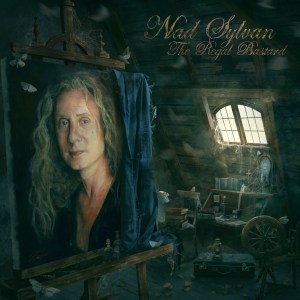
Nad Sylvan, The Regal Bastard, InsideOut Music, 2019
Tracks: 1. I Am The Sea (7:49), 2. Oahu (4:19), 3. Whoa (Always Been Without You) (7:22), 4. Meet Your Maker (6:36), 5. The Regal Bastard (12:22), 6. Leave Me On These Waters (5:49), 7. Honey I’m Home (3:02) Bonus Tracks: 8. Diva Time (4:52), 9. The Lake Isle of Innisfree (3:43)
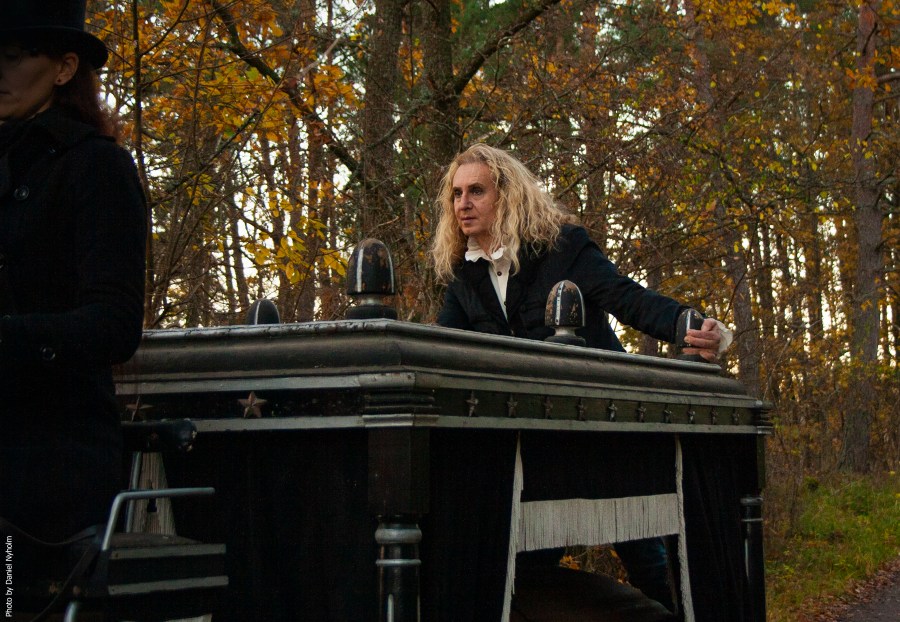
On July 5, the mighty Nad Sylvan releases the third in his trilogy of Vampirate themed albums, following 2015’s Courting the Widow and 2017’s The Bride Said No. The Regal Bastard finds the Swedish artist subtly transforming his sound for a third time. Across all three albums, his sound has developed and matured while remaining distinctly Nad Sylvan. Nobody else makes music quite like this. He honors the tradition of progressive rock (can a tradition be progressive?) musically and lyrically. The music is complex without being overly technical, and it shifts in style enough to keep the album incredibly interesting on repeated listens. In fact, it is layered in such a way that the listener discovers more with each listen.
Some have commented that some of the songs take a bit more of a pop approach, and if that’s true, then it is in the vein of Steven Wilson’s definition of pop, not whatever trash is currently sitting atop the American top 40 charts. This music is tasteful. And it is still 100% prog.
It is hard to nail down particular stand-out tracks because every song is fantastic. “Whoa,” “Meet Your Maker,” and the bonus “Diva Time” are my personal favorites, but the longer “The Regal Bastard” is also a very compelling progressive piece. You can’t go wrong anywhere on this album. His guest artists, which include the likes of Steve Hackett, Guthrie Govan, Nick D’Virgilio, Tony Levin, and many other talented folks, interpret Nad’s music faithfully while adding their own touch. Jade Ell, Sheona Urquhart, and Tania Doko return on backing vocals – their voices have helped add depth to Nad’s music in the past, and it is great to hear them return.
2019 has been an especially strong year for prog so far, and even in that environment, Nad Sylvan’s The Regal Bastard stands out. His music is unique and powerful. This is not an album to be missed.
This past Friday, June 28, 2019, I had the wonderful opportunity to talk with Nad via Skype about the album, his writing process, singing for Steve Hackett, and other related topics. I screen-captured the whole interview, but even the compressed video file is too big for WordPress’ liking. You can still listen to the audio or read the transcript, which has been very lightly edited for readability, although it is wholly uncensored.
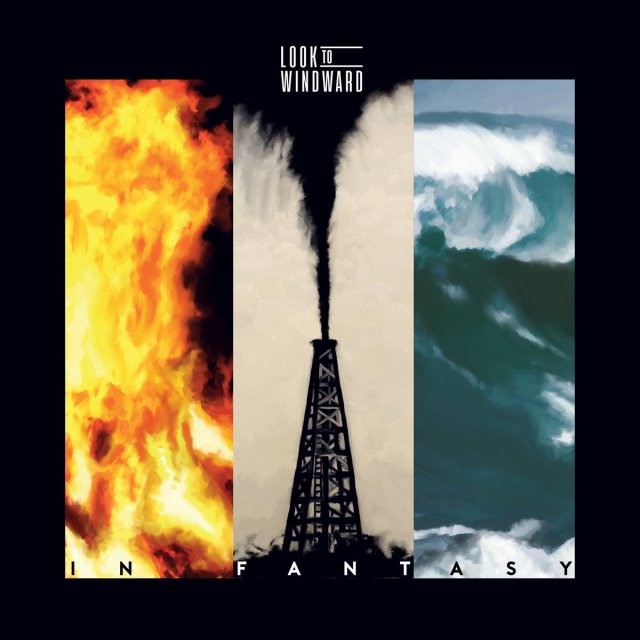
Look to Windward is a progressive rock/metal studio project by London-based musician Andrew McCully who has released two studio albums, two EP’s and a single since 2010. The latest release is this year’s full-length album entitled “In Fantasy.”
In an interview for Progarchy, McCully talks about his project, the scene, and more.
Let’s start from your early music beginnings. How did your musical career begin? When did you start playing? Which groups have been your favorites as a young man? Please tell us something more about your early life.
My earliest memories of performing music were learning the recorder and clarinet before receiving a birthday present of an electric guitar in my early teens. That started it all really. I was also singing in choirs throughout school. I grew up surrounded by music performance. Then around the age of 11 I connected with a close friend over mutual music tastes and we continued to share and listen to music together leading to writing and performing on our own in high school when we recruited a drummer from my jazz group, Jono Sawyer.
I have rather distinct memories of 4 albums from my youth that really started to define my interests and passion for rock music. The first was Mellon Collie and the Infinite Sadness by The Smashing Pumpkins (which was the first album I ever bought). I still regularly listen to this masterpiece. Then came Metallica’s Reload (a strange one to start with I know) and Ok Computer by Radiohead (which remains my favourite album). And then I can’t leave out first hearing Dream Theater’s Scenes from a Memory when I was 15. I don’t listen to them anymore really but it opened up an entire world of prog related music to me.
How did you go about starting Look To Windward?
LTW began as some basic riff experiments with my friend and collaborator Ben Morley, and we created our first track out of that (which I believe was Forest Is Moving from the first album Fortunes Haze). We were looking for a way of exploring all the epic prog-metal ideas we were talking about and without the ‘restrictions’ of having a band to play it live we went nuts. The first album grew over 2 years of messing around and I’m proud of what we made. There was a lot of self taught music production done along the way.
In the beginning, did you have some “fixed” tempo in composing songs or everything was a product of jamming, improvising?
A bit of both I think. Sometimes I might tackle a song with a specific feel in mind or I might just be jamming with my guitar and find something I like. Then it’s a case of slowly building up the layers and melodies on top of this.
How would you describe the music from your new album “In Fantasy” on your own?
Progressive Rock with elements of Metal, Alternative Rock and Pop I think. I was trying to focus more of clarity and structure for this album, not to say I don’t value the unrestrained, layered intensity of my first 2 releases.
What was your approach to writing the album like?
Much like it has been in the past. Just lots of exploration. I would say that I threw out more ideas this time around though. Either because it was harder to generate ideas I was happy with or because I was being stricter in regards to my desired sound for the album.
You pay attention to atmospheric and ambient elements in your music. How important it is for the structure of your songs?
Dynamic contrast is integral to Look To Windward’s sound. I love creating the flow between great intensity and ambient calm. I’d say the structure of the songs in this regard is what I pay attention too the most!
How do you see the prog rock/metal scene today?
I have mixed feelings about it. There are artists doing genuinely interesting things but a lot of what is called progressive is rather stagnant and derivative. Particularly in metal, where copying a certain sound has become quite widespread. I’m guilty of it myself. When the technique of locking your kick drum in with a de-tuned guitar chug works so effectively it’s hard not to dip into that well. When you look back at how far the genre came from the 80’s into the 90’s and early 2000’s you want to see that kind of innovation now. There are small pockets of innovation but it isn’t genre wide yet.
Do you consider yourself a part of any specific cultural movement, however peripheral?
I’m probably part of the movement of DIY musicians creating fully realised music at home. The tech allows 1 person to take on the role of a full band. That’s why it was important for me to get as many guest musicians performing on the album as I could. It elevates the music beyond what I could do myself. Devin Townsend is the model I aspire too here.
Are you also involved in any other projects or bands?
At the moment I’m not. Look To Windward fully scratches that itch for me. That being said I’d like to collaborate more on the songwriting for the next album, too add some new flavours to the palette.
So, what comes next for you?
I’m taking a break from writing and recording for a while, but I already have some ideas brewing for the next release.
“In Fatnasy” is out now and is available from Bandcamp. Follow Look to Windward on Facebook.
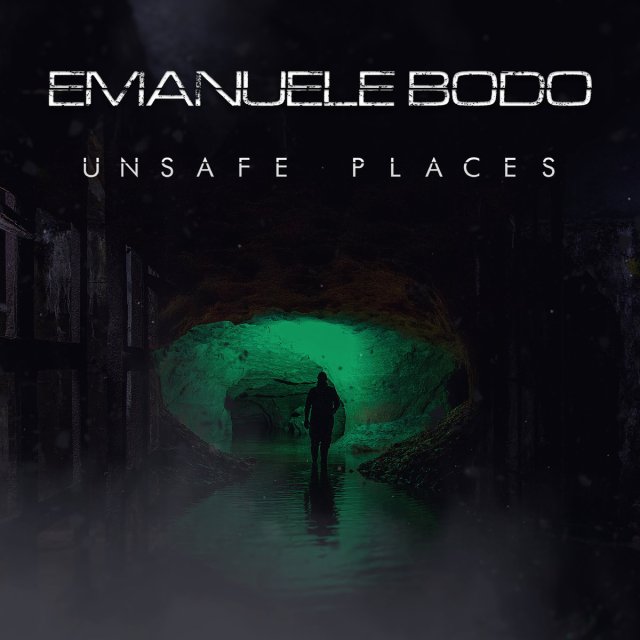
Progressive-rock and jazz-rock often share a common bond, yet many artists either tilt the scale towards technical gymnastics or focus on strong song-form and fine-tune the balance of justice with judicious soloing spots. “Unsafe Places” marks the first album by Italian guitarist and songwriter Emanuele Bodo, who gathered a line-up of highly skilled musicians to help him with his musical vision.
The musicians uphold a well-defined, group-centric line of attack, consisting of foot-stomping fuzoid rockers, often tempered by Bodo’s sonorous phrasings. His zinging crunch chords and soaring single note leads are contrasted by keyboardist Davide Cristofoli’s fluidly streaming lines. Moreover, the band integrates catchy themes into these impacting works. Thankfully, the group attains an equilibrium, where dynamics are acutely employed among the swirling interludes and off-kilter time signatures that instill a sense of adventure into the grand mix.
A portion of their sound is designed with brief nods to the days of progressive-rock yore, with a manifesto that transmits a hip group-centric disposition, tinged with modernist tendencies. Overall, the material reigns supreme, and it’s easy to discern that this is not an album that was recklessly slapped together. Emanuele Bodo’s self-titled recording debut is a persuasive one, indeed. Get if from here.
Webster’s Dictionary defines “surreal” as an adjective meaning “marked by the intense irrational reality of a dream.” In other words, something so bizarre that it shouldn’t be real, yet it is. This may be the most accurate name for an album I’ve ever encountered.
Composer, musician, engineer, and producer Garrett N. has a background making music for commercials, films, and documentaries, in addition to a few of his own progressive albums. That background helps explain the non-traditional nature of this album. Garrett performed all the music on the album, displaying wide musical talents. He also sings on the few tracks that have lyrics.
Let’s Get Surreal is extremely synth-heavy in a Pink Floyd sort of way. I’d say Floyd is the biggest rock/psychedelic influence here, and at times it works very well. The first four tracks in particular are quite strong in this regard. There is a sci-fi cinematic feel to some of the synths sounds too, in a sort of 1950s alien sci-fi movie way. With that said, the slightly distorted acoustic guitar on “The Eternal Laugh” is a welcome addition. The next track, “Quiet,” features what sounds like extremely distorted electric guitar… maybe too distorted. Definitely a gritty sound. The blending of different types of synths, drums, and guitars manages to work, however. The bit of flute on “Scorpio/Ramos” is nice, although the song could have used a lot more of it.
Garrett appears to making a bit of a political statement on a few tracks, particularly on “Saddam/Espace.” This song has a remix of former US President George W. Bush giving a speech about Saddam Hussein and all that mess. It is an interesting reworking of the speech, with blurred repetition of Bush saying “terror” playing through the background. The album was recorded between 2013-2017, so this track seems like it is 10-15 years past when it should have been released. That particular moment has passed, making this song lose a lot of its punch.
At an hour and thirteen minutes in length, the album kind of drags a bit because a lot of it sounds the same. There are a few songs that could have had a few minutes trimmed out. The album is at its best when other instruments are mixed in with the synths, rather than the lengthy sections that are only synthesizers.
Ultimately, this album sounds more like a tv show soundtrack than it does a rock album. It is mostly instrumental, with synths dominating the instruments being used. As such, it doesn’t sound like a typical instrumental prog album. There’s nothing inherently wrong with that, but it does feel like we are missing a piece of the puzzle. “Let’s Get Surreal” won’t be for everyone, but those into the more psychedelic side of prog should appreciate it.
Thank You Scientist with Bent Knee and Entransient at The Pyramid Scheme, Grand Rapids Michigan, June 13, 2019.
“There’s only one way to rock!” — Sammy Hagar
Well, that’s one school of thought. But after this downtown club triple-header, it struck me that (at least in theory) there can be as many paths to playing progressive music as the number of artists that give it a shot. On Thursday night, three fine young bands unwittingly tested my hypothesis, approaching their music in three very different, equally valid ways.
Grand Rapids’ own Entransient, fresh from a showcase gig at Florida’s RosFest, kicked things off. The quintet’s 3-song, 30-minute set of “melodic neo/post-prog rock” refined readily admitted influences (Anathema, Opeth, Porcupine Tree, Pineapple Thief) into their own unique blend, with a rich sound and atmosphere. While guitarist Doug Murray and drummer Jeremy Hyde were standout players, the group as a whole (fronted by Scott Martin on subtly tasty keys and fierce vocals) was thrillingly tight and professional. Prog metal bands are a dime a dozen these days, but Entransient has a distinctive, readily appealing touch. As they blaze a fresh trail in a genre that easily collapses into cliche, they’re well worth a listen.
By contrast, Bent Knee dove into their local debut determined to sound like nobody but themselves. With Courtney Swain’s sweeping synth sounds and bracing, uninhibited singing to the fore, the Boston sextet blew through a clutch of mostly new material, including the recent single “Catch Light”. Their sound is artful, cinematic and immersive — a unpredictable, unstoppable rollercoaster ride of dynamic, rhythmic and textural contrasts and transitions, underpinning allusive, cryptic lyrics. You’re pulled in, put through the wringer — then ejected, safe and smiling! It was a joyful, cathartic set, and the biggest crowd of the night readily caught the vibe; Swain made a lovely announcement about how she doesn’t like to compare audiences, but she loved this one. Their closer “Lovemenot” launched guitarist Ben Levin and bassist Jessica Kion into full pogo mode, with Levin gleefully diving offstage to cap the evening. An impressive, enjoyable experience — and a real revelation to me; I’d go see Bent Knee again in a heartbeat! (Photos below by Robert Henry)
To wind things up, Thank You Scientist pumped up the energy another level; the heady mix of Snarky Puppy-ish jazz/funk chops and Mars Volta-like whiplash transitions could have come from no other band. Focusing on the brand new album Terraformer for their 90-minute set, the virtuoso New Jersey septet reeled off complicated riffs, head-spinning solos and breakneck unison lines with awesome precision, with Salvatore Marrano’s idiosyncratic falsetto vocals soaring over the adrenalized counterpoint. To be honest, I found TYS’ non-stop barrage relentless to the point of exhaustion at times; good thing founder/guitarist Tom Monda whipped out his Chinese shamisen to change the pace on an instrumental rhythm section feature. Great horn work from Sam Greenfield on sax and Joe Gullace on trumpet then set up a towering version of Terraformer’s title track, with violinist Ben Karas and Monda tearing it up as Marrano’s surreal narrative brought the delighted audience into the home stretch.
So yeah — there’s more than one way to rock — and to progress — and each of these committed, talented bands proved it! Enjoy them when they hit your town.


 Nad Sylvan, The Regal Bastard, InsideOut Music, 2019



 Garrett N., Let’s Get Surreal, 2018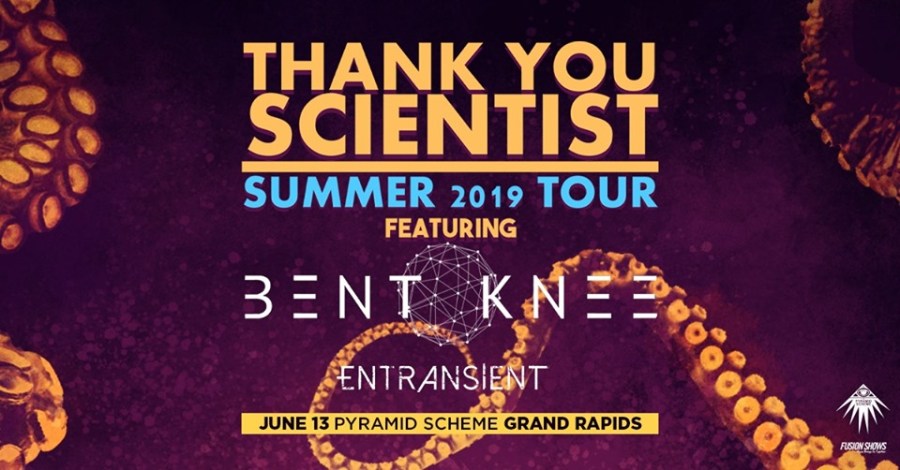


 Progarchy