
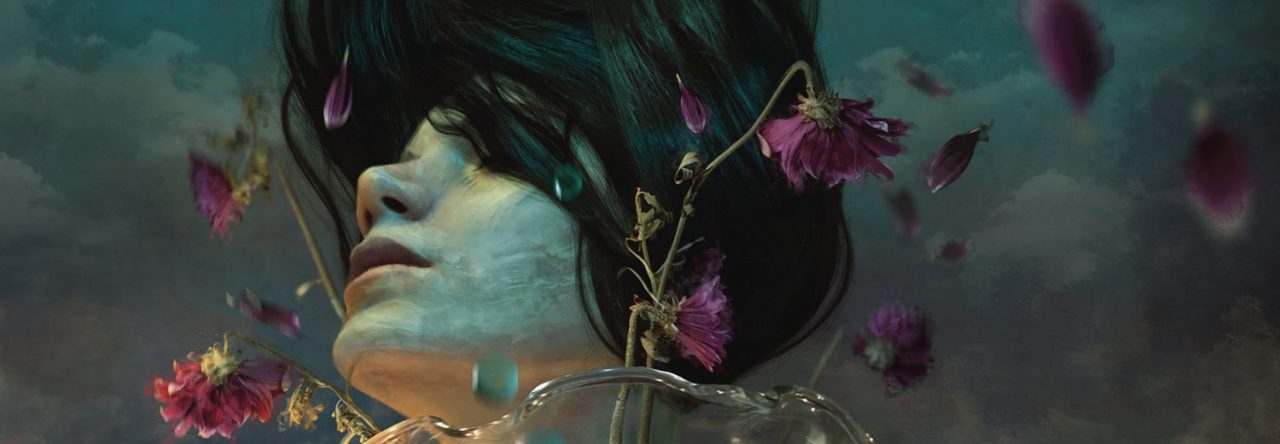
Royal Albert Hall appears to have finally sorted its acoustics and sound system issues. I’ve never seen a show there, but I’ve heard many live albums from progressive rock artists who have played there. Most of those recordings sound like garbage because of the physical environment in which they were recorded. Hopefully this new system they have will remedy the 150 year old problem.
Nad Sylvan Releases First Track Off Upcoming Album
The brilliant Nad Sylvan has released the first single from his upcoming album, The Regal Bastard. The album will complete Sylvan’s Vampirate trilogy.
More from Inside Out:
Continue reading “Nad Sylvan Releases First Track Off Upcoming Album”
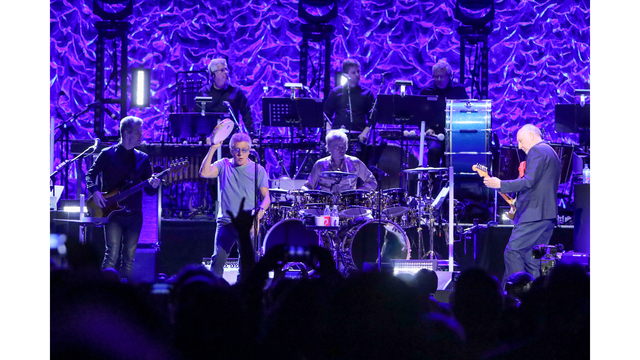
In Concert: The Who – Moving On!
The Who, Van Andel Arena, Grand Rapids Michigan, May 7, 2019.
Taking the mike as The Who casually took the stage, surrounded by a 49-piece orchestra, Pete Townshend saluted my adopted hometown. “Grand Rapids — on the Grand River — a grand occasion!”
As I’ve noted before, Michigan has played an outsized part in The Who’s history — the site of their first US hit single (“I Can’t Explain”, in Detroit) their first US gig outside New York (the Fifth Dimension Club, in Ann Arbor), their first car driven into a swimming pool (at Flint’s Holiday Inn). Tuesday night brought a new “first” — the opening night of an ambitious band-plus-symphony tour. Would it be a brave triumph? A crazy experiment? An baffling failure? A cynical cash grab? We would get to find out — first!
What we got was a mix of the first two possibilities — thoroughly intriguing and pretty gripping, worth some shaky moments and rough pacing for the sheer, audacious impact of the whole package. The evening was by no means a smooth ride or a safe play to a sold-out sports arena crowd; parachuting into unfamiliar sonic terrain, The Who had to blaze new trails forward. They stumbled at times, but when they found their feet, the musical vistas they discovered could be downright glorious.
20 Looks at The Lamb, 20: Getting Down to “It”
 This is the end. (Doors again?) The end of “the line.” The last stop (or will there be an “epilogue”?). Curtains. (I think of Bugs Bunny as Gangster Bugs, telling Rocky, “It’s gonna be coitins for you! COITINS!!” (“Aw, they’re adorable!”)
Remember that the end is arbitrary, given the parameters I laid down (set down? set down, servant; I can’t set down?). Arbitrary means a (non-random) decision was made. It’s the 20th Look at The Lamb. Last stop. Everybody out! Los Endos! …but that’s a different Genesis, isn’t it? (There’s an angel standing in the sun….)
An end is a goal as well as a stopping point or cessation. And today, almost a year after Look 19, the goal is to end. I want to get this out of my system, but lo! it will take its place IN the system that is “me” (wrapped around my “I” like a package with all the ingredients, nutritional information, warnings, etc.). It will not be OUT of my system. You’ve gotta get in to get out.
 It would make sense, here at the end (if it is the end) to go back to the last track, “It.” I’m on record as being less enthused about that track than the rest of The Lamb, but I also admitted that its lack of appeal might be its appeal, if I can put it that way. And now that I am here, a little more than six years after the beginning (the genesis), when I look again at the lyrics to “It,” I see it with different eyes. Of course, I should say, with a different regard, a different look.
So what does “It” look like? How does “It” look? We are looking into “It”, but to paraphrase an overused Nietzsche sound-bite, if we gaze long into “It”, perhaps “It” will also gaze into us. So considering both meanings, how does “It” look?
In the LItany (get it? L-It-any) of places where “It” is, one place (locus, lieu, site) in particular strikes me today: “It” is “in the distance of the face.” The French philosopher, Emmanuel Levinas, writes of how the other person, the Other (capital ‘O’) is given to me in the face (visage), which (considered as a phenomenon, as experienced by the one to whom the face appears) is not so much a thing that is present, but a medium through which an absence is made manifest (“present”).  The Other appears to me as a trace, which is the term that Levinas and others in his wake use for what is really the absence of something. But it is not a mere absence. It is an absence that is pregnant with meaning, an absence that is a positive “datum” (like the absence of fingerprints at a crime scene when they’ve been wiped away). It’s the absence of something, but it is as if it (It) WAS here, just a moment ago. Instead of It being in my world as other things are, it is an embodied refusal to be IN my world. It is another world, so to speak. The Other, for Levinas, is infinity (in relation to what I would have assumed would be my world, my totality.
I know the Other has been a theme earlier. All of this has been lurking here, from the beginning (the genesis). Have I said any of it explicitly before? I’m not carefully checking; I’ll risk repetition.
So what is the distance of the face? If we listen to Levinas, perhaps it is that “presence of absence.” Perhaps it is the infinity there in anOther’s face, which is (among other things) infinitely more than I can think. It is infinitely more than I can grasp. The distance in brother John’s face… is it an icon of the distance in my own face? My own face is never really given to me — or more strictly speaking, to I. Rael’s face, John’s face, Rael’s face, John’s face…. Add up the distance between Rael’s face, John’s face, Rael’s “I” (better that ordinary word than the Greco-clinical ‘ego’), my “I”, your “I”. The answer will always be the same as it was when the adding began: infinity. It’s kind of like dividing by zero, except the program, instead of just crashing, goes into an infinite loop. (Once in, is there an out?)
And adding here is nothing that an abacus could help you with. Infinity is not a quantity here, but a quality.
It is chicken, it is eggs,
It is in between your legs.
It is walking on the moon,
Leaving your cocoon.
Where are you when you leave your cocoon (if you ever really do)? If we say “infinity,” we both do and do not give an answer. If we say “It”, we might be closer in some sense, but we still both do and do not give an answer.
Perhaps the only way to answer the question is to come out of the cocoon. But the risk is that we come too too soon. (It is in between your legs.)
Listen again, and do whatever you need to do to leave your cocoon. Do whatever you need to do to really be open to the Other. See if you can get in to get out. See if you can find that gift shop at the end, where you can buy a bumper sticker that says I Found “It”!
This is the End. But is “It” the End? Will the light die down? Or (God, this sounds hoaky, but it’s inescapable) is it another beginning (genesis)?
“Keep your fingers out of my eye.”
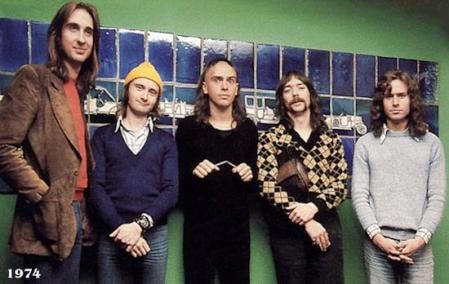
Album Review: Amorphis — Queen of Time

I finally made time to explore this acclaimed album from 2018. And it has quickly become one of my very favorite listens over the past few weeks. Yes, indeed, it’s an absolutely superb metal album.
In 2018, it was chosen as Record of the Month for May 2018 by AMG (full review here), and also #5 on the list of Best Albums of 2018 by MoMM (full review here). So, now it’s official over here at Progarchy: I add my voice to the chorus of praise.
My entry point was the amazing song “Amongst Stars,” which features Anneke van Giersbergen joining the vocals. After I had listened to that magical song a half dozen times, I was totally hooked. And I soon downloaded the rest of the album, thus beginning a happy journey of wondrous audio exploration.
If you are skeptical about an album full of death metal vocals and growls integrated into proggy metal that also has stunning clean vocals, this is the album to convert you to the expanded artistic possibilities opened up that sonic palette. For me, it was “Heart of the Giant” that demonstrated what only death metal vocals can effectively accomplish in tandem with epic riffs and big choir arrangements. This is an invigorating song to revel in.
But every song is exciting in its own way. An infusion of world music modalities and folk music influences give a distinctive edge to practically every song on the album. You’ll hear Celtic, Middle Eastern, and much more. But that’s the sharp edge of a very heavy musical broadsword wielded by the band. With finesse, its audio slicing motions frequently deploy virtuoso guitar solos and spacey synth keyboard solos.
Every song is indisputably upper echelon, but we will each have our favorites. In addition to the two I already mentioned above, I would name “Daughter of Hate” (thanks to its unexpectedly effective saxophone solos), “Wrong Direction,” and then the two bonus tracks, which seem to be most accessible to prog lovers (“As Mountain Crumble” and “Brother and Sister”). But who am I kidding, I also look forward to the powerful one-two punch of the openers “The Bee” and “Message and Amber.” In truth, every track thrills as it comes on over your speakers.
Now that this album has taken pride of place on my daily playlist, I am really looking forward to seeing Amorphis when they visit here on tour with Delain and Anneke later this year.
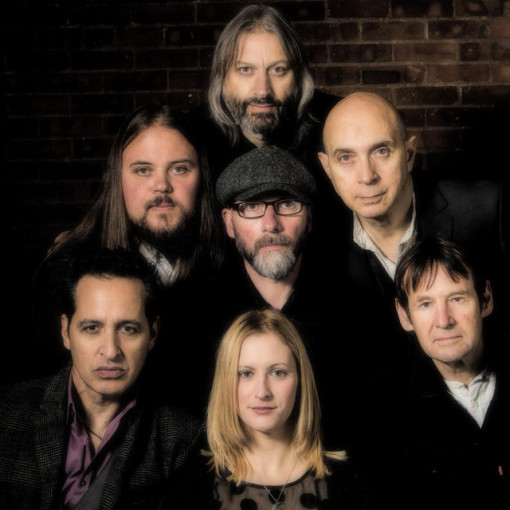
Big Big Train, Grand Tour
What prog rock does is to free artists from some of the limitations of pop, rock and folk music whilst incorporating their best elements e.g. memorable melodies or story-telling. The sweet spot is where high-quality songwriting and interesting music collide.
— Greg Spawton, “What is Prog?” (from Big Big Train’s 2017 concert program)
A sweet collision indeed. On the new album Grand Tour, the members of Big Big Train extend and refine their sonic vocabulary, and broaden their topical reach from the seminal Albion cycle (The Underfall Yard, English Electric, Folklore, Grimspound and various offshoots) to explore a wider, sometimes wilder world. As fans have come to expect, it’s both instantly appealing and bracingly challenging — richly melodic, spikily rhythmic music, continually reaching toward symphonic scope; words that reflect on, rejoice in and ruminate about the wonders of the past and present, this time breaking out beyond Britain to Europe and to farther shores.
Admittedly, Grand Tour starts more tentatively than some previous albums: setting the scene and foreshadowing what’s in store, “Novum Organum” (the first of drummer Nick D’Virgilio’s composing credits, with bassist Greg Spawton) is a gently hypnotic prologue for patterned percussion and keyboards. It eases us out of the dock into the harbor, with David Longdon sounding the album’s themes at low tide, setting sail “for science and for art.”
But before we can drift off, Longdon’s “Alive” slams in — a rocking kick-off that urges listeners to “Find your wings/Dare to fly/Find your feet/Then run for dear life”. Straightforward rock with a lighter, contrapuntal bridge, it’s a powerful, limber groove with lots of nifty textural touches (backing vocals at the octave, poppy handclaps, Spawton’s bass pedals under the driving rhythm, Danny Manners’ defining Mellotron riff and in-your-face synth solo, spiffy keyboard and guitar filigree at unexpected moments). And Longdon is having the time of his life, reveling in the new day to seize and the beauty awaiting him. He’s raring to go — and the invitation to come along is irresistible.
To Hear His Wondrous Stories: Jon Anderson in Concert

The lights are dimmed. “Ocean Song,” the opening track from Olias of Sunhillow, plays in the background as the band members (eight in total) find their positions on stage. Suddenly, the guitarist strikes the familiar opening chords of “Owner of a Lonely Heart”: the show has begun. Seconds later, a diminutive man, clad in black, glides onto the stage. His voice, tinged with that distinctive Lancashire accent, is a bit raspier now, but his vocals are nevertheless clear and melodious. Jon Anderson the performer has not changed a whole lot over the years. And he did not disappoint last night.
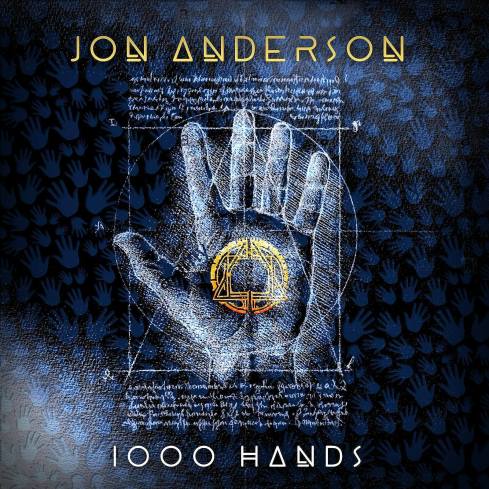
The Yes catalogue is both diverse and extensive, and Anderson made some excellent choices: “Owner of a Lonely Heart” was followed by a jazzier version of “Yours Is No Disgrace” (Anderson has a woodwind and horn player accompanying him on tour). Also in the setlist, sandwiched between selections from his solo albums, were “I’ve Seen All Good People,” “Sweet Dreams,” and an acoustic version of “Long Distance Runaround.” I must confess that I am not too familiar with Anderson’s solo work, so I was not as engaged with the songs he chose to play from his personal catalogue, but a few did capture my attention. Before transitioning into a dynamic performance of “Starship Trooper,” Anderson played two songs that had never been performed prior to this tour: “First Born Leaders”, a song he has been working on for some time (around thirty years), and “Come Up”, a previously unreleased song from the album he just recently finished, 1000 Hands: Chapter One. This new album was actually a project begun nearly thirty years ago, but was left forgotten in a box in Anderson’s garage until 2016. Considering the heavy-hitting talent that was featured on the first chapter—Ian Anderson, Billy Cobham, and the late Chris Squire, among others—it will be interesting to see where Anderson goes next with this project.
At 74 years old, you might imagine that a chap who has been performing on stage for nearly fifty years now might be a bit burnt out. Anderson indicated last night—as he performed in front of a small audience in North Las Vegas, Nevada—that this was not the case. I could not help but smile as I watched this man, who possesses still so much joie de vivre, dance and interact with his younger band members on stage. He had a smile on his face for the entire hour and a half show, from the opening piece to the grand finale—the fan favorite “Roundabout”—during which he brought his lovely wife Jane out on stage for a brief dance. Even a cynic like myself was not immune to the contagious enthusiasm and joy present at this concert.
Keep going strong, Jon! We at Progarchy wish you only the best.
Scourge of the Enthroned
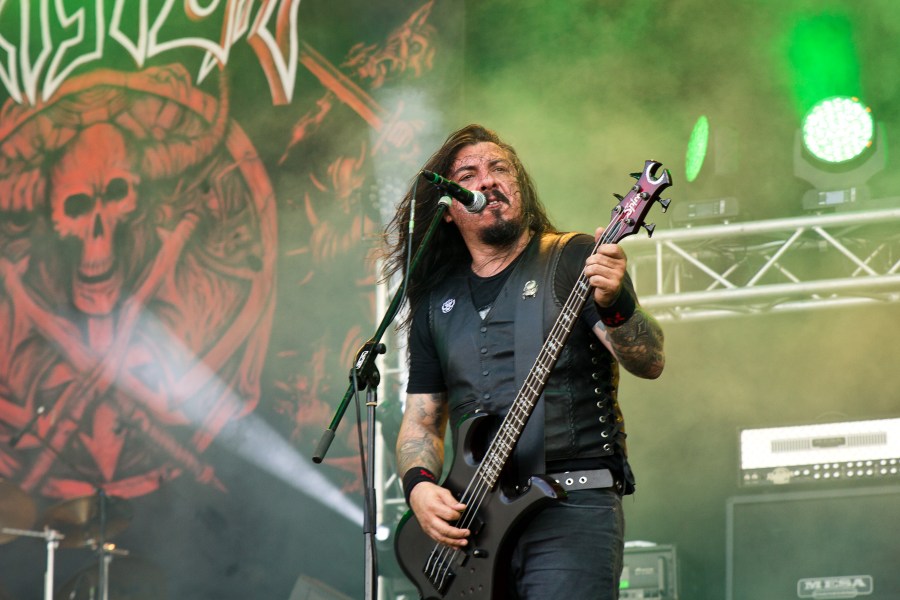
With subtle dynamics, and a uniquely synchronized riff-drum assault, Krisiun forges ahead. Signatures here are inimitable. Not only is it old school as it ever gets, that intricate shredding and precision temporal switches simply elevates the band, altitudes above the numbing turbulence of run-of-the-mill death metal releases.
When a steady synchronized hammer of riffs and double bass runs into that hardly decipherable characteristic growls – “Slay yourself for the glorious day. When the bell tolls for the sins you have made” – it just provides that vocal finesse to this old school technical train. But, as expected, “Devouring Faith“ finally scorches its path into an electric blues like shredding, searing and relentless.
S. Bollmann [CC BY-SA 4.0], via Wikimedia Commons
A Big Big Interview …
“Big Big Train’s David Longdon and Greg Spawton and BBT artist Sarah Louise Ewing in conversation with Nick Shilton of Prog Magazine. Filmed at the Royal Astronomical Society, London in 2019.” Topics covered: the new album Grand Tour, live shows, artwork and much more. 90 minutes!
— Rick Krueger
 Progarchy
