Phillip Mann, the mastermind behind the alternative metal project Diveradiant, hails from Belgrade, Serbia, and has been crafting a unique blend of heavy and atmospheric music for over a decade. Blurring the lines between post-metal, ambient, and experimental metal, Diveradiant’s sound is an intricate mix of atmospheric depth and crushing heaviness. Last month, Phillip released Ascension, an EP that showcases his genre-blending approach and unconventional songwriting. In this interview, we discuss the challenges of creating Ascension, the inspirations behind its sound, and Phillip’s thoughts on the state of the alternative music scene today.
You launched an EP with your project Diveradiant entitled “Ascension” last month. How do you feel about the release?
I feel a bit of excitment, I wonder how I will pass the test from the audience, with awareness that is not the convencional release in the metal world I think.
How much of a challenge was it to work on the release?
Quite reasonable, in the matter of struggle with everyday activities. I am satisfied with the deadline of production, It took me around a few months for this EP to record. The most challenging thing is primarily the unconventional approach to the settings and concept of the blending genres I did. Also it will be a challenge to make people try to hear maybe something new in this hyper trending world. I will give it a try.
Speaking of challenges, have you set any in the early phase of what has become the final result?
Main challenging focus was and still is focus on genre blend and the experience that will produce on the listener on first and multiple listens. As a final result I see that my ideas become clearer to me and to the others.
Tell me about the different instrumental and lyrical aspects that you explore on these new songs.
At first, always experimentation on guitar layers and atmosphere. At some point I explored my vocal potential to make an even deeper atmosphere through lyrics and manner of singing. I am far from some professional singer, but the main goal is the atmosphere that voice creates. And then again, new instrumental soundscapes through different guitar tunings to synth volumes that massively rises upon heavy and low guitar riffs and drums. Main lyrical themes are psychological behaviors compared to modern society as the things we need to take more care of.
What is your opinion about the alternative scene today?
Alternative scene definitely went deep underground. Today it is harder to catch a wider audience, because of the super fast and hyper production lifestyle we live. And also I need to mention differences between mainstream now and in the past, how it was. I think that in the past mainstream was way better and that took influence in the alternatives also. It was way better back then.
Let me know about your influences — the artists that in a way shaped and continue to shape your music.
There are many artists and bands like Justin K.Broadrick ( various of his projects like JESU and GODFLESH), Roger Waters (early Pink Floyd), Thierry Arnal ( Fragment.), Misha Mansoor (BULB, PERIPHERY), Vildhjarta, Cult Of Luna, Meshuggah and many more. All of these bands and artists have similarities, like heavy guitar riffs and atmospheres. I think that I seek roots from these bands in some manner.
What are your top 5 records of all time?
Oh, difficult one. It will be at first:
JESU – Jesu PINK FLOYD – Ummagumma FRAGMENT – Is Your Truth Carved in Sand? PERIPHERY – Periphery (instrumental) VILDHJARTA – Måsstaden under vatten
Besides the release of “Ascension” are there any other plans for the future?
I will continue to explore soundscapes of metal and ambient music through new songs and collaborations I am planning, probably I will consider maybe live appearance in future.
PatrickBroguière, a seasoned French progressive rock composer and multi-instrumentalist, continues to captivate listeners with his ability to blend diverse musical styles into cohesive, cinematic narratives. Following the success of his previous album A Secret World, Broguière has just released Destinations, a concept album that takes listeners on a journey through imaginary lands, each with its own distinct soundscape. Known for his meticulous attention to detail and innovative use of technology, Patrick pushes his compositional boundaries on Destinations, emphasizing vocals and exploring themes that transport audiences to fantastical realms.
In this interview, Patrick discusses his creative process behind Destinations, his musical evolution over the years, and the influences that continue to shape his distinctive sound. From the album’s use of relative keys and vocal elements to its captivating artwork, Broguière reveals the intricacies of his latest project and what listeners can expect from this imaginative and immersive musical voyage.
Congratulations on the release of Destinations! Can you tell us how this album represents your evolution as a composer since your last release, A Secret World?
With each album, I try to come up with something new compared to the previous ones. In Mont Saint Michel there was a real drummer, in Châteaux de la Loire there was the influence of Renaissance music, in A Secret World it was a bit of a patchwork of my influences, but I tried to unify it all by staying around the B minor tonality for all the tracks. For Destinations, the main change was the emphasis on vocals.
You mentioned that the concept for Destinations emerged gradually. How did the idea of exploring different imaginary lands through music develop as you composed the album?
At first, I thought of calling the album Voices, given all the voices I’ve introduced. But as the first tracks on the album were The Land of Elves and The Land of Rock (Rockland), the idea of journeys into imaginary lands eventually took hold. From there, the choice of the word Destinations eventually emerged, as it seemed to be unused by other musicians.
The decision to use relative keys of D minor and F throughout the album creates a sense of unity. How did you settle on this approach, and how did it influence the album’s sound?
Single tonality is an approach that comes from classical music and is often used in dance suites and symphonies, for example. That said, there are many other ways of achieving unity in classical music. Getting back to the album, the fact that all the tracks are in D minor or F major means that you have to be more inventive to ensure that the pieces don’t sound the same despite their common tonalities. In fact, it’s just an arbitrary constraint that stimulates creativity.
Destinations features an impressive lineup of vocalists. What was the process of working with voices from commercial sound banks, and how did you create such natural-sounding melodies from these elements?
First of all, it has to be said that today’s sound banks are really amazing. For example, I’ve also used some very successful symphonic string banks to imitate string staccatos. After that, realism is achieved by working carefully on the choice of different sounds and their sequencing. The album also includes two spoken voices produced by AI. As I don’t perform live, I make full use of all the technological marvels of the moment. At the moment, there are a lot of problems in the world, but I have to admit that technological progress is exciting.
Could you walk us through your creative process for one of the album’s tracks? For instance, how did “The Land of Elves” come together, both musically and conceptually?
The composition of this piece began when I found a simple guitar arpeggio on the three rock chords C F G, which I modified a little by playing C F.add9 G. Then the rest of the music followed in a somewhat mysterious way. After that I transposed the piece to F with a capodastro to give the theme F Bb.add9 C. After the music, the melody and the elf theme came when I bought my sound bank on the elf language. Finally, a friend of mine, the musician Jean Philippe Brénot, really encouraged me to stretch this piece. So I found other themes, other instruments and a guitar solo to flesh out the composition to the 10-minute mark.
The album blends progressive rock with cinematic and atmospheric elements. How do you balance these influences while maintaining your signature compositional style?
I admit I’m not sure how it all fits together. All musicians have different influences and as far as I’m concerned I use a lot of different sounds to compensate for the fact that I’m not a band like the progressive giants Genesis or Pink Floyd.
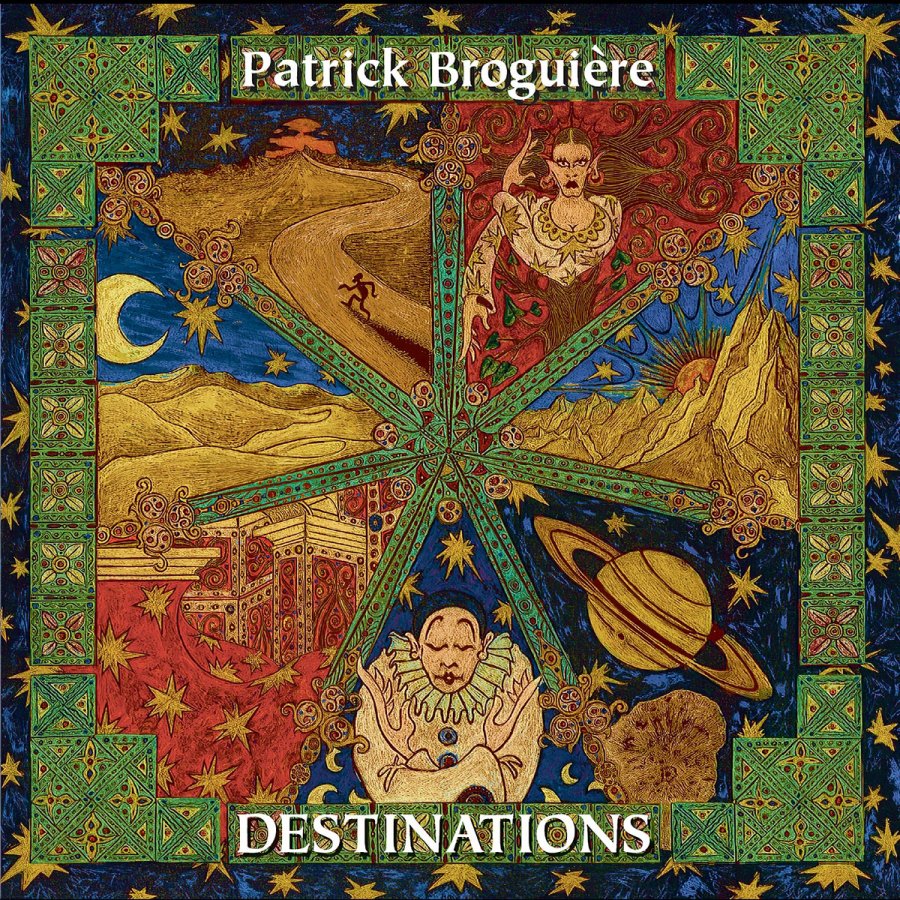
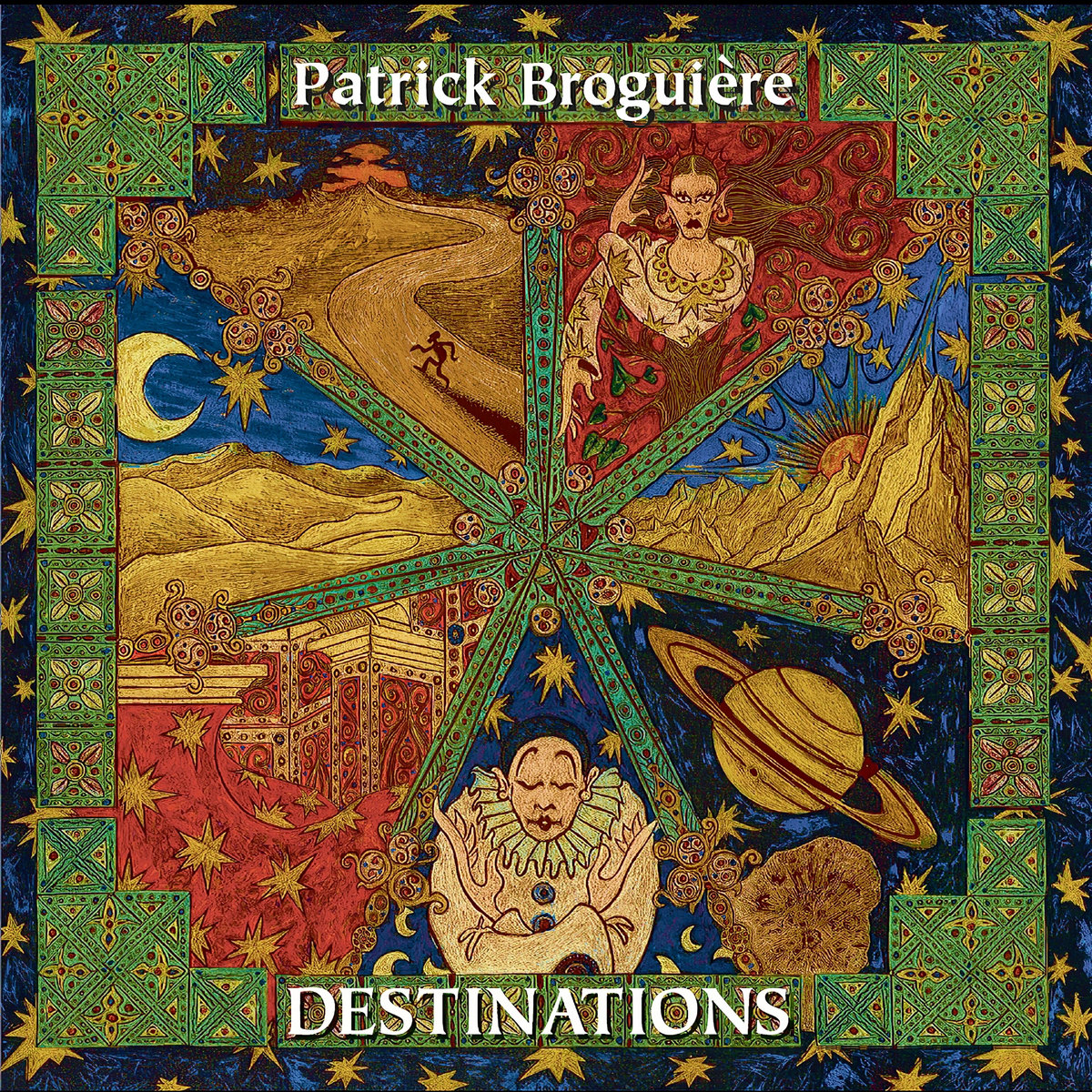
The album artwork, created by Hervé Thibon, complements the music beautifully. What was your collaboration like, and how does the artwork reflect the themes of Destinations?
This time, Hervé worked from the finished album. So he quickly came up with the idea of drawing a circle with 7 sections representing the 7 songs on the album. So in order there’s a queen of the elves, a land of boulders (rockland), a view of Hyperion and Saturn, a Pierrot for Dreamland, a nod to my Brocéliande album, a desert and a character heading towards dawn/sunset for The Last Destination. Also the decorations and illuminations are inspired by the famous Book of Kells from the year 800. After the design on paper, it took Hervé a month of work to finely engrave the painting on glass.
You’ve drawn inspiration from mythology, history, and visual art throughout your career. Were there any particular stories or artistic influences that shaped Destinations?
On Destinations, I didn’t have any specific influences like the Renaissance for Châteaux de la Loire. But I do know that I thought a lot about Pink Floyd, particularly Meddle, which encouraged me to write long songs and use sound effects. I also remember that the organ on Hyperion with the bird sounds was of course inspired by More. As for the rest of the album, I don’t have any particular memories: most of the influences are unconscious.
Rockland and The Land of Elves have radio edits on the album. What led you to create shorter versions of these tracks, and how did you decide which parts to highlight in these edits?
These short versions were made with the idea of making videos with these two songs, which I thought were catchy enough to reach a wide audience. The video for Rockland by Jean Philippe Brénot is already online. The video for The Land of Elves will be released in November. After that, the choice of shortening was made by keeping the main themes as much as possible.
Your use of both guitar and keyboards drives much of the album’s narrative. How do you approach blending these two instruments to tell a cohesive musical story?
In fact, I think it was Mike Oldfield’s Tubular Bells that made the biggest impression on me because of the way the guitarist does everything himself. Back then it was with a multitrack tape recorder and now it’s with a computer. After that, the coherence of the compositions is obtained by choosing a theme for the album, by taking care of the arrangements and also, for example, by choosing a main tonality.
Having started your career at 15 and been influenced by Ritchie Blackmore, how have your early influences shaped your current approach to progressive rock composition?
At first, like many teenagers, I wanted to be a guitar hero. Then I quickly went from a taste for the virtuoso guitar/keyboard of Deep Purple to a taste for the more epic guitar/keyboard of Genesis and Pink Floyd. That’s also when I got a taste for concept albums. So, as I wasn’t really a guitar hero, I gradually got interested in keyboards, then home studio, then composition, while studying harmony and counterpoint at the conservatoire. From Blackmore and Gilmour I’ve also retained a strong taste for the Fender Stratocaster.
You’ve had a long and varied career, from releasing music in the 90s to publishing books and now returning to music. How has your creative journey outside of music influenced your recent works like Destinations?
In fact there was an indirect influence because after I’d done two books I studied magic and close-up for 2 years. I did some tricks to music that one really enjoyed. And at the end I unfortunately failed the school’s final exam. It upset me so much that I decided I absolutely had to go back to music only and it was this challenge that led to the composition of A Secret World. Destinations is a continuation of that project but with new sounds.
Can you talk about your love for blending genres like classical, medieval, and Celtic with progressive rock? How do these influences manifest on Destinations?
We talked a bit about this in the previous questions. There was the influence of the blending of styles by Mike Oldfield, Pink Floyd or Genesis, the folk guitar, the electric guitar plus the study of classical harmony.
You’ve described Destinations as a musical journey meant to take listeners to different worlds. What do you hope listeners experience when they listen to the album from start to finish?
Above all, I hope that listeners will enjoy listening to the album in its entirety, unlike the current fashion for mp3 playlists of singles. I also hope that this music will make them dream!
What’s next for you after Destinations? Are there any other projects or musical ideas you’re currently exploring?
Right now I’m feeling a bit drained after two albums that were released quite close together! So I’m just jotting down a few ideas with no clear direction at the moment. I’m also doing some promotional work and I’ve been filmed playing guitar for the forthcoming The Land of Elves video.
Destinations is out now; stream/download/purchase it from Bandcamp here.
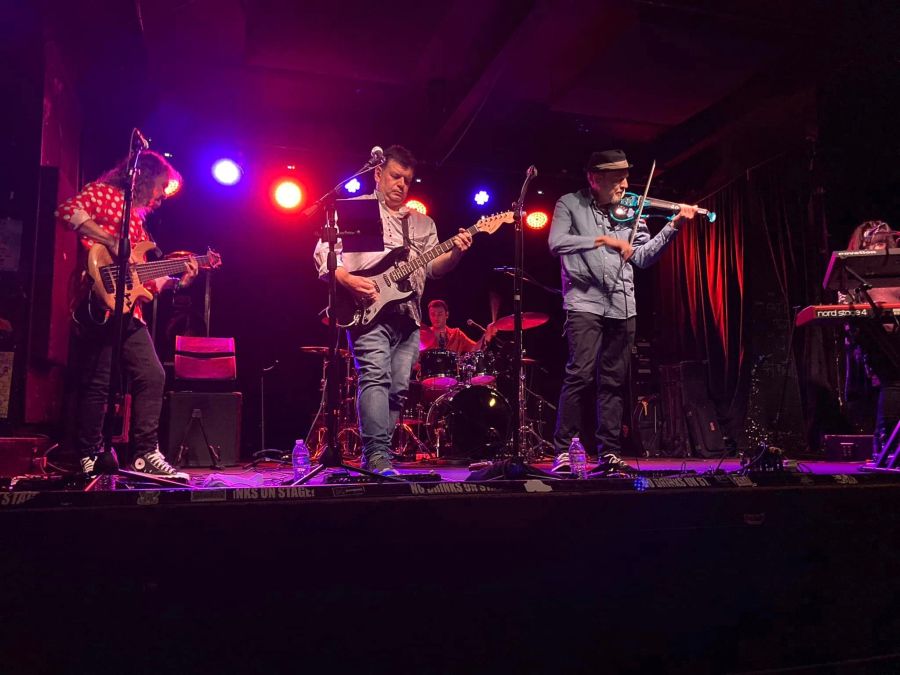
It hadn’t been an auspicious beginning for The David Cross Band’s stateside tour; their opening night in Asheville, North Carolina was scuttled by Hurricane Helene’s brutal landfall, blowing a hole in their plans (and their finances) and stranding them in the disaster zone for a couple of fateful days, until they could source a full tank of gas and find an open road north. As they took the stage at Grand Rapids’ Pyramid Scheme, you could tell they felt for the devastated community they’d left behind — but also that they were also grateful to be back on track and playing for an enthusiastic (if compact and shall we say, mostly of a certain vintage) audience.
Electric violinist Cross, best known for his early-1970s stint in King Crimson, wasn’t messing around. As guitarist/vocalist John Mitchell — yep, fellow Progarchists, that genial jack of all trades from The John Wetton Band/Frost*/Lonely Robot’/Kino/Arena/It Bites/etc. — hit a chord, Cross took off on the kind of free improvisation that awed Crimson fans back in the day (including the drummer two seats over from me, who raved about a stop at GR’s Aquinas College 50 years ago). Cross, Mitchell, bassist/vocalist Mick Paul, keyboardist Sheila Maloney and drummer Jack Summerfield quickly locked in, building the folky core material to a simmering peak with classical flourishes and just the right amount of rock muscle. The epic Cross original “Calamity” shared a similar brooding feel, while “Tonk” and “Starfall” (the latter written with Crimson lyricist Richard Palmer-James) proved convincing slabs of the hard-hitting odd-time prog-metal the crowd had come to hear.
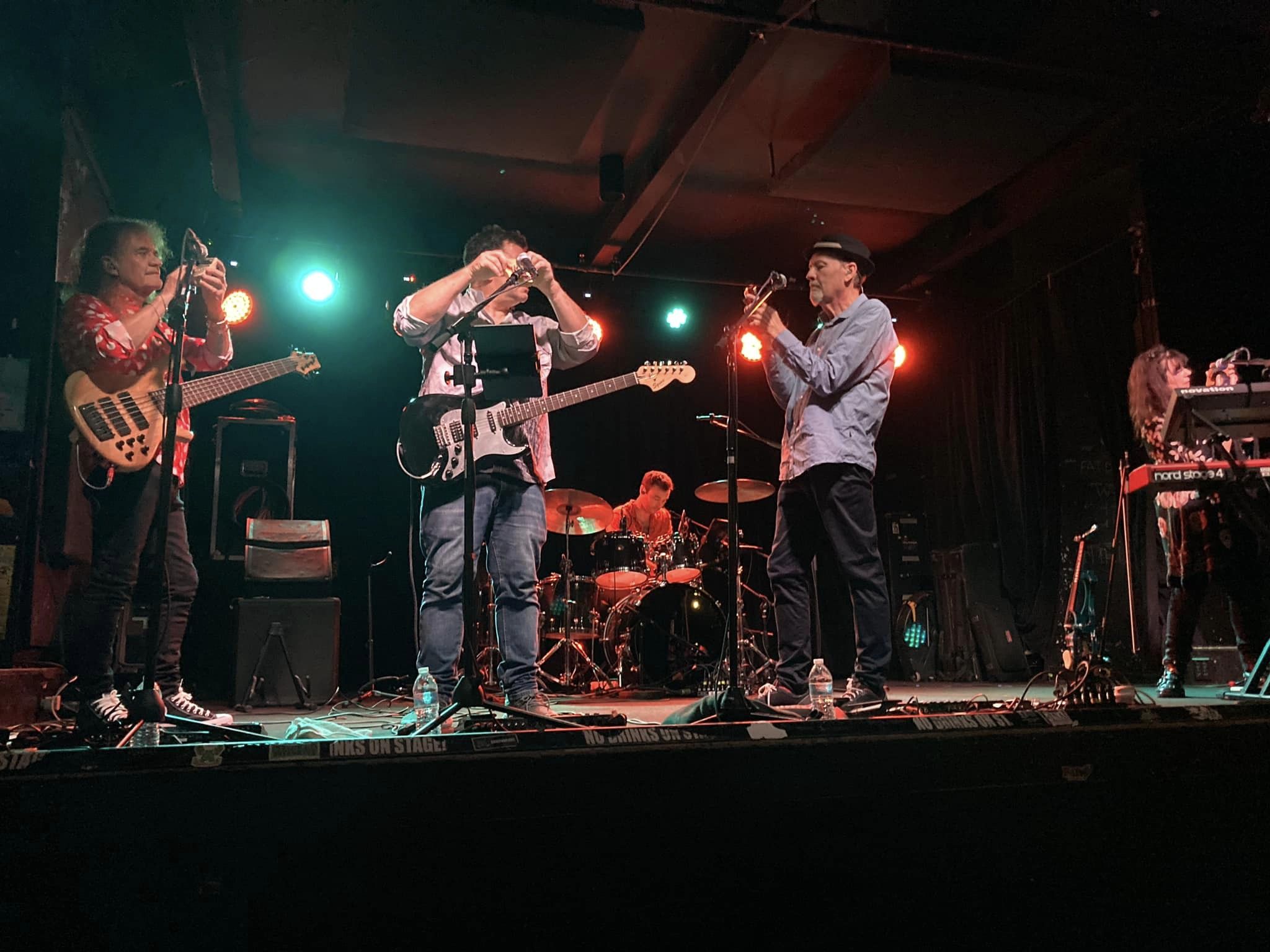
But as cool as Cross’ original work is, this North American stint isn’t called the “Larks Tongues’ 50+” tour for nothing; there was plenty of classic King Crimson on tap. “The Great Deceiver” was a high-octane update of the “flying brick wall” groove with which Bill Bruford and Wetton had terrorized Robert Fripp and Cross back in the day, as Paul, Mitchell and Maloney belted out Palmer-James’ sardonic lyrics; “Red” remains every inch the monstrous instrumental stomp it was in 1974. And after an apropos announcement in the vein of the Who’s Keith Moon from Mitchell (“Silence for rock history, please – especially up there in the jazz club”), the band launched into the entire Larks’ Tongues in Aspic album — complete with the extended thumb-piano intro that opens Part 1 of the title track.
Not on their cell phones: the Larks’ Tongues in Aspic Thumb Piano Ensemble in action
Throughout the night, Summerfield and Paul drove the band forward with propulsive power and a wicked edge, while Maloney served up lush keyboard colors, the occasional synth solo, and a nifty electronica backbone to freshen the mournful ballad “Exiles”. Paul’s rough-hewn voice soared on that tune, and Mitchell’s singing spanned the tender ardor of “Book of Saturday” and the vicious kiss-off of “Easy Money”, channeling Fripp’s monolithic power chords and tritone-laced solo style all the while. At center stage, Cross covered all bases with aplomb; buzzing like a hornet’s nest, shrieking like a banshee or launching sustained flights of aching, soaring melody, he moved with the music in the moment, no matter its direction or destination. Eschewing the precision tooling of recent King Crimson tours for a freer flow, the band built the tribal funk of “The Talking Drum” to a fever pitch, then pumped up the crushing Hendrix-plays-Stravinsky riffs of “Larks’ Tongues Part Two” to a shattering climax.
The final touch could only be “Starless”, one of the last pieces Cross played live with Crimson in those early salad days. Mitchell rose to the occasion, singing Wetton & Palmer-James’ melancholy words with fervor and grace. Then Summerfield and Paul cranked the tension of the instrumental build to a tipping point. From that height, Cross dove into the breakneck double-time coda, blazing the trail for Maloney and Mitchell to follow. As the quintet stuck the landing, the audience hit their feet (with only minimal prompting from Mitchell), glad to be in the moment with a band that, on this night, had ascended to a sweet spot where memory and spontaneity combine.
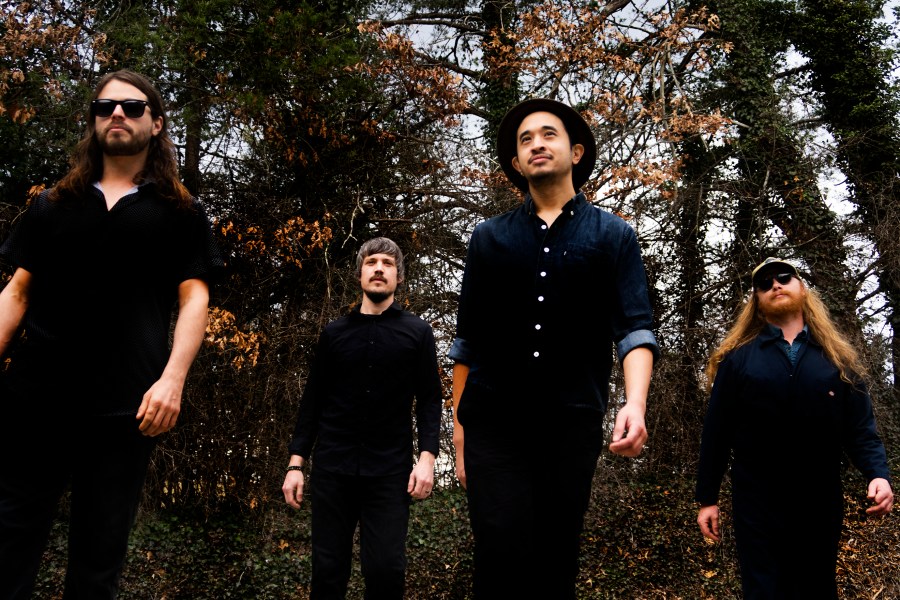
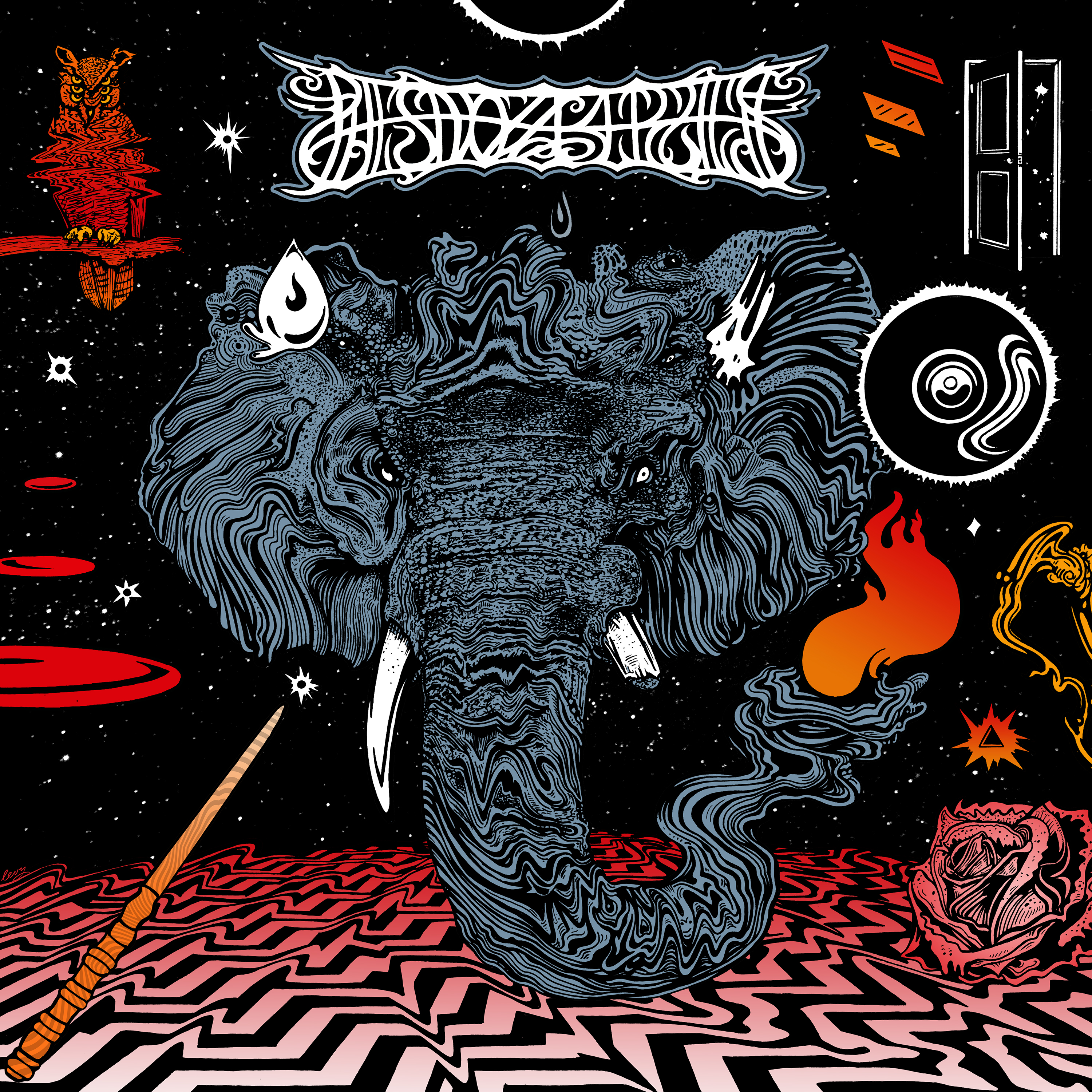
Today, we are thrilled to premiere “Grundle,” the third and final single from The Snozzberries’ highly anticipated self-titled album, set to release on October 11, 2024. Known for their explosive blend of psychedelic rock, funk, and progressive influences, The Snozzberries have spent years cultivating a sound that transcends traditional genre boundaries.
Stream “Grundle” below.
The forthcoming album promises to be a sonic journey, exploring dark psych rock, thrash metal, funk, and soul, while delving into themes of love, loss, and personal growth. Each track serves as a testament to the band’s evolving artistry and commitment to pushing the limits of their musical expression.
“Our main goal with this album was to focus on writing interesting, well-crafted songs,” the band shared. “The fun thing about The Snozzberries is that we don’t just stick to one style. Each of us brings our own influences to different tracks on the album.”
Despite being an underground act, The Snozzberries have garnered critical acclaim and a dedicated following. Renowned music publication Rolling Stone hailed them as “an explosion of vibrant tones and textures,” while Live For Live Musicpraised their “hard-hitting set” that leaves audiences in awe. MusicFestNews.com even likened their electrifying performances to rising stars like Spafford and Goose.
While The Snozzberries may not yet be a household name, their dynamic live shows have gained them recognition at festivals such as Hulaween and Summer Camp, sharing stages with notable acts like Papadosio and Big Something.
With the release of their self-titled album, The Snozzberries aim to deliver the genre-blending energy that has come to define their sound, solidifying their position as one of the most exciting acts in the underground psychedelic and progressive rock scene.
The new single, “Grundle,” showcases the band’s psychedelic prog influences, with bassist and vocalist Josh Clark delivering his signature bass style.
The Snozzberries Track Listing:
Darkness
Return
Grundle
Living Without You
Circling the Drain
Guepardo Morado
Hide
The Storm
Biting Through
For more information, visit TheSnozzberriesMusic.com. Follow them on social media @TheSnozzberriesAvl.
With their upcoming double album, Life in the Wires, ringing in my ears, I recently sat down to talk with Frost* conceptualist/keyboardist/vocalist/grinning mastermind Jem Godfrey. Impishly humorous and thoughtfully reflective in turn, he was more than ready to talk about how the new album came to be, where it sits in the grand tradition of prog concept albums, what each band member contributes, the chances of touring behind this record, and possibilities for Frost*’s future. Video of our chat is below, with a full transcript following.
First of all, congratulations on the new album, Life in the Wires! It’s been three years since the last one by Frost*. And the first thing I was curious about was, what was the journey between the last one and this one? How did Day and Age perhaps lay the groundwork for this album?
Weirdly, it created a world, a sort of cinematic universe that the new album is set in. When John and I were writing Day and Age – I didn’t realize this at the time, but I think quite visually in terms of music. I’ve started to realize that when I’m writing songs, I can kind of see the world that these people are in. The Day and Age world was quite cinematic; to me it felt very cinematic with these different places, and the album cover being quite iconic with the five megaphone-holding gentlemen, and the world it was in! It felt quite cinematic. And so, at the end of Day and Age, there’s a little bit at the end of the song “Repeat to Fade” where the song fades out and is replaced by static. And there’s just a voice in the static that says, “Can you hear me?” Which is how the new album starts.
I quite liked that; I put it in at the end of Day and Age thinking it might be nice to have a little hook. It’s almost like the sort of thing where they say, “James Bond will return.” I quite liked that sort of idea.
In my head, it’s set in the same world, like the video game Grand Theft Auto, where you used to be able to be in one city driving around and doing stuff. But if you wanted to, you could just jump in a car and drive across the bridge to another city, and there’d be another world going on there. It felt a bit like that to me, the Day and Age world and the Life in the Wires world are the same world. But things are happening concurrently. So while in Day and Age-land we’ve got the characters, like in “Terrestrial” and “The Boy Who Stood Still”, these characters similarly over here there’s the character in Life in the Wires and that’s happening there at the same time. I quite liked the idea that it’s all set in the same universe. And so, as a result of that, visually and musically, it was quite easy to set a house style, in that respect.
Ah! OK, that makes sense. Was that part of the emphasis behind making it a double album as well?
Not really; I think that the story of Life in the Wires, there was enough of a story to tell that it felt like a double album would do it justice. Cause there’s nothing worse than a prog band – I’m saying this hopefully – there’s nothing worse than being judged as a prog band that’s waffling on. We’ve always thought that we had enough to say within the confines of a 60-minute CD format previously.
But with this one I very much had a mind, I wanted to do vinyl, as in, it’s four sides of vinyl. And as a result, each bit of vinyl, the constraint’s about 20 minutes [a side] for optimum audio quality. What’s nice about that it is gave me some parameters to work in. And weirdly, when you say 86 minutes that seems like a very long time. But if you say four 20-minute sides of vinyl, in my head it doesn’t feel anywhere near as daunting.
The double album idea, we’d always wanted to do one, I’d always wanted to do one. This just felt like the right time to do that fabulous prog cliché of the double vinyl album!
Four sides kind of gives you a structure like a movie structure to play with.
Exactly! You introduce the characters in the first half, the first act – there you go, that’s the word! And then the journey happens over the next phase, which is Act Two. And then you have the third act, where it’s all concluded and the fable is told, the lessons are learned, or whatever. So yeah, it had enough material, musically, for it to extend over those sorts of formats. And because I was thinking of it in longer bits of music like 20 minutes – they’re not all 20 minutes long, but all the songs are connected. So they’re sort of like a suite of songs.
And so naturally with that, the feeling is “well, the songs need to be more progressive; there needs to be more of a journey.” Like The Wall is a continuous thing and The Lamb, is quite a lot of it linked.
It just felt like that right, natural thing to do. I think if I gone into it thinking, “I’m making a CD,” it would have been different. But my mind said it was four sides of vinyl and it seemed – I don’t know, it seemed perfectly natural this time around.
And that seems to be a shift that’s happened across the music industry. You can tell that things are being planned more for sides of an LP, if you will, than a single CD. It certainly covers a lot of ground; I had the chance to listen to it this week, and there’s a lot of sonic difference and variation, and there’s quite a bit of thematic ground that it covers as well. But you also mentioned, in the press release, that there are deliberate nods to the back catalog; Milliontown was mentioned in the press release. What kind of facets of your previous albums did you want to bring forward? And were there any particular reasons for that?
There is [laughs] – I was thinking about this earlier. I went on a nice long walk; it’s this beautiful autumn day, and I was thinking about it. The push/pull for me is that I sort of know why, but what I don’t necessarily want to do at this point is talk too much about it. Because I don’t want it to be too defined – it sounds like a strange thing to say. If I say, “well, this is because of that”, everyone’s gonna go ,“Oh, well, fine, I won’t bother!” I think at this point, there’s quite a lot I’d like to leave up to people’s imaginations and interpretations.
I know why it is, and the reason is tied up in the name of the character, but apart from that it’s open to interpretation. In my head, I have a reason why it is. I will explain it, but maybe not yet.
Yeah, I understand the need to avoid spoilers at this point!
[Laughs] Yes, exactly.
But I did notice that this time around, there’s more – we Americans would call them 16th notes; I believe you call them semiquavers – involved than there were on Day and Age.
Mainly [drummer] Darby Todd was the purveyor of 16th notes and 32nd notes on Day and Age. Yes, with Day and Age we made a conscious decision to not do too much widdle, you know? We wanted to pull back from that a bit. Because there’s obviously a danger; you can drown in a sea of hemi-demi-semiquavers [64th notes]. What we decided on that one is to do arrangements.
But then what I realized is that in the gap between Falling Satellites and this album is, I think, eight years? A decade is quite a long time to ask your fanbase to put up with you not doing one of the things they enjoy you doing! Again, also because the album is more progressive in its demeanor and arrangement, it seemed sensible for us to not have any rules this time. So, we can play and we can do a bit of soloing; we can be a bit cleverer. Also, as you’ve said, it covers many, many different moods and atmospheres. And as a result of that, if you take away the ability to solo or to express yourself in musical terms instrumentally, you are over the course of 86 minutes making it more difficult for yourself. I think one of the things that we all enjoy about this genre and musicians in it is when they can cut loose with a bit of this [mimes guitar shredding]. It seemed fair to have a bit of light and shade, to allow that in the band; so we’ve all had a little moment when we allow ourselves to let go a bit. I hope it’s tasteful! I hope it’s tasteful! [Laughs]
Well, sometimes bad taste is the best taste, but …
Exactly. Well, look at my dress sense! Exactly. [Both laugh]
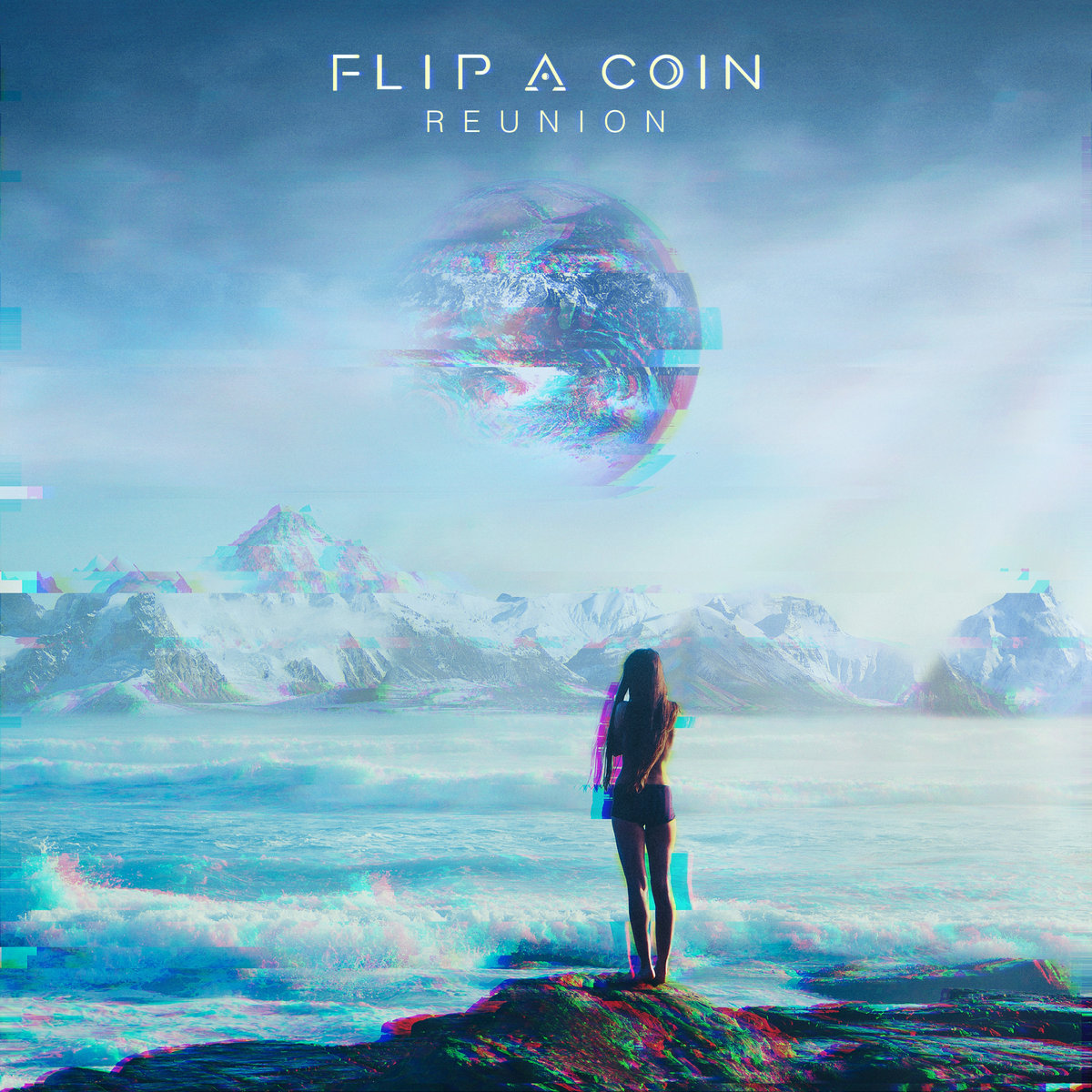
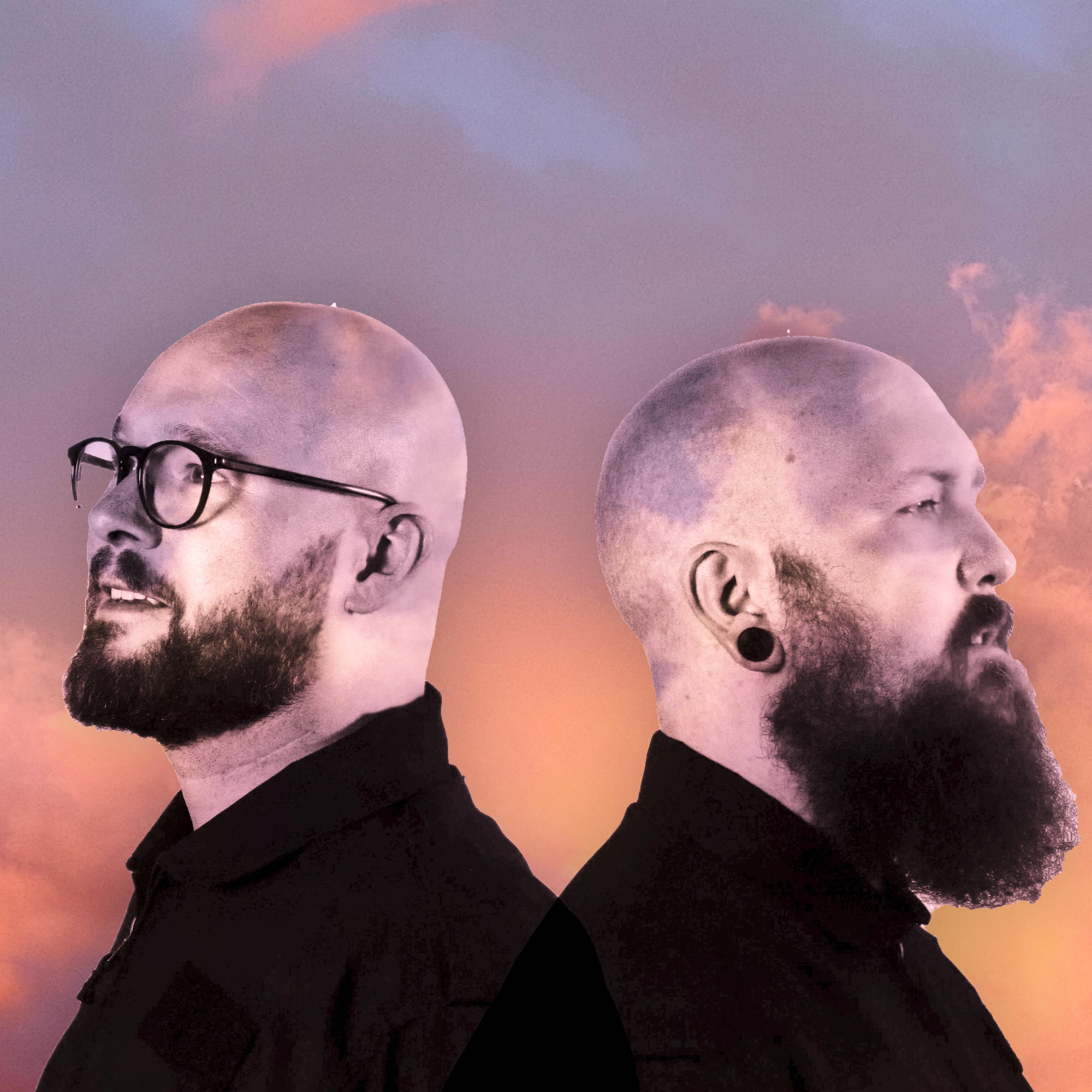
Flip a Coin is an international progressive metalcore duo, comprised of Czech guitarist and songwriter Tomáš Biza and American vocalist Heyden Smith. Despite the challenges of collaborating across a seven-hour time difference, the duo released their highly anticipated debut album Reunion in June 2024. Blending elements of melodic post-hardcore, deathcore, and progressive metal, Reunion showcases the band’s versatility and willingness to experiment with diverse sounds. In this interview, Tomáš and Heyden discuss their collaborative process, the creative evolution of Reunion, and how they navigate the unique challenges of being an international band.
How did Flip a Coin come together as an international duo, and what challenges have you faced working across a seven-hour time difference?
Tomáš: The distance between us brings forth challenges both in the creative and production side of things. Being able to sit in the same room and just vibe and bounce ideas one from each other in real-time is something I think we both long for. Production-wise, we both depend on just our own knowledge of how to actually record ourselves and use our gear in the best way possible, which can be a limiting factor sometimes.
Heyden: There’s limited amount of time in the day to talk about things in real time. Shout out Tômas for being willing to have midnight video calls in his time zone. I do feel like we’ve developed a pretty good process of collaborating over the past few years.
Your debut album “Reunion” represents four years of creative growth. How did the collaborative process evolve over those years, and what were some of the key milestones?
Tomáš: I think the most key moment came from before this album even happened, and that was the release of our first single called Haven four years ago. Once that was out, we knew like, yeah. We can actually do this. And that was super affirming. During the process of working on Reunion, though, I’d say fully finishing the longest song on that record, False Promises, felt like a real landmark.
Heyden: These songs weren’t recorded in one batch. There wasn’t really a demo process. We were kind of writing and recording them at the same time, and I think you can hear that across the different songs. “Lifestream” and “False Promises” were recorded close to a couple years apart, so I definitely think we brought some new tricks with us into that song.
The album spans multiple subgenres, from melodic post-hardcore to borderline deathcore and progressive metal. How did you decide to embrace such a diverse range of sounds on “Reunion”?
Tomáš: To be honest, that was not a completely conscious decision! My music taste leans towards albums where I feel like each song has it’s own identity, that every song does something a little bit different from the rest. And so that’s just where my songwriting takes me naturally.
Heyden: I’m a fan of bands that fall into all of those subgenres, and plenty of non-metal stuff too. I’m always excited to experiment with songs that are outside of what I’m used to performing. It’s a huge reason I joined Flip a Coin.
How do you manage to maintain a cohesive sound across the album when experimenting with so many different styles?
Tomáš: But do we really? Haha. I believe that is mostly Heyden’s work, he brings his own vocal style into each song and that sort of ties it all together and makes the differences less jarring. If it wasn’t for his singing the album would feel much more disjointed since the instrumentals are so vastly different.
While the songs are pretty different from each other, I think we both have our own style that we bring into every song. At this point I’ve jammed our demos enough to know a Tomâš riff when I hear one…and the riffs he’s cooking up are quite tasty.
“Reunion” feels like a very cinematic album. How do you approach writing music that feels as immersive and dynamic as your tracks on this record?
Tomáš: I’m so happy you used the words immersive and cinematic, because that is exactly what I was trying to achieve with the sound of this record! I did this with layering many different instruments – guitars, synth pads, strings – on top of each other; just when I thought it was enough I always tried to take it one step further. Then contrasting these parts with more raw sounding sections creates that sort of experience. Also lots of samples and special effects. I wanted each song to feel almost like a movie, sort to speak.
Heyden: That’s all Tomâš. I think this aspect of our music lent itself well to the lyrics that are more story-driven in “False Promises” and “Passengers”. My inner theatre kid definitely came out in my vocal delivery for those.
Tracks like “Lotus” and “Lifestream” have a strong melodic focus, while others like “Amaterasu” lean towards a heavier, deathcore sound. How do you balance melody and aggression in your songwriting?
Tomáš: It’s very much about where I’m at life during the time of writing, or what bands I’m currently listening to, or just the mood and feeling I’m trying to capture. I have a good image in my head of what kind of song I’m trying to write almost every time before I even pick up my guitar. Sometimes I’m going for a rather pretty and melodic sound, other times I want to write something dark and heavy. Songs like Lifestream or Passengers strike a good balance of both, I think.
Heyden: It all starts with what Tomáš brings to the table instrumentally, although I try to avoid predictability when I’m writing vocals. There’s kind of a tired trope of singing on melodic parts and screaming on heavy parts in a lot of modern metal, which I find boring. Ultimately though, I try to just embody the emotions the song makes me feel.
Heyden, as a vocalist, how do you approach matching the intensity and emotion of the different styles of music on “Reunion”?
Heyden: I think all music that makes you feel something has a good grasp on tension and release. I try to tell a story with each song where it has ups and downs and recurring themes. Bringing back certain parts in a new way kind of helps tie everything together. Other than that, it’s getting out of my head when I’m tracking my takes. Trying to worry less about hitting a note perfectly and trying to be “in the song”, for lack of a better term.
Tomáš, you not only wrote and played the music but also handled the production, mixing, and mastering. What were some of the biggest challenges of wearing so many hats on this album?
Tomáš: I’d say the biggest challenge for me is bridging the creative and production processes. Sometimes the parts I write end up sounding very different from what I heard in my head once they‘re recorded and fully fledged out. So failing to translate my ideas into the actual music can be frustrating. On the other hand, this can also make for some really cool, unexpected moments. Being in complete control over the entire process from start to finish is both a blessing and a curse.
The album features guest musicians like Michael McGinley on piano and Jake Maaka on vocals. How did these collaborations come about, and what did they bring to the project?
Tomáš: Jake was featured on a very heavy piece of music I was enjoying a lot a few years back, and when I wrote Amaterasu, I realized he’d be the perfect person to have a feature on it. The piano parts Michael wrote for Lifestream were the last piece of the puzzle that interlocked the different sections of the song. I still remember the moment when I heard what he wrote for the first time, I was honestly shocked by how well it hit the spot.
Heyden: Michael McGinley is my dear friend and bandmate in my other project Flora Nova. Check that out if you want to hear more of him shredding on the keys. I thought Jake brought a visceral kind of aggression to “Amaterasu” that fits so well, and his delivery on the chorus had similarities to Tommy from Between the Buried and Me who is one of my favorite vocalists. I liked filling in on backing vocals for that song and playing off of his melodies. I think both features brought influences to the album that we wouldn’t have otherwise.
“Amaterasu” is one of the heavier tracks on the album. Can you tell us more about how this song came together, and what inspired its powerful sound?
Tomáš: The first half of the song basically wrote itself over a span of a few days. At that time I already knew this one had to end up being a single because of the super straightforward structure and open chorus. I even think it’s the song with the earliest chorus on the album? However, then I hit a brick wall with the ending and it took me 2 years to come back to it. As far as inspiration goes, it’s a very Veil of Maya inspired song.
With “Reunion” being your debut album, how do you feel it sets the tone for Flip a Coin’s future? Are there any particular directions you’re excited to explore moving forward?
Tomáš: As you’ve mentioned, the album features a very wide sound palette, and I’m super happy about our debut album having this kind of character. That’s because it shows we can do it all, and it sort of leaves you wanting more while not knowing what to expect next at the same time!
Heyden: It’s good to have it out there! I’m excited to get more experimental with the next batch of songs and expand on the variety of sounds we were able to achieve on this album.
What are some of the major influences, both musical and non-musical, that shaped the sound and themes of “Reunion”?
Tomáš: I started writing this album right after I moved away from my family and entered college at 19. Now I’m 23, and I think I don’t have to explain how so many things happen in a person’s life during this period. It was a rollercoaster and all these experiences served as a fuel for writing and are reflected in the album. Sound-wise, I drew inspiration from many of my favorite records which came out during that time, most notably from bands like Periphery, ERRA and Counterparts.
Heyden: It probably comes as no surprise that I joined this band after seeing a post from Tomáš on the r/periphery subreddit. They’re definitely a huge influence for both of us. In the realm of prog and metal, Protest the Hero, The Contortionist, and Corelia have been pretty big influences on me. Both Tomâš and I are into sci-fi, so that’s where some of the more conceptual lyrics came from. The rest is inspired from both of our perspectives on past relationships, loss, mental health, and personal beliefs.
Given the album’s independent release, how have you approached getting your music out to the world and building a fanbase for Flip a Coin?
Tomáš: Making music is an outlet for both of us, and so that’s the most important aspect before anything else for the band. I personally really enjoy the visual aspects as well, so coming up with the artwork and music video ideas was lots of fun and I feel like it can help connect with our audience. For our guitar oriented fans, I’ve also recorded guitar playthroughs for some of our songs and tabbed them out, you can find that stuff on our YouTube and Bandcamp.
Heyden: We put out music videos for “Lifestream” and “The Algorithm” and a few more visualizers for “Lotus”, “Insomnia”, and “Amaterasu”. We’ve also pitched music to some playlist curators. It’s tough when you can’t promote by playing shows and finding a scene to be a part of. Ultimately though, we’ll write this music whether there’s a fanbase or not. It’s first and foremost a passion project and an outlet for creative expression.
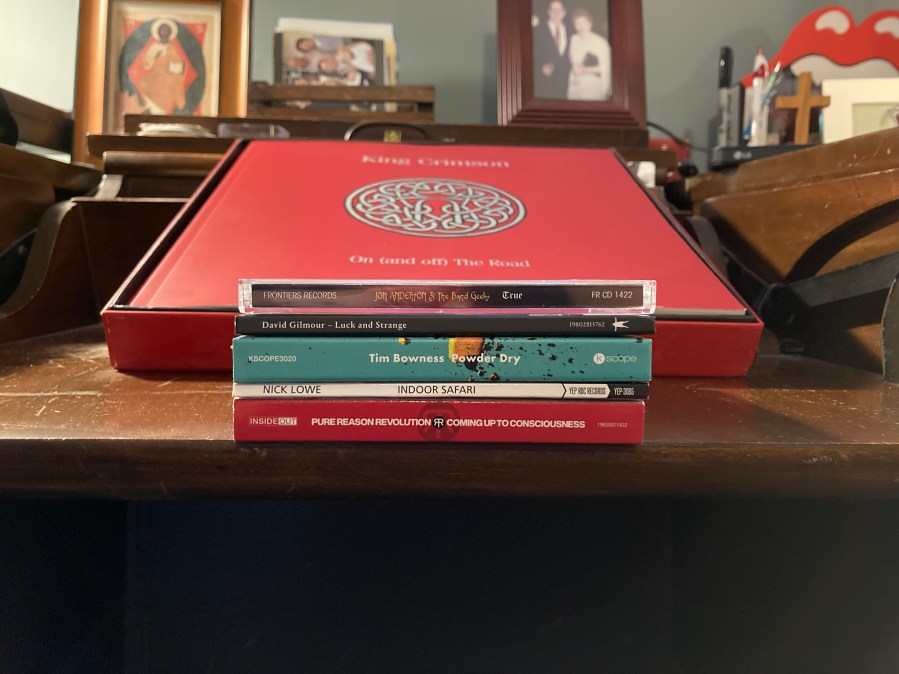
This month’s connecting thread: grizzled veterans connect with high-powered talent from younger generations; the chemistry fizzes, fuses and pops — and some excellent new music is the result! (Of course, there’s an outlier or two in this month’s stack as well.) Let’s get down to it, shall we? Purchase links are embedded in the artist/title listing, with album streams or samples following the review.
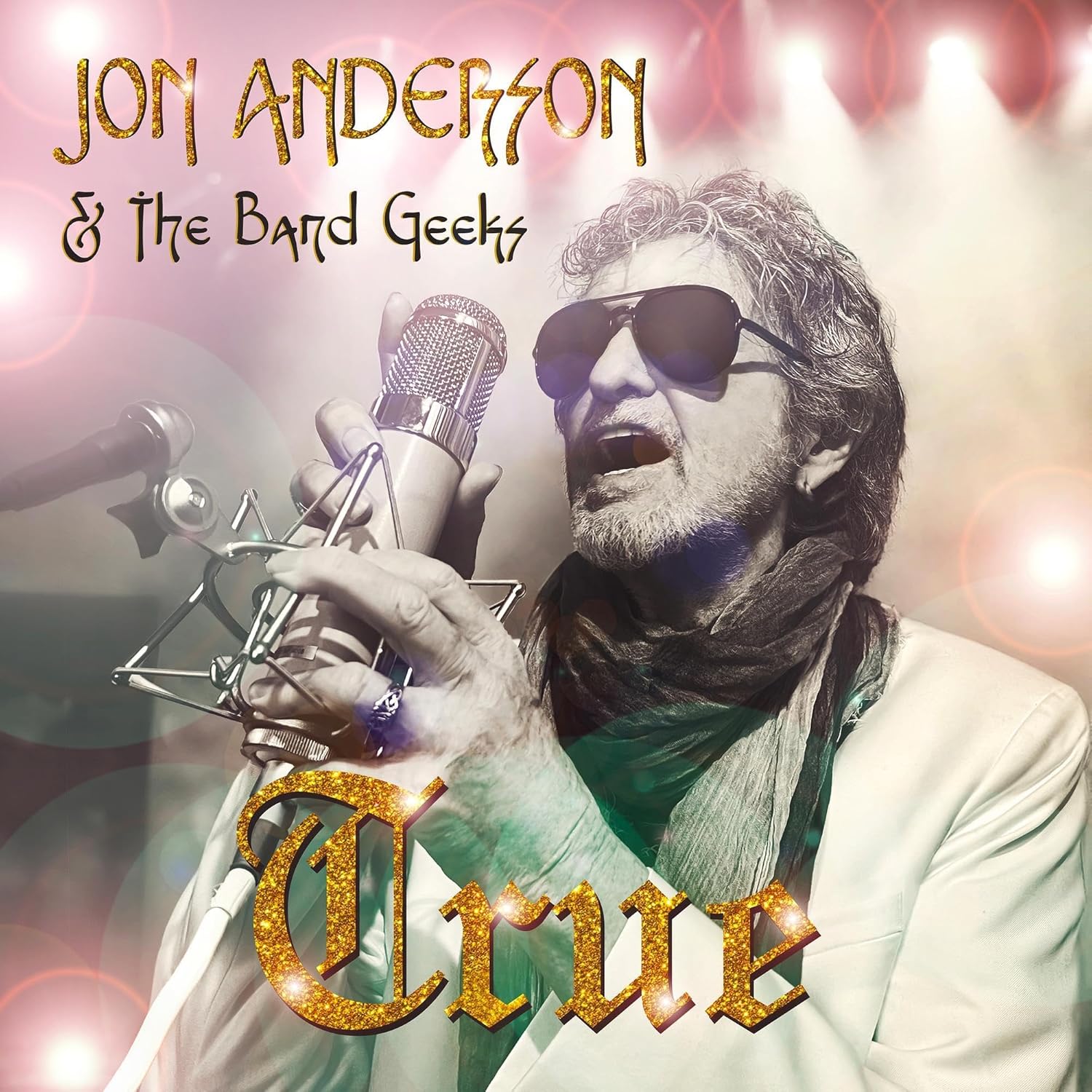
Jon Anderson and The Band Geeks, True: Anderson (going on 80, and as seemingly immortal as Keith Richards) has consistently worked with little-known yet impeccable virtuosos since his abrupt exit from Yes; watching him front a high-impact big band from the 10th row in 2019 was a thrilling experience. Now, teaming with a quintet of killer players half his age, he delivers the album fans have desired for decades. Sure, there are times when The Band Geeks (bassist Richie Castellano, guitarist Andy Graziano, keyboardists Christopher Clark and Robert Kipp and drummer Andy Ascolese) seem a little too eager to ape their counterparts in the classic Yes lineup, but overall they lean into epics like “Counties and Countries” or “Once Upon a Dream” and shorter romps like “True Messenger”, “Shine On” and “Still a Friend” with full commitment, fresh creativity and chops galore. Then there’s Anderson, still soaring into sub-orbit with that unmistakable voice, still preaching peace, love and understanding with his trademark New Age word salads. (Is there no way this man could run for U.S. President? At this point, he’d get my vote.) At first, I thought Time Lord’s full review was a bit over the top — but repeated hearings are bringing me around. Most hardcore Yes-heads will flip over this, and casual listeners will find plenty to lure them in.
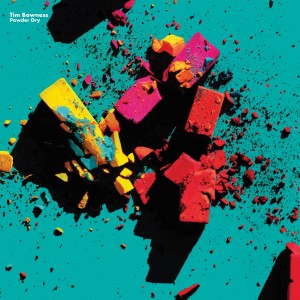
Tim Bowness, Powder Dry:the exception to this month’s rule, Bowness’ first-ever “solo solo project” hits the speakers like a cold slap in the face. Instead of the languorous widescreen ruminations of previous albums, we get brusque, sparse song sketches (rarely more than 3 minutes); a disorienting mix of natural tones, machine rhythms, bracing industrial grit and gnarled lo-fi samples yields shocks, disturbances and wake-up calls aplenty across these 16 tracks. Well practiced in the dark arts of ineffable yearning and melancholy, here Bowness hones and refines his lyrics to bare-knuckled, highly charged haikus, whether staring down decadent cultures (opener “Rock Hudson”), devolving psyches (“This Way Now”, the title track), disintegrating connections (“Heartbreak Notes”) or the unholy conjunction of all three (“Summer Turned”, “Built to Last”). With his stoic vocals bearing the brunt of this emotional tangle, Bowness’ voice plumbs fresh depths, flickering in desperate hope one moment, driven to sublimated fury and fear the next. If you’re already a Bowness fan, stow your expectations — but whether he’s familiar or brand new to you, don’t hesitate to strap in for a compelling, cathartic ride.
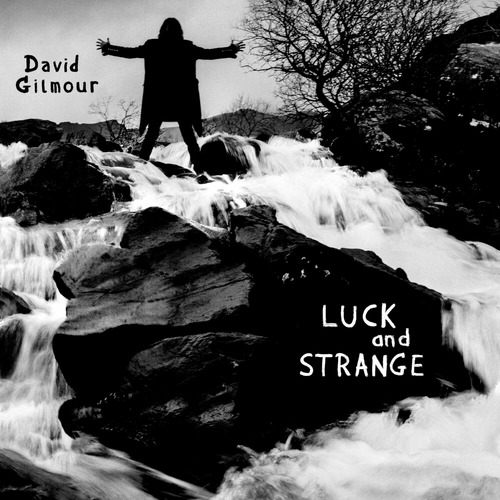
David Gilmour, Luck and Strange: another prog legend who can sound like nobody but himself cranks up one more time. But the canvass Gilmour paints on here accents different tones and tints, with youthful co-producer Charlie Andrew shaking up instrumental backgrounds and song formats to good effect. There’s a sense of lightness, air and space this time around, a less obviously Floydian palette that both complements and contrasts with Gilmour’s craggy singing and singular take on blues guitar. Polly Samson’s lyrics level up as well, tackling well-worn topics (nostalgia on “Luck and Strange”, spirituality on “A Single Spark”, love as refuge on “Dark and Velvet Nights” and “Sings”) from newly contemplative angles, sounding absolutely right coming out of Gilmour’s mouth. (Oh, and daughter Romany Gilmour totally enthralls in her vocal turn on The Montgolfier Brothers’ “Between Two Points”.) By the time Gilmour hearkens back to which one’s Pink, firing off a final round of Stratocaster fireworks on orchestral closer “Scattered”, he’s taken us on the most varied – and I’d argue, most sheerly enjoyable – ride of his solo career; this one’s already a 2024 Favorite.
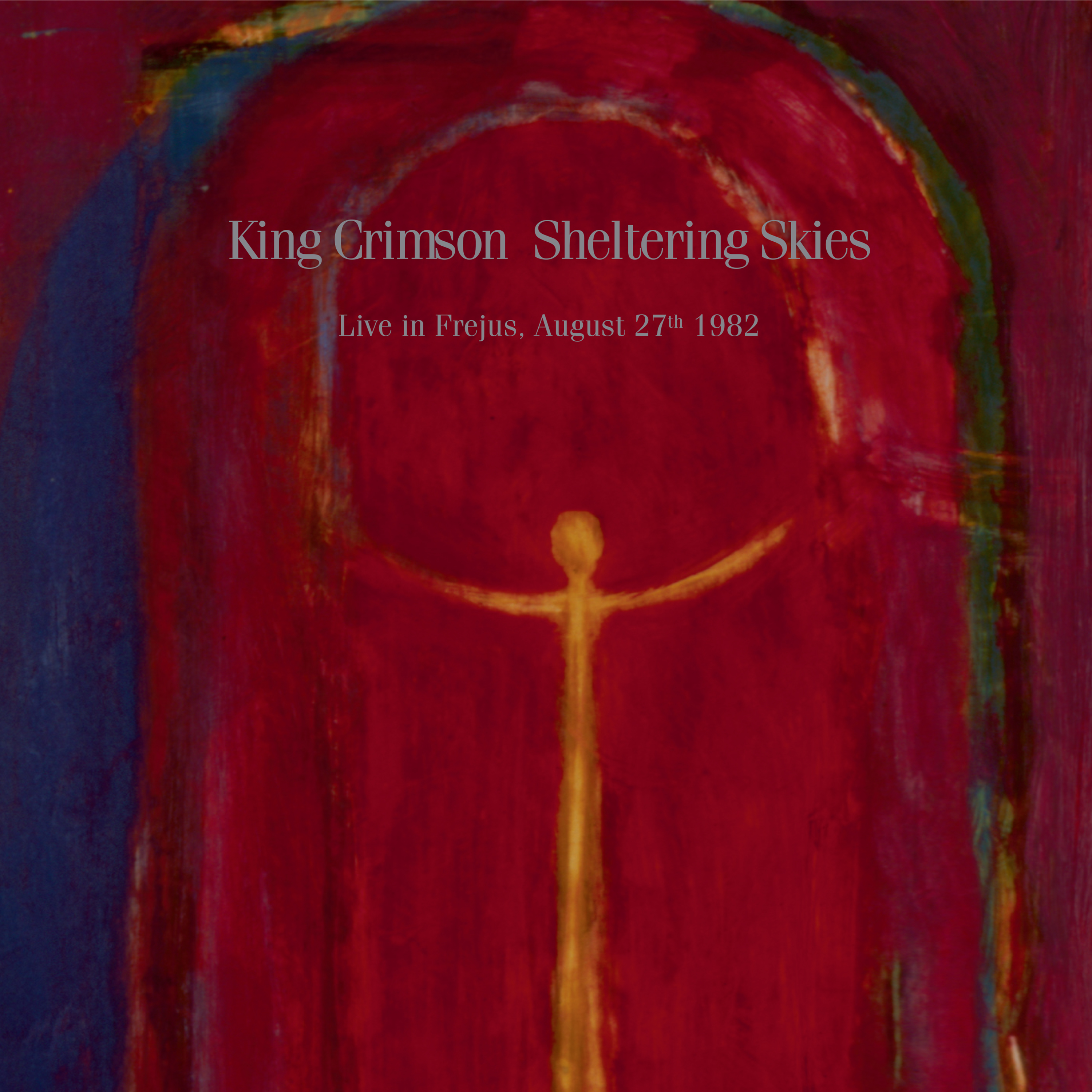
King Crimson, Sheltering Skies: OK, so this one isn’t “new” new. But when Crimson sherpas Robert Fripp and Bill Bruford teamed with American upstarts Adrian Belew and Tony Levin back in the 1980s, the result was a revitalized second reign for the King, swapping out trademark Mellotrons and prodigious pomp for raucous noise, limber polyrhythms and surging, seething energy. With Belew and Levin now touring this music again as BEAT, this issue of a 1982 show previously released on video couldn’t come at a better time; opening for Roxy Music on the French Riviera, Crimson pulls the unsuspecting audience right into the clinches for the hottest of hot dates. From the subdued intensity of “Matte Kudasai” and “The Sheltering Sky” through the dynamic clatter of “Indiscipline” and the hypnotic guitar weave of “Neal and Jack and Me” to Bruford and Belew’s ecstatic percussion duet that kicks off “Waiting Man”, this is that rare live album of nothing but highlights. Banter, bicker, balderdash, brouhaha, ballyhoo — whatever their desired flavor of elephant talk (including some 70s throwbacks), Crim devotees will find it here.
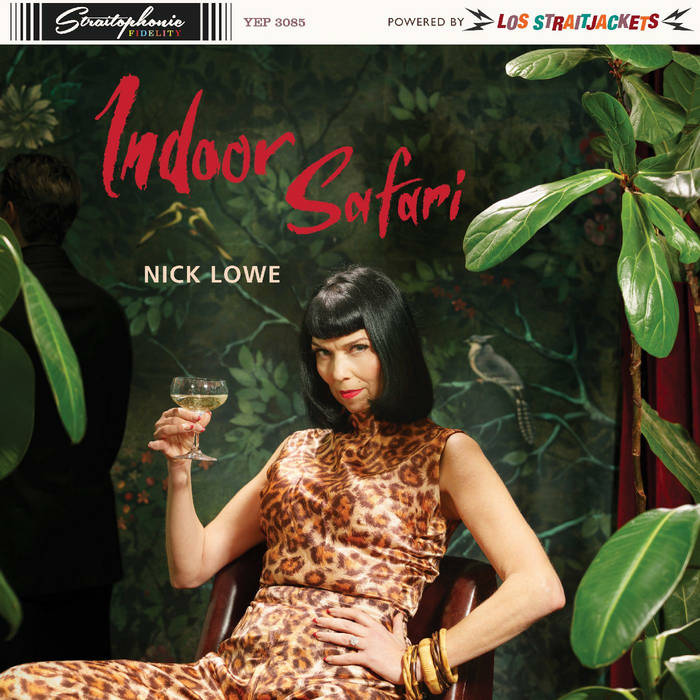
Nick Lowe, Indoor Safari:almost 50 years on from his solo debut at the crest of the New Wave, Lowe’s pure pop for now people remains pin-sharp and on point. Who else can still pump out breezy rockers like “Went to A Party” and “Jet Pac Boomerang” (the latter complete with high-culture similes and a Fab easter egg), ring wry changes on the battle of the sexes in “Blue on Blue” (“You’re like a mill, you run me through”) and “Don’t Be Nice to Me”, then capture the emotional devastation of the quietly crooned “A Different Kind of Blue”? Masked surf-rockers Los Straitjackets (currently celebrating their 30th anniversary) prove crucial here, laying down swinging retro grooves for Lowe’s originals and hoisting just the right backdrops as he nails the blue-collar aspiration of Garnet Mimms “A Quiet Place” and the innocent romance of Ricky Nelson’s “Raincoat in the River”. Lowe’s smart-aleck satire has always entertained, but his later embrace of pre-rock stylings deepened his songwriting and singing; now, even at his jauntiest, his aim for the heart is true. This is a real charmer that’s gone straight onto my 2024 Favorites list.
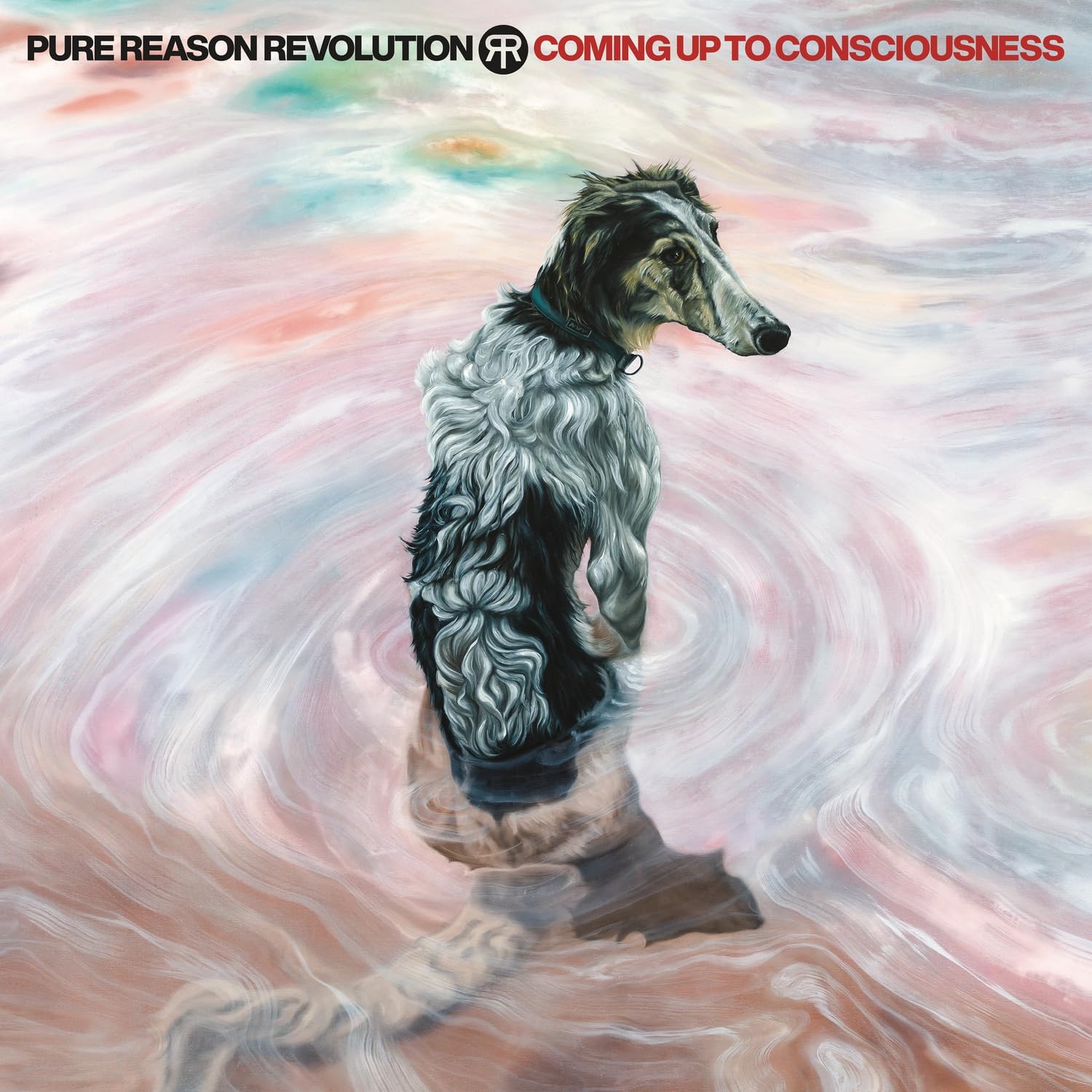
Pure Reason Revolution, Coming Up to Consciousness:a variation in reverse of this month’s theme, as long-time Pink Floyd/Gilmour bassist Guy Pratt brings extra low-end oomph to the latest from Jon Courtney, Greg Jong and their fellow electroproggers. As Time Lord ably spells out in his full review, once again PRR relies on the proven recipe of previous high points like 2006 debut The Dark Third and 2022’s Above Cirrus: float in on low-key ambience, keep the verses chilled out, ramp up on the bridge, kick hard into the chorus! (While seasoning to taste with lush harmonies, towering guitar riffs and slamming club beats, whipping up maximum tension and release before serving.) Here the results are consistently yummy, not least because the soundscapes’ ebb and flow echo Courtney’s perennial lyrical themes. As Courtney, Jong and Annicke Shireen’s voices entwine, splinter, and reunite, there’s a serene insistence on transfiguration, on something more than material, beyond the harsh realities of eros (“Dig til You Die”, “Betrayal”), fear (“The Gallows”), and death itself (“Useless Animal”, “As We Disappear”). Pure Reason Revolution isn’t giving us answers, but Coming Up to Consciousness points us toward the mystery they’ve pursued all along.
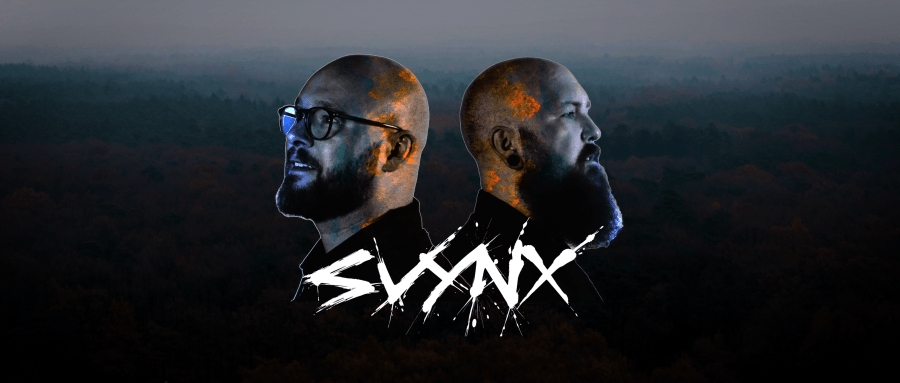
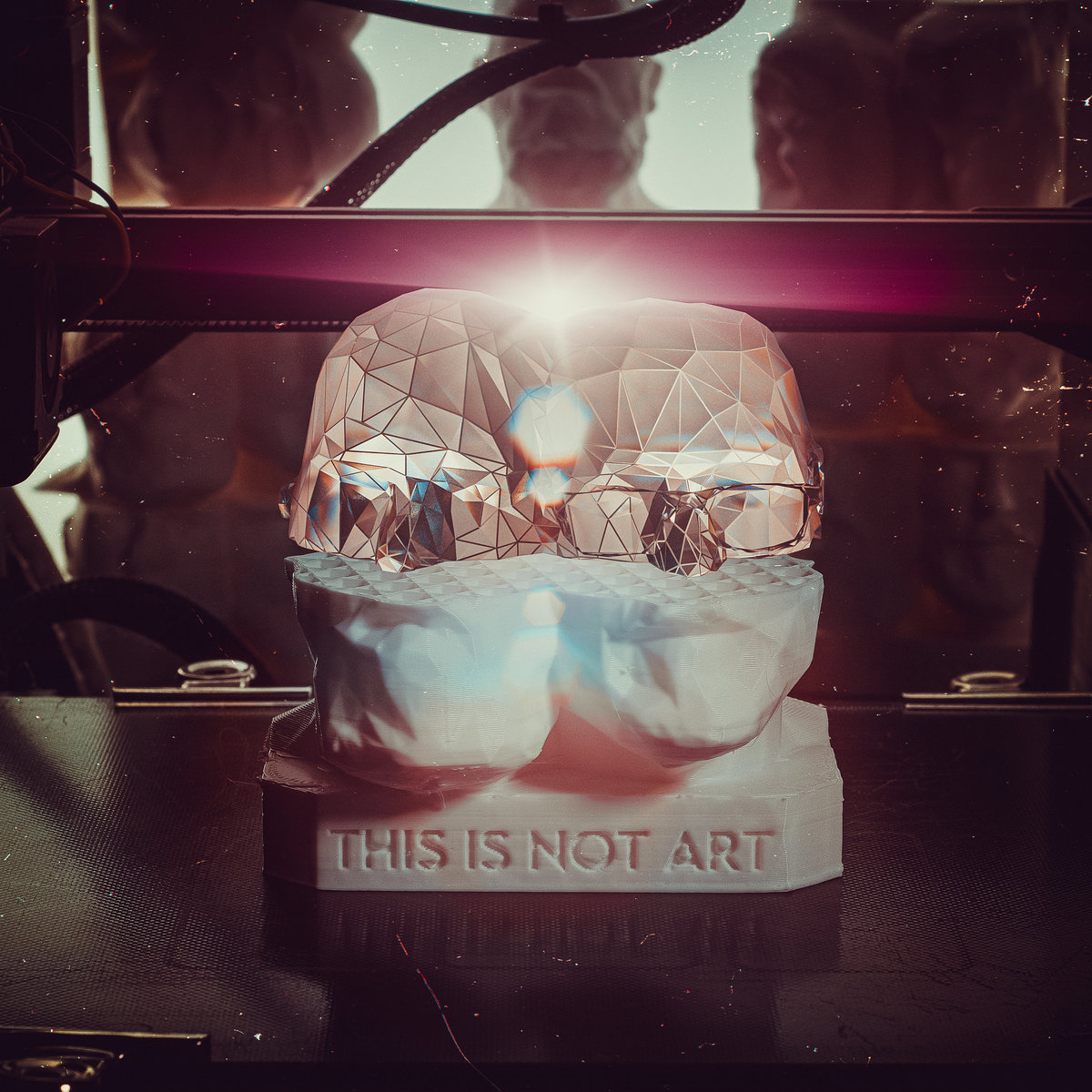
As SVYNX prepares to unveil their debut full-length album This is Not Art on September 14th, we sat down with the progressive/alternative metal duo from Cologne, Germany, to discuss the album’s themes, the influence of the pandemic, and their creative process. Tackling heavy topics like societal disillusionment, corporate greed, and political unrest, the album pushes boundaries both musically and lyrically. With their unique blend of progressive rock, pop, and alternative music, SVYNX has crafted an album that reflects the uncertain times we live in. Below, the band shares insights into the creation of This is Not Art and how their personal experiences shaped its message.
Your upcoming album, This is Not Art, explores themes of societal change and disillusionment. How did the pandemic influence the creation of this album, and how do you think these themes resonate with listeners today?
Disillusionment fits the record’s concept well. The very beginning of the pandemic felt like a time for all of us to come together as equals and awakened hope for change. When that change fell flat, we had to write about our disappointment. Post-pandemic, the world seems even colder than it did before, and the political climate keeps evolving in a troubling fashion. All of these developments are still relevant and probably always have been. But it was the pandemic that revealed my own naivety, which is a recurring theme throughout the album. These emotions resonate with all of us when dealing with disappointment, be it in a grander societal context or in our interpersonal relations.
The track “Art Won’t Save Me Now” sets a poignant tone for the album. Can you elaborate on the message behind this track and how it reflects the overall message of This is Not Art?
“Art Won’t Save Me Now” serves as somewhat of an antithesis to the record’s title. It references Ton Steine Scherben’s “Musik ist eine Waffe” but focuses much more on my own shortcomings as a socially mindful person. Making music will not likely remedy that fact, but maybe it doesn’t have to.
You mentioned that many songs started as short ideas recorded on your computer. Can you walk us through your creative process? How did the studio become an instrument in shaping the album?
Tobi: All of the songs on the album were written collaboratively, but often we were not even in the same room, just elaborating on what the other had done. I honestly don’t know which guitar or vocal lines I came up with on my own and which Wolle has edited and twisted beyond recognition. Our workflows are very compatible that way. I usually take a quick and dirty approach, while Wolle is very detail-oriented.
Tracks like “Follow Me” and “Feed Me” tackle modern conveniences and their impact on our lives. How do you approach writing lyrics that are both thought-provoking and accessible to a broad audience?
Tobi: Lyrics are always difficult. I don’t know if they are thought-provoking or accessible. I try to stay away from absolute truths and write about my interpretations and intuitions—the writing itself is a way for me to understand myself, if that makes sense. [laughs]
“Harvest Season” and “Europa” delve into issues of corporate greed and Europe’s historical role. What inspired you to address these specific issues, and how do you hope your music will influence discussions around them?
Wolle: We are very privileged here in Germany. We feel like the right thing to do is to share our resources and build a more diverse society. Populists are weaponizing migration and turning the poor against each other, while big companies—and sometimes politicians—are stuffing their pockets with more money than anyone would ever need in their lifetime. What used to be common sense now needs to be said out loud: f*ck fascism, f*ck racism.
In “Never at Ease,” you highlight privilege and its influence on choices. What personal experiences or observations led to the creation of this track, and what message do you hope to convey through it?
Tobi: “Never At Ease” is one of the few tracks that was inspired by very specific situations. As a teacher, I’d love to believe that everyone has the power to shape their own lives. But many values I hold in high regard and might subconsciously use to judge someone’s character can’t be taken for granted by everyone. It’s much harder to be punctual, well-dressed, rested, or motivated if you’re responsible for preparing your siblings for school and cooking dinner. I failed to realize this until a 13-year-old pupil of mine shared their story with me. It really makes you uneasy when you hear things like this.
The album was self-recorded but mixed and mastered by professionals at RRenimArts. How did this collaboration impact the final sound of the album, and what was the experience like working with them?
Wolle: We worked for a long time on the album and initially tried mixing and mastering it ourselves, but we were never quite satisfied with the results. By the time we decided to let someone else handle the final touches, we were already very attached to how it sounded. Luckily, Gabri and Konny at RRenimArts knew exactly how to preserve our vision while improving the mix, especially considering we had songs that utilized both bass guitar and synths.
The album ends with “Alexandria,” which addresses rising right-wing forces in Europe. How do you view the role of music in responding to and influencing political and social issues?
Tobi: Tough question! Personally, I want artists to position themselves clearly, so it was important for us to do so. I don’t really know how effective music is in shaping the political landscape, and I don’t want to pretend to have all the answers. That’s part of the inspiration behind the album title. I don’t know who cares about what we’re singing, but we have to sing it.
You’re set to perform at the Euroblast festival this October. What does it mean to you to return to this festival, and how does it feel to perform alongside other bands that have inspired you?
Wolle: Last time we played Euroblast, our music was vastly different—more funky, less modern. After working on this music for over two years, we’re especially proud to return. Euroblast is the best time of the year for us. You meet a lot of open-minded people, and the music ranges from nasty riffs and blast beats to grand-sounding ballads. We really feel like our music fits right in, and we’re thankful for the opportunity to perform again this year.
As a duo, how do you manage the balance between your DIY ethos and the need for professional production? How has this balance evolved over time, especially with this album?
Wolle: Over the years, we’ve acquired a lot of equipment and now have our own little studio. It’s nowhere near professional-grade, but I think the sound we managed to capture speaks for itself. We were motivated by the saying, “If it sounds good, it’s good,” and a video of Devin Townsend recording vocals in a hotel room with mattresses for sound isolation. For the next record, I think we’ll be less obsessed with perfection—imperfection has its own value.
How has your approach to blending progressive rock, pop, and alternative music evolved with this album? Are there any new influences or techniques you experimented with on This is Not Art?
Tobi: Our previous releases were written and fine-tuned while jamming in the rehearsal room, and we limited ourselves to the sounds typically associated with a rock band. After listening to How I’m Feeling Now, I was super inspired. Incorporating synths and heavily effected vocals was our way of achieving a more modern sound. That said, no one wants to hear me play guitar in 4/4, so it had to be proggy. [laughs]
Looking ahead, what are your plans following the release of this album? Are there any upcoming projects or performances that fans should be excited about?
Wolle: Right now, we’re focused on playing shows and festivals and getting reviews out for this record. We both work full-time (Tobi is a teacher, and I’m a nurse), and since we’re only a duo, we can’t do everything at once. There are a few song ideas we’ve started working on, but with our limited time, we’re focusing on making this release as big as possible.
This is Not Art is out on September 14th, and is available as a digital download from Bandcamp, with the vinyl version coming later this Fall. For more about SVYNX visit their website, or follow them on Facebook and Instagram.
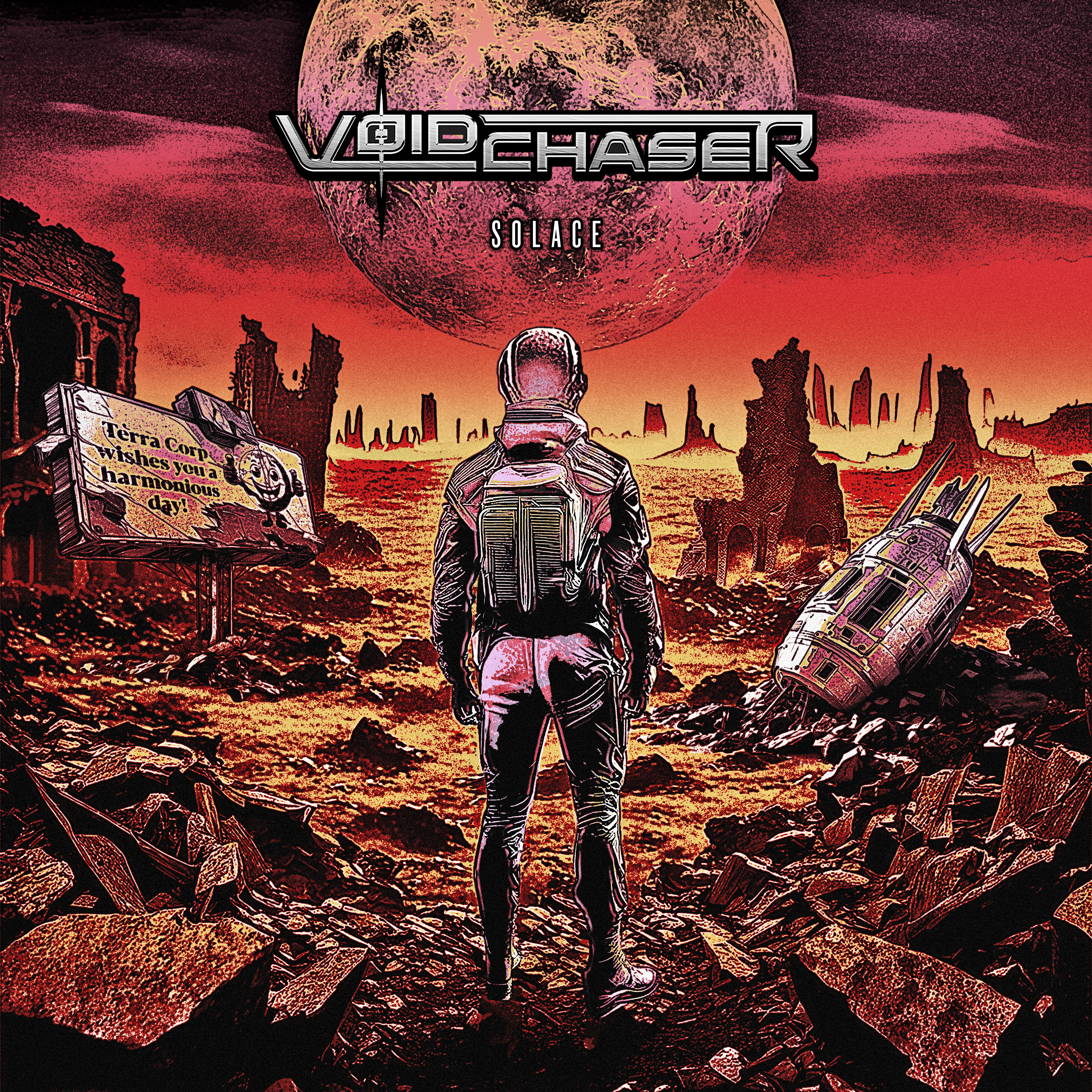
Formed just last year, Stockholm-Montreal-based progressive metal band Voidchaser has wasted no time making their mark. Following the release of their well-received EP Odyssey earlier this year, they have returned with their full-length debut album Solace, launched on September 6th. The album, a concept-driven masterpiece structured as a continuous piece of music, showcases Voidchaser’s distinct blend of technical precision, emotional depth, and theatrical flair. In this interview, we delve into the creative process behind Solace, the band’s rapid rise, and their ambitious plans for the future.
Progarchy talked with Voidchaser’s singer and rhythm guitarist Chad Bernatchez and bassist Jici LG.
Voidchaser formed just last year, yet you’ve already released an EP and are now gearing up for your debut album Solace. How has the journey been for the band so far?
The journey has been incredible. The band is really operating like a train without breaks. It feels like we are tighter and more creative than we’ve ever been.
Solace is a concept album structured as a continuous piece of music divided into movements. Can you talk about the creative process behind designing the album this way?
One of the things I love the most about music is the journey you take when listening and I always appreciate when an artist/composer recalls certain themes or melodies and uses them as identifiers, whether it be for characters, or emotions, etc. It’s story telling through songwriting.
The two tracks, “Solace Part II: Only Human” and “Solace Part IV: Alien,” are vastly different in tone and style. How do these contrasting pieces fit within the larger concept of the album?
The two songs are very much tied together narratively by the experience of our protagonist but are very much opposing each other in terms of emotion. In “Solace Part II: Only Human”, our protagonist is dealing with surviving in a new environment. They are coming to terms with their isolation and are trying to embrace it. In “Solace Part IV: Alien” it is very much the opposite. Our protagonist is feeling an embrace that they have longed for and is blindly following it with little regard for anything else. All of a sudden, the desire to survive and push forward disappear and the only thing they care about is love.
Your sound draws from progressive death metal, but also includes elements of melodic and theatrical music. How do you strike a balance between technical precision and emotional depth in your songs?
I love feeling things when I listen to music. I love hearing something and it makes me cry. I’m a very big fan of musical theater because of this. When I write the heavy riffs, I really try to find something that can serve as a “home base” and I think it becomes a little “pop-y” as a result. Once I have that I just let my imagination run wild and go crazy with time signatures and all the other fun stuff. And it’s the same thing with the emotional stuff. I think that part of the balance is giving a space for these things to exist but also offering more to the song than just a standard song structure. It makes it so that when we land on those parts they shine more because we’ve been building towards it or around it.
Chad, you’ve described Solace as Voidchaser’s most ambitious project yet. What were some of the challenges and triumphs in creating such an intricate and cohesive record?
I think the biggest challenge for me personally was to let go of it. I kept thinking “it’s not perfect yet” or “oh this person will probably hate this part” and with the rest of Voidchaser’s support I was able to overcome that self-doubt and just say “fuck it, I like it, we like it, let’s go” After that it was a breeze, recording and producing it ourselves was smooth, the collabs were easy, the mix and mastering was like a glove. I think the stars really aligned for us after that.
Guest performances by Ashbreather on “Only Human” add another layer to the track. How did that collaboration come about, and what do you feel it brings to the album?
Ashbreather have always been our friends, we recorded our very first single at their studio. They have been there since the beginning really. After that we did the “Ashes of the Void Tour” and that made really strengthened our friendship, so we just asked, and they were super into it. I think it adds a great layer of chaos and emotion to that section. They killed it!
Your debut EP Odyssey made a significant impact earlier this year, and tracks like “Tyrant” and “Star-Crossed Lovers” have garnered tens of thousands of streams. How did that early success influence the making of Solace?
We were planning on doing Solace before Odyssey was even released so it never derailed the plan but I think it just made us want to go all in with it. We felt like something was happening and we needed to give it everything we had and do it justice.
Solace explores themes of survival, resilience, and toxic relationships. Can you share how these themes developed and how they resonate with the band on a personal level?
These are just all experiences that I have had and I’m trying to write them in a way that more people can resonate with. I use the narrative as a way to relate a feeling that detaches itself from me, myself and I. Solace covers a very important chapter in my life. Years ago I found myself in a situation where the rug was swept from underneath my feet and all of a sudden it felt like my entire world was collapsing. Then I left and I moved to Montreal. I had no point of reference anymore, I felt alone and wanted to use that as a strength. Then I met someone, and we were together for a few years, but it was unhealthy. We were both filing a void through each other. Finally once that break up happened I had a lot of cathartic moments with myself and I started feeling inner peace.
Voidchaser has roots in both Montreal and Stockholm. How do these two cities’ distinct metal scenes influence your sound and the way you approach music?
I would say that we’ve been more involved with the scene in Montreal and its had an influence that you’ve already heard and will continue to hear. You go see a gig, have a good time, get inspired and go home and jam something out. Stockholm is still a mystery to us, but being in a new environment has supercharged my creativity. I have been writing a lot of new stuff. Stuff you won’t hear for a while but you will hear it eventually.
You’ve shared the stage with Ashbreather and The Aphelion on the Ashes of the Void Tour, and you’re about to embark on the Terra Corp Presents: The Only Human Tour. How does performing live shape the evolution of Voidchaser’s music?
It’s just a constant flow of inspiration really. You make music that makes you wanna go out and play it in front of people. Then you go on tour with your friends, have a blast, grow closer and by the time you get home you’re just inspired to make more music. I think feeling the audience’s reaction to our music also helps inform some of the song writing. I’ll be making music and say things like “oh this is gonna make people jump around” or “I think we might lose the audience in this section.” Plus it’s just fun. Performing is the pay off for me.
Jici, you mentioned that Voidchaser feels like an unstoppable force since releasing Odyssey. What is it about the band’s chemistry that has allowed you to move so quickly and decisively in the past year?
At some point, we realized that this band could be the vehicle to help us achieve our dreams as musicians and artists, as long as we put in the effort strategically. I believe everyone in the band has a deep and existential drive to fulfill their own personal goals, which creates a powerful force behind everything we do as a band. We strive to break through our self-limiting beliefs and give everything we’ve got. Honestly, we’ve already accomplished so many of our goals so far, and it’s just the beginning. It’s overwhelming, but it’s one of the best feelings we’ve ever experienced.
Chat Bernatchez (Voidchaser)
Progressive death metal often demands a high level of musicianship. How do you as a band continue to challenge yourselves technically while still staying true to the emotional core of your music?
I think we stopped limiting ourselves to what we can play. The philosophy now is very much write what sounds good and if you can’t play it, learn how and if it’s hard, practice.
The remixed version of “Tyrant” was critically acclaimed. What made you decide to revisit that track, and how did the remix alter its impact?
What made us revisit that track was our current sound engineer, Jason Poulin, who just liked the band and asked us if he could do a remix of Tyrant for us.
We liked it so much that we just decided to release it. We’ve been working with him ever since and he became a ghost member of Voidchaser a very good friend of ours.
Voidchaser has a theatrical element in both your recordings and live shows. How do you incorporate that theatricality into your stage performances, and what can fans expect from your upcoming tours?
Matching costumes for one. I believe a live performance needs to transcend beyond just the music. So there will be as much visuals as we can get for now, as well as some light choreography stuff. We are also gonna be playing with backing tracks for the first time to really give a FULL sonic experience.
The progressive death metal genre is known for its innovation, but also for pushing boundaries. What do you feel sets Voidchaser apart from other bands in the scene?
I think that it is our roots. We have a lot of variety in the kind of music we listen to individually, as well as the music we were around while growing up. But I would say the most important thing for us is that we embrace some traditional songwriting elements that are more pop oriented. We allow ourselves to fluctuate between being very heavy and technical to being light and breasy.
Looking back on the making of Solace, is there a particular moment in the process that stands out as a defining moment for the band?
I would say we all really stepped up our game and we knew that this had to be big so that was something we collectively established early on. I think the defining moment, for me anyway was when we heard Jason’s first crack at the mix. We just sat there in complete awe and said, this is huge, there’s something going on here.”
Finally, as you gear up for the release of Solace and your next tour, what are your hopes for the future of Voidchaser? What’s next after this album?
Oh man, we have so much more plans we want to do. We have 1 more EP that we are hoping to put out this year. 2025 will have 2 albums and one tour at least, then 2026 will have something that I think is even more ambitious. We are going full force with Voidchaser until it dies or I do.
Solace is available now; check it out on Bandcamp. For all things Voidchaser check out this location.
While Prog’s old guard still continue to defy the ages with a continuing stream of exceptional music, we must look ahead to identify the stars of tomorrow.
In the UK, we’ve seen a steady stream of younger bands breaking through the ranks and making their mark.
One such band is Azure, who initially caught everyone’s imagination when they brought their brand of complex, fantasy-based, metallic edged Prog to wider audiences notably through relatively low key llive appearances and a fascinating second album, Of Brine and Angel’s Beaks, together with a full-on single Mistress.
Topping the Readers’ Poll for Prog Magazine’s Best Unsigned Band in 2021, the band began 2022 working on their third studio album, which they declared would be an ambitious and far-reaching concept. And they weren’t kidding!
At their heart is the creative duo of vocalist/guitarist Christopher Sampson and guitarist Galen Stapley, who met while both were studying music at the University of Sussex in their now home city of Brighton.
Their mutual love of bands such as Dream Theater, Animals as Leaders and Yes brought them together to start creating their own brand of Prog. Its Unique Selling Point is very much the fantasy stories that Sampson writes, having published their first novel Path of the Adzinist: LU in December last year.
Many of the characters Sampson has created have found their way onto the album whose simplistic title Fym belies the extraordinary, spellbinding 78 minute journey on which Azure take their listeners.
But it’s not just Sampson’s incredible imagination that dominates this album. It’s also the extraordinary way in which Sampson and Stapley fuse their musical ideas, creating a vast but always accessible cinematic soundscape. Many long walks were taken along the south coast by Sampson and Stapley during the course of the album’s evolution as they spent countless hours refining the story and its soundtrack.
It also helps that Sampson is the possessor of a unique multi-octave, sometimes theatrical voice that can soar higher than Geddy Lee’s and evokes a kaleidoscope of emotions. Stapley is the perfect foil, their laser-like guitar runs that can so brilliantly illustrate the epic story, bringing other-worldly textures to the 12 shape-shifting tracks.
One can only guess the reaction when their regular bandmates Shaz D on keyboards and bassist Alex Miles, plus guest drummer Andrew Scott, when they saw the scale of Fym’s incredibly complex musical score. Whatever they might have thought, their contributions are key to interpreting the myriad nuances within the overall sound.
It’s not just the music, it is also the storyline which is centred on the centuries-spanning travails of introverted, jungle-dwelling historian Fym Sallow, whose mission is to retrieve the shards of a glass blade called Umbra.
Introducing characters from the book and previous albums including the aforementioned Mistress, Fym’s journey is fraught with danger as she is accompanied by The Lavender Fox, which has its own song and “voice”.
Each track has its own particular theme, depicting a specific sequence of the story.
One of the most memorable is the three track continuous sequence of Sky Sailing/Beyond the Bloom/Wilt, the central piece being the most vivid descriptive piece about a natural, but dangerous landscape in which the oboe of guest player Camille De Carvalhomakes an appearance.
Perhaps the most accessible song is the album’s single Weight of the Blade, a mid-paced deliciously energetic rocker on which Shaz D shines on grand piano. Its accompanying video (see link) shows the band performing on a deserted shoreline, whilw giving tantalising insights into the storyline.
The climax comes with a huge battle in Trench of Nalu, that explodes with drama and turmoil, Fym facing her biggest and potentially deadliest conflict in the bowels of an alternative Earth.
No spoilers on how it all ends, but the conclusion, the ridiculously beautiful Moonrise sees Sampson in melancholic mood, accompanied only by a gentle, soothing bass melody from Miles.
The double album’s cover is as striking as its contents, Felix La Mer, depicting many of the characters and scenes from within. The accompanying booklet telling the story also features a map and Sampson’s unique lyrical symbols.
It’s an outstanding achievement from the band, who pour every ounce of their emotional energy into layering the all-enveloping sound then producing it to an exemplary standard.
The band’s live performances are as dramatic as their music: they are currently regrouping to ensure they take their stage show to a different level to reflect the quality of their music.
Fym is one of the best Prog albums of recent years that you probably have never heard of. It’s a dazzling, head-spinning musical journey that I recommend everyone experiences.





 Progarchy