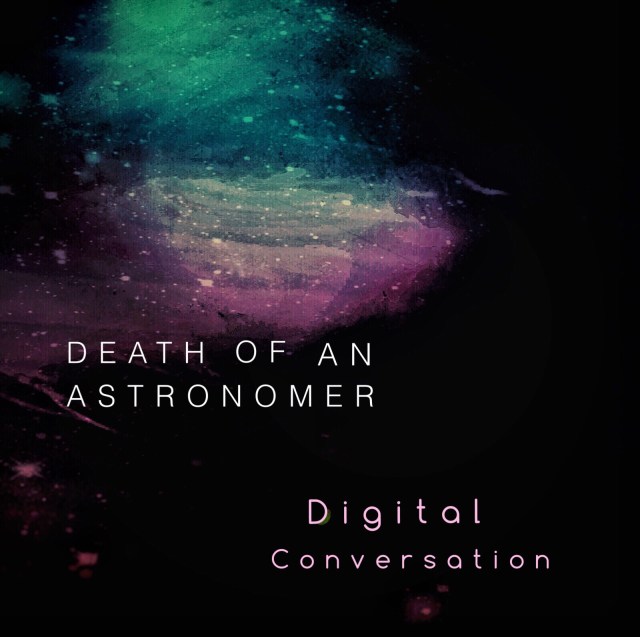
Track Review: Death of an Astronomer – Digital Conversation

Digital Conversation

Sometimes, metal guys want to play jazz fusion, and that is something that Los Angeles based keyboardist, guitarist and composer Jairo Estrada does with his project Death is an Astronomer on the recently released single “Digital Conversation.” 

https://bandcamp.com/EmbeddedPlayer/track=198860162/size=small/bgcol=ffffff/linkcol=0687f5/transparent=true/

Estrada offers up striking, highly progressive metallic fusion music that never bores or ventures too far off into aimless territory. Highly complex yet flowing, “Digital Conversation” sees weaving guitar and bass melodies twisting and turning around each other, the drums, following along every step of the way but keeping it all grounded. Arrangements just grab hold of you and take you on a mind altering journey. Nothing here is overly heavy, but there is just enough crunch in the guitar to keep this in the metal camp, yet when Estrada goes for some soaring, thought provoking chops, it’s classic jazz fusion/prog rock all the way. 

Jairo Estrada (Death of an Astronomer)

If you like adventurous, classy instrumental metal fusion, Death of an Astronomer’s debut single is a something you need to seek out immediately. But to make it easy, here is where you can get it.

Album Review: Vector – Haken

38810878_10156676432099744_262269145683329024_n2

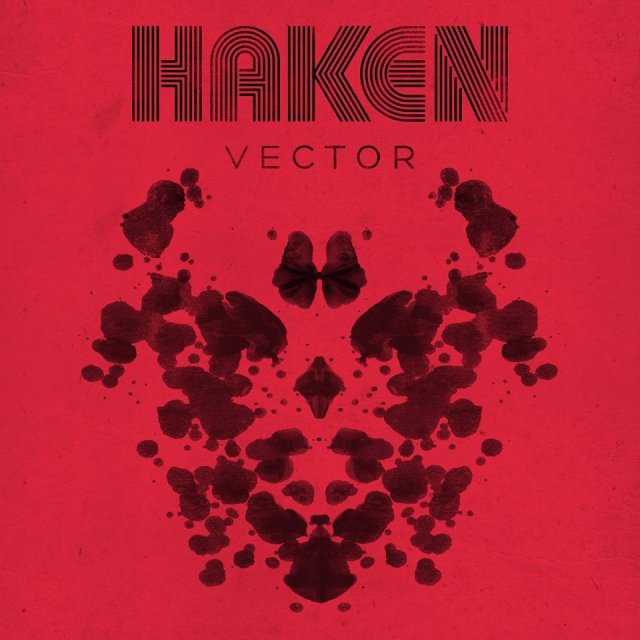
It took me a few listens before I truly found my way into Vector, the new studio offering from Haken.

And then I realized:

It’s the musical blot!

Genesis pun intended. Allow me to explain…

I was really looking forward to this album, because as I listened to L-1VE, their brilliant live album from earlier this year, I became convinced that, with Rush now retired, it is Haken that reigns supreme.

Haken’s ability to play with such complexity and virtuosity live, in such a compelling and spirited way, embodies that living “spirit of radio” that Rush had been able to offer live for so many decades.

L-1VE reminded me of Exit… Stage Left, in that it was a perfect overview of the band’s career, as well as definitive proof of their being today’s live band without equal.

At any rate, I was baffled by Vector at first, because initially it didn’t seem to be musically or lyrically coherent.

But the breakthrough came for me when I read the Man of Much Metal’s review of it, wherein he put forth the thesis that Vector is “an understated and clever homage to every single previous incarnation of the band within the music.”

In illustration of this thesis, he averred that Affinity can be heard within “The Good Doctor,” The Mountain within “Puzzle Box,” Aquarius within “Veil,” and Visions within “Host.”

This immediately rang true for me, as I realized each song indeed marked a “vector,” or definite trajectory, in fact audible in previous manifestations of the band.

In my mind, I added my own perception of the teleological spirit of Restoration in “A Cell Divides,” and of the jaw-dropping response induced by L-1VE (with its dazzling live display of unmatched technical musical ability) in the instrumental “Nil by Mouth.”

While the Vector album, on the one hand, thus didn’t have the overall coherent feel that comes from a spatio-temporally undivided live performance (which is what the career overview of L-1VE records), on the other hand, its fragmentary studio snapshots of discretely engineered musical styles did supply quantum musical “blots” of a Haken offered via a more scattershot distribution.

Thus, like the “ink blot” on the cover, you can see the Haken you want to see, if only you look more closely.

As for what Haken is overall, who knows; it is as if the band is saying, “It is up to you to perceive it; we are not going to decide it in advance, to fit some marketing categories or any other reductive schema.”

Look within the music, and you will see what is there.

And as I understand the point of this exercise, it is not so much “to project your own meaning” onto the music, but rather to be an active participant in the music itself, along with Haken.

Just as they themselves won’t reduce the musical experience in advance, so too do they invite you not to insist in advance that your musical experience be able to be put in a nice and neat little box.

So, instead they have given us quite the little puzzle box on Vector.

I believe I have solved it.

Not a musical box, but a most satisfying musical ink blot.

Lee Speaks About Music… #107 — Lee Speaks About…

Story Tellers Part Two – Tiger Moth Tales Introduction… The latest and 4th studio album release of Tiger Moth Tales is the sequel to the 2nd album Story Tellers Part One and I was so glad to that Story Tellers Part Two had been in the making and was to be the next album to hit […]

via Lee Speaks About Music… #107 — Lee Speaks About…

After the flood…

Kudos to Erik and Brad for being willing to step up and speak on this. This post began as a comment on Erik’s post (which was a response to Brad’s posts), but the words kept coming and it seemed better to add to the conversation separately.

I am probably the least informed of all of you with respect to the cutting edge of current Prog. I haven’t had a chance to listen to either album in question, so I shan’t speak to those specifically. I will say, that I’ve come to realize that a lot of the music that I enjoyed when I was younger was filled with political posturing that mostly sailed right over my head. But now, years later, when I listen to much of it I find the perspectives to be quite vacuous and it does spoil my experience of the music. Political criticisms can be powerfully done, but they typically work better when written in prose by people who have been gifted with insights for such things. Poetry can work to that end, but it takes an extremely deft hand (Shakespeare & Eliot come to mind) to really make it art.

Continue reading “After the flood…”

Lost Progarchy: Methinks Thou Doth Protest Too Much

If anyone has read the attacks below, posted on Progarchy, that are assaulting the latest from both Roine Stolt and The Tangent, I just want to encourage people to ignore the ranting and raving, and to actually go and listen to the music and lyrics instead.

Stolt releases a song called “Lost America” and suddenly some heads explode at Prograchy. Hey guys, calm down. How about you actually listen to the song? Is it too much to thoughtfully digest what an artist offers, before pronouncing premature rash judgment?

The music to “Lost America” is itself not too bad. Musically, there is nothing offensive. I admit the track doesn’t do much for me, because musically it has nothing too innovative or elaborate to get me excited. But, the guitars are great, and it’s still pleasantly enjoyable to listen to, nonetheless.

Continue reading “Lost Progarchy: Methinks Thou Doth Protest Too Much”

A Few More Words on the Politics Thing

One of our esteemed founders, Dr. Birzer, has had a few excellent posts today on the intersection of art and politics, in part to a reaction of some recent releases and in larger part in reaction to some larger trends.  In reading them, I had about 1.5 cents of my own I wanted to throw in.

This isn’t to say I don’t ever like political subject matter intertwined with music.  But some ways of doing it are more appealing than others.  One of my favorite albums this year – Galahad’s sprawling, incredible Seas of Change – is very political in its lyrics.  It’s focused on the tumult in the U.K. over Brexit.  However, which side of that debate it eventually comes down upon is hard to say.  I’ve read reviews that say it’s pro-Brexit, others that say it’s anti-Brexit.  When I pore over the lyrics, I come away with … I don’t know.  It seems like Galahad has plenty to critique on both sides of that debate.  Irrespective of that, one of the things I like about it is that it takes a “clean up your own backyard first” approach.  Nobody is doing a Roine Stolt on Lost America here, sitting back smugly criticizing another polity as if theirs is somehow perfect.  The path Galahad has chosen is one of self-reflection, the one chosen by Stolt is cheap, smug, self-superiority.  Galahad’s path is engaging (as is Marillion’s FEAR), Stolt’s is off-putting.

Continue reading “A Few More Words on the Politics Thing”

Glass Hammer Smashes Time

A Hole In The Sky

Do you long for the days when listening to FM rock radio meant hearing classic Todd Rundgren, early Chicago, ELO, ELP, Pink Floyd, and maybe a little Autobahn courtesy of Kraftwerk? Do you miss watching Rockford Files and Barney Miller on TV? If so, then you will love Glass Hammer’s new album, Chronomonaut. It is a trip back in time to those heady days of the 1970s when DJs thought nothing of playing an entire album side in the middle of an afternoon.

Brad Birzer has already written an impossible-to-improve-upon review of Glass Hammer’s latest, but I am so captivated by this album that I had to add my voice to the chorus of praise it is garnering. While Valkyrie was a beautiful and sympathetic examination of the horrors of WWI trench warfare and the toll it took on soldiers, Chronomonaut is a much lighter affair, at least in its brilliant mix of styles of music. Tongues are firmly in cheek throughout this update on the hapless protagonist, Tom Timely, whom we first met in 2000’s Chronometree.

Tom’s still convinced he’s receiving secret messages via prog music, and he is not a happy inhabitant of the 2010s. He is sure that he can travel back in time to the 1970s and fix whatever it was that made his life go off the rails. Where Chronometree was pretty much all in fun, though, this new chapter has some deeper messages lurking beneath the surface.

The music is all over the place, and I mean that in a good way. I hear snatches of early Chicago in the horns, some Houses of the Holy – era Led Zep, some early-80s new waviness, and a heavy dollop of Something/Anything? – era Todd Rundgren. Babb and Schendel put it all in a blender and it comes out sounding pretty glorious. Susie Bogdanowicz is still on board, thankfully, contributing her trademark angelic vocals. Aaron Raulston is solid as a rock throughout. He is the most adaptable drummer I’ve heard – regardless of the musical style, his percussion is a perfect fit. Steve Babb is now my favorite bassist – he is endlessly inventive and melodic without dominating the proceedings. And of course, Fred Schendel is marvelous on guitar and keyboards, pulling all kinds of vintage sounds out of his instrumental arsenal.

In the end though, amidst the sheer pleasure of listening to all of this ear candy, there is a sobering message: nostalgia for its own sake can be dangerous. As they sing in the album’s final and finest song, “Fade Away”,

“If you could truly travel back

You’d still not find the things you lack.

The glories you seem to recall

Were not glory after all.”

Tom, it turns out, is searching for Truth, and in the end he finds it. It’s a deeply moving moment in the arc of the album’s trajectory. There are not many bands who could pull off such a mix of engaging melodies with such a serious message. Glass Hammer, however, are not your typical band. They make it look easy, which is all the more impressive. Long may they run!

Still Life

Another anniversary.

Still Life released on October 18th, 1999.

Below write-up is eleven years old, and slightly edited for my present sensibilities. But the album is still timeless.

Opeth’s ‘Still Life’ – that perfect arrangement of death, progression and blues. Always listen to this record uninterrupted from “The Moor” to “White Cluster”, the band simply extends the boundaries of progressive death. There is always that one album which defines the artist and forms the cornerstone of their whole music. But with “Still Life”, Opeth has pushed their own creativity to insane heights — of near impossible emulation.

Here the band actually transcend the normal decorum of mathematics, high (means progressive) and low (means death metal) mixed together isn’t a big nothing. Akerfeldt must have been simultaneously strung up on Alcohol and grass when he wrote ‘Still Life’. Mind you, the record doesn’t hit you hard, instead it methodically seeps into every iota of musical nerve and gets ingrained there. Been listening to this band for over fifteen years and can convincingly claim this is the pinnacle of their prog death years.

“Still Life” has an ambiance which perfectly blends contrasting elements — those dank deathly growls, progressive riffs, bluesy folk acoustic melody, and clean vocals. It’s a sort of a real life musical analogy to Speedball – in other words, these songs simultaneously stimulates and depresses your brain. The beauty of this torment is simply beyond comprehension.

Lyrics are mostly grim, and when combined with the growls create an ambiance of a cold winter morning – probably spent in retrospection about lost life. It might be illegal to make music this inscrutable; it’s not easy when you are unable to comprehend how melancholy “Benighted” can effortlessly transition into the aggressive “Moonlapse Vertigo”, and end in a mournfully poetic “Face Of Melinda”. When the guitar slowly fades, you wonder if it can get any better.

Traces of early black metal are still felt in the last two tracks; otherwise the record sticks to good progressive death and progressive metal. One of the high points is the sheer quality of riffs that literally form the backbone. Compared to their early works, Still Life has lot more clean vocals and acoustic guitar, and integrates even more of a number of transitions between the textures they usually exhibit. This was also a quantum leap in terms of production quality and can perfectly satiate the musical appetite of any progressive metal fanatic.

Could never confront the idea of reviewing ‘Still Life’; no vocabulary prowess can do justice to such a complex form of musical expression. A rather obvious infatuation with this music might just heave me into a cavalcade of clichés, which I have hopefully refrained from ’til now.


By Grywnn [CC BY-SA 4.0 ], from Wikimedia Commons

Immersed in Memory: The Rising Brilliance of Oak

Oak, False Memory Archive, 2018

Tracks: We, The Drowned (5:24), Claire De Lune (7:16), False Memory Archive (4:56), Lost Causes (8:30), Intermezzo (1:42), The Lights (10:34), These Are The Stars We’re Aiming For (4:19), Transparent Eyes (4:59), Psalm 51 (7:26)

[Edit: The original version of this review included a track listing with the wrong track order. I offer my sincerest apologies to the band and to our readers for this mistake.]

Have you ever found yourself so utterly satisfied by something in life that you find yourself feeling guilty for enjoying it? For me, that is Oak’s music. Their two albums are flawless. Every note. Every theme. Every lyric. Every wash of sound. Perfection.

2016’s Lighthouse blew me away. I’m not sure how much attention the band has received in more popular press (i.e., Prog magazine), but beyond Progarchy, the Dutch Progressive Rock Page (where I and Andy Read have promoted the group), Prog Sphere, and the Prog Mind, I haven’t seen the band covered all that much. That is a downright shame because this band has reached into a completely new level of brilliance.

Oak is prog in the vein of Pink Floyd’s, Riverside’s, Porcupine Tree’s, and Steven Wilson’s atmospheric and contemplative moments. Unlike those bands, Oak never abandon that overarching theme. Their new album, False Memory Archive, may start with a pounding drum intro reminiscent of the heavier moments in rock history, but that does not take the band away from their overall sound. Instead, it grounds them in rock, and it allows them to explore broad soundscapes. The band goes from quiet contemplative moments to heavy guitar driven rock in places all over the album. Throughout the first track, the heavy drumming seemingly contradicts the warm vocals and soothing piano and synth sounds, but when taken together it really doesn’t. The end result is a layered effect that allows the music to build gradually.

Continue reading “Immersed in Memory: The Rising Brilliance of Oak”

Album Premiere: Oak – “False Memory Archive” — The PROG Mind

https://bandcamp.com/EmbeddedPlayer/v=2/album=4004955793/size=large/bgcol=ffffff/linkcol=0687f5/tracks=773703106,626084637,2147233160,3073911281,3095255974,923318095,2736249444,3261170423,3437170636/esig=67dcda28ff305cd044ce9deae04fb27b/

Check out the full album premiere of Oak’s “False Memory Archive”.

via Album Premiere: Oak – “False Memory Archive” — The PROG Mind