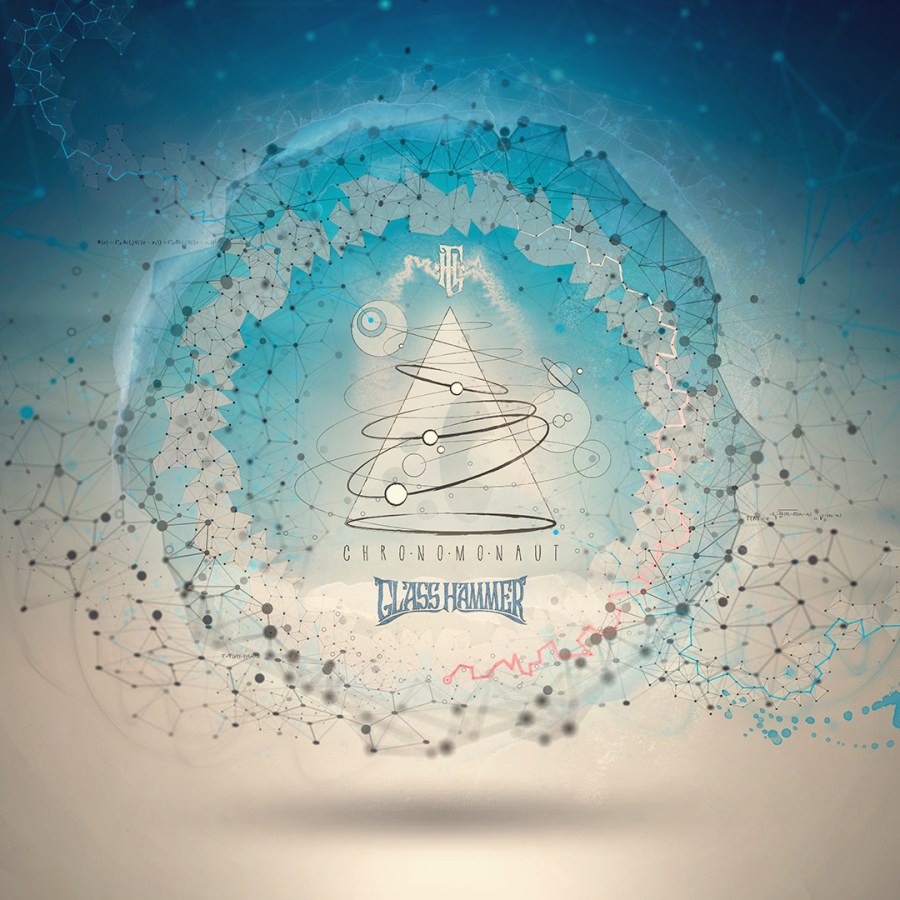
This morning/today, I have a piece at The American Conservative introducing a 26-year old band as America’s greatest rock band. Please check it out. And, note, there’s nothing political in the article, despite the venue. So, humans of all political persuasions, be not afraid!!!!
Creating Glass Hammer in 1992, long-time friends, Steve Babb and Fred Schendel—who had played in several 80s metal bands—decided to dive into what they loved most: complicated, intricate, baroque, over-the-top rock. At the time of the band’s creation, the term “progressive rock” was more than out of favor, evoking for most the horrors of bloated songs, the wearing of capes, the stabbing of keyboards with knives, and lyrics about Hobbits. Though, if Babb and Schendel had hoped to avoid the “progressive rock” stereotype, they failed miserably. If anything, their music—what they called “fantasy rock,” bringing the speculative and imaginary worlds of C.S. Lewis, J.R.R. Tolkien, and others to life—was inordinately more nerdy than “progressive rock.”
Treason – Gryphon Introduction… With the departure of Graeme Taylor and Malcolm Bennett things may have looked all over for Gryphon. But they was not about to give up just quite yet, and pretty soon they was to recruit 3 new members to the band, they even brought in a lyricist to make things run […]
Summer 2018 will live long in the memory of The Elation. The first two singles from their debut EP garnered huge radio support across Ireland and the UK. “Clickbait” was then released in June via Top 6 and went straight into the Irish Indie Charts at #3. A milestone for most artists and labels. The […]
From its formation in the heady days of the 1960s to its final dissolution about 15 years later, Soft Machine rarely stayed in one place for long. The British band’s journey through technicolor psychedelia, meaty jazz-rock and idiosyncratic jazz fusion (equal parts Mahavishnu Orchestra, Terry Riley and Jimmy Webb) took shape on the fly, in a blur of live gigs and album sessions — along with multiple personnel changes following founding drummer Robert Wyatt’s departure. At the end, changes came so fast that the final album of the original discography, 1981’s Land of Cockayne, was Soft Machine in name only — effectively the first solo effort by composer/keyboardist Karl Jenkins, foreshadowing his eventual emergence as a classical crossover star (and a knight of the British Empire).
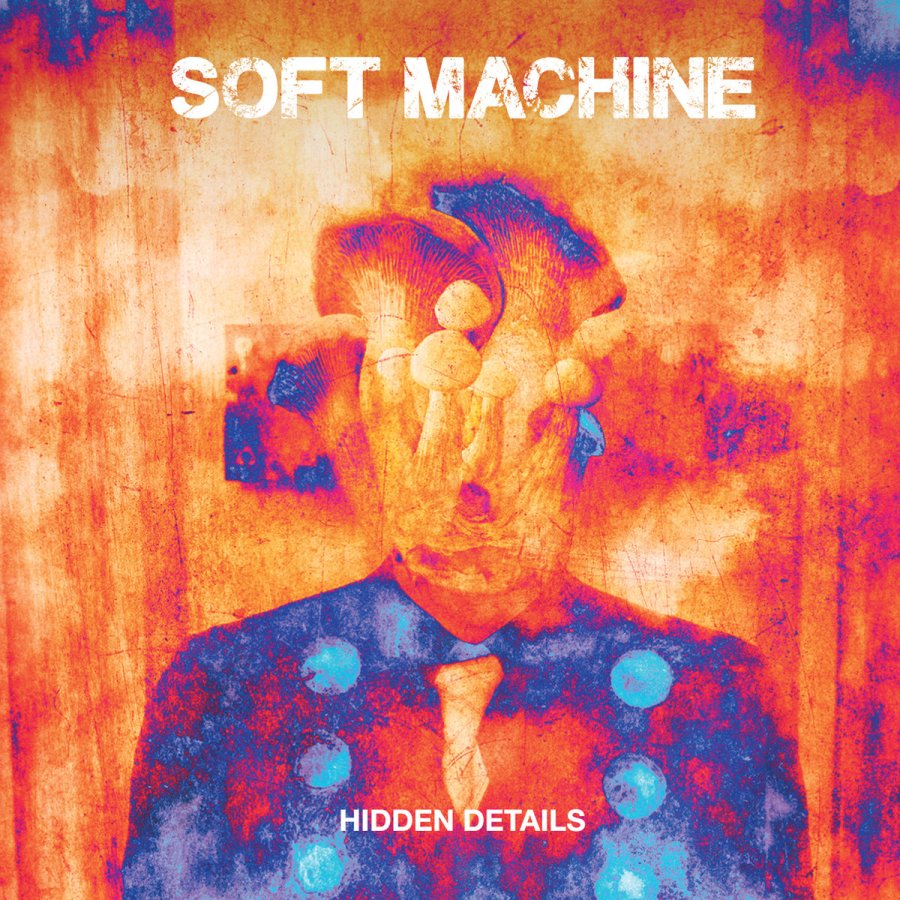
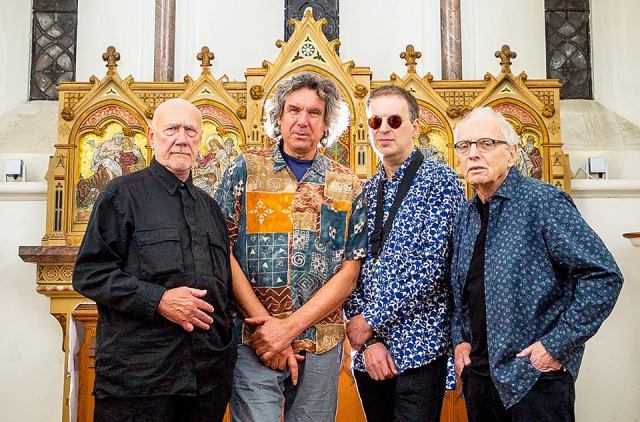
But starting in 2002, the persistence, dedication and improvisational spirit of MoonJune Records impresario Leonardo Pavkovic accomplished the extraordinary — bringing together Soft Machine alumni from across multiple incarnations, first as Soft Works, then in a long-running series of tours and albums as Soft Machine Legacy. 2015 brought about the resumption of the original band name, with the group consisting of 1970s Softs John Etheridge (guitar), Roy Babbington (bass) and John Marshall (drums), joined since 2006 by prolific saxist/flutist/keyboardist Theo Travis. Hidden Detailsis their sterling new album, released to coincide with a worldwide 50th anniversary tour. It’s an impressive addition to the Soft Machine canon; there’s fresh, exploratory depth throughout, coupled with the immediate appeal of fine players enjoying both each other’s company and the exquisite music they’re making.
The tracks on Hidden Details span a broad range of genre and style: there’s driving slowburn riff rock (Travis’ title track), thick chunky funk (Etheridge’s “One Glove”), even a sprightly pop groove with a psychedelic lilt (Travis’ “Fourteen Hour Dream,” complete with 1968 title reference). True to previous Legacy efforts, the band revisits vintage Softs classics, too; Mike Ratledge’s “Out-Bloody-Rageous” from Third features exuberant soloing by Travis, one-man horn section licks from Etheridge and plenty of steam in the engine room courtesy of Babbington and Marshall. Also present and correct: Ratledge’s “The Man Who Waved at Trains” from Bundles, updating original elements like Babbington’s hypnotic, cyclical bass and Travis’ reimagined take on Ratledge’s electric piano ‘cosmic tinkles’.
Even more exciting than the great tunes is the way the band works together throughout this album; tight but loose, the Softs listen to and play off each other in unexpected, delightful ways. Travis is equally at ease trading thick piano stabs with snarling Etheridge guitar on “Broken Hill,” saxing it up over a stutterstep Babbington riff during “Ground Lift,” and weaving flute-based loops punctuated by Marshall for the closing duet “Breathe.” Etheridge runs a gamut of sounds and styles as well, from the lyrical semi-acoustic arpeggios on “Heart Off Guard” and “Drifting White” to the full-on electrified power of “Flight of the Jett” and “Hidden Details” (complemented by Babbington’s nods to Hugh Hopper’s ground-shaking fuzz bass). And when the quartet builds music from silence — joining in one at a time on “Ground Lift” or engaging each other simultaneously on the epic free blow “Life on Bridges” — the results are extraordinary.
So the 2018 incarnation of Soft Machine has nothing to prove; for all with ears to hear, they bring their experience, confidence and musicality to bear on Hidden Details, and the results really are superb. It’s a winning album, great material for these Softs to bring to North American and British audiences this fall — in the US, for the first time in more than forty years! Check out the new album on Bandcamp for yourself, and don’t hesitate to catch them live.
Cries And Whispers is the long-awaited follow-up to 2015’s A Foreign Place, Anthony Reynolds‘ hugely successful biography of Japan.
Detailing the fascinating musical adventures of Richard Barbieri, Rob Dean, Steve Jansen, Mick Karn and David Sylvian from 1983 to 1991, the book takes in Sylvian’s solo work, The Dolphin Brothers, Dali’s Car, the brilliant but ill-feted reunion release Rain Tree Crow, and more.
This limited deluxe hardback first edition (cloth-bound with a gold and silver foil debos) – designed by Carl Glover – includes many rare photographs, plus contributions from Bill Nelson, Johnny Marr, Bill Bruford, Robbie Aceto, Simon Raymonde, Ivo, Martin Fry, Michael Brook, Tim Bowness, Paul Morley, Thomas Dolby, the late Colin Vearncombe and others.
All copies will come with a postcard signed by the author.
Pre-order for 26th October release. To coincide, the softback version of A Foreign Place will be available at the special price of £13.99 until the release date of Cries And Whispers.
Was reading this write-up on death metal – ironic that the genre itself might be in death bed, but it leaves us with over 30 years of music. We can actually spend a lifetime exploring that aesthetic defying trajectory. From Hellhammer’s punk coarseness to Decrepit Birth and Necrophagist like sophistication — seems like death and its variants were always an acquired taste. Just imagine, Morbid Angel and Obituary still play in basement venues and divey bars. Couple of years ago I saw Entombed with just 30 other metal heads at this venue in San Francisco. And these are like The Beatles of death metal!
It’s inaccessible not just because of the harshness. The main barrier is the subtle aesthetics and musicianship, other than over-the-top aggression there are no exaggerated elements. Absolutely no extended passages – structural progressions are in fact measured, convulsive and precise. In other words, very little about death is instantly discernible. The most complex of patterns is comfortably buried beneath a wall of rich chaotic sound. So, in spite of being substantive, intellectually and physically demanding, the uninitiated simply may not have the ear. We can appreciate the textures and the grand symphony only with some ability to abstract away that pulverizing sound. Actually mandates higher levels of cognition – sort of the mark of an ageing and civilized genre.
Editor’s Note: Scored for a cappella choir, John Tavener’s “Hymn for the Dormition of the Mother of God” was composed in 1985 as the second part of a pair of Marian devotions. 347 more words
The ultimate concert experience not only features a great band along with great sound but the venue plays a part in the overall success and enjoyment of the evening. Sure, professional musicians playing their best can certainly make up for a bad locale but how about that same concert inside a phenomenal place that begs […]
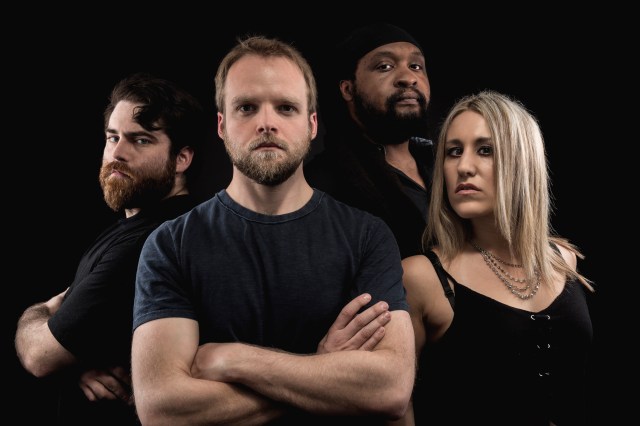
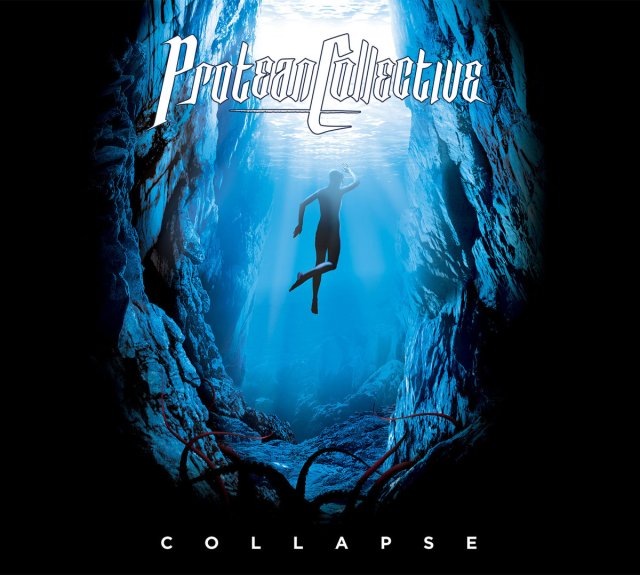
Prog metal act Protean Collective is one of those bands for me whose name I’ve been seeing around the web but never gave them a proper listen, until few weeks ago. I was contacted by the group’s publicist, who was very ambitious about the four-piece’s most recent, third studio album “Collapse,” and who insisted that I should check the Boston-based group out.
And so I listened… With four releases under their belt (one of them being an EP) since 2010, it’s quite easy to notice that these three guys and a girl know their craft. It can be said that each of the ten songs on “Collapse” is a gem per se; the album was released last year but the group is still promoting it, with the release of a playthrough video which was launched a few weeks ago.
I talked with guitarist and singer Graham Bacher about this new album — which, by the way, was mixed and mastered at Fascination Street Studios by André Alvinzi and Jens Bogren, respectively.
Let’s start from your early music beginnings. How did your musical career begin? When did you start playing? Which groups have been your favorites as a young man? Please tell us something more about your early life.
Well, I first started playing violin when I was about 6, and played acoustic and electric violin through my teens, but as time went on, I got much more into the sounds and textures of the guitar. It felt like an instrument that I was more free to experiment with and really be creative.
I’d say the first bands that really got me excited about playing music were the 90’s bands like Soundgarden, Alice in Chains, the Smashing Pumpkins — and then in high school I started discovering bands like Porcupine Tree, King Crimson, Rush, and Pain of Salvation who really turned music from a hobby to a kind of obsession. Those are all bands that have been huge influences on me as a musician. Of course, while we do have a lot of common musical interests, I think everyone in the band has a pretty wide array of influences.
How did you go about forming Protean Collective? Who was the most influential when the band started its musical journey?
Matt [Zappa, drums], Steph [Goyer, guitars], and I all became good friends in our first year of college but never really played together. Sometime late in our first year there, we all got in a room together to jam, and I think it was a kind of amazing moment, where we all realized that we had some really special musical chemistry together. I’m not really sure who was the most influential — I think it was just something we were all really excited about and we really worked together on it.
In the beginning, did you have some “fixed” tempo in composing songs or everything was a product of jamming, improvising?
We always have been this way, and probably always will be to some degree, but everything was very fluid in the beginning. Someone might come in with a riff or a beat or a melody and we’d just play off it until we were all excited about it. I think later on, on the last two albums, there are a few songs that we’ve gone into thinking that we were going to go for a particular feel or effect on the listener, but writing for us has always been a very collaborative process. In the beginning, I think the improvisational nature was very apparent, with more meandering song structures; over time, I think we’ve gotten more direct and concise with our writing, but the collaboration is always an integral part of what we do.
How would you describe Protean Collective’s music on your own?
First I would grimace because I’m absolutely terrible at answering that question. I don’t feel like I’m emotionally separated enough from the music to really have perspective on it, so I’d LOVE to hear how you’d describe it.
But ultimately, what we try to do is create powerful music that meshes the aggressive energy of metal with powerful melodies and a great deal of dynamic depth. When we use progressive elements in our music, it’s to create a certain effect on the listener. I hope that each song it’s it’s own journey.
Your most recent full-length album, “Collapse” (2017), is a follow-up to 2010’s debut full-length “Divided” and 2014’s “The Red and the Grey.” Have you felt any pressure while working on “Collapse” because of that in terms of coming up with something that’s sort of expected to be better than the first two efforts?
It absolutely was for me, because “The Red and the Grey” is an album I was very proud of. We put a lot of time, energy, and love into making that record be the best album we could put out, and I think it was the first musical project for me that, after the lengthy process of writing, tracking, mixing, and mastering, I was still excited to listen to. For me personally, it was written during a very challenging time mentally, so I think it felt especially meaningful.
At the same time, since we were self producing, that took some of the pressure off, just because we were free to make sure that we had something we were really proud of and happy with before releasing it into the world — and in the end, I have to say I absolutely couldn’t be happier with how “Collapse” turned out.
What has changed for Protean Collective when it comes to writing new music — “Collapse” in particular?
Well, as I alluded to earlier, the general process has really stayed the same, but I think with Collapse in particular, we were really leaning towards creating more focused, powerful songs than ever before. So I’m not sure the process itself has changed so much as I just think we’ve grown a lot as writers and maybe what we’re trying to accomplish with each song has changed. I think and hope that our writing will always continue to evolve as we continue to write.
What would you say is the most important segment for the structures of your songs?
To me, it’s got to be the choruses. There are a lot of structures and moving pieces that go through our songs, but the choruses are where I feel like it all comes together into a unified message that connects all the pieces together into a coherent construct.
How do you see the modern progressive metal scene?
I think this is an absolutely amazing time to be a musician. I think now, with the ability nearly anyone can have to record professional sounding music, there are an unprecedented number of people who are free to create music in a way that wouldn’t have been possible 15 years ago. There are so many amazing musicians out there creating so much amazing music that it’s absolutely inspiring to see. There’s so much variety of music out there that really, I’m not sure if there’s any one real sound I could even nail down as defining a modern progressive metal sound, but I think there’s a tremendous amount of people out there who are trying to do something new and make music that is their own, and I love it.
Do you guys consider yourselves a part of any specific cultural movement, however peripheral?
I don’t think so in particular. We’re about making music we feel strongly about, and that’s the focus.
Are you also involved in any other projects or bands beside Protean Collective?
I’m not, personally. Matt also plays in an amazing band called Walter Sickert & the Army of Broken Toys.
What comes next for Protean Collective?
More shows! We’re hoping to get out there and share what we have with as much of the world as possible. Right now we’re very much in the mode of getting “Collapse” out there to as many listeners as we can. This is an album that I’m really passionate about, and I really just want to get to share it with as many people as we possibly can.
“The first memoir by Wayne Kramer, legendary guitarist and cofounder of quintessential Detroit proto-punk legends The MC5.” More info about Kramer’s MC50: Kick Out the Jams – The 50th Anniversary Tour (which I’m seeing in September) here.
“The outrageous and often hilarious autobiography of legendary session musician and lead guitarist and singer of Toto.” Check out more about the current bizarre synchronicity between Toto, Weezer and Stranger Thingshere. (I’ll be at Toto’s Grand Rapids show in a couple of weeks; look for a review to follow. Hoping for advance copies on sale at the merch booth …)
“The frontman of one of the greatest bands of all time tells the story of his rise from nothing to rock ‘n’ roll megastar, and his wild journey as the voice of The Who.” Given that Pete Townshend’s Who I Am has been out for a while, I’m looking forward to Daltrey’s take.
“The singer, guitarist, and songwriter, best known for this work with Wilco, opens up about his past, his songs, the music, and the people that have inspired him.” I’m a huge Wilco fan; Tweedy is one of the few remaining rockers I know who takes the idea of music as the basis for community seriously. Very interested in what he’ll be putting down here.
Any other rock books coming soon you’d like Progarchy fans to know about? Leave the info in the comments!












 Progarchy