The ever prolific The Tangent will release their 10th studio album ‘Proxy’ this November and in doing so remind the community of fans and peers that they are a force of nature that defies the odds when it comes to producing new music regularly and touring it around the world. Quite how this happens is mind blowing when you consider the challenges of pulling this off as a self-funded and self -organised and promoted endeavour.
Aside from the Inside Out label showing their on-going dedication to The Tangent, the real success in the delivery of the music from inception to the stage comes from the hardworking collection of excellent musicians, lead by Andy Tillison, who pull together and function as a band and a business.
Last year’s tour of Europe and US was a masterstroke in the clever guise of ‘Tangekanic’ – a collective of Tangent and ‘Karmakanic’ pooling their resources, their talents and most notably, the risks to bring the music to the stage. This event not only served as a means to get the band out in front of their fans but as a vehicle to work through ideas and fresh inspiration. Reminiscent of the classic bands of old like ‘Purple’ writing their epic ‘Highway Star’ on the bus, the band began to naturally develop ideas for what would be their next album on their travels too. It’s not without some sense of irony that ‘Proxy’ came together (somewhat) through time spent together as a collective.
‘Proxy’ comes to the fans with the usual pre-order options, which are a big part of how the band survive and continue to thrive. However this time, the usual process to develop the music and keep the faithful happy with snippets while the world waits patiently for the album to be completed has been much shorter – the announcement and release date have happily come closer together which in itself generates a buzz that the band are working hard to deliver.
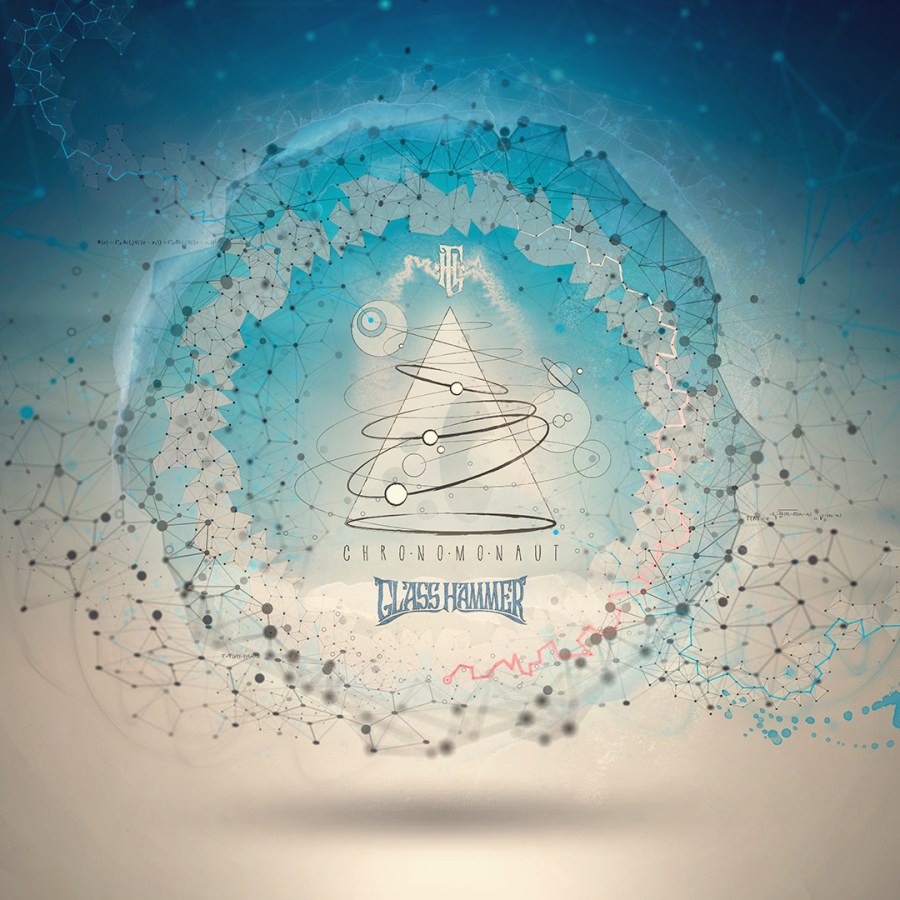
Glass Hammer Release Chronomonaut Video – Melancholy Holiday
Glass Hammer premiers their Melancholy Holiday video from the new concept album Chronomonaut.
Chronomonaut tells the story of “the ultimate prog-fan” Tom, who, according to bassist Steve Babb, “has reached middle-age and wants to time travel back to the early 70’s to relive the glory days of progressive rock. We first introduced fans to Tom with our 2000 release Chronometree, an album which proved to be a turning point for us.”
Babb has been releasing videos of his character Tom, supposedly filmed in 1983, where viewers have learned about Tom’s failed prog rock band, The Elf King, and his preoccupation with time travel. “In the Melancholy Holiday video we find Tom late for a meeting with his girlfriend,” explains Babb. “Tom is convinced he’s traveled back in time to find her. She informs him otherwise and things just get weirder.”
Longtime Glass Hammer vocalist Susie Bogdanowicz sings this track, though Discipline front-man Matthew Parmenter also provides some lead vocals on Chronomonaut.
The seventy-minute long Chronomonaut releases on October 12th, but fans can pre-order autographed copies of Chronomonaut and limited edition t-shirts at the band’s website. http://glasshammer.com/official-store/
What new music, live albums, and reissues (deluxe and otherwise) are heading our way between now and Black Friday? Check out the exhaustive (and possibly exhausting) sampling of promised progressive goodies — along with a few other personal priorities — below. Pre-order links are for CDs or combo packages; vinyl editions are frequently available from the same website.
September 21:
Marillion, Happiness is Cologne and Popular Music. Limited edition live reissues from Racket Records and earMusic. Pre-order at Amazon or other online retailers.
Nosound, Allow Yourself. Pre-order from Burning Shed.
September 28:
Blackfield, Open Mind (The Best of Blackfield). Pre-order from Burning Shed.
Dave Stewart and Barbara Gaskin, Star Clocks. Pre-order from Burning Shed.
October 5:
Steve Hackett, Broken Skies – Outspread Wings (1984-2006). Esoteric Recordings reissue box set (6 CDs + 2 DVDs). Pre-order autographed copies from Hackettsongs.
King Crimson, Meltdown: Live in Mexico. 3 CDs + 1 BluRay. Pre-order from Burning Shed.
October 12:
Glass Hammer, Chronomonaut. Pre-order autographed copies or the deluxe bundle from Glass Hammer’s webstore. Pre-order deadline: October 11.
Sanguine Hum, Now We Have Power. Pre-order from Bandcamp.
October 19:
Greta Van Fleet, Anthem of the Peaceful Army. The first full-length album from Frankenmuth, Michigan’s young Zepheads. Pre-order at GvF’s webstore.
iamthemorning, Ocean Sounds. Live in the studio; audio/video bundle. Pre-order at Burning Shed.
In Continuum, Acceleration Theory. With Dave Kerzner and an all-star line-up. Pre-order bundles from Bandcamp.Pre-order deadline for special bundles: September 30.
Frank Sinatra, Only the Lonely: 60th Anniversary Edition. Yes, really. The greatest concept album of the pre-rock era, with Sinatra and arranger Nelson Riddle at their most gorgeous and devastating. “Make it one for my baby … and one more for the road.” More info at Super Deluxe Edition.
October 26:
Anathema, Internal Landscapes. The best of the band’s Kscope albums. Pre-order from Burning Shed.
Procol Harum, Live In Concert with the Edmonton Symphony Orchestra. Esoteric Recordings reissue with bonus tracks. Pre-order from Burning Shed.
November 2:
Opeth, Garden of the Titans: Live at Red Rocks Amphitheatre. Various audio & video formats/bundles available. Pre-order from Burning Shed.
Steven Wilson, Home Invasion: In Concert at the Royal Albert Hall. Various audio & video formats/bundles available. Pre-order from Burning Shed.
November 9:
Jethro Tull, This Was — The 50th Anniversary Edition. Steven Wilson remix included, on 3 CDs + DVD. Pre-order from Burning Shed.
Rikard Sjöblom’s Gungfly, Friendship. Pre-order from Rikard’s webstore.
November 16:
Marillion, Brave Live and Live in Glasgow. Limited edition live reissues from Racket Records and earMusic. Pre-order at Amazon or other online retailers.
Yes Featuring Jon Anderson, Trevor Rabin, and Rick Wakeman (plus Lee Pomeroy and Louis Molino III), Live at Ravinia, Highland Park, Illinois, September 7, 2018
Setlist:
Cinema
Hold On
I’ve Seen All Good People
Changes
And You and I
Rhythm of Love
Perpetual Change
Lift Me Up
I Am Waiting
Heart of the Sunrise
Awaken
Owner of a Lonely Heart (with a portion of Cream’s “Sunshine of Your Love)
Encore
Roundabout
Summer 2018 has been the summer of Yes. With two versions of the band touring the United States, fans have been treated to a double helping of fantastic music. I saw the official Yes in Grand Rapids a few months ago (see my review here). Seeing Yes featuring Anderson, Rabin, and Wakeman was a great way to compare the two groups while getting to see a few progressive rock legends.
I had never seen Jon Anderson or Rick Wakeman (or Trevor Rabin, for that matter) live before this show. I’ve watched old live footage, but it isn’t the same. Jon Anderson is over 70, yet he sounds absolutely fantastic – maybe better than he did a decade ago. He didn’t miss any notes, and he looked like he was having the time of his life. Rick Wakeman hasn’t slowed down at all, and watching him play his eight or nine keyboards was a blast.
Okay. To set the story straight, there’s no such thing as “AmProg.” I just made that up just now. I will say though that in some ways it does suit the kind of direction this band is wanting to go in a relatively new niche of the subgenre of Prog. I spent the late 80’s and early 90’s championing the new wave of “Ambient” sound on local radio and in many articles I wrote for a national magazine. Thanks to the likes of Tangerine Dream, jean Michel Jarre, Vangelis to name but a few, and also the rise of New World/Contemporary Instrumental music it found its own home in a very popular market of New Age thinking and marketing particularly in music. From Electronic Music, or EM as we like to call it, it has evolved and splintered into many other areas of sound and music as well as other genre fields. The rich melodies with Middle Eastern and Oriental beats thanks to the advent of bass synthesizers and drum machines have combined many different rhythms and mood enhancing arrangements to make it fresh and interesting. Such were the workings of such artists as Ron Boots, Ian Boddy and Andy Pickford with their heavily synth inspired albums leading to bands such as Loop Guru, The Orb, Aphex Twins and the ever popular The Future Sound Of London. and that was just in the early 90’s.
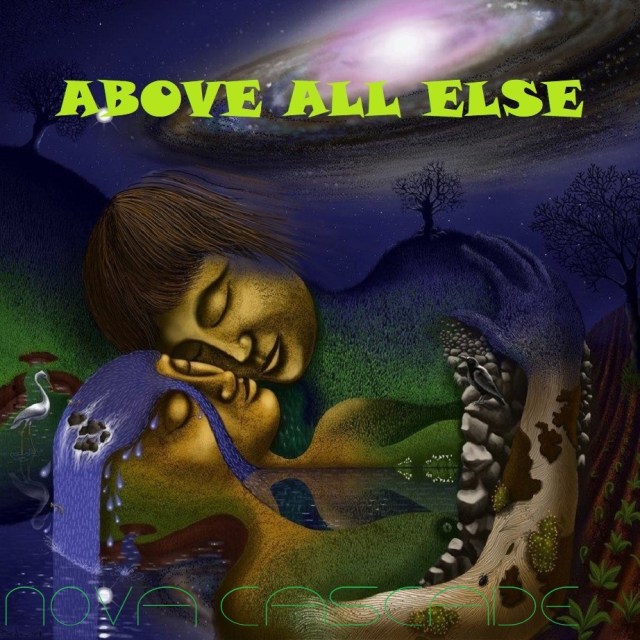
And to my way of thinking that’s what this band have in mind, and have clearly stated in their press blurb where they’ve intentionally gone “Retro.” There’s also a certain organic feeling to it as they maintain certain guitar riffs were actually recorded on phone, and vocals in the kitchen! There are twelve tracks in all and if you like the kind of vibe Nosound bring to the table in the gentle wave they’ve crafted then this album might appeal to you. It definitely is mood music with lush orchestral keyboards overlayed with atmospherics here and there to enhance that melancholic flavour bands like The Lotus Eaters dabble in. And let’s face it, Prog’s DNA is melancholic enriched right from the late 60’s to present day, and what sometimes draws us into. In a good way, if that is possible. It certainly is born out with the wonderful piece of artwork by Paul Dew they’ve chosen for their album cover. Most of these are short songs but it’s the album as a whole you should go over to Bandcamp or iTunes to hear for yourself.
It’s also interesting how this band name came about. Back in July last year Dave Hilborne contacted me not to promote their new band but to really go out of his way to praise another local Prog band he dearly loved and should be plugged further, THIS WINTER MACHINE, for which I wrote a piece about last August 2017 [https://progarchy.com/2017/08/06/ey-up-winters-coming-fair-starved-and-champion/]. And even this weekend Dave is plugging this band in his own plugs of their new album!
Dave and I got chatting and he also mentioned he wasn’t too happy about the name they were thinking of using. I have a few daft ideas every now and again and I suggested how about Prog fans on a Prog-related page come up with suggestions for a name they might like to choose from? We’ll make it a fun event and turn it into a competition of sorts. Well, cutting a long story short (which doesn’t happen that often in Prog), and after a reboot, it came down to a couple of names Dave and the band favoured, and to resolve it to their liking, they combined two words from each into one name. Thus was Nova Cascade born.
There’s also a great interview with Dave and Charlie of Nova Cascade on Progzilla Radio’s Northern Star show about the new album
I sent Dave a number of questions around the band and the music which he kindly and quickly responded to.
How did you get involved in music?
DAVE: I started writing music in 1987, and by 1991 I had formed a band and we released a single called “Wrapped in Silver.” Later I went on to write an opera, and perform solo shows in small theatres. I really enjoyed the intimacy of that type of setting.
What artists may have been an inspiration to you?
DAVE: My influences have mainly been Peter Hamill and Genesis, but I also take cues from others such as Talk Talk, Nick Drake and Pink Floyd.
I know that you met the other two main artists on a gaming platform. So how did the conversation get around to forming a band?
DAVE: We were all talking about how we were musicians but weren’t actually doing anything creative currently. So we decided to to experiment and write a track between us. We had no idea whether we would gel as musicians. Fortunately the results surprised us all and continue to do so!
What motivated you to record “ABOVE ALL ELSE?”
DAVE: Once we started collaborating on a regular basis we were producing roughly a track a month. Our 4th track “Hurtled” entered the UK ambient chart at number 5 and went to number one the following week. Our next 2 tracks did the same. That motivated us immensely and we put our heads down with the intention of making the album you hear today. We all feel immensely proud of how far we’ve come.
Can you describe your writing process for the music of this album?
DAVE: Our first two tracks “Continuum” and “Prophecy” were deliberately created around riffs that each of us would contribute our individual part. Swapping files back and forth until a complete structure was decided upon. After that our approach altered. I would create complete skeletons of tracks either as instrumentals or songs and the others would add their complimentary parts. The material became more fleshed and ambitious at this point as well. Its a process that has served us well during the writing. This entire album was recorded in our homes with whatever means we had at our disposal. I mostly used an iPad pro and a midi keyboard,the others audacity or reaper.
From memory, the last time we spoke I think you said there were three of you in the band? So who else has joined Nova Cascade?
DAVE: After our 2nd track we recruited a flautist (Charlie Bramald) and Heather Leslie (Violin) in quick succession. Very late in the recording process we were joined by David Anania (Drums) a member of the world famous blue man group. He only appears on one track “Epiphany” but his performance is incredible.
Where there any challenges you faced either in the creative part or even in the recording segment?
DAVE: Recording at home with very limited means is always going to be a challenge,but the restrictions also force creative decision making. I think the recordings speak for themselves.The writing for the most part was very easy . Ideas flowed regularly and we kept up a good momentum.
For that matter, Ambient is all about tone and atmosphere – how has that helped you in creating this album?
DAVE: As I’ve gotten older I’ve become far less interested in the rock side of progressive and far more drawn towards its subtle elements. So creating the skeletons of the tracks the way they are was very natural for me. The others all added their own individual tastes and influences which made for some very unexpected results!
I know that Ambient music has played a large part in the New Age/Contemporary Instrumental music field for over a couple of decades, but now in 2018 can you see perhaps a direct fusion of Ambient and Prog developing?
DAVE: There’s definitely a fusion happening. Bands like London Grammar are taking Prog elements and fusing them with ambient . I know a lot of Prog fans like myself find the combination very exciting. I also think its been around for awhile. Bands like Talk Talk were infusing Prog and Ambience way back in the late 80’s with great success. I’m pleased Nova Cascade are adding to that catalogue
I see you mention on your page that you are currently #1 in the UK Ambient Charts. Has your love of Prog in any way played a part in the music you’ve created for that genre of music?
DAVE: Definitely. Its just in my DNA to create progressive sounding music. I’m naturally drawn to music which is constantly evolving. A few of our tracks never repeat themselves. Having said that I’m not against standard song structure either. Once a song start to take shape I never force it into any one direction.
Now that the album is completed, what next? Any plans of perhaps a video or even playing a live version of any of these tracks with the band if you can get together or others?
DAVE: The simplest answer is, it largely depends on demand and how the album is received and sold. A few of us already reside in one country and others have expressed their enthusiasm for potential live performance. Its perhaps not as outlandish idea as it might appear.
What is the best way to purchase “Above all Else” and where?
DAVE:Above all Else can be purchased digitally on Sept 10th via iTunes/Amazon/Google play and Bandcamp. We plan a limited CD release a month after featuring some very special photography by Brooke smith whom we recently had the pleasure to begin working with.
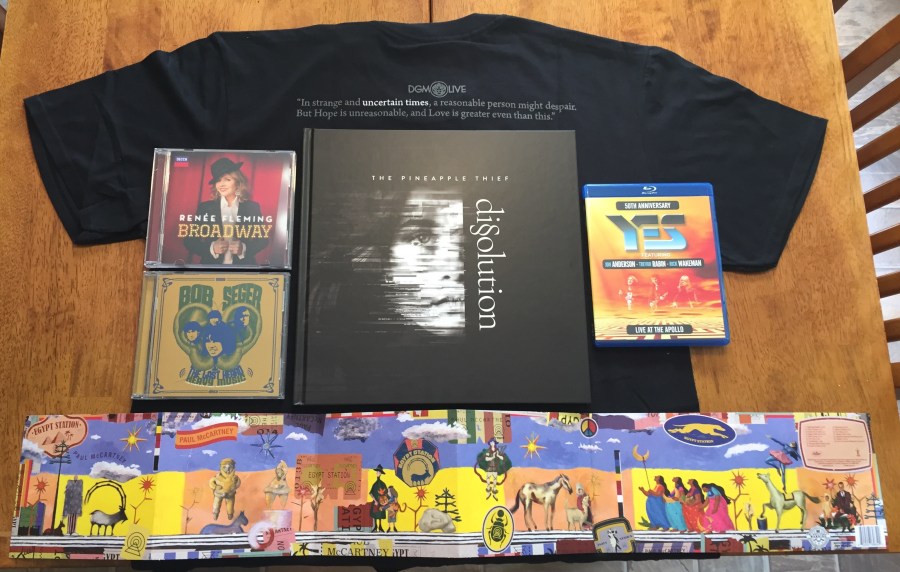
It’s been a busy week at the mailbox and on the doorstep. With a clear day off, I decided to listen to all the new music I’ve received since Monday. Capsule reviews follow the jump; albums are reviewed in their descending order on my freshly made up Personal Proggyness Perception (PPP) scale, scored from 0 to 10.
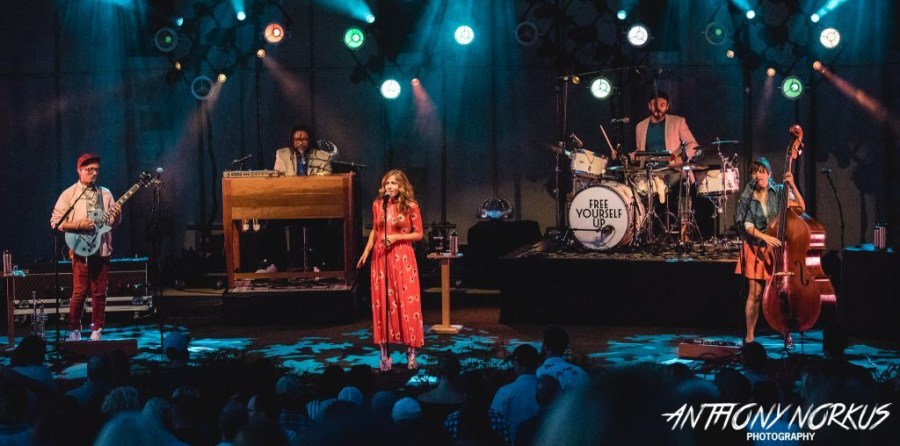
Lake Street Dive at Frederik Meijer Gardens Amphitheater, Grand Rapids, Michigan, August 30, 2018.
Boston-founded, Brooklyn-based pop’n’soul band Lake Street Dive has swiftly become a quintessential Meijer Gardens act — debuting in 2015, returning every year since, regularly selling out shows even though their ticket prices have doubled in just four years. (The quintessential Meijer Gardens act? Undoubtedly Lyle Lovett, who’s appeared during 13 of the Amphitheater’s 16 seasons.)
In that time span vocalist Rachael Price, guitarist/trumpeter Mike “McDuck” Olson, stand-up bassist Bridget Kearney and drummer Mike Calabrese have seasoned their initial Motown-meets-Beatles stylings with funk and disco flavors, signed with quirky Warner Music imprint Nonesuch, added keyboardist Akie Bermiss as a full member, and scored a top 10 album, 2018’s Free Yourself Up. With 2,000 fans spanning the generations in attendance, this show was set to be a celebration — by both players and audience — of the band coming into its own.
From my point of view, they delivered; the night felt like the most fun of the three Lake Street Dive shows I’ve heard. The simple choice of having Calabrese’s drum kit face the audience (instead of toward stage right) seemed to open a more direct connection between the group and the crowd. And with four albums to choose from, the setlist felt like it flowed better, with more variety in the moods and grooves, consistent forward motion, and a gathering momentum.
Throughout the night, Bermiss’ pads, rhythms and synth licks gave Olson leave to be looser on guitar and play more solo trumpet, and Calabrese’s drumming was splashier and more extroverted. Playing to their respective strengths, Kearney held down the bottom end with solidity and style, while Price cooed, cajoled, tempted and triumphed, delivering alternately sassy and lovelorn reports from the front lines of 21st-century romance. Multi-part harmonies were spot on throughout the night, with Bermiss contributing a winning lead vocal on a typically oddball cover, Shania Twain’s “You’re Still the One.” Other eccentric ideas like a triptych of songs about the same loser (“Bobby Tanqueray/Spectacular Failure/Doesn’t Even Matter Now”) and the microsuite “Seventeen” came off without a hitch, too. By the encore, as Price soared on the driving “Dude” then simmered through the lounge jazz take on the Jackson 5’s “I Want You Back” that brought Lake Street Dive to prominence, I was convinced — this had been a great evening. And the audience response seemed to bear that out.
Except for one thing: my friend from college — who’d first brought Lake Street Dive to my attention, who consistently raves about their abilities, who’s attended all their Meijer Gardens shows with me, whose musical opinions I deeply respect — wasn’t convinced. And he had fair points to make. For one thing, the live sound was substantially louder and boomier than on previous visits — I realized that, on the uptempo tunes, I’d been compensating by listening through the low end fuzz and haze to hear the harmony vocals or Kearney’s detailed bass work. In addition, the thicker, chunkier sound of the Dive’s quintet formation just didn’t work for him; while acknowledging Bermiss’ ability and musicianship, he strongly prefers the open space and freer interplay of the original quartet. And both of us agree that the band’s writing could use a shot in the arm — all the onstage energy pumped life into the new tunes, but on disc both the Nonesuch albums (Side Pony and Free Yourself Up) run out of steam before they run out of songs.
So while I enjoyed the evening, this show also served another purpose — illustrating that “in matters of taste, there can be no dispute” — de gustibus non est disputandum, for any Latin majors. Both of us had strong opinions of the show — and the cool thing was that we could talk through them without feeling like we had to convince the other to abandon his point of view. Probably good for me to remember the next time one of those classic online prog-rock discussions (“Was Genesis any good after Peter Gabriel and Steve Hackett left? Did Trevor Rabin ruin Yes? Was Signals where Rush jumped the shark?”*) break out.
And, since “in matters of taste, there can be no dispute,” I do think that both my friend and I would encourage you to check out Lake Street Dive —- on record and live — for yourself. You can also check out another local review of the show, with an extensive photo gallery, here. The setlist:
Baby, Don’t Leave Me Alone with My Thoughts
You Are Free
I Don’t Care About You
Red Light Kisses
Mistakes
Bobby Tanqueray
Spectacular Failure
Doesn’t Even Matter Now
Hello? Goodbye!
Hang On
I Can Change
You’re Still the One
Call Off Your Dogs
Seventeen
Shame, Shame, Shame
Musta Been Something
Bad Self Portraits
Good Kisser
You Go Down Smooth
Dude
I Want You Back
— Rick Krueger
*- For the record, my answers are: yes; no; and absolutely not.
Recorded “quietly and carefully” over Spring and Summer of this year, Proxy is scheduled for release by the esteemed Inside Out Music on 16 November and will be available as a CD digipak, vinyl LP and digital download.
Soon after placing my order, I was delighted to receive a long and chatty email from Andy Tillison, delving deeply into the influences and musical styles of the new album, and the approach used to make it. Absolutely fascinating.
According to Andy, it is a “very organic feeling piece”, featuring a real drummer this time (Steve Roberts). Naturally, we should expect Prog – “not just Prog, but lots of it… often focused on the Hammond and Electric Piano”, with “less in the way of orchestrations – more focus on the core instruments”. Apparently, we’ll “spot influences from Chris Squire, Keith Emerson, Pip Pyle, Pierre Moerlen, Tony Iommi, Chick Corea, Fatboy Slim, Sophie Ellis Bextor and Peter Hammill”. Now that’s an eclectic bunch!
Because Doctor Livingstone from Slow Rust was so well received, we’ll be getting another instrumental on Proxy, along with a 17-minute epic that, intriguingly, has all the hallmarks of Prog and yet is “not made out of Prog… Imagine the Eiffel Tower made in mahogany”. I am very curious to find out what this actually means…
And what of the lyrics? Let me quote Andy in full here:
No overall concept this time. Yes, there will be politically motivated bits – there will be introspect – there will be reckless optimism and ever more reckless pessimism. Some of the songs are tinged with the regrets arising from missed opportunities earlier in life, some are angry and cynical. But the overall conclusion of the album is that there is “still time”.







 Progarchy