Brass Camel has just completed a nationwide tour after trekking 25,000km across Canada. Back home to record their next album, they played a triumphant gig at the Canada Day celebrations yesterday at McLeod Athletic Park.
The band took the stage as the grand finale for the day. They were billed on the program as 70s-inspired rock ‘n’ roll, but I think most of the crowd was unprepared for the heavy prog onslaught that blasted forth from the stage. Is progressive rock the official national genre? From Rush to Brass Camel, the torch of musical liberty is certainly shining like a beacon down from the Great White North. The lucky audience that day got to witness something special.
Brass Camel played six tracks from their debut album Brass, and then finished the show with a track from their forthcoming disc (which apparently has the working title: Camel).
They kicked off the show with “Pressure Cooker,” and to fit the special occasion they threw into the middle of it a version of Canada’s national anthem as a solo section highlighting guitar and synth synergy.
Next up was “I’ve Got the Fox,” complete with an extended scream that must have jolted the audience into realizing they were witnessing something historic, because it was on the order of magnitude of The Who’s “Won’t Get Fooled Again.”
The next tune was the witty prog extravaganza, “King for a Day,” which was introduced by a proggy medley of Canadian musical references. Must stunning of all, there was an extended bit of Rush’s “La Villa Strangiato” included as part of the tribute.
The group sounded amazing. No doubt their close musical bonding on their recent tour is what had them sounding so tight. The only flaw I could notice was in the sound mixing, which I assume was beyond the band’s control at this festival gig. The bass, drums, and synths were louder in the mix than the vocals and the twin guitars.
I was okay with that happenstance, since I know all the songs by heart. Thus, I can fill in any gaps in the sound mix by using my memory and imagination. But it’s a shame that new listeners in the crowd would have missed out on the subtle excellences in the vocals and guitar performances. I noted this missed opportunity during the band’s next song, “Only Love,” which has exhilarating lyrics lifted aloft by guitar heroics. So it was sad that some in the crowd may have missed out on the uplifting enunciation within the song’s chorus: “only love conquers all.”
Brass Camel proved that they were pulling no punches in the prog department when they proceeded to play one of my very favorite songs next: “Last Flight of the Vulcan.” How incredible that they expose a mass audience to this elegant flight of extended musical excellence. Perhaps some kids in the crowd had a sonic epiphany that day which will change their musical tastes henceforth. At the very least, it transported the adults in the crowd over 50 years back in time to the heyday of prog.
Continuing the relentless prog onslaught, “Easy” was up next. This song had the most hilarious introduction of all the tunes in the set. The band tossed out frisbees into the audience, but the kids who caught them threw them right back at the band. After all, if you throw a kid a frisbee, their natural reaction would be to continue the fun game and reciprocate your throw.
This went on for awhile as the band tried to explain to the young frisbee enthusiasts that the frisbees were the band’s gift to them and they could hang on to them, keep them, and take them home. It took some time for this message to get across. Eventually the band gave up and announced, “okay, it’s time to rock!” and they charged ahead into “Easy.” Thankfully, they didn’t get pelted with frisbees as the song got underway. But it sure wasn’t “easy” getting it started!
After playing that dazzling set of a half-dozen killer tunes from Brass, they broke out the double-neck guitars for a mind-blowing preview of their next album. The song was called “Another Day,” and it seemed to supply proof positive that Brass Camel has doubled down on the prog for their next album. The song was so epic that the band ran well over their scheduled stage time. Piercing screams, blazing guitars, 70s synth sounds, and even gong crashes treated everybody to a spectacle as wondrous as any acrobatic airshow.
Anyone who was there to witness this concert knows what a national treasure Brass Camel is. I can’t wait for when the nation’s Rush fans — and everyone else around the world — gets to find out what this band is doing to fly the flag for prog.
Rock on, Brass Camel. I couldn’t have imagined a better way to celebrate Canada Day. We can’t wait to hear your new album. Thanks for keeping the prog alive.
Brass Camel live in Langley at McLeod Athletic Park on July 1, 2024 playing a song from their next album.
Ethos, the Atlanta-based progressive rock quintet, has delivered their latest album, “An Eye for an Eye,” released on June 25th, 2024. This release marks a significant milestone for the band, showcasing their evolution in sound and style while retaining the essence of what has established them over a decade ago. Comprising Austen Earp on vocals and keyboards, Kuyper Cummings and Matt Palopoli on guitars, Nick Riggs on bass, and Tribb Robison on drums, Ethos recorded and mixed the album at Darkroot Studios, with mastering done by the renowned Jens Bogren at the Fascination Street Studios.
“An Eye for an Eye” presents itself as a journey through the band’s musical and personal growth. According to bassist Nick Riggs, the album serves as a bridge between the band’s past and future, featuring writing and composing contributions from all five members for the first time. This collaborative effort has led to a more cohesive yet dynamic sound, leaning towards heavier and faster territories compared to their previous releases. Riggs emphasizes that this album represents a significant shift in their overall sound and writing style, providing a glimpse into the future direction of Ethos while reinforcing their established identity.
Listeners familiar with Ethos‘s earlier work will notice a maturation in both the music and the thematic content. Guitarist Kuyper Cummings notes that the record took several years to write, a period marked by significant life changes for the band members, including becoming parents, moving, and career shifts. This time of growth is deeply embedded in the album, with each song meticulously crafted and refined. If a part didn’t add meaningfully to a song, it was either reworked or discarded, a process that applied to both the music and the lyrics. This approach has resulted in a more polished and mature sound that still retains the band’s signature blend of heavy riffs and intricate piano melodies.
The album’s title, “An Eye for an Eye,” was inspired by a painting by fantasy artist Fian Arroyo. Vocalist and keyboardist Austen Earp explains that the title reflects themes of distrust in power structures and the inevitable reckoning that follows. However, the phrase “An eye for an eye” also suggests a more nuanced perspective on justice and healing, emphasizing the transformative power of creativity in addressing wrongdoings. This thematic complexity is mirrored in the album’s music, which blends rock and metal with classical motifs in a way that feels both natural and innovative.
Track Analysis
1. Begin With the End (4:01)
The opening track, “Begin With the End,” sets the tone for the album with its compelling mix of heavy riffs and melodic intricacies. The song showcases Ethos‘s ability to balance aggression and beauty, with Earp’s vocals delivering a poignant narrative that draws listeners in from the outset. The instrumentation is tight, with Cummings and Palopoli‘s guitars creating a dynamic interplay that propels the song forward.
2. Holy Water (4:09)
“Holy Water” continues the momentum with a more aggressive, larger-than-life feel. The track features soaring vocals and a driving rhythm section, anchored by Riggs‘ solid bass lines and Robison‘s precise drumming. The song’s chorus is particularly memorable, showcasing Ethos‘s knack for crafting hooks that resonate long after the music has stopped.
3. The Archetype Suite: IV. Stars Align (6:41)
The “Archetype Suite” is the centerpiece of the album, a multi-section epic that demonstrates Ethos‘ ambition and creativity. “Stars Align,” the fourth part of the suite, is a standout track that pushes the band’s musical boundaries. Spanning over six minutes, it takes listeners on a journey through complex time signatures, intricate guitar work, and haunting melodies.
4. The Archetype Suite: V. The Caudal Lure (1:37)
“The Caudal Lure” serves as a brief interlude within the suite, offering a moment of reflection and introspection. At just under two minutes, the track is a showcase for Earp’s vocal performance. This piece highlights Ethos‘s ability to create atmospheric and emotive music, even in shorter compositions, but still making it on point.
5. The Archetype Suite: VI. A New Regime (5:03)
The final track, “A New Regime,” concludes the album with a powerful statement. This song encapsulates the album’s themes of change and transformation, both musically and lyrically. The band pulls out all the stops, delivering a performance that is both technically impressive and emotionally resonant. The interplay between the guitars and the rhythm section is particularly striking, along with Earp‘s always soaring vocals painting a rich sonic landscape that leaves a lasting impression.
Conclusion
“An Eye for an Eye” is a compelling and ambitious album that showcases Ethos‘ growth as artists. The band’s ability to blend rock, metal, and classical motifs into a cohesive and dynamic sound is impressive, and their meticulous approach to songwriting and production is evident throughout the album. Fans of progressive rock and metal will find much to appreciate in this release, which serves as both a reflection of Ethos’ past and a preview of their future. With “An Eye for an Eye,” Ethos has solidified their place as a force to be reckoned with in the progressive music scene.
For more about Ethos visit their website. “An Eye for an Eye” is available now from Bandcamp.
Due to circumstances beyond my control — thanks to everybody who helped out! — this edition of Quick Takes is playing catch-up. This time around, purchase links are embedded in the release title, with any additional sample/streaming links labelled (LISTEN HERE).
The last few months’ progressive rock releases have skewed heavily toward reissues — for example, Keith Emerson and Greg Lake’s mid-1980s reunion with hard-rocker Cozy Powell in the drummer’s chair. Triple-cd box Emerson, Lake & Powell: The Complete Collection(LISTEN HERE) is a compact, yet worthy appendix to the ELP canon. The main album, ranging from extended throwbacks “The Score” and “The Miracle” through jazzy diversion “Step Aside” to souped-up classical gas like the single “Touch and Go” and Holst’s “Mars, the Bringer of War” is big, brash, widescreen stuff; both in the studio and on the two live discs included, Emerson’s thrusting digital synthesizer upgrades, Lake’s full-throated bravura vocals and Powell’s sleek percussive drive come on like gangbusters on new material and vintage classics such as “Pictures at an Exhibition” and “Pirates”. ELP’s mass appeal remained in the rear view mirror, but Emerson, Lake and Powell was a game try at reinvention for a different time.
Carl Palmer was playing drums for Asia during ELPowell’s flare and fade, but he’s remained engaged with his biggest band’s work, stepping up as legacy guardian after Emerson and Lake’s passing. Disc 1 of Palmer’s solo boxFanfare for the Common Man(a reissue/expansion of 2001’s Do You Wanna Play, Carl?) shows how he emerged from his bandmates’ shadows in the later 1970s, asserting himself in spellbinding trio jams, big band blowouts and a stylish, eclectic percussion concerto; disc 2 covers his roots in British R&B and psychedelia plus his later collaborations with Asia and others, while a new 3rd disc documents live work reinventing the ELP repertoire for guitar-based power trio. The accompanying BluRay video and biography are revealing, though scattered and even self-contradictory. But that’s a minor blemish: Palmer remains rightly admired and respected by musical peers and fans, and still on the road in his 70s, he retains the rhythmic fire and momentum that this set amply demonstrates.
ELP weren’t the only proggers trying to reinvent themselves after the mid-70s; on side one of 1977’s The Missing Piece(LISTEN HERE), the manic British sextet Gentle Giant made ever so coy feints at co-opting the energy of punk and New Wave (especially on the self-conscious spoof “Betcha Thought We Couldn’t Do It”). Side two was more relaxed; reaching for the soul-inflected art-pop that Genesis and Yes later rode to the top of the charts, the Shulman brothers & company still stirred in Baroque cross-rhythms (“As Old As You’re Young”), stately balladry (“Memories of Old Days”) and breakneck instrumental and vocal twists and turns (“Winning”). With Steven Wilson providing fresh stereo and spatial audio remixes, this is another delightful installment in the Giant’s ongoing series of album upgrades.
English folk-classicalists Renaissance kept plugging through the decades, with operatic lead singer Annie Haslam at the helm. 2000’s Tuscany(LISTEN HERE) was Haslam’s last go-round with key members guitarist Michael Dunford and drummer Terence Sullivan (plus limpid guest piano work from former keyboardist Jon Tout). Not as urgent as their 1970s work, it’s still a lovely, impressionistic album, gently meditating on the nexus of art (“Lady from Tuscany”, “Dear Landseer”), nature (“Pearls of Wisdom,” “Dolphin’ s Prayer”) and love (“In the Sunshine”, “One Thousand Roses”). A complete live show from Renaissance’s 2001 tour of Japan included as a bonus mixes new tunes with career standbys such as “Carpet of the Sun,” “Northern Lights” and “Mother Russia”, showing off Haslam and company’s musicality and consistency. As usual, Esoteric Recordings’ latest Renaissance reissue provides the context to better assess the work of this underrated band.
And in the wake of its new reissue, I now consider Yes’ 1994 album Talk the most unified effort of their post-prog decade. (It was also the least well-known, due to grunge taking over rock radio and Yes’ record company collapsing.) The only full-blown songwriting team-up of hippie muse Jon Anderson and guitarist/keyboardist/composer Trevor Rabin, Talk’s tunes ooze out-there ambition and hi-gloss appeal; the choral kick of “The Calling” and “Walls”, “Real Love’ jangle-pop/heavy metal synergy, the skip-hopping “State of Play” and the closing multi-part epic “Endless Dream” are stunningly remastered to devastating impact. Rhythm section Chris Squire and Alan White are at their most down and dirty; Tony Kaye leans in with expressive, gnarly organ work. And a bonus live set (from the soundboard at a 1994s tour stop) showed that this lineup could conjure a fairly close approximation of the classic sound on standbys like “Heart of the Sunrise” and “I’ve Seen All Good People”. If you loved Yes but wrote them off between 90125 and Union, I’m serious; give Talk a shot.
There have also been plenty of ear-opening new releases, mostly rooted in improvisation rather than composition. The latest posthumous set from piano legend Chick Corea has its source in a 2019 tour and follow-up sessions with eclectic banjo virtuoso Bela Fleck; the aptly-titled Remembrance(LISTEN HERE) covers an incredible range of sonic possibilities, with the duo wailing on Thelonious Monk’s “Bemsha Swing”, Scarlatti sonatas, brand new compositions and impromptus pulled from thin air. Impeccably tasty and always in the moment, Corea and Fleck spark off each other constantly, caught up in an unending sense of play and delight. Fans of either player will love this, and folks who dig acoustic jazz, bluegrass or both will find themselves smiling again and again when they hear it.
While Brad Mehldau is one of the numerous young lions who followed in Corea’s wake on piano, his sound and vision are uniquely his own, as a fresh pair of solo discs make clear. On After Bach II, Mehldau brings his love for the classical piano tradition and his improvisational chops to bear on a second set of J.S. Bach’s richly poised keyboard works, mingling preludes and fugues played straight with jazzier extrapolations (“Between Bach”) and superimposed twists of rhythm and counterpoint based on one of Bach’s pinnacles, the Goldberg Variations. Apres Fauré brings a similar freedom to the music of Gabriel Fauré, the French composer who became a unique bridge between the late Romantic and Impressionist schools; Mehldau responds to Fauré’s sense of adventure with sweeping repetitious bass lines, long-spun singing melodies, and thick two-handed harmonies. Plenty of rigorous development to chew on, plenty of knotty invention and lush sound to bask in on both of these!
On their new EP Tropic of Cancer, Chicago’s heavy-prog-jazzers Sons of Ra show how they can unspool variations on a theme with staggering impact. Setting a nimble, dancing idea with roots in fusion’s golden age into motion, multi-instrumentalists Erik Oldman and Keith Wakefield and drummer Michael Rataj put it through exhilarating paces over 23 minutes: you get wah-wah electric piano extrapolations, a sax/bass duet over a bed of guitar/sax noise; a wonderfully idiomatic folk/Celtic throwdown (complete with guests on violin, flute and pipa); a Santanesque guitar jam that spirals up dizzingly before it goes off like a fireworks display; and a gargantuan finish with hypnotic sax wailing over a shuddering guitar army. No jive; this is great stuff, and Sons of Ra are a band to which attention must be paid!
King Crimson-adjacent power trio Markus Reuter, Trey Gunn and Pat Mastelotto are also back with the ironically titled Tu-Ner for Lovers, another heaping helping of rich, doomy thrash. Sculpted from improvs recorded on their 2023 tour, the trio scrape, scratch and scrawl from the get-go, with Mastelotto laying down off-kilter tribal beats, Gunn rattling listeners’ innards with sludgy bass lines and Reuter slapping down arresting leads and color clusters on touch guitar. Stalking the abstract sublime, the music coalesces as the album progresses, locking in to galvanizing effect on closing stompers “They Call Him Threnody” and “Transistor Valentine”, wispily floater “I Put a Crush on You” and skittering finale “Combat and Courtship”. You may need to be in the right mood for this to grab you — alienation? Righteous anger? — but when you are, boy, does it hit home!
Kamasi Washington’s long-awaited double album Fearless Movement is every bit as kickass and sprawling as previous spectaculars The Epic and Heaven and Earth (the latter my 2018 Album of the Year), but somehow settles in a gentler, more welcoming vein. It kicks off with “Lesanu”, an Egyptian Orthodox chant of Psalm 96 riding first a free-jazz slam, then a finger-snapping, hand-clapping vamp and ends with “Prologue”, an Astor Piazzolla tango that morphs into a blaxploitation movie theme; at all points within and between, Washington on tenor sax, keyboardists Cameron Graves and Brandon Coleman, Ryan Porter and Dontae Winslow on brass, and a platoon of guests play and sing up a storm. But slower burning tracks like “Asha the First” and “Together” provide respite from the intensity of Washington’s sweep and surge, and a looser, relaxed sense of momentum on the Zapp cover “Computer Love” and the extended workout “Road to Self (KO)” helps you catch your breath. Washington and his friends are still making audacious spiritual jazz, building from whispers to screams again and again and dancing across barlines like they don’t exist; but somehow this set feels more like a place to make a home than a monument to visit. And yes, this one’s gonna be on my Favorites list this time around, too . . .
And sometimes, you just need some down-home picking and singing. On the heels of selling out the Ryman Auditorium (documented on record to great effect last year) and duetting with Willie Nelson, Charley Crockett pitches a passel of new songs our way on $10 Cowboy(LISTEN HERE) As with much of Crockett’s recent work, this album leans into soul nearly as much as country; the choogling brass and choral vocals of “America”, the piano-with-strings heartbreaker “Gettin’ Tired Again” and the funky “Diamond in the Rough” can’t help but call Motown and Memphis to mind. But there’s plenty of Nashville/Austin classicism too, in the steel guitar-laced single “Hard Luck and Circumstances”, the Latin-flavored acoustic revenge ballad “Spade” and the honky tonk shuffle “Ain’t Done Losing It” Whether this is the long-predicted breakthrough for Crockett or not, $10 Cowboy is a thoroughly satisfying album, capturing sharply defined snapshots of a nation wondering when things will get better.
And (thanks to the copious music collection found at the main branch of the Grand Rapids Public Library), I discovered that Sierra Ferrell’s 2021 debut Long Time Coming is every bit as good as her new one (Trail of Flowers, reviewed last time). My entire notes for this one consisted of the word “WOW!!”, so I’ll just point you in the direction of this review (from my go-to site for genre news and reviews, Saving Country Music), add Long Time Coming to my 2024 Favorites list and look forward to hearing her live in September!
We’re only five months into the year, but Witherfall has just released this weekend what definitely seems mostly likely to claim the title of the prog metal album of the year. The classic heavy metal album of the year has already been claimed by Judas Priest in March, with their untoppable Invincible Shield. The closest rival to Witherfall’s melodic death metal excellence that I can think of so far this year is Unleash the Archers, who gave us their amazing new disc Phantoma in early May.
With so many great new albums in 2024, it’s hard to pick favorites, especially with Neal Morse’s The Dreamer—Joseph: Part 2 from January still wearing the crown for prog epic of the year, and Big Big Train claiming prog album of the year in March with The Likes of Us. So I’m just going to declare a seven-way tie for the best albums of the year-to-date, and then proceed to explain below my rationale for giving upper-echelon placement to Witherfall’s Sounds of the Forgotten:
Prog Metal AOTY: Witherfall, Sounds of the Forgotten
Classic Metal AOTY: Judas Priest, Invincible Shield
Metal Epic Concept AOTY: Unleash the Archers, Phantoma
Prog Epic Concept AOTY: Neal Morse, The Dreamer—Joseph: Part 2
Prog AOTY: Big Big Train, The Likes of Us
Glam Metal AOTY: Sebastian Bach, Child Within the Man
Doom Metal AOTY: Pallbearer, Mind Burns Alive
Okay, let’s talk about Witherfall. Witherfall gathers together a stunning array of talent: guitarist/songwriter Jake Dreyer, vocalist/songwriter Joseph Michael, bassist Anthony Crawford, drummer/percussionist Chris Tsaganeas, keyboardist Gerry Hirschfeld, and studio-only drummer Marco Minnemann, whom you may be familiar with from The Aristocrats, Jordan Rudess, and Steven Wilson, not to mention Witherfall’s superb previous album, Curse of Autumn (2021). I’ve been following Witherfall’s underrated audio excursions from the very beginning. I count this as their fifth album, taking its predecessors as Nocturnes and Requiems (2017), A Prelude to Sorrow (2018), the substantial EP Vintage (2019), and Curse of Autumn (2021).
Their latest album is their greatest album—Witherfall’s Sounds of the Forgotten (2024), which I like to think of as built on a spine of seven epic, nicely prog-length tracks:
“They Will Let You Down” [Track 1 (5:59)]
“Where Do I Begin?” [Track 2 (6:30)]
“Insidious” [Track 4 (6:47)]
“Ceremony of Fire” [Track 5 (7:32)]
“Sounds of the Forgotten” [Track 6 (5:23)]
“When It All Falls Away” [Track 8 (6:39)]
“What Have You Done?” [Track 10 (10:19)]
Even if you wanted to pin down Witherfall as melodic death metal, you’d have to admire the perfect pacing along this seven-song spine. The songs alternate between the more demented death forays and the more melodic metal earworms: “They Will Let You Down,” “Insidious,” “Sounds of the Forgotten,” “What Have You Done?” are the four darkest of the spine tracks, whereas the highly melodic, multi-layered vocal choruses of the others pull you into singing along every time (“Where Do I Begin?”, “Ceremony of Fire,” “When It All Falls Away”).
The other three tracks on the album are clearly intros or outros to that seven-track spine, which is evident simply from their time lengths:
“A Lonely Path” [Track 3 (1:33)]
“Aftermath” [Track 7 (1:31)]
“Opulent” [Track 9 (2:45)]
These three snippets are characterized by brief but effective instrumental evocations of mood and atmosphere and by half-sung word paintings by vocal frontman/songwriter Joseph Michael, in which the other half of the vocal timbre is spookily spoken or growled. “A Lonely Path” offers a seamless introduction into “Insidious,” whereas “Aftermath” seals “Sounds of the Forgotten” with a suitably harsh coda. “Opulent” starts off with a nice instrumental break before the final epic “What Have You Done?” as Jake Dreyer dazzles us with more Spanish-style guitar licks, but Joseph Michael also returns at its end with more dramatic vocal narrative.
It’s impossible not to be floored by the band’s instrumental virtuosity. The central track in the seven-song spine, “Ceremony of Fire,” thrills me to no end with its soloing section, because the emotions I feel during that excursion parallel the excitement I once felt when I first heard the guitar-bass-drums interaction on some classic Rush tracks. The ecstasy induced by the guitar-bass-drums interaction on “Ceremony of Fire” is consolidated by the track’s sudden tempo change and downshifting into Joseph Michael’s magical bridge. That magic lasts right to the final notes, with concluding guitar and organ chords that invoke the heights of musical mysteries. If hearing one song will get you to buy the album, this is the winner.
But while all the musicians contribute to making this Witherfall’s most astounding album, it is perhaps Joseph Michael who leaves me with the mightiest impression here. Yes, it was Jake Dreyer’s guitar playing that drew me to the band, since it is rare to find such shredding talent anywhere that also deploys itself in service of unusually brilliant songwriting. But with Sounds of the Forgotten I have to declare that Joseph Michael is the one who has now stepped forward and truly achieved his own personality. By “personality” I mean that, no matter who he may remind you of here and there, he has a distinct voice that has attained an incomparable individual incarnation. Some examples of iconic musical personalities: Ozzy, Dio, Rob Halford, Chris Cornell, Freddie Mercury. When you hear these guys, they sound like themselves. Same with Joseph Michael, who I would venture has joined the pantheon with this latest performance. The range of what he does on this album is quite something to hear. Screams, shrieks, growls, whispers, howls, layered choruses, he does it all. He’s thereby the perfect frontman to epitomize Witherfall’s overall chameleon-like musical abilities.
I’d advise ordering the CD direct from DeathWave Records, which was created by Witherfall headmen Joseph Michael and Jake Dreyer. I did, and it was most gratifying to receive the CD in the mail in advance of the official release date, along with a bunch of extra goodies like snazzy art and band photo postcards, a band name sticker, and an Anthony Crawford Witherfall guitar pick.
The disc doesn’t have a bonus track, but maybe it will eventually be released with the cover version of Aerosmith’s “Kings and Queens” that the band unveiled earlier. If I could advise the band, I would tell them to release a full album of covers, including their own past covers. The thing about Witherfall’s versions is they put their own stamp on the songs and they morph them into their own delightfully demented renderings. What’s the point of doing a cover if you don’t unexpectedly transform the song into a new reward? Witherfall knows the secret to making a good cover. Witness their contrarian takes on Boston’s “Foreplay/Long Time” (from the Curse of Autumn era) and Tom Petty’s “I Won’t Back Down” (from the Vintage era). I say we need more. In the meantime, enjoy one of the best albums of the year: Witherfall, Sounds of the Forgotten. ⭑⭑⭑⭑⭑ = 10/10 = A+.
Stonerhenge hails from Minsk, the capital of Belarus. Led by songwriter and multi-instrumentalist Serge Skrypniczenka, the project has been facing many challenges over the past few years. But these did not stop Serge to stop creating. In an interview with Progarchy, Serge talks about the latest studio offering, 2023’s record “Gemini Twins,” but he does not dwell on the past.
You launched an album with Stonerhenge entitled “Gemini Twins” back in December 2023. How do you feel about the release?
Work on the album took longer, longer than I had originally planned. And when it was finally over, I was very happy. Because the feeling of unfinished work is one of the most unpleasant human experiences. Moreover, I was already in full swing working on even newer material (I’ll tell you about this a little later) and I was terribly nervous about the situation with the incompleteness of Gemini Twins. Based on all that has been said, I can say that I am very pleased with the result. Yes, when a new album is still being planned, the authors have a more or less definite idea of the final version. I mean the sound, the composition and the number of tracks. But some interesting and unplanned nuances are always added to the work. In the end, the album is still somewhat different from its original image, which was in the minds of the authors. In most cases, these are good differences, that is, more and better have been created than expected. It’s the same with Gemini Twins – the way I initially imagined the final work changed a little during the recording process. And it definitely got better. Although not all created tracks were included in the album. I once said that when working on music, sometimes you have to exclude some individual works from the general program. That is, this is not filtering out the bad, but rather excluding not entirely suitable material from the concept being created. These same excluded tracks are not “bad”. It just dawns on me that the mentioned tracks are not suitable for this particular album. But they are good on their own. And since working on Andromeda, certain songs or instrumental compositions have always been put aside for me. One day I will publish them under the name Outtakes.
And when the release label Space Rock Productions informed me that Gemini Twins would be released on CD, I was beside myself with surprise and with the understanding that I had chosen the right path. Many thanks to the owners Sabine and Scott for believing in me!
How much of a challenge was it to work on the album?
I repeat, there was a completely unclear situation with the line-up of the group. So I couldn’t figure out who I would record with. But there were no technical problems. Well, or almost not, I’ll tell you now. I haven’t been dependent on studios for a long time. However, in the twenty-first century, the cost (and availability) of professional studio equipment cannot be compared with what was on the market fifteen to twenty years ago. And I have all the conditions for full-fledged work on recording music. If any restrictions arise, I can turn to studio owners I know and get everything I need. So, just before the recording sessions, I finished working on my pedalboard. But, as often happens, the pedalboard needs some minor improvements. I’m working on it. But in the process of recording Gemini Twins, I didn’t like some of the guitar parts after the fact during mixing. And I re-recorded them right at home directly into the computer and processed them with various guitar emulators and cabinet impulses. This did not affect the overall sound picture in any way. The fact that I was only re-recording small fragments also plays a role. And, frankly, no one will ever be able to determine this by ear. This was the only “difficulty” you are asking about. I’ve been doing “all this stuff” for many years and have been entering the studio fully prepared for work for a long time.
Speaking of challenges, have you set any in the early phase of what has become the final result?
Actually, I have already answered this question above.
Tell me about the different instrumental and lyrical aspects that you explore on these new songs.
A few years ago I was at a musical impasse. After the story of my original group žygimont VAZA ended, I created a hard blues project The Blue Devils. But I simply couldn’t find suitable musicians. It all ended with recording professional demo versions. And then I lived with a lack of understanding of what direction I needed to move on. However, “once a musician, always a musician.” At some point I “found” a direction that seemed interesting to me. And as I immersed myself in the topic, I suddenly discovered a whole huge world of what had arisen around the stoner core. In this genre I feel like a fish in water. It’s interesting for me to listen to it and write it myself.
From an instrumental point of view, I feel like I’m in the right place and don’t have any difficulties in writing new material.
And the lyrical aspects? What can I say, the eternal questions of Humanity: who am I, where am I from, where am I going? Love, betrayal, happiness, grief, war, life and its end – death. And is this the end? As I once said in another interview, for me the theme of Sci-fi in music is not something like “trendy”. It seems that this is required “according to the laws of the genre.” I am quite capable of creating themes and images within the framework of the conventional Sci-fi and at the same time touching upon phenomena that are quite real, not fantastic. If we make a parallel comparison, then in world science fiction literature there is a whole mass of works of very different artistic levels. From the simplest semi-comics, shooters “Earthlings against Aliens” to large, detailed works in which the authors touch on the most important themes of existence and create entire worlds of their own.
What is your opinion about the progressive rock scene today?
Oh, this is what makes me incredibly happy. I am quite sincere. It is clear that the concept of “progressive rock” is so broad that it can simply include diametrically opposed artists. But still, this direction exists and is developing. You can find groups for every taste. From boring “math nerds” to completely liberated, jaunti characters who seem to have just returned from their performance at Woodstock yesterday:) And, most importantly, modern progressive rock is not “plowing the old field,” so to speak. Yes, you can style it to the music of the 70s, you can wear bell-bottoms and look like a classic hippie. But at the same time, you can create music that is completely relevant for our time and be interesting for today’s listeners and fellow musicians.
Let me know about your influences — the artists that in a way shaped and continue to shape your music.
You see, I grew up in the Soviet Union. And everything related to information about world rock at that time and in that place was connected with a simply phenomenal phenomenon. Yes, there was a very real Iron Curtain. But, nevertheless, we listened to almost everything that listeners from free countries did. People brought records from abroad. All this was then instantly scattered throughout all fifteen republics in the form of tape recordings. The Soviet authorities jammed Western radio broadcasts around the clock. But even in such conditions, we still somehow managed to listen to the most current musical innovations of those years. Well, here’s another plus – all six western republics of the USSR bordered on the countries of the so-called “Socialist Camp”. And in this very “Camp” the authorities were incomparably softer about the existence of such a phenomenon as rock music. And rockers in Poland, Czechoslovakia, Hungary, East Germany, Romania and Yugoslavia not only could officially perform in their countries. They also recorded records and these records – OFFICIALLY – were exported to the USSR, in the form of a “socialist cultural exchange”. And we, in Lithuania, Latvia, Western Belarus, Western Ukraine and Moldova, could easily listen to the radio and even watch television programs from neighboring countries. And in Estonia, radios and televisions generally received programs from Finland and even Sweden. So, in addition to all the classic rock music, we were also influenced by the music from the “Neighboring Barracks of the Socialism Camp”.
Of course, I love Pink Floyd dearly. I even have on my smartphone the complete discographies of Led Zeppelin, Deep Purple, Black Sabbath, Grand Funk Railroad and other greats. I listen to them in the car or on headphones when I’m walking. However, I have never been tied to any one direction. And my musical preferences are very, very broad. I adore Tom Waits. There’s a lot I like about Bruce Springsteen. Yes, he has a lot of self-repetitions. But many of his things just knock straight to my heart. I have always loved and still listen to The Police and Sting’s solo work. I’ve always liked Steve Vai. On the one hand, I admire the music of AC/DC, and on the other hand, I have always been comfortable listening to Kraftwerk. And ABBA – yes, I’m not kidding 🙂 Or, for example, Frank Zappa – he’s just a colossus! I won’t even talk about Hendrix – it’s clear that this is also my personal rock hero.
Among contemporary artists, I would immediately single out King Buffalo (also all albums on a smartphone), Villagers of Ioannina City, All Them Witches, Black Sky Giant, Cracked Machine. In 2021, a simply incredibly cool album was released by Elara Sunstreak Band. Wonderful German band Kosmodrom. Also the Germans Fuser – I even virtually know their bassist. I like the bands Madmess and Lucid Void. Cool Turkish band Uluru.
Our Ukrainian neighbors Somali Yacht Club have been in my top list since the first listen. Polish neighbors also create excellent music, for example, Power Plant. Wodorost recently released a wonderful album. I also know the guitarist of Solar Trip and I am incredibly in tune with their music.
I am also very interested in musicians from Mali, and very diverse musicians: Tamikrest, Tinariwen or Fatoumata Diawara. Also from Africa is the wonderful Gambian kora player Sona Jobarteh.
It is clear that I cannot list everyone here now.
What are your top 5 records of all time?
Oh, this is such an incorrect question. There can’t be anything “better”. Or someone “better”. Who is the best writer? Who is the best physicist? Who is the best painter? Etc.
Same with records. I like a lot of things. But there is also such a thing as periods of infatuation. Sometimes something comes up and I start listening to The Rolling Stones. And at some other time I don’t listen to them at all. Or, for example, I initially couldn’t stand Grand Funk Railroad. They just pissed me off and annoyed me. And then suddenly I began to really like them and I listen to them with pleasure. I listen to Polish rock from the 80s, and then my mood changes and I listen to The Who.
Of course, I can immediately cite something from the “generally accepted top lists” as an example. But if I say The Dark Side Of The Moon, then I just don’t know how not to mention Wish You Were Here or Animals? Or “it is customary to call” Sgt. Pepper the pinnacle of the Beatles’ creativity. But then what about Revolver or Abbey Road?
One day, my friend and I were talking over a glass of beer and the conversation just turned to the topic: “Tomorrow you are forced to go to a Desert Island for the rest of your life. And you can only take three records with you.” Keeping my answer in mind then, I’ll try to expand it to five positions:
Tom Waits: Closing Time.
Jimi Hendrix. Axis. Bold as Love.
Pink Floyd. Wish You Were Here
Led Zeppelin. Physical Graffiti
Bruce Springsteen. Tunnel Of Love
Besides the release of “Gemini Twins” are there any other plans for the future?
I have good news. While this whole Gemini Twins story was going on, I created a new album, “Solaris”. Yes, this is my stoner/psychedelic interpretation of Stanislaw Lem’s famous work. Recently Cichan Zolatau (bass player with whom we recorded our first two albums) called and said that he was ready to work. I gave him the recorded demo and he is working on his parts. But that’s not all – just the other day, the wonderful drummer Alex Sanchez joined us! He also received a demo of “Solaris” and recording will begin in the near future. So everything is moving forward. Thank you.
For your consideration, recent releases from the worlds of prog, jazz, folk, country and marvelously unclassifiable music. As usual, purchase links are embedded in the artist/title listing, with streaming previews below the review.
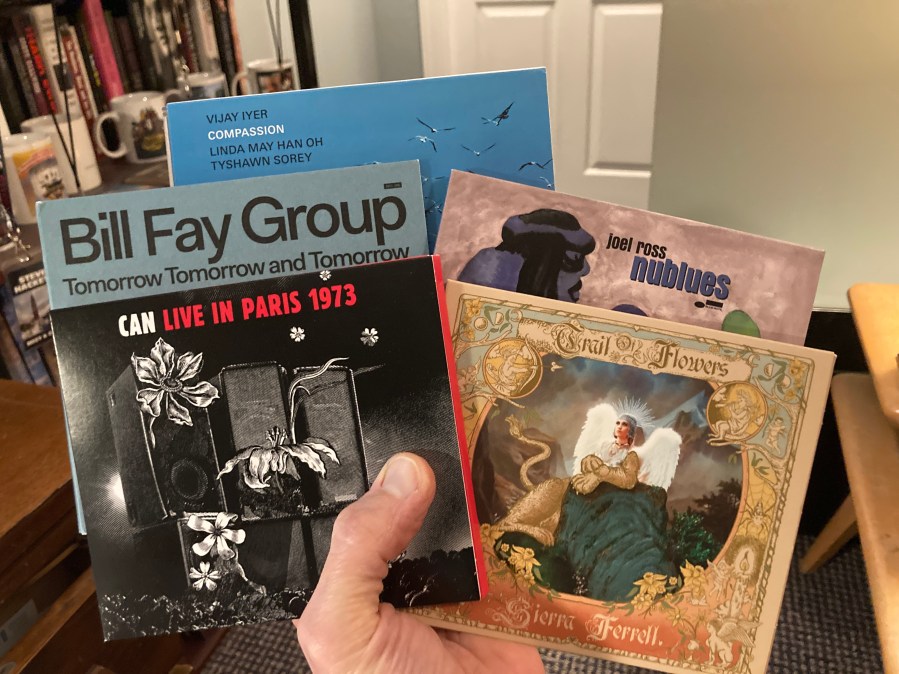
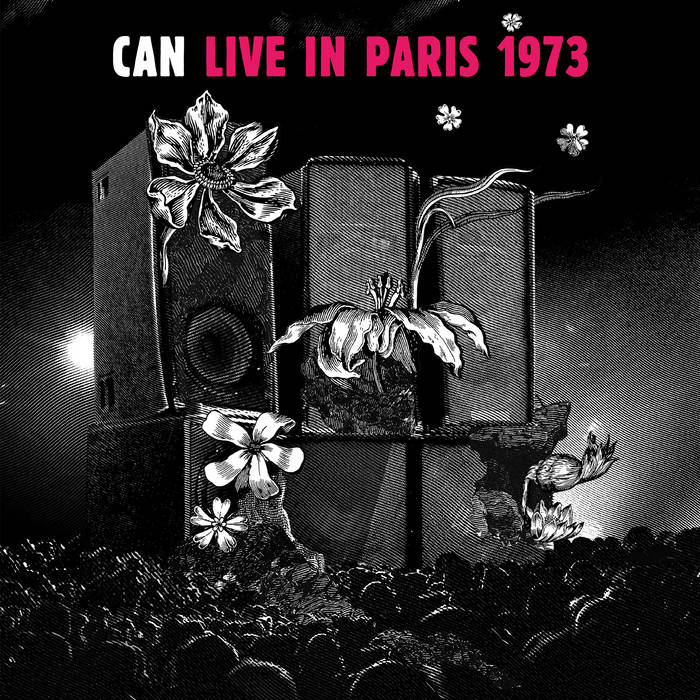
Can, Live in Paris 1973: Another immensely enjoyable archive release from the guys who sent krautrock into orbit with a winning combination of tight grooves and freeform jamming. The fresh angle this time around is the presence of late vocalist Damo Suzuki; locking in with Jaki Liebezeit’s propulsive percussion, the throbbing bass of Holger Czukay, and Michael Karoli and Irwin Schmidt’s guitar/keyboard interplay, Suzuki burbles, banters, bickers – a daffy, devious jester who pulls improvised melody and lyric from thin air as he goes along. Oh, and forget about sounding “just like the records” – studio tracks “One More Night” and “Spoon” are touched on to kick off the jams, then abandoned or deepened, stretched like taffy to the point of sonic hypnosis, mannnn . . . Five gripping examples of Can’s live prowess; whether they could actually stop time or not (it may have been the psychedelics), these ninety minutes of unbridled creativity go by in a flash.
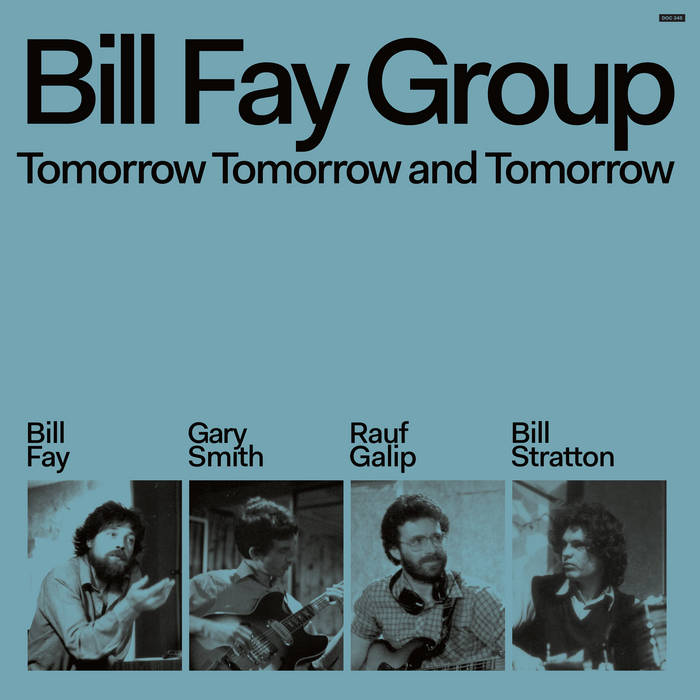
The Bill Fay Group, Tomorrow and Tomorrow and Tomorrow: Ignored in the late 1960s and early 70s, British singer-songwriter Fay achieved cult favorite status after Wilco covered his hymnic “Be Not So Fearful” in the wake of 9/11. Utterly unlike the manneristic Dylan-meets-Kinks pop of his debut or the bleak rock crunch of 1971’s lost classic Time of the Last Persecution (both well worth seeking out), these vibrant demos from 1977 capture the gentle Christian mysticism at the heart of Fay’s songs, executed with grace and empathy by the three-piece Acme Quartet (?). The multiple versions of meditations like “Strange Stairway”, “Isles of Sleep” and “Life” radiate understated grace and power, foregoing apocalyptic panic to embrace simple, jubilant confessions of faith (“So that the world might believe/That Life has risen/That Life has conquered”). Prayers and hypnotic invocations that invite and welcome without rancor or hectoring, couched in song that’s timeless yet vividly in the moment.
Sierra Ferrell, Trail of Flowers:Widescreen mountain music for the anxious generation, this went straight to my 2024 Favorites list. In West Virginia native Ferrell’s sure grasp, her second album mounts to melodramatic heights on the wings of old time country. Ferrell’s sly, witty songwriting whiplashes between Americana subgenres to perfection; her opening run of originals – yearning road dog anthem “American Dreaming”, cautionary honky-tonk stomp “Dollar Bill Bar”, giddy fiddle reel “Fox Hunt”, and string-swathed heartbreaker “Wish You Well” left me astonished in the wake of their range and breadth. There isn’t a dud track here (check out jaunty Latin-tinged romp “Why Haven’t You Loved Me Yet”, murder ballad “Rosemary”, hybrid gospel/love song “Lighthouse” – oh heck, all of ’em); when you add in Ferrell’s beguiling voice (spanning the spectrum of twang from Janis Joplin to Dolly Parton and all points between) and gutsy fiddle work, plus producer Eddie Spear’s rich gothic ambience, the result is thoroughly winning. Believe the hype – if anybody can save country music from Greater Nashville’s ongoing torrent of processed pop, artists like Sierra Ferrell and Charley Crockett (both playing my local outdoor amphitheater this summer) are your best bet.
Vijay Iyer, Compassion: Building on the near-telepathic teamwork they established on 2021’s Uneasy (one of my faves from that year), pianist Iyer, bassist Linda May Han Oh and drummer Tyshawn Sorey come out swinging with this full-on follow-up. The impressionistic title tune shimmers into focus, with the trio relying on space and silence as much as sound; a luscious take on Stevie Wonder’s “Overjoyed” doubles as a tribute to Chick Corea, inspired by Iyer’s opportunity to play the late legend’s own piano. Whether on the angular, driving “Ghostrumental” or the rugged throwback blues “It Goes”, Oh pulls gorgeous melodies out of the air, Sorey whips up a seething percussive stew even as he grooves, and Iyer stirs in one heady, pensive idea after another. Iyer characterizes the music as “a reminder, an assurance, a plea, and perhaps an inspiration – to find each other in this together”; it’s a tribute to these exceptional musicians that, with what seems like maximum grace and minimum sweat, Compassion tangibly conjures up the empathy it advocates in sound.
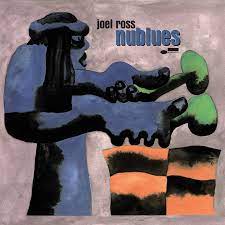
Joel Ross, nublues: Chicago-born vibraphonist Ross impressed me to no end when I caught him live as part of the Blue Note 85th-Anniversary All-Star Band this past January. His fourth album is of a piece with his previous three: a soundworld of abstract yet delightfully contemplative jazz, soaked in the blues, always tumbling and turning with a non-stop flow of invention. Ross’ interaction with young saxophone lion Immanuel Wilkins (also an All-Star), Jeremy Corren on piano and bass/drums duo Kanoa Mendenhall and Jeremy Corren are the secret sauce at the music’s heart, whether putting their own spin on Thelonious Monk’s “Evidence” or John Coltrane’s “Equinox” and “Central Park West”, conjuring the title track from thin air – Mendenhall shines on bowed bass here – or building “Bach (God the Father in Eternity)” into a steamrolling surge of gospel-soaked eloquence. It’s like crashing a conversation already in progress and discovering you were invited all along.
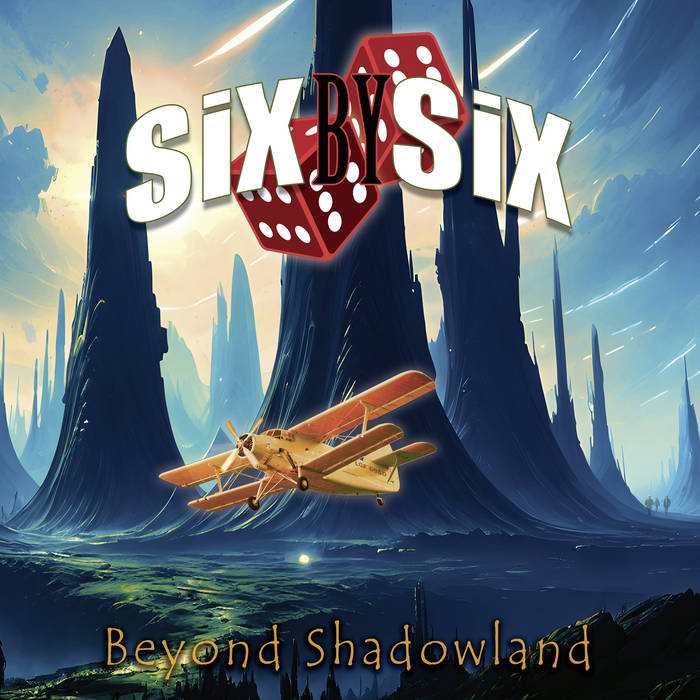
SiX by SiX, Beyond Shadowland: Robert Berry, Ian Crichton and Nigel Glockler hit hard and strong, blasting past Difficult Second Album Syndrome to craft a wild and wooly extension of their first-rate debut. Sonically, this one comes across hotter and crunchier, as multi-instrumentalist Berry corrals Crichton’s hypercreative guitar licks into decidedly unconventional song structures, then layers in heaping helpings of lyrical positivity, while Glockler lays down rock solid percussive foundations. The result is a record that gets stronger as it goes, with head-turning surprises that stack up thick and fast: the acoustic-based sci-fi narrative “Obiliex”, the slashing, tribally funky “Titans”, the fuzz-toned flutter of “Sympathize” and, in “One Step”, an epic that progresses from yearning balladry through a proggy midsection to a hip-hop shuffle that works! Add in the relatively straight-up singles “Arms of a Word” and “The Mission” and you have a sophomore effort that oozes both mass appeal and maximum creativity. Check out the new Progarchy interview with Robert Berry here.
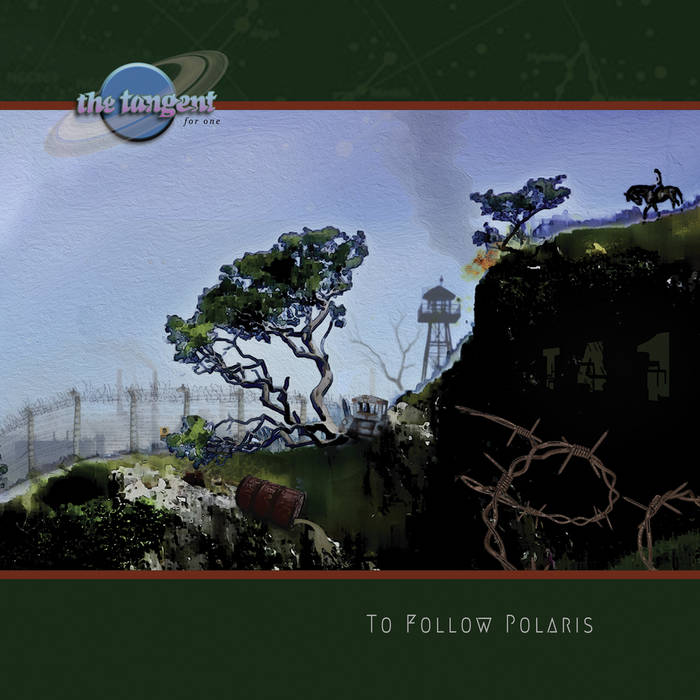
The Tangent, To Follow Polaris (released May 10):On which Andy Tillison takes off the gloves. Playing all the instruments himself (the album’s labeled “Tangent for one”) with style and panache, Tillison sails confidently through textures ranging from glitchy electronica to vintage soul and funk, with generous lashings of his trademark organ and synthesizer throughout. Kaleidoscopic overture/mission statement “The North Sky” lays down Tillison’s lyrical marker on graspable truth; brooding ballad-of-the-algorithm “A Like in the Darkness” paints a genuinely creepy portrait of online life; “The Fine Line” muses on the commodification of journalism, “destroy[ing] the world to sell the story”. Then on “The Anachronism”, Andy lets it rip – a furious jeremiad calling out both the ineffectual monocracy that’s lost its grip on events and the self-absorbed masses who watch it all happen on their phones. The whole thing builds to a crashing, anarchic climax – only to return to Tillison’s beginning, “follow[ing] the North Star/(When all around me seems to be going South)”. Be warned: something Tillison sings on this audacious, accomplished effort will probably cheese you off – but only because, in a world of grinning provocateurs, shameless attention whores and cynical game players, he’s a genuine idealist, with no other agenda than speaking his mind and wondering why we can’t have a better world.
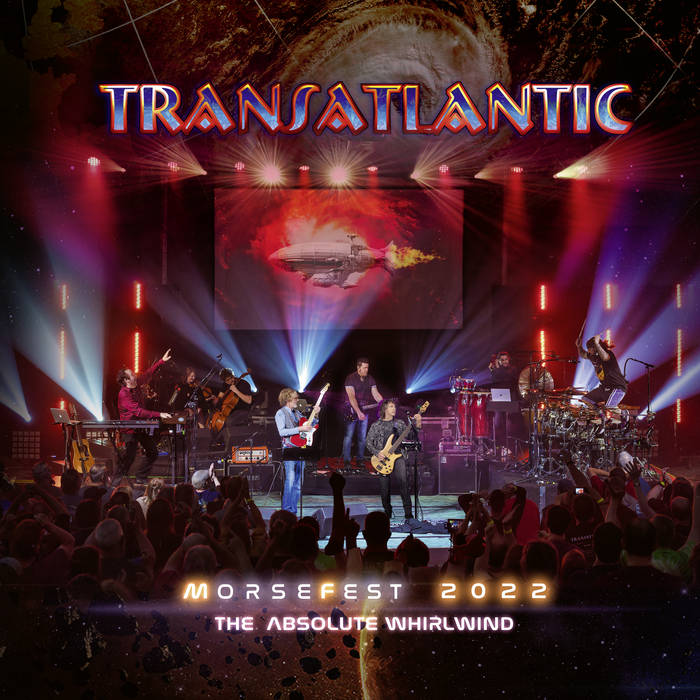
Transatlantic, Morsefest 2022: The Absolute Whirlwind: Or should this be subtitled, “More Never Is Enough . . . Yet Again, Still”? Transatlantic’s second live set off the back of 2022’s The Absolute Universe, this five-CD, two-BluRay set certainly doesn’t skimp on the quantity. There’s five hours of music here from two consecutive nights: the twin album-length epics that provide the release’s title, three elongated ballads, a side-long Procol Harum cover, and bits and bobs of five more extended extravaganzas from the back catalog. It’s not all gravy; there are brief instants where the energy flags and, as Neal Morse and Roine Stolt strain to sing the high notes, I’m reminded that it’s been25 yearssince this supergroup first crashed into the prog world’s consciousness. But these are far outnumbered by the moments where Morse, Stolt, Pete Trewavas, Mike Portnoy and “fifth Transatlantic” Ted Leonard fire up the afterburners and launch into startlingly tight ensemble passages, awe-inspiring solos, pin-sharp vocal counterpoint (often backed up by a real choir), dizzying transitions and over-the-top, orchestrally augmented climaxes. Too much of a good thing? It’s possible – but, with the recent news that Portnoy’s resumed the drum chair in Dream Theater, Transatlantic isn’t a good thing to be taken for granted.
Two years after their fine debut album, SiX by SiX — Saga guitarist Ian Crichton, Saxon drummer Nigel Glockler and veteran vocalist/bassist/keyboardist/arranger Robert Berry — release their sophomore effort Beyond Shadowland on April 26th. The 11 new tracks hit hard and strong, stretching out in an eclectic variety of directions but always stuffed full of upbeat lyrics, killer melodic hooks, thrillingly crunchy guitar work, and tough, grounded percussive grooves.
What with the pre-release singles “The Arms of a Word” and “Obiliex” – the pronunciation of the latter somehow becoming a running gag below) already out in the wild, Robert Berry – who I first interviewed in 2022 – was ready and eager to talk about the band’s working process, their hopes for the new album, and their coalescing plans for live work! (One confirmed live date was announced after our time together, at New Jersey’s annual ProgStock festival in October.) As before, Berry proved gracious, genial, and genuinely interested in my reactions to SiX by SiX’s latest material. The video of this interview is right below, with a transcript plus the videos of the singles following the jump.
As Kevin McCormick posted two weeks ago, Adrian Belew & Tony Levin of King Crimson will be performing that band’s innovative 1980s repertoire live with pioneering shred guitarist Steve Vai (Frank Zappa, David Lee Roth, G3) and drummer Danny Carey (Tool). More than 40 US/Canada dates (listed below and at www.beat-tour.com) have been announced; a presale begins April 2nd at 12 noon EDT (password BEATTOUR), with sales to the general public starting April 5th.
To say I’m stoked for this tour is an understatement! I became a fan of all things associated with King Crimson founder Robert Fripp after hearing him live at a local record store in 1979,then devouring his articles about the creative process and the travails of the music business in Musician magazine. So I was primed when Fripp, Belew, Levin and drummer Bill Bruford launched a re-envisioned KC with 1981’s breakthrough album Discipline. In addition to the striking use of cutting-edge tech like Simmons electronic drums and Roland guitar synthesizers (along with a New Wave sense of texture and space), I loved how all four players were constantly interweaving; there was no real precedent for the sound in rock or even prog, but Balinese gamelan music, classical minimalists like Steve Reich & Philip Glass, and some of Talking Heads’ contemporaneous experiments came to mind. This was just the noise for a heady, more than slightly pretentious listener like me!
1982’s Beat turned out to be my favorite of the albums the band released, but I didn’t see the mighty Crim live until the Three of a Perfect Pair tour in the summer of 1984 – by which time they had throughly assimilated their new music and stomped audiences flat with it! It was the first of 10 times I heard Crimson in concert over the decades, and still it’s vividly memorable.
Shortly afterward, Fripp put Crimson on one of the band’s numerous indefinite pauses, but Belew has always had a soft spot for this music, even publishing an online appeal to Fripp, Levin & Bruford for a 30th-anniversary reunion in 2011. This only happened in truncated form: Belew’s Power Trio hooked up with Levin’s Stick Men for a series of Two of A Perfect Trio dates (I caught the Detroit stop of the tour late that year) eventually becoming the Crimson ProjeKct and opening for Dream Theater on a lengthly tour.
And while I absolutely adore Fripp’s Belew-less version of KC that ran from 2014 to 2021 (see my reviews here, here and here), I’m no less ready to lose it for a Fripp-less take on this classical material like BEAT. Given Vai & Carey’s impeccable credentials, this should be some show.
— Rick Krueger
BEAT Tour dates:
9/12 SAN JOSE, CA @ SAN JOSE CIVIC
9/13 NAPA, CA @ BLUE NOTE SUMMER SESSIONS at MERITAGE RESORT
9/14 LOS ANGELES, CA @ THE UNITED THEATER on BROADWAY
9/15 ANAHEIM, CA @ CITY NATIONAL GROVE of ANAHEIM
9/17 SAN DIEGO, CA @ HUMPHREY’S CONCERTS
9/18 PHOENIX, AZ @ CELEBRITY THEATRE
9/20 AUSTIN, TX @ THE PARAMOUNT THEATRE
9/21 HOUSTON, TX @ BAYOUS MUSIC CENTRE
9/22 DALLAS, TX @ MAJESTIC THEATRE
9/24 ATLANTA, GA @ THE EASTERN
9/26 FORT LAUDERDALE, FL @ THE PARKER
9/27 ORLANDO, FL @ HARD ROCK LIVE
9/28 CLEARWATER, FL @ RUTH ECKERD HALL
9/29 CHARLESTON, SC @ CHARLESTON MUSIC HALL
10/01 CHARLOTTE, NC @ KNIGHT THEATER
10/02 DURHAM, NC @ CAROLINA THEATRE of DURHAM / FLETCHER HALL
10/04 WASHINGTON, DC @ WARNER THEATRE
10/05 NEW YORK, NY @ BEACON THEATRE
10/06 GLENSIDE, PA @ KESWICK THEATRE
10/08 RICHMOND, VA @ CARPENTER THEATER in DOMINION ENERGY CENTER
10/09 RED BANK, NJ @ COUNT BASIE CENTER
10/11 BOSTON, MA @ SHUBERT THEATRE
10/12 HAMPTON BEACH, NH @ HAMPTON BEACH CASINO BALLROOM
10/14 HALIFAX, NS @ REBECCA COHEN AUDITORIUM
10/15 MONCTON, NB @ CASINO NEW BRUNSWICK
10/17 MONTREAL, QC @ THEATRE MAISONNEUVE
10/18 TORONTO, ON @ MASSEY HALL
10/19 ROCHESTER, NY @ KODAK CENTER
10/21 ALBANY, NY @ THE EGG
10/22 GREENSBURG, PA @ PALACE THEATRE
10/23 READING, PA @ SANTANDER PERFORMING ARTS CENTER
Happy Easter. Someone at Progarchy usually posts some version of Marillion’s “Easter” every year, but this year it seems more fitting than ever. The lyrics of the song refer to The Troubles Ireland experienced for much of the second half of the twentieth century, and the title and lyrics also reference William Butler Yeats’ poem, “Easter, 1916,” about the 1916 Irish rebellion. In troubled times like these, with violent bloody wars popping up all over threatening to draw us back into darker times, Marillion’s “Easter” rings out truer than ever:
What will you do? Make a stone of your heart? Will you set things right When you tear them apart? Will you sleep at night With the plough and the stars alight?
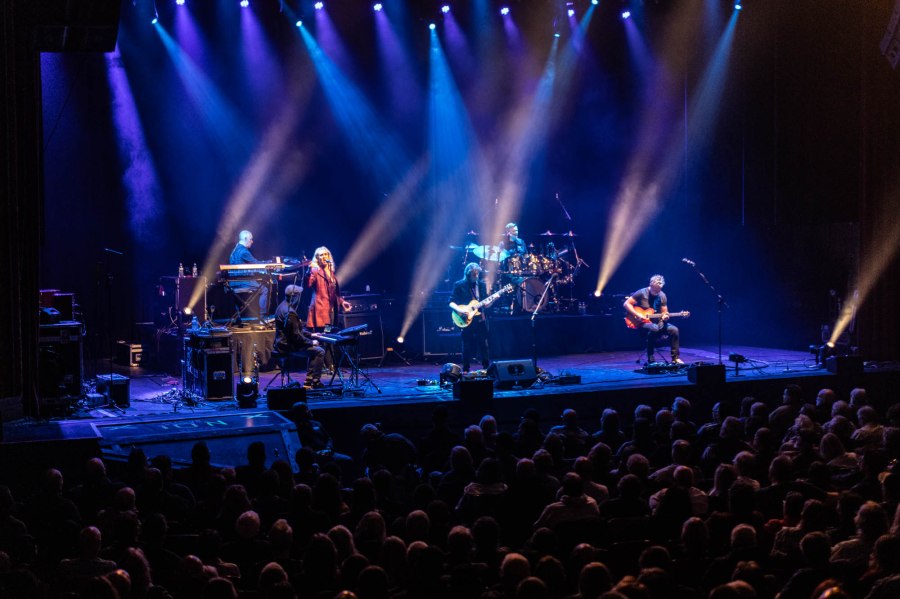
Steve Hackett: Genesis Revisited – Foxtrot at Fifty + Hackett Highlights, The State Theatre, Kalamazoo Michigan, March 23, 2024.
Yet again, another Progarchist beat me to reviewing Steve Hackett’s current tour — this time by three months! I can’t complain, though; Connor’s November review and last fall’s CD/BluRay release convinced me to catch Hackett in concert for the fifth time since he resumed stateside touring in 2013. And I’d say this most recent gig — played to over 1500 fans that packed a historic downtown theatre in Gibson Guitars’ original hometown — was the best of the five.
As I mentioned the last time Hackett played West Michigan, his current band is both precision tooled and breathtakingly daring. Craig Blundell’s fleet, thundering drums propel the music forward at a thrilling pace (no click tracks here!); bassist Jonas Reingold anchors the low end with nimble melodic licks and a terrific sense of interplay; self-effacing keyboardist Roger King genuinely deserves the “one-man orchestra” label. The opening blast from Hackett’s brand-new album The Circus and the Nightwhale— dramatic overture “People of the Smoke”, giddy tarantella “Circo Inferno”, classically-tinged ballad “These Passing Clouds” — showed their remarkable range, while Rob Townsend’s woodwinds and Hackett’s lead guitar took off from that solid musical foundation with tasty, direct themes and hyperspeed unison lines.
While the initial set of “Hackett Highlights” contained plenty of reliable crowd-pleasers, my favorite was the deep cut “Camino Royale”. A funky Reingold solo spot merged into a duet with Blundell, suddenly crashing into the bold opening riff; then an extended midsection gave Townsend space to develop his most compelling solo of the night, followed by Hackett’s wildest playing — squeezing out metallic sparks one moment, launching keening, heart-piercing sustains the next.
Still, let’s face it: Hackett wouldn’t have his current touring career if he hadn’t been fervently waving the “Genesis Revisited” banner for the last eleven years. And it was the classic 1972 Genesis album Foxtrot that this audience had come to hear.






 Progarchy