
An interview with Yes, December 10, 1971

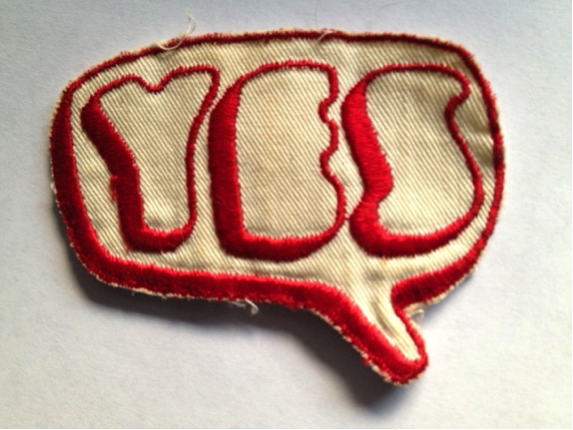
yes patchby Frank Urbaniak

As a sophomore at Lafayette College I became program director of the college radio station, and Larry Fast (Synergy) became the general manager.  We had access to early releases and concert passes in one of the great periods in progressive music.  To generate better distribution for college stations, I published a newsletter called The Rolling Paper that we distributed each month on campus and to all record labels.

We were fortunate to interview our three favorite bands between 1971 and 1973-Yes, Genesis on their first US performance at Lincoln Center, and King Crimson on the second Larks Tongue tour through the Bill Bruford connection with Yes.

We met and interviewed Yes at Dickinson College in 1971.  I had seen Yes the previous summer supporting Jethro Tull ($5) with Tony Kaye and had been blown away by the energy of the band.  By December the Yes album was taking off, and Fragile had arrived that week as an import from Jem Records.  We requested an interview through Atlantic Records, and received a warm welcome from the band members who were delighted that we were holding import copies of Fragile in the US.  For the next several years we were fortunate to have backstage passes to more than 20 Yes shows at area colleges, and later at the big arenas like Madison Square Garden and the Spectrum in Philly during their prime including several shows with Bruford on drums prior to his departure.  We watched the band grow from being third on bills (Yes, King Crimson, Procol Harum ) to headliners for the Close to the Edge through the Tales from Topographic Oceans tour.  Larry built a strong connection with Rick Wakeman through electronics and keyboards, and he went on to build some sequencers for him over the next few years. My connection was forged through and over beer, as Rick and I shared a fondness for brew.  I was but a lightweight while Rick’s consumption of Budweiser was unrivaled and eventually unsustainable.

I thought it would be fun to revisit this interview 40+ years later and have condensed the original piece, but not changed the content. Continue reading “An interview with Yes, December 10, 1971”

Have Yourself a Proggy Little Christmas…

Brad has already discussed A Proggy Christmas by The Prog World Orchestra (and very good it is, too!) but there are yet more musical treats out there to get you in the mood during the festive season.

Cover art for The Jethro Tull Christmas AlbumMy first recommendation is the 2009 two-disc edition of The Jethro Tull Christmas Album. Disc 1 of this set is a reissue of the original 2003 album. It contains some reinterpretations of seasonal Tull material such as Ring Out Solstice Bells and A Christmas Song plus some new songs and some new arrangements of traditional tunes.

Even more interesting is Disc 2, a recording of a 2008 concert at St Bride’s Church in London. The concert features live versions of half of the material from Disc 1, interspersed with readings and carols sung by choir and congregation.

Cover art for Chris Squire's Swiss ChoirMy second recommendation is Chris Squire’s Swiss Choir. This album appeared in 2007, over three decades after Squire’s first solo album, but it is quite unlike that earlier work. Twelve of the album’s thirteen tracks are traditional carols or Christmas songs. The album title is a Spoonerism rather than a clue as to the nationality of the singers, for it is The English Baroque Choir that plays a pivotal role here. Some of the tracks are largely choral in nature whilst others have a predominently pop/rock flavour. Squire is on bass throughout (of course), with Steve Hackett guesting on guitars.

The final track is a remix of the enjoyable 1981 Chris Squire-Alan White Christmas single Run With The Fox. You can listen to the original version here:

Coralspin’s Honey and Lava (2012)

Coralspin, “Honey and Lava,” (Altrospire, 2012).  New on the prog scene, Coralspin hails from England.  Much of the music on this excellent release has the feel of something Trevor Horn or Trevor Rabin might have produced around the time of Yes’s 1984 MTV masterpiece, “90125.”  Certainly, Coralspin has its roots in the early to mid 1980s, especially with its big guitars and its big keyboards.  Whether one likes the music of Horn or Rabin or not, no one could honestly dispute the audiophile proclivities of each man.  The same can be written of Coralspin’s Blake McQueen.  The production of this album is simply stunning–this hit me from the first moment I put it in my cd player, and it continues to impress me with each listening.  It’s not just the keyboards and guitars that stand out , no matter how much they predominate on most of tracks.  The bass and the drums are crisp, offering this album a much more punctuated and professional feel than some of its 80s ancestors.  Indeed, I wish Horn and Rabin would’ve mixed Chris Squire’s bass at this level on 90125.  Amazingly enough, almost all of Honey and Lava was recorded in McQueen’s home, and he later mixed and engineered it.  He’s, simply put, a master audiophile, in the same league with Steven Wilson or Rob Aubrey.  The lyrics on this album are wonderful as well–mythic, pointed, hard, soft.  Everything has its place, and its place is very good.  If I were forced to make a comparison (and, as far as I know, I’m doing this out of my own free will), I would compare Coralspin to The Reasoning.  There’s the obvious fact that the lead singers of each are women, but the comparison between the two is much, much deeper than what some silly academic might have pronounced twenty years ago as worthy of revelation.  The structures of the songs–as approached by Matt Cohen and Blake McQueen–have a definite similarity.   Both love mythic lyrics as well, and each wisely uses the voice not only to convey the meaning of the lyrics but also to convey the meaning of the very music itself.  For what it’s worth, I’m a very proud owner of Honey and Lava, and I eagerly await the follow up.