Rick’s Quick Takes for Summer’s End

As usual, direct purchase links will follow each album review, along with video or audio streaming where available. Given the potential impact of new US tariffs and regulations on both overseas musicians and the vendors who sell their music, I especially encourage readers to support your favorite prog artists and retailers during this period of transition.

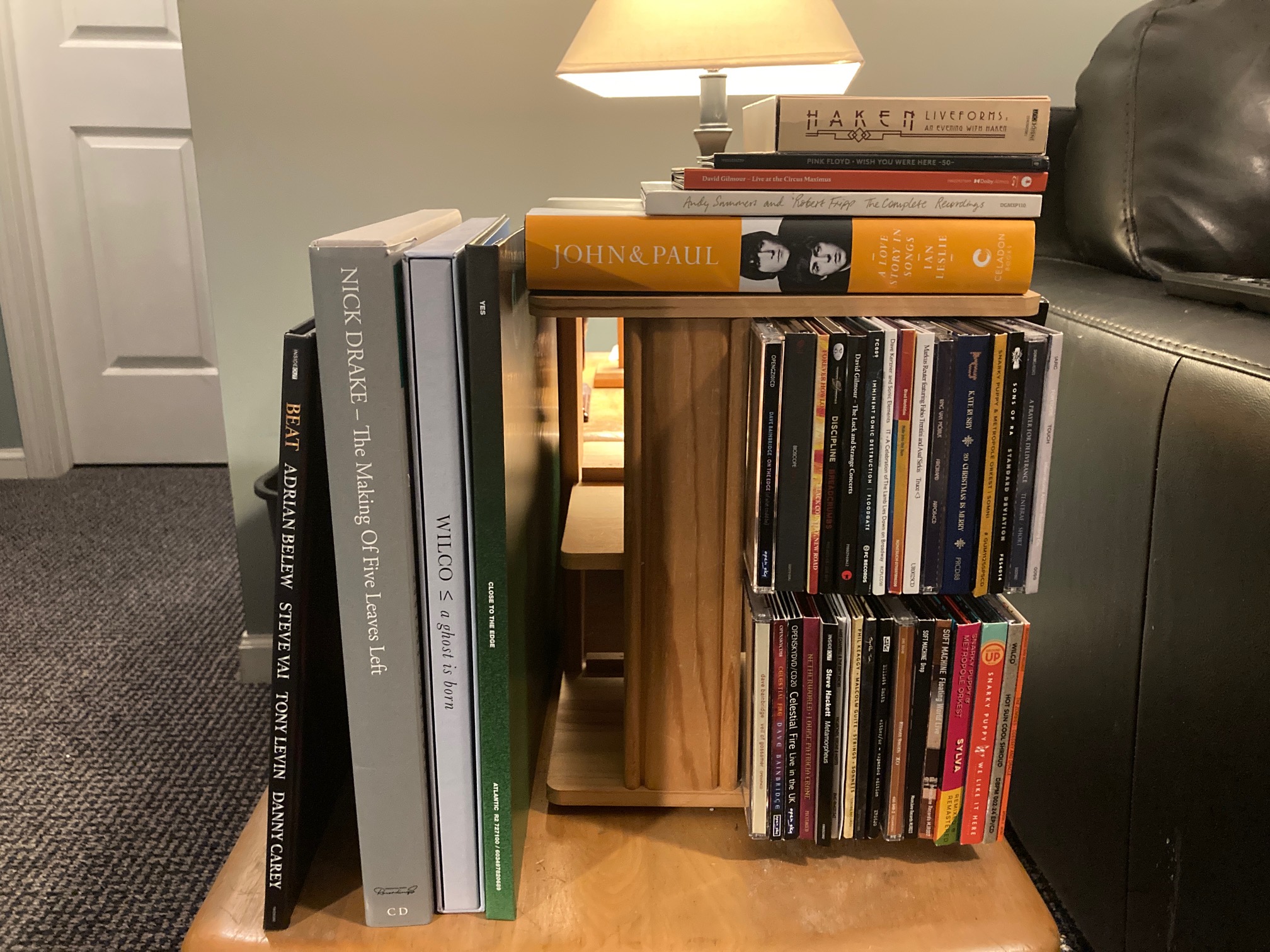
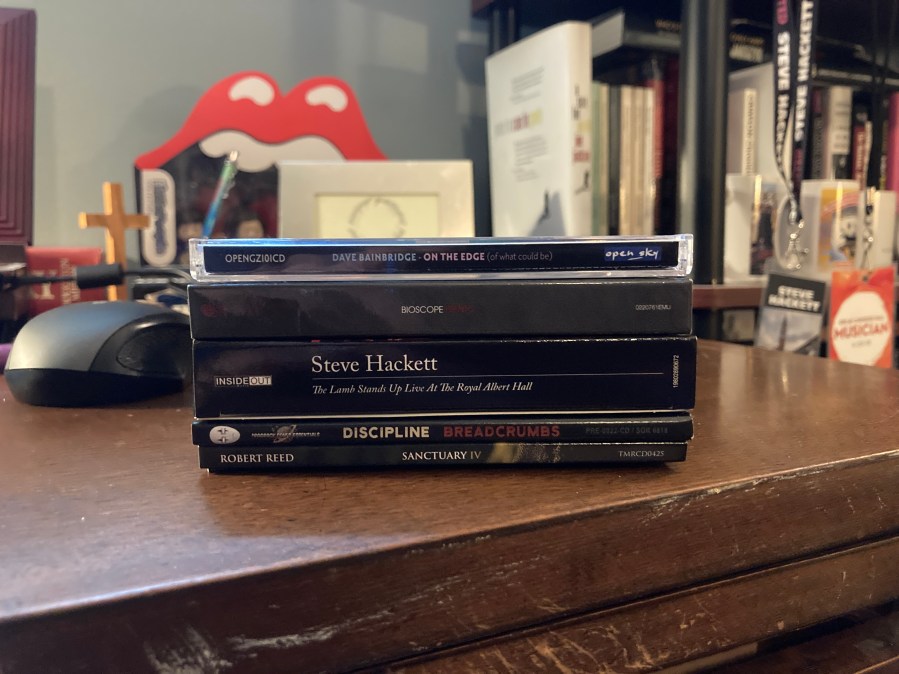
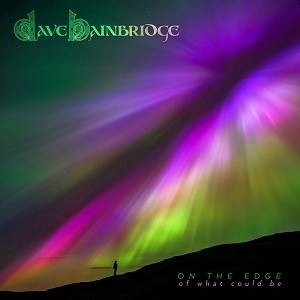
Dave Bainbridge, On the Edge (Of What Could Be): I glommed onto Bainbridge with his fabulous 2021 effort To the Far Away, but every one of his solo albums is crammed full of delights — rocking, rhapsodic and ravishing throughout. On the Edge is no exception: a double album with a self-contained suite on each disc, like Dave’s band Iona it takes listeners on a trip through the beauty of this world to the promise of a life to come. So many highights they can’t all fit here! Up-tempo elegy “Colour of Time” (with Randy McStine’s fierce vocal inspiring Bainbridge to heights of biting, frenzied jazz-fusion); the title track’s multi-sectioned build from triple-time acoustic folkiness to a thrilling electric climax; Simon Phillips’ fleet drum groove on “Farther Up and Farther In”, topped with mind-melting acrobatics from Bainbridge and piper Troy Donockley; Frank van Essen’s evocative violin and Bainbridge’s primal, Santana-meets-Mahavishnu cry on the orchestral “Beyond the Plains of Earth and Sky” are just a few of many great moments. Toss in vocals (in English and Gaelic) from a bevy of fine singers and virtuoso keyboards from Bainbridge, and you have an set that takes you on a genuinely amazing journey, gathering power as it builds to a spectacular culmination. Already a 2025 Favorite and a solid contender for the year-end top spot.

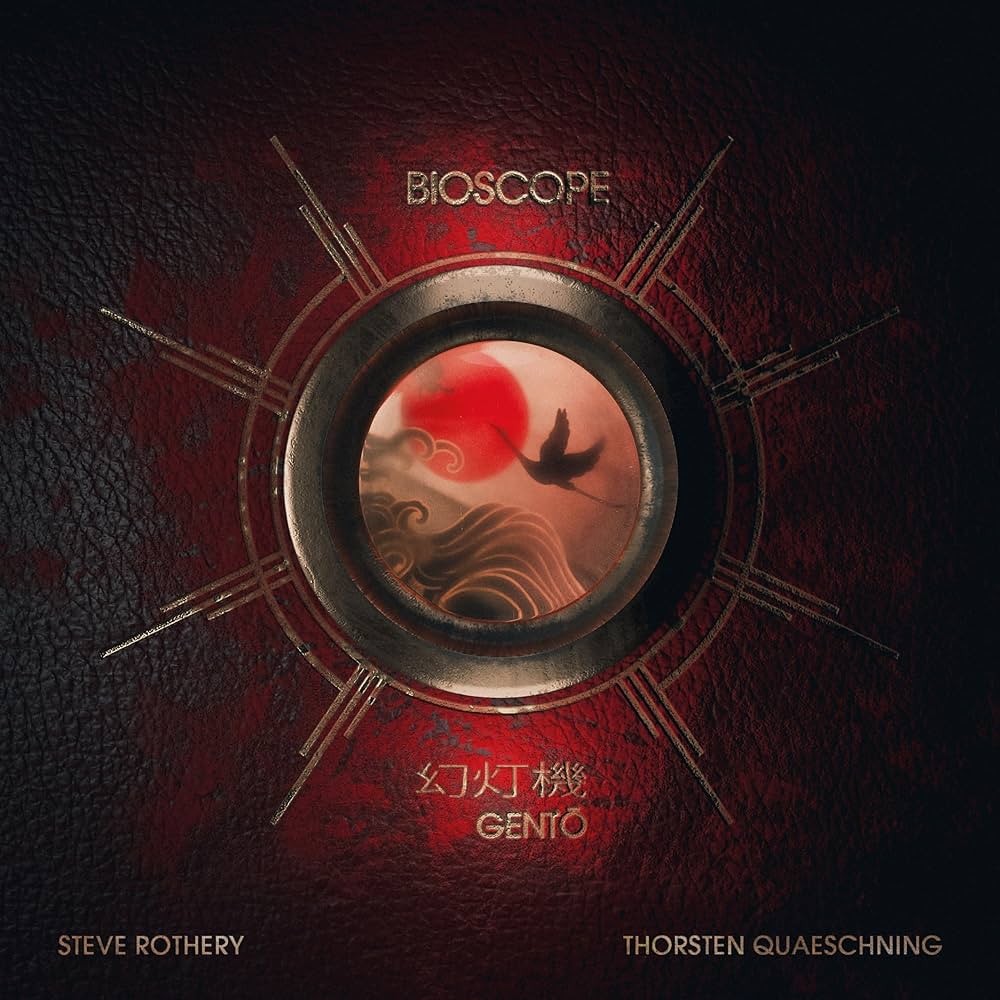
Bioscope, Gento: Steve Rothery’s keening, singing guitar has been one of Marillion’s prime calling cards for more than 40 years; as Edgar Froese’s appointed musical heir, Thorsten Quaeschning has recently propelled synth-rock trailblazers Tangerine Dream to fresh creative heights. Recorded during breaks in their bands’ work, the duo’s debut is a classic example of how two great tastes can taste great together. With the exception of psychedelic-Beatles closer “Kaleidoscope”, the musical elements on Gento repeatedly gather from thin air, coalesce, intensify, interact, react and dissipate — whether driven by Quaeschning (the wispy melodies, luxuriant textures and motorik rhythms of the three-part opener “Vanishing Point”), Rothery (the chiming rhythm guitar, slide/synth duets, fierce fuzz riffing and floating arabesques that shape another trilogy, “Bioscope”), or both in wonderfully organic call and response mode at multiple pieces’ climaxes. Add the rock solid drumming of Elbow’s Alex Reeves, and the results really are magical. Gento has gently, unobtrusively grown on me, all the way to making my 2025 Favorites list; it may take a few listens, but I think it will do something similar for you.

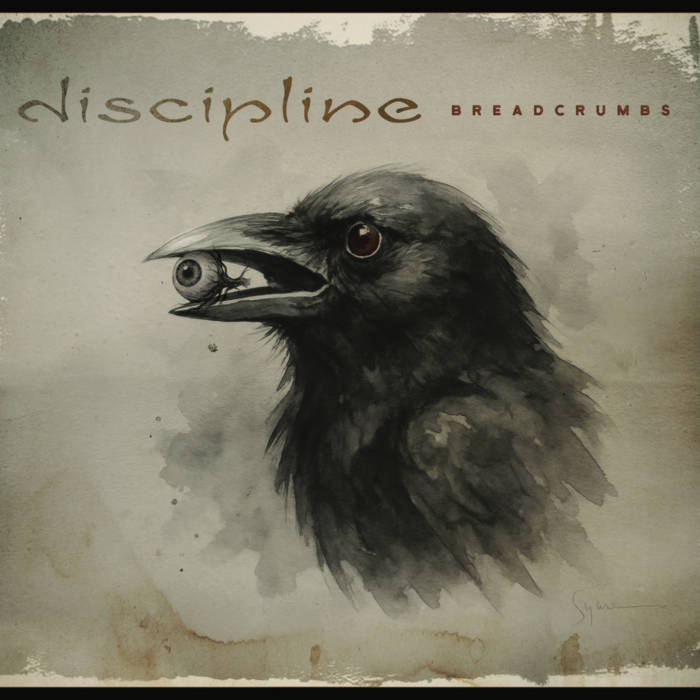
Discipline, Breadcrumbs: Eight years on from their last record, the Detroit proggers serve up another helping of their trademark, stately melancholia. Breadcrumbs proudly mines veins dug by King Crimson, Gabriel-era Genesis, Van der Graaf Generator — even a bit of keyboard-period Rush, with production by Terry Brown and art by Hugh Syme to boot — but as always, the results are a heady, hearty brew all its own. Throughout the intriguing title epic, the measured lament of “Keep the Change”, the relentless, stinging “When the Night Calls to Day/Aloft” and the thwarted, impressionistic “Aria”, Matthew Parmenter’s lyrical rhetoric and harmonically slippery keys take point, with Chris Herin providing pungent, tasty support and comment on guitar. While Breadcrumbs leans away from the slashing theatrics of vintage Discipline classics Unfolded Like Staircase and To Shatter All Accord, it still gives off a chilly intensity that showcases the band at their most spellbinding and cathartic. Through every challenging musical twist and verbal turn. this album is finely crafted and delivered with total conviction — another instant 2025 Favorite!

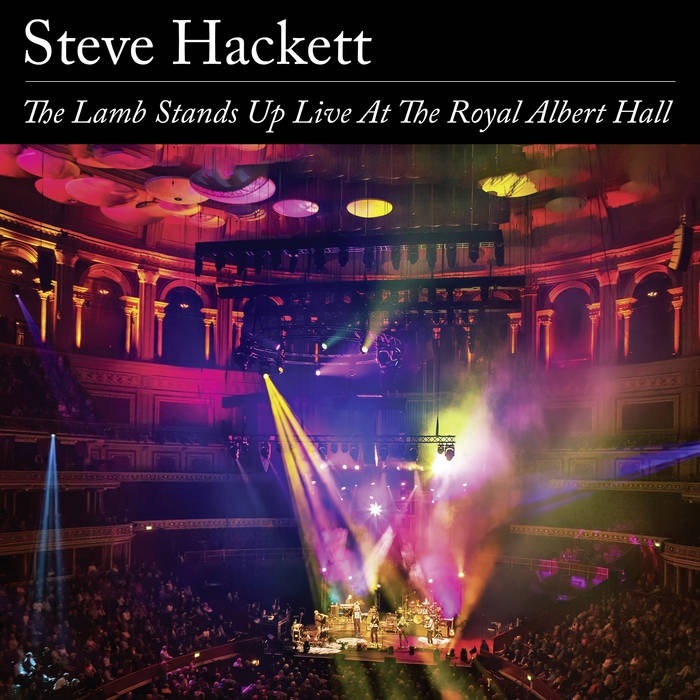
Steve Hackett, The Lamb Stands Up Live At The Royal Albert Hall: Yes, it’s Hackett’s tenth live album of the 21st century, but as usual, fans will find this a must for multiple reasons. Given recent personnel announcements, it’s probably Steve’s last live set with Roger King’s keyboards and Craig Blundell’s drums driving his talented band forward; the first half proves a spirited solo set, with lots of pleasingly vintage material and a thrusting trilogy of excerpts from 2024’s The Circus and The Nightwhale. And it’s hard to conceive of a better anniversary celebration for The Lamb Lies Down on Broadway! Nad Sylvan utterly inhabits protagonist Rael and Peter Gabriel’s other sundry characters; unjustly-forgotten Genesis vocalist Ray Wilson conjures an atmospheric, rumbling take of “Carpet Crawlers”; reflective moments like “Hairless Heart” shimmer, narratives like “The Lamia” and the title track subtly, potently grip your attention, and heavier moments like “Fly on a Windshield”, “Lilywhite Lilith” and “It” slam good and hard. With the super-deluxe box of The Lamb finally coming out at the end of September after multiple delays, sets like Dave Kerzner’s studio tribute and Hackett’s new concert set have nicely filled the gap while reminding both long-time and first-time listeners how ahead of its time the album was, and how vibrant this music still is.

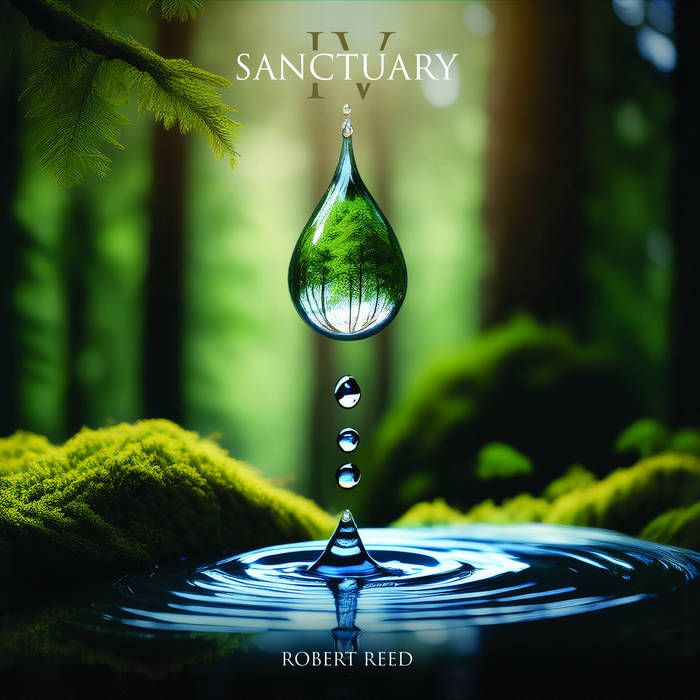
Robert Reed, Sanctuary IV. One of the driving forces behind 1990s neo-proggers Magenta, Reed has branched out impressively in the following decades. Reed’s Sanctuary albums — episodic long-form pieces in the genre pioneered by Mike Oldfield’s Tubular Bells — have evolved far beyond pastiche or even tribute, and here he refines and re-energizes his approach to its peak. Compelling opener “The Eternal Search” races forward, climaxing with an utterly berserk Simon Phillips drum solo; “Truth” bounces vivid instrumental colors off of sampled male vocals, morphs into a nautical shuffle laced with Les Penning’s recorder tootles, then lunges for a grandiose, double-time finale; and the closing “Sanctuary” provides the perfect comedown with its gentle, compact, well-wrought theme. If you’re looking for a sweet spot between Bainbridge’s Celtic maximalism and Bioscope’s kinematic ambience, Sanctuary IV’s shimmering, tuneful instrumentals could be just your ticket.

— Rick Krueger

Kruekutt’s 2021 Favorites!

I thought I didn’t have a big list of favorites from this year’s listening — until I revisited my six-month survey from back in June and added in the good stuff I’ve heard since then! The listing below incorporates links to full or capsule reviews, or other relevant pieces on Progarchy and elsewhere; albums I haven’t written about yet get brief comments, along with my Top Favorites of the year. Most of these are available to check out online in some form; if you find yourself especially enjoying something, use that Christmas cash and support your choice with a purchase! And the winners are . . .

Continue reading “Kruekutt’s 2021 Favorites!”

Rick’s Quick Takes for November

Discipline, Unfolded Like Staircase: a stone cold classic of late 1990s prog, freshly remixed by Rush producer Terry Brown. True, this Detroit quartet wore their influences (Gabriel-era Genesis, 1980s King Crimson, Peter Hammill and Van der Graaf Generator) on their sleeves here, but they also gave them a fresh, arresting spin. As Jon Preston Bouda’s guitar, Matthew Kennedy’s bass and Paul Dzendel’s drums weave grim, mesmeric webs of sound, Matthew Parmenter’s flamboyant vocals and literate scenarios drill deep into existential desperation. Lush, dramatic and riveting, the four twilit epics included here, kicking off with the Dante-influenced “Canto IV (Limbo)”, will get under your skin in a breathtaking way. In short, I believe you need this music; get it on CD or LP from The BandWagon USA or download it at Bandcamp. (Here’s hoping Discipline’s studio follow-up To Shatter All Accord and the live This One’s for England get similar treatment in the near future.)

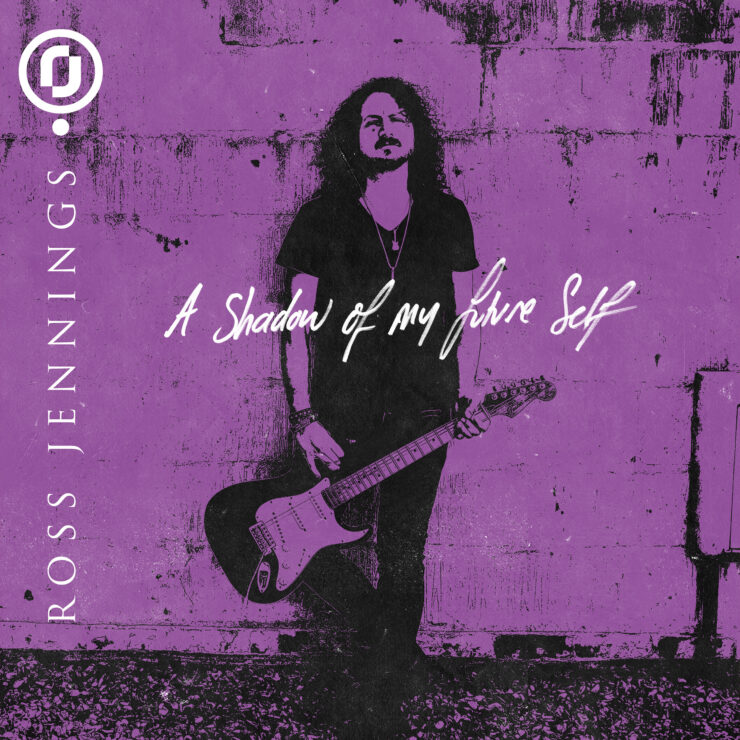
Ross Jennings, A Shadow of My Future Self: a superbly accomplished, immensely appealing solo debut from Haken frontman Jennings. Recorded during (what else?) COVID lockdown, he spans and mixes genres with ease, diving headlong into folk (“Better Times”), funk with lashings of metal (“Violet”), power pop (“Rocket Science”), cinematic ballads (the moving elegy “Catcher in the Rye”) — oh, and even extended-song-form-verging-on-prog workouts (“Phoenix” and “Grounded”). Jennings is at the top of his game on vocals and guitar, backed by stellar players. And the songwriting is outright wonderful; on every single track, the riffs demand air guitar, the verses demand your attention, and the choruses demand a cathartic singalong. Yes, all of this raises my hopes for Jennings’ upcoming collaboration with Nick D’Virgilio and Neal Morse, but that can wait; this thrilling, eclectic album is a genuine treat in itself. Unquestionably my pick of the month. Get it on CD or LP (merch and bundles also available) at OMerch.

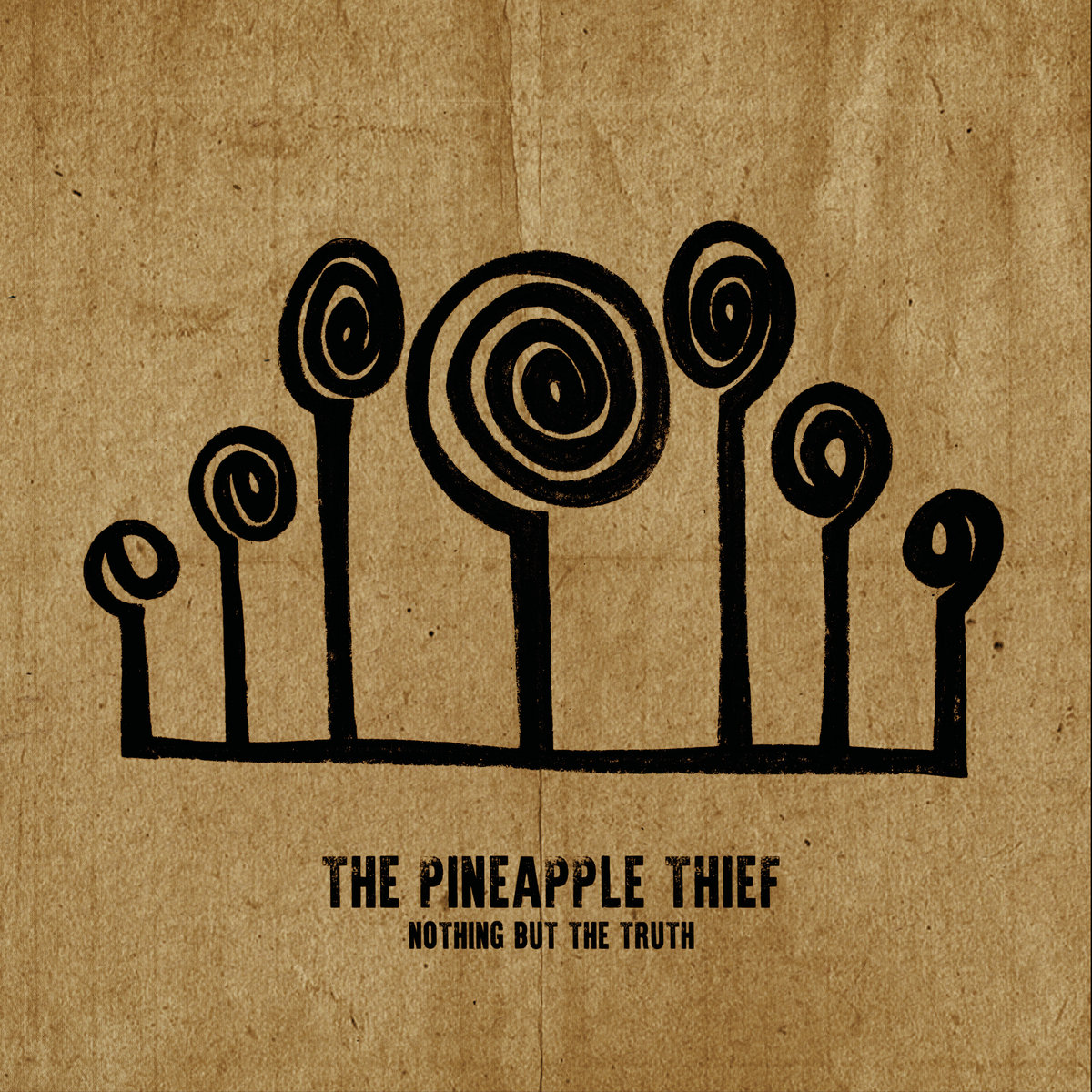
The Pineapple Thief, Nothing but the Truth: whatever the substantial virtues of their studio efforts, The Pineapple Thief’s recent live albums have been where they’ve shone the brightest. Their latest is no exception; filmed for streaming in lieu of their cancelled tour for Versions of the Truth, this 90-minute set finds TPT as brooding, stylish and kickass as ever. Bruce Soord nurses his songs of disillusionment and division through the gathering angst, then opens fire on one blazing chorus after another; Gavin Harrison does the unexpected on drums with astonishing regularity — and yes, I bought the BluRay for the drumcam option! Steve Kitch’s atmospheric keys and Jon Sykes’ throbbing bass are essential ingredients here, not anonymous backing. The new songs gain heightened guts and strength; the dives into the back catalog aren’t just well-calculated, but passionately played, and essential to the set. This one makes me more eager than ever to see The Pineapple Thief when they return to North America next spring. Get it on CD, LP, Blu-Ray video and deluxe artbook box (CD/DVD/BluRay) at Burning Shed.

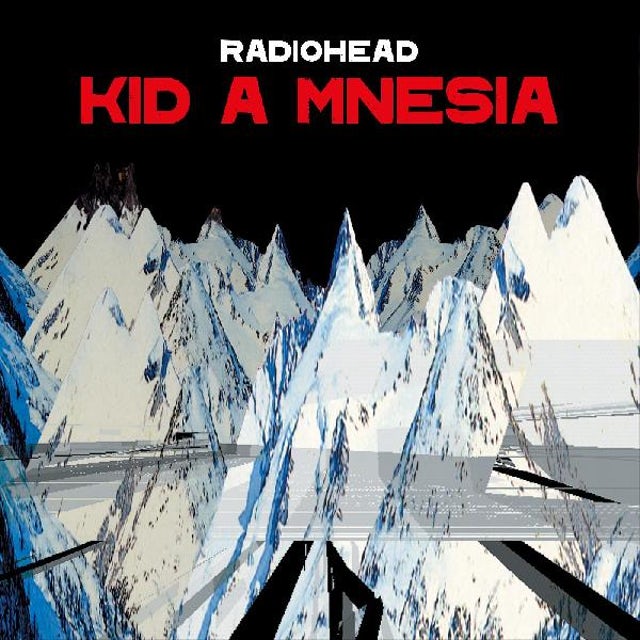
Radiohead, Kid A Mnesia: a band hard at work tearing down the sound that made them world famous, then rebuilding from scratch. Which somehow made them more famous, given that their first Number One album in America was the result. I’ve always found Kid A gripping stuff; with their wholesale shift to glitchy electronica beats, found-sound patchworks, soupy orchestral backing and sharp-edged noise, Thom Yorke, Jonny Greenwood and company achieved a genuine paradox — alienation embodied in music, that immediately connected with a mass audience. And when Radiohead walked backward into rock on Amnesiac, the success of their breakaway strategy made both guitar-based grooves like “I Might Be Wrong” and off-kilter art-pop like “Pyramid Song” even more effective. This triple-disc reissue pulls the era together with a bonus set of ear-tickling odds and sods: Yorke, the most deliberately unbeautiful of singers, reaches for actual purity of tone on the unreleased songs, while Greenwood scratches his avant-garde compositional itches, courtesy of a full string section. Get it on CD, LP, cassette or download from Radiohead’s webstore.

The War on Drugs, I Don’t Live Here Anymore: a recent immersion course in Adam Granduciel’s ongoing project — regrafting 1980s tropes like tick-tock rhythms and thick ambient textures onto the stock of classic rock — has proved enticing, though not consistently galvanizing. The War on Drugs’ latest slab of Big Rock Redux is their most organic album to date, integrating the blips and blobs with the rootsy muscle of a tight sextet. Whether a given track goes minimal or maximal, each musical backdrop is built in loving, precise detail, and the simple hooks become earworms before you know it. Granduciel’s vocals — his most individual to date — insistently ride the rhythms, his songs meditating on scenes of a dissatisfied youth (“Change”, “Victim”), then finding unanticipated serenity in the quiet victories and encroaching vulnerabilities of middle age (“Living Proof”, the widescreen title track, “Occasional Rain”). This one snuck up on me via multiple evening listens, and now it’s not letting go; see if it grabs you! Get it on LP, CD or cassette from TWoD’s webstore.

Watson’s Best Prog Albums of 2017: Part 3 — TOP TWENTY # # 10 — 1

Having previously (in the last couple days) shared my 20 “Honorable Mentions” and the first half of my TOP TWENTY ( numbers 20 through 11) I come now to the pay-off.  The following ten albums are, obviously my favorite discs, but also I submit, The Best 10 Progressive Albums of 2017.  Making no apologies for my penchant of melody over rhythm, of consonance over dissonance, I have selected ten works that are heavily laden with beauty and harmony rather than experimentation and edginess (hey! while my friends were listening to the Rolling Stones I was chilling to The Moody Blues)

THE TOP TWENTY:  # # 10 through 1

10)  COMEDY OF ERRORS/House of the Mind

comedyOFerrors

After their great 2015 release SPIRIT, this Glasgow band returns with their crowning achievement.  HOUSE OF THE MIND surpasses their prior releases with a mixture of large-scale symphonic fervor and slower and delicate textured emotionalism. The band is tight and Joe Cairney’s vocals are a real highlight. My favorite tracks are the two longer songs ‘House of the Mind’ and ‘Wandering Jacomus.’  Some of the best new prog is coming from Scotland and Comedy of Errors is perhaps the best of the best.  A+

Continue reading “Watson’s Best Prog Albums of 2017: Part 3 — TOP TWENTY # # 10 — 1”

Rick’s Quick Takes: Captives of the Wine Dark Sea by Discipline

by Rick Krueger

As a Detroit native, it’s a bit embarrassing that most of my Motor City progressive rock knowledge has come from — you guessed it — Prog Magazine.   That’s where I first came across Tiles and their fluent, anthemic take on mid-career Rush and 1980s neo-prog.  From Tiles, it’s been just a hop, skip and jump to their darker, more Gothic peers, Discipline.

There’s definitely an edge to this band, springing directly from Matthew Parmenter’s lyrical “Magic Acid Mime” vision, honed by music that channels and modernizes the gloomy flair of Peter Hammill & Van Der Graaf Generator, the plummy drama of Gabriel-era Genesis, and the hypnotic counterpoint of 1980s King Crimson.  Stirring in just enough alt-rock crunch resulted in two minor classics, 1997’s Unfolded Like Staircase and 2012’s To Shatter All Accord; Parmenter’s fatalistic narrative drive and the band’s inexorable momentum shake you up and sweep you along — usually toward an unavoidable crash landing.

For Captives of the Wine Dark Sea, Tiles’ guitarist Chris Herin joins the veteran roster of Parmenter on vocals and keys, Matthew Kennedy on bass and Paul Drendzel on drums; Terry Brown (yes, he of “Broon’s Bane” fame from Rush’s Exit Stage Left) produces.  Clocking in at just over 45 minutes, the new album doesn’t waste time or motion, as Parmenter fires off sardonic verbal volleys at the futilities of aging (“The Body Yearns”), the white collar working world (“Here There Is No Soul”), desire (“Love Songs”) — even creativity itself (“Life Imitates Art”).   The music, subtly powerful and accomplished, carries the words with an appropriate gravity.  Herin’s licks and tone provide plenty of style and color, Parmenter weaves enticing, compelling keyboard webs, and the rhythm section is rock solid.

Building from lullaby to anthem to fiery guitar/synth playout, the 15-minute finale “Burn the Fire Upon the Rocks” aptly sums up Discipline’s aesthetic: rage against the dying of the light — but keep moving as you do it, and find comfort where you can.  Not exactly fun or even contented, but triumphant on its own stubborn terms.  On Captives of the Wine Dark Sea, Matthew Parmenter and company stoically look failure and frustration in the face, leaning into the understated strength of their music to make it through.


You can listen to (and buy) Captives of the Wine Dark Sea at Bandcamp: https://lasersedge.bandcamp.com/album/captives-of-the-wine-dark-sea


All our Yesterdays

All our Yesterdays

Released today on the small but mighty Bad Elephant Music label, All our Yesterdays is Discipline front man and songwriter Matthew Parmenters third solo release, following up 2008’s Horror Express.
Parmenter is a unique talent, and I will put it out there straight away that this album will be a Marmite album to many, there will be people out there who love this work, and people who will find it too idiosyncratic and left field for their tastes.
This however is not a bad thing, it’s wonderful as a reviewer to receive an album that grabs you by the back of the neck from the get go, and if you’re wondering where my tastes fall, I am firmly in the former camp. Basically I love this record.
I will admit now that whilst I’ve heard of Discipline and of Matthew Parmenter, this is the first time I have ever heard any of his music, and when my bank manager hangs their head in despair as I investigate his intensive back catalogue I can only blame David Elliott and BEM for introducing me to this music.
The album itself is performed entirely by Parmenter (with only Discipline drummer Paul Dzendzel playing on 4 tracks) so to all intents and purposes it is a truly solo work, and yet Parmenters virtuoso playing and complex arrangements make it sound like he’s backed by a full band.
There are shades of Peter Hammill/Van Der Graaf Generator on this album, (another artist/band who are uncompromising in their musical vision as Parmenter) particularly on the keyboard and piano driven Digital with some fantastic vocal work which brings mid-seventies Hammill to mind, again not a criticism as Matthew Parmenter is as creative and original musical visionary as Hammill is.
The impressive title track, showcases Parmenters musical talents, with a blistering guitar solo, and his fantastic vocal range is entirely taken from the works of Shakespeare, and I can just visualize him performing this on stage, pouring his heart out into the ether.
The BEM website encourages you to listen in full as this musical work is ‘best experienced as a single, all-encompassing musical odyssey’, normally as I’m a contrary Yorkshireman I ignore all listening instructions and get into the record in my own way, but BEM are right, this is an immersive experience, and whilst it sounds good booming through the stereo, it sounds even better on headphones, sat by a swimming pool in Fuerteventure drinking a cool beer (guess what I listened to on my holidays?)
In all seriousness, the musical dynamics are designed for an intimate listening experience, and the arrangements fall somewhere between the epic sound of early Queen (particularly on dramatic opener Scheherazade, and the powerful I am a Shadow) and the classical music meets rock of Jon Lords 1970’s solo work. Whilst the keyboard and piano driven work on the brooding and sinister All for Nothing acts as a backdrop for Parmenters impassioned and powerful vocals, whilst the sax that kicks in brings Van Der Graaf Generator back to mind.
Meanwhile the piano driven pop of Stuff in the Bag showcases another side to Matthews talent, as he goes from dark to light with a quick mood change that should jar, but fits seamlessly into the record as a whole. Whilst the closing epic Hey for the Dance brings the record to a fantastic close, with Parmenters vocals and the folk influenced closing coda culminating in a genuinely uplifting piece of music, that launches into an extended rock fade.
Listening to the arrangements, the depth and power that is present throughout this epic work, its hard to imagine that there isn’t a full band in the studio and an orchestra hiding out somewhere as well, it’s a testament to Parmenters skill and vision that his concept works throughout from start to finish.
I hesitate to refer to the works on this album as songs, as they are more like movements in a musical symphony, harking back to the days when progressive rock meant moving forward and pushing the recorded form to se how far you could get away with and how creative you could be with the medium,
A lot of contemporary bands on the scene have certainly forgotten the true meaning of progressive rock, Matthew Parmenter hasn’t.
He has released a contemporary concept album, as fresh and original as anything I’ve heard so far this year, and yet clocking in at around the 40 minute mark it never overstays it’s welcome, and would easily fit on one side of a C90 tape to pop in your walkman.
Like I said earlier this Matthew Parmenter is a unique talent, and this album isn’t going to be everybody’s pint of bitter, however I would rather hear a record that is striking, original and polarises opinion than a record that just sits there and you think ‘Well, it’s alright innit?’
This is an astonishing piece of work, and to all of you who’ve pre-ordered it and are waiting for the thump at the letterbox, you are in for a real treat my friends.

Discipline: The Phenomenology of Prog (Part 1)

Socrates: “But what you call ‘self-indulgence’, is it not rather a kind of discipline?”

Phaedrus: “What do you mean, Socrates?”

Socrates: “Do people not say of prog songs that they are very long?”

Phaedrus: “Yes.”

Socrates: “Well, is it harder for a musician to play a short song or a long song?”

Phaedrus: “That depends on how difficult the song is, I think.”

Socrates: “Are not prog songs usually more difficult and complex? At least that is what people also say about them.”

Pheasdrus: “Yes, there are the changing time signatures that we mentioned earlier.”

Socrates: “Well then, do not long songs with things like changes in time signatures require a higher level of skill to play?”

Phaedrus: “It certainly seems so.”

Socrates: “Well then, that is what I mean about prog being a kind of discipline. Perhaps no musician could play such songs without having achieved the opposite of self-indulgence; namely, a kind of discipline.”

Phaedrus: “Yes, I imagine it is some form of envy or resentment that leads people to call prog ‘self-indulgent’.”

Socrates: “Perhaps in some cases it could become self-indulgent, but only when the discipline goes awry. Because what seems to be the essence of prog is that it is in fact a kind of discipline.”

Phaedrus: “But exactly what kind of a discipline, Socrates? For it seems that if it were simply a skill like the skill of playing instruments or singing well, then how would the essence of prog be any different from any other type of music where songs are played well?”

Socrates: “By the dog, Phaedrus! I believe you have hit upon the main difficulty in our quest. If prog is a kind of discipline, how then is its essence different from other types of skill or art?”

Phaedrus: “Which returns us to your earlier question…”

Socrates: “Indeed! If we can solve the question of what kind of discipline prog is, then do you think we could answer the question that began our discussion earlier on: namely, ‘Can prog be taught?'”

Phaedrus: “I do, Socrates.”