

My praise of one of the greatest albums of third-wave prog, Gazpacho’s NIGHT (2007).
Tag: Gazpacho
Ransom-ed Prog: Glass Hammer
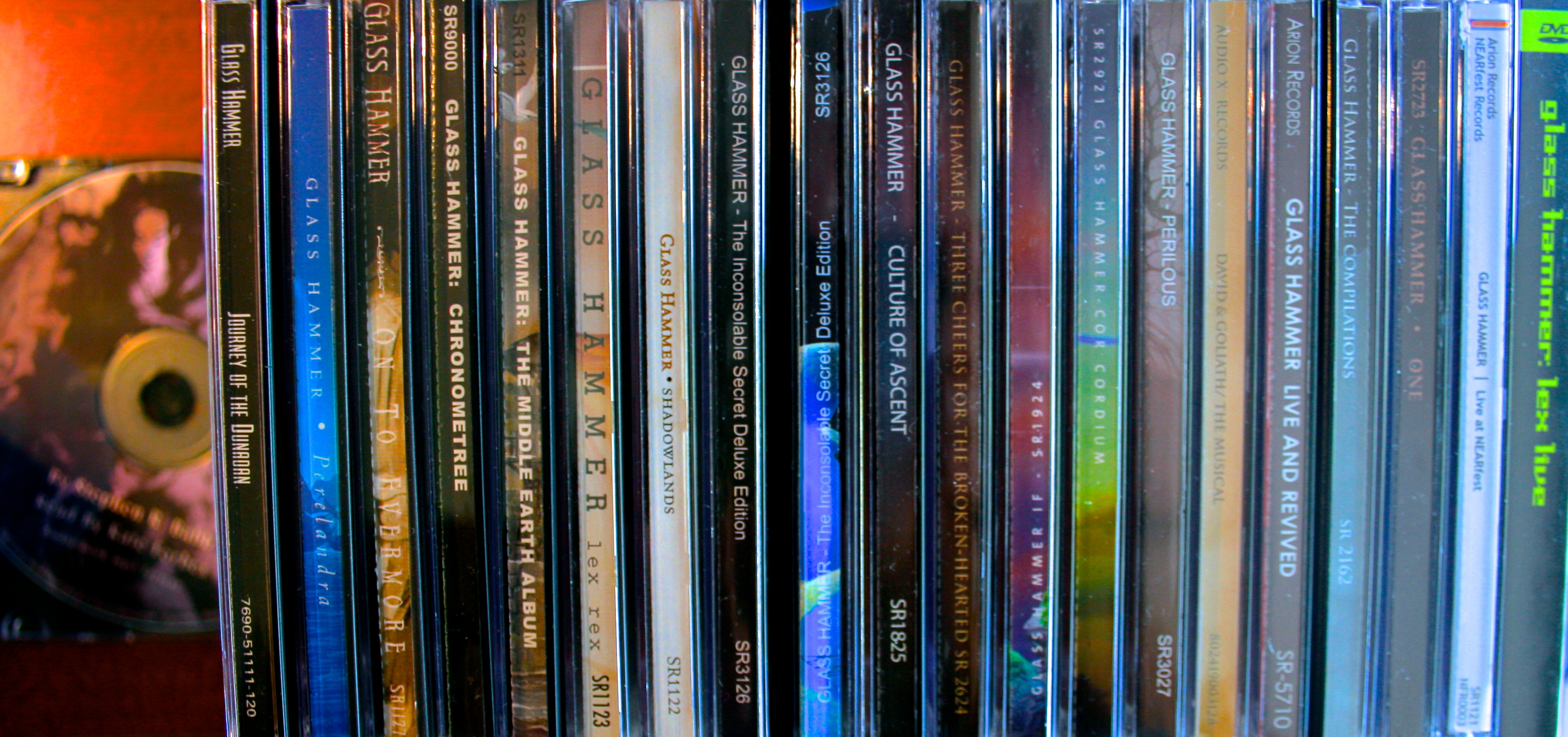
Feel free to call me a “Glass Hammer Junkie.” Steve and Fred might not approve, but it is the truth. Ever since my great friend, Amy Sturgis, introduced me to their music, days or so before LEX REX appeared in 2002, I’ve been hooked. As you can see by the accompanying photograph, I’m pretty much a completist as well. After all, why like anything halfway? Besides, Glass Hammer isn’t a “half-way” kind of love. You either love them completely, or you don’t know them.
Some reviewers have–in an almost obligatory way–compared their music to that produced during the first decade of Yes. As Babb has joked, GH admires Jon Anderson and Yes deeply, but he’s merely acknowledging the debt in his own music, not mimicking it. And, frankly, from my perspective, GH has much more of a “Leftoverature” feel than a Yes one. Regardless, Babb and Schendel are artists, pure and simple, indebted and original all at once.
There is so much I could write about GH, a book really. But, for now, let me state that there will be more much about GH at progarchy, as well as an extensive analysis and history of the band over at Carl Olson’s brilliant, Catholic World Report. Additionally, we’ll have a long interview with GH co-founder, Steve Babb.
As many of you know, I’m not a huge fan of labels, as they tend to narrow the beauty of a thing. If you forced me to label Glass Hammer’s music, though, I’d probably claim it as “Ransom Prog,” the kind of music Elwin Ransom would’ve written while on Malacandra. For one (or three, really) of the things to love about GH is the “voice” of the band. And, I don’t mean the vocalists. There are lots of vocalists for GH, and there have been since the band’s beginning, the release of their first cd back in 1993, twenty years ago. There quite good. I’m especially fond of Susie Bogdanowicz. Phew, can she sing or what? Her rendition of Yes’s “South Side of the Sky” is simply breathtaking. The vocal equivalent would be Dawn Upshaw singing Gorecki’s Third Symphony. Yes, Bogdanowicz is THAT good.
The real voice of the band, however, can be found in three very different things. Second and third, the distinctiveness of the bass and keyboards, a profound mixture of the punctuated, the soaring, and the lush. But, first and foremost, are the lyrics. Glass Hammer contains some of the best lyrics in rock history. No exaggeration. Last year, just as 2012 was winding down, I was utterly blown away by Perilous. I even held up my “best of” because of the album. It went from not being on my radar in October to being one of the top releases of the year by early December. The music is, certainly, excellent. But, the lyrics are top notch–meaningful, imagist, and philosophical.
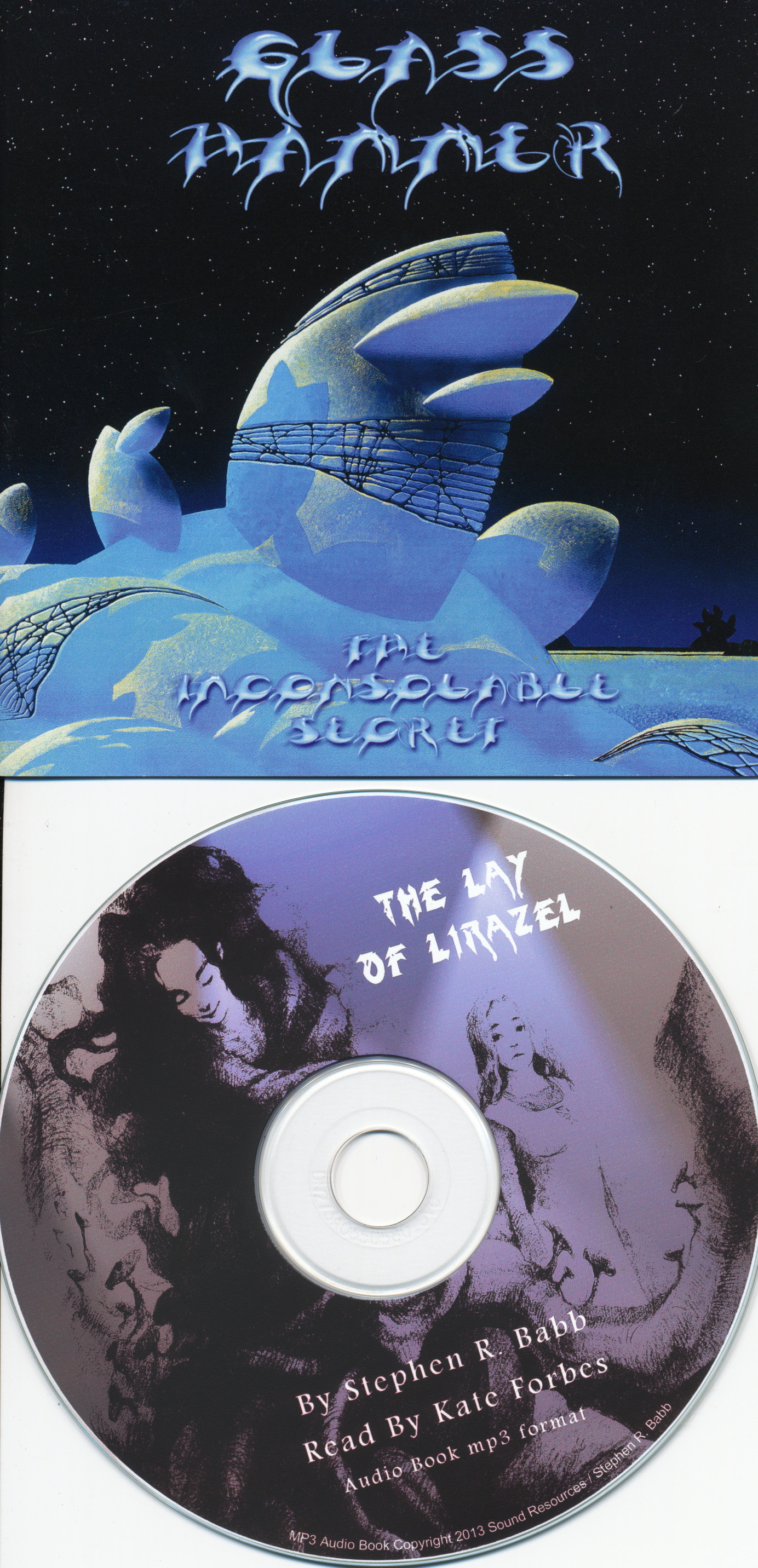 I think the lack of recognition of excellent lyric writing is one of the great faults in reviewing and assessing this third wave of prog (as our own Brian Watson labels it). After all, look at the lyrics of Spawton, Longdon, and Tillison, the lyrics of the Tin Spirits, of Gazpacho, or Ayreon (the plot of Ayreon is also mind boggling–but this is for another post), and others. The lyrics for GH are at this top. They are as good as the music, and the two–lyrics and music–serve one another. The lyrics are at once mythic and deeply moving. Here’s just one example from Inconsolable Secret:
This is where we draw the line
And here is where we make our stand
You’ll gather all our forces here for
Here we stand on hallowed ground
And here the foe will surely fall
We’ll send his army scattering for
This is where we draw the line
And here is where we make our stand
Now sound the trumpets, form the battle line
Hold the line
Babb’s lyrics reflect those of the Beowulf poet as well as the poet of the Battle of Maldon. Certainly, Babb is drawing upon these medieval sources, and, probably, a bit of Chesterton’ s Everlasting Man.
There’s a really nice review of the rereleased and remixed version of Glass Hammer’s masterful, Inconsolable Secret, over at http://www.progrocket.com. Sadly, I can’t figure out who the author is, or I’d give her or him explicit credit.
One of the quintessential modern-day symphonic progressive rock bands, Glass Hammer recently re-released their 2005 album The Inconsolable Secret. The new “deluxe edition” contains all the original material from the two-disc album, as well as a third disc featuring remixes of several of the songs, two with new vocal tracks from present lead singer Jon Davison, who is currently the lead singer for Yes. Glass Hammer is led by multi-instrumentalists Steve Babb and Fred Schendel.–Progrocket.
To keep reading this excellent review, click here.
For Glass Hammer’s official website, click here.
Pure Pop for Prog People
Sometimes you have to put aside the extended epics and experience the simple pleasure of a nicely crafted pop song. With that in mind, here’s a playlist of recently released pop-like songs that prog-lovers can enjoy without guilt:
1. Sound Of Contact: “Not Coming Down”. Coming from their extraordinary album, Dimensionaut, this catchy tune has all the right ingredients: wall-of-sound production, rich vocal harmonies, an eminently hummable chorus, and they even sneak in a Beatlesque bridge. Take a listen, if you don’t believe me:
2. Days Between Stations: “The Man Who Died Two Times”. I’ve written about the wonderful album this track appears on in a previous post, and it features a delightful cameo by XTC’s Colin Moulding. It has an irresistible beat married to an insistent synthesizer riff, with Moulding’s multitracked, wry vocals floating over the controlled chaos. Think classic Alan Parsons Project mashed with 10CC, and you get a glimmer of the genius of this song. Go ahead and spend a buck for the mp3 of it here. You won’t be disappointed.
3. Sanguine Hum: “The Weight of The World”. Okay, this one is almost 15 minutes long, which qualifies it as a genuine epic, but it is so effortlessly melodic and uplifting I have to include it. I’ve always thought Sanguine Hum’s secret influence was Jellyfish, and it’s hard to deny that here. If Jellyfish and “One Size Fits All”- era Mothers of Invention had a child, it would be this track. It lilts, it waltzes, it almost skitters out of control, but it never loses its pop appeal. The first 37 seconds of their promo for the album are taken from this near-perfect song:
4. Big Big Train: “Uncle Jack”. I defy anyone to listen to this song and not end up grinning ear to ear. A jaunty tempo provides a fertile bed for lush vocals that sing the joy of taking a walk outdoors. And when the counter-melody hits at 2:40, you’re transported to paradise. Listen below (but buy the whole album, English Electric Part One):
5. Arjen Lucassen: “E-Police”. It can’t be an accident that Lucassen’s “E-Police” recalls the glories of late-70s Cheap Trick (“Dream Police”?). A big helping of glam rock that will leave you hitting Repeat on your player.
6. Gazpacho: “Mary Celeste”. A Norwegian band does Celtic music, and creates a pop masterpiece. A delicate intro on mandolin and piano blossoms into a full-blown production that includes accordion, guitars, violin, and masterful vocals. It doesn’t hurt that the melody compels you to get up and move.
So there you have it – a playlist that you can use to seduce your friends who are woefully ignorant of prog into the beauty of that genre, or one that you can use yourself when the occasion calls for some sing-at-the-top-of-your-lungs music. Enjoy.
Ticking and Tocking Through a Back Catalog: Gazpacho’s ‘Tick Tock’
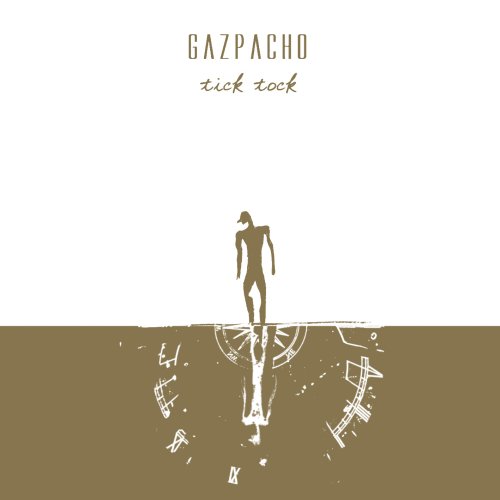 One of the great things about getting to know some of the other contributors to this site is the discovery of bands that were previously missed. One such band that I had missed out on was Gazpacho, of whom I did not learn of until 2011. At that time, I took mental notes that I would check them out one day. After reading this fantastic review of their 2007 album ‘Night’, I knew it was time. Literally within minutes of finishing my reading of that review, I had purchased the album and was giving it a first of many listens. I was not disappointed, and will definitely vouch for all the good things written about ‘Night’. It is truly is one incredible album.
After such an excellent and absorbing introduction to Gazpacho, I knew I would have to explore some of their other works. I read a few reviews and asked around a little bit, and finally settled on the follow-up to ‘Night’, ‘Tick Tock’ from 2009, as my next foray into the world of Gazpacho. I knew this album would be a big challenge for the band, as is any follow-up to such a masterpiece. And once a again, I can say I was not disappointed. In fact, I can and will say a whole lot more, as ‘Tick Tock’ is an incredibly brilliant work in its own right and most certainly belongs on the shelf right next to ‘Night’, not just for being from the same band, but for being an album of the same level of artistry. In other words, ‘Tick Tock’ is an absolutely fantastic album, and could end up being the tipping point that turns me into a Gazpacho junkie.
A short summary of Gazpacho’s music is in order (at least as I know it from the two albums I have heard thus far). Unlike a lot of progressive rock, and certainly unlike most 70’s prog, you won’t hear a lot of instrumental fireworks in their music. If you are looking for self-indulgent soloing, Gazpacho is not your band. On the other hand, much like one particularly popular 70’s prog band – Pink Floyd – Gazpacho’s music give the listener a lot of room for contemplation (this is not to say they sound like Pink Floyd – they most certainly do not). ‘Spacious’ is one adjective I would use to describe their music. Two other adjectives I would use are ‘subtle’ and ‘meticulous’. Because Gazpacho relies on subtlety instead of flashy instrumentals pushed to the forefront of the mix, their music often requires more work from the listener to fully ‘get’ it. Ah, but what rewarding work it is! Repeated listens with undivided attention reveals the meticulous attention to detail in their arrangements.
One final adjective I would use to describe Gazpacho music is synergistic – the whole is much, much greater than the sum of its individual parts.
Getting back to the subject of this review, ‘Tick Tock’ is a concept album based on the story of the airplane crash of Antoine de Saint-Exupéry and his navigator during a Paris-to-Saigon air race, and their subsequent walk through the desert. The walk nearly ended in tragedy, but both were saved by Bedouins in the nick of time. The album is divided into four separate compositions (in order), ‘Desert Flight’, ‘The Walk’, ‘Tick Tock’ and ‘Winter is Never’. The middle two compositions are relatively lengthy, with the first being divided into two tracks, the second being divided into three.
Taking into account my basic summary of Gazpacho music above, ‘Desert Flight’ goes and makes a liar out of me. It begins as a straight ahead rocker. Musically and lyrically, it conveys an adventurous spirit:
We can be the first
Tie a ribbon all ‘round the world
We’ll make it a gift to us
From the start with a wind-flapped officer’s scarf
Like a ghost in the wind
Eventually, the mood of the music shifts a bit to give the listener a sense of trouble. Toward the end of the song, the pace picks up again in the same manner the ground would appear to move by faster as the airplane loses altitude. And suddenly, the pace grinds to a halt, with the mood of the violin and piano letting us know that we are now on the ground – but alive nonetheless.
The trek across the Sahara then starts in earnest with ‘The Walk’. Our heroes are lost, but nonetheless confident that they will get out of their predicament relatively unscathed. Musically, the acoustic guitar and drums dominate, with other instruments making brief appearances before stepping back into the shadows (a classic example of the meticulous arranging I discussed above). Midway through Part I, the violin steps to the forefront with a Middle Eastern motif, with the other instruments carrying this motif through the end of Part I. As the music segues into Part II of ‘The Walk’ we can feel the doubts creeping into the minds of our heroes, and maybe a little loss of coherency of their thought processes. We’ve now transitioned from adventure mode to survival mode. 
Part I of the title track begins with the percussion indicating the ticking of a clock, and this ticking carries on throughout the entirety of the piece. The lyrics in Part I of ‘Tick Tock’ begin to really bring home the predicament our heroes are in as they trek through the sands of the Sahara:
You beg for time
She’s china white
There’s no cure
Nowhere to hide
A Gregorian-sounding chant appears near the end of Part I, and the mood becomes even darker as Part II begins. The sheer drudgery of walking through the hot desert is conveyed through the music, while the lyrics have one of our heroes (probably the pilot) beginning to question his own life. In Part III, the trek is taking its toll on our pilot and our navigator, as they apparently begin hallucinating as their survival hangs by a thread:
And what do you think they’ll do?
The ground is a pendulum
The continent is gravel
Humming in your shoe
A pendulum.
The final track is ‘Winter is Never’, which occurs chronologically after the rescue in the desert. It is a reflective track, appreciative of the present and hopeful for the future in light of the recent past in the desert. It’s a fitting conclusion for a fantastic album.
Like its predecessor ‘Night’, ‘Tick Tock’ is a must-own masterpiece. I won’t go so far as to say this album is better than ‘Night’, but in this reviewer’s opinion, it is every bit as good. The number of bands out there that can put out an album of the artistry of ‘Night’ and ‘Tick Tock’ is small; the number of bands that can do it on two consecutive albums is even smaller. Everything about the music of ‘Tick Tock’ is utterly flawless, as is the delivery of the lyrics by Jan Henrik Ohme. It’s the kind of album you want to listen to eyes shut through headphones as you get lost and absorbed into it.
If you had previously missed out on Gazpacho, as did I, now is the time to go back and explore some of their back catalog. Start with either one of ‘Tick Tock’ or ‘Night’. Drink it in fully, and then move on to the other one. You will quickly find that what they have done as a band is to create a sound like no other. While you may hear an influence here or there, those influences have been amalgamated into something completely unique. Like the best progressive rock bands, they have pushed the boundaries back to create something new. As ‘Tick Tock’ indicates,, along with its predecessor, these guys need to be in any conversation regarding the best progressive rock bands, not only for the present revival, but for the entire history of the genre.
Now, onward to ‘Missa Atropos’!
Gazpacho news
 Gazpacho, one of my all-time favorite bands, posted this (below) today at FACEBOOK. I assume they won’t mind me reposting it here at Progarchy–Brad, ed.
*****
Hi there and greeting from us lazybones. It has been a special year with happy and sad events as life thunders on. We can definitely confirm that we havent been.
However, being who we are, it has been very difficult to suspend the need to make more of our particular brand of music. Last album Mog was written in a frenzied weekend session where most of the original demos were kept and polished over the year it took to make the final album.
This time we set our standards much higher and as the months have gone by we have written about an hours worth of music which will be whittled down and added to over the year. We have committed to a concept album in the true meaning of the word and where our last four albums have been intended as films without pictures the new one feels a lot more like a novel. A novel written by a confused and crazy man but still a novel!
The ideas we are toying with are based around the concept of evil and its different shapes and incarnations. The malevolent force that mankind has dressed up as the will of God or the misdeeds of demons depending on the circumstance. Is it possible to catch the feel and the impact of this in music? Well we think so, and the demos are dark but strangely engaging.
Its still early days and as soon as we have a release date we’ll keep you posted.
Wish us luck!
Love
Gazpacho
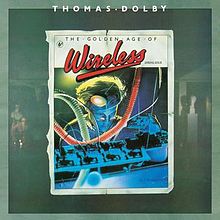
Thomas Dolby’s Golden Age
In the late spring of 1982, as I completed 8th grade, I met one of those kids who is always at the height of cool. But, it was a calm, somewhat cynical, real cool, not the show-off cool of the wealthy socialite kids. It was the Bohemian cool of the Beatnik not contrived cool of the Hippie or the Yuppie.
Ritchie.
 Only a few of us belonged to his circle.
Except for moments of ecstatic outbursts about an idea here or there, he radiated coolness. He read the Great Books and knew lots of poetry, he worked out in his room (he had the whole upstairs of a late 19th century house to himself) and studied Japanese martial arts, he knew everything about men such as Bill Buckley and Jack Kerouac, he owned the best stereo system of anyone our age, and he possessed an amazing record collection. He was the youngest of a large family, and his parents were much older, pretty much leaving Ritchie to raise himself.
It was Ritchie who introduced so many of us–in a medium-sized town in the wheat belt of the Great Plains–to English New Wave. Growing up a progger–addicted from an early age to Yes, Genesis, and Kansas–New Wave was a bit eye opening for me. It seemed to hold much of the complexity of prog, but it did so with computers and keyboards, often one or two musicians, where prog might have included eight or nine. Ritchie introduced me to ABC, Kate Bush, The Smiths, Oingo Boingo, Tears For Fears, and, most importantly for me, Thomas Dolby.
Not only was I a prog guy, but I was also very much a sci-fi and computer guy. All of this appealed to me. Continue reading “Thomas Dolby’s Golden Age”
Kevin McCormick’s Squall (1999)
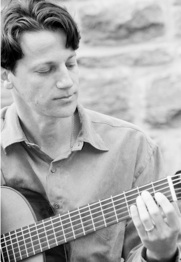 Kevin McCormick, Squall (1999). To my mind, this is some of the best rock music ever written—but tempered with very serious classical sensibilities and lacking the over-the-top bombast present in even some the best of 1970s progressive rock.
If one had to label his music, it would most likely be a post-prog, post-rock, or, simply put post-Talk Talk. In the current realm of music, one might think of a mixture of Matt Stevens, Gazpacho, and Nosound.
McCormick incorporates his profound poetry as lyrics. Each word—and the way Kevin sings it—seems utterly filled with grace and conviction. This is part two of a rock/post-rock trilogy (he’s currently working on number three). And, it’s hard to listen to Squall without listening to its equally fine predecessor, With the Coming of Evening (1993). Kevin really has it all: a great voice, the ability to write poetry as lyrics, and the training of a classical guitarist.
Before I write any more, let me admit my bias. Kevin is one of my closest friends, and he has been since we first met in the fall of 1986 as freshman at the University of Notre Dame. We still talk and correspond frequently. Kevin is the godfather of my oldest son, and I of his second daughter.
We bonded immediately on matters of music back in 1986.
Kevin and his two brothers had a well-known Texas band in the mid 1980s, and Kevin formed the finest band at Notre Dame, St. Paul and the Martyrs, during our years there. Toward the end of our senior year, St. Paul and the Martyrs opened for the-then unknown progressive jam band, Phish.
During our years in college, Kevin and I traveled throughout the U.S. and England together (making sure to visit Trident studios as well as EMI (hoping to catch a glimpse of Mark Hollis) while journeying through the mother land of prog and New Wave), co-produced a “Dark Side of the Moon” charity show, complete with an angsty-movie backing a full performance of the album by the Marytrs, talked music and lyrics until late into the nights, and even co-hosted a prog rock radio show on Friday nights.
Not surprisingly, one of my greatest memories of Kevin in college was listening to the entirety of Talk Talk’s Spirit of Eden in 1988. We remained completely silent for a very long time after its completion, stunned by the immensity of its beauty.
Kevin is extremely talented in a number of ways. Not only is he the father of our beautiful daughters, but he has won national poetry as well as classical guitar composition awards. In addition to the two post-prog albums (With the Coming of Evening and Squall) already mentioned, Kevin has also released several albums of solo classical guitar as well as an album of Americana, all recorded on an 1840s Martin.
His music has been praised publicly by many (see, for example, his entry at Allmusic) and privately by such luminaries as Phill Brown and Greg Spawton.
As of this afternoon, Kevin has finished mixing a Christmas CD, recorded with his oldest daughter on vocals, to be released next Christmas season. And, as mentioned above, he is currently working on the completion of his post-rock trilogy.
Here’s Kevin’s music at CD Baby: http://www.cdbaby.com/Artist/KevinMcCormick
Here’s Kevin’s official site: http://www.kevin-mccormick.com/KM/index.html
I know we at Progarchy have offered lots and lots of suggestions for worthwhile purchases over the last three months. But, as we begin this near year, I can state unequivocally that it’s worth supporting Kevin, especially as he prepares to record his new post-prog album. I’ve only heard bits and pieces, but Kevin is a man of absolute integrity. He is, like so many of us who either play prog or simply listen to prog, a perfectionist. He also possesses one of the finest senses of beauty I’ve ever encountered in another. So, while 2013 will probably NOT be the year of Kevin McCormick in the prog world, 2014 almost certainly will be.
Certainly, Kevin’s album should be one of the most anticipated releases of the next two years. It’s worth beginning to anticipate today, January 1, 2013.
***
Some video links:
http://www.youtube.com/watch?v=umMMJ4B-D6k
The Best 15 Albums of 2012, The Greatest Year in Prog. Ever.
 by Brad Birzer, Progarchy editor
One of my greatest pleasures of 2012–and there have been many–has been listening to massive quantities of progressive rock, mostly for pleasure.
Being a literary and humanities guy, I’d contemplated rejecting the entire numerical ranking scheme. Rather, I thought about labeling each of my best albums with various qualities of myth. These albums achieved the level of Virgil; these of Dante; these of Tolkien, etc. But, I finally decided this was way too pretentious . . . even for me.
Below are my rankings for the year. Anyone who knows me will not be surprised by any of these choices. I’m not exactly subtle in what I like and dislike. Before listing them, though, I must state three things.
First, I loved all of these albums, or I wouldn’t be listing them here. That is, once you’ve made it to Valhalla or Olympus, why bother with too many distinctions. The differences between my appreciation of number 8 and number 2, for example, are marginal at best.
Second, I am intentionally leaving a couple of releases out of the rankings: releases from Echolyn, The Enid, Minstrel’s Ghost, Galahad, and Kompendium, in particular, as I simply did not have time to digest them. Though, from what I’ve heard, I like each very much.
Third, I think that 2012 has proven to be the single greatest year in prog history. DPRP’s Brian Watson has argued that we’re in the “third wave of prog.” He might very well be right. But, I don’t think we’ve ever surpassed the sheer quality of albums released this year. This is not to belittle anything that has come before. Quite the contrary. I am, after all, a historian by profession and training. The past is always prologue. Close to the Edge, Selling England by the Pound, and Spirit of Eden will always be the great markers of the past.
Ok, be quiet, Brad. On with the rankings.
Continue reading “The Best 15 Albums of 2012, The Greatest Year in Prog. Ever.”
Yet Another Best of 2012
10. Flying Colors – At first I thought this was more “pop” than “prog”, but I kept coming back to it throughout the year. It’s prog, and it’s very good!

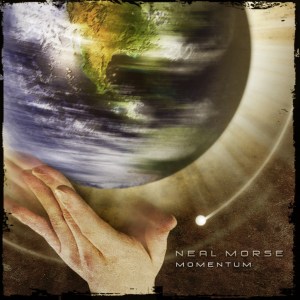
9. Neal Morse – Momentum. Neal stays true to his beliefs, while delivering the best album of his solo career. Full of energy and great melodies, he, Randy George, and Mike Portnoy create a masterpiece with this one.
8. Jeff Johnson & Phil Keaggy – WaterSky. A beautiful set of ambient pieces that were recorded while on retreat at a lodge in rural Texas. The sympathetic interplay between Johnson’s keyboards and Keaggy’s guitar is simply wonderful. My students request this music while working on math problems! Continue reading “Yet Another Best of 2012”
Norwegian Visions of Purgation: The Eddas of Gazpacho
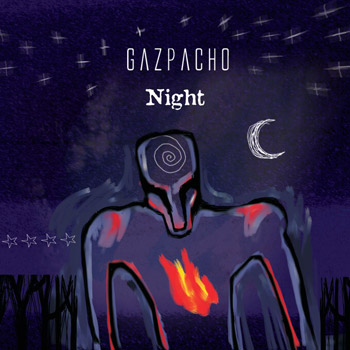 [Progarchists, I published a version of this about six months ago, but I’ve revised it significantly since then. I’m also very much desirous of celebrating the re-release and bettering of a must-own (YES, a MUST-OWN ALBUM) album, “Night.” I honestly didn’t think this album could get any better. And, just to be clear, I rank it somewhere in my top ten albums of all time.]
Little things that make up her life
Watching them pick winners with her standing by
She read a tired pamphlet by a fire-starting freak
Campbell’s ice cubes, the drinks are unique!
But everything is cool as long as you dare
To bend a few taboos, to sacrifice pawns
Pockets filling up with gold
From the shades of his soul
Lost in the panic that she typewrote
Of lightbulbs that burn out in rain
And he saw his wife to be in someone
But she couldn’t see and she never cared
How small is your life
Is it too small to notice?
–Gazpacho, “Valerie’s Friend” (2007)
Nearly six years ago, I finally listened to a band I’d avoided for over half of a decade. Having been a part of various prog newsgroups (the “National Midnight Star” was the greatest of these in the 1990s), news feeds, and websites for the entirety of my adult life, I’d come across the name of Gazpacho numerous times, and the mention was always in a positive context.
For reasons which now elude me, I kept putting off purchasing one of their cds. I even consider their original patrons, Marillion, one of my favorite bands, and I have for nearly two decades now.
Still, even the praise and promotion of Gazpacho by Marillion didn’t convince me. From my poor memory, I was a bit turned off by the name, and I’d assumed they were merely a Marillion cover band and tribute band. “Gazpacho” is the name of one of Marillion’s songs from their album, “Afraid of Sunlight” (1995).
Then, almost half a decade ago, a friend I trust explicitly told me I had (yes, HAD) to listen to the latest album, “Night,” a single 53-minute song broken into five parts. It’s as much a suite as it is a song.
Well, I’m certainly a huge fan of concept albums and albums without any breaks in the music. To me, if something is worth saying, it generally takes much longer than the traditional 3-minute pop song allows. As I posted here recently, the only real flaw in The Cure’s 1989 “Disintegration” is the few seconds of silence between songs.
But, 53 minutes?
Was this too good to be true? Seemingly so. This would be akin to complaining to Costco that their 56lbs. (yes, I exaggerate. I think it’s 5 lbs., 6 ounces–but it’s huge and glorious!) of M&Ms for $8 isn’t enough.
Asking for more would just be sheer decadence and would probably require a quick jog down to the confessional at church.
With the prompting of my friend and my eagerness to hear a 53-minute song, I purchased “Night.” To say this changed my life would be too much. To say it reshaped my taste in music and set my listening standards to a new level would not be an exaggeration in the least. I was just on the verge of discovering Big Big Train at the moment I first listened to “Night,” and I think Gazpacho raised my understanding of what’s possible in music to a very high height.
“Night” is, to my thinking, a proper successor to Talk Talk’s “Spirit of Eden.” Musically, there are certainly similarities, and I’d be rather shocked to learn that the shadow of Mark Hollis, Tim-Friese-Greene, and Phill Brown did not over over the work of Gazpacho. Indeed, Talk Talk seems much more of a direct influence than does Marillion despite the name of the band.
“Night” has been in constant listening rotation now for as long as I’ve owned it, and I’ve never once gotten tired of it or felt I’d actually reached and understood it in all of its depth and breadth. As I’m listening to it now, writing this review, it’s almost as fresh to me as it was on the first listen or whatever number of listens yesterday’s was.
[I’m revising this article (November 21, 2012), which I first wrote about six months ago. As I’m revising, I’m listening to it yet again–it’s just stunning. So stunning, in fact, that heart is actually skipping a few beats. No, unlike with the 56 lbs. bag of M&Ms mentioned above, I’m not exaggerating.]
“Night,” for me, ranks up with the greatest post-classical albums of all time. Indeed, it’s in a league with “Close to the Edge,” “Selling England by the Pound,” “Grace Under Pressure,” “Hounds of Love,” “Ocean Rain,” “Skylarking,” “Spirit of Eden,” “Disintegration,” “Brave,” and “The Underfall Yard.”
From the first listen of “Night,” I was hooked. The piano, the violin, the voice, the bass, the drums, the guitar–everything just fits, and it does so beautifully. It also does so as an organic whole, one note and one idea leading mysteriously, yet perfectly, to the next.
I knew fully well upon the first few moments of listening to “Night” that I would have to become a Gazpacho completist. My prediction has come true, and I rather proudly own their seven studio cds and two live ones.
Rare for me, I even purchased the new re-release of “Night” from Kscope, despite already owning the original. The new version comes with new artwork and typically beautiful Kscope packaging, but it also has new drums, a few new parts, and three of the five parts of “Night” recorded life.
And, did I mention the lyrics? These guys know how to write, and they know how to integrate the lyrics with the music and the music with the lyrics into something profoundly and seamlessly whole and good.
Despite its brilliant intensity, the album seems to come to a fitting denouement at around forty minutes into it, when Jan-Henrik Ohme sings one of the best and most haunting lines in all of rock music: “St. John got gunned down with a cold 38.” My mind reels every time I hear this. Am I in Norway, on the island of Patmos, or in some twilight realm of progressive/art rock bliss?
And, so, I’ve concluded, listening to a Gazpacho album is akin to every poetic description of purgatory I’ve ever encountered. It’s not the perfection of heaven, but it’s also not the twilight and long defeat of this earth, or, in any way, the pains of hell.
A Gazpacho album is purgatory in the best sense: a journey toward perfection, offering brief glimpses of the most beautiful things possible, reaching for that which the Platonic Celestial King reached: the Good, the True, and the Beautiful.
For those of you have had the blessing of reading Dante’s Divine Comedy, you know exactly what I mean. No scene in literature touches me as much as Dante realizing he has escaped the Inferno and found himself staring at the stars of Purgatory. Listening to this album is akin to this.
The touch of its hand is memory
A kiss to lead the blind
In water I hear slamming of doors
St.Christopher beneath the rocks
An empty dream of summer fields of daisies
Perfect endings
–Gazpacho, “River” (2010)
Gazpacho-esque Eddas
Despite the name, Gazpacho hails from the glorious northern Kingdom of Norway, home of many, many good and meaningful things, including one of the finest writers to ever grace this earth, Sigrid Undset, and one of the kings who actually gives monarchy a fine name, the courageous Haakon VII.
Oh, and let’s not forget, some of the best stories (the Sagas and myths) ever written come from this land as well.
Sadly, I’ve only visited once, and that was way back in 1988. Still, the memories of the intense and stark beauty of the Norwegian landscape inspire me to this day, and I happily keep a map of Scandinavia (dated 1815) framed above my desk as a reminder of what wonders can exist in creation. Could I travel anywhere in the world at the moment, my first choice would be Norway and Sweden.
Interestingly, though we always associate the word with the Scandinavian mythic tradition, “Edda” is one of the most debated words in the history of Europe. No one is exactly sure of its etymology, but it’s generally agreed that it means “a soulful utterance” and is applied almost exclusively to northern myth. Whatever its history, it’s a stunning word, and the peoples of northern Europe (as the great English author and scholar, J.R.R. Tolkien, knew well) should be proud of it as an immense part of their cultural traditions.
Indeed, northern mythology is every bit as interesting, as complicated, and as developed as classical Mediterranean mythology. There are, understandably, similarities between the two polytheistic systems, but there’s a nobility and a will found in northern myth that is missing in the much more rationalistic and abstract realm of classical myth.
Whether the members of Gazpacho have intentionally embraced this northern Eddic tradition or not, it certainly seems to be in their very blood.
Formed in 1996 by Jon-Arne Vilbo, Thomas Anderson, and Jan-Henrick Ohme, Gazpacho has now released seven studio albums (recently adopted by Kscope Records) and two live releases. The seven studio: Bravo (2003); When Earth Lets Go (2004); Firebird (2005); Night (2007); Tick Tock (2009); Miss Antropos (2010); and March of Ghosts (2012). Each release is a delight, and while I find myself drawn back to “Night” more than the others, this is no small praise, and I find myself liking everything these men have produced.
Broken glass
The plan has failed
The silence knows
A man of faith
Everything that he knows, what a layman will do for diamonds
Fell on his knees gave in to sad overload
And all of the survivors shamed in the trench
Scrape up what’s left of his soul
Of his soul, of his soul
–Gazpacho, “Tick Tock” (2009)
Daughter of Night or of Zeus: Either way, mischief.
While the albums prior to “Night” are certainly artful and progressive, they are not part of a greater concept.
After “Night”, though, Gazpacho has produced three concept albums, each as progressive as progressive can possibly get. “Tick Tock” (2009) follows the story of a downed French pilot, trying to make it safety back to civilization in 1935. A number of separate stories comprise Gazpacho’s latest album, this year’s “March of Ghosts.” In a sense, at least thematically, this album best represents the very purgatorial idea of Gazpacho, literally following the souls of a variety of those who have passed from this existence.
Rather humorously (yes, I laughed for probably ten minutes solid), the lead singer describes his own theological beliefs on his Facebook page as “Frisbeetarianism”–the belief first proposed by comedian George Carlin that at death, the soul “goes upon a roof and gets stuck.” Admittedly, I’m a Roman Catholic. A pretty bad one, frankly. But, I love the idea of Frisbeetarianism.
With “March of Ghosts,” however, the restlessness of souls pervades the album. I live across the street from a very large nineteenth-century graveyard, and, in ways I could never describe, “March of Ghosts” fits perfectly with the sense one gets walking around the cemetery at any time of the day or night. There are haunted and restless feelings present, but there’s also a calm that really can be found no where else but in a cemetery and, maybe, on a Gazpacho album.
As much as I love the driving qualities of “Tick Tock” and the pervasive certain uncertainties of “March of Ghosts,” I find their 2010 album, “Missa Atropos” the most interesting and most daring of their post-“Night’ concept albums.
The story of Gazpacho’s “Missa Atropos” is exactly what the title states: a Mass written for one of the three Fates. Little recorded remains of her. A quick glance at Hesiod’s Theogony reveals only a conflicting story. In the same work, Hesiod claims that she is one of the seven children of Zeus and Themis, the god’s second wife (Lines 901-906), as well as the offspring (alone; no father) of the horrific Night (Lines 217-219). In each version, however, Hesiod recorded that the Fates determined what good and what evil should be given to every man.
The protagonist of Gazpacho’s story, however, struggles to accomplish the writing and completion of a Mass. To write it, he disappears into the solitude of a light house. The conflicting ironies in Gazpacho’s story are simply brilliant. A “Mass” is meant to be a communal celebration, and a lighthouse is meant to aid those who cannot see clearly. Here, a man turns away from the world in a project to connect this world to the next, thus bridging the horizon with the heavens. By residing in a light house, he also guides the desperate to a safe haven, a port, thus bridging chaos and order. But, he also writes a Mass to appease the Fate–who, by definition, should be unappeasable–and thus bridges determinism with free will.
Struck down in the middle of
a little life
Star spangled by the wayside
As the trains roll by
Mercy, what can you do?
Try to be a saint?
Leaving cannot heal you
First try it with a kiss.
–Gazpacho, “Black Lily” (2012)
Summa Gazpacho-ia
If you’ve had the opportunity to listen to the beauty that is Gazpacho’s music, none of the above matters much–you already know exactly what I’m trying to write, and probably in a better fashion that I can communicate.
If you’ve not had the opportunity to listen to Gazpacho’s music, well, I’m incredibly jealous. I’d give a lot to be able to listen to them again for the first time–it would be an experience akin to reading Eliot’s “Four Quartets” or Tolkien’s Lord of the Rings for the first time, again.
Those first times are intensely precious.
Yet, as with Eliot and Tolkien, each new listen of Gazpacho reveals even more depth and more width and more breadth. As with Eliot and Tolkien, I’m sure I’ve not comprehended it all yet, not matter how many times I’ve heard or read.
I’ve yet to hear a note or a lyric by Gazpacho that is out of place. While everything they do is unpredictable, it’s never chaos; it’s always justice and harmony–but arrived at through the most artful of ways.
So, yes, Gazpacho’s music is brilliant, stunning, shattering, and healing. It is, truly, in the most Dante-esque sense, purgatorial, a purging of our imperfections through fire, and a reaching, searching journey toward all that is perfect.
After Summa
Please take my advice. This is a MUST OWN (yes, I’m shouting at you!) album. In the U.S., Amazon.com has it for $4.95! What in the world? Well, take advantage of it. I can’t be held responsible for what happens after. If you have any love of music–and how would you have made it through nearly 2,500 words if you didn’t???–you will end up purchasing all of Gazpacho’s releases. Along with Big Big Train Matt Stevens, and The Reasoning, these are the absolute leaders of the new movement and embracing of progressive rock.
The official Gazpacho website is here.
 Progarchy