Tom Woods and Progressive Rock: A 30-minute Chat

Tom Woods is one of the foremost political philosophers and commentators.  He's also a proud progger.
Tom Woods is one of the foremost political philosophers and commentators in the United States today. He’s also a proud progger.

I had the great privilege of speaking with one of America’s foremost political commentators yesterday, Tom Woods, about progressive rock.  It turns out that Tom is a huge progger.  I shouldn’t be surprised.  I think we’re both the younger brothers of Neil Peart.  We really had a field day talking about CLOSE TO THE EDGE, SELLING ENGLAND BY THE POUND, THICK AS A BRICK, PASSION PLAY, IN ABSENTIA, and THE FINAL CUT.

We talked “third wave prog,” too.

Tom was especially interested in the founding and purpose of progarchy.  And, for what it’s worth, Tom is as smart and insightful as he is kind.  A true gentleman.  Here’s a link to our show yesterday.  Enjoy.

“The Episode of the Year”: Woods and Birzer talk prog.

Also, in September, Tom talked with Jethro Tull’s Ian Anderson.  Also worth checking out.

Here’s the link to Tom’s website: http://www.schiffradio.com/f/Tom-Woods

The Humility of the Duke

Every once in a while, an album from my past jumps out at me.  How much thought, perspective, and perception went into it, I wonder?  What did these folks think as they were making it?   Did they think of it as a job?  Did they think of some abstraction such as Art, Beauty, Truth, Goodness, hoping against hope for the approval of the gods?  Did they make it to satisfy themselves or their friends or their families or their producers or their record label or their fans or some combination of all of these things?

Did they know it would still be touching the lives of others thirty-four years later?

Thank you so much, Phil, Tony, and Mike.  Whatever your intentions, Duke still speaks to me.  In volumes.  Yours, Brad

It is written in the book.

duke modern

The Best Prog Bands You’ve Never Heard Of (Part Five): Babylon

babylon

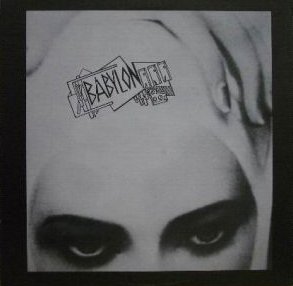
Following a busy (and triumphant) end to another college semester, I have finally returned to help bring to light those bands which would have been lost to history if not for the wondrous powers of the Internet.  There are many groups left to cover, and this Christmas week I would like to call your attention to a band called Babylon.  This Florida based quintet released one eponymous album in 1978.  It was an excellent effort, but due to lack of sales the group disbanded shortly after the album’s release.  Nevertheless it is an album worth listening to.  Babylon has been compared to Genesis, but they are more than mere copycats.  Like Genesis, Babylon found its niche in the symphonic school of prog; their sound is primarily driven by keyboards and a guitar synthesizer (no flute is present, however).  The lead singer could best be described as a blend of Peter Gabriel and Peter Hammill; his vocals are rather distinct and dramatic.  Guitarist J. David Boyko was no doubt inspired by Steve Hackett’s unique sound, and he does some fine work on the album.  The individual members are comparable in sound (and nearly in skill) to the members of Genesis, but some of the lyrics are darker.  And now to the songs:

The Mote in God’s Eye: keyboard driven piece; (somewhat) humorous lyrics sung with dramatic vocals provides an interesting contrast

Before the Fall: solid bass performance (louder than Rutherford usually played); Hackett-like guitar synth

Dreamfish: excellent keyboard intro reminiscent of some of Banks’s finest work; Hammill-like vocals; solid drumming and bass provides great rhythm section

Cathedral of the Mary Ruin: vocals sound like Fish and Gabriel; another fine keyboard and guitar synthesizer driven song

All four songs are over seven minutes in length and each is of the utmost quality.  It’s unfortunate this group never released another album, but thanks to Youtube and iTunes, you can enjoy the small masterpiece they did produce.

Have a Merry Christmas and Happy New Year!

Here is Dreamfish:

The Mighty Phil

Don’t miss the fascinating argument over at The Guardian: “Is Phil Collins the godfather of popular culture?

From Joy Division and Brian Eno to the Cadbury’s gorilla, the former Genesis drummer’s vast influence far outweighs the derision he frequently attracts

And Then There Was One…

I’ve heard a lot of great Genesis covers, but this single-handed version of “Supper’s Ready” has got to take the prize.

It is yet more evidence that Canada is a prog paradise… O, Canada! Land of Rush.

Okay, maybe I should have called this post, “And Then There Were Two,” because although it is a one man band doing all the instruments,  the vocals are done by a second dude.

But I wanted to emphasize the insanely great instrumental skills on display in this video…

A Perfect Introduction to Prog: 2003. Or, was it 2002?

fk fpWell, not quite perfect, but I probably got your attention.  I’m becoming a marketer!  Dear Lord.  Help us all.

For much of my life, friends have asked me to explain progressive rock to them.  A decade ago (Or so.  It might have been more than a decade ago–probably sometime around 2002, now that I think about it), I decided to start burning CDs as a way of introducing the genre.  This morning, as I was cleaning an area that should’ve been cleaned a while ago, I came across a copy of the CD.

For whatever reason, I entitled it “Regressive Rock, Part I.”  I must’ve thought that was pretty funny at the time, though I don’t remember exactly why.  I assume that I didn’t want my friends thinking that “progressive” had something to do with crazy right-wing nationalists (such as Teddy Roosevelt and Woodrow Wilson from a century ago; or President Bush of 2002).  In the United States, “progressive” often recalls horrifically embarrassing memories of slaughtering Indians, interning Japanese Americans, and treating African-Americans inhumanely.

Well, regardless.

As I was making Sunday brunch, I popped the CD in and found myself quite happy with the selections.  Here they are.  Let me know what you think.


***

1.  Flower Kings, “Deaf, Numb, and Blind”

Here’s my own appreciation of this song: https://progarchy.com/2012/11/17/mini-review-deaf-numb-and-blind/

2.   Genesis, “Squonk”

3.  Rush, “Natural Science”

4.  Pat Methany, “The Roots of Coincidence”

5.  Pink Floyd, “Echoes”

6.  Spock’s Beard, “At the End of the Day”

The Battle of Epping Forest: Story of the Song

One of the things I love about prog is that there’s very often an interesting story lurking behind a song.

Classic Genesis track The Battle Of Epping Forest is no exception to this, and I would imagine most Genesis fans have some idea of its origins, but Rob Webb has delved a little deeper to uncover more of the history.

Well worth a read.

The Best Prog Bands You’ve Never Heard Of (Part One)

Cathedral

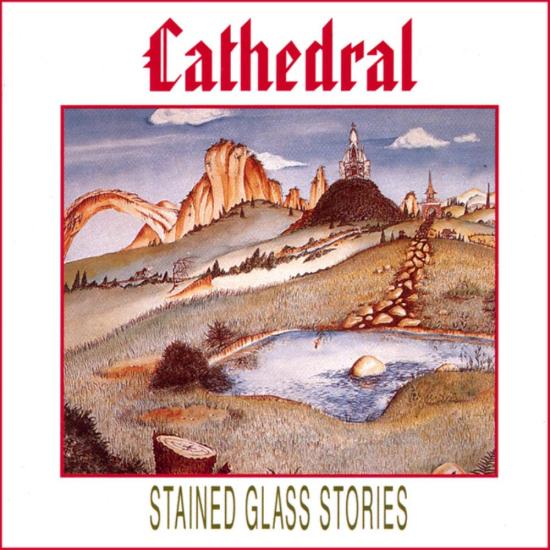
Hello Progarchy! As a new member, I’d like to start off with a series that focuses on underappreciated prog rock groups, and Cathedral will be the first. In 1978, this quintet released one of the better American prog albums, Stained Glass Stories, which took elements of Yes, Genesis, and Gentle Giant, and combined them into one beautiful symphony.  The album consists of five songs, two of which (Introspect and The Search) are wonderful epic pieces reminiscent of some of Yes’s finest music.  Gong is a shorter instrumental piece that hearkens back to Peter Gabriel-era Genesis.  The other two songs (The Crossing and Days & Changes) also have a captivating symphonic sound that will remind listeners of Relayer-era Yes or King Crimson’s In the Court of the Crimson King.

Overall, Cathedral did a superb job creating symphonic music inspired by their more popular British contemporaries while also maintaining their own distinct sound. The musicianship is top notch (listen to the crisp sound of Fred Callan’s Rickenbacker bass and Rudy Perrone’s dexterous handling of lead guitar) and let’s not forget the great cover art.  The beautiful pastoral setting (dare I say Tolkienian?) arouses a sense of awe and suits the music perfectly. I hope you enjoy this album as much as I did.

Stories of Genesis vol 1

A few years ago my wife introduced me to the concept of ‘Fan Fiction’. This is where fans of particular TV series write their own stories involving the characters, and share them in on-line forums. They seem to be quite popular, and Jude has written a few tales about Horatio Caine and co from CSI: Miami.

Recently an advert popped up on my Facebook wall for a book that described itself as ‘a new kind of fan fiction’: ‘Stories of Genesis, volume 1’ by Chris James. It contained a collection of five short stories based on characters from songs by Genesis, and, as a long-time fan of the band, I found it a fascinating read.

The first story, inspired by the title track of the 1976 album ‘A Trick of the Tail’, tells of Mr Magrew’s big adventure away from the City of Gold, meeting people unlike himself, who were all without horns and tail, and of his journey home. There’s a nice twist at the end, too, but I won’t spoil it by telling what it is.

Next is ‘The Chat Show Host’, which relates the dreams of Jason Jones (‘JJ’), the eponymous host stuck in provincial TV waiting for his big break, and of Duchess, a fading star hoping to resurrect her career. JJ’s dreams of success hang on his ability to humiliate Duchess live on air, and the story shows how sometimes our plans can be interrupted by events.

My favourite story in this collection is the next one – ‘One Regret’, inspired by ‘Dreaming While You Sleep’ from 1991’s ‘We Can’t Dance’. This is one of the better late-period Genesis songs, in my opinion, and James brings a wonderful depth and poignancy to this tale of guilt and inner torment following a hit-and-run accident.

The longest story is ‘The Final Battle’, taking up more than half of the book’s length, and is the one which most closely follows the ‘plot’ of the song that inspires it, the monumental ‘Supper’s Ready’ from 1972’s ‘Foxtrot’. For those who know the song, you will know how complex the tale is, with its apocalyptic imagery and scriptural allusions. James’ tale, with a strong sci-fi feel to it (his usual genre for writing, it appears), tells of the struggle by an angelic army against the Eternal Sanctuary Man, and gives an interesting modern slant to ancient concepts and themes.

From the longest to the shortest tale in the fifth and final chapter – ‘The Agent Lunges’, inspired by ‘Down & Out’ from 1978’s ‘And then there were Three’. I must confess that this is a strange tale, and almost comes across as an afterthought, but it rounds off the book nicely. Again, no spoilers!

Overall, the stories are engaging without being direct re-tellings of the songs, and a second volume is planned for later in the year. Fans of Genesis’s music and lovers of a good yarn will enjoy these tales: I certainly did.

Consider putting Little Atlas on your map

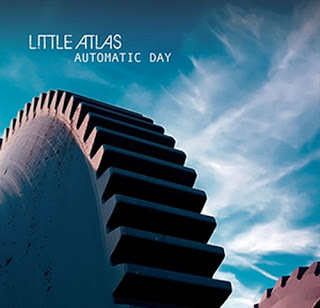
The Miami-based proggers Little Atlas (home page) have—according to keyboardist, vocalist, and founder Steve Katsikas—been around for nearly twenty years and have just released their fifth studio album, Automatic Day littleatlas_automaticday(10t Records). I have all of the band’s albums save their debut, Neverworldly, which are all very solid to exceptional, and yet have never spoken with anyone else about the group. A few months ago, I was going to write a post about that odd silence, and now that the group’s new album is out, I’m finally writing it.

My .02 is that Little Atlas is well worth checking out, and that each of the band’s album has progressively (yes, pun intended) built upon and improved on the previous. Comparisons to early Genesis, Marillion, and Spock’s Beard are apt points of reference. The music is highly intelligent and tasteful, with a wide array of tones, moods, tempos, and lyrical perspectives. While the players are all top-notch, the focus is definitely on songs and grand themes rather than virtuoso showcasing. Katsikas has a background in psychology, which is evident in many of the songs, notably in the 2007 album, Hollow, which presents ten different perspectives in a sort of psychological-prog suite (the title song, “Hollow”, is one of my favorite cuts by the group). As for the new album, Roger Trenwith of the “Astounded by Sound” blog does a fine job of explaining its many merits:

Covering subjects linking the mythical, the stellar, the metaphysical and the politick, both personal and impersonal, Steve Katsikas has crafted a set of intelligent lyrics that to highlight one particular trio of songs make a stately progress from Greek mythology (Twin of Ares) to man’s helplessness at the mercy of the passage of time (At the End Of The Day), via a depiction of Nature as the true deity (Emily True), without seeming in the slightest part contrived, or indeed jarringly disconnected, as could have been the case with a blunter intellect holding the pen. OK – so the lyrics to Emily True are actually by poet Emily Dickenson, but these three songs manage to flow seamlessly nonetheless!

Musically, Emily True manages to mix Rush and Blue Oyster Cult with an epic vision to come up with a new art rock template for the 21st century, and a fine beast it is too.

Illusion Of Control continues an undercurrent of darkness that runs through the album, and would not have sounded out of place had it been penned by Amplifier around the time of The Octopus. Although not quite as heavy (but heavy enough!) as the Manchester sci-fi prog metallers, it is yet more evidence of a new post-prog zeitgeist currently weaving its smoky tendrils through the subconsciousness of a fair number of bands around the globe….

Never forgetting the value of a structured song, there are no aimless instrumental passages, and no displays of musical ego on Automatic Day. Everything is kept tight and to the point. Probably the best song on the record is We All Remember Truth, which within its economic four minutes manages to display all the virtues of the first two sentences in this paragraph.

Read the entire review. And watch a video for “Oort”, the opening cut from Automatic Day: