Review: 23 Acez – Embracing the Madness

23 Acez - Embracing the Madness

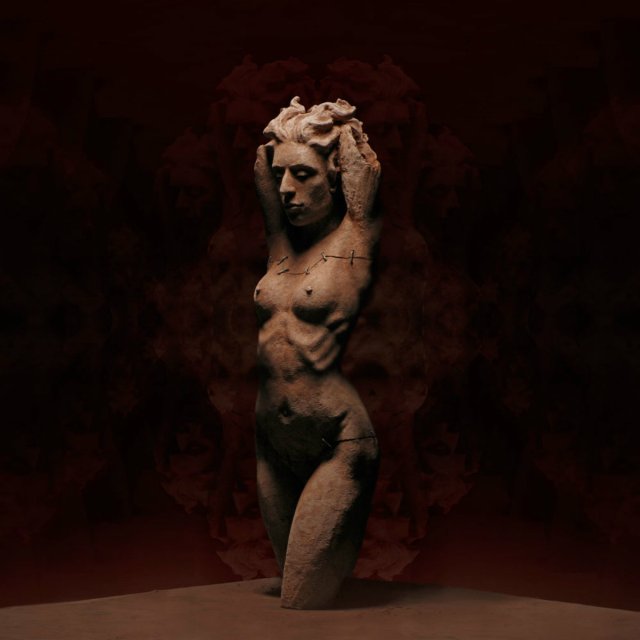
Prog/Heavy metallers from Belgium, 23 Acez, have been around since 2010, and they have recently returned with their third album “Embracing the Madness.” Why the hell didn’t I know about them earlier? Now, thanks to the PR wire, I got a promo copy of the mentioned release, which is a real t(h)reat. 

The style that 23 Acez plays is pretty standard, comparing somewhat with more traditionalist ‘80s metal throwbacks, yet they manage to sound different and fresh when compared with a lot of the other bands that attempt to play in this particular style.

Benny Willaert’s vocals are gravely and rough, standing at the very center of the counter-tenor wails of Rob Halford and the husky baritone of Blaze Bailey. During the choruses of such catchy anthems as “Cellbound” and “Embracing the Madness” the vocal work almost punches past the rest of the arrangement. While he doesn’t soar into the higher stratosphere in the manner that most in the genre do, he more than compensates with sheer power.

Although the voice alone gives this album a heavy yet melodic edge, the entire arrangement pounds the sonic threshold of the listener into submission. Whether its faster songs like or down tempo stomping machines, there is a consistent picture of a mighty fist slamming itself down on a stone table and commanding your undivided attention.

“Embracing the Madness” is a powerful statement from a band that is hungry to show what their abilities are, and according to this they have much more to offer. Grab this record, you’ll not regret.


Review: Barry Weinberg – Samsarana

01_booklet_cover

Fresh from the warm South Florida, comes a prog rock veteran Barry Weinberg, with his debut album “Samsarana” dropping January 25th.

The fifteen-piece musical beast of a debut appears very much ready to stand next to plethora of amazing albums that the genre gave birth to over the years.

After short and atmospheric intro titled “Conception,” forward comes “Creation” leading off with a very Floydian feel and with a full sized chorus following all verses, it seems there may be an easy ride ahead for more cautious listeners. “Welcome to my World” is a laid-back stripped down acoustic piece with Weinberg’s voice over leading to “This Vicious Circle,” which sees Weinberg’s circling melody wash over the pebbles and steal away the shoreline behind, whereas “Come Out and Play” is a groovy and funny little piece.

“Beyond the Astral Sky” kicks in through a silent verse, attacking with a slightly alternative-flavoured chorus, and some sharp instrumentation, before the leviathan-sized hook belonging to “Taking it All” take things to a further level, with occasional hard rock sprinkle. We hear the same good work kept up through “Endless Sea” and “A Passage of Time,” the latter ringing the Genesis influence.

After another instrumental interlude “Perception,” “You Cannot Burn the Fire” comes as, arguably, the heaviest piece, incorporating heavy metal riffing and evil-flavoured singing. “Come My Way” brings in the folk element, while the following “The Way” comes with a steady pace, making for one of the highlights.

“Samsarana” is an absolutely accomplished piece of playing, writing and performance that should see the genre pushed out of its confines.

“Samsarana” is out on January 25th; pre-order it from Barry Weinberg’s official website.

Review: Impera – Weightless

Impera band

Impera from Lisbon prefer to mix their metal with some groove and prog, albeit with the strong emphasis on the ‘metal’ part. The other bands of similar genre orientation place a premium on virtuoso musicianship and highly technical song structures, and while that also figures prominently into Impera’s music, these boys slather it all up in a special sauce that I like to refer to as ‘classic sauce.’ The group’s debut album “Weightless” sounds deliberately rustic and antiqued, like that milk-stained fake money you’d buy at the museum.

But production is not what prods Impera. What stimulates this band’s formidable corpus are five very talented musicians. It’s Daniel Chen, though, who takes home the MVP award on “Weightless”; if drummers are action figures, Chen carries both a rapid-fire uzi (the toms) and an erase-all, double-barreled bazooka (dual-bass drums). I guarantee, he will brutalize you.

Impera - Weightless

Like their metal peers, Impera sport some mathematics. But where Meshuggah get deep into calculus and Dillinger Escape Plan prefer(red)  trigonometry, these guys enjoy the more accessible stuff — we’re talking pre-algebra here. They drop in just enough to keep the arrangements flavourful, but not so much as to overload the vintage guitar riffs with Dream Theater-like complexity. And then they counterbalance it with some nice, old-fashioned, Sabbath-style metal attitude: guitars crunch, wail, and burn. The complete package sounds timeless, but in that unbelievable way that you’ve never heard before.

A great band whose raging, sodden hellfire now beckons you to warm yourself at its side throughout the impending winter months. A band whose crushing, odiferous, sodomizing blade dices like a Popeil cuisinart and runs you through with gruesome exactness. This band is Impera.

Treat yourself with “Weightless” here.

InnerWish – InnerWish – Album Review

Artist: InnerWish Album Title: InnerWish Label: Ulterium Records Date Of Release: 18 March 2016 I’m going to begin this review by stating that I know nothing of InnerWish. Or at least, I didn’t until I decided to give this album a try having been sent the promo. I mean, it would be rude not to […]

https://manofmuchmetal.wordpress.com/2016/03/12/innerwish-innerwish-album-review/

Thunderstone – Apocalypse Again – Album Review

Artist: Thunderstone Album Title: Apocalypse Again Label: AFM Records Date Of Release: 1 April 2016 The Blog Of Much Metal seems to have been inundated with albums that have a strong power metal influence recently. Arguably however, this is the most straight-up no-nonsense power metal record of them all. And it comes in the form […]

https://manofmuchmetal.wordpress.com/2016/03/14/thunderstone-apocalypse-again-album-review/

Teramaze – Her Halo – Album Review

Artist: Teramaze Album Title: Her Halo Label: Mascot Label Group Year Of Release: 2015 Another day, another good news story. Before I was sent a promo for this release, I knew very little about Teramaze if I’m honest. However, a quick look on that there Internet showed me that there was a definite buzz surrounding […]

https://manofmuchmetal.wordpress.com/2015/09/26/teramaze-her-halo-album-review/

Metal Mondays – Maiden!

I don’t know about you, but I’m tired of Chris and Bryan having all the fun on Metal Mondays.  Time for me to crash the party!

While I’ve never been a huge heavy metal fan, I’ve liked Iron Maiden since I first heard them back in the ’82-83 timeframe.  On September 4th, they will release their next album, Book of Souls, an ambitious double album (produced by Kevin “Caveman” Shirley, who refused to give Alex Lifeson his #@$%ing reverb on Counterparts 🙂 ).  In reading some advanced press about this album, one of the things that caught my prog-loving eye is the presence of a few long tracks, The Red and the Black (13:33), The Book of Souls (10:27), and Empire of the Clouds (18:01).  The latter will be Iron Maiden’s longest track ever.   The previous titleholder is presented below, The Rime of The Ancient Mariner, from 1984’s Powerslave.

Is This The End, My Friend?

Apparently, it is.  Black Sabbath is calling it quits:

Last summer, the original lineup of Black Sabbath — Ozzy Osbourne, Tony Iommi, and Geezer Butler — roared back to life after some 30-plus years apart. In rather short order, the trio snagged their first-ever No. 1 album with 13, toured the world for nearly a full year, and even celebrated by winning a couple Grammys back in January. Now, in an interview with Metal Hammer (via Rolling Stone), frontman Osbourne talks the metal icons’ future plans, which include “one more album, and a final tour.”

We’ll get one more album, with a final show in November, 2015, in Tokyo.  Part of this is due to the cancer treatment for guitarist Tony Iommi, and we do wish him well.

Godspeed, Black Sabbath – you’ve had a great run and your influence extends far beyond your own genre.  You will be missed but you will not be forgotten.

Philosophical Reflections on the Scorpions

Gregory Sadler, The Heavy Metal Philosopher, reflects on the career of the Scorpions and asks the Heraclitean question about whether the same band can exist twice. His conclusion? It makes a key metaphysical distinction about privation:

I’ll say this much though — perhaps we can speak of two overlapping musical periods after the Scorpions really got their sound together and coalesced in the mid-70s:  a serious and formative early metal period from Fly to the Rainbow (1974) to Taken By Force (1978), capped by their first live album (Tokyo Tapes) and the first Best of The Scorpions compilation — then a simply meteoric period from Lovedrive (1979) to Love at First Sting (1984), also capped by a live album (World Wide Livein 1985).  And then, for years, more and more touring.

Even though one can hear a difference between what let’s anachronistically call the 1970s Scorpions and the 1980s Scorpions — and one can hear analogous differences between earlier and later Judas Priest (compare, e.g. Sin After Sin with Defenders of the Faith), and despite a key lineup change on lead guitar from Uli Roth to Matthias Jabs,  there’s still a really vital and robust continuity, an ongoing incorporative development one can hear across this body of work.

Savage Amusement marked a shift of sound and ethos whose radicality wasn’t entirely apparent at the time — it needed additional albums to come along and confirm that something was really different.  Even though it came out — after a lot of anticipation on the part of their fans — in 1988, I’d say it’s already the 1990s Scorpions composing and producing it (key word there for that time — producing, not playing, not building, not hammering it out).

I remember listening to it at the time, and having to make a kind of emotional effort to find the new songs as exciting, as well-crafted — really simply put, as captivatingly interesting as those from the earlier albums.  It was competent, to be sure.  It rocked. . .  more or less.  Crazy World — and particularly the ballad “Winds of Change” — confirmed that something had indeed happened.  Something had gotten lost, was going missing — metaphysically, we’re not just talking about alteration, breakdown, movement from one thing to another, but rather that difficult to conceptualize reality of privation.

So, although we could certainly buy tickets and show up at the venue, and see at least some of the guys — Klaus Meine, Rudolph Schencker, Matthias Jabs — who carved out such new sonic spaces in the 1980s, compositions that retain their freshness and complexity decades later, in several important but difficult-to-clarify senses, it would no longer be the same band that created and played those songs who we’d get to witness covering them on stage.

We can, however, continue to enjoy those great albums from the 1970s and 1980s — there is a kind of complex continuity preserved partly in the past, but reenactable in the present, continuing even for generations yet to come in the future.