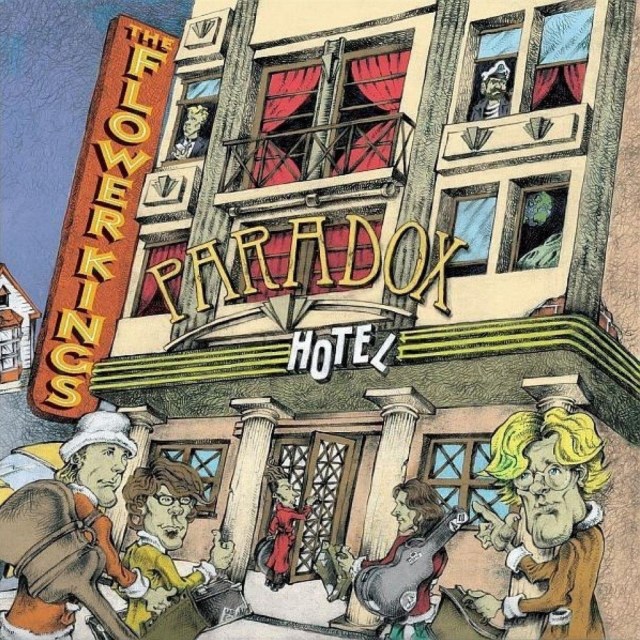
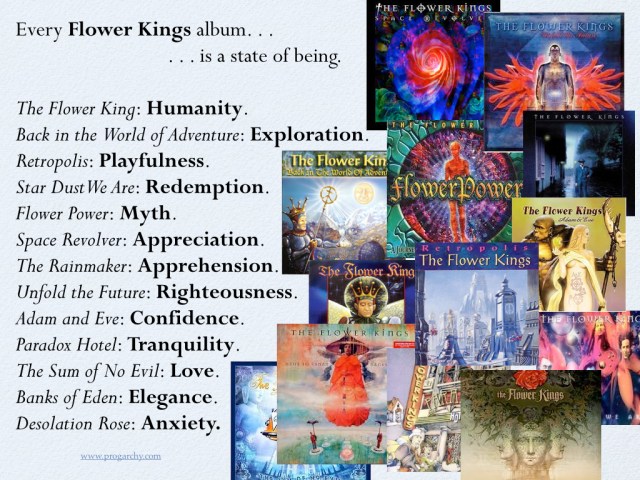
On April 4, 2006, the Flower Kings released PARADOX HOTEL, not just a seminal album for the band, but a seminal album for third-wave prog.
At the time of its release, Roine Stolt expressed some reluctance with the album, noting that it had not been as complicated, complex, or nuanced as the previous release, ADAM AND EVE (2004). PARADOX HOTEL, he sighed (or, so I’ve interpreted the interview he gave to/with DPRP.net), was just another release of a prog album, but not as progressive as the 2004 album.
While everything the Flower Kings does is excellent, it’s hard not to rate PARADOX HOTEL as extraordinary, even for an extraordinary band. In hindsight, PARADOX HOTEL is probably regarded as a much stronger album than ADAM AND EVE.
Regardless, we’ll be giving PARADOX HOTEL close scrutiny as we celebrate its tenth birthday.
Artist: Spiritual Beggars Album Title: Sunrise To Sundown Label: Inside Out Records Date of Release: 18 March 2016 If you’re looking for a musical experience to surprise you and offer something completely different from what has gone before, I wouldn’t recommend Spiritual Beggars to you. Theirs is not a blueprint that seeks to challenge listeners […]
This afternoon, I had the grand pleasure of speaking with a man whom I have admired since at least 1978, Steve Hackett. Though I called an hour earlier than scheduled (by accident) and though I mislabeled Hackett’s latest box set, PREMONITIONS, as PROGENY, Hackett was as kind, as intelligent, and as interesting as one might possibly imagine.
I have a feeling that I could’ve easily talked with him for another hour or so, but I didn’t want to take advantage of his obviously gracious and easy-going nature.
We covered a lot of ground in our conservation.
I was mostly interested in how he wrote, structured, and reworked his own music. Growing up a huge Genesis fan, I have rather happily found that Hackett’s several GENESIS REVISITED II releases (live and studio) have reminded me yet again just how very layered and nuanced everything Hackett produces is.
His latest studio album, WOLFLIGHT, is no different. After all, it almost seamlessly incorporates classical, orchestral, ELO-esque pop, carnivallesque rock, and Brazilian-style guitar into a mythological whole. The lyrics, too, pull together Greek antiquity with the Norse Volsunga and shed light on modern psychological and personal dysfunctions.
Rather than take copious notes or record our conversation, I simply asked questions, listened with great interest to Hackett’s many excellent insights, and jotted down a note here or there.
As Hackett has become more comfortable with his own views on music and now willing to reassess many of his once strongly held opinions as a young man, he has come to love much of what he had once dismissed, he tells me.
He knowingly and sagaciously laughed about his “one-time prejudices.”
Now, while a certain style of music might or might not grab him at every level, he loves listening to how various peoples from various cultures use an instrument. What if one uses the guitar, for example, as a drum or as something primarily rhythmic?
Whether one calls his music “world or progressive,” Hackett doesn’t want a label or genre to narrow his own thinking or his own creativity.
He is, he says, “always looking for a good tune and a good lyric,” no matter where it is to be found.
At the moment, he tells me, he’s working on two new tracks for his forthcoming album (no time frame yet, as Hackett wants it to come as it comes). One track is influenced by flamenco playing and the other deals with his own recent (and wondrous) visit to Iceland.
In our conservation, he also notes how very interested he is in exploring how the smallest and most easily dismissed instrument can contribute to a larger whole. Imagine, he asks out loud, what “the humble triangle” brings to an orchestra. It’s critical, he explains, to see what color the triangle or any other instrument offers to the whole. Once we understand what the least obvious can do, we are ready to allow things to develop in a right “sort of way,” letting each thing breathe.
In my own enthusiasm, I told Hackett how much his various GENESIS REVISITED II releases reminded me just how very alive the music of Genesis was and is and always will be. I mentioned that the performances elicited not nostalgia from me, but admiration.
With GENESIS REVISITED II, he answers, he never “wanted to be slavish, but” he did desire “to be authentic. A perfect reproduction would” be nothing but boring.
Still, he says, some things he felt needed to be exact—such as certain parts of “The Musical Box.” They were properly written from the beginning and need to remain as is. It’s all a matter of judgment. The notes are just as right in 2016, he says, as they were in 1971. He sees the GENESIS REVISITED II project as “dusting off the exhibits” while presenting them in new light.
What more can one state? Hackett is a gentleman and an artist. How nice it is to find that’s one’s hero is fully human, but in all the glory that it attaches itself to humanity. Thank you, Mr. Hackett. I will be listening for years to come.
Wonderful interview with Steve Hackett at Ultimate Classic Rock. Just one good quote below, but it’s worth reading the whole interview.
I’ve always had a strong love of Hackett’s art (well, at least since 1978 or so), but that appreciation has grown exponentially over the past several months. Can’t believe I’m finally listening to WOLFLIGHT. Had I done so before, it would’ve been a top three album of 2015 for me. So artistic.
I hate to admit it, but I avoided listening to this album simply because I thought the cover was cheesy. Now that I understand the album, the cover makes perfect sense. So much for not judging an album by its cover!
Yeah! I think the response to the whole Genesis Revisited idea was so strong, it really turned things around for me in every sense of the word. I still love the Genesis songs that we all wrote and crafted together, and I have been able to work with a wonderful band live for many years. The bass playing position, which is also a 12-string-playing position, had been somewhat flexible. So far, it’s been between Nick Beggs and Lee Pomeroy, both of whom are great players and lovely guys. So, sometimes it’s one, sometimes it’s the other. And it may be that this year I have to work with some other player live, because they’re much in-demand. I share Nick Beggs with Steven Wilson — so, some years, Steven gets the priority, and other years, I get the priority.
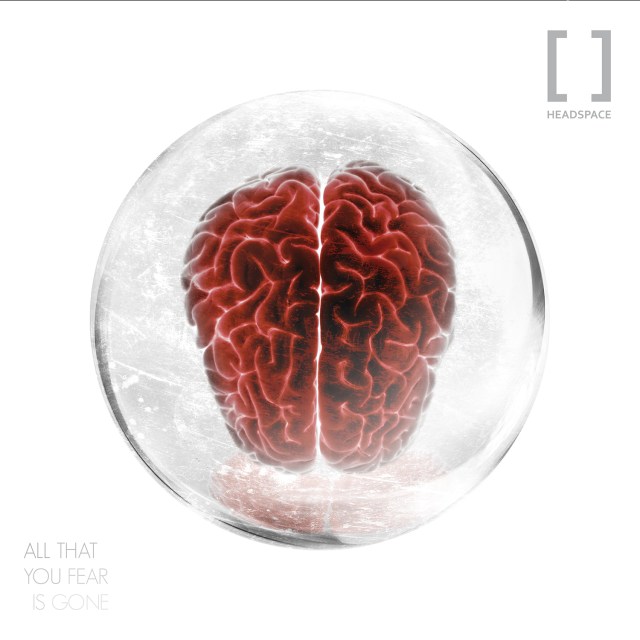
As soon as you have a free moment, pre-order the new [headspace], ALL THAT YOU FEAR IS GONE (InsideOut, 2016). I’m on my fourth listen in less than 18 hours, and I’m utterly blown away by it. Yes, I know how inelegant this sounds, but it is true. Blown away.
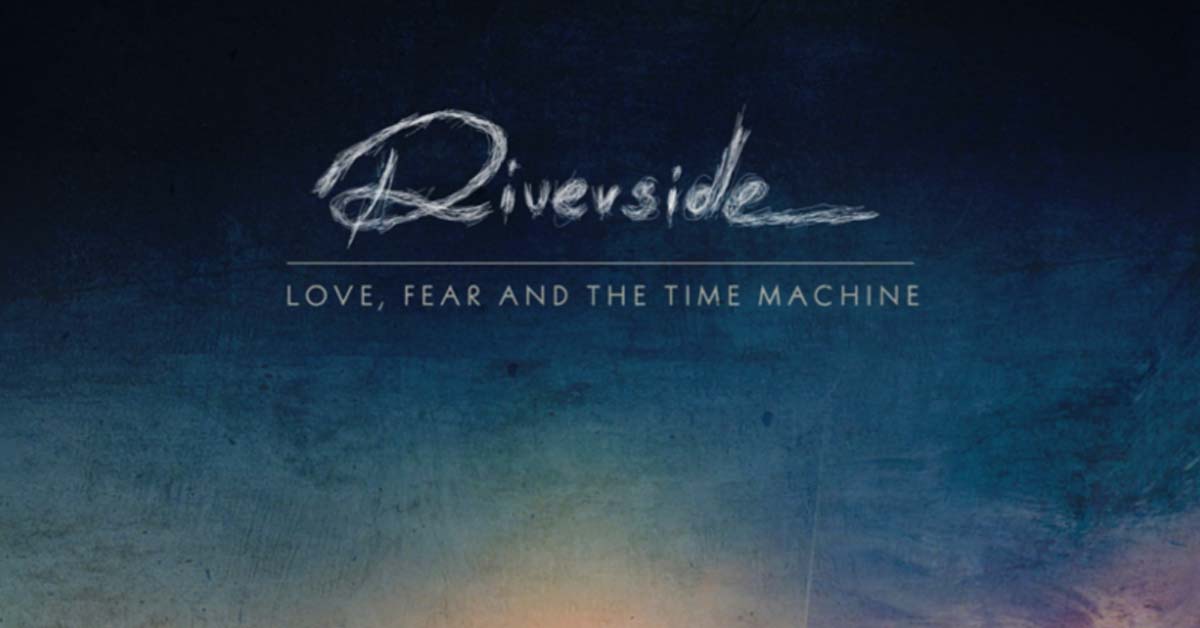
Riverside’s latest album, LOVE, FEAR, AND THE TIME MACHINE (InsideOut, 2015).
Erik Heter’s grand interview with Mariusz Duda this past summer, The Duda Abides, reawakened (or least reminded me of) much of my love of Riverside. And, that love is and never has been a shy love. I first heard Riverside sometime between 2005’s SECOND LIFE SYNDROME and 2007’s RAPID EYE MOVEMENT. I was immediately riveted by their music. Not only do I love the Polish people and culture, I love prog and rock—so what a perfect mix of things.
Frankly, if you measure Poland’s prog and art rock output through Riverside and Newspaperflyhunting, it’s hard not to think of Poland as one of the most important countries in the world when it comes to producing modern music.
First, as always, thank you! As we’re only about a week and a half from our 3rd birthday, it’s nice to remember how much you’ve supported us and allowed us to grow. The growth has been steady, in terms of readership, and I think our writing just gets better and better. And, we’re getting to a point at which we’re having trouble getting everything reviewed. Not a bad problem to have.
Regardless, thank you so much for the kind support you’ve shown.
Second, you’ve probably noticed the layout of the site is different. This is most likely a temporary layout, and we’ll keep shifting things around until we’re satisfied. I (Brad) have almost no training in design, and I have even less training in website creation. We’ve been using WordPress templates thus far, but we’ve found these too limiting as we’ve grown. As of today, we’ll be working with a third-party web provider, one that specializes in WordPress sites. I’m not exactly sure how this transition will work, but I have faith in the provider. Already, they’ve proven quite excellent in customer relations. If there’s a problem, it’s that my 48-year old brain can’t quite get the terminology down. But, it will come. Much like the graying of my hair.
Third, you’re seeing our first ad appearing at the top of the page. Don’t worry, we won’t sell Chia pets or anything “As Seen on TV.” Promise. We’ll only accept ads for and from companies that believe in art, integrity, and, of course, understandably, profit. We’re not anti-market. Quite the opposite, actually, but we want the market to produce the best. The best for the artist and the best for the listener.
Consequently, we’re extremely proud to work with InsideOut. This is a real company, this is a real label. One that has promoted some of the very best of Third-Wave Prog. Already, relations with Jeff Wagner and Roie Avin have been nothing short of outstanding. I’m rather excited to get to know each of them better and to promote the truly artistic and quality work each embodies and represents. Please join us in supporting InsideOut whenever and wherever possible.
I’m very much looking forward to all that is coming in our fourth year.
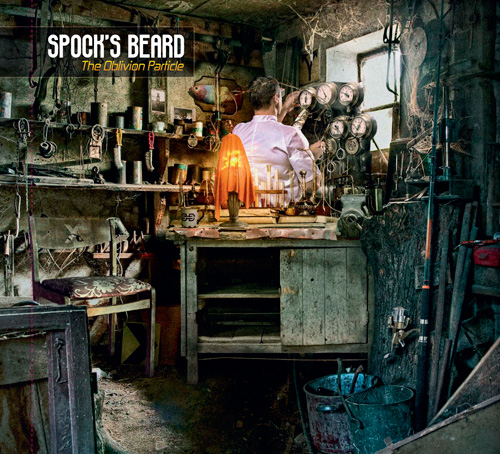
Today, InsideOut Music releases Spock’s Beard’s 12th studio album, The Oblivion Particle. This marks the second official release with the lineup Alan Morse (guitars), Ryo Okumoto (keyboards), Dave Meros (bass), Ted Leonard (lead vocals and guitars), and Jimmy Keegan (drums and lead vocals on “Benett Builds a Time Machine”)
Overall, it’s a very strong album, but it didn’t click with me right away, unlike Brief Nocturnes and Dreamless Sleep. The Oblivion Particle is definitely a grower, just because there are a lot of new sounds, that you may not expect from Spock’s Beard, being thrown at you from all directions.The arrangements are very strong, although the album doesn’t feel as much of a cohesive unit as BNaDS, perhaps because of the multiple writers involved. Stan Aumus wrote “Tides of Time”, Morse and Okumoto wrote “The Center Line”, Leonard wrote “Minion” and “Hell’s Not Enough”, and seasoned Spock’s writer John Boegehold wrote the rest of the tracks.
“Tides of Time” is a very strong track, a perfect opening, telling you that you have made no mistake- You are listening to prog and with all great prog, this one takes you on a journey. The song starts a little too abruptly, though. It’s like being a passenger in your friend’s really fast car, and he goes from 0 to 60 before you even got a chance to fasten your seat belt. The beginning is great, I just wished it waited to start 2-3 seconds after the play button was hit. I do have the album in digital format, but perhaps the CD itself is programmed with a little more time before take off.
The first couple of minutes are undoubtedly Spock’s Beard. Then we get some great power synths thrown into the mix which make the piece sound very “Turn It On Again” by Genesis or perhaps a lost B-side of Abacab. I can totally picture Phil Collins singing the lines of the 2nd verse of “Tides of Time”- “You’d thought you’d know by now, but know it you do not. It’s a hard cold cross to bear, but pain is all you got”.From there we get a beautiful ballad section, but it doesn’t last as long as it could. Then we get some Spock’sy counterpoint and harmonic acoustic guitars which turn into an awesome metal riff. There are some really great dirty guitar shredding and blazing rock organs afterwards, but Okumoto’s and Morse’s solos seem to get cut off by the vocals too soon.It’s a very concise prog song just under 8 minutes, so I understand what they may have been going for, but Icould have easily listened to 3 more minutes of it.
“Minion” has a Kanasas-like vocal rock anthem intro, but then immediately goes into a whole new territory. The section changes, groove changes, riffs and vocal melodies are so fantastic, it’s hard to pay attention to Leonard’s powerful lyrics at first. “Hell’s Not Enough” is a fantastic track that keeps on stepping it up notch after notch. At first we get a synth-flute which is something fresh to the SB arsenal and then Meros adds an interesting bass line. The end is very powerful and gospelly- which works really well in this song about cult-like religions. I can’t put my finger on it, but the background “Ah”s at the end remind me of something I heard already in early Neal Morse era Spock’s Beard, or probably more likely from Morse’s Christian Prog-rock endeavors.
At first it seems as if “Bennett Built a Time Machine” doesn’t stylistically belong with the rest of the album. Leonard takes a break here and passes the gavel over to Keegan for lead vocals.The vocal harmony combined with the leads sounds a little like Weird Al overdubbed on himself, which is unfortunate because it disguises the beautiful voice Jimmy really has, but I do like the background Beach Boys-like “Oooh”s toward the end. Some of us who have seen Spock’s Beard live recently, may have seen Jimmy come out from the drums and sing “Carrie” from Snow. Of course “Bennett” doesn’t have as sweet of a style or melody, but I still felt as if he was robbed of his moment due to overproduction, mainly on the vocals. It does have a very Spock’s Beardy transition into the 2nd half, which starts with a very unexpected but exciting chord progression, which leads to a really cool bass solo- a great homage to the late Chris Squire. Okumoto then brings in some really nice synths.
When “Get Out While You Can” starts to play, all bets are off. This is not your father’s Spock’s Beard. It’s not very proggy and the first minute plays like something you’d expect from a Depeche Mode song. Leonard’s vocals go from silky smooth to gritty, really following the entire spectrum of the energy of the track.
If you could mind-meld with Spock’s Beard’s collective brain, “A Better Way to Fly” is the song you would hear. There is some quite impressive drumming by Keegan, but everyone really does give it their all in this song. It will be quite impressive to see this one done live.
Okumoto performs some great piano solos on the album including on the intro of “The Center Line” after which we get Meros to add a little Spock’s Bach counterpoint. There are a lot of notes in this song; I would also be impressed to see SB do this live. My favorite piano solo of the album is on “To Be Free Again”. Love the jazziness! Not sure why, but when listening to this song I get the impression it may be about Frodo taking an adventure and at the end he throws the Ring into the fires of Mordor.
The Oblivion Particle forms a black hole in the Large Hadron Collider and destroys all existence in final track “Disappear”. Just kidding, that’s not what it’s about, as far as I know, but that could have been awesome! “Disappear” is an appropriate finale to the album. Not only does it have the Kansas influences (I hear bits of Magnus Opus in the middle), which Spock’s Beard has had since their beginning, but it also has Kansas’s David Ragsdale tearing it up on violin. I like that it doesn’t have a big epic ending, but rather just “disappears.” But, of course, we all are hoping that Spock’s Beard will not disappear and release their 13th album in the next 2-3 years.
The album was produced by Rich Mouser, Alan Morse and John Boegehold and was engineered, mixed and mastered by Rich Mouser at The Mouse House. As with all Mouser mixed productions, you’ll definitely want to listen to The Oblivion Particle with great speakers or on headphones. There is so much going on here, so you’ll also want to listen to it multiple times. Every time I listen to it, I hear new things that I like. I can’t decide on one favorite track, but my three favorite are “Tides of Time”, “Hell’s Not Enough”, and “A Better Way To Fly”. The album is being released by InsideOut Music. The special edition CD also contains the bonus track “Iron Man”.
When I first listened to The Oblivion Particle, I was outside my place (A/C wasn’t working and it was too hot to listen to inside). When Ted sang, in “Tides of Time”, “I hope I can find my way home”, I couldn’t help but to look up at the stars. Spock’s Beard has always had that special magic which would somehow make me do such a thing in the first place. It was a beautiful moment. ★★★★
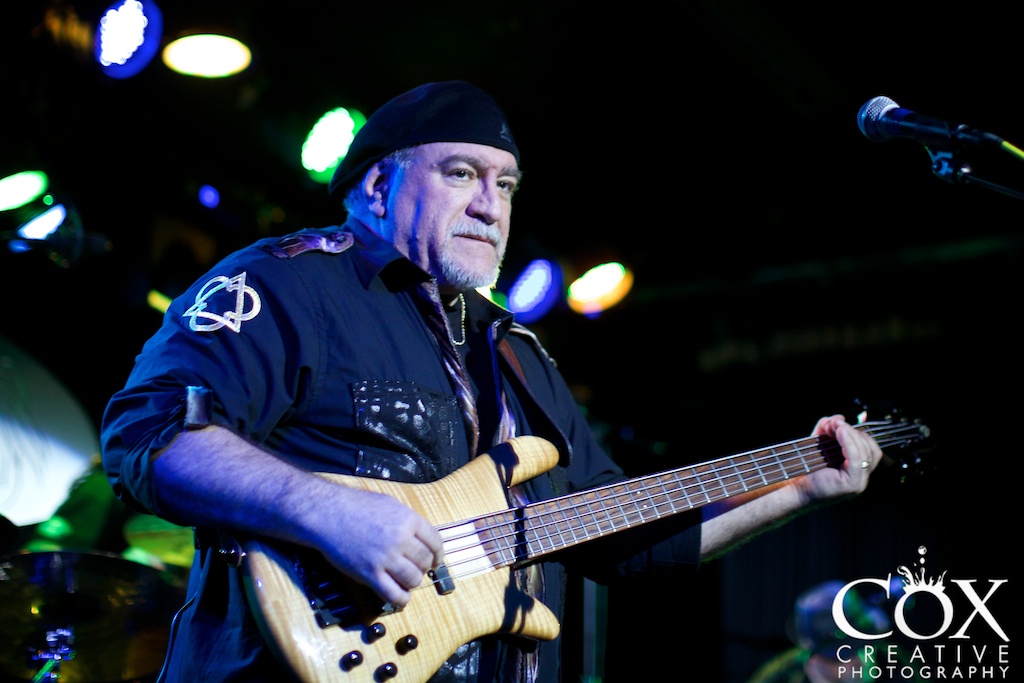
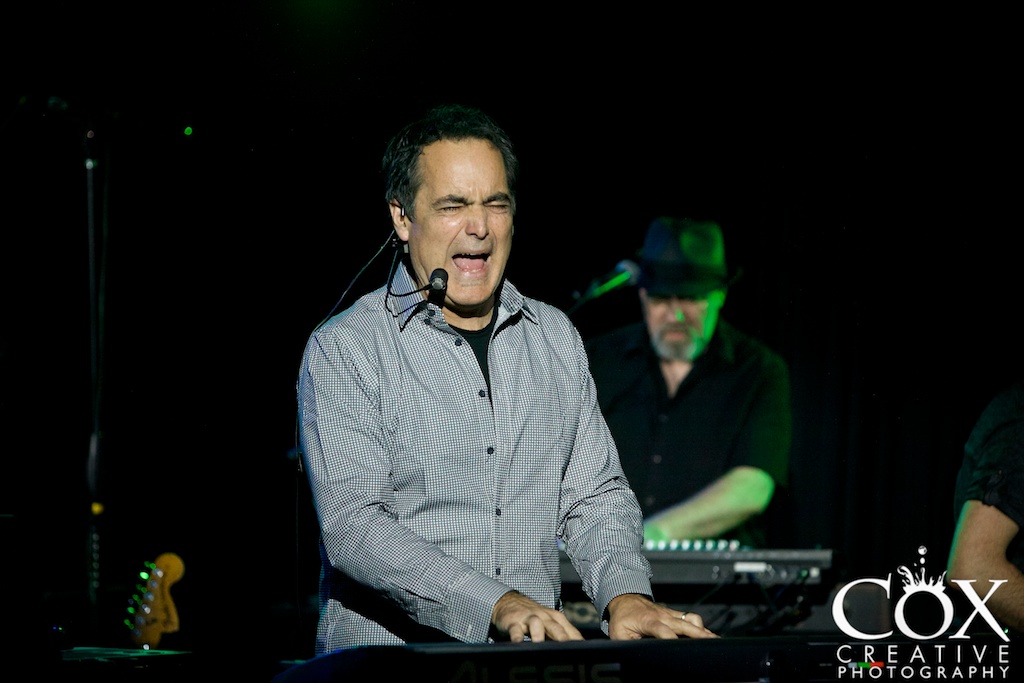
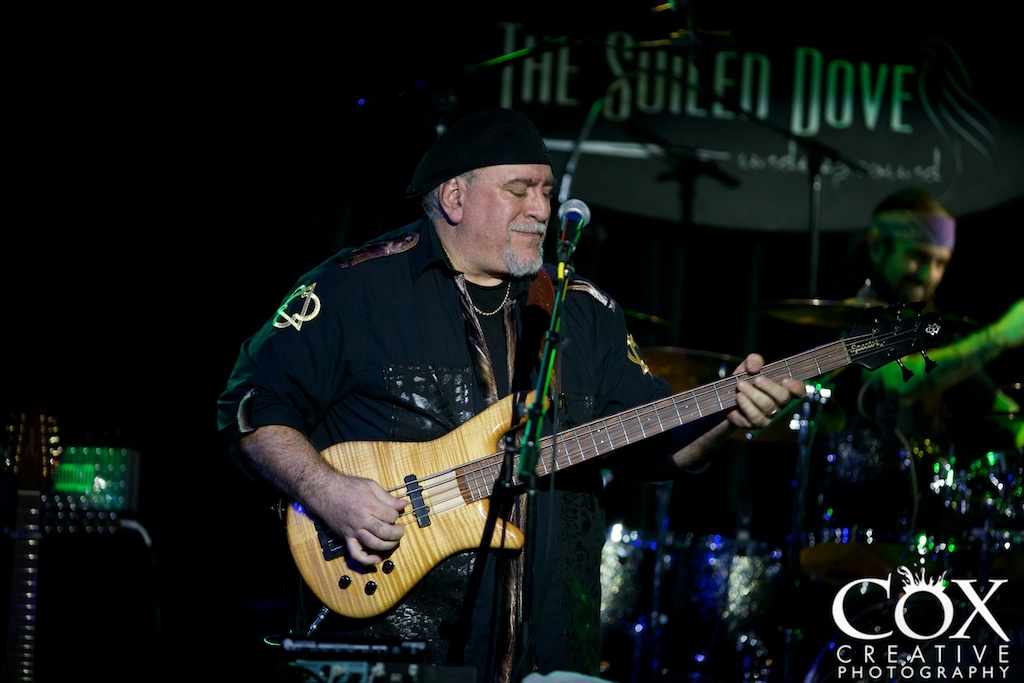
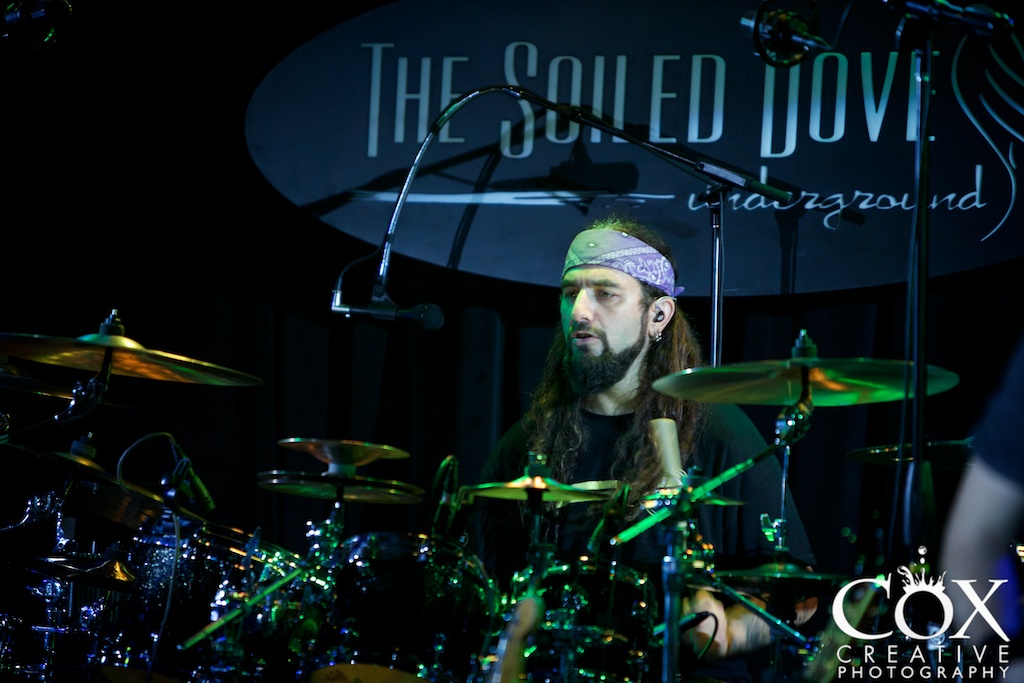
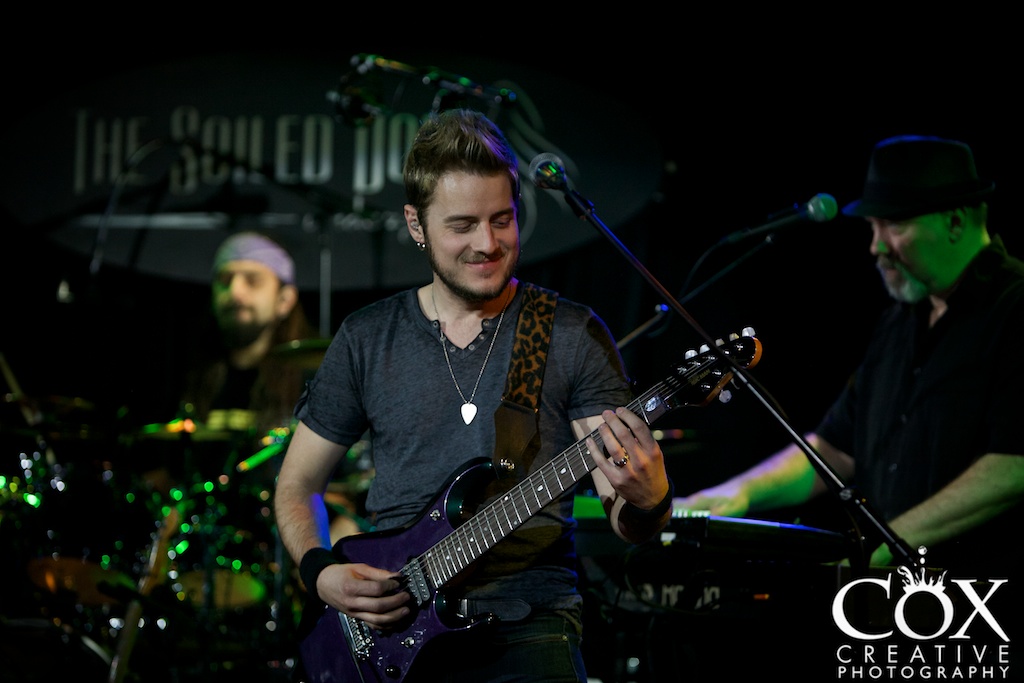
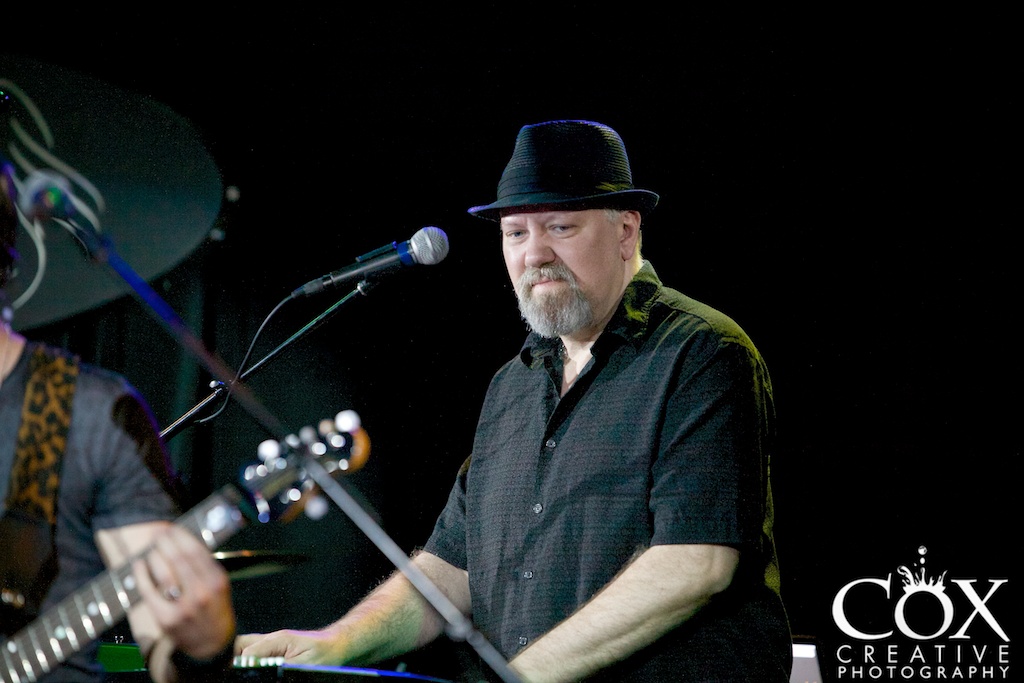
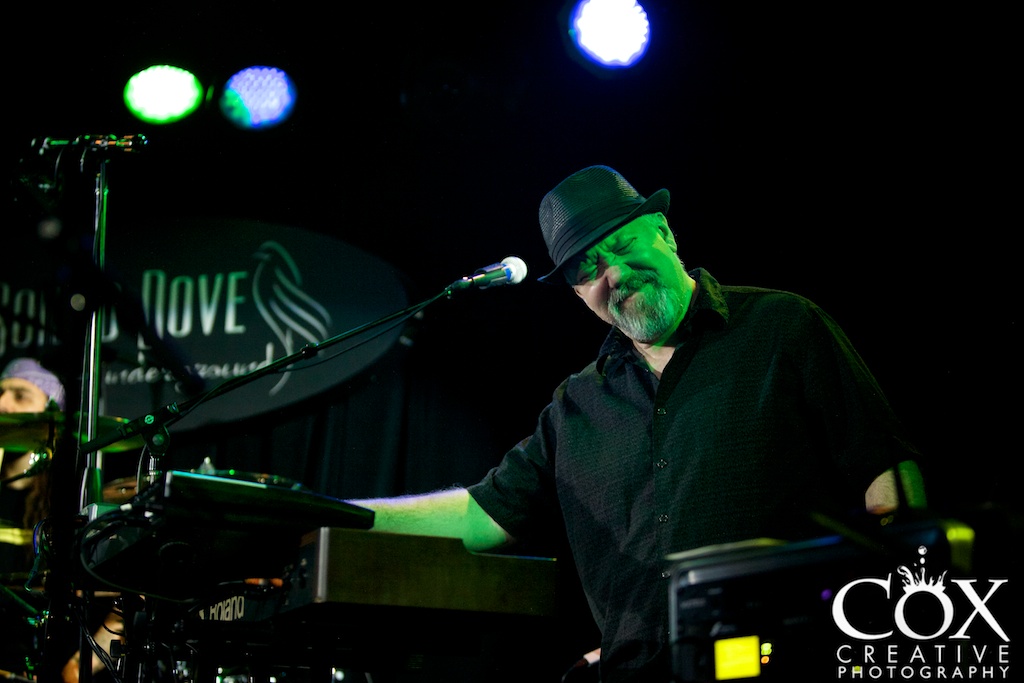
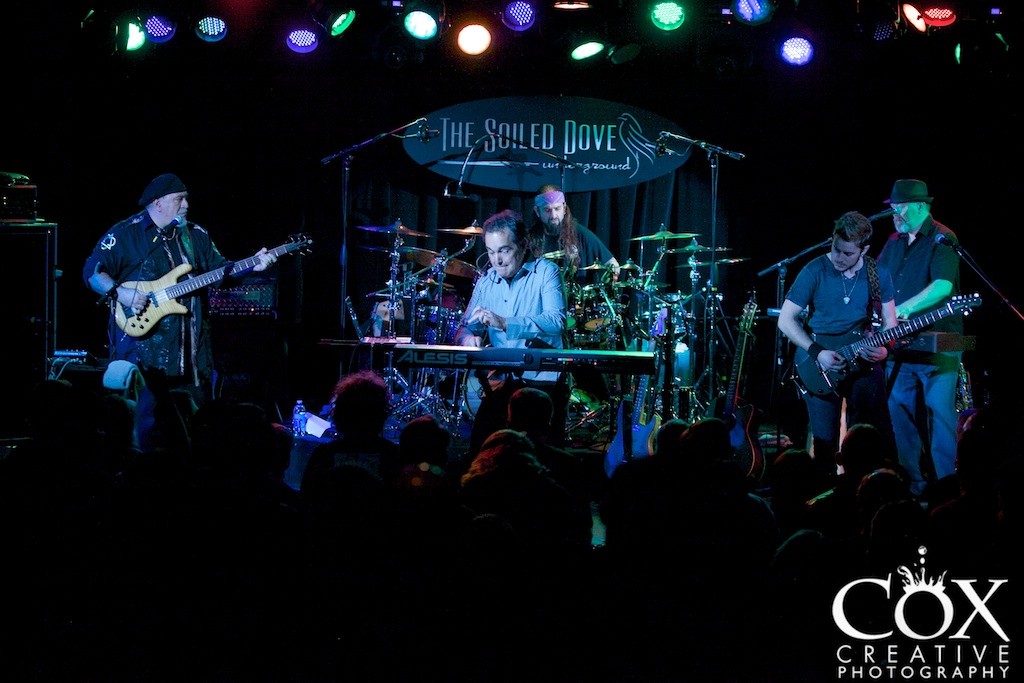
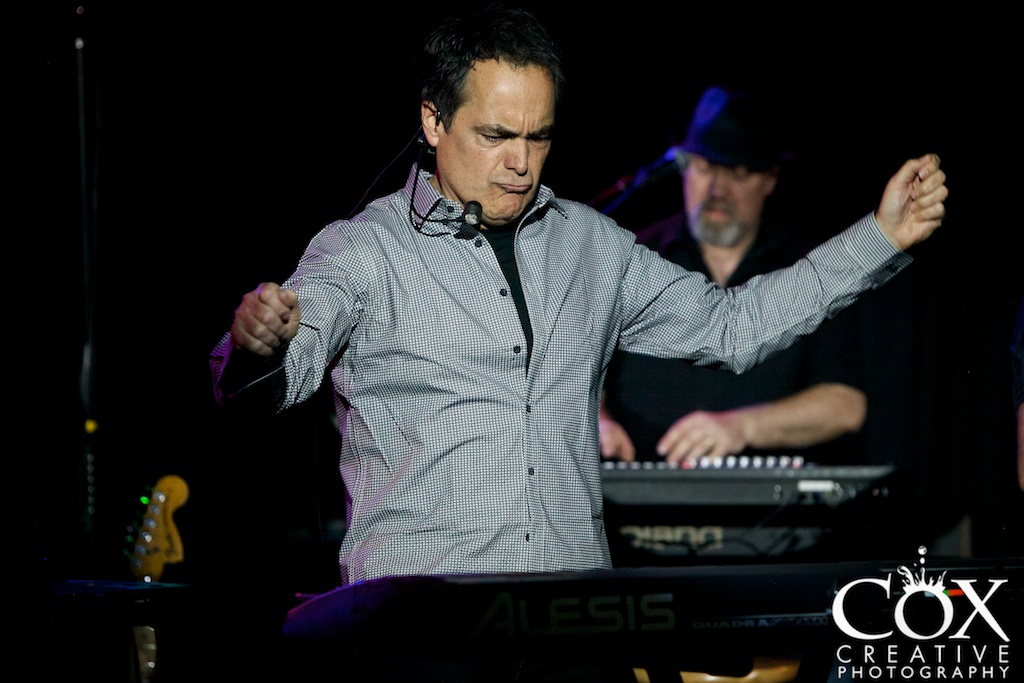
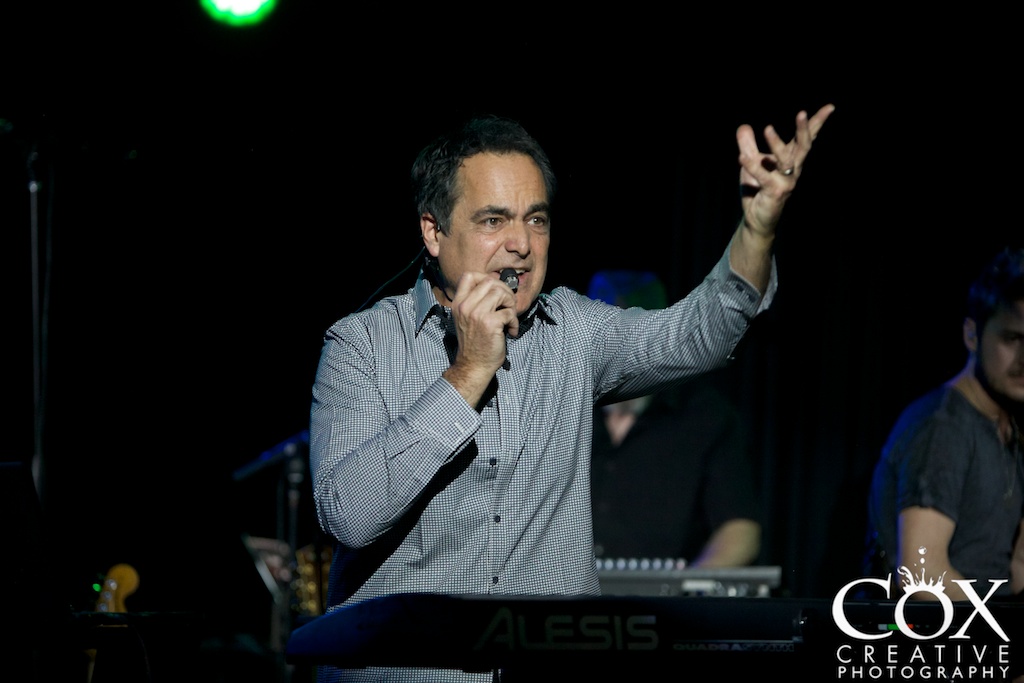
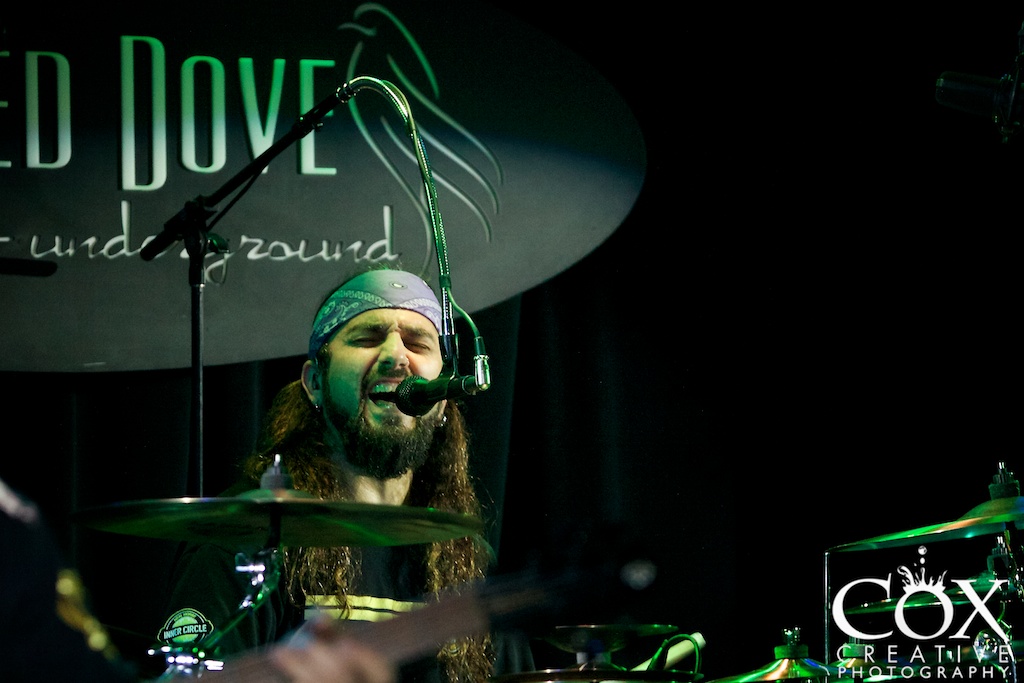
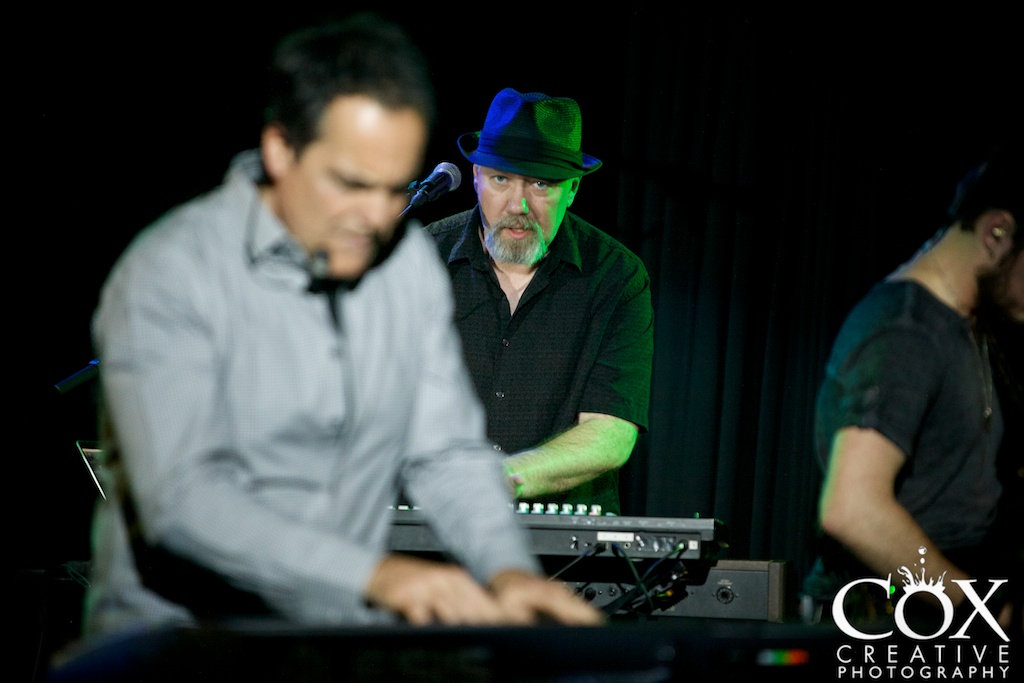
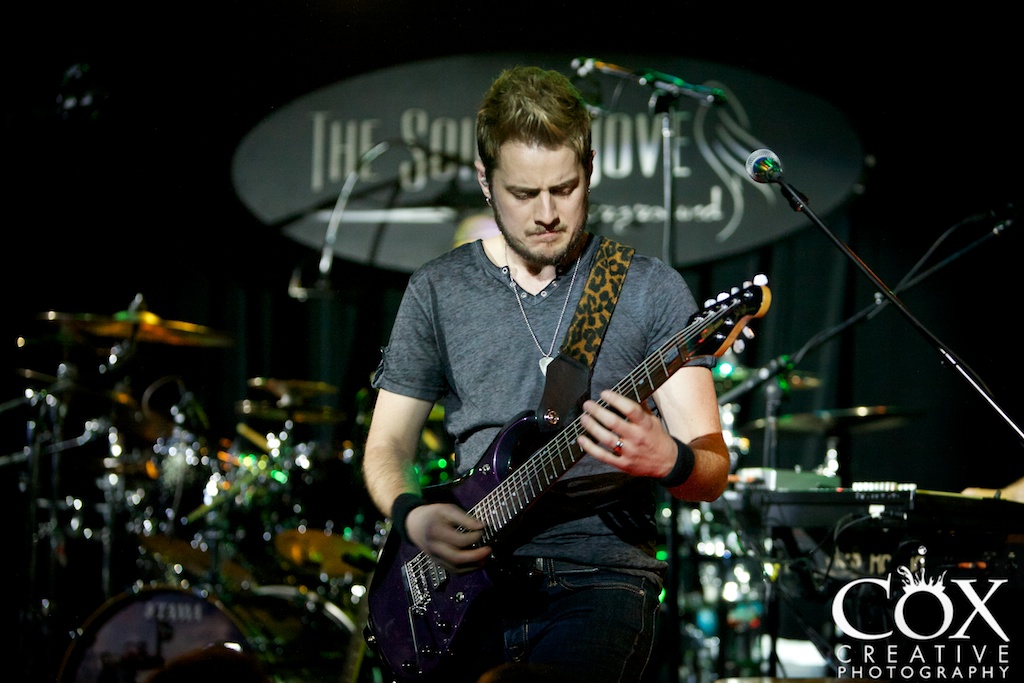
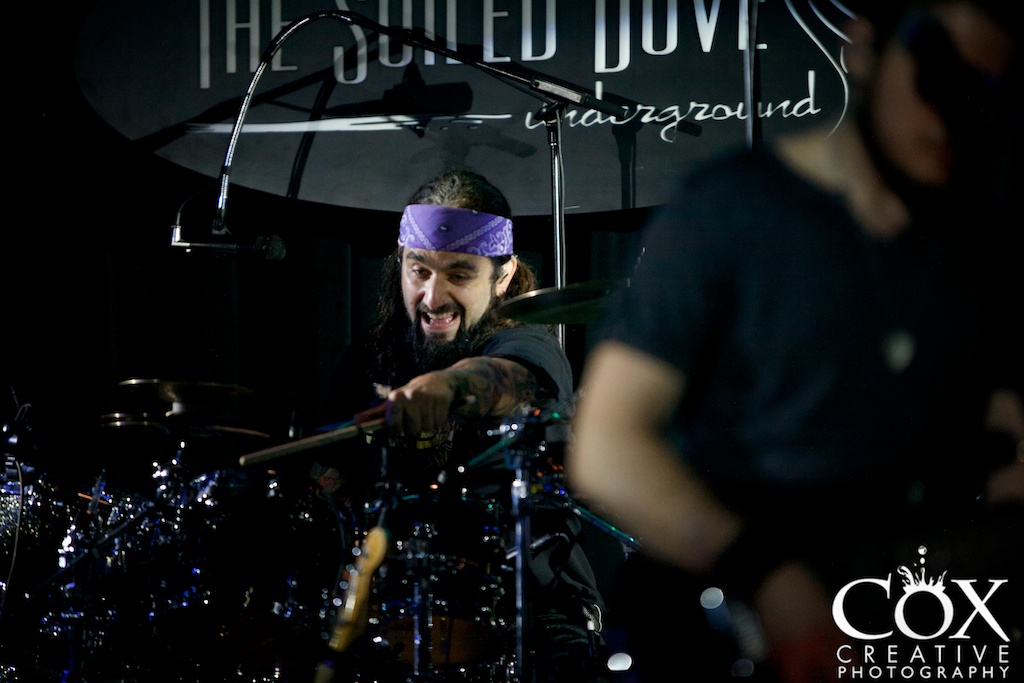
Alan Cox was the promoter of the Neal Morse Band concert in Aurora, Colorado, on February 28, 2015. It was a truly glorious evening. Here are Cox’s amazing photos from that night–posted with his kind permission.
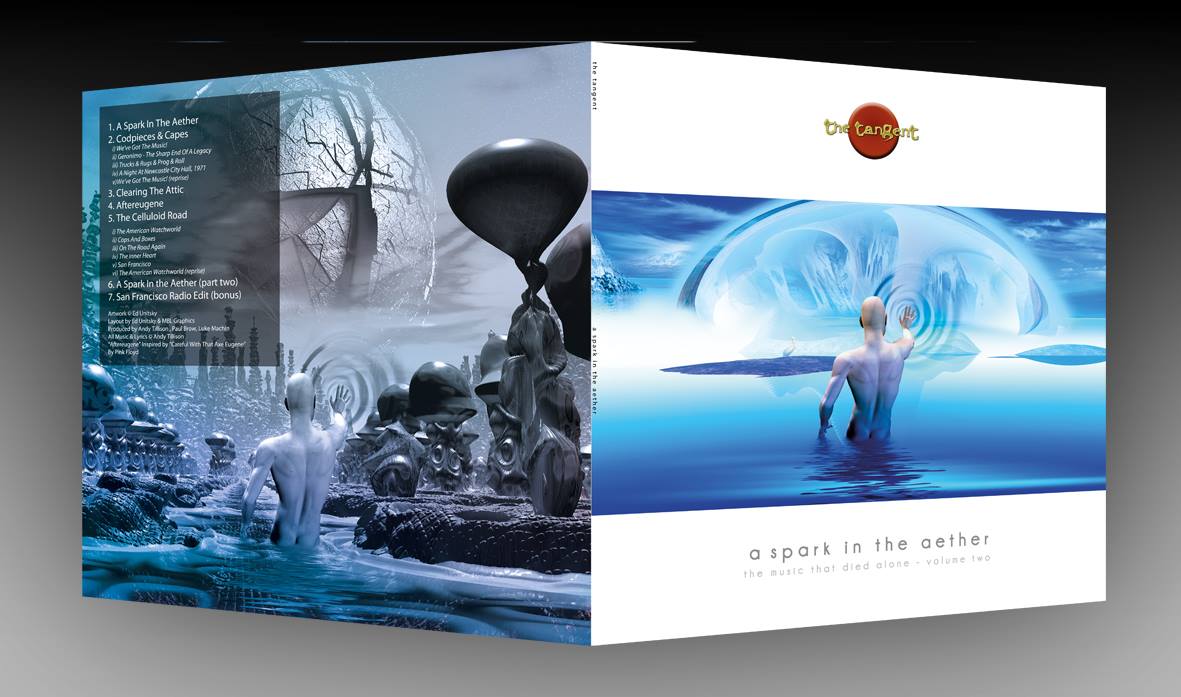
The Tangent, A SPARK IN THE AETHER (Insideout Music, 2015).
Tracks: A Spark in the Aether; Codpieces and Capes; Clearing the Attic; Aftereugene; The Celluloid Road; A Spark in the Aether (Part 2)
The Tangent: Andy Tillison; Luke Machen; Theo Travis; Jonas Reingold; and Morgan Agren.
Birzer rating: 10/10
The new album (Insideout Music).
“If Neal can find God. . . what’s in it for me?”
I’ve never hidden my admiration for all things Andy Tillison. I almost feel like I should always be writing AllthingsAndyTillison™ whenever I mention any aspect of him. For, as we all know, this redheaded and motorbiking mischievous Andy does nothing halfway. Like almost every person in the prog world—artist or fan—he’s a perfectionist. Andy’s not just a perfectionist, though. He’s a perfectionist-plus.
It would be nearly impossible to re-do or even try to top The Tangent’s 2013 masterpiece, Le Sacre du Travail, itself a celebration of Stravinsky’s The Rite of Spring from exactly a century before. The Tangent reached a fascinating peak (at least, thus far) with that one. It sold well, and well it should have. Le Sacre is a thing of true beauty and grace, a tangible piece of eternity, here and now. On it, Tillison combined—almost impossibly—the mundane with the sacred, and he did so in a way that philosophized without preaching. Not an easy task or accomplishment for anyone.
“Careful with that sax!”
Tillison is a restless man, and we all benefit from his need to make, to produce, to continue, to create, and to communicate.
Nothing stands out as much on this new album, A Spark in the Aether, as the almost-signature energetic restlessness of Tillison. This is not to suggest that we don’t also revel in his many satisfactions. Spark, however, ultimately reveals Tillison’s deepest longings, and his greatest (and quite lovely) imaginings and his desire for justice. Tillison is not just the definition of restlessness and perfectionism, he is also the spirit of charity itself. Whereas the last album considered the routine and liturgy of work, this album explores what might and what could be. It’s every bit as subtle as the previous work, but the subtleties are found in the musical passages, especially the ones that linger, rather than in the structure of the album as with 2013’s Le Sacre.
“Struggling with a Hammond until my fingers bleed. . . to an empty room.”
Tillison has rather famously proclaimed progressive rock as the sum of all music. You want jazz? So be it. 1950’s rock? Great. 1960’s bubble gum pop? Not a problem. Combine them in any way you see fit, and you have one of the many glories of prog, the ability to fuse and meld, the combination of infinite diversity within infinite possibilities. On Spark, one hears funk, funkadelic, rock, prog, jazz, and folk. There’s a bit more Pink Floydish influence than is normal for The Tangent, but, of course, it’s all done so very tastefully.
As mentioned above in the header, six pieces make up Spark. The first, “A Spark in the Aether.” Swirling keyboards and sax open the album. This is a rambunctious piece, a prime example of “prog n’roll,” as Tillison likes to call it. The title and the music fit together perfectly. Truly, there is a small fire that sets off something much larger than itself.
The second piece, “Codpieces and Capes,” could lyrically be the sequel to “Supper’s Off,” the fifth track of the 2013 bonus cd, L’Etagere du Travail. Tillison’s lyrics are at their wittiest, a series of comments about pretentions among the first generation and wave of prog stars. Tillison rightfully mocks the self-indulgence of the era.
“Clearing the Attic,” the third track, is the most fantastic of all the songs, a carefully structure dream wondering (and wandering) what would happen if every thing went perfectly well for those Tillison admires and loves most. Interestingly enough, parts of the track somewhat resemble “Feelin’ Groovy” by Simon and Garfunkel as well as Santana’s version of “Oye Como Va.” This, however, is 2015, not 1966 or 1970, for better or worse. In Tillison’s reality, Guy is famous, Cliff spins tracks for the BBC, and Sally gets to ride horseback across the vast and almost limitless plains of North America.
The fourth piece, “Aftereugene,” I misunderstood at first. I thought this might be Andy’s filler, as it were, a way to connect the first half of the album with the second. Upon several listens, though, I’ve come to realize just how complex this piece is. The best moment is Tillison whispering, “Careful with that sax.” The quality of his voice at this moment–the drama of it–is just brilliant, as is the atonal solo that Travis immediately provides. This is a sleeper song, and it will, I predict, one day be regarded as a Tangent masterpiece. It has everything a prog fan craves—weirdness, beauty, and a connection to our rather glorious prog heritage.
Perhaps the centerpiece of the entire album is “The Celluloid Road,” a full journey through and across America. Not the real America, but the America as understood by a non-American receiving his information from Hollywood. Every one from Clint Eastwood to Jesus makes an appearance in this song, and it really is the perfect road music for traversing the Great Plains and the Rocky Mountains en route to the West Coast and the Pacific. The story ends in San Francisco, with talking apes and giant lizards destroying everything. As Tillison notes, he gets to observe it all from the haze of Yorkshire.
The last song brings us back to the first, and it becomes obvious that though Tillison has not created another concept album, he has certainly created a song cycle. And, the song cycle takes us back not just to the first song of this album, but to the very first Tangent album ever, The Music That Died Alone (2003).
As a crass American, I often wonder if the English realize how lucky they are to have Andy. I know the Germans understand his brilliance, as do the Scandinavians. The English-speaking peoples of the world have an incredible treasure in Andy Tillison. Add his significant other, Sally, and they’re basically unstoppable.
Andy, thank you for sharing your wisdom with us. It’s such an honor to be a part of AllthingsAndyTillison™.






 Progarchy