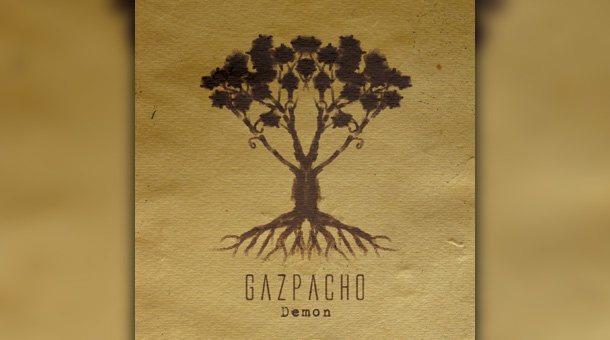
Norse Macabre: Gazpacho’s DEMON

gazpacho_demon_2014[A review of Gazpacho, DEMON (Kscope, 2014—digibook edition).  Lyrics by Thomas Andersen and Jan-Henrik Ohme.   Please forgive any typos.  I composed this on my iPad in an airport waiting area.]

Everyone’s favorite artists from Norway have released an eighth studio album, two years in the making. And, not shockingly, it’s brilliant, stunning, and ingenious. If NIGHT is the Poetic Edda of modern progressive rock, DEMON is the Prose Edda.

Our own progarchist editor, Craig Breaden, has already offered his always excellent thoughts on the album, but I can’t let a Gazpacho release go by without also discussing it. So, please consider this review a supplement to Craig’s, certainly not a replacement.

As with every Gazpacho release, on DEMON, Jan-Henrik Ohme’s vocals are immaculate, and Thomas Andersen’s and Ohme’s lyrics reach toward the highest of the high, the most beautiful of the most beautiful.

As with all of seven of their previous albums, on DEMON, the notes linger in a Mark Hollis fashion, melodies emerge through punctuated walls of sound, Ohme’s vocals soar in an introspective aural empire, every instrument is played with loving perfection and always contributes as a sonic res publica. One can find guitar, base, drums, and keyboards here. But, strings, accordions, umpa brass, and Eastern European folks instruments abound as well. Old phonographs spurt statically operatic voices, dinner party crowds murmur, wind howls, and the natural elements create a wash of color in the background, all adding to a perfectly late nineteenth-century and early twentieth-century haunting. Though frightening, DEMON’s story reflects an eerie Ray Bradbury horror rather than an H.P. Lovecraftian terrifying one.

It would be hard to find a band in 2014 more suited to long epics than Gazpacho. Really, the band’s only serious rival would be Ayreon. Here, I exclude bands such as Big Big Train, The Tangent, and Glass Hammer, as they rather happily create both concept albums and non-concept albums. Ever since NIGHT, though, Gazpacho has created concept after concept: NIGHT (a dream); TICK TOCK (a journey and escape): MISSA ANTROPOS (a pagan Mass); and MARCH OF GHOSTS (a series of short stories). The last especially offers a thematic prologue to DEMON.

While Ayreon reflects a deep knowledge and a loving embrace of science fiction and is close to infinity in its longing expansiveness, Gazpacho creates a fantastic and fabulist aura of quiet darkness and asks us to reflect on ourselves and our ancestors (our ghosts).

In a previous post here at progarchy, I noted that Gazpacho produces what might be called Eddic prog. DEMON only confirms that. Edda is a word that has no definite origins. It’s seemingly neither of Germanic or Latin origin, yet it appears as a vital word in Medieval Scandinavia. In our modern times, we attach it to the work of Snorri Snurlson. Not quite a Saga (also a perfected art form in Scandinavia), an Edda seems, by best definition, to be an “utterance of the soul.” Really, nothing could better describe the lyrics, the vocals, and the music of Gazpacho.

While I have no intimate knowledge of the band (though J-H Ohme is quite gracious on Facebook in answering my pesky questions and putting up with my innumerable tags of him), I suspect that DEMON is meant to be a second or third chapter in a long line of stories dealing with the supernatural. It began either with MISSA ANTROPOS (the calling of the Muses into this world) or with MARCH OF GHOSTS. The latter, though, seems more of a follow-up rather than a beginning. MISSA ANTROPOS certainly has the makings of a prologue or opening chapter to a long novel. If I could offer Gazpacho one piece of advice, it would be this: make the next album about Scandinavia. Images of Sigurd (baptized St. Michael after Christian evangelists appeared), the gods and heroes of the Seeress’s prophecy of Ragnorak, and the modern works of Sigrid Unset would all serve to continue this story so imaginatively begun by Gazpacho.. Imagine the use of traditional Scandinavia folk music (which bled readily from the pagan into the Christian/Lutheran), melodies, and instruments; and the imagery of Nordic prowess, AllThings, rune stones, and the Stave churches. My wannabe Viking heart swells just thinking about the possibilities.

Many reviewers have compared Gazpacho’s music to Radiohead or Sigur Ros, but I don’t hear that. If anything, Gazpacho offers a much more energetic vision first expressed by Mark Hollis and Tim Friese-Greene in 1988’s SPIRIT OF EDEN and 1991’s LAUGHING STOCK. Yet, these comparisons are inadequate. Gazpacho, as with all great bands and artists, is at once backward looking, inward looking, and forward looking. Rarely, however, do artists display the kind of confidence that this band so joyously does. Gazpacho is its own band and never a mimicry of another band. They may very well build on the music of Hollis and Friese-Greene, but they have taken it in directions that Talk Talk never could or would.

No, Gazpacho is its own. Its own beauty, its own excellence, and its own genius. Long may they pursue goodness, truth, and beauty, even while examining the horrors of the macabre.

Kscope Rocks

A huge thanks to Johnny and Sarah of Kscope for being so gracious in reaching out to and dealing with progarchy.com.  Faith in the prog world very much restored.

–Brad, ed.kscope

Credit Where Credit is Due: Kscope Graciously Responds

kscopeSo, after my longish and personal but open letter to Kscope yesterday, I received a very nice email from Snapper/Kscope.  Credit where credit is due.

Thank you, Kscope.  Not to be too dramatic (or soap operaish), but I’m really pleased to receive a response.  Especially since I didn’t expect one.

Yours, Brad

P.S.  I removed the original post.

Gazpacho Demon Reviews

Reviews of Gazpacho’s latest album, DEMON, are appearing all over the web.  We’ve already posted a link to Chris McGarel’s review.  Here are a few others–

Echoes and Dust

http://echoesanddust.com/2014/03/gazpacho-demon/

Dutch Progressive Rock Page

http://www.dprp.net/reviews/201413.php

Metal Talk

http://www.metaltalk.net/columns/20106636.php

***

While progarchy hasn’t been blessed with a review copy, here is a progarchy’s take on pre-DEMON Gazpacho–

Erik Heter on Tick Tock

https://progarchy.com/2013/06/08/ticking-and-tocking-through-a-back-catalog-gazpachos-tick-tock/

Me on Night

https://progarchy.com/2013/11/05/totally-unprofessional-video-review-5-gazpacho-night/

Me again on Night

https://progarchy.com/2012/11/21/norwegian-visions-of-purgation-the-eddas-of-gazpacho/

Gazpacho’s office site is here.

Chris McGarel on the new Gazpacho at Onemetal

Demon-300x300Over at Onemetal, the always insightful Chris McGarel has an excellent review of the forthcoming Gazpacho album, DEMON (Kscope).  As far as I know, this is the very first review of the album to appear.

These Norwegian purveyors of chilled and eccentric progressive sounds have long been a well-kept secret. Their unique blend of electronic sounds, insistent Radiohead-inspired minimalist beats, dynamic riffing and European folk instrumentation is cherished by a hardcore (and burgeoning) few. Once heard it is difficult not to fall under its spell. Demon is their eighth album.

Nordic jazz has a long tradition of fusing folksong with a cinematic rendering of the vast wildness of the landscapes into which it was born. Gazpacho’s feet are firmly planted in the rock camp though their music too seems imbued with a cold pastoral majesty while facing outwards, taking influences from ethnic traditions with a global and timeless remit. Thematically they have found another story to tell worthy of their stylistic reach.

To read the rest of this (and you should!), go here: http://www.onemetal.com/2014/02/14/gazpacho-demon/

For a progarchy take on Gazpacho, go here (Birzer) and here (Heter).  Suffice it to state, we’re fans.

Happy Birthday, Billy Reeves!

Kscope-podcast-1000I can’t believe Billy Reeves has only been offering us the Kscope podcasts for four years.  Such great stuff–seems like Billy’s voice has been been with me always.

Happy Birthday, Billy!  And, thanks for all of the joy you’ve brought us.  Looking forward to many more years.

http://www.kscopemusic.com/Podcasts/

Is This The End of Rock? Maybe, Maybe Not. An Editorial.

classic rock march 2014Classic Rock Magazine’s most recent issue (March 2014) has a fascinating article/editorial asking, “Is This the End of Rock”?  The website has reposted it as well–http://www.classicrockmagazine.com/blog/is-this-the-end-of-rock/.

Well written, Scott Rowley’s article laments the decline of the popularity of rock—as there seems to be little new talent, few companies, and even fewer cd shelves promoting and selling rock music.  In particular, with the decline of genre-radio, there’s no precise way to get a “mass movement” behind a band, a song, or an album.

Such laments, of course, can be heard in the book publishing and movie-making industries as well, as the author of the piece readily admits.

In some ways, I can sympathize with the article’s author, but only in a a very few ways.

I grew up with an amazing radio station, KICT-95FM, out of Wichita, Kansas.  I started listening to T95 sometime in 1978 or so.  I was 10.   As a teenager, I would rather listen to it or to my albums than watch TV, any day.  I even had the great privilege of having roughly six years of working for classical, rock, and news radio as a DJ and as a news reporter.

KICT95 and my albums were the soundtrack and the background of my life.  For a long time in my life, radio was everything.

Whether I was delivering pizzas or writing debate briefs (I was a high school debater–yes, I’m sure you’re shocked!), I always had music playing.  Though I now teach professionally, little has changed.  I would still rather listen to good music and write than watch TV, though I’m, admittedly, a big fan of science fiction.  Our house and my home and work offices always have music playing.  And, of course, I edit this website, dedicated to music.

Technology and a vastly expanding digital market has changed everything over the last two decades.  Steve Jobs, in particular, decentralized the world of media.  We no longer have to look to Arista or to CBS or to MGM to provide entertainment, all based on a corporate profit model.

As with all decentralization, it means harder work at all levels.  Bands will have to find time to write, to record, to tour, and to promote.  Fans have harder work as well, making choices about what to buy, how to search it out, and how much time to promote it.

In other words, in music, we’ve gone from from the equivalent of a world of Walmarts and Targets back to the “ma and pa dime stores”, the local soda fountains, and the corner groceries and drug stores.

Rock, as a genre, consequently, could follow two paths.  It could follow jazz in the late 1980s and basically die out or become so specialized as to become, sadly, merely obscure.

The other path is to follow prog, and the ways paved, in the mid 1990s, by Marillion, Spock’s Beard, and the Flower Kings.

The loss of CDs, centralized, corporate music making, and genre radio has been a huge boon to the creativity of prog as a genre.  We proggers—fans and musicians—have formed small but highly inclusive communities, using the internet as a means of communicating, sharing, discussing, debating, and promoting our favorite bands.  I know how frustrating it is for such great groups as Big Big Train, The Tangent, Cosmograf, TFATD, Leah, and others to get a market.  I would give much—and have, especially given my own limited financial resources and time—to promote progressive rock wherever and whenever possible.  I would love Greg Spawton or Andy Tillison to do nothing all day but write music, never having to worry about a 9 to 5 job.  If I had the financial means, I would gladly serve as a Patron, allowing them to do nothing but write and produce.

But, objectively, we also have to admit, as a genre, we proggers (fans and musicians) have done really, really well over the last twenty years.  If we want art as expression and not as market campaigns—forgive me, Mr. Peart—we’ve succeeded.  Rather than a Walmart or Target (is it Tesco in Britain?) of prog rock, we have lots and lots of wonderful, small-town stores and boutiques, intimately connected to their customers.  Rather than a Coors or a Budweiser, we have in the prog world, neighborhood after neighborhood of locally-produced, finely honed craft beers.  Rather than a General Motors or Ford, we have folks making model cars in their garages.  Well, you get the idea.

And, those prog labels that have done beautifully–such as Insideout, Radiant, Kscope, Bad Elephant–have done so precisely because they have allowed for the flourishing of creativity and have promoted it, rightfully, as the creativity that it is.

As with all changes in the market and technology, there are those who will adapt, create, and succeed, finding a place.  There will also be those who—out of failure to understand or sheer bad luck—fail.  If mainstream rock wants to succeed as a genre, it needs to look to prog, not jazz, as a model.  It needs to accept decentralization and intimate relationships with the fan base.

As proggers, we have almost everything to praise.  Rather than lamentation, we should be celebrating.  The old taskmasters are gone, and we’re–the small labels, the musicians, and the fans–now in charge.

A Brief Encouragement Toward Hope: Anathema’s video concert, UNIVERSAL (2013)

KSCOPE517-600pxPlease forgive this somewhat strange interruption here in the flow of progarchy.  But, I have to express this.  It’s not a review, just an expression of love.

I’ve only been listening to Anathema since 2008.  In the big scheme of things, I’m an Anathema newbie, and I never knew about them when they were a death-metal band.  I’ve still not explored that side of the band, and I’m fairly sure I wouldn’t understand it or what they were trying to accomplish with their early albums.

I can state with certainty, however, that I believe that every thing they’ve recorded over the last 11 years is of the highest excellence and integrity.  I will admit, I wasn’t as keen on Weather Systems as I was We’re Here Because We’re Here.  To me, the 2011 album is an example of a perfect album, or as perfect as things can get in this world.  When I hear Anathema, I think of Rush meeting Marillion, of Arvo Peart meeting U2 (Unforgettable Fire period).  We’re Here Because We’re Here hit everything just perfectly, and it did so with intensity and purpose (two of my favorite words).  I’m also not a fan, generally, of music videos for single songs, but the video for “Dreaming Light” hit me very hard.  It captured mystery, tragedy, and innocence so . . . well, perfectly.  My oldest daughter, Gretchen, and I watched it over and over when it came out.  We made up stories about it, and it became a very important part of our relationship.  We’re naturally very close, but this only made us closer.  It gave us a way to talk about war, abuse, and other horrific issues that must be confronted.  But, of course, the video also embraces hope.  Perhaps hope pervades every aspect of the song, frankly.

Weather Systems (2012), as I judged it, succeeded just as well, and. in some ways, better, until Track No. 9.  Then, it all fell apart for me, really changing the complexion of the entire work of art and, to some extent, of the band.  I certainly have nothing against poetry or spoken word, but, from my perspective, “Internal Landscapes” just failed.  I didn’t find the story compelling, and I thought the voice of the narrator (an American, I presume, or at least a North American) mediocre.  Maybe I’m just close-minded, but this really affected me.  I still played the album around the house and on our very long car trips, but I grimaced every time “Internal Landscapes” came on.  When PROG called Weather Systems the best album of 2012, I was just stunned.  Big Big Train had earned that one!

Last week, however, Gretchen started singing a song repeatedly, and I recognized that I recognized it, but I couldn’t quite place it.  She didn’t have the lyrics correct, but had interpreted them as well as she possibly could have, given that I have the CD in my office, and she’s only heard the album intermittently.  After about 10 tries with different groups, she explained again, “No, daddy, it’s a back and forth, a man and a woman, and they’re in love but they’re separated.”  It hit me that it had to be Anathema.  I put on Untouchable, Parts I and II, and she breathed a sigh of relief.  Yes, that was definitely it.

I’d already heard the soundtrack of the UNIVERSAL concert, and I enjoyed it.  Hoping to encourage Gretchen, I ordered the concert video.  It arrived yesterday.  Let me express my view of this concert in the most succinct way I can: Wow.  Just wow.  I love concert DVDs, and I have quite a few of them.  This, however, has to rank up near the top.  It has reaffirmed everything I loved about this band, but didn’t quite understand.  I’m still not a fan of “Internal Landscapes,” but it doesn’t matter.  This is reality.  This is myth.  This is beauty.  This is intensity.  This is integrity.  This is glory.  This is music.

Once again, everything is simply perfect.  The aggressiveness, the playfulness, the seriousness, the artistry, the cinematography, the personality.  Everything.  In.  Its.  Right.  Place.

Thank you.  Just, thank you.  And, my beautiful and wondrous daughter, Gretchen, thanks you as well.

For information on the album from Kscope, go here.

Suspicious Architecture: SAND

The cover of the new Sam Healy solo album, SAND.

From the opening notes to the final ones, the first solo album by Sam Healy, SAND, is a stunning, immersive ride.  Mysteriously, SAND is at once glorious, introspective, resignated, and triumphal.  

Throughout SAND, Healy layers tensions.  Indeed, tensions lurk and hover every where in and throughout this album.  In the end, all find resolution, and this is much of what makes SAND so utterly brilliant and compelling.  There are walls of sound, there are depths of sound, and there are tidal waves of sound.

There are also silences, many of which are deafening.  Some silences allow the listener to pause, but Healy uses most of his silences to create a playful anxiety.  Tellingly, some of the silences within the tracks are longer than those between the tracks.

In the last half century of rock, one might readily compare SAND to Talk Talk, to the Beach Boys, to Mew, to ELO, to Catherine Wheel, and to Pink Floyd.  But, without a doubt (and I’ve had the joy of corresponding a bit with Healy), Sam Healy is very much his own man and artist.  He’s as dedicated to his music as he is intelligent and witty.  Yet another perfectionist.

Defining SAND, (though, there’s nothing about SAND that one could not call “particular” or merely representative) Healy juxtaposes minimalist rhythms with swirling eddies and currents of dense sounds, samples, strings, and always interesting lyrical insights.

The WordSmith

I would never want this last part of what I just wrote to be lost, somehow, in this review.  Healy possesses the gifts of the poet.  Words find their places, rather perfectly.  As T.S. Eliot wrote in “Little Gidding,”

And every phrase
And sentence that is right (where every word is at home,
Taking its place to support the others,
The word neither diffident nor ostentatious.

If I have one frustration with the reviewers of the current manifestation of progressive and post-progressive rock (overall, not at any one particular outlet) it’s that too few critics look at  the words.  Yet, if one looks carefully at the lyrics being produced by Spawton and Longdon, Tillyson, Kilminster, or Healy, she or he will see the poetic insights equivalent to the best of the 19th-century English romantics.  (And, of course, I’m not even including the non-Brits.  Add the Scandinavians and North Americans in, and we’re experiencing a brilliant moment of poetic revival.  But, this isn’t the purpose of this post. . . . For now, trust me that Healy is a master of words, a smith of words, if you will.)

Not only does he master his musical material, but he knows which word to use to emphasize the music, and which music to employ to emphasize the word.  Without getting religious here, it would be fair to state that something sacramental or incarnational appears when Healy puts words to notes and notes to words.

My favorite line of SAND:

Suspicious architecture rises on the plains of our doubt.

This is not the only gem.  Healy’s words drop mischievously like bombs at times, and always to the delight of the listener.

Without your triage and telegraph

I’m a rudderless antique oil-powered destroyer

or

While the reason slips away beneath the everyday

White picket fences circumscribe the lies that started out

Innocent as not complaining when you feel slighted

Sam Healy, an Irishman turned Scot.
Sam Healy, an Irishman turned Scot, dedicated and purposeful artist and perfectionist.

An Original

In the material promoting SAND, Healy said that he needed a “palate cleanser” after writing and recording his first two albums as North Atlantic Oscillation (also on Kscope).  And, as it turns out, Healy recorded all of this on his own, with only the most minimal help from others.  He wrote, produced, mixed, and engineered the entirety of SAND.  Would it be fair, then, to call SAND something akin to NAO 2.5?  Not in the least.  This is its own album and own project with its own purpose, meaning, and direction.  Anyone who loves NAO will additionally throw her or his love to SAND.  But, SAND is something different and original.

As the opening line of the album states, “There’s weather enough for us all.”  Whether Healy meant this to have a double meaning or not, it comes with one for the listener.  Healy’s certainly not distancing himself from NAO, he’s just noting there’s much to do, much to discover, and much to create.

Yet, this is clearly a Healy project.  There are just two things that Healy will never be able to escape, though I also very much hope he never tries.  First, Healy has one of the most distinctive voices in the rock world.  It has the depth of everything David Longdon brings to Big Big Train and the lush beauty (yes, I’m calling a man’s voice beautiful, as it is) of Leah McHenry or Sarah McLachlan.  It carries the urgency of Catherine Wheel but also offers the varied tones (sorry, I’m not a musician, so I might not be using the proper terminology) of what Andy Partridge was capable of with the best of XTC, such as what he did on The Big Express.  Healy’s voice is the music, to a large extent, and the other instruments really serve to augment what he’s capable of, vocally.

kscope

An Artist Colony

Kscope, the home of Healy’s music, seems a small but mighty paradise to me, the equivalent, from a century ago, of the artist colonies of Ditchling in England or Taos in the United States.  In the morning, you work in the fields, in the afternoon, you learn to blacksmith, and in the evening, you write and tell stories around the hearth, all of it in good company.

I also imagine Kscope, in much more modern terms, as the English equivalent of Pixar, a place of toys, machines, spaces, treats, delights all available for human ingenuity and creativity to flow.  Maybe a Steve Jobs (RIP) or a John Lassiter pops his head into your office every once in a while, giving you the thumbs up and the encouraging smile.

These, of course, are just the passing fancies of a middle-aged American lover of fine music, sitting in his office, recovering from grading 65 final papers.

Still, what I hear in SAND is not a part of my fancy at all, though it certainly tickles it.  No, this is reality.  And, a beautiful one at that.  Even the cover of the album reveals much about Healy’s overall project.  SAND, printed in a minimalist font across the front, hovers over a black hole and a swirling galaxy, itself rotating around the abyss.  A star, powerful in and of itself and the single brightest element of the cover, keeps its distance from that which would devour it.  Yet, more tensions.

I must admit, I hope that Healy does two things in the future, though with no rush.

First, I hope he puts his rather considerable writing skills to creating a concept album.  I’m sensing a coherency of ideas running throughout SAND, but it would be wonderful for Healy to be explicit.

Second, I hope he rents an organic space and employs several string and woodwind players, and produces one of the most gorgeous albums imagined.  Healy is a natural director and composer, but he does almost everything on SAND via various machines.  And, what he does with those machines makes my heart flutter.  But, I have to wonder what he would do with a string and woodwind ensemble, recording in an intimate setting.  Imagining this, my heart goes beyond the flutters and begins to pound!

SAND_image

A Must Own

So, Progarchists, let me apologize.  Had I heard this album prior to December 1, it would have made it—unquestionably—into my top of 2013.  Why apologize—because,  you need to buy this album.  Yes, you need to spend more money.  This is a must-own, an aural delight, a real piece of art for the headphones.  We need to support the likes of Sam Healy as much as we can.  He has earned it, and we owe it to the very ideal of beauty itself.

As a Catholic, I can state that my new year began on the first day of Advent.  So, I’m declaring SAND the first truly great work of 2014.  Yes, I know I’m cheating.  But, I’m cheating for the best of reasons.  Maybe, I’m just a Jesuit.

Now, please excuse me.  Some suspicious architecture is calling me. . . .

SAND debuts Today

The cover of the new Sam Healy solo album, SAND.

While my copy hasn’t arrived yet (I’m eagerly awaiting it), Sam Healy’s first solo project, SAND, came out today from Kscope.  iTunes and amazon.com both have music samples, and I’ve been enjoying them quite a bit.

Healy is the lead singer and main songwriter for the Celtic (Irish and Scottish, I’ve recently discovered) prog group, North Atlantic Oscillation.  I’ve had a chance to correspond a bit with Healy over the past week, and I’ve found him to be as intriguing and intelligent as one would imagine from this deeply talented song writer.  He’s also quite witty.  After I mentioned to him that I was heading to class (western civilization), he reminded me that all would be explained when I came to realize that “Soylent Green is people.”

Thank you, Sam.

For more information, go here: http://www.kscopemusic.com/2013/10/04/sand-the-debut-album-from-new-project-by-sam-healy-north-atlantic-oscillation/