My best of, must owns, of 2013

Prog7 - Version 2I realize it’s not the end of the calendar year, but it is the second day of Advent, and it seems like a proper time to list what I love about the music of this past year.  

The year, frankly, has overwhelmed me—but all in a good way.  As someone who has followed prog rather consciously since about 1981 (age 13) and has been exposed to it since about 1971 (age 3), I love the genre.  Frankly, I love many forms of music, including classical, opera, and jazz.  I’ve never learned to appreciate anything about country and rap, and, given that I’m 46, such prejudices will probably remain.

Sometime around age 22 or 23, though, I realized that financially, I was going to have to chose a genre if I wanted to collect and listen with any seriousness.  Perhaps it’s the slight OCD or some other quirk I possess, but I’ve never liked doing any thing half way.  In fact, as my maternal grandparents taught me—whether in taking care of the yard or cooking a meal or baking a loaf of bread or even in helping a neighbor—there’s no sense at all in doing something only partially.  In fact, to do anything partially was to slap yourself, integrity, and God in the face.  If you’re going to do something, do it well.  In fact, do it with excellence, if you possibly can.

So, if I wanted to throw myself into a genre, and not do it halfway, I had to choose between jazz and prog.  I love poetry too much, so prog seemed the best genre, as I find much to appreciate in fine lyric writing.  And, even in psychedelic lyric writing, there’s a joy to figuring out the puzzle of imagery.

And, so choosing prog, I realized soon after that I’d chosen a genre made up a lot of folks like myself—a number of OCD perfectionists!  And, I found that almost everyone making prog was (and is!) deeply committed and intelligent.  And, so were (and are!) the fans.  No one who loves the superficial of life becomes a prog musician, artist, or aficionado.

The problem was, of course, that when I was age 22 (1990), there wasn’t a lot of prog happening.  At least not much new was coming out.  Yet, prog could be found all throughout the rock world—though not always in the likeliest places.  As a genre, though, prog was probably at its lowest point in terms of what was being released.  Yet. . . yet. . . we were only a few years away from Brave and The Light and The Flower King . . .

Flash forward 23 years.  Holy schnikees.  What a year 2013 has been.  Really, could it be better?  Doubtful.  And, as I mentioned in my Preliminary Awards piece a few days ago, an argument could be made that we’ve reached the pinnacle, the Mount Everest of Prog!  I know, I know.  Eric Perry is going to slap me down for being hyperbolic.  Damnit, Eric, I’m from Kansas!  We’re not exactly subtle!!!

Phew.  Ok, I feel better getting all of that out.

Two quick comments.  First, these are in no order, other than alphabetical.  Frankly, these albums are just too good to allow my own will to separate one from another by “better or better.”   With one exception.  I would think any lover of the genre would want to own each of these.  Second, there are several albums that I suspect are wonderful, but do to my loan limitation because of family and work, I didn’t have time to absorb.  This latter list includes releases by Sam Healy (SAND is en route to the States as I type this), Mike Kershaw, Haken, Francisco Rafert, Ollocs,and Sky Architects, I apologize to these artists, as they took the time to contact me, and I was unable to give them credit where credit is due.  In due time, I will, however.

***

So, the list of the must-own cds of 2013, with two important exceptions.
ayreon

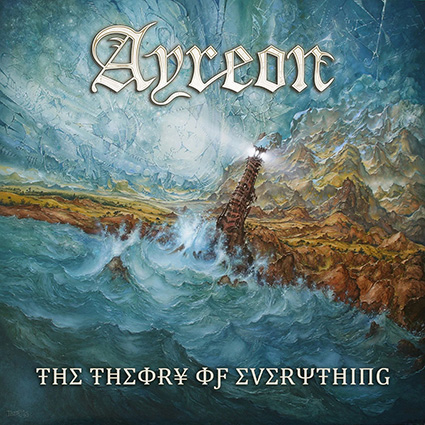
Ayreon, The Theory of Everything.  I hope to offer a full review of this soon, and I think fellow progarchist Tad Wert will as well.  The earlier series of Ayreon albums—possibly and arguably one of the most complex science fiction stories ever written—seems to have become self contained and at an end.  Now, if I’m understanding the lyrics from Arjen Lucassen’s latest correctly, Ayreon has become a project about exploring the self rather than about the self exploring the universe.  This is not easy listening, in terms of music or lyrics.  The former is a shifting feast of glory, no idea lasting more than two or three minutes before gorgeously transforming into some new idea, and the latter is deeply introspective and intelligent.  I’ve never had the chance to meet Arjen, but I would guess that he must be about as interesting as possible.  For him to keep such a huge range of ideas in one album, musically and lyrically, screams brilliance.  I only have one complaint with this release.  I’m a huge fan of Arjen’s voice, and he relies on the voices of others.  All good, if not outstanding, but I want Arjen’s voice.

***
cosmograf

Cosmograf, The Man Left in Space.  Phew.  Yes, let me write that one more time.  Phew.  That English chronometric and entrepreneurial demigod, Robin Armstrong, has now released four albums under the project name of Cosmograf.  Each is better than the last.  And, each of “the last” was pretty amazing and astounding and outstanding and lovely and meaningful and . . . you get the point.  The Man Left in Space is existentialism at its best.  Just as Arjen has written one of the finest science fiction stories of the last century, Robin has given us the musical equivalent of of the works of Albert Camus and Gabriel Marcel.  Add to near perfect story telling the musical work of Greg Spawton, Matt Stevens, Nick D’Virgilio, and, among the best, Robin himself, and you have a work of art that will stand the test of time.  A family man who loves speed, Robin also loves excellence.

***

days_between_stations_in_extremis_resized

Days Between Stations, In Extremis.  This one was a complete surprise to me.  A review copy arrived in the mail, courtesy of the band and the master of American prog PR, Billy James.  I was intrigued by the cover [que, background sound, Brad’s mother: “Never trust a book by its cover. . . “], though I frankly don’t like it that much.  It’s by the famous Paul Whitehead, but it’s a little too psychedelic for my tastes.  But, then, I looked at the musician list.  Holy smokes!  Tony Levin, Billy Sherwood, Colin Moulding, and Rick Wakeman.  How did this come about, I wondered?  Sherwood and Moulding sing on the album, and neither has ever sounded better.  Indeed, they seemed to have been created and birthed for this album.  Overall, In Extremis is symphonic prog at its best.  At 8 tracks over 70 minutes, the album never lags.  It flows together beautifully and movingly.  There are some of the most gut-wrenching passages, emotionally, I’ve ever heard in a prog album.  And, the two main members of the band, Oscar Fuentis Bills and Sepand Samzadeh, know exactly when to linger over a musical part and when to move on.  The high point: The Eggshell Man.  I have no idea who or what he is, but I’d like to meet him.

***
firece spooky action

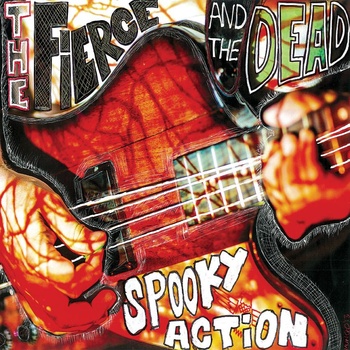
The Fierce and the Dead, Spooky Action.  Four great guys—Matt Stevens, Kev Feazey, Stuart Marshall, and Steve Cleaton—making the best music possible for two other great guys, David Elliott, European Perspective Guy (I think this is official superhero name) and founder of Bad Elephant Music, along with the hilarious and artful James Allen.  Matt Stevens is a stunning person and artist.  It’s been fascinating and heartening to watch him struggle as he makes his way into the profession.  He very openly asks about opportunities.  Should he pursue fame first or art first?  I always know where Matt is going to land.  Probably many of us do.  He always comes down on the side of art, knowing the fame will follow when it follows.  I hope and pray he never changes his mind or soul regarding this.  There are lots and lots of folks out there—not just progarchists—cheering these guys on.  As my close friend and fellow progarchist, Pete Blum, has said, nothing has hit him so hard since the days of Zappa.  And, for Pete, this is a massive and important statement.  Everything on this album is wonderful.  In particular, I’m quite taken with Parts 4 and 5, a continuation of a theme that Matt and the guys started with Part I, their 19 minutes epic from their very first release.  TFATD, not surprisingly, also seems to have started somewhat of a sub genre within prog, the prog instrumental album.  In otherwords, what TFATD is doing is roughly equivalent to what progressive jazz was in the 1960s and 1970s.  A good sign for the health of all concerned.  In particular, newly emerging bands such as Ollocs and Rafert are also releasing instrumental albums, all of them quite good.

***
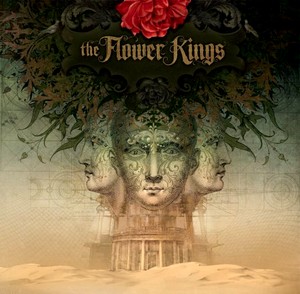
"Pure Flower Kings, pure prog and Kingly epic."

The Flower Kings, Desolation Rose.  This release surprised me as well, but not for the reason Days Between Stations did.  As far as I know, I own everything Roine Stolt has made or contributed to since about 1994.  Every side project, everything.  So, there was never a question about whether or not I would buy the new Flower Kings album.  I would certainly list Space Revolver (2000) and Paradox Hotel (2006) as two of my favorite albums of all time.  Stolt always has the power to release wonder in me.  Whether it’s the wonder about the first day of creation (Unfold the Future) or John Paul’s Pizza (Space Revolver), I love the libertarian, hippie, playful spirit of Stolt and the band.  Really, think about the members of this band.  Stolt, Bodin, Reingold, Froberg, and Lehrmann.  Already reads like a “supergroup.”  Not that they can’t be as serious as they can be trippy. One only has to listen to “Bavarian Skies” or the “Ghost of Red Cloud” to know just how deep they can be.  What surprised me about the new album, “Desolation Rose” is just how political and angry it is.  I don’t disagree with the anger or the politics.  In fact, I think I totally agree.  But, “Desolation Rose,” lyrically, is about as far away from “Stardust We Are” as one could possibly imagine.  This diversity just demonstrates how talented this Swedish band really is.  The entire album builds until it reaches its highpoint (in terms of intensity) in “Dark Fascist Skies.”  The final two songs, “Blood of Eden” and “Silent Graveyards,” offer a rather calming denouement.

***

fractal mirror

Fractal Mirror, Strange Attractors.  I’ve already had a chance to write a long review of this excellent album on progarchy, and it was (and is) a great honor do so.  Strange Attractors is not only one of the best releases of 2013, it’s the freshman release of a brand new group.  Three folks—all of whom met one another through the internet prog community (how cool is this!)—makes up this band.  Leo Koperdraat, Ed Van Haagen, and Frank Urbaniak.  But, we have to add a fourth.  It’s art comes from Brian Watson.  This is really important.  Not only is Watson an amazing artist, but he also creates an image for the band in the way one associates Yes with Roger Dean, Talk Talk with James Marsh, and Jim Trainer with Big Big Train.  It’s one of the joys of prog.  The art can be (and should be!) as beautiful and meaningful as the music and lyrics.  But, back to the music.  The three members of Fractal Mirror have created a stunning progressive soundscape, gothic and heavy in tone, but light in the space created.  I realize this sounds like a contradiction, and I wish I had the ability to explain it better.  I don’t, sadly.  It’s really not like anything I’ve heard before.  Suffice it to state, it’s quite refreshing and welcoming in its own intensity.

***

leah otherworld

Leah, Otherworld.  This is the only EP to make the “best of” list this year.  It’s also the only release I’m listing in which the artist (Leah McHenry) doesn’t consider herself a progger.  She places herself more in the metal camp, and this becomes obvious in the final song of the EP, “Dreamland,” a beauty and the beast duet with lots of metal “growling.”  Whatever one wants to label Leah’s musical style—and I would call it a cross between Sarah Maclachlan and Arjen Lucassen—it is very artful.  Leah’s voice could haunt a moor!  So much depth, truth, and beauty in every note.  The EP is only five songs long—Shores of Your Lies, Northern Edge, Surrounded, Do Not Stand, and Dreamland.  The first four possess a very Celtic/Nordic northern edge to them.  In fact, I called my initial review of the EP, “On the Northern Edge of Prog.”  I’m not bragging, but I am rather proud of this title.  it seems to capture exactly what Leah is.  Arjen Lucassen, if you read this blog, please look into Leah’s music.  I could see the two of you working very well together.  Leah, as it turns out, is also about as interesting a person as one might find anywhere.  Since Otherworld first arrived at progarchy hq, it’s been in constant listening rotation, and I pretty much have every note and lyric memorized at this point.

***
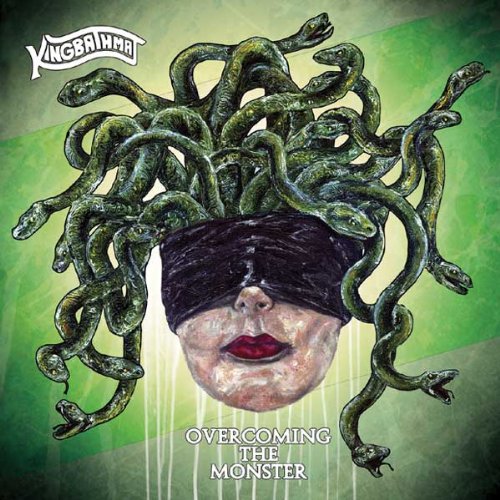
Kingbathmat OTM

Kingbathmat, Overcoming the Monster.  When we first started progarchy just a little over a year ago, I received a note from Stereohead Records of the U.K., asking me if we’d be interested in reviewing a cd by Kingbathmat.  Sure, I thought.  Of course.  Only the dead wouldn’t be intrigued by a band with that name.  Well, since then, I’ve not only listened to about as much Kingbathmat as exists (still missing a small bit of their back catalogue, but this will be rectified at the beginning of 2014, when the new tax year begins!).  I love these guys.  I’ve had the chance to get to know John Bassett and Bernard (he seems to have several last names on the internet!).  What incredible guys.  Really a band of Peart’s “Tom Sawyers.”  Mean, mean stride, never renting the mind to god or government.  Smart, insightful, unafraid.  Frankly, these are the kind of guys I would want next to me should I ever find myself under fire.  As with Leah, I’m not sure that Kingbathmat is perfectly prog.  But, then again, if it’s “perfectly prog,” it’s probably not prog at all.  Kingbathmat mix a number of styles, many of them heavy, to form a mythic maze of musical inspiration.  They are by far the heaviest in my list for 2013.  The “Tom Sawyer” reference is not just lyrical.  Parts of Kingbathmat pay great homage to early and mid-period Rush.  Of all Rush albums, Counterparts is my least favorite.  That doesn’t mean I don’t love it.  I’ve been a Rush man since 1981, and I will die a Rush man.  So, any criticism is relative.  But, if you could imagine Rush entering the studio with the music of Counterparts, the lyrics more intense than culturally sensitive, and a producer who wants to rock, really rock, you’d have an inkling of what “Overcoming the Monster” is.  Every song is a joy.  Not in the precious, sappy sense, but in the satisfying, just sense.  Everything is really quite perfect: vocals, bass, guitar, drums.  Since I first received a copy of OVERCOMING, I’ve probably listened to it every other day.  After a hard day of teaching (a job I love) or writing something scholarly, there’s nothing quite like putting this cd on, sitting back, and saying, “yeah, it was a good day.”

***

KSCOPE245

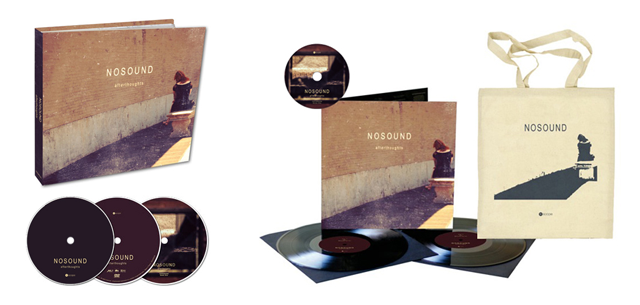
Nosound, Afterthoughts.  Giancarlo Erra might be the anti-Kingbathmat.  Erra, an Italian demigod of sound in his own right, loves silence and space as much as Kingbathmat loves walls of Rush/Soundgarden-like sounds of thunder!  Indeed, Erra has a lot of Spirit of Eden and Laughing Stock in him, a lot of Arvo Part, too.  If there are three notes, maybe there should be two.  If there are two notes, maybe there should be one.  If there is one note, maybe you should let silence have its say.  I’ve been following the work of Giancarlo Erra for almost a decade now.  He always entrances and entices me.  He creates soundscapes so powerfully delicate that one wants to drown in their dreamlike, twilight quality.  He’s also every bit the lyricist Hollis was at his best.  He’s also really a complete artist.  He not only writes his music and lyrics, he creates his own packaging, is a rather jaw-dropping photographer, and even designs his own computer apps.  I was thrilled that Kscope just re-released his early masterpiece, Lightdark (2008), remastered.  As with Lightdark, Afterthoughts just flows.  Gentle, punctuated, quiet, loud, emptiness, walls.  Listening to Afterthoughts is akin to standing on a peak in the Idaho Rockies, watching a violent storm pass under you in an adjoining valley.  Nothing is unneeded, and nothing needs to be added.  Afterthoughts is what it is, another Erra masterpiece.

***

Two more to go, but supper’s ready . . . .

Kscope Postcast 45

Billy Reeves, Kscope Podcast.

Billy Reeves never disappoints.  Check out his latest podcast featuring Nosound, Ulver, and Sam Healy (focused on Healy).  #45.  Quite good.

https://soundcloud.com/kscopemusic


The May Kscope Podcast: Nosound’s “Afterthoughts”

Kscope Music puts out an entertaining and informative monthly podcast featuring conversations with and performances by the label’s artists. It’s free, and you can subscribe to it via iTunes, or listen to it here.

This month’s podcast focuses on Nosound’s new release, Afterthoughts (see our review of this extraordinary album here). It features interviews with Giancarlo Erra and Chris Maitland, and we’ve embedded it below for your convenience!

Covered

For some reason, I’ve always been quite taken with the idea of the “cover,” a great group or artist remaking the old art into something new, profound, and tangible for a new audience.

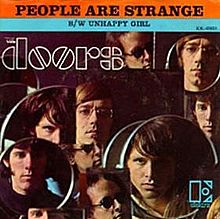
220px-PeopleAreStrangeUnfortunately, the result of the cover is often a mere imitation of the original.  This, sadly, does nothing but waste everyone’s time.  In this instance, I can’t help but think of Echo and the Bunnymen’s remake of “People are Strange.”  It is almost note for note and instrument for instrument the same as the original by the Doors.  No matter how great, Echo, they will simply not best a classic by merely imitating.  There’s nothing even remotely interesting or unusual in the Echo version.  They sound bored, and they probably are.  Echo was simply too good to be a glorified cover band.

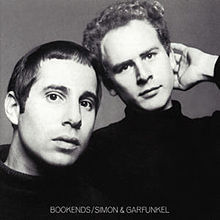
BookendsThere are also inferior versions of a once great song that simply had never had a wide audience in the first place.  Here, I think specifically of the Bangles remaking A Hazy Shade of Winter.  The Simon and Garfunkel version is in every way superior except one.  When it was originally released, A Hazy Shade of Winter appeared around a number of other attention-gathering songs off of the album, Bookends.  It would’ve been pretty hard to complete with “Mrs. Robinson.”  And, A Hazy Shade never became absorbed into American culture the way so many other Simon and Garfunkel songs did.  When the Bangles released it in 1987, it climbed to #2 on the American pop charts.  Who can forget first hearing that song, realizing the immense disconnect between a barely talented hack corporate band and some of the best lyrics ever written?  No, it shouldn’t have succeeded, but it clearly did.  Commercially, a success.  Artistically, a travesty.

Over the last decade or so, though, a number of excellent songs have been covered by various prog bands.  In each case, at least as I see it, the songs covered are–quite the opposite of the Bangles assault on and diminution of a classic–in most respects far better than the originals.  Three things help account for this.  First, some of this improving, I’m sure, is a product of better technology.  Still, we can all think of examples where the newer technology has driven the life out of a song or an album.  Technology, in the end, is a tool, neither good nor bad in and of itself but a means to a good or bad end.

Second, in ways that could never be measured, a remake is importantly the result of the love the artist of today feels for the artists and traditions of the past.  The current prog artist has absorbed some beloved songs for years and years, and the songs have become an essential part of the art itself and of the artist herself or himself.

Third, very importantly, few progressive rock acts perform merely to be commercial.  They do so for love of the art itself.

Again, let me go back to that Strawband, the Bangles.  What did they have to offer to a Simon and Garfunkel song?  Nothing in the least.  Per the above three points.  First, the technology made them mere apes, allowing them to present sanitary mimicking of a great song.  Second, the Bangles play their version as though they’d only encountered the original version days or possibly hours before recording.  Their version came out twenty years later, but it, in no way, feels as though an artist had absorbed that song for twenty years.  Third, the Bangles wanted to cash in on a piece of art that failed to reach its full potential two decades earlier.  And, they did.  Again, a commercial success, but a artistic horror.

***

But, what about some wonderful, beautiful, intense, gorgeous covers?

artworks-000011754621-tdrn2o-t500x500Nosound’s remake of Pink Floyd’s 1971, “Echoes.”  Four minutes longer than the original, the Nosound version not only records their version with affection, but there is an unmistakable Nosound sound.  Where Floyd used a cold and rather impressive technology to make certain unusual sounds, Nosound substitutes a much greater organicism to the song.

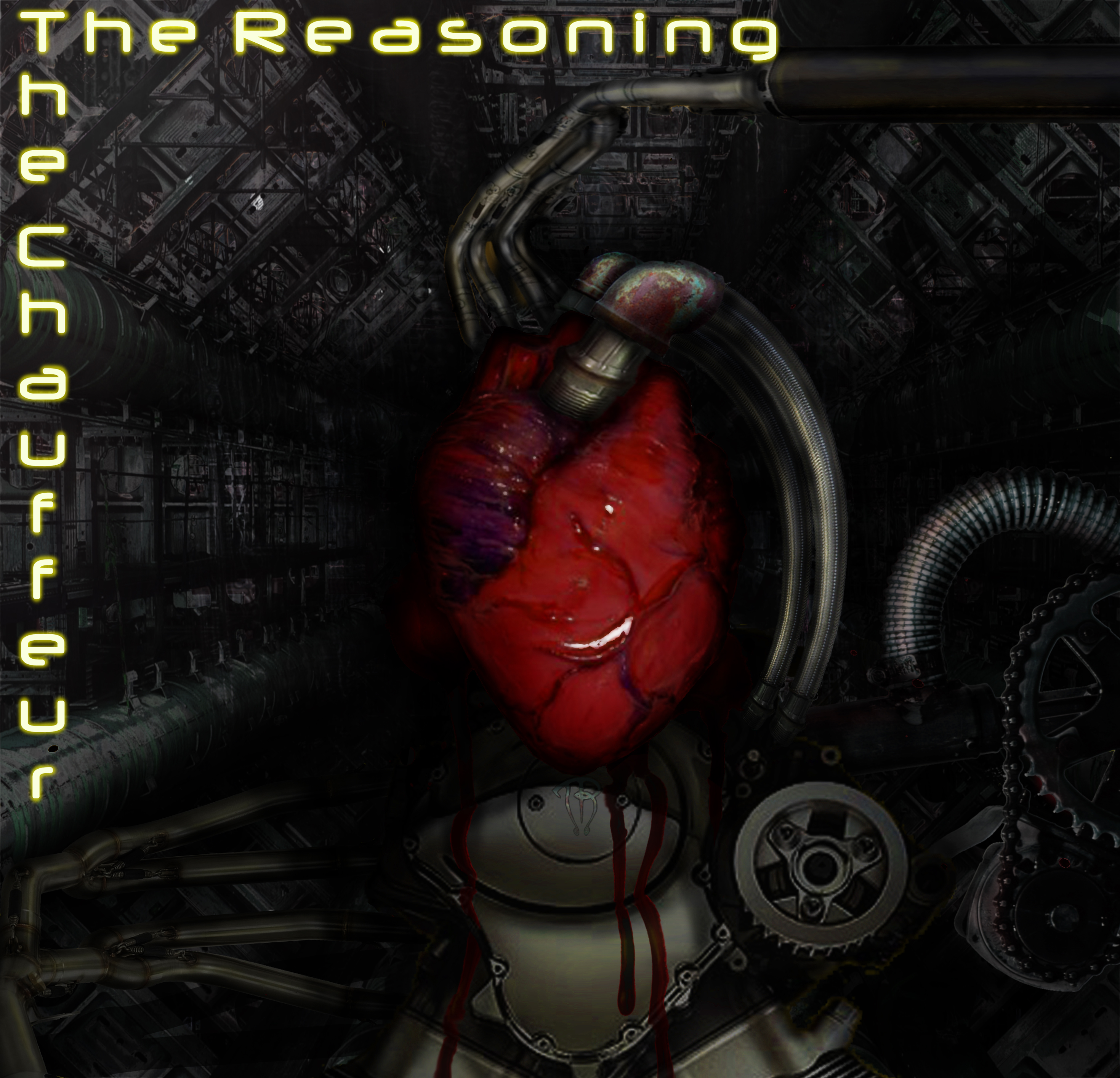
1479671968-1The Reasoning’s remake of Duran Duran’s “The Chauffeur.”  This was certainly the best and most interesting track off of Rio (1982).  And, Rachel Cohen of the The Reasoning has never once hidden her admiration of the best rock of the 1980s.  Matt, Rachel, and the others do wonders to the original, making it far, far superior.  At once more delicate and yet harder than the original, The Reasoning makes this a serious work of art.  Matt’s deep and haunting bass is especially good.  But, so is Rachel’s voice.  The Reasoning takes a good pop/rock song, and makes it a short but haunting masterpiece of prog.

bbt masterBig Big Train’s “Master of Time.”  Sheer bucolic glory.  Next to the original by the former Genesis guitarist, BBT’s Master is a blatant and full-voiced work of immaculacy.  It makes the original seem a fine sketch of a song, while paying all due homage to it.  Even in its BBT’s intensity, joy multiplies as the song progresses, following NDV’s driving drums.  If this isn’t a glimpse of a pre-fallen Eden, nothing is.  And, yes, I wouldn’t be surprised if David Longdon’s voice has an angelic counterpart in the spheres far beyond this world.

Peter_Gabriel_-_Scratch_My_BackPeter Gabriel’s Scratch Your Back, in many ways, corrects the errors of the Bangles.  While the whole album is good, and Gabriel covers everyone from Elbow to David Bowie to the Talking Heads, nothing bests his own version of the Paul Simon song, “Boy in the Bubble.”  While it’s not necessarily better than Simon’s version, it is a penetrating look at the darker aspects of the song.  I would challenge anyone to listen to Gabriel’s version with headphones and not tearing up at the terrors and tragedies revealed anew in the lyrics.  This might be Gabriel at his absolute highest as an artist.  “These are the days of miracle and wonder.  Don’t cry, baby.  Don’t cry.”

glass hammer south sideGlass Hammer remaking Yes’s “South Side of the Sky.”  This has been one of my two or three favorite Yes songs going back to my early childhood in the mid 1970s.  Certainly, when I saw Yes play live in Grand Rapids for the 35th Anniversary tour, this song was the highlight.  Nothing, however, prepared me for hearing Glass Hammer’s version when I first purchased “Culture of Ascent.”  This cover is a perfect example of a band and a group of artists that had fully absorbed the song–every single aspect of it–over  period of two or three decades.  This song by Yes is simply an immense part of the DNA of Glass Hammer.  And, it shows in every aspect of Glass Hammer’s version.  Everything is simply perfect, and it’s as obvious as obvious can be that Glass Hammer recorded and produced their version with nothing but love, pure and unadulterated love.  And, dare I say it without risking the reader just switching off and heading to the wilds of a new website. . . Susie Bogdanowicz was born to sing this song.

***

There are other songs I’d love to write about, but time prevents me at the moment from doing so.  Let me just conclude with this.  When a cover is done well and with love, it’s a hard thing to beat.  And, while I would never want the current progressive moment to become imitative at its heart, it’s a healthy thing to remember and honor those who came before us.  In particular, I think there are a number of songs from the 80s that were brilliant in their time, but could really benefit from being progged up.  Imagine Thomas Dolby’s One of Submarines redone as full-blown prog.  Or, Big Country’s The Seer. Or, The Cure’s Disintegration.  Or, New Model Army’s Whitecoats.

So much to be done.  So little time.

golden age

Nosound Cover Pink Floyd’s Echoes

artworks-000011754621-tdrn2o-t500x500I know that I can get into all kinds of trouble for stating this, but, when covers are done well, they’re often even better than the originals.  And, I don’t mean to degrade the originals.  For example, I think NDV’s Rewiring Genesis does an even better job at LAMB LIES DOWN than did Genesis originally.  Heresy???  Maybe.  But, it’s true.

Here’s another example.  I love Pink Floyd’s Echoes.  I was probably 14 or so when my friend and sometime debate colleague, Darrin, showed me Pink Floyd’s Live in Pompei on laser disc.  I was blown away.

But, this version (linked below) is even better.  I’m sure production and technological advances have something do with it.  But, I also think it’s because the covers do come later, and the folks who cover them often have integrated the songs into their very being in ways the original writers probably didn’t.

Yes, start writing crazy things about me in the posts comments!  At 45, I’m thick skinned enough to take it!!!

So, here’s the cover and the masterpiece: Nosound’s version of Pink Floyd’s Echoes.  Makes me just sigh in wonder.  Erra is a genius.  And, he “just gets it.”

https://soundcloud.com/kscopemusic/nosound-echoes-pink-floyd-live

The Textures of Nosound–Never an Afterthought

afterthoughts640Review: Afterthoughts (2013; Kscope Records).  It can be ordered here.

Listening to a Nosound album (original, live, or compilation–they come in every variety and always possess the very essence of quality itself) is so much more than a moment or an event.  It’s an immersion into something immeasurably deep and wide and beautiful.   It’s a mystery.  It’s liturgy.  It’s possibilities.  It is eternity.

Looking over the reviews of the first three studio albums–Sol29 (2005), Lightdark (2008), and A Sense of Loss (2009)–a few words appear repeatedly and unmistakably.  Ethereal, intelligent, contemplative, flowing, organic, psychedelic, spacey (as in Pink Floyd space rock), progressive, artful, ambient, flowing, melodic, painted, cinematic.

If one had to label the music of Nosound, it might be something like: neo-classical, Hollis-esque, Shoe-gaze prog.  Certainly, the spirit of Mark Hollis lingers over the music of Nosound, but, as with most bands loved and admired by Progarchy, Nosound is its own band, and the sound it creates is its own.

Some have labeled the music of Nosound minimalist, but this is simply false.  While it might have the feel of Philip Glass at times, Nosound is about a wall of sounds as well as about the absence of sounds.  Just as Arvo Part uses amplifiers when necessary to make the music he needs, so does Nosound.  If a synthesizer is called for, a synthesizer is used.  But, if a real stringed instrument is appropriate, the stringed instrument is used.  Everything has its place, and every thing supports every other thing.

Afterthoughts (2013; Kscope)

In less than a week, Kscope will be releasing the fourth studio album from Nosound, Afterthoughts.  When it was first announced, I ordered the three cd-version immediately.  Very graciously, Nosound sent us a promo-advanced copy of Afterthoughts.  I’m not sure how many times I’ve listened to it over the past week and a half.  It is every bit as captivating as the first three albums, and I have thoroughly enjoyed and appreciated and been made better by my immersion in this latest work.  It is a glory, to be sure.

It is certainly Nosound, but it is Nosound plus.

The nine songs of the album are: In My Fears, I Miss the Ground, Two Monkeys, The Anger Song, Encounter, She, Whatever You Are, Paralysed, and Afterthought.

As always, the album ebbs and flows.  Though I grew up on the treeless and waterless plains of Kansas, I imagine the music best represents the ebb and flow of the tide.  Just as with the ocean, one must imagine creatures populating the water well beyond anything we know, and we must imagine the edge of the world just over the horizon.  When reaching it though, one does not fall into nothingness but into everythingness, life itself.

The words flow as beautifully and as meaningfully as the music itself, and the lyrics only take one further into this sacramental reality.  The listener feels the joys, the anguish, and the incomprehensibilities experienced by the lead singer, Giancarlo Erra.

While every song presents and exists in its own form of majesty, the album especially reaches its highest highs in the second half.  From the longings of Encounter (the fifth track), Afterthoughts climbs to ever greater heights, reaching eternity sometime in the middle of the eighth track, Paralysed.

Giancarlo Erra

The mastermind behind the band, Roman Giancarlo Erra, is as intelligent and as talented as he is kind.  An artist in the purest sense, Erra writes for himself, but he never forgets his audience.  Yet, unlike so many in the larger rock and pop world, Erra keeps that sense of traditional relationship between artist and patron (his fans and those who purchase his CDs).  He never–in any way, shape, or form–dumbs down his art, but he remains responsive to his audience, incorporating them joyfully in his own art.

As the greatest of Anglo-American poets, T.S. Eliot, explained at the very end of World War I:

And he is not likely to know what is to to be done unless he lives in what is not merely the present, but the present moment of the past, unless he is conscious, not of what is dead, but of what is already living.

Though 94 years early, Eliot must have been writing about Erra.  Certainly, we can consider Eliot’s voice prophetic.  Erra embraces the moment while never forsaking what he has inherited.  Indeed, Erra willfully and lovingly embraces the past in the present, and the present in the future.  As with Eliot in the greatest work of art of the twentieth century, The Four Quartets, Erra stands in the middle of his art and looks outward.  He observes the world from within the miracle.

Unlike so many those pretentious artists of the last century who often stood aloof from all of those around them, Erra, again, invites all listeners into this world of majesty.  They might not accept his invitation, but the invitation remains, nonetheless.

As I would with Greg Spawton, Matt Stevens, and Robin Armstrong, I would give much to sit down and have a drink with Giancarlo.  It wouldn’t matter if we had a coffee, a beer, or a glass of red wine–the conversation, I assume, would be spectacular and meaningful.  We’d certainly talk about music, but, if I’m judging Erra correctly, we’d talk about everything under the sun and, perhaps, beyond.

Probably, Erra’s work will be remembered someday more as an early 21st century equivalent of Arvo Part and Henryk Gorecki rather than it will be with, say, Marillion or  Oceansize (both bands I love).

Regardless, the work of Nosound is a must-own for any person celebrating this current return of prog music or any real lover of any kind of music.  And, not just Afterhoughts, but every studio album by Nosound.  You can also go beyond the studio albums as well.  Happily, Erra never stops releasing EPs and other assorted good things.  At the Pier, Clouds, The World is Outside, and The Northern Religion of things are well worth owning as well.

And, perhaps most interesting of all is the mixing of Nosound and No-man in what is arguably the finest name ever for a band, Memories of Machines.  Erra’s music has its own place within the current revival of prog, and it’s as important as the music of Big Big Train, Gazpacho, Matt Stevens, The Reasoning, Neal Morse, and a number of other acts Progarchy cherishes.

Thank you, Nosound.  You ably capture the essence of the music of the spheres, and we living in this vale of tears can do nothing but smile and appreciatively wait for more glimpses of all that is eternal.

Nosound, “Afterthoughts”–a must own (brief)

afterthoughts640After posting a brief note this weekend re: the forthcoming album from Nosound, “Afterthoughts,” Giancarlo Erra himself (!) contacted me.  What a gracious man he is.

Thanks to his good graces, I have now had a chance to listen to a preview/promo of the new album several times.  In fact, I’m on at least my sixth time.  And, I’ve the had the chance to listen to it on at least three different types of devices.

“Afterthoughts” is stunning.  I–and perhaps a few other progarchists as well–will review this fully.  But, if you’re looking for something to preorder, make sure this is it.  Fantastic, melancholic yet uplifting, intense, organic, deep, imaginative–everything you expect from Nosound and then some.  A 2013 must-own.

To preorder (and YOU SHOULD!), click here.


***

Also, in doing a brief bit of research on Nosound, I came upon this insightful interview from Prognaut:

http://prognaut.com/interviews/giancarlo-erra-nosound.html

Nosound–Quite the Contrary

comboweb640 (1)There can be no doubt that this will be one very, very great year for Prog.  We’ve already had masterpieces from Big Big Train and Cosmograf.  Sanguine Hum has released its second, though it’s still not available in North America.  Matt Stevens, Ayreon, Heliopolis, Advent, and the Tin Spirits are working on new albums as well.  Very exciting.

One of the albums I’m most looking forward to this year is the new studio album (KScope–May 6, 2013) from Nosound, “Afterthoughts.”  It will be their fourth studio release.

Sea of Tranquility was able to get a hold of a pre-release copy and has offered an excellent review.  You can read it here.

I’ve been a huge fan of this Italian (now, Anglo-Italian with the addition of Chris Maitland on drums) post-prog act for coming up on a decade now.  Indeed, I find Lightdark (2008) and A Sense of Loss (2009) to be essential parts of any serious progger’s library.  When music historians look back on this current revival of prog, the albums of Nosound will stand at the forefront–along with the works of Big Big Train, Glass Hammer, Gazpacho, Cosmograf, Ayreon, and The Fierce and the Dead . . . and many others (what a great time to be a prog fan!).

This music is contemplative and wave-like, without ever descending into the abyss of self-absorption or ascending into the madness of over-the-top ELPism.  Probably the best descriptive of Nosound’s perfectionist sound would be: tasteful.

Nosound’s official website is: http://nosound.net/.  I preordered “Afterthoughts” the moment the CD was announced, and I very much look forward to reviewing it.