Cosmograf News

cosmograf

One of our heroes, Robin Armstrong, just posted the following at Facebook:

Album update – It’s finished!, well very very nearly. Last night was spent holed up in Aubitt Studios with Rob Aubrey, working into the wee small hours putting the final mixes in place. Just final tweaks and then the final master next week. Expect some sort of pre-order info next week…. and of course the big reveal for the title and artwork.

Progarchists everywhere await this with eager enthusiasm.

A Little Neil Peart Every Now and Then. . .

Rush_Permanent_Waves. . . is healthy for the soul.

In their own image

Their world is fashioned

No wonder they don’t understand

—Neil Peart, 1980

***

Rush-SignalsSome will sell their dreams for small desires

Or lose the race to rats

Get caught in ticking traps

—Neil Peart,1982

***

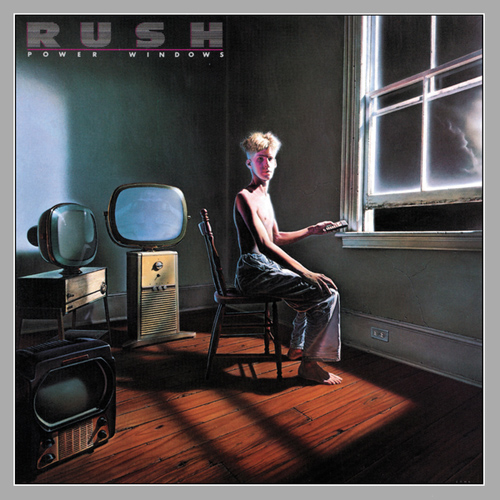
power windowsYou can do a lot in a lifetime

If you don’t burn out too fast

You can make the most of the distance

—Neil Peart, 1985

***

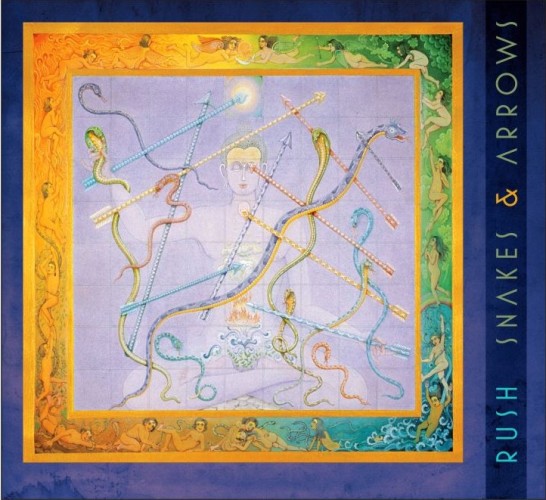
rush snakes arrowsNow it’s come to this

It’s like we’re back in the Dark Ages

From the Middle East to the Middle West

It’s a world of superstition

—Neil Peart, 2007

***

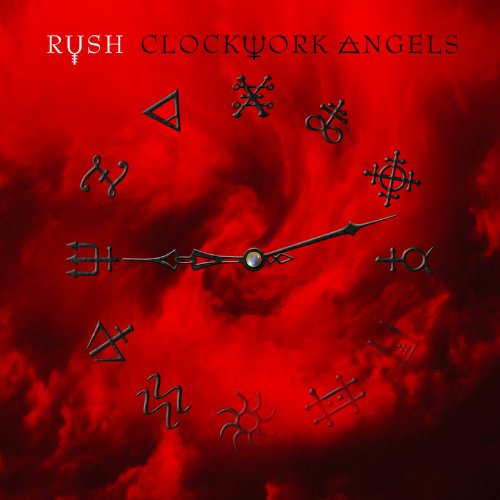
rush clockwork angelsThe future disappears into memory

With only a moment between.

Forever dwells in that moment,

Hope is what remains to be seen.

Forever dwells in that moment,

Hope is what remains to be seen.

—Neil Peart, 2012

S.T. Karnick’s review of Transatlantic’s latest

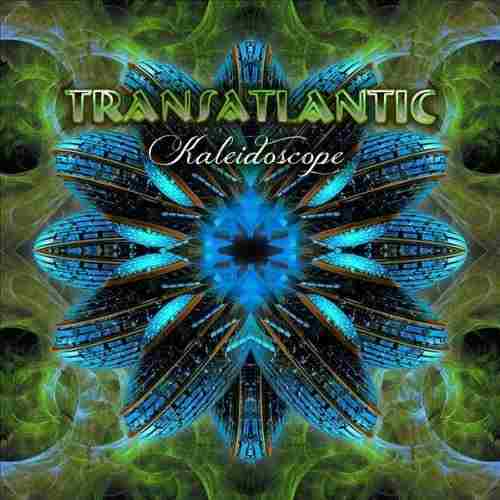
transatlantic-kaleidoscope-box-set-cddvd-deluxe-edition-11801-MLB20049782288_022014-OOver a decade ago, American cultural critic S.T. Karnick published a seminal piece on progressive rock and its third-wave vitality in the pages of William F. Buckley’s magazine, National Review.  At the time, he noted especially the greatness of Spock’s Beard.

Karnick is always worth reading, but this (below) will be of particular interest to progarchists–a review of the latest Transatlantic album:

Although progressive rock has had a low profile in the music world since the rise of punk and disco in the late ’70s, it’s still very much alive today, even to the point that there are real stars of this musical style. Foremost among these are the members of Transatlantic, and their latest album, Kaleidoscope, is a production worthy of their major talents. Just as a kaleidoscope creates fascinating images by juxtaposing numerous bits of colors and shapes that contrast with one another, Transatlantic’s Kaleidoscope does so with sounds. Ranging from hard rock to classic rock to folk to classical, the sounds on Kaleidoscope shift and recur in patterns of real beauty.

To keep reading (and you should!), go here: http://www.stkarnick.com/blog/post/transatlantics-kaleidoscope-is-classic-progressive-rock

Integrity’s Minstrel: John Bassett. Unearth (2014)

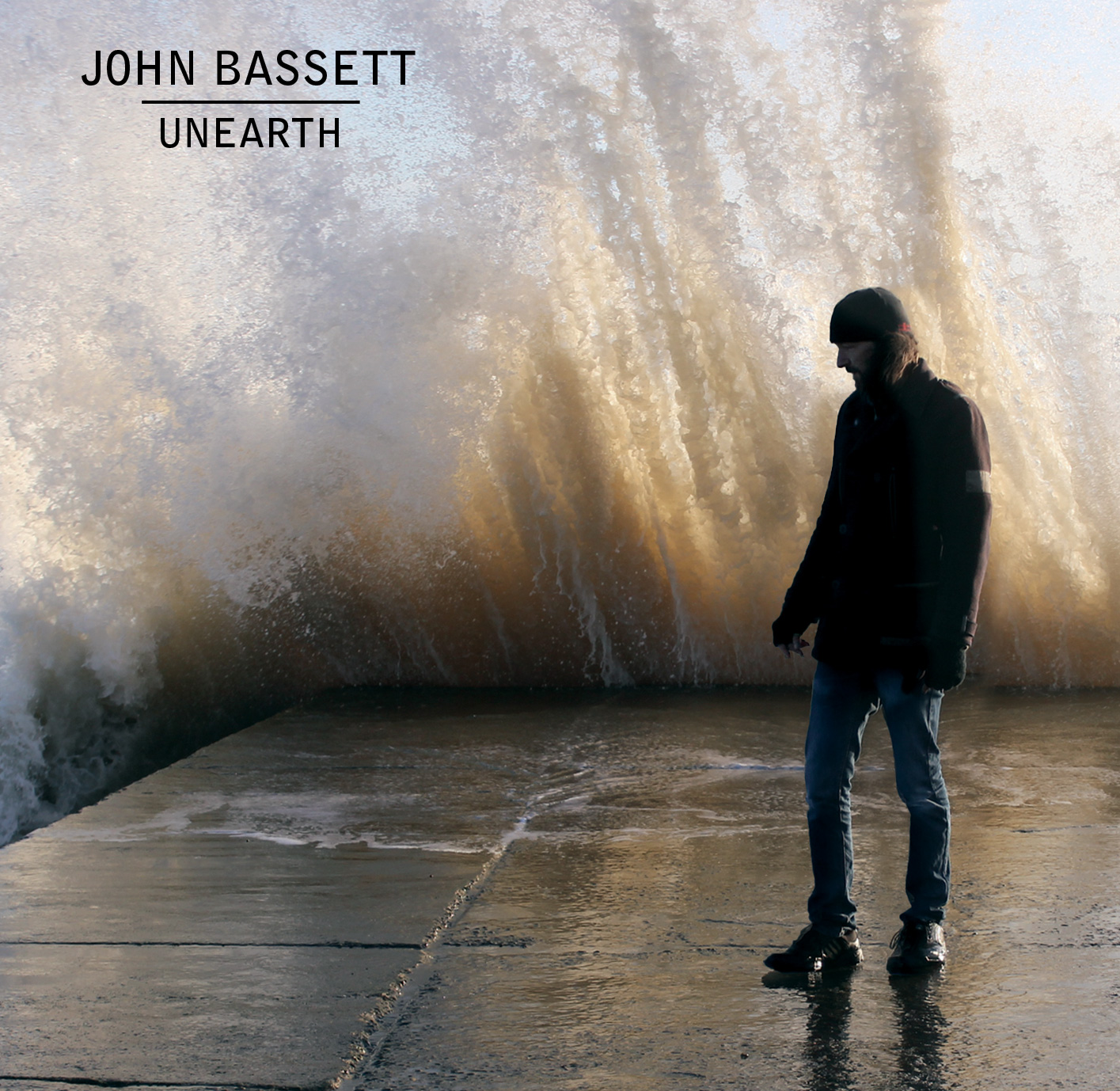
Unearth-Album-CoverA review of John Bassett, Unearth (Stereohead Records; release date: March 31, 2014).

I’m honestly not sure if my admiration for John Bassett knows many—if any—bounds.

When we first announced progarchy’s birth in the fall of 2012, Kingbathmat’s label reached out to us immediately.  As objective as I’m trained to be in my own actual day-to-day profession (though, I’ve become firmly convinced that so-called objectivity is highly overrated), it’s hard not to be grateful when someone, some band, or some label contacts us.  After all, it’s automatically a profound sign of trust, though always based on a leap of faith.

As reviewers and lovers of music, we’re, of course, not for sale.  Still, we are rather human.  Kindness and relationships make a difference in the ways we perceive artists.  In no genre of music is this more true than in prog, as the audience matters so deeply to the music—its creation and its longevity.  Whatever my many faults, disloyalty isn’t one of them.  As it turned out, though, I didn’t have to worry about any false motives on my part.  I was not only grateful to Kingbathmat for trusting us, but I also, thank the Good Lord, really liked their music as well as their trust!

I also immediately came to like—personally—two of its members, John Bassett and Bernardo Smirnoff (who goes by many aliases and seems to be one of rock’s greatest men of mystery).

Perhaps, all four members of the band are wonderful.  I wouldn’t be surprised in the least if this proved true.  But, I’ve not had the pleasure to meet the other two.  I do know, however, John and Bernardo—at least electronically—and they’re both truly great guys.  Really truly great guys.  The kind of guys I would love to spend some time with—maybe over a beer and discussing a meaningful book.

John Bassett Promo 3So, when I heard that John was releasing a solo album, I couldn’t help but be thrilled.  I was immediately curious as to what it would sound like.  Another Kingbathmat album?  I imagined the solo album to stand in relation to Kingbathmat’s other releases much as I think of Chris Squire’s solo album from 1975, Fish Out of Water.  It’s a critical piece of Yes history.  The same, I assumed, would prove true of John’s solo album.

As early reviews have come out regarding the forthcoming release, a number of reviewers have compared Unearth to much of David Gilmour’s work with Pink Floyd.  I’m sure that Bassett has listened to lots of Floyd, as we all have.  And though Gilmour’s work is so iconic, Bassett is simply better and more nuanced than even the best of Gilmour.  Gilmour is certainly amazing, and he always has that trademark sound, recognized anywhere.  But, frankly, Bassett has a better voice, more diverse talents with the guitar, and better lyrics.  This isn’t meant to be a knock against Gilmour.  The guy is brilliant.  Bassett is just better.

I’m not sure this comparison is worthwhile or fair, though.

As I’ve had the opportunity to listen to a review copy of the album over the past several weeks—and, I’ve absolutely fallen in love with it, listening to it at what one might call an addictive level—I’ve thought of many comparisons.  This might be Dan Fogelberg without the sappiness.  It might be Storm Corrosion without the pretension (as the ubercool David Elliott has argued, Storm Corrosion might be one of the biggest hoaxes on the prog community in years; Bassett is no hoax).  It might be Opal or Mazzy Star with a male voice.  It might be. . . well, we could keep going with this.

It’s worth stating this as directly as possible, though: John Bassett is his own man and his own artist.  He’s the kind of guy who would, I assume, take criticism very seriously for about an hour or two.  He might even feel a bit down if a truly negative review of his work came out.  The next morning, though, Bassett would’ve totally forgotten whatever was written about him, and he’d do his own thing any way, whether he remembered what had been written or not.

harry the anarchistAgain, Bassett is very much his own man.  It’s part of his immense charm.  And, the fact he doesn’t even realize—at any level—how charming, interesting, and charismatic he is, makes him even more interesting.  When I tried to tell him several months ago how important he was in the prog community (yes, I’m rather blunt and obnoxious at times—I’m sure you’re shocked), he just blew it off.  “Brad, I’m just a Muppet,” he wrote me.  Well, John, you are far more than a Muppet (though, I really like the Muppets, especially Animal, Sam the Eagle, and Harry the Anarchist).

So, the sum of it all?  This album, Unearth, is a manifesto for being your own person, just as John is his.  My best comparisons?  Imagine the lyrics of a young Neil Peart without the overtly Nietzschean strain.  Or imagine the lyrics of a middle-aged Neil Young, but anti-political rather than merely anti-rightest.  Or imagine the social justice of Andy Tillison (a man of equally brilliant integrity).  Put all of this together, and you have a John Bassett.  The lyrics are not only well written, they are sung with absolute belief and integrity.  Indeed, this entire album just exudes integrity.  As I’ve written elsewhere, Kingbathmat “reeks of integrity.”  The same, of course, is true for this solo album.  Lyrically, Bassett justly rails against injustice, superficiality, betrayal, and every single form of conformism.  This is a most confident and non-navel gazing individualism.  The individualism of a Keats or a Thoreau.

Musically, the songs range from the sublime (this word seems to fit more than does “beauty” for Bassett’s music) and the delicate to the clever and the intricate.  And, frankly, though I’m no musician, I’m as impressed with the keyboards as I am with the guitar.  In the ability to pull every thing together, Bassett is a master.

I must state a dream of mine.  If Kingbathmat ever released an album, a concept to be sure, that combined the drive of Kingbathmat and the pauses and reflections of Unearth, ably giving it an organic flow, the band would make an album that would not be just a great release of third-wave prog, but a worthy masterwork, an equal to the best of Genesis or Pink Floyd of Yes from the 1970s.

Please John and Bernard, think about it.  I’m already eager with anticipation, just imagining what could be. . . .

***

To order, go here.

Interview with Edgel Groves Jr. of Insideout Music (U.S.)

Edge Groves, Jr., and Mike Haid on the Progressive Nation at Sea Cruise, 2014.

Excellent and insightful interview with one of the foremost rising talents of the music industry, Edge Groves, Jr.  Enjoy.

http://www.rockbandsofla.com/inside-insideout-music/

Gazpacho Explains the New Album

A note from Thomas Anderson

Hi all connoisseurs and lovers of different music! We are in the happy position of being able to offer you the chance of indulging in the guiltiest pleasure of all for music aficionados. You can now purchase the new Gazpacho album.

It is called Demon and it is a true fully fledged concept album.

Here is the official info on the album:

Demon is inspired by a conversation Thomas had with his father a few years ago where he spoke of a dark force moving through history. During the conversation his father recalled a business visit to Prague in the seventies where he visited the family of some of his hosts.

The family lived in an old apartment, recently renovated after a fire. In the debris, an old manuscript was found. The manuscript was written by a previous resident, for which no records existed other than that his rent had been pre-paid for many years.

Written over two years, the band have described Demon as the ‘most complicated and strange album Gazpacho has ever made’ and whether the manuscript is truly the work of an obsessed madman or an urban legend it has certainly provided the basis for an interesting twist on a concept album. The manuscript contained various ramblings and diagrams which formed the basis of a diary, of sorts, of the man. He claimed to have discovered the source of what he called an evil presence in the world.

This presence, ‘The Demon’, was an actual intelligent will, with no mercy and a desire for bad things to happen. The author wrote as if he had lived for thousands of years stalking this presence and the manuscript contains references to outdated branches of mathematics, pagan religions unknown to the present world and an eyewitness account of the bubonic plague. So crazed were the writings that the document was donated to the Strahov Library in Prague, where it was thought it would be of interest to students of psychiatry.

The thought of this mysterious figure that had lived through the ages, hunting the ‘Demon’, seemed like too good of an idea not to write about. Thomas presented the idea to the band who were just as inspired by the story, and with Jan Henrik, he started writing the lyrics based on what they thought the manuscript would reveal, drawing inspiration from previously ‘discovered’ diaries and manifests.

The story is told in four parts, ending with ‘Death Room’ which are the last words of the unfinished manuscript written just before the disappearance of the unknown writer.

We hope you enjoy it.

Love from all of us, Gazpacho

BillyNews: Wishbone Ash Tour North America

Wishbone Ash 2014 photoNew London, CT – Wishbone Ash, one of the most influential guitar bands in the history of rock, returns to North America this Spring with brand new tunes from their upcoming release, Blue Horizon.
The group returns to these shores following last year’s annual tour through the the East, Midwest, Northwest and Western Canada, where they delighted fans with high-energy performances featuring a vast catalog spanning 45 continuous years of music-making.
The 2014 Spring tour has been nicknamed “The Blue Horizon Tour” to coincide with the March US release of Blue Horizon and celebrate the return of the band to areas not visited in many years.
I thought, why not ring the bell to see if our fans in the South and Southwest would come out and join the party,” says bandleader and founding member Andy Powell.
The first leg of the tour begins April 15 in Florida and winds south and west before heading northward through the Pacific West Coast and Canada.
We hope our long-lost fans will come check out what we’ve been doing, which has been continuously touring, recording and rehearsing,” said Powell. “The band has a fire in its belly, and we want to share that.”
Formed in 1969, Wishbone Ash has to its credit 24 original studio recordings, 10 live albums and four live DVDs along with a DVD rockumentary (“This is Wishbone Ash”). The band is led by founding member Andy Powell on guitar and vocals, trading licks with Finland’s guitar wizard Muddy Manninen. Bassist Bob Skeat, a 17-year veteran of the band and in-demand studio musician, sets the pace with Joe Crabtree, one of the best of Britain’s new breed of drummers whose performance credits include Pendragon and David Cross of King Crimson.
The band basically lives together year-round, so we have a very strong level of communication that translates in our performances and recordings,” says Powell.
Wishbone Ash’s new album, Blue Horizon (Solid Rockhouse Records), includes guest artist Pat McManus playing fiddle on two tracks. Fans will recall McManus made an appearance on 2011’s Elegant Stealth and also co-wrote one of the songs, “Can’t Go It Alone,” with Andy Powell. Blue Horizon features two songs written by Aynsley Powell (Powell’s son) and one by former Wishbone Ash guitarist Roger Filgate.
Elegant Stealth (ZYX Records) was enthusiastically received by fans and critics alike. Classic Rock Revisited’s Jeb Wright called it “One of the best albums in Wishbone Ash’s career.”
This band is like a fine wine that just keeps getting better with age and this is one of their strongest studio releases in years,” said Keith “MuzikMan” Hannaleck of MuzikReviews.com.
The songs are catchy, very technical, but there is a soul in what Wishbone Ash is doing!” said Mark Kadzielawa of 69 Faces of Rock.
Lynyrd Skynyrd cites Wishbone Ash as a primary influence on their style along with Thin Lizzy, Iron Maiden and, more recently, heavyweights like Opeth and some of the guitar-based Indie/Alternative bands. All have been transformed by the original, legendary twin-guitar approach of Wishbone Ash. There is no other rock band on the planet that has done more with the twin guitar concept than The Ash.
Longtime fans and new converts will find that Wishbone Ash offers an undeniable concert experience.
Tour dates and more information can be found at www.wishboneash.com
To download electronic press kit: www.wishboneash.com/epk
Like the band on Facebook: www.facebook.com/wishbone.ash.official
Wishbone Ash Publicity and Marketing: Kate Goldsmith – kate_goldsmith@wishboneash.com
Wishbone Ash Worldwide Publicity: Glass Onyon PR – PH: +1 828-350-8158 ,glassonyonpr@gmail.com
North American Booking: Steve Ozark, Ozark Talent (785)760-3143OzarkTalent@gmail.com

Neil Peart: The Most Endangered Species

Some songs just scream “let me reach perfection.”  

Every note, every pause, every ebb, every swell, every silence, and every word just gravitates towards its right place.  It’s as though the cardinal and Platonic virtue of Justice becomes manifest, real, and tangible in this world.

There probably are very few perfect tracks—tracks that never grow old and never cease to cause wonder.  From the 70s and 80s the following immediately spring to mind as candidates: The Battle of Evermore, In Memory of Elizabeth Reed, Close to the Edge, In Your Eyes, Thick as a Brick, Cinema Show, Take a Chance with Me, Echoes, and The Killing Moon.

Of all of these great possibilities from those two wild and wholly decades, the one song that comes closest to attaining perfection, such as perfection is understood in this rather bent world, is Natural Science, the final track on Rush’s Permanent Waves.

Well, at least in my humble opinion.  Ok, not so humble of an opinion.

Rush PW cover

Unobjectively Rushed

In a number of previous posts here at progarchy and elsewhere, I’ve talked about my love for all things Rush, perhaps even putting myself in a position in which I simply can’t be objective about them.  Frankly, at age 46, I’m tired of trying to be objective about the things I love.  In fact, I want to be subjective.  Really, really subjective.  I want to spend the rest of my life promoting things of excellence and beauty, and not wasting my time analyzing what I don’t like.  I want to explore how various forms of art have shaped my own life, how they’ve guided me, how they’ve given me strength and comfort, and how best to pass on such nuggets of insight to my children and my students.

So, purely subjectively: I’ve always thought of Neil Peart as the older brother I never had—the cool kid with all the great ideas and, equally important, the guy with all of the good friends.  Most importantly, however, Peart has always had the courage of his convictions.  What an appealing combination of qualities.  Creativity, intelligence, integrity and perserverance.

As much as any person in my life I’ve never met (from Plato to St. Augustine to Friedrich Hayek to T.S. Eliot to J.R.R. Tolkien), Peart has profoundly shaped my view of the world.  I’ve known this since the spring of 1981, when, as a seventh grader, I first encountered Moving Pictures.

And, coming from a very (happily) nerdy and intellectual family which encouraged a love of music as much as it encouraged a love of reading and writing, I started writing my own first little essays on Rush while still in high school.

Perhaps my professors in college shouldn’t have allowed me to do this or encouraged me, but I did get to help lead a discussion on the Adventures of Huckleberry Finn, using the song “Tom Sawyer” to explain the significance of the end of Twain’s novel.  The end of that complex novel tries to examine the motivations of Huck and Tom as they decided whether or not to free Jim from his enslavement.  Their humanity tells them one thing, but their cultural upbringing tells them another.

I also, as I’ve mentioned before, wrote my major paper for my sophomore liberal-arts core course examining the philosophy of Neil Peart, using nothing but the lyrics of Grace Under Pressure.  Sadly, I don’t have a copy of that paper any longer, though I might attempt to reconstruct it at some point.

Rush 1980 by Todd Caudle

Natural Science

I can identify almost every single moment in my post-1980 life with a Rush album—noting when I first encountered that album, how it shaped my own thoughts, life, and actions, and what else was going on in my life at the same time.  Certainly, Rush has served as the soundtrack of my own existence for over three decades.  Strangely, the one album in Rush’s entire catalogue I can’t place perfectly—at least when I first encountered it—is Permanent Waves.  I’m guessing that I first heard it shortly after Spring 1981, but I’m not positive.  It just seems to have always been “there.”  There, meaning my life.  This is impossible, of course, as I was 11 when the album first came out, but it does seem to have an uncertain yet certain position in my memory.

I still regard the entire album as a work of artistic intensity and creative genius.  There’s a confidence that exists in every note of this album that had not yet appeared in Rush’s music.  Don’t get me wrong—up to Permanent Waves, Rush had always possessed audacity and integrity.  But, they’d not possessed this level of confidence before.  Songs such as Anthem—so openly declaring confidence—reveal youthful anxiety.  But, the personal aspects of Permanent Waves, such as in “Free Will,” carry with them a rather clear maturity.

To my mind, none of the songs carry as much confidence, however, as does Natural Science.  Originally, as is well known by Rush fans, Peart had hoped to write a saga, epic, or edda about the Court of King Arthur and especially about the character of Sir Gawain.

I had also been working on making a song out of a medieval epic from King Arthur’s time, called ‘Sir Gawain and the Green Knight’. It was a real story written around the 14th century, and I was trying to transform it while retaining it’s original form and style. Eventually it came to seem too awkwardly out of place with the other material we were working on, so we decided to shelve that project for the time being…with the departure of ‘Gawain’ we had left ourselves nothing with which to replace him!…something new began to take shape. It was the product of a whole host of unconnected experiences, books, images, thoughts, feelings, observations, and confirmed principles, that somehow took the form of ‘Natural Science’…forged from some bits from ‘Gawain’, some instrumental ideas that were still unused, and some parts newly-written. – Neil Peart, “Personal Waves, The Story Of An Album” [taken from: http://www.2112.net/powerwindows/main/RushInspirations.htm]

Though I don’t know this for certain, I assume that Peart was still in a bit of a myth/fantasy/Tolkien stage as he considered the lyrics for this song.  Best known by the world for his fiction, J.R.R. Tolkien was in his professional life the leading scholar of the medieval literature of Beowulf, Sir Gawain, and others.  In the late 1970s, Tolkien’s publisher attempted to capitalize on success of The Silmarillion by re-publishing almost everything Tolkien had ever written, including his academic work, repackaged for a popular audience.

Many of the ideas in Natural Science, at least musically, also came from a “mass of ideas called Uncle Tounouse” [Popoff, CONTENTS UNDER PRESSURE, 76; http://rushvault.com/2011/02/05/natural-science/; and http://www.2112.net/powerwindows/main/PeWlyrics.htm%5D

At 9 minutes, 17 seconds, “Natural Science” consists of three parts: Tide Pools; Hyperspace; and Permanent Waves.  These might have also have been titled, less poetically, Nature; Science; and Integrity.

In Part I, “Tide Pools,” Peart offers a vision of community.  Each person is born into a myriad of factors.  As the great Irishman, Edmund Burke, once said before Parliament: “Dark and inscrutable are the ways in which we come into the world.”  Each person is born into a family, an environment, a language, a set of morality, a religious system (even if atheist), etc.  Each of these factors shapes and delimits our very beings, and we must—from our earliest infancy—learn to move from one realm into another.  From, for example, our family to our school.  We must transition, we must bridge, we must understand, and we must integrate our experiences.  Such a world of communities brings us security, but it might also allow for an insular kind of inbreeding and sloth.  Looking at all of the connections and interactions, though, overwhelms us.

Wheels within wheels in a spiral array,

A pattern so grand and complex,

Time after time we lose sight of the way,

Our causes can’t see their effects.

Part II, “Hyperspace,” reveals how insane an integrated, uniform culture might before.  Peart’s vision of conformity here is not of a communist or fascist variety, but instead of a capitalist, consumerist variety.  It might metastasize uncontrollably.

A mechanized world out of hand.

Computerized clinic

For superior cynics

Who dance to a synthetic band.

In their own image,

Their world is fashion.

No wonder they don’t understand.

Part III, “Permanent Waves,” brings the story and listener to a stoic resignation, a realization that one must somehow and in some way recognize the limits as well as the advantages of an insular natural community and a hyper collectivist consumerism, brought together by (I presume) colossal bureaucracies of corporations, educational systems, and governments.

The true man, whatever the odds against him, will survive.

The most endangered species,

The honest man,

Will still survive annihilation.

Forming a world

State of integrity,

Sensitive, open and strong.

These are quintessentially Peartian themes, and he will return to them again and again in his lyrics.  “Subdivisions,” for example, offers almost all of the same sentiments, but it does so in lyrics that are much more direct.  The lyrics for Natural Science remain far more poetic than intellectual, far more artistic than philosophical.  And yet, they are poetic, intellectual, artistic, and philosophical all at once.

They are. . . well, Peartian. Very Peartian.
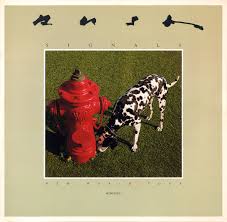
Signals Cover

Words of Friendship and Wisdom

In the summer of 1987, having completed my first year of college, I returned back to my hometown of Hutchinson, Kansas.  It was one of the best summers of my life, as all of my high school friends were home, and I had the best job possible—I was the overnight DJ at a local radio station.  In my mind, this really was the last year of my youth.  I didn’t realize that at the time, but I do now.  It was also, though, a summer of immense upheaval.  The following school year, I wouldn’t be returning to the University of Notre Dame.  Instead, I moved to Innsbruck, Austria, for a year.  At home, a number of domestic crises would lead to a divorce.  As much as I loved my mom, I needed to get away from the home front quickly.  All of this added up to a summer of craziness, me being a little more wild than I should have been.

Trying to get me back on track, one of my two closest college friends sent me a letter toward the end of that summer.  Inside, written on rice paper, neatly folded, were the lyrics to Natural Science, with a note of encouragement.

I carried that piece of folded rice paper with me—tucked in my wallet—for about two decades. It’s very hard to put into words what Peart’s thoughts in “Natural Science” did for me.  “Natural Science” did for me in my 20s and 30s, what “Subdivisions” had done for me at 14.  They gave me no easy answers or platitudes, but honesty and courage.  They got me through many, many tough times, never failing to remind me that right has absolutely nothing to do with winning or losing.  Right, instead, has to do with being right.  Nothing more, nothing less.  We do the right thing not for advantage, but merely and simply because it’s right.  It’s not subjective.  It’s either right, or it’s not.  It’s not partially right or almost right.  It’s either right, or it’s not.

Sometimes, we just need a big brother or a friend to remind us of these things.

Neil Peart, moral philosopher, “sensitive, open, and strong.”


*******

For more from Progarchy on Rush

The first Rush album reviewed by Craig Breaden

https://progarchy.com/2014/02/22/rushs-first/

A review of A Farewell to Kings by Kevin McCormick

https://progarchy.com/2013/01/21/rush-a-farewell-to-hemispheres-part-i/

A review of Power Windows by Brad Birzer

https://progarchy.com/2013/12/14/power-windows-rush-and-excellence-against-conformity/

Kevin Williams on Clockwork Angels Tour

https://progarchy.com/2013/11/24/rushs-clockwork-angels-tour-straddles-the-80s-and-the-now/

Brad Birzer on Clockwork Angels Tour

https://progarchy.com/2013/11/27/rush-2-0-clockwork-angels-tour-2013-review/

Erik Heter on Clockwork Angels Tour Concert in Texas

https://progarchy.com/2013/04/24/you-can-do-a-lot-in-a-lifetime-if-you-dont-burn-out-too-fast-rush-april-23-2013-at-the-frank-erwin-center-austin-texas/

A review of Vapor Trails Remixed by Birzer

https://progarchy.com/2013/10/05/resignated-joy-rush-and-vapor-trails-2013/

A review of Grace Under Pressure by Birzer

https://progarchy.com/2013/02/21/wind-blown-notes-rush-and-grace-under-pressure/

RETRORUSHgallery

Lego Ayreon

Arjen: Into the Electric Castle.  After an evening of Legos with my five year old, John.

Ayreon Arjen