
 Our own beloved Alison Henderson (well, we can’t lay claim to her, but we do love the fact that she likes us), first Lady of Prog, has been named a member of the “Ageless Generation.”
Wonderful, Alison. We’re extremely proud of you!
Our own beloved Alison Henderson (well, we can’t lay claim to her, but we do love the fact that she likes us), first Lady of Prog, has been named a member of the “Ageless Generation.”
Wonderful, Alison. We’re extremely proud of you!
Genius
Andy Tillison is a genius. It must stated as bluntly as possible. Tillison is a genius. He’s a musical genius and a lyrical genius, but he’s also just a genius genius. Actually, this might seem redundant, but it’s not. Only genius could properly modify genius when it comes to Tillison’s art.
As I mentioned in a previous post on our beloved site, Progarchy, anything Tillison releases is not just an event, but a moment. A real moment, not a fleeting one. A moment of seriousness and reflection.
From the first I listened to The Tangent’s The Music That Died Alone, a full decade ago, I knew there was something special going on. Not only did the cover art entrance me, but the very depth and seriousness of the music captured my then 35-year old imagination. I felt as though Tillison was speaking directly to me, asking me to remember the greatness of the musicians who came before 2003, but also inviting me–in a very meaningful fashion–to move forward with him.
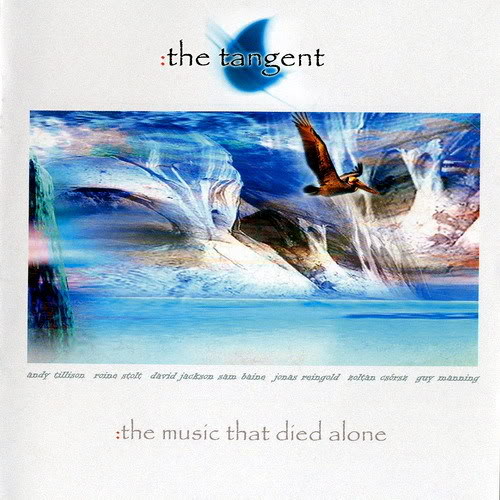 The Music That Died Alone really serves as a powerful nexus between past and present, present and future, up and down, and every which way. Only the evocative power of the lyrics match the classiness and free flow (though, we all know what makes something seem free is often a highly disciplined mind and soul) of the music.
At the time I first heard them, I mentally labeled The Tangent a “neo-Canterbury band,” but I was too limited in my imagination, and I would discover this very quickly. Indeed, each subsequent The Tangent album offers new pleasures and paths for adventure, but always with that power of that Tillison nexus, connecting the past and the future with beauty.
Tillison makes this connection literal in his very fine novella, “Not as Good as the Book: A Midlife Crisis in a Minor.” The dedication lists close to 100 names, including numerous members (first names only) of the members of various bands from Yes to ELP to The Flower Kings to Spock’s Beard to XTC and to authors such as Arthur C. Clarke and J.R.R. Tolkien. None of this is contrived. Just pure Tillison expressions of gratitude.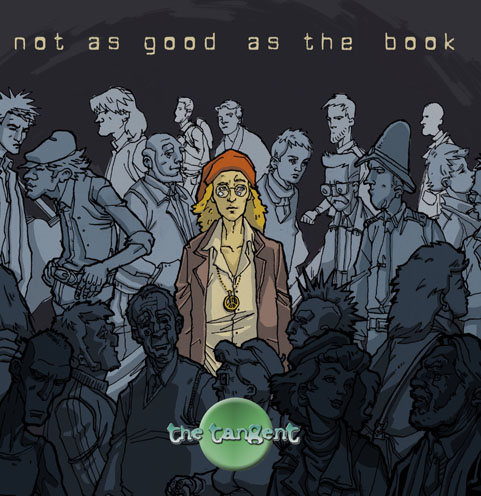
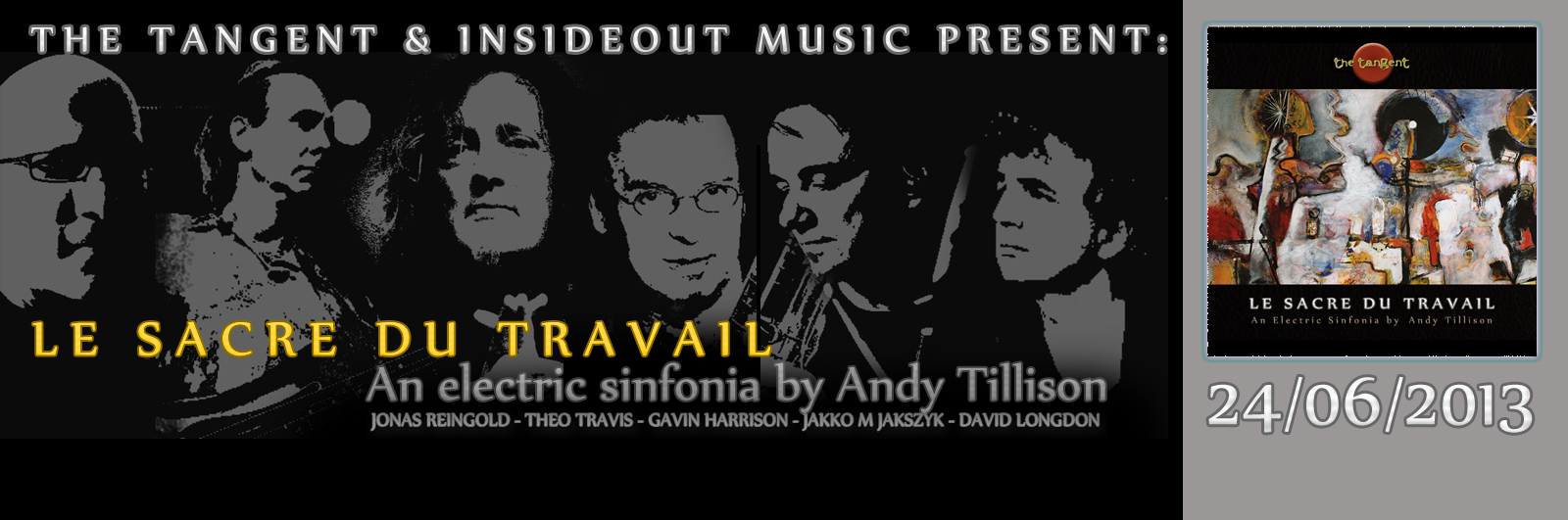
Privileged (well, blessed, frankly, if you’ll pardon a blatant religious term) to receive a review copy of the new album, Le Sacre Du Travail (Out officially June 24, 2013 from InsideOut Music), I dove right into the music. Full immersion. With every album, Tillison has only improved. Each album has bettered the already previous excellent album with even more classiness, more intensity, and more meaning. Not an easy feat in this modern world of chaos and consumerist fetishes.
With this album, though, Tillison has moved forward the equivalent of several The Tangent albums. Again, to be blunt, the album is mind-boggingly good.
Easy listening? No. Of course not. It’s Tillison, it’s prog, and it’s excellent. What part of those three things suggests easy. No excellent thing is easy. Can’t be. It wouldn’t and couldn’t be excellent if easy.
Satisfying listening? Oh, yes. A thousand times, yes.
For one thing, Tillison has brought together some of the finest artists in the business. I was convinced of the potential greatness of this new album when I first heard David Longdon (in my not so humble opinion, the finest voice in rock today) would appear on the album. But, add a number of others in: Jonas Reingold (The Flower Kings), Jakko Jakszyk (Level 42), Theo Travis (Soft Machine), and Gavin Harrison (Porcupine Tree). And, it doesn’t stop here. Add Brian Watson (DPRP.net)’s spectacular art work and the cool dj voice of Geoff Banks (Prog Dog show). Ok, this is one very, very solid lineup of the best of the best.
1913
Ten years ago, Tillison released the first The Tangent album. 100 years ago, Igor Stravinsky released what was arguably his masterpiece and certainly one of the finest pieces of music of the twentieth-century, The Rite of Spring. While The Rite of Spring hasn’t pervaded our culture in the way the fourth movement of Beethoven’s 9th Symphony has, it’s a close second. Every person, an appreciator of music or not, knows at least part of The Rite of Spring.
Imagine for a moment 1913. It was, by almost every standard, the last great year of the optimism of western civilization. Technology upon technology had produced innumerable advancements, almost everyone in the western world believed in unlimited progress, and even devout Christian artists (such as Stravinsky) had no problems embracing the greatest elements of paganism and folk culture.
In almost every way, Stravinsky explored not only the folk traditions of his era, but he embraced and, really, transcended the modernist movement in music. He bested it. His Rite is full of tensions and dissonance, but each of these is overruled and corrected by harmony and emergent joy. The Rite, no matter how pagan, also has deep roots in the Judeo-Christian and Greco-Roman traditions. The Rite–the ritual, the liturgy–has been a part of western civilization since the pre-Socratics debated about the origins of the cycles of the world and history: earth, water, air, or fire.
 2013
2013
Imagine for a moment 2013. Well, ok, just look around. Technology remains exponential in its growth, but few would praise the development of the Atomic Bomb, the gas chamber, or the aerial bomber. But, then, there’s the iPod. And, unless you’re Steven Wilson, you probably think your iPod is ok. Certainly better than an Atomic Bomb.
Optimism? No. I don’t need to go into detail, but, suffice it state, T.S. Eliot might very well have been correct when in the late 1940s he claimed the western world in an advancing stage of darkness:
the tower overthrown, the bells upturned, what have we to do
But stand with empty hands and palms turned upwards
In an age which advances progressively backwards?
The U.S. and the U.K. are currently waging numerous wars, and there seems to be no end in sight.
The Rite of Work
As with the Stravinsky of 1913, the Tillison of 2013 surveys the cultural landscape. Unlike his Russian counterpart, the Yorkshire man finds little to celebrate in this whirligig of modernity.
The “good guy anarchist,” as he described himself in a recent interview (and, not to be too political, but more than one progarchist would be in great sympathy with Tillison on this point), Tillison observes not the Rite of Spring, but the liturgy of work. We get up, we commute, we sit in our cubicle, we commute again, we eat, we drink, we have sex, we watch a little t.v., and we sleep. The cycle beings again every Monday, Tuesday, Wednesday, Thursday, and Friday. Who made this deal, Tillison wisely asks.
Throughout it all–pure prog interspersed with very modernist musical elements from time to time–Tillison references much in our modern folk and popular culture, including The Sound of Music and Rush (2112):
In a Rush T-shirt, pony tail, 2112 tatooed on his hands
He’s a star through thick & thin
But he still gets that data in
A modern day warrior, today’s Tom Sawyer is a clerk
He’s a meta for disillusion
He’s a metaphor for life
But, interestingly enough, Tillison does all of this as a modern-day St. Thomas the Doubter.
But I don’t believe them, not ’til I see it
Until I put my finger in the holes
In every word, the lyrics rage against the conformity demanded in 2013–demanded by our corporations, our neighbors, and our governments. What have we become. . . mere ants, living in a world of bird dung. Certainly, whatever humanity remains has been given over to some institution radiating power.
And, yet, still somewhat in the persona of St. Thomas, Tillison asks us to reconsider our day-to-day rituals and liturgies. Is it worth it that we squander what little time we have in the name of the mindless and soulless cycles of modern life? By far the most powerful moment of an album of immense power (power in the good sense; not in the domineering sense):
‘Cos you can’t take it with you
There’s no luggage allowed
No you can’t take it with you
No matter how rich or proud
Your kids will sell it off on Ebay
For god’s sake don’t waste their time
‘Cos you can’t take it with you
You can leave just a little bit behind.
Summa
Well, what an album. What an artist. What a group of artists. If any one ever again complains about the superficiality of rock music, consider handing them a copy of this CD. No superficiality here. Only beautiful–if at times gut wrenching–meaning.
Keep raging, Mr. Diskdrive. Rage on.
To order the album (and you should, several times!), go here: http://www.thetangent.org/
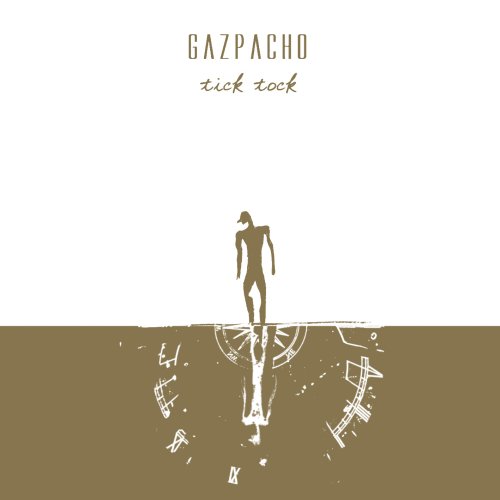 One of the great things about getting to know some of the other contributors to this site is the discovery of bands that were previously missed. One such band that I had missed out on was Gazpacho, of whom I did not learn of until 2011. At that time, I took mental notes that I would check them out one day. After reading this fantastic review of their 2007 album ‘Night’, I knew it was time. Literally within minutes of finishing my reading of that review, I had purchased the album and was giving it a first of many listens. I was not disappointed, and will definitely vouch for all the good things written about ‘Night’. It is truly is one incredible album.
After such an excellent and absorbing introduction to Gazpacho, I knew I would have to explore some of their other works. I read a few reviews and asked around a little bit, and finally settled on the follow-up to ‘Night’, ‘Tick Tock’ from 2009, as my next foray into the world of Gazpacho. I knew this album would be a big challenge for the band, as is any follow-up to such a masterpiece. And once a again, I can say I was not disappointed. In fact, I can and will say a whole lot more, as ‘Tick Tock’ is an incredibly brilliant work in its own right and most certainly belongs on the shelf right next to ‘Night’, not just for being from the same band, but for being an album of the same level of artistry. In other words, ‘Tick Tock’ is an absolutely fantastic album, and could end up being the tipping point that turns me into a Gazpacho junkie.
A short summary of Gazpacho’s music is in order (at least as I know it from the two albums I have heard thus far). Unlike a lot of progressive rock, and certainly unlike most 70’s prog, you won’t hear a lot of instrumental fireworks in their music. If you are looking for self-indulgent soloing, Gazpacho is not your band. On the other hand, much like one particularly popular 70’s prog band – Pink Floyd – Gazpacho’s music give the listener a lot of room for contemplation (this is not to say they sound like Pink Floyd – they most certainly do not). ‘Spacious’ is one adjective I would use to describe their music. Two other adjectives I would use are ‘subtle’ and ‘meticulous’. Because Gazpacho relies on subtlety instead of flashy instrumentals pushed to the forefront of the mix, their music often requires more work from the listener to fully ‘get’ it. Ah, but what rewarding work it is! Repeated listens with undivided attention reveals the meticulous attention to detail in their arrangements.
One final adjective I would use to describe Gazpacho music is synergistic – the whole is much, much greater than the sum of its individual parts.
Getting back to the subject of this review, ‘Tick Tock’ is a concept album based on the story of the airplane crash of Antoine de Saint-Exupéry and his navigator during a Paris-to-Saigon air race, and their subsequent walk through the desert. The walk nearly ended in tragedy, but both were saved by Bedouins in the nick of time. The album is divided into four separate compositions (in order), ‘Desert Flight’, ‘The Walk’, ‘Tick Tock’ and ‘Winter is Never’. The middle two compositions are relatively lengthy, with the first being divided into two tracks, the second being divided into three.
Taking into account my basic summary of Gazpacho music above, ‘Desert Flight’ goes and makes a liar out of me. It begins as a straight ahead rocker. Musically and lyrically, it conveys an adventurous spirit:
We can be the first
Tie a ribbon all ‘round the world
We’ll make it a gift to us
From the start with a wind-flapped officer’s scarf
Like a ghost in the wind
Eventually, the mood of the music shifts a bit to give the listener a sense of trouble. Toward the end of the song, the pace picks up again in the same manner the ground would appear to move by faster as the airplane loses altitude. And suddenly, the pace grinds to a halt, with the mood of the violin and piano letting us know that we are now on the ground – but alive nonetheless.
The trek across the Sahara then starts in earnest with ‘The Walk’. Our heroes are lost, but nonetheless confident that they will get out of their predicament relatively unscathed. Musically, the acoustic guitar and drums dominate, with other instruments making brief appearances before stepping back into the shadows (a classic example of the meticulous arranging I discussed above). Midway through Part I, the violin steps to the forefront with a Middle Eastern motif, with the other instruments carrying this motif through the end of Part I. As the music segues into Part II of ‘The Walk’ we can feel the doubts creeping into the minds of our heroes, and maybe a little loss of coherency of their thought processes. We’ve now transitioned from adventure mode to survival mode. 
Part I of the title track begins with the percussion indicating the ticking of a clock, and this ticking carries on throughout the entirety of the piece. The lyrics in Part I of ‘Tick Tock’ begin to really bring home the predicament our heroes are in as they trek through the sands of the Sahara:
You beg for time
She’s china white
There’s no cure
Nowhere to hide
A Gregorian-sounding chant appears near the end of Part I, and the mood becomes even darker as Part II begins. The sheer drudgery of walking through the hot desert is conveyed through the music, while the lyrics have one of our heroes (probably the pilot) beginning to question his own life. In Part III, the trek is taking its toll on our pilot and our navigator, as they apparently begin hallucinating as their survival hangs by a thread:
And what do you think they’ll do?
The ground is a pendulum
The continent is gravel
Humming in your shoe
A pendulum.
The final track is ‘Winter is Never’, which occurs chronologically after the rescue in the desert. It is a reflective track, appreciative of the present and hopeful for the future in light of the recent past in the desert. It’s a fitting conclusion for a fantastic album.
Like its predecessor ‘Night’, ‘Tick Tock’ is a must-own masterpiece. I won’t go so far as to say this album is better than ‘Night’, but in this reviewer’s opinion, it is every bit as good. The number of bands out there that can put out an album of the artistry of ‘Night’ and ‘Tick Tock’ is small; the number of bands that can do it on two consecutive albums is even smaller. Everything about the music of ‘Tick Tock’ is utterly flawless, as is the delivery of the lyrics by Jan Henrik Ohme. It’s the kind of album you want to listen to eyes shut through headphones as you get lost and absorbed into it.
If you had previously missed out on Gazpacho, as did I, now is the time to go back and explore some of their back catalog. Start with either one of ‘Tick Tock’ or ‘Night’. Drink it in fully, and then move on to the other one. You will quickly find that what they have done as a band is to create a sound like no other. While you may hear an influence here or there, those influences have been amalgamated into something completely unique. Like the best progressive rock bands, they have pushed the boundaries back to create something new. As ‘Tick Tock’ indicates,, along with its predecessor, these guys need to be in any conversation regarding the best progressive rock bands, not only for the present revival, but for the entire history of the genre.
Now, onward to ‘Missa Atropos’!
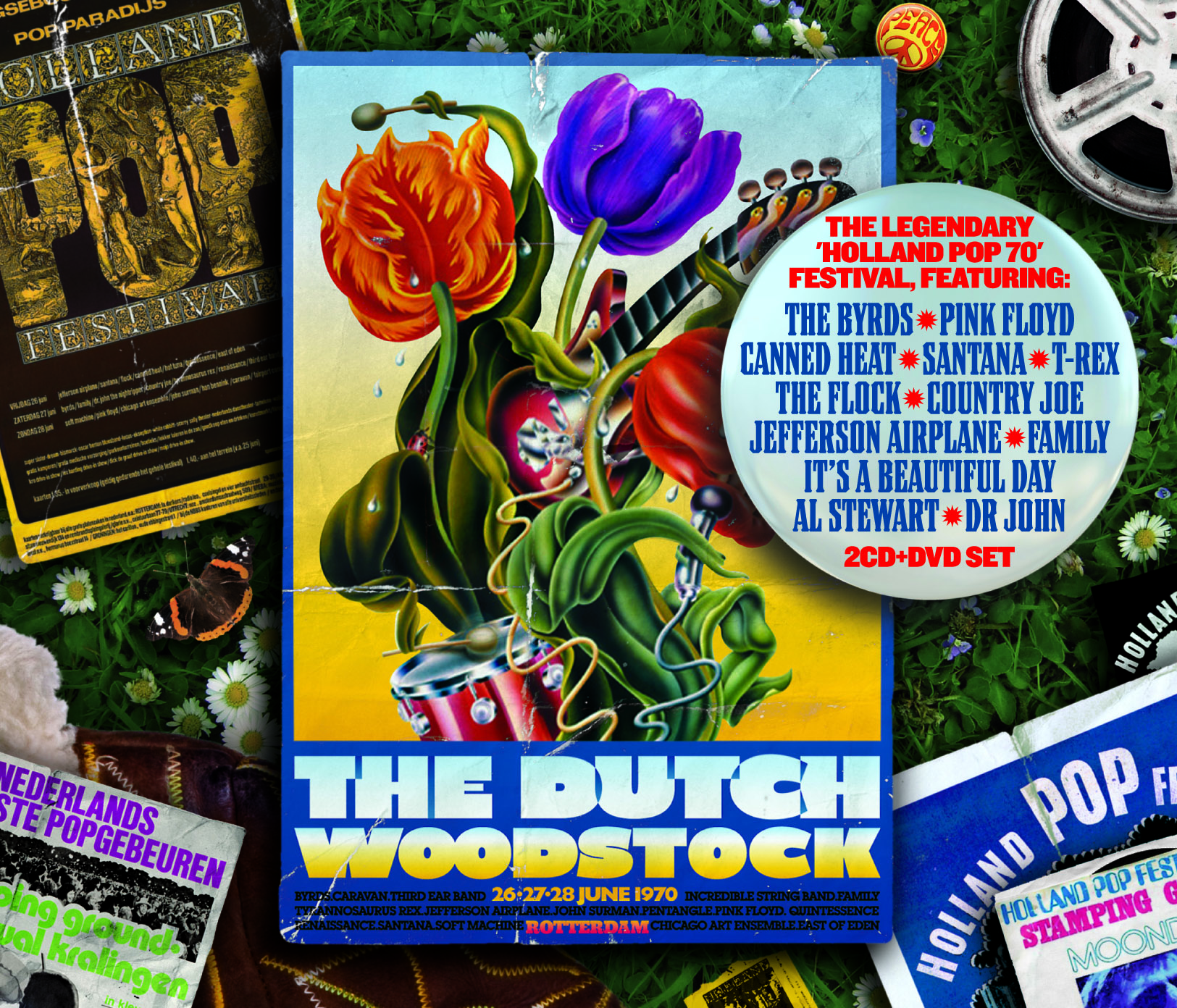 Featuring performances by Pink Floyd, Santana, T.Rex, The Byrds, Canned Heat, Jefferson Airplane, Soft Machine, It’s A Beautiful Day, Family, Country Joe, Dr. John & the Night Trippers, Flock and Al Stewart
London, UK – One of the most historic concert events of the early ’70s, the Dutch Woodstock, also called the ‘Holland Pop Festival’, has now been released on a double CD/DVD set by UK’s Gonzo MultiMedia. Featuring rare and exciting performances by Pink Floyd, Santana, T.Rex, The Byrds, Canned Heat, Jefferson Airplane, Soft Machine, It’s A Beautiful Day, Family, Country Joe, Dr. John & The Night Trippers, Flock and Al Stewart, makes this extraordinary release a must for fans of music everywhere! The three-day festival was held in August 1970 at the Kralingse Bos (Kralingse Forest) in Rotterdam, and despite the rain, an estimated 100,000 people attended the astounding event!
Featuring…
Pink Floyd – Set The Controls For The Heart Of The Sun, A Saucerful Of Secrets
Santana – Gumbo, Savor, Jingo
The Byrds – Old Blue
Canned Heat – Human Condition, So Sad
T-Rex – Pavillions Of Sun
Jefferson Airplane – Saturday Afternoon, White Rabbit, Ballad Of You & Me & Pooneil plus interviews with Paul Kanter & Grace Slick
Soft Machine – Esther’s Nose Job
It’s A Beautiful Day – Wasted Union Blues, Open Up Your Hearts
Family – Drowned In Wine
Country Joe – Freedom Is A Constant
Dr. John & The Night Trippers – Mardi Gras Day
Flock – Big Bird
Al Stewart – Zero She Flies
The Dutch Woodstock double CD/DVD set will be released by GONZO MultiMedia UK on March 22, 2013
To Purchase The Dutch Woodstock double CD/DVD set: http://www.gonzomultimedia.co.uk/product_details/15545
Press inquiries: Glass Onyon PR, glassonyonpr@gmail.com
As most readers of Progarchy well know, Andy Tillison will be releasing the new The Tangent album at the end of this month. Any Tillison release is as much an event as it is a momentous moment. As he’s proven time and again over the last decade with The Tangent releases, Tillison is a true believer in the roots and the origins of prog as well as in the future and innovation of prog. He’s a seeker of all things excellent and beautiful.
Bringing in David Longdon for the new album is a touch of genius. But, Longdon is not alone. Bassist Jonas Reingold and guitarist Jakko M. Jakszyk join as well.
In case you’re interested, and I assume we all are, there are two pieces on the internet well worth checking out today:
A newspaper interview with Tillison here:
And, the first review of the new The Tangent album here:
http://ytsejam.com/music-review/the-tangent-le-sacre-du-travail-the-rite-of-work/
You can order the album here:
Enjoy!
 Forgive this quick post. We have a school event to attend this evening.
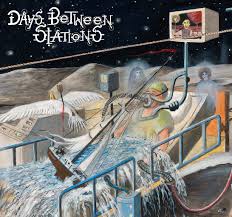
But, I can’t allow this afternoon to pass without noticing one of the best new releases of the year, Days Between Stations’ latest, “In Extremis.” What can I write, but that this album is simply mind boggling. I played it for the first time only early yesterday morning, and I’ve listened to little else in two days. I’m sure I’m on my seventh or eighth listen.
This is prog. Psychadelic prog, but prog–unapologetic prog–to be sure. There are some hints of Pink Floyd, Miles Davis, early Spock’s Beard, Genesis, and The Doors within. Regardless, Days Between Stations is its own band.
To add to overall beauty of this album, Colin Moulding, Tony Levin, and Rick Wakeman contribute.
It is an absolute must own. A huge thank to Billy James of Glass Onyon for letting me know about this thing of beauty. And, long live the Eggshell Man.
(Note: This post has been on my personal blog for some time, but in light of having recently read two columns about this topic, I figured, “Perhaps it’s not just me” and decided to share it here)
There’s one thing that seems to be common among most albums I listen to these days:
Most of them are long – certainly longer than the albums of my youth – and that’s not always a good thing.
Believe me, I’ve never taken an album’s length into consideration before purchasing and don’t plan to, but I’ve come to realize that the longer an album is, the greater the possibility that it won’t be one that’s treasured by this listener.
For most prog/rock/pop albums I truly love, the total running time isn’t a consideration, but when I think about the landmark albums of the last 40 years – especially progressive rock albums, being my favorite genre – you figure that many of them were recorded back when LP’s and cassettes were the norm and, by design, resulted in shorter-length albums unless a band thought they needed a double album to get the point/concept/noodling across.
I’ve posted elsewhere about this phenomenon of albums sometimes suffering from being too long and was usually met with some ridicule from a few respondents, though I should have polled their ages to see if they were even alive before the CD format; did they know anything other than a physical format that could hold over 70 minutes of music?
Perhaps it’s conditioning. Perhaps it’s a shorter attention span on the part of this author.
However, I kept thinking there was something to my point.
That point was driven home for me by Rush’s latest album, “Clockwork Angels.” As with pretty much all of their albums since “Test For Echo,” I haven’t liked more than, say, half of the tracks, whereas I adored 75-100 percent of everything they did through “Counterparts.”
After numerous spins of “Clockwork Angels” and finding that I was skipping through several tracks every time – just as I was doing with most of their work since “Test For Echo” – I began to wonder how long the album was and how long it’d be if the tracks I didn’t like weren’t on it. In turn, that again got me thinking about the trend of albums more or less getting longer since the advent of the CD – do bands really have that much great music in them every time out?
To illustrate, I’ll “pick on” my all-time favorite band and their album lengths since 1976 (according to Wikipedia):
2112 – 38:46
A Farewell To Kings – 37:37
Hemispheres – 36:14
Permanent Waves – 35:35
Moving Pictures – 40:07
Signals – 42:18
Grace Under Pressure – 39:23
Power Windows – 44:44
(CD format taking hold around this time)
Hold Your Fire – 50:21
Presto – 52:11
Roll The Bones – 48:04
Counterparts – 54:17
Test For Echo – 53:25
(following the five-year break)
Vapor Trails – 67:15
Snakes And Arrows – 62:45
Clockwork Angels – 66:04
Now, if I take out my least favorite tracks from “Clockwork Angels” – the ones I will likely skip over every time – the album would be around 46 minutes. That’s with me losing “The Anarchist,” “Carnies,” “Seven Cities Of Gold,” and “BU2B2.” That’d put the album length near “Power Windows” and “Hold Your Fire,” and then I’d likely say that “Clockwork Angels” was their best effort since “Roll The Bones,” which so happens to be their shortest-length album between 1987 and 1996 (and my favorite from that time span). Then again, I’d be killing the concept of “Clockwork Angels” as released.
There should be little argument among fellow progheads that Rush’s “landmark” period was from 1976 to 1981. The first three albums, while progressing in scope each time, aren’t spoken of with the reverence that the “2112” through “Moving Pictures” albums are. Some of you may wish to add albums around that period to that list, but as we all know, “2112” was the turning point in Rush’s career and the epic-length tracks were gone starting with 1982’s “Signals.” I’ve enjoyed all of Rush’s albums since then, but not treasured them the way I do the ones from, in my case, 1977 through 1981 (sorry, gang, I’m not the biggest “2112” nut).
Okay, I’ll stop picking on the recent Rock & Roll Hall of Fame inductees…how about some other prog bands and popular albums they made?
You’ll undoubtedly cite some worthy exceptions to this premise but like I said, we all have favorite albums and pay no mind to how long they might be. I randomly chose five of my “Albums Of The Year” from the last 10 years and the average length was exactly 60 minutes – nearly an album side longer than the LP format.
Now that digital downloads have become more popular than physical sales, it’ll be interesting to see if, in the future, album lengths contract, stay the same or expand due to an artist having no physical media restraints.

I’ve never been a huge follower or fan of Sacramento’s music scene. Even with popular groups such as Cake and Tesla hailing from my hometown, the only local group ever I really dug was ’80s eclectic pop group Bourgeois Tagg (I highly recommend their two albums).
So, some 25 years later, it was a lovely surprise to see that Tim Morse’s second CD, ‘Faithscience,” the follow-up to his 2005 debut album, “Transformation,” was generating buzz among fellow progheads.
I’ve known of Morse for years through his involvement with Parallels, a Yes tribute band that I believe I once spoke to him about drumming for (but regrettably skipped out on). Since then, Morse has occasionally popped up on my radar either for Parallels or for After The Beatles, a group that covers the solo work of the Fab Four.
So, it’s fitting and with a strong dose of local pride that “Faithscience” is my first album review.
Initially conceived as a concept album about the life of Charles Lindbergh, the themes on “Faithscience” grew to include themes of love, spirituality and loss taken from Morse’s real-life experiences. It kicks off with an instrumental opener, “Descent,” calling to mind a Neal Morse/Spock’s Beard overture. It’s clear that Morse has no shortage of ideas to present and here he makes a bold statement about his progressive rock prowess.
“Voyager” feels much like a a two-movement track. The first part combines traditional prog stylings with a tight, song-oriented arrangement, leading to a dense, anthemic solo section – a chill-inducing moment. As the section gradually winds down, one would think the next song is about to begin. Rather, a second section of “Voyager” begins, fueled by a melodic bass line, leading to some fine soloing before an intricate synth sequence picks up an earlier acoustic guitar pattern and leads us out.
“Closer” is another prog showcase with its many twists, tuns and tones, and just when I think the track might leave us in a sonic place far from where it began seven minutes prior, Morse reprises the song’s intro to wrap things up nicely.
Morse provides a soft landing to the thrill ride that are the first three tracks with “Window,” a nylon-string guitar interlude that immediately reminded me how Steve Howe’s “Masquerade” on Yes’ “Union” – yes, a “Union” reference; sue me – broke up “I Would Have Waited Forever” and “Shock To The System” on one side and “Lift Me Up” on the other. The accompanying crickets provide a dreamy background for the guitar to lull us into a daydream, which Morse then extends with “Numb,” the companion to “Window,” that features wonderful piano/acoustic guitar interplay accented by strings and oboe.
“Myth” shakes us from the daydream with an arena rock intro, haunting verses sections and even a touch of “prog swing” – Progarchists, I hold a copyright on that term – to lead us out. “Found It” and “Rome” are tracks where Morse’s songwriting skills really stand out. He kicks off “Found It” with a MiniMoog-esque solo over a synth soundscape, then thunders into the track with arguably the heaviest riffs on the album, plus we’re treated to fantastic guitar soloing over the last half of the song.
“Rome” gives us a lyric delivery reminiscent of the late, great Kevin Gilbert in the verses and chorus. Again, Morse has no shortage of ideas in his “prog arsenal” but I found these more traditional song arrangements more to my taste. The track closes with a fine violin solo courtesy of guest David Ragsdale of Kansas, blending soulful playing with technical prowess.
Morse throws the proverbial kitchen sink at the instrumental “The Last Wave,” kicking off with a Beard-like section of stops and starts, along with syncopated melodies and rhythms. A quieter guitar section takes over in the vein of “Thrak”-era King Crimson with its chorsed, delayed guitar parts, and from there it’s more prog goodness to the end. This one is really all over the place yet Morse makes it work, ending with a heavy riff we heard at the start.
The album closes on emotional notes, first with the soulful “Afterword,” a tribute to those who help shape one’s life, beginning as a ballad and ending on an more upbeat tone. Finally, Morse brings us to “The Corners,” inspired by the tragic death of a former student of Morse’s and somewhat structurally reminiscent of “Exit Song,” the emotional epilogue to It Bites’ “Map Of The Past.” An oft-quoted passage from Thornton Wilder’s play, “Our Town,” is spoken over a moving piano part – perfectly fitting for this – then transforms into an anthemic, symphonic conclusion, taking us from grief to a sense of hope…all in just under two minutes. Beautiful.
The fine collection of progressive rock songs on “Faithscience” showcase Morse’s command of the genre. My hometown is all the much better with a talent like Tim Morse making great music in it and we’re all better off that he shares his talents with us. Do give it a listen.
Doing a little research on the new record label, BEM, I found this today. A manifesto. In the most emphatic but non-religious sense, I write the only Aramaic word I know: “Amen.” Thank you, David Elliott. Brilliant.
 The BEM Manifesto
Every record label needs a manifesto – here’s ours…
Bad Elephant Music (BEM) is a record label with a difference.
The music industry has changed immeasurably in the last ten years, a change which we at BEM see as good for everyone (with the possible exception of major record company executives!). It’s now possible for musicians and songwriters to make professional-quality recordings of their material for very little outlay, and the low costs of production of CDs together with high-quality digital distribution means that releasing an album no longer requires the backing of a Sony or an EMI.
But artists are in the business of creating. Releasing a recording involves a lot if work – getting tracks mastered, arranging for artwork to be produced, sorting out duplication of CDs, advertising, setting up mail order and digital distribution – the list goes on. Musicians want to be free to create, to have the space to make the very best music they can.
This is where BEM will help, Working in very close collaboration with musicians we bring the results of their creativity to the listener. Not only can we get CDs made and sort out the digital world, we’ll publicize and market the music with the enthusiasm of fans.
Because fans is what we are, first and foremost. We know that BEM isn’t going to make us rich, and that’s not how we measure success. We’ve got ‘day jobs’, just like most of the artists we work with, we’re not relying on BEM for our livelihood. If we can help bring some great music into the world, cover our costs, make a small profit for the ‘talent’ and maybe afford the occasional curry, then we’ll consider the job done.
What’s In It For Me?
The Music Lover
As fans ourselves we know the thrill of unwrapping a new CD, putting it into the player and hearing it come alive for the first time…the uncovering of new depths with repeated listens…the feeling of satisfaction when the artwork complements the sounds. The demise of the CD has been widely predicted over the last few years, but we think it’s a format that’s still in great health, and it’s the way we prefer to buy music ourselves.
So you will get CDs from us, professionally made and presented, and at a price that’s fair for everyone – for you, for the artists and for us. We offer a fast and friendly mail order service, with postage and packing charged at cost, to anywhere in the world. Our returns service is second to none – if you’re unlucky enough to get a disc that’s defective in any way at all, we’ll replace it at our expense, no questions asked.
If you prefer to buy your music as downloads then that’s fine by us, and we apply the same quality criteria in the digital realm. We’ve chosen CDBaby as our partner for downloads, providing high-bitrate (that’s good quality) MP3s of all our releases. We also recognize that with downloads you often miss out on the artwork you get with a CD, so we make special versions available on our own website.
Whichever way you like to buy your music, you can be sure of one thing – to BEM, quality music and quality service go hand-in-hand.
The Artist
To us it’s all about building relationships. If you sign with BEM you’re entering into a partnership with us. We’ll talk to you before anyone signs anything to find out what makes you tick, who your audience is, where you want your music to go. Only when both you and we are happy that we can work together will we put pen to paper.
There’s no such thing as a ‘typical’ BEM artist, so there’s no standard contract. We arrange things to work for you, tailoring the package to suit. Maybe all you need is someone to arrange for your latest album to be duplicated and distributed. Maybe you need help right from the start, finding a producer and a studio. Maybe you’re somewhere in between. We’ll work out the right deal for any situation.
We can’t promise to make you rich, but we do promise to give you a fair deal. Weasel words like “recoupage”, “breakage fees” and “container charges” don’t appear in your contract with us, which will be written in plain English, easily understandable by non-lawyers. We’ll be investing in your project, and we will expect to get our money back, but we will make sure you understand how that’s going to work.
You should expect to get a profit from you music…after all, we do! Our basic model is that once we’ve recovered our investment (the money we put into production, duplication and marketing) we’ll split the profits with you equally. We’ll also be absolutely transparent about what we’re paying out, so you can see precisely how the business end works. The contract we make with you will cover a specific album or project, with a fixed period of time during which we have sole rights to distribute it. We never own the music itself – you made that, and you deserve to keep it. At the end of the ‘distribution period’ you’ll have the option of staying with us (we hope you will) or being free to sell the music yourself, or through someone else.
Not all musicians perform live, but fortunately there are other ways to promote your music. If you do gigs, then we’ll be there, and we’ll make sure you have CDs to sell to the punters, but if you don’t then we’ll look at what we can do with video, internet marketing, the press, and so on. It’s in our interests to promote you as much as it’s in yours.
And that’s it, plain and simple. No hidden agenda.
BEM – music is our passion.
To read the statement as originally posted, please go to the BEM website.


