The older I get, the more I love the past, even as I’m profoundly enjoying the present. 2017. It has a nice sound. 2017. Looking back over the years of which this current one is an important anniversary (ok, not the best writing in the world), I can’t help but think of several important years and albums that spring to mind immediately.
A two-part review of Rush, TIME STAND STILL (2016).
Between May and August, 2015, Rush performed to jam-packed audiences in cities across the United States and Canada. Rush captured this tour with its own 2015 release, R40 LIVE, a three cd/1-bluray set. This tour attracted an immense and diverse crowd. Generations of men in the same family (grandfather, father, and sons) sat together, women attended in larger than usual numbers, and my two oldest kids (Nathaniel and Gretchen) drove with me nearly 10 hours to see the band perform R40 in Lincoln. That magical show will always remain one of the greatest of my life. Not just because I was seeing Rush for the umpteenth time, but because I got to share the band with my children for the first time. They’ve grown up with Rush—listening to the music and watching their concerts over and over again; indeed, all six of my kids can readily name the members of the band, the songs, and the albums—but they’d never experienced the joy of an actual concert. It was, to be sure, a glorious spectacle.
When I looked out the bedroom window the other day to see Nathaniel shoveling snow and head banging, I could tell he was head banging to 2112. Every few moments the shovel came up and served as an Alex Lifeson air guitar. Needless to write, it took a bit for him to complete the driveway. Regardless, I’m deeply proud that my children recognize the greatness of the three Canadian artists, even older than their dad!
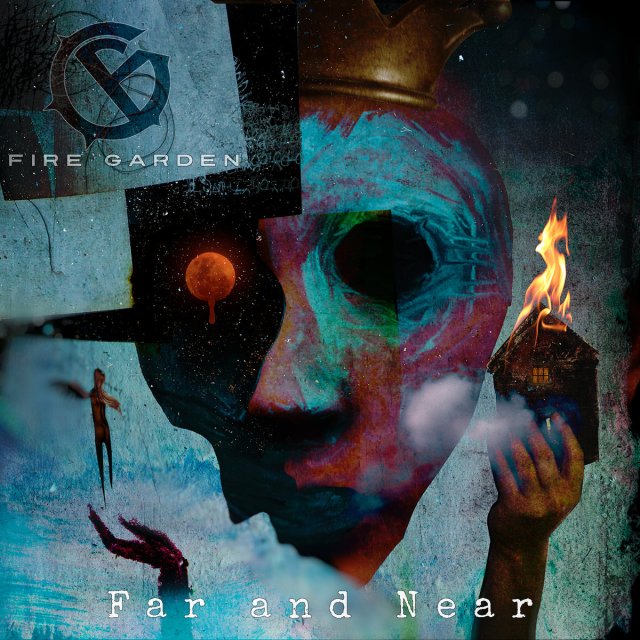
Fire Garden, FAR AND NEAR (2016). Tracks: Far and Near; There’s Something; A New Day; Life of a Drifter; A Thousand Lost Souls; War and Peace; Faint Shadows; Whitelight; and Diary of a Blood Moon.
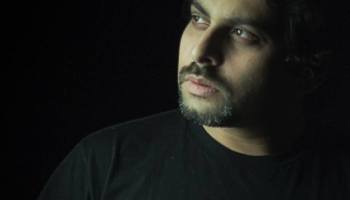
One of the single best things about being a hyperfan of progressive rock music is always dealing with the most interesting of people. When it comes to prog—the musicians, the engineers, and the fans—we’re all basically a bunch of OCD perfectionists. And, I think we understand each other in ways non proggers simply cannot (as in, not constitutionally equipped to do so). In the nearly ten years I’ve been reviewing music online, I’ve met a number of absolutely fascinating people. None less so than Chicago’s young master of all that is melodic metal prog, Zee Baig.
The moment I first found Zee’s music—as first sold through his ep, aptly titled THE PRELUDE—I knew I had to reach out to him. I did, he was responsive, and we pretty quickly established a friendship through email. We talked about war, tradition, music, kids, art. You name it, and Zee and I talked about it. Even though we’re only a three-hours drive from one another, we’ve never actually met in person. Strange, but true. And, here’s hoping, someday soon this will be rectified.
Zee BaigUntil that glorious moment, I’m more than content listening to Zee’s astounding music. It, in and of itself, has become a close friend. The band’s first album, SOUNDS OF MAJESTIC COLORS, has remained in my constant listening rotation since it first appeared in 2014. There’s no mistaking that the best of Dream Theater influenced and inspired much of the first album, but Fire Garden takes chances that Dream Theater never would. This is especially true in lyrical content. To be sure, Fire Garden is no clone of DT.
FAR AND NEAR, Fire Garden’s second full-length album, has just appeared on the market, and it’s a stunner, as strong and as good as anything else that has come out this year. This is no small praise when one considers how many greats have come out: from Frost* to Glass Hammer to Big Big Train. FAR AND NEAR stands with those at the very top.
Canadian guitar god Rik Emmett’s new release Res 9 contains two songs with fellow Canuck Alex Lifeson: “Human Race” and “End of the Line.”
James LaBrie also sings with Rik on two tracks: “Sing” and “End of the Line.”
There’s also a bonus track where Rik reunites with his old bandmates from Canada’s classic metal band Triumph, Gil Moore and Mike Levine: “Grand Parade.”
You can watch the album trailer below, as well as both of the songs with Lifeson in their entirety.
Lifeson takes the third guitar solo on “End of the Line.” He also plays a Rickenbacker 12-string on “Human Race.”
While Caress of Steel ended on an organic, open and free-spirited note, their fourth album, 2112, began with discordant and spacey computer noises and swatches of sound. The contrast in mood and sound could not have been greater. 2112 even inverted the structure of Caress, placing the epic side-long track on side one of the album, with the shorter songs on side two.
Again, it’s worth remembering that if they were going to end, they were going to do so on their own terms. If Rush was going “down the tubes,” they were going to go down with a serious statement and a very, very loud thud. No whimper. Only a bang. “We talked about how we would rather go down fighting rather than try to make the kind of record they wanted us to make,” Lee remembers. “We made 2112 figuring everyone would hate it, but we were going to go out in a blaze of glory.”[i] Alex feels the same. “2112 is all about fighting the man,” he states. “Fortunately for us, that became a marker. That was also the first time that we really started to sound like ourselves.”[ii] It is hard to judge whether or not this anti-authoritarian streak in Rush came from the group as a whole or from each of the three individuals who made up the band. Perhaps the distinction is a false or a super-fine one.
I wish I had a review ready, but I just received the book today! So, sadly, no review yet. Just a notice. This, however, is the conclusion to Anderson’s brilliant, Saga of Shadows trilogy.
For those of you who don’t know, Anderson is not only one of Neil Peart’s closest friends, but he’s also the co-author of Clockwork Angels and Clockwork Lives with Peart. Much to celebrate in the prog world.
What else to write about Kevin? I mentioned he’s brilliant, but did I mention he also writes lyrics for Roswell Six, is a great guy, has an equally great wife, and has been nominated for the Hugo?
From Rush’s transitional Permanent Waves, “Jacob’s Ladder” is a psychedelic march, carrying up its spiral staircase Neil Peart’s cosmic Coleridge musings. It thunders across the eastern deserts evoked by its title, a biblical steampunk, all dust and whirlwind and prophetic dreams set against Rush’s tightening musical clockwork. The song’s three sections flow together, distinct but seamless, no verses or choruses, only a gradual rising heavenward. Early on Alex Lifeson blasts an economical, freakout solo across a moorish scale, heavy as an elephant swaying across a mountain pass, and from that point forward commands cycling chord changes and arpeggiated stutters, underpinned by a bolero rhythm favored by the band around this time. Geddy Lee’s bass and keyboard work hits a balance that Rush would capitalize on with Moving Pictures, while Peart’s drumming, as usual, defies adequate description (although “badass” will do), ever shifting, restless and precise. It is a descendant of their epic “Xanadu” and a forebear of “YYZ,”andwhile stoner-era Rush was cobwebbing at this point, “Jacob’s Ladder” made a case for the band’s continued long-form potency and its ability to take heavy music to places no one else, not anyone, was going.
Snakes and Arrows, Rush’s 18th studio album, came out on May 1, 2007. It was the last Rush album to be distributed by Atlantic, but the first to be produced by Nick Raskulinecz. Snake and Arrows was profoundly progressive, but it was also one of Rush’s blues-iest album, almost certainly influenced by their EP, Feedback, a 30th anniversary tribute to the bands the three members loved in the 1960s. And yet, even the blues on the album is mischievous, an inversion or twisting of blues, propelling the flow into more classical progressive directions.
The album also sees the return of Peart, the cultural critic and observer. The first track, “Far Cry,” begins with the harrowing “Pariah dogs and wandering madmen,” a commentary about the evil in society and those who would sell their own souls and become evil to destroy the other evil. Each, tellingly, is a fundamentalist, “speaking in tongues.” The track begins, musically, with a psychedelic blues feel. This was not the world we thought we would inherit, Peart laments.
It’s a far cry from the world we thought we’d inherit
It’s a far cry from the way we thought we’d share it
You can almost feel the current flowing
You can almost see the circuits blowing
Even when we feel we might actually make something right, the world spins and we find ourselves rolled over.






 From
From 

 Progarchy