Bryan’s Best of the Decade, 2012-2022

As we here at Progarchy continue to celebrate our tenth anniversary, we’re moving from talking about our favorite artists of the decade to our favorite albums. Since 2014 I’ve compiled a “best of” list highlighting my favorite music of the year. Looking back, I still stand behind my lists because they represent where I was with music at the time. But now as I look back and try to compile a top ten for 2012-2022, my list looks a little bit different. The following list reflects my views and tastes regarding the last ten years as they sit right now. It’s all very fluid and subjective.

But enough blathering. On with my top ten. The only limit I put on myself was I didn’t want to repeat artists, because otherwise it would all be Big Big Train or Neal Morse and Mike Portnoy. Limiting myself to one album from each of those artists was difficult, but I’ll steer you back to my yearly best of lists at the end of the article, for those artists abound in those lists.

[Headline links, for those that have them, link to Progarchy reviews, articles, or interviews associated with the album.]

10. Pain of Salvation – In The Passing Light Of Day (2017)Pain of Salvation - Passing Light of DayI missed this album when it came out, although I remember reading about it in Prog magazine. I came to appreciate Pain of Salvation with their 2020 album, Panther, which was my top album of the year. I finally started to dig into their back catalog this summer, and I’ve been blown away. In The Passing Light Of Day is a brilliant tour-de-force of emotions. Some of the lyrics I think are too sexually explicit, which is primarily why I rank it at number 10 and why I almost kicked it off my top ten. But the music and melodies are so good, and most of the lyrics are incredibly profound. I also think Ragnar Zolberg brought a lot to the table and was a great balance to Daniel Gildenlöw.

9. The Neal Morse Band – Innocence and Danger (2021)
The Neal Morse Band Innocence & DangerIt was hard to pick one of the MANY albums made by Neal Morse and Mike Portnoy  over the past decade. They’re all just so good, so I took the easy way out and picked the most recent. I think this is the most well put-together of all the Neal Morse Band albums. “Beyond the Years” is one of the finest pieces of music to come out of the last several years.

8. TesseracT – Portals (2021)

tesseract-portalsPortals is a brilliant album. It is unique on this list for being a live release, but it is also unique for being a live-in-studio release – a product of the pandemic. I suppose that’s why I don’t rank it higher on this list, but I’ve been listening to it a ton since it came out. I even broke down recently and bought the fancy deluxe CD/DVD/Blu-ray edition. I think most of the tracks on here sound better than they do on the original albums. The album also introduced me to the band, as well as to the world of djent. The way the band blends djent riffs with Floydian spacey motifs is just perfect. One of the finest bands in the world right now.

7. Haken – The Mountain (2013)
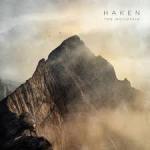
haken mountainI go in spurts when listening to Haken (like I do with many bands). The Mountain has a magnificent blend of metal with splashes of 70s golden age prog. Songs like “Atlas Stone,” “The Cockroach King,” “Falling Back to Earth,” and “Pareidolia” have become prog metal classics, in my book. I’ve come to think Haken isn’t as compelling in their quiet tracks as bands like Riverside of TesseracT, but this entire album is still very listenable nine years later.

6. Marillion – F.E.A.R. (2016)

arton33729Marillion’s F.E.A.R. was my introduction to the band, and I’ve thoroughly enjoyed diving back into their catalog. I’d have to say I think this is one of their best with Hogarth. Their latest album, “An Hour Before It’s Dark,” comes very close to it, but “Reprogram the Gene” knocks it down a peg for me. F.E.A.R. combines musical prowess with cultural critique to wonderful effect, even if I may disagree with Hogarth at points.

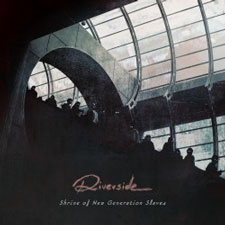
5. Riverside – Shrine of New Generation Slaves (2013)
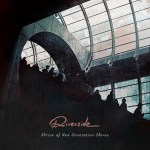
riversideI had a hard time deciding which of Riverside’s three studio albums from the past decade to choose. Love, Fear and the Time Machine and Wasteland are both brilliant, and if I had allowed myself to choose multiple albums from the same artist in a top ten, Wasteland would probably be here too, but I think Shrine edges both of them out. It’s heavy, both musically and lyrically. Several of the songs turn into real earworms for me, and I’m never disappointed when I return to this record. And it’s another one on this list that I discovered several years after its release.

4. Oak – False Memory Archive (2018)
Oak false memory archiveOak is my favorite new band of the last decade. Both their 2013 (2016 release on CD) album Lighthouse and 2018’s False Memory Archive are brilliant albums, if not perfect. This record was my top album of 2018, and Lighthouse was my top album of 2016 (I didn’t realize at the time it had been released digitally earlier). The Norwegian melancholic aesthetic is dripping from both albums. It was hard to pick one of the two, but the closing track on False Memory Archive, “Psalm 51,” is one of the finest album closers I’ve ever heard. I think that gives this record the edge.

3. Devin Townsend – Empath (2019)

Devin Townsend - EmpathI was blown away by Devin Townsend’s Empath when it came out – so much so that I bought the 2CD deluxe version that year and the super deluxe version when Inside Out funded that project the next year. The record masterfully blends all the aspects of Devin’s career into a truly unique and truly Devin experience. It has the heavy bombast of Strapping Young Lad at points, yet it’ll soar into orchestral and even operatic highs elsewhere – or even at the same time. Pure musical theater in the best way. Devin’s vocal performance on “Why?” is stunning, and the message of hope on “Spirits Will Collide” is always a pleasant reminder that life is worth living. The production side of things, with Devin’s famed “wall of sound,” is unmatched in his career, or anyone else’s for that matter.

2. Steven Wilson – Hand. Cannot. Erase. (2015)

Steven_Wilson_Hand_Cannot_Erase_coverHere we come to one of the truly great albums of our time. I would certainly rank this in a top 10 best albums of all time. Back in 2015, this album was my number 3 pick, with The Tangent’s “A Spark in the Aether” coming in at number 1. Now I still think that’s a great record, and I wrestled with whether or not to include it in my top 10, but I think over time Wilson’s masterpiece has proven to be a generational album. Both the music and the story sound fresh, even seven years and many listens later. The themes of isolation and loneliness in city life (or life in general) will always be relatable. Someone 100 years from now could listen to this record, and while they may miss some of the references (even I still miss some of them), the underlying theme will still connect. That’s what places this record up there with the likes of Pink Floyd’s The Wall.

1. Big Big Train – English Electric: Full Power (2013)
Big Big Train English Electric Full PowerThe defining band and defining album for the last decade of prog. Looking back, this record was the one that got me into the contemporary progressive rock scene. Returning to it today is a special treat, as I hope it always will be. It contains everything you might want out of a quintessentially “English” progressive rock band. It has the rock, the folk elements, the complex musicality, the well-told stories. And then there’s David Longdon’s voice, showing us his command of the material and his command of the upcoming several years in the prog scene. When I traveled to England in 2015 (which to me felt like a longer distance between its release than it feels between now and that visit – it’s weird how your perception of time changes as you grow older) I really wanted to listen to this album while being out in the hedgerows and fields. I can still remember sitting on a bus traveling between towns listening to English Electric (I wrote more about this in a piece back in 2016). There are a lot of good emotions connected to this record for me. But beyond that, Big Big Train showed us all that they were THE powerhouse in the new generation of prog bands. They were who all the younger bands were going to look up to for the next decade, and they did it all themselves. Sure, the journey began when Longdon boarded back in 2009 for The Underfall Yard, but English Electric was where they really picked up steam. Every album since has been magnificent, with many topping my best of lists in the ensuing years, but this one will always be the quintessential Big Big Train album for me.


As a coda to this review of the past decade in the best of prog, I want to give you the albums I picked as my favorites for the years 2014-2021 (I didn’t start my best of lists until ’14). I’ll include links to those lists as well. I find it interesting how I’ve “discovered” albums and bands even within the last year that have soared up my list, even if I missed them when they came out. Better late than never.

  • 2014Flying Colors – Second Nature  – I saw them live right after this was released. It’s a great record and a great band, but the poppier edge doesn’t stick with me as much as the records on my list above do.
  • 2015 – The Tangent – A Spark in the Aether – I shared above how Wilson’s Hand. Cannot. Erase. has grown in my estimation. I still think this is one of The Tangent’s finest records.
  • 2016 – Oak – Lighthouse – Even if its original release was 2013, this record still dominated my listening in 2016 and was my album of that year.
  • 2017Big Big Train – Grimspound, The Second Brightest Star, London Song, Merry Christmas EP – Enough said. Brilliant band. Brilliant music. Brilliant year for them.
  • 2018 – Oak – False Memory Archive
  • 2019 – Devin Townsend – Empath
  • 2020 – Pain of Salvation – Panther – I still think this is a great album. I listened to it yesterday at work, in fact. It was my intro to the band, and maybe I was shocked by how different it was from everything else I had been listened to in the genre. I’d still rank this record extremely highly, but I don’t know if I would put it at the top of the list if I were making a 2020 list today.
  • 2021 – Big Big Train – Common Ground – What can I say? I like Big Big Train.

Thanks for reading through all this. If you’ve been a prog fan throughout this past decade, I hope this brought back some good memories. If you’re new to prog, consider every album mentioned in this post as your homework over the coming weeks. Prepare to be blown away.

Here’s to hoping the next decade is even better.
The Duda Abides: Progarchy’s Interview with Riverside’s Mariusz Duda

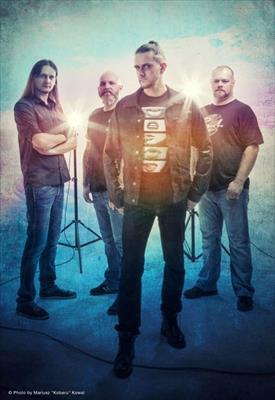
Riverside LTFM Band PhotoRecently, I had the good fortune to be able to talk to Riverside’s bass player, lead vocalist, and creative genius extraordinaire, Mariusz Duda. Despite nursing a summer cold, Mr. Duda was quite pleasant and offered some fascinating insights into Riverside’s most recent album (Love, Fear and The Time Machine), connections among albums, and a host of other topics. At the end, I tried to entice him and his Riverside band mates, with food, to play a local gig. Hope it works. Cross your fingers for me.

—————————————————————

Progarchy: First of all, thank you for taking the time for this interview. We really appreciate it. Second, congratulations on the new album. I’ve heard it a few times now and it is absolutely spectacular. Love, Fear, and the Time Machine has dispensed with the heavy metal elements and many of the hard rock elements of previous Riverside albums for a more melodic approach. What is the impetus behind the change in sound?

Mariusz Duda: Well I think that Riverside is that kind of band that [uses] melodies and emotions. We started with that kind of album, our career. Our debut album is full of emotions, full of melodies. Later I started to experiment a little bit. But I think since the previous album I went back to the main core that we have. I don’t want to repeat myself and repeat all the things that I have heard before. The thing I can do best is when I focus on the melodies and I focus the things that I am good at. So I just said to the guys that it’s time to reach into this melody mood, because this is the main idea behind Riverside’s music. Of course I would like to go even farther and focus on the melodies even more. But first of all, I wanted to change a little bit, the music, I wanted to change the mood. And I didn’t want to repeat myself. I didn’t want this time to delve into this vintage 70’s whatever. I wanted to push the boundaries and end up in a different place. I communicated this 80’s – I called it 80’s – I think that is the new path, the kind of era, in our music on the new album.

Progarchy: Yes, the third song, #Addicted took me back to my 20’s, as it had a lot of that 80’s sound.

Mariusz Duda: You know, those are my times. I’m not the generation of the 70’s, I’m 10 years later if I can say that. I grew up on tapes, I grew up in the time of the 80’s when on the radio I could hear songs. What I think is that in the 80’s we got really good songs on the radio. Now everything is, very shallow, flat, it sounds like a product made very quickly on an iPhone or iPad. In the 80’s you got really good songs that have lots of layers beneath the surface. Examples like Peter Gabriel’s stuff, or U2, or whatever. I really love that. I remember when I was 10, when I was 15, that was my era, and that’s the time machine, some memories connected with the new album. I really wanted to go back to this era. So I thought that would be great, to not maybe delve into 80’s, but to connect 70’s and 80’s with our style and come up with some kind of strange mixture. It’s not very progressive to be in the 80’s, but that’s the paradox because this [album] sounds much more progressive than other retro-vintage sounds.

Progarchy: Can you explain how each term in the album, “Love”, “Fear”, and the “Time Machine” relate to the overall concept of the new album?

Mariusz Duda: Actually, this is not an album about those terms themselves. The album is about making the important, life-changing decisions. I think in your lifetime there is a moment when you need to decide if you want to change your life or not. That kind of situation is usually when you have a midlife crisis, or you have some time where you are sick and tired of some patterns and you want to change something, what do you do? Let’s say you decide to change your life, some kind of twist, 180 degrees. Let’s say you decided to change your job, or you life, or move to another country, what’s going on then? Life changing decisions, something important, something that will have an impact on your future. From one side you feel this excitement, this freedom, maybe you said to your boss, “goodbye, I don’t like you, I’m going to start another life.” So you’ve got this good, positive feeling, and I called it “Love.”

On the other hand, there is this fear of the unknown, you didn’t know what to expect of this new life. You don’t know exactly. And there is other stuff, your experiences of the past and your imagination about the future, and I called it the “Time Machine.”

All these three elements are the most important forces that force you to make this very important, life changing decision. So that’s why it’s titled, those are the most important things when you want to change something in your life. You need to touch of love, touch of fear, and touch of your experiences from the past, your memories.

Progarchy: So what prompted you explore this theme?

Press_Cover_01 Mariusz Duda: Well, actually, there is some kind of personal background. And I think it is always connected with developing, evolving. We wanted to change something with our music too. I just felt it was kind of interesting. I wanted to do something a little bit optimistic than I do usually, a little bit more brighter, lighter. Last year, I did the solo project which is called Lunatic Soul, and it was very dark, it was about suicide. It was like a prequel about someone who died. And I just discovered, “my God, I’m delving into this darkness for so many years, maybe it’s time to do something a little bit more, you know, the light at the end of the tunnel.” So that was my first idea, to focus on the positive emotion. And focusing on the positive emotions was kind of connected with this transition into someone who is sad and was full of misery and he’s just trying to himself into someone who is more, in a better mood if I can say that. Someone who is more happy, to be happy, to feel happy. So, that was some kind of challenge to me, to go back maybe to go back to some kind of tunes that are not so dark. And I think the new album is also different.

Progarchy: Is there a connection with the last Riverside albums, since in the very last song on SoNGS, the protagonist seems to be saying “I’m going to take control of my life.” Even though that album had a pessimistic or dark tone, that piece seemed to be a little bit of optimism, he was saying “I’m not going to be a new generation slave, I’m going to be in control.” So could you say that relates to the new album, or there is a connection there?

Mariusz Duda: Well I have to tell you the last three Riverside albums are kind of connected again. I wouldn’t call it an official trilogy like the Reality Dream trilogy. I call it an unofficial new trilogy, I call it the Crowd trilogy, because all the lyrics on these albums are connected with social media, with the new modern life, those kind of elements that surround us these days. On ADHD and SoNGS, and the new album we’ve got this new modern language. I just wanted to take some features of our times, and that why we have #Addicted, that’s why we’ve got Celebrity Touch, and Under the Pillow, and ADHD we have this regular disc which is [a] Blu-Ray disc which is high definition and everything. And I think everything goes in this direction. Since the beginning of Hyperactive on ADHD until the final track on the new album, Found, I think there is this transition of the main hero who is just trying to finally feel positive. Maybe that’s not very original. But he is just in the moment when he realizes life doesn’t suck (laughs). You can deal with your life. And that is the whole truth, and it’s kind of obvious, but take a look at us and notice that so many people realize it maybe too late or when they have aged more than they would have liked to. That’s the way it is, you need to grow up and realize that, and you need to have your own experiences and to finally say “I like my life, I love my life even.”

So I think there is some kind of connection, maybe not strictly like on the Reality Dream trilogy. But I always try to create albums as movies. Yeah, Coda on the last album, that’s kind of positive too I would say, so that was like the pre-life of the life we have on the new album.

Progarchy: In general, where do you find sources of inspiration to use for a Riverside album?

Mariusz Duda: I don’t like to work an album like it’s some kind of job. I just feel that there are lots of things within my head. It’s kind of messy and kind of buzzy, and I know that I need to spit it out from time to time. It depends on how I feel and has different colors. It’s more introverted or more extroverted stuff. It doesn’t matter if it’s Lunatic Soul or Riverside or not, everything must be connected to or inspired by my personal stuff. I don’t need to be influenced by bands I am listening to now or read lots of dark books and decide “because of this, I will create that kind of mood on the albums.” Right now, since SoNGS, the last Lunatic Soul, this album, that was kind of personal. When I decided to do something about “slaves” let’s say, and I wanted to have this dark mood, then I started to connect the inspirations. Mostly I start with my personal experience, my personal needs of dealing with this subject that is just stuck in my head. I am usually trying to spit out what I have in my soul, in my heart, I don’t know, somewhere.

Progarchy: Do you think you are going to do another Lunatic Soul album before the next Riverside Album?

Mariusz Duda: I don’t know yet. If I catch a good flow with the guys we will continue this somehow. But I definitely have unfinished history with Lunatic Soul. I would like to do at least two more albums, including another prequel, because in my head I’m digging … I just see six covers and six symbols, different symbols of these albums. I will definitely need to go back to this. But I’m not sure if it will be Lunatic Soul first or another Riverside album, I have no idea. Maybe it will be something totally different to destroy this pattern somehow. I need to refresh myself from time to time too.

Progarchy: Do you ever have any internal conflict regarding an internal idea as to whether you should pursue it with Riverside or with Lunatic Soul?

Mariusz Duda: I’m one of these guys that can say “goodbye” to even the best ideas I have in my mind. Sometimes I really reject lots of good ideas for a more general cause, if you can say that. Because of this there is usually not a conflict like “ok, I don’t know if I should do this for Riverside or Lunatic Soul.” When I work on an album, I work on this album right now. So when I work on Lunatic Soul, this is this, I create this, I create that, but at times I see that this may be good for Riverside so maybe I’ll leave it, but it’s just an idea, not an entire song. I always know if it’s more for Riverside or Lunatic Soul or another future project. Riverside and Lunatic Soul are different musical worlds. Even if they sometimes sound similar in the studio, I can change instruments and change the whole mood.

But I have to tell you one thing – the track called Afloat, that was my idea that I wanted to use on the last Lunatic Soul, but it just didn’t fit, so I left it. When I started to compose the new Riverside with the guys and myself, I realized this idea could be very nice, I can use this somewhere in the middle of the album to take some rest. But actually it was something I [originally] wanted to use on Walking on a Flashlight Beam.

Progarchy: That’s an interesting bit of perspective. How would you describe the creative process in making a Riverside album, who does what?

Mariusz Duda: Well, I would say that I do just about everything (laughing). In the beginning we were trying to do lots of things together but I was this guy who was this director, editor, screenwriter, whatever. So I’m writing lyrics, I’m writing lyrics.

But to let you know one thing, when I do stuff with Riverside, I always try to use our band. I’m bringing my ideas and we are composing this together, and I am watching for reactions from the guys for these ideas. Thanks to this I know what I can follow, I can go in this direction and that direction. I need that. And sometimes there is interaction in bands, and thanks to this I can know where we should go with the music. This time I did kind of a personal thing and did a lot of things by myself, but also together with the guys. They were doing some composing.

Riverside should be a band anyway, but as the leader, the main composer and writer of lyrics, I don’t want to transform this into a one person band. No, each of us has a different musical style, a different way of playing, and that’s very necessary. Because of someone’s skills, you know what you can do and you know the limits, and that can help to find the final result.

Progarchy: And you know what the guys like to do, what their influences are and that affects the direction?

Mariusz Duda: Just imagine if you have musicians, you pay the musicians, and they can play everything, exactly everything you want them to. That’s kind of dangerous because the music could be everything and nothing at the same time. When there’s a band, and there’s guys where you know each other, you know what they like, what kind of music style, and you can write the music and you know the areas you can be in. Thanks to this you can develop the band’s style.

Progarchy: Poland is obviously a very different place now than it was at the time you and your bandmates were still growing up, having gone through a political upheaval and massive change at the end of the Cold War. It’s quite different from when you were different from when you were a kid in the 80’s right?

Mariusz Duda: I’m not from Warsaw, I grew up in a very small town in the north of Poland. It was almost a village, 18,000 people lived there. I moved to Warsaw at the new millennium when I was 25. But I remember as a kid, I did not have almost anything. We were really not rich as a family. My mother and my father, they would try to save money. I knew that we were limited, and this what I see in Time Travelers [from LTFM], that go back to the world of 30 years ago. I don’t want to go back to a times when there was nothing in shops.

I remember one thing when I was 10 I needed to wait for something, I need to respect things more, I need to deserve something. I was truly waiting for the small things, and I was really happy when I got it. Now these days you can have access to everything on each possible platform and everything at every moment in time. It’s just sometimes it’s ridiculous. People don’t know what to do with that, and they don’t feel happy these days. Where is their reason to be happy? You don’t have to wait for anything. I remember when I was a kid I was waiting for better times. I remember hen my friend got a computer, a Commodore Amiga or Atari or whatever, and I had nothing. Probably because of this, 30 years later I am a huge game lover and have this PS/4 and I can just woo woo!! And I don’t want to grow up!

I have that kind of job where I don’t have to work in the office, I can from time to time, of course, work hard in the studio. But mostly I can watch movies, play video games, and feel free!

Progarchy: My last question, but a very important one. I live in Austin, TX. Whose arm do I have to twist to get you guys to do a gig down here?

Mariusz Duda: Our manager, we’ll send you his personal contact (laughs). That would be great. This year will be our second tour in the U.S. So far we have only played single shows. Two years ago since Shrine we started to tour in America and played more shows and hopefully this year we will come back. One thing has changed in Poland, something connecting American visa. Now we have less problems with that. In the beginning we couldn’t even play [here] in 2005, but now I have 6 or 7 visas, working visas. Hopefully there will be a time when we play in your neighborhood. Mention this interview. I truly hope that will happen.

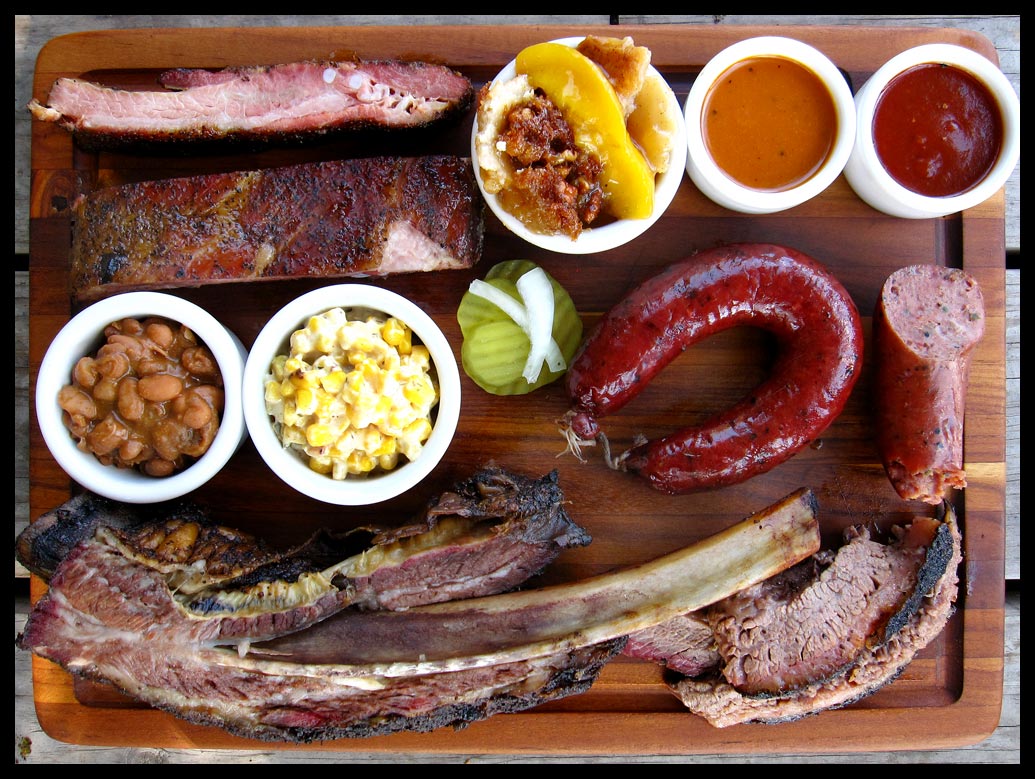
Progarchy: Ok, if that happens I’m going to contact your manager and take you guys out for barbecue after the show.

Mariusz Duda: Oh definitely. I don’t think of anything else right now! (laughs heartily).

Progarchy: Thank you very much for your time.

————————————————————

Some parting thoughts, in bullet point format:

  • What a cool guy, this Mariusz Duda. He answered my questions better than I could have possibly hoped. In general, I found him to be very easy to talk to and a very interesting conversationalist.
  • I loved the insights into the new album that he provided. In particular, I enjoyed hearing how there is a connection between the current album and the previous two, with the hero, as he called him, finally decides to take control of his life and realize he’s in control. In a sense, it reminds me of what Albert Camus once stated: “The only way to deal with an unfree world is to become so absolutely free that your very existence is an act of rebellion.”
  • Mariusz and the rest of the guys, if you end up reading this piece, make sure to look at the picture below (ignore the hypnotic waves emanating there from … ):

TerryBlacksBBQ1w

That’s what’s in store for you if you play here. Oh, and don’t let those pikers in Kansas City tell you they have better barbecue. They don’t. Texas has the best. Period. And to your manager, if he makes a gig in Austin happen, I’ll buy his dinner too.  So, Mr. Riverside’s Manager, we have the Austin City Limits Music Festival in the fall, South By Southwest in the spring, and lots of great venues available year round.  Are you hungry?

😉

Self-Imposed Slavery: Riverside’s ‘Shrine of New Generation Slaves’

Image    Riverside’s recorded output began with three albums that are collectively known as the Reality Dream Trilogy (‘Out of Myself’, ‘Second Life Syndrome’, and ‘Rapid Eye Movement’).  These are all very good albums, although I wouldn’t call any of them great albums.  However, in 2009, Riverside took a big leap forward with ‘Anno Domini High Definition’ (ADHD).  The music took a noticeably different direction from its three predecessors, and reflected well on the album’s subject matter, i.e. the frenetic pace of modern life and accompanying dissatisfaction that sometimes goes with it.  After a two-and-a-half year wait (with the EP ‘Memories in My Head’ thrown in during the meantime), Riverside has returned with ‘Shrine of New Generation Slaves’ (SONGS).  And once again, they have taken a big – no, huge – leap forward.  Quite simply, this is Riverside’s best album to date.

Conceptually, the album relates to dissatisfaction with modern life, so much so that many people feel that they are slaves to something beyond their control.  Thematically, there are some common threads with various lyrics on SONGS predecessor, ADHD (in particular, the lyrics on the excellent ‘Driven to Destruction’).  Nevertheless, the lyrical (and thus conceptual) content extends beyond that to into areas such as stagnant relationships, the depravity of celebrity culture, surrender to nihilism, and ultimately, redemption.

Musically, the album is just fantastic.  In contrast to its predecessor, it does not feature a barrage of notes and thus gives the listener a little more space to contemplate the lyrics. That being said, I wouldn’t call it dimensionally sparse either, as there is plenty going on.  The music is probably the result of a different approach.  Bass player Mariusz Duda stated in a recent interview:

I had some problems before as I was a little bit tired of the formula that we had in the past and I didn’t want to do another album with complicated structures. I just wanted to finally focus more on the arrangements and the composition. To focus on some details, like a way for playing drums, a way of playing guitar. I really, really wanted to focus simply on songs. Simply songs, ambitious songs should be the foundation of this album. The metal parts I skip and replace them with hard rock elements.

Confident in the chops honed on previous albums, the band has taken more of a big picture approach to the music on this album – an approach that seems to have served them very well.

‘New Generation Slave’ opens up the album, featuring a heavy guitar riff interleaved with verses of Duda’s protagonist lamenting his life and dissatisfaction with it:

Ain’t nothing more to say

Your Honor

Don’t look at me like that

The truth is

I am a free man

But I can’t enjoy my life

The tempo then picks up, and keyboardist Michał Łapaj announces his presence in this piece by getting in touch with his inner Jon Lord (RIP), and repeats this a number of times throughout the album.  The opening track segues into ‘The Depth of Self Delusion’, which is less heavy and a bit slower, but no less good.  The use of acoustic guitar and atmospheric keyboards make their first appearance.  I don’t recall this much use of acoustic guitar on any previous Riverside release, and it’s great to hear them expand their sonic palette in this manner.  The song includes some interesting bass work in the latter half and closes with light acoustic guitar.  The band then blasts into ‘Celebrity Touch’ as Duda offers his critique of our Kardashian-ized culture and the pathological need some have for attention and approval from others:

I can’t afford to be silent

I can’t afford to lose my stand

What matters is to be in view

I am seen therefore I am

I can satisfy my hunger

I can satisfy my thirst

What about the feeling of importance

Now I’ve got my chance

In the center of attention

TV
Glossy magazines

My private life is public

I sell everything

Days are getting shorter

They’ll forget about me soon

So I jump on the bandwagon

With no taboos

The song includes a nice juxtaposition between a heavy riff that accompanies the above lyrics, to a less heavy, more reflective section:

But what if we start to talk

Not only say out loud

What if we sift the babble

From what really counts

What if we disappear

Go deeply underground

What if we hide away

From being stupefied

‘We Got Used to Us’ follows, and is yet another slower track that has somewhat of a Porcupine Tree-like vibe as our protagonist ponders a stagnant and dissatisfying relationship.  This one is pretty emotional.

Next up is the punchy ‘Feel Like Falling’, a song with crossover appeal having upbeat music that belies the lyrics, as our protagonist begins to realize the path he has chosen in life has led him astray and left him wanting to simply give up:

Had allowed that life to drift

For I’ve chosen a different trail

When light fades

I feel like falling into blank space

‘Deprived (Irretrievably Lost Imagination)’ is up next with music that is slower, mellower, and decidedly more melancholy than the previous track.  The music includes a nice, Floyd-ian interlude at about the halfway mark leading into a jazz-infused instrumental section in the latter half featuring some excellent sax playing.   Our protagonists dissatisfaction seems to be so intense at this point that they have gone beyond the mere desire to give up as in ‘Feel Like Falling’ – now we have a full fledged surrender to despair:

Curled up

Deprived
Curled up

Deprived
I shut away

Please don’t call my name

‘Escalator Shrine’ begins as another slower track, but picks up the pace after a few minutes.  Once again we hear the Hammond organ with the Leslie cabinet, some excellent bass playing, and some heavy (but not necessarily metal) guitar.  Like the previous track, it includes another Floyd-ian interlude at about the halfway mark.  Lyrically, ‘Escalator Shrine’ approaches the new generation slavery from more of an intellectual level than an emotional one, as our protagonist channels Albert Camus and the Myth of Sisyphus:

Dragging our feet

Tired and deceived

Slowly moving on

Bracing shaky legs

Against all those wasted years

We roll the boulders of sins

Up a hill of new days

‘Coda’ is the final track on the album, and maybe the most emotionally heavy, even though it is instrumentally the lightest – a single acoustic guitar.  Perhaps our protagonist has read some Epictetus, or maybe the serenity prayer, but it appears he has realized that his happiness and satisfaction with life is ultimately in his control and his own responsibility:

Night outside grows white

I lie faceup in my shell

Open my eyes

Don’t feel like falling into blank space

Indeed, for all of its darkness and all of its sadness, SONGS ends on an upbeat note, as our protagonist casts off his self-imposed chains:

I won’t collapse

I’m set to rise

It’s interesting to note that, although ‘Coda’ is the final track on the album, it is also numbered as Track 1, as is ‘New Generation Slave’.  Indeed, our protagonist has hit the reset button and is starting over.

I simply cannot say enough good about this album.  As thrilled as I was with ADHD, my response to SONGS is in a completely different realm.  Musically, the album has a perfect blend of heavy and light, of complex and simple, emotional and intellectual.  Nothing is overdone, nothing is incomplete.  The lyrics have a strong message, and as dark as the album’s atmosphere, it’s ultimately a message of hope for those that get it.  And if this album is an indication of what we can expect in the future from Riverside, then it’s another strong piece of anecdotal evidence that we are in the midst of a progressive rock golden age heretofore unseen.

Oh, and in case you didn’t get it, I strongly recommend this album 🙂