soundstreamsunday: “Closure” by Opeth

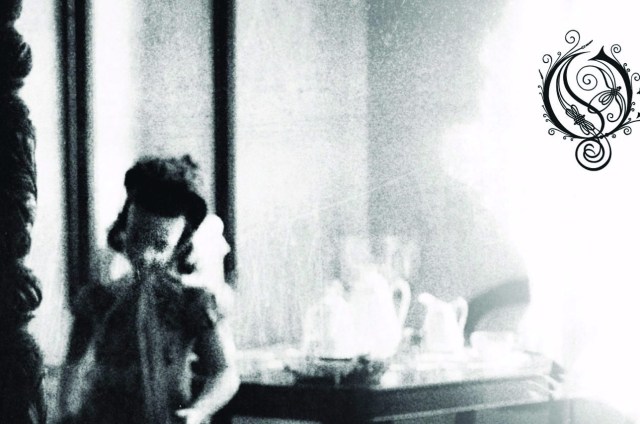
Opeth2Turns out the best Swedish death metal band of the 90s and early oughts was listening to those Bert Jansch and Popol Vuh records all along.  And such grooves are not as unrelated to Opeth’s charge as first glance might suggest.  Having spent the better part of a decade determinedly NOT (no, never) dancing around the DADGAD maypole in the relatively quiet interludes of scorching song suites lasting upwards of 20 minutes, Opeth bookended their 2002 LP Deliverance with 2003’s Damnation, and the acoustic drone floodgates opened.  Prog polymath Steven Wilson, who’d helmed the band’s production since 2001’s Blackwater Park, found in Opeth’s singer/guitarist Mikael Akerfeldt a like-minded soul who, after a blistering half-dozen LPs replete with growls, blast beats, and super doom — though never rote, and always smart — needed some wind in the sails.  Unplug, let the mikes breathe a bit, leave the distortion pedals at home, I can imagine part of the conversation going, and so it sounds anyway on the recorded evidence.  Damnation is a masterpiece, a quiet, spacious death metal record, a grim yet lithe prog album, and with that said and with that description, no, it sounds nothing like the Cure, but it may appeal if Disintegration is your cup of tea.  It’s Wilson’s and Akerfeldt’s best and most dramatically pioneering record (although Opeth’s Wilson-less Ghost Reveries, from 2005, is maybe most representative of their work until the band’s real act two began with 2008’s Watershed).

Soon after Damnation‘s release the band took their show to Shepherd’s Bush in London, and there recorded 2004’s live Lamentations DVD, long since a YouTube staple.  Just as “Closure” anchors Damnation, its live cousin fills the same role on Lamentations.  The show is worthwhile to watch in its entirety, as Opeth takes some giant steps, with jazz-touched atmospherics and restrained but potent jams.  The band acknowledges its debts while shrugging off the diehard metal kids who came out for blood (they’d be given their due anyhow in the harder part of the show, and even in the Damnation section it ain’t exactly MTV unplugged).  If there’s a point where Akerfeldt became who he is, it’s on full display here, an artist who, as he appeals to his audience, is confident in his direction.  Just glorious.

soundstreamsunday presents one song or live set by an artist each week, and in theory wants to be an infinite linear mix tape where the songs relate and progress as a whole. For the complete playlist, go here: soundstreamsunday archive and playlist, or check related articles by clicking on”soundstreamsunday” in the tags section.

soundstreamsunday: “Wave” by Beck

BeckWhen Beck walked a talking blues over a sample of Johnny Jenkins’s cover of Dr. John’s “I Walk on Gilded Splinters” for “Loser,” his giant 1994 hit, there was an aesthetic purpose lurking underneath its vibe of off-the-cuff spontaneity that, 25 years later, continues to infuse his work with vitality.  While “Loser” itself is marked by the wild west feel of early 90s indie rock, with all its many faces, Beck’s subsequent work shapes that freedom into something beyond any particular rock and roll era — his catalog reflects possible trajectories across time rather than a simple series of destinations.
Morning Phase, released in 2014, is Beck’s ninth, an “acoustic” record that ran away with a clutch of awards and praise from critics.  All deserved.  He makes a pallet on the floor in support of his considerable vocal power and melodic finesse (things he’s not always interested in showing off), rich strings and rolling rhythms stacked beneath a lyrical prowess speaking of a talent well-nurtured:  if he’s not always successful in his endeavors, Beck is an active creator not inclined to coast.

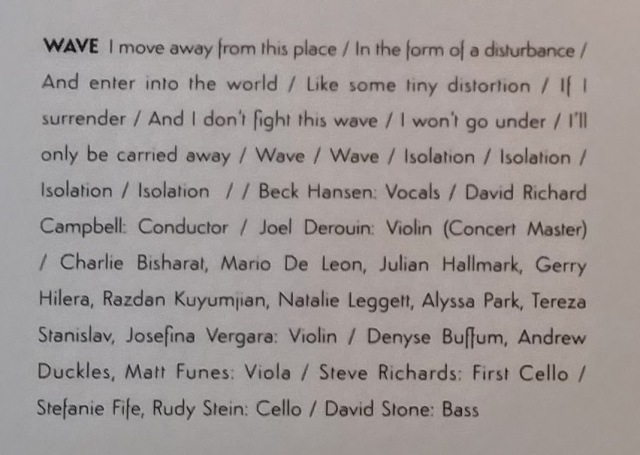
BeckWaveLyrics

In its length, in its lyrics, “Wave” appears a slight, slip of a thing.  But in its undertow it is a song of deep release, a beautiful orchestration of removal, isolation, perspective; and so reminds me of King Crimson’s Starless and John Wetton’s treating the lyric as if he’s singing an emotionally interior “Jerusalem” — the land falls away, and you are at sea.

soundstreamsunday presents one song or live set by an artist each week, and in theory wants to be an infinite linear mix tape where the songs relate and progress as a whole. For the complete playlist, go here: soundstreamsunday archive and playlist, or check related articles by clicking on”soundstreamsunday” in the tags section.

soundstreamsunday: “Starless” by King Crimson

kingcrimsonKing Crimson appeared in 1969 as an island, on the far side of the bridge joining a tiring psychedelic scene to a studied, if no less freaky (for its age), “progressive” rock.  In its nearly fifty years the group’s membership has drifted in and out through orbits around guitarist Robert Fripp, his steady hand and heart dissolving and reforming Crimson as there is music for it to play.  As Fripp assembled the band’s third incarnation, Crimson was riding a wave of popularity the rewards of which didn’t settle entirely well with him, and in promising a more difficult, rockier terrain he was able to lure drummer Bill Bruford, looking for a similar fresh start, from megaprog juggernaut Yes.  With violinist David Cross and bassist/vocalist John Wetton, the band created three albums in quick succession, ranking among their diverse best.  1974’s Red, the last of the trio, is an able summation of Crimson to that point, before Fripp forcibly retired the band (he would let Crimson lie dormant until a brilliant, left-field return in 1981).  The music is a metallic, abrasive take on contemplating the dying of the light, its mood no doubt reflecting Fripp’s, and his band’s, growing uneasiness.
In its lyric, “Starless” is an extension of the previous album’s title, Starless and Bible Black,  but the resemblance more-or-less ends there.  It has more in common with the grandeur of Crimson’s first record, In the Court of the Crimson King, mellotrons drifting into Fripp’s signature sustained tones, with Wetton’s vocal part an overtly dramatic (such was Wetton’s m.o., but here it works) preamble to a long instrumental passage as heavy a piece of jazz metal fusion as has ever been created.  For all his professorial demeanor and seriousness, Fripp loves a good stoner riff, and the tension he can build around such beasts — harmonic, exploratory — separates him from the pack.  Brainy, yes, but beguiling, gorgeous, devastating.

soundstreamsunday presents one song or live set by an artist each week, and in theory wants to be an infinite linear mix tape where the songs relate and progress as a whole. For the complete playlist, go here: soundstreamsunday archive and playlist, or check related articles by clicking on”soundstreamsunday” in the tags section.

soundstreamsunday: “I’m So Tired” by the Beatles

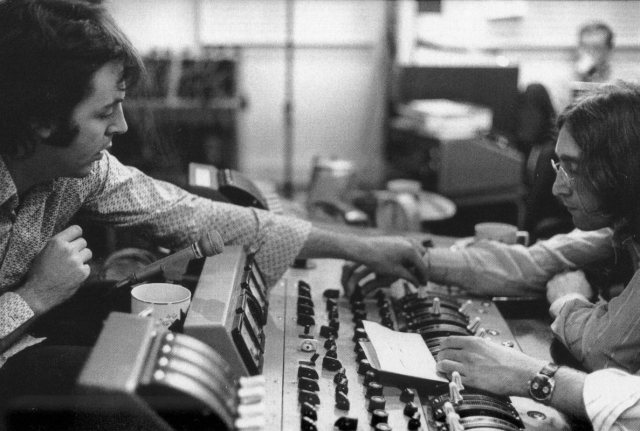
paul john mixing white album 68Released in November 1968, the White Album did a Pollock on all the principles of freedom the Beatles had been shaping since 1965’s Rubber Soul kicked off their long, disciplined freakout, and splattered the canvas with every elementary Beatle colour: rock and roll, British music hall, folk-and-pop, country, novelty songs, in no apparent order or thematic unfolding.  In its elemental, revelatory mess and as a rock double album it bears resemblance to Dylan’s Blonde on Blonde (1966) or even Hendrix’s Electric Ladyland (released just the month before), and if you took the long view you could, I suppose, think of it as part of the strengthening trend in the late 1960s towards the belief in rock music as art.  While The White Album may not be a lot of things to otherwise die-hard Beatles fans, it is very definitely Art.  Self-conscious Pop collage.  If the grinning nods-and-winks of yore are replaced by the dour four studiously not having a good time together during these last years of their existence (or perhaps merely shrugging the veil of idolatry), the music gives the lie to this not being good for the rest of us and for popular music in general across the timeline of centuries.  That Abbey Road and its blueprint for rock’s next steps was still in their future is almost impossible to believe.
“I’m So Tired” is a late Beatles-era Lennon masterpiece, a song of yearning and uncertainty.  Its central line,  “I’d give you everything I’ve got for a little peace of mind” is both a call of desire for Yoko Ono and, in its cultural context, maybe the expression of the need to cool off for a bit, get some bearings amidst the drugs and money and politics and war and bullshit.  This is what makes great songs.  And of course it doesn’t hurt that there’s a lazy kind of rhythm to it, torch ballad sway giving way to hard rock march in the B section.  Twice through and out, nothing to it really, but in its barely 2-minute glory it contains in its molecules everything the Beatles were and would be.

soundstreamsunday presents one song or live set by an artist each week, and in theory wants to be an infinite linear mix tape where the songs relate and progress as a whole. For the complete playlist, go here: soundstreamsunday archive and playlist, or check related articles by clicking on”soundstreamsunday” in the tags section.

soundstreamsunday: “Can I Sit Next To You” by Spoon

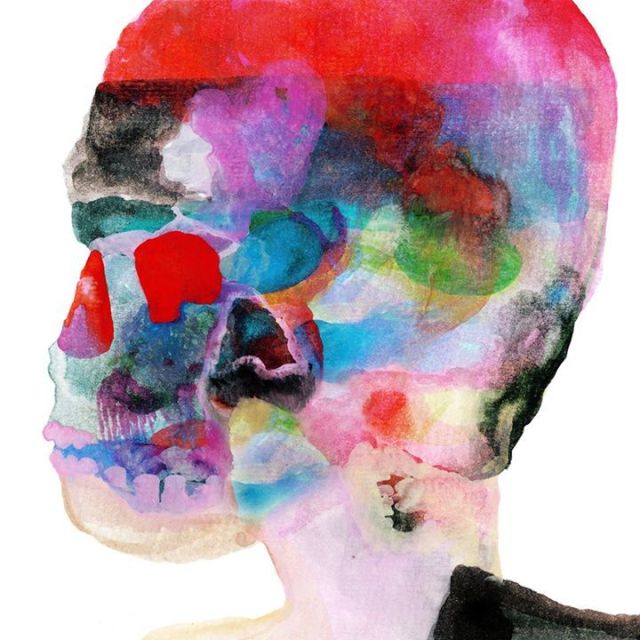
spoonThe connections are clear, right? Michael Karoli’s cousin and girlfriend were the cover models for Roxy Music‘s album Country Life (1974); Spoon names itself after a song by Karoli’s band Can; and if Spoon isn’t America’s Roxy Music then I’m buying a ticket to Cologne and getting this all figured out for good.  Spoon is the rock art band of the moment and of many previous moments, their career now in its twenty-somethingth year.  Released this spring, the band’s latest, Hot Thoughts, along with LCD Soundsystem’s American Dream, gives the lie to what is otherwise a general truism: rock bands are a young person’s game.  A killer set of songs with a sustained, youthful definition, Hot Thoughts makes me search my brain for other great rock records made by folks who are my age.  A real, original rock record.  With guts and balls and great songwriting and absolutely no fat.  Not something worthy of elder statesmen or something celebrated by NPR for the maturity of its grizzled veterans, but damn, something that makes you want to dance and call out its lyrics without having much of a history with the band (and I don’t).
When Britt Daniel sings “I’ve been working on a plan, yeah” on “Can I Sit Next To You” he makes it feel like the most important words ever uttered.  Part of this is his voice, which as rock vocals go is, as my 10-year-old would say, “savage, yo” (really).  A mix of John Lennon, Iggy Pop, and Lee Mavers, Daniel can do falsetto soul back-to-back with a nasal/glottal/punky growl.  This was the territory of the giants of early 70s British rock as it morphed into pub and punk, the White Album (yeah and maybe some Marvin Gaye…and Can…) in one hand and a lager in the other.  So, everything is a hook but all the hooks have a Martin-esque depth of detail, flourish, and care, and a slightly shifted off-ness that makes it a slow, satisfying grower.  When in the middle of the song the bulbs pop and the keyboards go eastern psychedelic, it opens the horizon and we’re getting a thumbnail funk view of the Arabian Peninsula.  Sick — maybe the Cure would have thought of this but wouldn’t have been so economical, and there is whiff of “Fascination Street” lingering in the background.  Jim Eno’s boss kick drum brings it back to old school, and if you’re like me you’re waiting for that crazy keyboard bit one more time, and it does come, hallelujah.  With all it makes me think about, still…this is a conjuring music, an act of devotion not imitation.  Song ’bout kicks and the lengths you might go to.

https://www.youtube.com/watch?v=LOKjTIbj1JI

soundstreamsunday presents one song or live set by an artist each week, and in theory wants to be an infinite linear mix tape where the songs relate and progress as a whole. For the complete playlist, go here: soundstreamsunday archive and playlist, or check related articles by clicking on”soundstreamsunday” in the tags section.

soundstreamsunday: “How Do You Sleep” by LCD Soundsystem

LCD soundsystemJames Murphy made no bones about the hipster cred accorded Can on “I’m Losing My Edge,” LCD Soundsystem’s 2002 dancefloor-meets-Weird Al hit.  “I was there, I was there in 1968, I was there at the first Can show in Cologne,” he sing-speaks ala King Missile, going on to target Suicide and others in the pantheon of removed, white boy cool.  It’s idolatry and idol-destroying at once, and it’s a lot of fun to listen to.  Murphy never shies from the obvious or expected, scratching musical itches and quoting hosts of precedents within his long-ish form constructions.  He makes big beats, giant basslines, and his meta smarts about the music he creates enlivens his work rather than reducing it to a nostalgia trip. Precocious, yeah, precious, no.
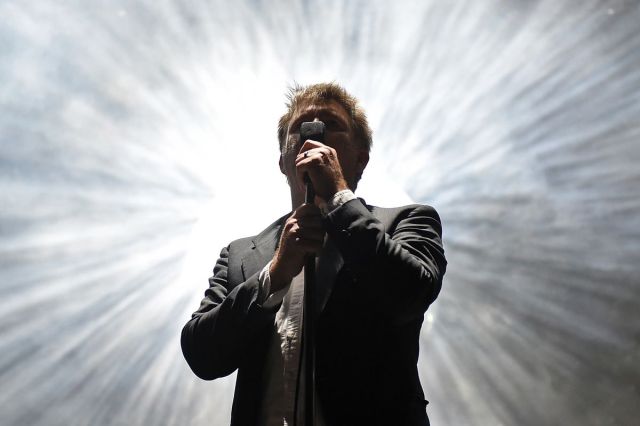
Murphy wrapped up his LCD Soundsystem project in 2011, but revived it last year with some shows and this year (this month in fact) with American Dream, a double LP epic that continues an obsession with Adrian Belew-era Talking Heads, Tom Tom Club, New Order, Depeche Mode, Modern English, Kraftwerk, and on and on and on….   Songs as dessert, and dessert with every meal.  And yet the lyrical content carries some heft, and whether or not you think Murphy is saying anything new or real or whatever, you can take his songs in a lot of different ways, luxuriating in all the analog richness  and the cracking drums, or thinking, as I do when listening to the lyrics of “How Do You Sleep?”, of something that relates on a personal level (in this case, there’s a Stevie Smith “Not Waving But Drowning” vibe going on).  These aren’t simply tossed off words so people who aren’t comfortable with instrumentals have something to chant, or words made to fit or counterpoint melody, which was Can’s m.o.  The lyrics crystallize, emotionalizing the epic weight of the central, insistent riff and Murphy’s all-in vocal.

soundstreamsunday presents one song or live set by an artist each week, and in theory wants to be an infinite linear mix tape where the songs relate and progress as a whole. For the complete playlist, go here: soundstreamsunday archive and playlist, or check related articles by clicking on”soundstreamsunday” in the tags section.

soundstreamsunday: “Spoon” by Can

Can2
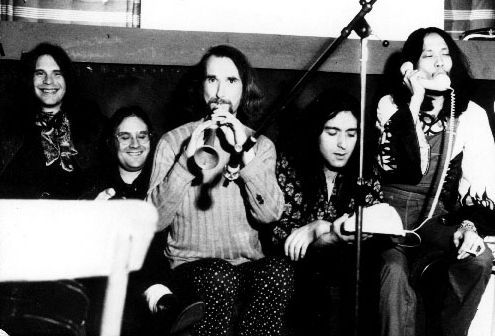
Michael Karoli, Irmin Schmidt, Holger Czukay, Jaki Liebzeit, and Damo Suzuki, circa 1972.

Across five albums and five years Can rendered the categories meaningless and set the bar for the kind of rock future that would make stars out of bands like Radiohead; there’s probably an argument that theirs is still the standard.  Like the better so-called “krautrock” bands of the era, Can’s music sounds like little else, and the environment supporting such freedom became a magnet for American and British artists looking to stretch (Keith Jarrett, Brian Eno, David Bowie).  But for such a self-styled experimental rock band, Can’s music is as accessible as it is confounding, a beautiful cut-and-paste mess controlled by disciplined musicianship (and editing).  Noise, psychedelia, jazz, funk, world, new and no music vie for space in the grooves, battling, more often than not, to equal victory.

By the time Can came to make 1972’s Ege Bamyasi they’d navigated a path through narcotic claustrophobia (Monster Movie‘s V.U.-summoning “Father Cannot Yell,”), cling-clang guitar trance (Soundtracks‘ “Mother Sky”) and long-form boogie freakout (Tago Mago‘s “Halleluwah”) butted up against concrete pieces that, to paraphrase Julian Cope, were guaranteed to clear the room at parties.  On Ege Bamyasi they tighten the bolts — at least on record, as live footage from the time shows vocalist Damo Suzuki doing everything to not play along, with varying degrees of success — and come up with an album that contains, in the context of Can’s musical universe, a slew of pop-shaded nuggets.  “Spoon” distilled all previous impulses into a succinct 3-minute masterpiece of Suzuki no-sense, Jaki Liebzeit clockwork, and Michael Karoli string-slinging wizardry, with Holger Czukay and Irmin Schmidt binding it all together.

It’s the perfect mixtape “link” song: rhythmic, catchy, weird.  It was a hit in Germany, adopted for a TV thriller and selling hundreds of thousands of copies.  Successful bands have named themselves after it.  It was and is — attractively to young, arty and ambitious Americans — roundly ignored in the States along with the rest of Can’s stunning catalog.  And even unto itself it’s a marvelous thing.

soundstreamsunday presents one song or live set by an artist each week, and in theory wants to be an infinite linear mix tape where the songs relate and progress as a whole. For the complete playlist, go here: soundstreamsunday archive and playlist, or check related articles by clicking on”soundstreamsunday” in the tags section.

soundstreamsunday: “Asa Branca” by Gilberto Gil

10262012-Gilberto-Gil-1_t958In “I Can See Clearly Now,” Johnny Nash rejoices in the rain ending, the clouds parting.  In “Asa Branca,” Gilberto Gil brings the boogie down party to a song that prays for the rain to return.  Written in 1947 by Luiz Gonzaga and Humberto Teixeira, this oft-covered Brazilian chestnut — and Gonzaga’s own versions are pretty uniformly great — is about two lovers separated by the economic conditions of the drought-ravaged region of Sertão, forcing the narrator to leave his beloved Rosinha to find work in the city, with a promise to return.

I love Gil’s work.  Along with Tom Zé and Caetano Veloso, Gil was at the cutting edge of Brazilian music in the late 1960s and paid the political price, as did Zé and Veloso.  The music he continues to create and perform is remarkable, and when I saw him live several years ago, even at age 70 he played two hours, electric guitar over his shoulder and wicked band behind him, to a rapt crowd he kept dancing in the aisles.  He’s an ambassador without a badge, a teacher without a blackboard, and when he plays, he’s on fire.  Along with Caetano’s first four or five records and the albums by Os Mutantes, Gil carved a path for singular Brazilian expression. By 2003 he had become such a hero that he was named Brazil’s Minister of Culture. Sure, “Minister of Culture” sounds Orwellian to me too, but if you’re going to have one, by all means make it Gil.  Two hours.  70 years old.

Gil covered “Asa Branca” on his 2001 live album São João vivo, and it’s been a live staple for him ever since.  This version is from the live tour supporting his album Fé na festa, the same tour we saw, and while some record company minion got the upload video quality wrong, the audio is fine and the performance jaw-dropping.  So great.

https://www.youtube.com/watch?v=u22XJWwteMQ

soundstreamsunday presents one song or live set by an artist each week, and in theory wants to be an infinite linear mix tape where the songs relate and progress as a whole. For the complete playlist, go here: soundstreamsunday archive and playlist, or check related articles by clicking on”soundstreamsunday” in the tags section.

soundstreamsunday: “I Can See Clearly Now” by Johnny Nash

johnnynash1Four months after Bill Withers hit number one with “Lean on Me,” Johnny Nash climbed to the top of the charts with the rocksteady/reggae pop of “I Can See Clearly Now.”  Unlike Withers, who seemed to appear out of nowhere, Nash had maintained a fairly solid chart presence since 1957, and by November 1972, at the age of 32, he was also a seasoned veteran of the biz side of the music biz, creating his own label and signing pop acts like the Cowsills.  He traveled to Jamaica in the late ’60s in an attempt to bring rocksteady to the U.S., for a time working with Bob Marley and the Wailers.  In a sense the sessions weren’t successful, illustrating the difference between Nash’s American AM-radio “hit” perspective and the maturing album-oriented FM-radio vision that Marley, and Chris Blackwell of Island Records, had for reggae.  And yet the association was significant for both Nash and Marley, taking them to London in early 1972 in an attempt to break reggae outside of Jamaica.  It was in England that Nash recorded his best album — relying heavily on Marley’s songwriting and the musicians that made up the Wailers and the Fabulous Five — and where Marley and the Wailers would meet Blackwell.

It’s hard to imagine a greater musical uplift than “I Can See Clearly Now.”  With that title and the refrain “it’s gonna be a bright, bright sunshiney day,” there’s more than a hint of Nash’s commercial reach, but he was clearly inspired by his work with Marley:  the tune’s simple reggae backing and the sincerity of the performance saves it from the treacly precipice.  When the bridge — itself a grand gesture — gets keyboardy and spacey it feels like there must have been something going on in the studio to fit the song, with its monumental groove and smile diminishing whatever adversity might be at hand.  This is a song about happiness in the moment, the rain lifting, and seeing the obstacles for what they are.

soundstreamsunday presents one song or live set by an artist each week, and in theory wants to be an infinite linear mix tape where the songs relate and progress as a whole. For the complete playlist, go here: soundstreamsunday archive and playlist, or check related articles by clicking on”soundstreamsunday” in the tags section.

soundstreamsunday: “Lean on Me” by Bill Withers

billwithers.jpgWhere Randy Newman and John Prine brought hyper-literate character study to the singer-songwriter genre, often inhabiting in the first person the figures they constructed in song, Bill Withers went for the emotional jugular, unabashed, and if there was any character being studied it was him.  Withers’ warm, supple voice, steeped in rhythm and blues and country, was his listeners’ point of entry, a vehicle in and of itself for delivering the musical goods.  Born in 1938, by the time he released his first record Withers was 33, had spent a decade in the service, and was working a factory job so soul-killing that a guitar and an empty notebook seemed as good a possibility as any for a better life.  His age helped him make records glowing with self-assured performances, and he became an unlikely pop star.  The hits came with that first record and kept coming through the 1970s.  By the time he did the unthinkable and retired in 1985, Withers’ legacy included some of the best American songs ever recorded: “Ain’t No Sunshine,” “Grandma’s Hands,” “Lovely Day,” “Just the Two of Us,” and “Lean on Me.”

“Lean on Me” is kind of like “The Weight” by the Band — it’s almost hard to believe that an earthly person actually wrote a song so integral to the late 20th-century American experience.  There is a grandeur to it, musically, lyrically, and sentimentally, that, even in its ubiquity, still shines.  It hit number one in 1972, but didn’t do all the heavy lifting to raise 1972’s Still Bill to number four, packed as that album is with great songs and arrangements popping with gospel funk dynamics.  In its album context, closing side one of the LP, “Lean on Me” is a beautiful respite from the personal strife suggested in “Lonely Town (Lonely Street),” “Who is He (and What is He to You)?” and “Use Me.”  The song evens a delicate emotional balance, and as an affirmation of simple friendship, it’s the finest kind of pop music.

soundstreamsunday presents one song or live set by an artist each week, and in theory wants to be an infinite linear mix tape where the songs relate and progress as a whole. For the complete playlist, go here: soundstreamsunday archive and playlist, or check related articles by clicking on”soundstreamsunday” in the tags section.