There were only a handful of them, American rock bands in the late 1960s who sunk the kind of roots that North American progressive rock could grow from. Spirit was one of them, and by the time they released their fourth album in 1970, they’d covered enough territory that they managed to have both a pop single, in the garage rock monster “I Got Line On You,” and a back catalogue of albums critically respected for their sophistication in arrangement and playing. Although recently dwarfed by the attention given to their instrumental “Taurus,” which Led Zeppelin may have heard and used, probably unwittingly, for “Stairway to Heaven,” Spirit’s albums up through Twelve Dreams of Dr. Sardonicus are rich canvases that, some have observed, may seem too eclectic, don’t always sum the band’s talents as they could. So that when you look for a definable Spirit sound, it eludes definition. I can see this, but at the same time Spirit’s appetite for musical movement was its guide, a definable point not being the point at all.
“When I Touch You” was not the song off of Twelve Dreams you’d hear on the air back when rock stations were just rock stations — that was “Nature’s Way,” the centerpiece of a record that dwelt on themes of conservation and modern-day alienation. But “When I Touch You” is where it’s at, an early metal art mammoth lumbering across its own post-Hendrix plain into the 1970s.
soundstreamsunday presents one song or live set by an artist each week, and in theory wants to be an infinite linear mix tape where the songs relate and progress as a whole. For the complete playlist, go here: soundstreamsunday archive and playlist, or check related articles by clicking on”soundstreamsunday” in the tags section above.
When the Polish band newspaperflyhunting released Iceberg Soul in 2014, to my ears it was a shot across the bow of prog, which maybe needed a little hard striving to bust out of the templates. The album was an original in a widening landscape littered with knockoffs, so while their sound skimmed Pink Floyd and the Velvet Underground, Mazzy Star and modern metal, their song structures, melodies, and presentation were a strong reminder of prog’s roots: a playground for the far out and unexpected, combining psychedelia, improvisation, and musics new and old, with a focus on riffs and the straight-up sonic power of rock’s stomp. This was not a music to be sequestered unto itself, and reminds me how the Soft Machine cut their teeth opening for Jimi Hendrix, and Yes was as likely to be paired with Iron Butterfly, or Rush with ZZ Top, as with strictly like-minded souls.
“Through the Lurking Glass” is representative of the rest of Iceberg Soul, which is unfussy and melodically rich, a dark stage lit by accents like Fender Rhodes piano and an innocent, plaintive vocal approach which is improved by its Polish tilt. It’s an utterly unique record. Along with the work of Gazpacho, newspaperflyhunting is the best argument I can find for the continuing vitality of progressive rock.
soundstreamsunday presents one song or live set by an artist each week, and in theory wants to be an infinite linear mix tape where the songs relate and progress as a whole. For the complete playlist, go here: soundstreamsunday archive and playlist, or check related articles by clicking on”soundstreamsunday” in the tags section above.
Like Rush, the Velvet Underground were painted as a cult band so frequently that it became clear by the early 1980s, a decade after the band was done, that they were anything but. In the rock-and-roll retrospectives and histories that began appearing at that time, the band became a pivotal force despite their commercial failure — Brian Eno famously half-joked that even though the band’s first record (that Andy Warhol one with the banana on it) only sold 10,000 copies on its release, every one who bought it started their own group — and through sheer collective will the rock community at large cemented VU’s role as the progenitor of punk by the time of Legs McNeil’s and Gillian McCain’s landmark Please Kill Me: The Uncensored Oral History of Punk (1996). It’s a conclusion that’s hard to argue with, if at the same time you cast a wider net including bands like Love and the Stooges and countless garage-rock monsters like the Sonics and the Seeds. The legacy of the Velvet Underground comes down to attitude, songwriting, and, importantly, their connection with Warhol and New York.
By the mid-1980s American college rock (for so it was called at the time) was jonesing for all things VU, but often threw that influence in with the other nostalgia trips taking place at the time, to the lands of Byrds, Beatles, and Barrett. California’s neo-psychedelic “paisley underground” existed in this space, and reached its pinnacle in the early 1990s with Mazzy Star, a group that grew out of another band, Opal, and, before that, Rain Parade. Mazzy Star matched David Roback’s sculpted fuzz country blues with Hope Sandoval’s beautiful vocal phrasing, which paired a remarkable emotional investment with the kind of matter-of-fact distance that characterized Lou Reed’s and the Velvet Underground’s best work. While their hit, “Fade Into You,” would come from their second album, it’s their first record, She Hangs Brightly, that defines their sound best, slow- and mid-tempo country/blues/americana rock that is its own reverb-ed thing but also strongly evokes VU and the Doors (to the point where they lift the riff for “Ghost Highway” straight from the Doors’ “My Eyes Have Seen You”). As a whole the album is near-perfect, has aged as gracefully as any of its contemporaries. “Blue Flower” reminds me of standing in front of a stage in Carrboro, North Carolina, in 1994, watching one of the best live bands I’ve seen make a case for the past and future of American rock and roll.
soundstreamsunday presents one song or live set by an artist each week, and in theory wants to be an infinite linear mix tape where the songs relate and progress as a whole. For the complete playlist, go here: soundstreamsunday archive and playlist, or check related articles by clicking on”soundstreamsunday” in the tags section above.
Outside the fact both groups employed players of a violin/viola in their lineups at one time or another, and possessed songwriters of legend, you’d be hard pressed to find common ground for Fairport Convention, last week’s soundstreamsunday feature, and the Velvet Underground. But in an imaginary Venn diagram of live rock jams from otherwise non-jammy groups circa ’68-’72, Fairport’s scratchy, chugging take on “Matty Groves” would share a noisy, electric segment of that interlocking circle with V.U.’s live work during the same period. In 1969 the Velvets, with aforesaid violist/bassist John Cale one year gone and a third album released (The Velvet Underground), recorded a handful of shows in Texas and San Francisco, showing an energetic, touring rock outfit whose songs of hustlers, dopers, and beloved Factory freaks worked even without Cale’s avant-garde contributions. Indeed, Cale’s replacement Doug Yule, doubling on organ, more than adequately filled in Cale’s creeped-out carnival viola drone. The tapes — unreleased until 1974’s 1969: Velvet Underground Live with Lou Reed (the full two-night run at San Francisco’s Matrix was released in 2015 in pristine glory and it is mind-blowing) —like the rest of their music, hold the seeds of punk. But beyond that, the jams they insert, not part of the studio versions, have a live inventiveness and melodic sensibility that rank among the finest of their long-haired time. On “I Can’t Stand It” — in its studio incarnation a proto pop-punk nugget of the variety the band could so effortlessly summon — the band opens up space for an extended guitar section that takes cues from Jim McGuinn’s intro to “Eight Miles High” and pushes its Coltrane-inspired riffing into the stratosphere. Mo Tucker’s relentless pounding and Yule’s bass background the song, never allowing the guitars of Lou Reed and Sterling Morrison to disintegrate into wandering exploration. This is a lean-and-mean live band unharried by the legend they would become (Tucker has even noted that on this tour audience members would tell her they couldn’t even find the band’s albums for sale), at a time when rock-n-roll was meant to be rough around the edges, and maybe even exact a toll.
soundstreamsunday presents one song or live set by an artist each week, and in theory wants to be an infinite linear mix tape where the songs relate and progress as a whole. For the complete playlist, go here: soundstreamsunday archive and playlist, or check related articles by clicking on”soundstreamsunday” in the tags section above.
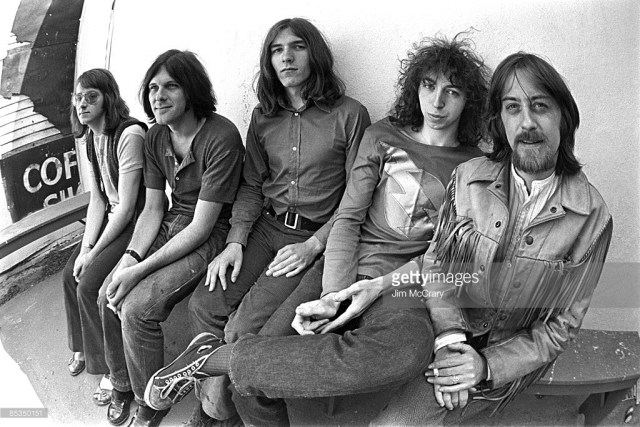
With deep roots in the mountains of north Georgia, young Hedy West presented authenticity and authority in her singing of old time folk music. By the early 1960s she had become a mainstay of the growing traditional music revival in America, having written the often-covered “500 Miles” and dazzling audiences with her fluid clawhammer banjo style and clear, naturally inflected, singing voice. By the mid-1960s she was touring Europe, singing and playing with like-minded fellow travelers of the British folk revival. But if you’ve heard of Hedy West, even if you’re acquainted with the American and British folk revivals, you’re an exception. She kept a low profile, and her career as a musician was wrapped tightly with her political activism. She was no rock star — although many thought her the best of the “girl” folk singers of the era.*
Hedy West
Following Hedy’s death in 2005, a collection of recordings and papers — including hundreds of tapes of interviews with her grandmother Lillie Mulkey West that in themselves are a storehouse of Appalachian culture — made their way to the special collections library where I worked at the University of Georgia. As my colleague Christian Lopez and I started working through some of the boxes in 2010, we found pictures Hedy had taken of two young men in a flat, sometime in the mid to late 1960s. We were flabbergasted: they were Dave Swarbrick and Martin Carthy. Both of us were fans of these two, knew their work and their cultural impact on British rock and folk music. And it’s an interesting thing, Hedy taking these pictures. Like West, fiddler Swarbrick and guitarist Carthy were leading lights of their folk revival, in Britain, often recording as a duo. According to Swarbrick, in an email response to Christian, the three traveled Europe together, and it was “on the banks of a river in the former Yugoslavia” that Hedy played for Swarbrick and Carthy a tune called “Maid of Colchester.” Why, you might ask, was Christian emailing the ailing Dave Swarbrick regarding this tune, and why should it be important in any way? To condense a long story, I started as a Martin Carthy fan because I was a Steeleye Span fan because I was a Jethro Tull fan. And, by the time I saw Carthy play his adaptation of “Famous Flower of Serving Men” in 1991 in a community center in a London suburb, also on my radar was the tune “Matty Groves,” from Fairport Convention’s live record, House Full (recorded 1970, released 1986 — of course, “Matty Groves” was the epic track of their seminal album, 1969’s Liege and Lief). Swarbrick was Fairport’s fiddler on these records, and anyone familiar with British folk-rock and with half an ear knows that the central tune for “Famous Flower of Serving Men” is identical to the extended jam-band outro of “Matty Groves.” Carthy identifies the tune to “Famous Flower” in the liner notes to 1972’s Shearwater as “Maid of Colchester,” learned from one Hedy West. Christian had emailed Swarbrick to see if we could close the loop, since Fairport’s “Matty Groves” pre-dated Carthy’s song. Swarbrick confirmed that his and Carthy’s source for the tune was the same, and it was indeed Hedy West. Our minds were fairly blown. Two keystone songs of the British folk revival and British folk rock rely on a riff brought (back?) from America, by a woman who as far as we know never recorded the tune herself.
As sung by Sandy Denny in 1969, “Matty Groves” is a song of adultery and tragic murder that became the centerpiece — along with the riff monster “Tam Lin” — of Fairport’s pinnacle album. Denny and founding bassist Ashley Hutchings left Fairport weeks after the release of Liege and Lief, and while Richard Thompson would stay for one more album, by 1971 he had embarked on a solo career. But between the departure of Denny and Thompson, Fairport Convention hit its stride as a live band, touring widely. For the first time without a female lead singer, the group indulged its triple attack of guitarists Simon Nicol, Thompson, and fiddler Swarbrick, trading vocals depending on the tune. The addition of Dave Pegg on bass gave them a heavier sound, and what sounded on Liege and Lief a bit thin was overpowering and raw live. By the time they hit a residency at the Troubadour in Los Angeles in September 1970, they were on fire, delivering absolutely devastating versions of Thompson’s new song, the mighty “Sloth,” as well as a huskier, rocked-out “Matty Groves.” With Thompson singing lead and the others in support, the tale takes on a dark, derelict tawdriness, unlike the tragedy it was in Denny’s reading, and when at the break they launch into, yes, “Maid of Colchester,” they may as well have been the greatest rock band on earth. At breakneck speed, Thompson demonstrates why he is who he is, while Swarbrick’s performance is electric and Dave Mattacks’s drumming dependably dynamic and fully engaged, as it always was and is. According to Joe Boyd, Fairport’s producer — for who else would it be — during Fairport’s stay at the Troubadour Led Zeppelin stopped by, sat in, and the music that happened was “not fit for a family album.” No doubt Zep loved their Fairport, if only based on the evidence of Denny’s presence on “Battle of Evermore,” but beyond that there is in this music a ragged-but-right universal tone that both bands were following at the time and in their own ways. As Hedy and others before them had done, they took what they needed from the ancient songbag and made it something else, in the spirit of Art.
*This from A.L. Lloyd, who was sort of Britain’s Pete Seeger. Seeger, for his part, also held Hedy in high esteem.
Image above: Dave Mattacks, Dave Pegg, Simon Nicol, Richard Thompson, Dave Swarbrick, 1970.
The embrace of Arthurian legend and Tolkien-esque fantasy by British musicians in the 1960s and 70s — fueled undoubtedly by mixing the sounds of the folk revival with psychedelics and horrified revulsion at an overly industrialized and de-personalized world — worked to create some truly exotic hybrids in a scene that had also been profoundly influenced by American blues music and the sheer power of electric instrumentation. But whether it was Donovan or Led Zeppelin or Uriah Heep taking on the Roundtable and Middle Earth, there tended to hang over this music a hippie haze that could just as easily turn towards the naively dumb as the innovative. (Spinal Tap’s “Stonehenge” sequence is funny because it’s so spot-on, and as a Zep and Rainbow fan I laugh, and squirm, whenever I see it.) Leave it to Pentangle to get it right. As Bert Jansch introduces “Hunting Song” as a “13th-century rock and roll song” on this stellar performance from the band’s 1970 BBC special, his is a voice of wry authority. A key figure in the development of acoustic guitar playing in the 1960s, and a songwriter who found inspiration in the dark power of traditional music, Jansch was a musician who masterfully summed the denominators of blues and jazz and folk music early in his career, and until his death in 2011 was a guitarist’s guitar player. While Pentangle could not be said to be Jansch’s band, as it also included a cast of equals including guitarist John Renbourn, bassist Danny Thompson, drummer Terry Cox and vocalist Jacqui McShee, they built on the ground Jansch cleared in the mid 1960s along with Martin Carthy and John Fahey. Their music is jazz medieval, folk improv, well-suited to covering one genre’s songs with another’s genre’s music. “Hunting Song,” originally recorded in the studio for 1969’s Basket of Light, adapts, from the Arthurian take on Tristan and Isolde, the story of Morgan Le Fay’s magic drinking horn, which revealed faithlessness in those who were incapable of drinking from it. The narrator’s role in the story isn’t entirely clear, and the broken narrative itself is, in a moment of genius, written as if the band found it on a shard of manuscript. There is a hunt, a horn, a betrayal. The sources are uncertain, our interpretations our own. Here we see a rare moment of electric guitar work from Renbourn, and Thompson, as always central to the Pentangle sound, hunched over his upright bass, working with Cox to both support and lead the tune. Although Jacqui McShee didn’t possess the vocal firepower of Maddy Prior or Sandy Denny, she matched them in finesse, and beautifully floats over Jansch’s rougher, Dylanesque delivery. As a crossroads of jazz, progressive, and traditional music, this is one of British folk-rock’s great moments.
In 1977, the same year Jethro Tull recorded “Velvet Green” and brought British folk music that much closer to prog rock with Songs of the Wood, John Kirkpatrick and Martin Carthy — both on tour at the time with Steeleye Span — began talking together about the future of folk rock, whether it had anything left to say and, if so, if they could say it together. To have been a fly on that wall. Of the handful of artists who defined the British folk revival, Carthy, whose unique approach to interpreting traditional material on guitar is matched only by Bert Jansch (R.I.P.) and Richard Thompson, has long been the most articulate regarding the nature of folk song, its strength and elasticity. Accordionist Kirkpatrick graced some of the most influential albums of the genre but has also recorded and toured with Pere Ubu — enough said there about artistry without fear. Six years would pass, though, before they fully addressed their question, with the formation of Brass Monkey, which in addition to Carthy and Kirkpatrick included percussionist Martin Brinsford, trumpeter Howard Evans, and trombonist Roger Williams. The idea was to push folk rock past electricity, into an unexpected setting where the bass and drums — here trombone and hand percussion — wouldn’t overwhelm the other instruments in live performance. The self-titled debut, Brass Monkey, appeared in 1983, and along with traditional songs transformed by progressive arrangements, the band also approached some of the outstanding original songs written by their contemporaries. The success of the album is in its seamlessness: it’s impossible to distinguish, without fairly deep listening, where the traditional ends and the contemporary begins.
And so it is with their treatment of Keith Christmas’s “Fable of the Wings.” As recorded in 1970 by Christmas on his album of the same name, the tune is a hyped-up folk blues, quick-timed, a song about a bizarre drug trip intruding on safe suburban lives, where sonically the music closes in around the listener. Very effective in its way, and in the hands of Brass Monkey the song sheds its claustrophobia, slows to a stately pace, and with Evans’s trumpet work takes on a kind of British regal grandeur. Carthy, an adept at modifying traditional lyrics to fit the presentation, takes small but important liberties with Christmas’s text, creating something at turns horrifying, lovely, and sad. It is a peak among the many high points in Carthy’s long career as a singer, player, and collaborator, and speaks volumes about the freedom such accomplished musicians found in the British folk revival.
*Image above, “Stooking” by Clare Leighton, used for the cover of The Complete Brass Monkey, a compilation of the band’s first two albums and essential to lovers of British folk music.
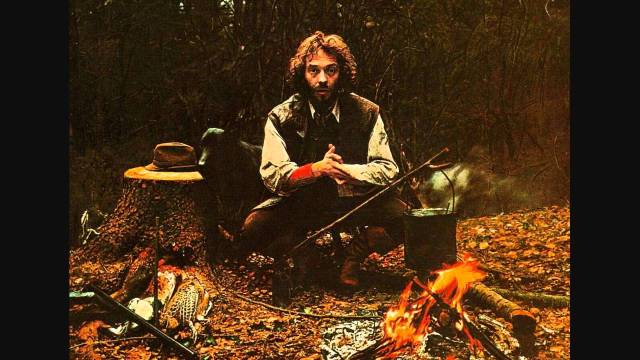
By 1977 Jethro Tull was beginning to wear out its welcome in punk-crazed Britain, but the band was still in its prime creative period. Since 1971’s Aqualung, Tull had been working toward a singular brand of progressive rock, fusing its blues and jazz leanings with the sound and presentation style of traditional songs to create, in the hands of Ian Anderson and his cracked, acerbic writing and vocalizing, an often wickedly pointed baroque folk songbag. Songs from the Wood gave full voice to Tull’s rural idylls, and provides a kind of bookend to what the Incredible String Band began with 1968’s The Hangman’s Beautiful Daughter: a freeform referencing of traditional song without going all trad arr (leave that to the Fairports and Steeleye….). The lyrical and electrical possibilities had ripened as Dylan‘s revolution took a turn towards more European forms, and Tull’s often exaggerated English-ness pervaded both songwriting and production: if Traffic’s “John Barleycorn” gave the impression that the band was plugging directly into the Yorkshire dales, Jethro Tull’s entire catalog depended on the conceit that you might see them — grubby around the edges — performing as a troupe on any given corner of any given English village on any given May Day. Disturbing. Liberating. And when Martin Barre goes to eleven on his Les Paul, thundering.
The live version of Songs from the Wood‘s “Velvet Green” was not included on 1978’s concert album Bursting Out, even though it was performed during that same tour, but was one of the many lovely additions that made the boxset Twenty Years of Jethro Tull (1988) so fascinating and worthwhile. If the band was ever in better form live, they were never captured so well as here on “Velvet Green,” a tune of some finessing, with all members of the band playing multiple roles. Part morris dance, Bach concerto, and dazzling 70s progressive musicianship, the song is a reverie of countryside and sex, rendered in the film without, ironically, Anderson’s trademark flute-between-the-thighs histrionics (his hands here are perhaps, um, full enough, with actually playing said flute and a Martin slot head acoustic). It is one of their finest moments, and as performances go — sympathetic to the song and to the strengths of its players (even though Barre doesn’t even get near a guitar!) — hard to think of a comparison.
Although there is the potential today for historically reconstructing The Incredible String Band as a folksy psychedelic sideshow, the core group of Mike Heron and Robin Williamson were among the most imaginative and deeply schooled of the musicians emerging out of Britain’s folk revival in the late 1960s. Succored by Joe Boyd and Elektra records, the band was in sympathetic company, and mined both sides of the Atlantic, and eastern drones, to create music and lyrics at turns profound and humorous, instantly identifiable, and hugely influential on far more successful bands who rode in their wake (Led Zeppelin particularly saw the writing that ISB flung like spatter art on the wall). They themselves didn’t emerge out of a vacuum, however; connecting the dots from someone like John Jacob Niles, the Incredible String Band can be viewed on a continuum with John Fahey, Bob Dylan, and Martin Carthy, and were surrounded by the time of their third album, 1968’s The Hangman’s Beautiful Daughter, by like-minded souls in Fairport Convention and Pentangle. “Waltz of the New Moon” is one of the many shifting centerpieces of that record, which is a paste-up of folk melody and imagery dissolving into each other, bounding across the frontiers separating east and west. The musicianship is breathtaking, and while the songs do hang in the air like a cannabis haze, I wonder if this association is because the Incredible String Band in their genius created such a sound to begin with.
The traditional folk music community — the collectors and pedagogues in the first half of the 20th century who defined the boundaries of the vernacular music fueling the folk revival of the 1950s and 1960s — probably had little use for a John Jacob Niles, scholar and singer of traditional and local songs whose work bore an imprint so unique that his interpretations took on a life of their own. Armed with giant lutes and dulcimers of his own devise, he would sing in a classically-trained impassioned vibrato whoop (Henry Miller described it as “ethereal chant which the angels carried aloft to the Glory seat”), investing in his songs a Kentuckian-by-way-of-France mondo spirit that channeled, intentionally or not — for Niles was a Modern — what Greil Marcus would later call the Old Weird America, inspiring a young Bob Dylan and echoing down the years in the work of Jeff Buckley and Devendra Banhart, and less intentionally, I suspect, but somehow powerfully in Radiohead and Gazpacho. Niles perhaps more than any other collector internalized the music he sought and found and wrote, seeing in it not a museum piece to be recited but a point of joy that deserved what he could add to it. He found what resonated with him and built a bridge forward with it, and while Led Zeppelin may have covered Fred Gerlach’s version of “Gallow’s Pole” and not Niles’s “Hangman,” Jimmy Page probably had more in common with Niles as an artist who extended a musical legacy rather than dwelt on some phantom authenticity. Here, on “Little Black Star,” Niles does the white man’s take on the “negro folk song,” complete with an affected pronunciation and an equally suspect attribution (some believe Niles might’ve just written this song himself). Through it though the piece builds a kind of magic that’s difficult to shake, and like much of the John Jacob Niles’s catalogue, is hard to forget.

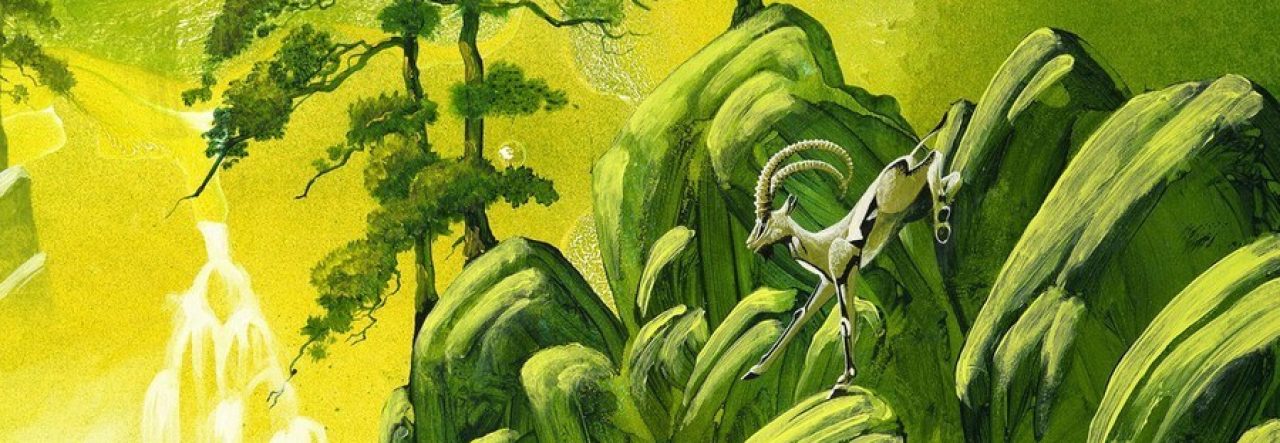
 There were only a handful of them, American rock bands in the late 1960s who sunk the kind of roots that North American progressive rock could grow from. Spirit was one of them, and by the time they released their fourth album in 1970, they’d covered enough territory that they managed to have both a pop single, in the garage rock monster “I Got Line On You,” and a back catalogue of albums critically respected for their sophistication in arrangement and playing. Although recently dwarfed by the attention given to their instrumental “Taurus,” which Led Zeppelin may have heard and used, probably unwittingly, for “Stairway to Heaven,” Spirit’s albums up through Twelve Dreams of Dr. Sardonicus are rich canvases that, some have observed, may seem too eclectic, don’t always sum the band’s talents as they could. So that when you look for a definable Spirit sound, it eludes definition. I can see this, but at the same time Spirit’s appetite for musical movement was its guide, a definable point not being the point at all.
 When the Polish band
  Like Rush, the
  Outside the fact both groups employed players of a violin/viola in their lineups at one time or another, and possessed songwriters of legend, you’d be hard pressed to find common ground for
  With deep roots in the mountains of north Georgia, young Hedy West presented authenticity and authority in her singing of old time folk music. By the early 1960s she had become a mainstay of the growing traditional music revival in America, having written the often-covered “500 Miles” and dazzling audiences with
 The embrace of Arthurian legend and Tolkien-esque fantasy by British musicians in the 1960s and 70s — fueled undoubtedly by mixing the sounds of the folk revival with psychedelics and horrified revulsion at an overly industrialized and de-personalized world — worked to create some truly exotic hybrids in a scene that had also been profoundly influenced by American blues music and the sheer power of electric instrumentation. But whether it was Donovan or Led Zeppelin or Uriah Heep taking on the Roundtable and Middle Earth, there tended to hang over this music a hippie haze that could just as easily turn towards the naively dumb as the innovative. (Spinal Tap’s “Stonehenge” sequence is funny because it’s so spot-on, and as a Zep and Rainbow fan I laugh, and squirm, whenever I see it.) Leave it to Pentangle to get it right. As Bert Jansch introduces “Hunting Song” as a “13th-century rock and roll song” on this stellar performance from the band’s 1970 BBC special, his is a voice of wry authority. A key figure in the development of acoustic guitar playing in the 1960s, and a songwriter who found inspiration in the dark power of traditional music, Jansch was a musician who masterfully summed the denominators of blues and jazz and folk music early in his career, and until his death in 2011 was a guitarist’s guitar player. While Pentangle could not be said to be Jansch’s band, as it also included a cast of equals including guitarist John Renbourn, bassist Danny Thompson, drummer Terry Cox and vocalist Jacqui McShee, they built on the ground Jansch cleared in the mid 1960s along with
  In 1977, the same year Jethro Tull recorded
  By 1977 Jethro Tull was beginning to wear out its welcome in punk-crazed Britain, but the band was still in its prime creative period. Since 1971’s Aqualung, Tull had been working toward a singular brand of progressive rock, fusing its blues and jazz leanings with the sound and presentation style of traditional songs to create, in the hands of Ian Anderson and his cracked, acerbic writing and vocalizing, an often wickedly pointed baroque folk songbag. Songs from the Wood gave full voice to Tull’s rural idylls, and provides a kind of bookend to what the
  The traditional folk music community — the collectors and pedagogues in the first half of the 20th century who defined the boundaries of the vernacular music fueling the folk revival of the 1950s and 1960s — probably had little use for a John Jacob Niles, scholar and singer of traditional and local songs whose work bore an imprint so unique that his interpretations took on a life of their own. Armed with giant lutes and dulcimers of his own devise, he would sing in a classically-trained impassioned vibrato whoop (Henry Miller described it as “ethereal chant which the angels carried aloft to the Glory seat”), investing in his songs a Kentuckian-by-way-of-France mondo spirit that channeled, intentionally or not — for Niles was a Modern — what Greil Marcus would later call the Old Weird America, inspiring a young
  Progarchy