Have Yourself a Merry Christmas

Well, it seems a little early to talk about Christmas.  But, not about Christmas music!  As we get close to Advent (begins this Sunday) and prepare for Christmas and the holiday season, you have a lot of wonderful offerings from the music community.  Indeed, there almost seems to be a revival of the Christmas song.  Lots and lots to choose from.

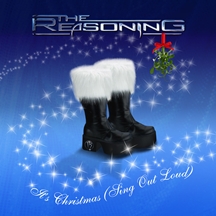
reasoning xmas

If you want a great two-track EP, get The Reasoning’s “It’s Christmas (Sing it Loud),” out today, and available from amazon.com and iTunes.  Rachel Cohen has the voice of an angel, of course, and it shows in every note she sings with one of the greatest prog/rock outfits around today.  Thank you, Matt Cohen, master of many, many things.  For those of you who shy away from prog, no worries.  This is just a wonderfully joyous song.  I think it could’ve easily been the finale to HOME ALONE.

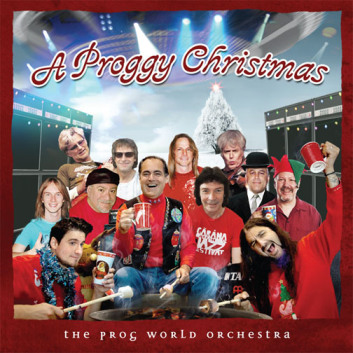
proggychristmas-new2-2

Neal Morse, never unwilling to profess his own faith (in Christianity and in prog!) has two CDs out you might like.  The first, out last year at this time and still available, is a PROGGY CHRISTMAS–featuring just about everyone you could imagine.  As I wrote last year:

All of the members of Transatlantic (Portnoy, Trewavas, and Stolt), Steve Hackett, Steve Morse, and Randy George.  Portnoy is even “The Little Drummer Boy”!  Jerry Guidroz does his usual extraordinary mixing and engineering.

Also available–as a member of the Neal Morse Inner Circle–“Christmas 2013.”  These songs date back almost 20 years.  Very delicate as well as energetic.

leah christmas

Our own progarchist, lovely Leah, “metal maid,” has a gorgeous EP out, “Let All Mortal Flesh Keep Silence.”  Three tracks introduce the listener to our favorite Canuck rocker (that is, below the age of 60.  Sorry Geddy, Alex, and Neil) and the spirit of a metal Christmas.

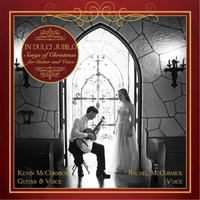
kevinmccormickandrachelm

Finally, out just since last Friday, is another progarchist album, In Dulci Jubilo.  This one comes from classical and progressive guitarist Kevin McCormick and his oldest daughter, Rachel.  My best description of this album is “immaculate.”  In Dulci Jubilo is 14 tracks long at 46 minutes.  A much more detailed review forthcoming.

The Overlooked and Neglected of 2012, Part I: North Atlantic Oscillation FOG ELECTRIC

Last night, I was a bit surprised to see a Belgian friend of mine post his “Best of 2013” list.  I shouldn’t have been surprised, and, of course, I was more than eager to read his choices.  I’m also hoping he’ll let us post them here.  In fact, I’d love for him to become a full-time progarchist.  Regardless, my first instinct upon seeing that list was to play Bill Buckley, that terrible infant of the American right of the 1950s and one of the fast friends of the Beatniks, and yell “Stop!  Stand athwart history!”  It’s all happening so quickly.

Several progarchists have joked that the current moment third wave prog releases is akin to drinking water from a firehose.  So much incredible music is being discovered, sung, written, produced, released, engineered, mastered.

Of course, there’s a real and true beauty in all of this.  We’re truly blessed at the moment with so much goodness.

Still, it’s good to breath and pause.  As the that grand prophet of old, Habakkuk, would call it, it’s time for Selah, time for a rest and a bit of peace.  Or, as our English Puritan ancestors did on the shore of New England (I speak as a papist and an American), it’s time to give thanks.

One of my worries about the current state of prog is that we’ll miss something vital as we ckeep looking to the next thing to come out.  In this spirit, then—whether of Habakkuk or William Bradford or Bill Buckley or Jack Keroauc—I want to make sure we don’t forget anything important, vital, and crucial in the real historical and artistic progress of progressive rock.  Over the next several posts, I’ll offer my thoughts on albums that the we proggers (as a community) have overlooked or neglected—the best releases of 2012 that we forgot but never should’ve.  If nothing else, as a historian, I want to make sure that certain things at least make it into the record (no pun meant).

***

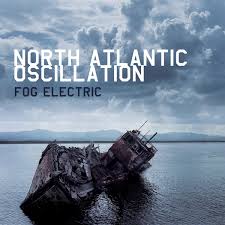
nao fog

So, first up, an album dismissed after listening to it two or three times, North Atlantic Oscillation’s second album, Fog Electric (Kscope, 2012).

I bought the band’s first album, Grappling Hooks, as soon as it was released in 2010.  At the time, I was pretty much ordering every single thing Kscope released (I can’t do this anymore, financially; and despite the immense love progarchy has shown Kscope, we can’t seem to attract the company’s attention when it comes to review copies—Kscope, where are you???  Regardless, we’re good Stoics.  We’ll make it!).

I liked Grappling Hooks.  Indeed, I liked it a lot, and I listened to it quite a bit.  I wasn’t quite ready to label it prog in 2010.  I thought of it more like excellent pop—in league with Talk Talk’s It’s My Life (this comparison, by the way, became extremely important to me), XTC’s The Big Express, or The Cure’s Kiss Me (x3).  Great stuff, but not really, properly, playfully prog.

For better or worse (well, better), I was so utterly immersed in The Underfall Yard at the time I was listening to Grappling Hooks, that I was using NAO’s release as a breather from the intensity of Spawton and Co.!  Call me loyal to Big Big Train or just OCD (though, probably both!)

Well, just as I never could’ve predicted a Colour of Spring, a Skylarking, or a Disintegration, I didn’t predict a Fog Electric.

The comparison is apt.  Picking Fog Electric back up this year, a year after it was released, I was—to use drug terminology of the 1960s—rather “blown away.”  It is an incredible leap forward in terms of creativity.  It’s as prog as the first album was pop.  Each is spectacular, but in very different ways.

The two three songs of Fog Electric feel very much like the majority of tunes on Grappling Hooks.  But, something profound happens in track number three, “Mirador.”  It begins very much to sound like My Bloody Valentine or Cocteau Twins as a wall of sound ploddingly assaults the listener.

Then, an explosion with track number four, “Empire Waste.”  Suddenly, the listener is in the same world as Hollis’s Colour of Spring.  Even the drumming—generally what I would dismiss as a little too electronic—resembles very much Lee Harris’s style (track six, “Interval,” even more so).  With track four, we’ve begun to trespass on holy ground.  Even the lyrics astound.  The song is a plea for us to recognize the modern post-World War II wasteland of colossal powers, each raping the earth and denigrating its inhabitants.  The vocals become deeply haunting.

In fact, I wouldn’t just equate this, musically, with the Colour of Spring.  It’s also a proper sequel, lyrically, to Thomas Dolby’s “One of Our Submarines is Missing.”  Whether the three Scots—Ben Martin, Sam Healy, and Chris Howard—intended this or not, I have no idea.

While I think the highpoint of the album is in “Empire Waste,” the remaining six tracks are simply stunning.  Each listen makes me want to listen yet again and again.  I can’t believe I went a year without this release in my listening rotation.  That won’t happen again.  I have a strong belief that this album will only age well—as well as Skylarking, Colour of Spring, and Disintegration have for me.

Fog Electric will, in some way that is beyond explanation or at least my ability to explain, become a part of me.  Isn’t this really want we want all of the things we love to do?  Not in a possessive sense, but in the sense of sharing in the beauty of it all.

Regardless, thank you Ben, Sam, and Chris.  Thank you for bringing such beauty to my soul.

No pressure, of course, but I’m waiting for release number three to be your Spirit of Eden.

Top 29 Prog Songs, 2008-2013

Sketch of Bassett by the wonderful and captivating Anne-Catherine de Froidmont.
Sketch of John Bassett of Kingbathmat by the wonderful and captivating Anne-Catherine de Froidmont.

A friend recently told me that nothing gets more hits on a webpage than a “top ten” list.  I had no idea.  For a brief moment, I thought, “well, let’s do a whole series, then!”  But, of course, we wouldn’t be prog lovers if we merely went for quantity.  We love quantity only when it’s full of quality.  You know, a 22-minute Big Big Train song, the kind of song that forces a non-prog friend to say to me, “Birzer, I had no idea when I started the song that I’d missed dinner.”

Ok, before I start sound like a really long refrigerator magnet. . . my top 29 prog songs of the past five years.  It’s the best I could do and still feel as though I possess some integrity.

My only rules.  1) The song had to appear in the last five years for the first time.  And, 2) I wouldn’t repeat any band’s appearance in the list.  In alphabetical order:

  • Anathema “Universal”
  • Ayreon “The Sixth Extinction”
  • Big Big Train “The Underfall Yard”
  • Cailyn “Nocturne”
  • Coheed and Cambria “In Keeping Secrets of the Silent Earth: 3”
  • Coralspin “Sons of the Sleeping Giant”
  • Cosmograph “The Man Left in Space”
  • Days Between Stations “Eggshell Man”
  • The Fierce and the Dead “Part 1”
  • Flower Kings “Tower ONE”
  • Frost* “Wonderland”
  • John Galgano, “1000”
  • Gazpacho “Tick Tock (Part II)
  • Glass Hammer “If the Stars”
  • I and Thou “Hide and Seek”
  • IZZ “Can’t Feel the Earth, Part II”
  • Kingbathmat “Kubrick Moon”
  • Leah “Northern Edge”
  • Neal Morse “Time Changer”
  • No-Man “Truenorth”
  • Nosound “Winter Will Come”
  • Oceansize “Trail of Fire”
  • Reasoning “A Musing Dream”
  • Riverside “Escalator Shrine”
  • Rush “Clockwork Angels”
  • Sanguine Hum “The Trial”
  • The Tangent “Where are They Now” (Going Off the Two Version)
  • Tin Spirits “Broken”
  • Tori Amos “Battle of Trees”
  • 3RDegree “The Ones to Follow”

Pallas Crowdfunding!

A huge thanks to Geoff Banks for letting me know about this.  Very cool.

PallasPressRelease

My Top Favorite Fifteen Albums (from a decade ago)

As I was going through some files, I came across an annotated list of my top favorite albums of the rock era (that is, after 1955).  I broke the list into seven prog albums and eight non-prog albums.  Considering how much has changed in the last decade, my list would look quite different now.  Still, it’s fun to reminisce.  Enjoy.

[A quick addition, just to clarify.  Anyone who knows me, knows my first real love was and, to a great degree, remains Rush.  I intentionally left Rush out of this list, as it would’ve distorted it too much.–BjB, November 18, 2013]

My Top Seven Progressive Rock Albums (in no order after the first three)

Kevin McCormick, Squall (1999).  Some of the best music ever written—but tempered with very serious classical sensibilities and lacking the bombast present in even the best of progressive rock.  McCormick incorporates his profound poetry as lyrics.  Each word—and the way Kevin sings it—seemed utterly filled with Christian grace and conviction.  This is part two of trilogy (he’s working on number three).  And, it’s hard to listen to Squall without listening to its equally fine predecessor, With the Coming of Evening (1993).

Talk Talk, Colour of Spring (1986).  I could certainly regard this as either my top album of all time (though interchangeably with Squall and Spirit of Eden; depends on my mood), or close to it.  I couldn’t even count how many times I’ve listened to it.  I bought it on a whim—because I liked James Marsh’s cover.  My whim paid off, as it opened a whole new realm of music to me.  But, what’s not to like: impressionist 1950’s Jazz and 1960’s Stevie Winwood mixed with intensely Christian lyrics.

Talk Talk, Spirit of Eden (1988).  Every note and word is perfect.  Mark Hollis and Tim Friese-Greene spent 14 months in a church recording this album.  Hard to beat the 20+ minute opening to the album.  And, the lyrics—better than most hymns I hear in church, to be sure.  Side two even has a song with St. Ignatius of Loyola’s prayer asking for the grace to surrender one’s will to God.

Yes, Close to the Edge (1972).  Ok, I’m noticing a pattern as I write out these descriptions—this album, as I understand it, is about the Reformation.  Anderson and co. incorporate high-church Anglican music and choral arrangements as they sing about Christ the Word.

Genesis, Selling England by the Pound (1973).  Heavily influenced by the poetry T.S. Eliot, Peter Gabriel soars on this album.

Pink Floyd, Animals (1977).  Continuing the fantasy and science-fiction themes of their earlier albums, Roger Waters and David Gilmore seriously challenge the right of one human to exploit another in this George Orwell inspired album.

Flower Kings, Space Revolver (2000).   Lyrics range from weird to wacky, as does the music.  Pro-Christian themes abound, but placed within a rather Scandinavian pastoral setting.

My Top Seven non-Progressive Rock Albums (in no order)

Thomas Dolby, Golden Age of Wireless (1982).  This was my introduction to New Wave.  Wild arrangements and very Bradbury-esque lyrics.  It became my anthem during high school debate and forensics.

Sarah McLachlan, Fumbling Towards Ecstasy (1993).  I can’t explain why this album means so much to me, but it does.  I love McLachlan’s voice and use of organ.  And, this first album lacks the nasty anti-Christian and pro-feminist cant of her later work.  When I worked at the Organization of American Historians in graduate school, we would play this CD as we played Quake on the network (after business hours, of course).

Echo and the Bunnymen, Ocean Rain (1984).  Beautiful and bizarre—musically and lyrically.  Probably the most Doors’ inspired album of the New Wave movement.  While the lyrics don’t quite rival those of Morrissey (in the Smiths), the music surpasses anything Johnny Marr wrote.  A staple for me in college.  I’m just sorry that some of the lyrics are heretical.

Traffic, John Barleycorn Must Die (1970).  What can I say about Stevie Winwood, Jim Capaldi, and Chris Wood?  Jazz-rock with Anglo-Saxon folktales thrown in.  Lots of Traffic is excellent, but this surpasses all of their other albums.

Van Morrison, Astral Weeks.  Introspection without pure naval gazing.  And, no body writes better about the beginnings of love than Van Morrison.  Must be something in the Irish soul.  As I understand it, the album was done in one take with the jazz musicians being given the music when they entered the studio.  Perfect for a spring day.

The Cure, Disintegration (1990).  From the beginning to the end, a masterpiece.  Perfect pacing, and fascinating arrangements.  The Cure’s flaw is their tendency to write hyper, bouncy pop songs.  While Disintegration has a few of these, they remain tempered by the more serious, gothic moments on the album.  And, hey, the album begins with early medieval plainsong.

Radiohead, Kid A (2000).  Intense lyrics about the problems of post modernity and scientism.  Though Ok, Computer has better moments, Kid A has no real flaws.  The lyrics, however, remain unimportant, ultimately, as Thom Yorke’s voice serves as another instrument on the album.  The producer, Nigel Godrich, deserves credit for being an equal member of the band.  The opening track, “Everything in its right place” sums up the production.

Prog Magazine Reader Poll, 2013

prog-vote-featureJerry Ewing, everyone’s favorite Prog editor, has just announced the 2013 Reader Poll.  Please take the time to vote as soon as possible.

I must admit, I’m far more excited to vote for this than I was either for the 2013 local elections or the 2012 national (here in the U.S.) elections.  I’d be pretty happy to have Greg Spawton as my mayor or my president.

http://www.progrockmag.com/news/vote-now-in-the-prog-readers-poll-for-2013/

3RDegree Remastered 1996 “Human Interest Story”

From 10T News:


3RDEGREE re-release their seminal 1996 CD HUMAN INTEREST STORY as a re-mastered digital download exclusively available immediately through 10T Records’ online store.  HUMAN INTEREST STORY will be available through all major mainstream online download outlets (iTunes, Amazon, etc.) on December 10, 2013.  This is the very first time the album has been available digitally anywhere except the band’s own website.

Before American progressive rock band 3RDegree came to the consciousness of the worldwideprog rock press with the 2008 album NARROW-CASTER and its follow-up release, 2012’s THE LONG DIVISION, the band knocked around the New York City area from 1990 to 1997 with little notice. They put out 2 albums during this timeframe, the second of which, 1996‘s HUMAN INTEREST STORY, was a particular milestone.

Having just added lead vocalist George Dobbs the summer before, the album’s April release was the culmination of 3 solid years of writing and recording to which Dobbs added his golden pipes in the 11th hour, taking over the spot from bassist/keyboardist Robert James Pashman. ”I was more than happy to relinquish the lead vocals in exchange for a better band and a less busyme!” says Pashman.

For listeners familiar with the band’s more recent albums, HUMAN INTEREST STORY does not sound a decade away from it’s follow-up. Patrick Kliesch explains, “Since Narrow-Caster consisted of many songs or ideas started in ’95-’97 but not finished, there’s a connection between the albums despite the 8 year break-up in the band”.

“Perhaps because of the band’s now more masked 90’s influences of Soundgarden, Jellyfish, and King’s X, Human is more guitar heavy, with keyboards in the background as more of a garnish than a main course” adds Dobbs.

“Never mind a second chance, HUMAN INTEREST STORY never got a first chance really. Marketing an album such as this in the mid-90’s was beyond frustrating!” notes now occasional drummer Rob Durham. Many songs from this 1996 collection have appeared in recent 3RDegree set lists. “There’s a bunch of songs that sit very nicely next to our newer material and are very much a part of us, so we keep playing them” says Pashman.

Songs like the title track with it’s memorable melody sailing on top of the start-stop rhythm section and its Jerry Springer-inspired subject matter (sister song to The Long Division’s “Televised” about reality shows), the heart-on-sleeve delivery of the vocal on the Todd Rundgren-inspired “Ladder,” and the snarky tone by Dobbs on the intense “Top Secret” (the NSA flavored ditty written the year Snowden was entering kindergarten). This song, from the point of view of a spy laughing at “the little people,” shows Dobbs doing something he would reprise on THE LONG DIVISION’s “Incoherent Ramblings,” delivered in the voice of a TV political strategist.

Additionally, anyone who purchases the new collection via digital download directly from10TRecords.com will be emailed a code for an exclusive download of a new song from the band called “What It Means To Be Human” (no relation!).  This is 3RDegree’s first new music since the summer of 2012.

While a new album is forthcoming in 2014, 10T Records president Steve Carroll says, “Anyone thirsty for new 3RDegree who hasn’t delved into material from their 90’s incarnation is really missing something special. This material from the 20-something version of 3RDegree is no less interesting or polished!

All tracks from HUMAN INTEREST STORY are now available to preview in their entirety on the 3RDegree artist page at 10T Records.  Downloads are immediately available in MP3, M4A (Apple Lossless) and Hi Def 16-bit WAV formats.

After December 10th, HUMAN INTEREST STORY will be available through all major mainstream digital download outlets.

You can leave a response, or trackback from your own site.

Totally Unprofessional Video Review #5: Gazpacho, NIGHT

My praise of one of the greatest albums of third-wave prog, Gazpacho’s NIGHT (2007).

Available at amazon (U.S.) right now for $7.92 (download).

Talk Talk Meets New Model Army: Ordinary Psycho: Vol. II

Not long ago on progarchy, I wrote about a demo ep sent to me, way back in the late 1990s.  The lead singer of the band, Ordinary Psycho, David Gulvin, offered a copy to any of the main participants of Within Without, a Danish-run site dedicated to the music of Mark Hollis.

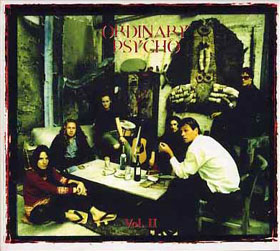
2221669In response to my recent post, fondly remembering how much pleasure that small cd has given me over a decade and a half, the guitarist, Tony Gulvin, sent progarchy a copy of the band’s second lp, Vol. II.

Holy Schnikees.  Yes, let me quote the late Chris Farley one more time: Holy Schnikees.

This is a masterpiece, a gorgeously textured and nuanced cd that should be very well known by all readers of progarchy.  Holy Schnikees.  Yes, I had to state this for a third time.  In sum (and I’ll write more later), this CD helps explain much of the leap from the late 1980s and early 1990s contemplative goth and post-rock to the full-blown explosion of third-wave prog around 2000.  Imagine New Model Army asking Roger Waters and Mark Hollis to join a common band.  You’d be very, very close to what is produced with Vol. II.  And, just in case you doubt the prog credentials, Emerald Part I is 9:02 long, and Emerald Part II is a little over 4:38 long, followed by 21 minutes of silence!  Move aside, Porcupine Tree.  This is the real deal.  Drums, guitar, bass, and anguished voices mix profoundly with woodwinds, piano, and strings.

I’m eager to give this CD a full review.  How did I ever miss this?  Thank God, I have it now.  Well, at least, thank Tony Gulvin!

On the Northern Edge of Prog: Leah’s OTHERWORLD

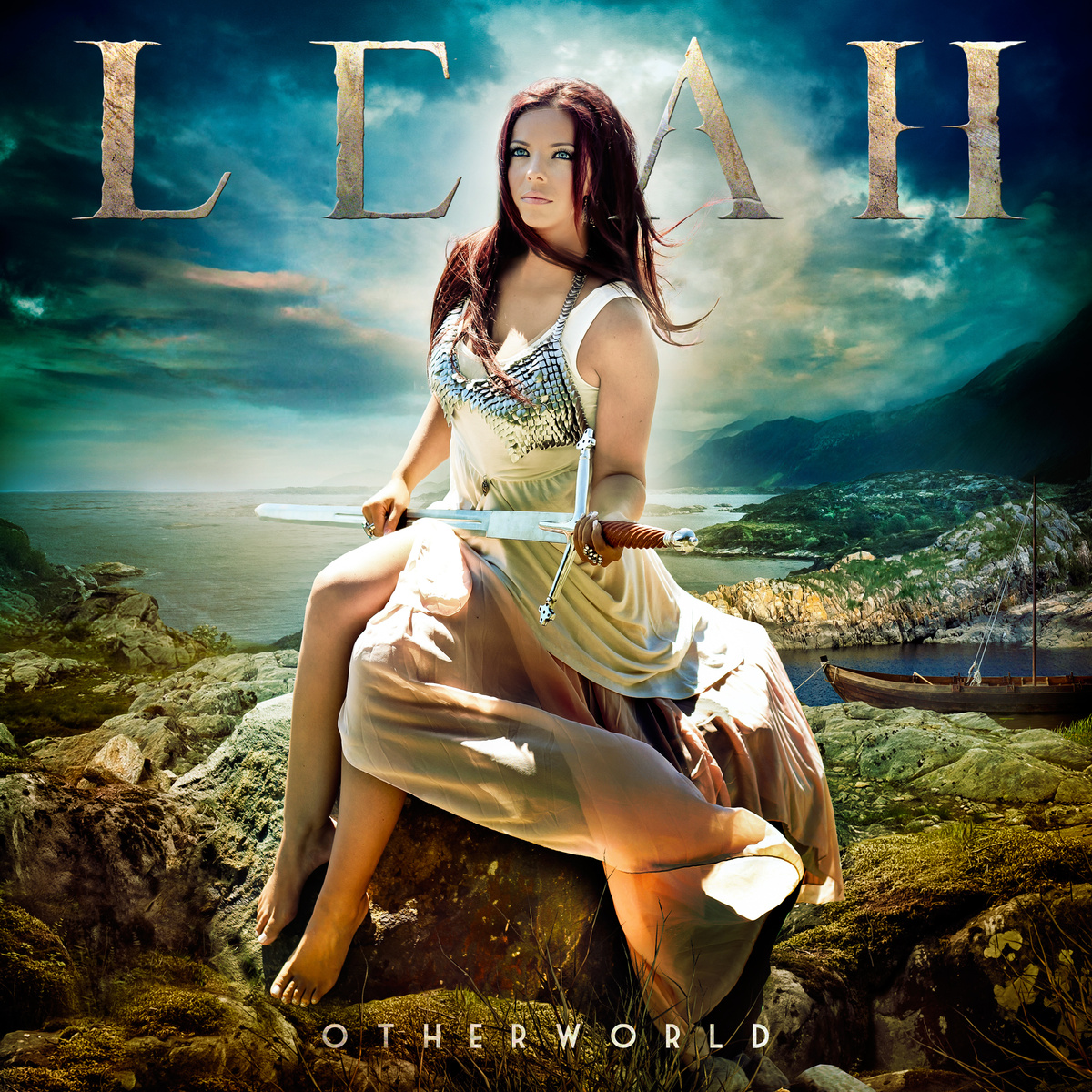
leah otherworldOtherworld EP

On this All Hallow’s Eve, the beautifully talented and talentedly beautiful Leah McHenry released her new EP, Otherworld.  She categorizes it as Celtic Metal, and I’m not one to judge such labels.  Of all of the progarchists, I’m probably the least qualified to comment on anything metal.  Growing up with prog, Rush was the limit of what “metal” I encountered, and Rush doesn’t qualify.  Over the last twenty years, I’ve come to love what progressive metal I’ve heard (such as Guilt Machine and anything related to Aryeon).  But, groups such as Dream Theater and Opeth have never grabbed my attention, even after brief flirtations with the former.

Regardless, I hold a very fond affection for Leah, whatever label we might give her.  To me, her music is just. . . well. . . really, really gorgeous.  Lush, mythic, lulling into punctuated, from dreamy to driven, but always full of purpose and depth.

If someone pushed me to describe her music in terms relative to what we’ve reviewed at progarchy, I’d say it’s as if Sarah McLachlan and Arjen Lucassen got together to make an album.  And, to be even more blunt, Leah and Arjen, I hope you two meet at some point.  I can’t imagine anything but greatness coming out of such a Canadian-Dutch alliance!


Otherworld

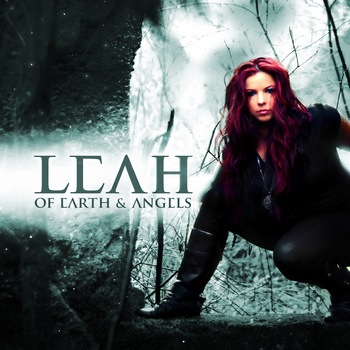
Leah+McHenry+Leahphotoshopfun_1264116476Otherworld, not surprisingly, is lush and nuanced.  The songs are a bit longer than the ones she released on her first album, Of Earth and Angels, but they’re much more connected by style and theme.  The first three songs (five total)—Shores of Your Lies, Northern Edge, and Surround—have a welcoming but perilous (as in Tolkien’s realm) tension.  Listening to Otherworld is as much about  immersion as it is enjoyment.  With the opening notes, storming atmospherics, and Leah’s voice, the listener enters into this elven world.  Things of beauty pierce “as sharp as swords” in Leah’s world.

The fourth track, “Do Not Stand at My Grave and Weep,” is as Celtic as it gets.  This could come from Enya in her darker moments or U2 on the second side of October.  Still, it’s pure Leah.

The final track, “Dreamland,” is, I assume, the most traditional “metal” song on the EP.  A duet, Leah’s voice and character serves as a counter and foil to the diabolic, growling voice of Eric Peterson.  A beauty and the beast moment.

I’ve only known Leah for about a year.  Just after we started this website, Canadian philosopher and progarchy co-founder, Chris Morrissey told me about her.  He also reviewed her first album as well as offering us one of the most extensive concert reviews I’ve ever seen.

haunting LeahGenerally (well, ok, always), I follow Chris’s advice.  So very glad that I do.  Much to my surprise, Leah replied to my first emails graciously, and we’ve developed a good friendship via correspondence.

Indeed, I respect her immensely.  She lives what she believes: she’s a wife and a mother of four; she home schools her kids; she’s active in community life; and she’s serious about her religious and political beliefs.  Really, what’s not to love about her?  Add all of this to the fact that she’s insanely talented as a singer, a musician, and lyricist.  Well, it just doesn’t get much better.  Well, except for the additional fact that she’s also as beautiful as one might expect from someone possessing that voice.  I’m sure she could model professionally, if she wanted.  Oh, and she also makes her own costumes and is proficient with a bow.  So, again, what’s not to love?  Talent, kindness, and integrity, all rolled into one west-coast Canadian!

Only in her twenties, Leah is the future of rock.

leah of earth