By day, I'm a father of seven and husband of one. By night, I'm an author, a biographer, and a prog rocker. Interests: Rush, progressive rock, cultural criticisms, the Rocky Mountains, individual liberty, history, hiking, and science fiction.
From Blake McQueen of prog outfit and class act, Coralspin:
Progarchy is a new US prog site that’s made a big splash already in only a few days of existence. This is not surprising as it’s headed up by that indefatigable trailblazer for modern prog (especially British modern prog) Brad Birzer. There’s even a review there of us…
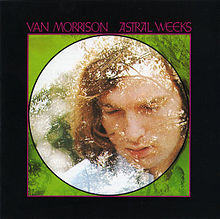
Van Morrison, Astral Weeks. 1968. This album is an insightful and penetrating introspection without ever falling into pure naval gazing. And, nobody writes better about the beginnings of love than Van Morrison. Possibly there exists something profound in the Celtic soul. Chesterton argued that the Irish were those the Gods made mad. Perhaps, this explains something. Or not. As I understand it, the album was done in only three sessions with the jazz musicians–who had never met one another–being given the music when they entered the studio. Happily, it possesses of the overproduced pop sound of its predecessor, Brown Eyed Girl. Astral Weeks is perfect for an autumn day. Or, really, for any day.
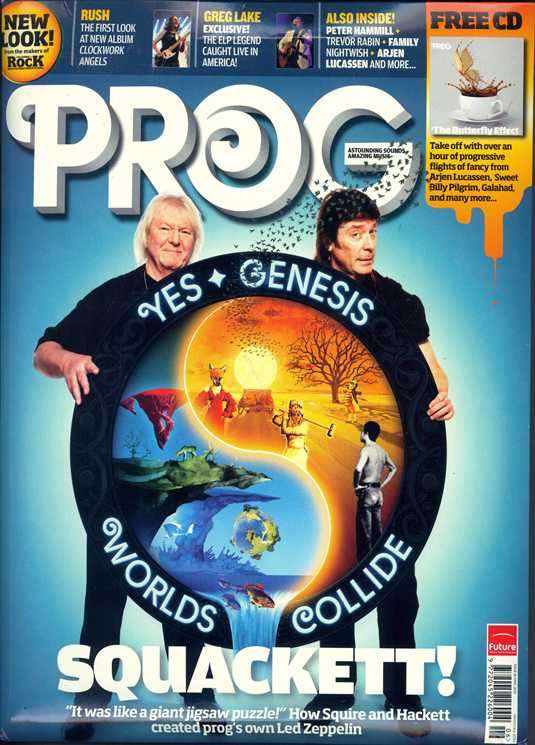
[I sent this to PROG magazine last May; sadly, the magazine chose not to print it. So, here it is, now safely lodged at Progarchy.–Brad]
May 24, 2012
Dear PROG,
Kudos for yet another brilliant issue (#26). I’m amazed and inspired by the sustained excellence in writing, photography, graphics, and layout. I even like the ads. Every thing in its right place and always accomplished with characteristic British taste, intelligence, and wit.
Having listened to progressive rock for four decades, I am firmly convinced that we are now living in the glory days, built upon the traditions and experiments of the past. Raised on a healthy diet of lyrics by Neil Peart and Mark Hollis, I’m especially taken with the quality of lyric writing in recent years. How can we listen to Big Big Train’s “Underfall Yard,” Gazpacho’s “Dream of Stone,” or Tin Spirits’ “Broken” and not realize that these artists are the heirs not only of Dvorak, Brubeck, and Davis, but also of Coleridge, Wilde, and Eliot?
American music critics rejected the progressive rock genre as pretentious and over-the-top, a regression of culture, almost from its very beginnings.
Though “progressive jazz” had been used as a term of approbation of and for non-trendy, non-danceable jazz since the late 1920s, the term “progressive rock” saw print only for the first time in the English language (and, I presume, anywhere) in 1968 in the Chicago Tribune. This first mention of prog carried no deep disgust or glorious praise, just a simple and descriptive recognition that this was not regular pop or rock.
In the fall of the same year, the New York Times (August 4 issue date) lamented that by making “the leap from sewer to salon, pop music has ceased to be an adventure.”
While certainly “ musically advanced,” the Times continued, progressive rock had made its art “emotionally barren.” Even the most intellectual of critics, the paper continued, could see that the “new, cerebral audience has endangered that raw vitality” of rock.
A few months later, the Times (November 24 issue date) again proclaimed that the “rock hero (who is almost always a social outcast)” should be nothing less than “a liberator in musician’s drag. His sexual display in the face of institutionalized repression becomes an act of rebellion. . . . It is immune to the censorship of ideas because its dialectic is purely rhythmic. To do away with revolution in rock, one would have to ban the music itself in its nature as a charged version of blues.”
A few days ago, Progarchist and classical philosopher Chris Morrissey asked about our first introductions to music.
The youngest of three boys, born in the summer of love (September 6, 1967—only 3 months and five days after the release of “Sgt. Pepper’s Lonely Hearts Club Band” by the Beatles), and coming of age in the late 1970s and early 1980s, I grew up on progressive rock: Yes, Kansas, Genesis, and the Moody Blues. We faithfully shunned the 3-minute pop format and we sought mightily the 20- and 30-minute epics of European (usually liturgically derived) symphonic music with rock instrumentation and bizarre time signatures.
I remember hearing lots of longish, prog songs as early as 1971 or 1972. Though I’ve never played an instrument with any degree of passion, I’m assured by my mom and two older brothers that I was obsessed with music even as a toddler. Somehow, I figured out how to crawl out of my crib and down the stairs to the family stereo. Even as a one-year old, I would wake the entire household up, blaring the Banana Splits or Snoopy and the Red Baron at 3 in the morning.
My first great awakening came, though, from seeing the sleeves of YesSongs. I spent hours trying to figure out how the animals made it from one floating island to the next. And, I’ll never forget the first time I played side one of YesSongs—I was overwhelmed by the depth and complexity of it.
As is now well recognized, the prog lyrics as well as the cover art tended to be fantastic, pretentious, overblown, and theological. There have even been some interesting scholarly articles about progressive rock thriving in the western and midwestern states of America, mostly among middle-class, conservative kids. And, of course, we, with great confidence, derided disco and top-40 music through junior high, high school, and college. Disco and top-40 music, as we understood it, were decadent and vacuous. As far as we were concerned, progressive rock artists (and some New Wavers) were the only real musicians outside of the classical and jazz world.
In many ways, progressive rock helped define my own childhood and teenage years. I will never forget seeing abolitionist John Brown on the cover of a 1974 Kansas album (it sparked all kinds of historical questions re: Kansas, abolitionism, and the American Civil War); hearing Pink Floyd’s “The Wall” at the University of Notre Dame in the fall of 1979; being introduced to Rush’s 1981 “Moving Pictures” in the Liberty Junior High School library in Hutchinson, Kansas; or listening to Yes’s “Fragile” over and over again and trying to figure out the “deep” meaning of the lyrics. In high school, I worked as on overnight D.J. at a local rock station (KWHK), which doesn’t exist anymore. And, while in college at Notre Dame, I had a Friday-night progressive rock show (WSND) my junior and senior years, often playing two hour blocks of Rush or other groups.
As powerful as any of the albums just mentioned, though, was my first listen to Talk Talk’s Colour of Spring in the spring of 1987 and, even more so, my first listen to Talk Talk’s Spirit of Eden in September 1988.
My comrade in arms in college was the singer of the most popular band on campus, St. Paul and the Martyrs. They even opened for Phish when Phish played on campus, spring 1990. The leader singer, Kevin McCormick, even became my oldest son’s godfather! Now, he’s a well-known classical guitarist and even a Progarchist.
But, I’ll never forget the two of us listening to Spirit of Eden for the first time. We were just stunned and in complete silence as we explored every note and every silence of the album.
Having turned 13 in the autumn of 1980, I also, of course, grew up with New Wave: Thomas Dolby, Kate Bush, The Police, The Cure, Oingo Boingo, XTC, Siouxie and the Banshees, and Echo and the Bunnymen. Over the Wall!
Our local Kansas radio station—KWHK—had briefly been formatted for New Wave, so I was able to get every new album sent by the record labels. The one that hit me hardest was XTC’s Skylarking.
My college radio show at Notre Dame focused on progressive rock, as mentioned above, but I threw in a lot of New Wave. New Wave just seemed the more radio-friendly version of progressive rock. And, by the early 1980s, progressive rock seemed to have run its course. Could Asia really claim to be the successor of Yes? Or, could Genesis without Peter Gabriel or Steve Hackett really be Genesis? We answered with a resounding “no.” That left us with New Wave.
After all, in 1990, we still had a few years before Dream Theater and Spock’s Beard re-introduced—in the states—a new wave of Progressive Rock.
A quarter of a century later, I realize that music took on religious significance for me and my friends. Those who embraced disco, pop, or top 40 music were heretics, and we supporters of progressive rock were the orthodox.
***
A year or so ago, some former students asked me to write about my listening tastes in the 1980s. Here’s what I wrote for them:
High School was a long time ago for me, but I still remember it well. During the summers, I had one of the best jobs in the world–I was a DJ at our local AM-station, KWHK. Not only did I DJ, but I also got to write and produce commercials, and I served as a liaison between the sheriff’s department and the National Weather Service. I grew up in central Kansas, so we had tornados and tornado warnings quite frequently. Great job. I’ve also been into collecting music (mostly progressive and alternative rock, some jazz, and a bit of classical) since second grade. I started young, and, for better or worse, I’ve never stopped. My kids (13 and under) can name bassists, singers, and drummers of the major progressive bands. And, yes, I’m proud of them.
Freshman year of high school, 1982-1983. It was freshman year that I really discovered New Wave. I had been listening, almost exclusively, to progressive rock and what’s now called classic rock during the 1970s and earliest part of the 1980s. The father of a friend of mine owned a record store, and we were introduced to all kinds of music through the store in 9th grade. In particular, I listened to Thomas Dolby’s Golden Age of Wireless (favorite song: One of Our Submarines is Missing). I had this on one side of a tape and ABC’s The Lexicon of Love (favorite song: 4 Ever 2 Gether). Also lots of U2’s War (favorite song: Sunday Bloody Sunday). Progressive Rock was never far from my heart, and I listened to Rush’s Signals (favorite song: Subdivisions) pretty much non-stop, Peter Gabriel’s IV (favorite song: Lay Your Hands on Me), and Roxy Music’s Avalon (favorite song: Take a Chance with Me).
Sophomore year of high school, 1983-1984. This was a huge year for music. Genesis released their self-titled album (favorite song: Home by the Sea, Parts I and II); the Police released Synchronicity (favorite song: Synchronicity II); and Yes released 90125 (favorite song: Cinema).
Junior year, 1984-1985. Rush’s Grace under Pressure (favorite song: Between the Wheels) dominated every other album that year. Frankly, this was THE album. If I had to name a favorite album of high school, this would be it. My sophomore year in college, I wrote a paper using only the lyrics from the album. I even got an A. I also listened a lot to The Smiths’ Hatful of Hollow (favorite song: Please, Please, Please), Oingo Boingo’s Dead Man’s Party (favorite song: same as title), and Thomas Dolby’s second album, The Flat Earth (Favorite song: same as title).
Senior year, 1985-1986. Another great year for music, but mostly for former proggers going pop. Albums that year included, at the top of the list: Sting, Dream of the Blue Turtles (favorite song: Fortress Around Your Heart), Peter Gabriel, So (favorite song: In Yours Eyes), Tears for Fears, Songs from the Big Chair (favorite song: Broken), and XTC, Skylarking (favorite song: The Man Who Sailed Around His Soul). The other album I played constantly was the soundtrack to To Live and Die in LA (a pop band, Wang Chung, playing a very proggy style). Lots of Kate Bush, Hounds of Love, too (favorite song: Hello Earth).
It wasn’t until my freshman year (1986-1987) of college that I really got into Talk Talk, the Cure, and Echo and the Bunnymen. I also really liked Blancmange (kind of a really smart Talking Heads) and New Model Army and a few others. That year, U2 released “The Joshua Tree.” I’ll never forget sitting in the car with a friend, being about 1/2 through the album and just breaking down (not something I did very often) because of the beautiful intensity of the album. Crazy. At the time, I was horrified by RATTLE AND HUM. Now, I think The Joshua Tree as a whole is really good, not brilliant. Side two, maybe, is brilliant. Side one has a brilliant moment–bullet the blue sky. And, RATTLE AND HUM seems better than it did to me then.
In high school, I also remember listening to some A-ha, B-Movie, b-52s, Erasure, Depeche Mode, and Communards. I don’t think I would’ve chosen to listen to these groups, but they would’ve been pretty hard to escape then. I would’ve always preferred something prog–unless we were dancing. Had an all night party at my house once my senior year when my mom was out of town. Late, late into the evening, a group of us were trying to analyze a 1977 Genesis concert we’d taped off of PBS! I’ll never forget that night. Lots of analyzing Pink Floyd, too.
Neal Morse just completed the Flying Colors and Momentum tours, and, from everything I saw and read regarding the various shows, they were all spectacular.
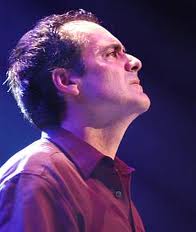
Watching Morse and his band play in St. Charles, Illinois, last Friday (a week ago tonight) with my wife, Dedra, and the Widhalms will serve as a great moment in my adult life. Morse and the band gave everything they had, and what they had to give was beyond ample. Indeed, had I enjoyed hearing them play any more than I did, I would be bordering on sheer decadence, demanding far more in this world than I have a right to.
Given Morse’s abilities–as a brilliant songwriter, a lyricist, a book author, multi-instrumentalist, and great show-man–we have a lot to expect from him in both the near and distant futures.
In addition to releasing the two major albums mentioned above in the last several months, he has also just released A Proggy Christmas, featuring Mike Portnoy, Steve Hackett, Steve Morse, Roine Stolt, Pete Trewavas, and Randy George. The cover even has a Sgt. Pepper’s style image with a photo of the head of Ray Bradbury included. Of course, it also looks like UFOs are invading a snow covered earth, but, hey, it’s all in good fun. We hope.
Of course, three albums simply wouldn’t be enough for Morse, aka Mr. Prog. Ok, how about “Reverend Prog”? Oh, I like this. . . .
So, in addition to what by any standards of output is beyond the natural, Morse is releasing an album of keyboard parts cut from the Flying Colors album. Entitled Island of the Lost Keyboards, it will be released for his Inner Circle fanclub in November. Should be excellent, and we’ll make sure to review it at Progarchy. We are, after all, huge fans of Radiant Records, Rev. Prog, and Chris Thompson.
And, if you’ve not yet gotten enough Morse (because More is Never Enough), here’s a great interview with John Wenlock-Smith, posted at DRPR. http://www.dprp.net/wp/interviews/?page_id=3240
Progressive rock has a very vibrant presence on the internet, with a number of communities and sites all with their particular strengths and idiosyncrasies. Over the years, I have probably visited Progressive Ears, Progarchives and DPRP more often than most, but there are many others, including sites hosted by individual bands (such as the BBT Facebook Group.)
Now, there is a fine new prog site called Progarchy which I strongly recommend. The site functions as a blog and includes reviews and articles. The number of contributors and readers is expanding very rapidly and I forecast that Progarchy will become an essential resource for prog listeners. The site can be found here and followed on Twitter here.
Thanks to my friend, Phil Chelmsford, for letting me know about Jeff Green and his rather personal album about the loss of his daughter, Jessica, in 1996. I’ve been listening to the music at bandcamp for the past several days, and I’m thoroughly enjoying it. We’ll have more about Green at progarchy soon.



 Progarchy