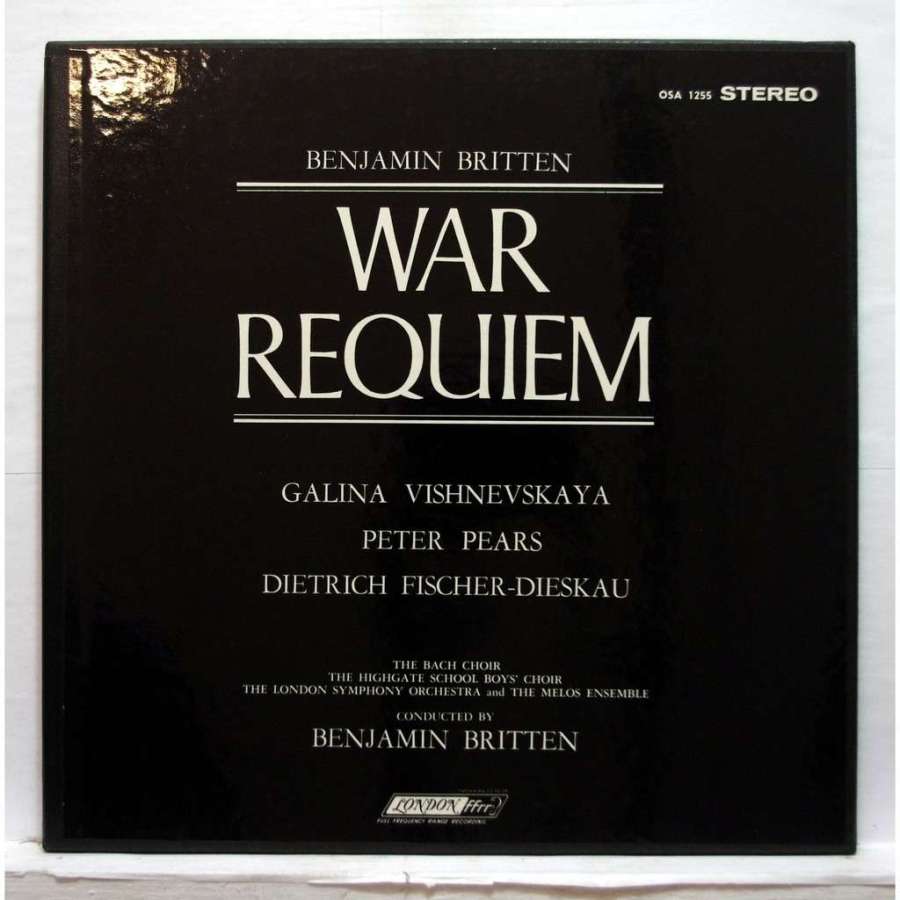
The Albums that Changed My Life: #5, War Requiem by Benjamin Britten

by Rick Krueger

“My subject is War, and the pity of War.  The Poetry is in the pity … All a poet can do today is warn.” — Wilfred Owen (1893-1918)

I took an orchestration class in early 1982.  The final project sounded simple: listen to Benjamin Britten’s War Requiem and write a report.  While I knew of Britten, and had heard his music — The Young Person’s Guide to the Orchestra was still standard music appreciation class material  — this piece was new to me.  I figured I’d borrow the record (conducted by the composer) from the college library, hear it once, and have what I needed to bang out an analysis.  Then I dropped the needle:

This piece demanded full attention — ears, head, heart and guts.  90 minutes later, I sat in my dorm room, drained and amazed.  35 years (and one long lost paper) later, I’m still completely engaged every time I hear the War Requiem, and singing it with the Grand Rapids Symphony Chorus in 2008 was a highlight of my life in performance.  It’s always commanded my wholehearted admiration, and it set me off on a deeper exploration of classical music (and 20th century music in particular) that’s endured to this day.  Why?

Continue reading “The Albums that Changed My Life: #5, War Requiem by Benjamin Britten”

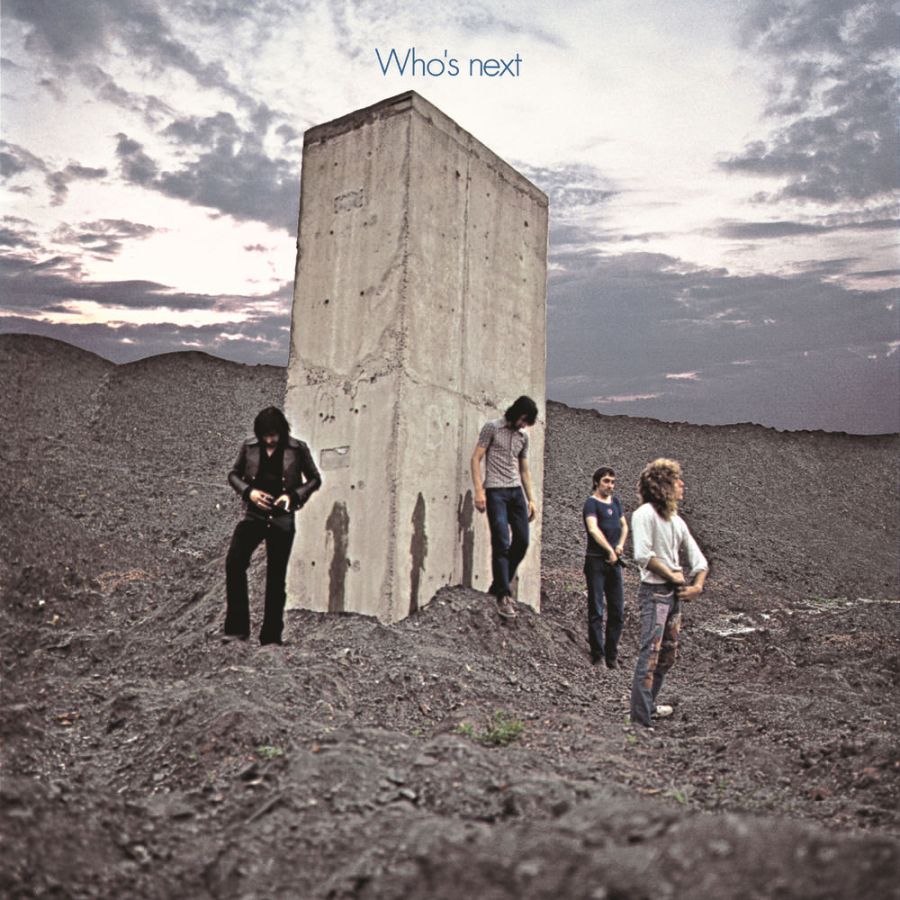
The Albums that Changed My Life: #4, Who’s Next by The Who

by Rick Krueger

“Rock ‘n’ Roll might not solve your problems, but it does let you dance all over them.” — Pete Townshend of The Who on Good Morning America, 1978.

From the 1960s through the early 1980s and beyond, Michigan loved The Who.  The only place their first single “I Can’t Explain” was a hit in the USA was Detroit.   Flint’s Holiday Inn became infamous as the hotel where, according to legend, Keith Moon drove a Lincoln Continental into its swimming pool on his 21st birthday.  Their 1975 show at the Pontiac Silverdome briefly held the record for largest indoor concert.

So it wasn’t as if I hadn’t heard songs from Who’s Next before I went to college in 1979; at that point, “Baba O’Riley,” “Behind Blue Eyes” and “Won’t Get Fooled Again” were inescapable on FM radio.  But it was at the end of my first term away from home that the 1971 album became something more to me.

Continue reading “The Albums that Changed My Life: #4, Who’s Next by The Who”

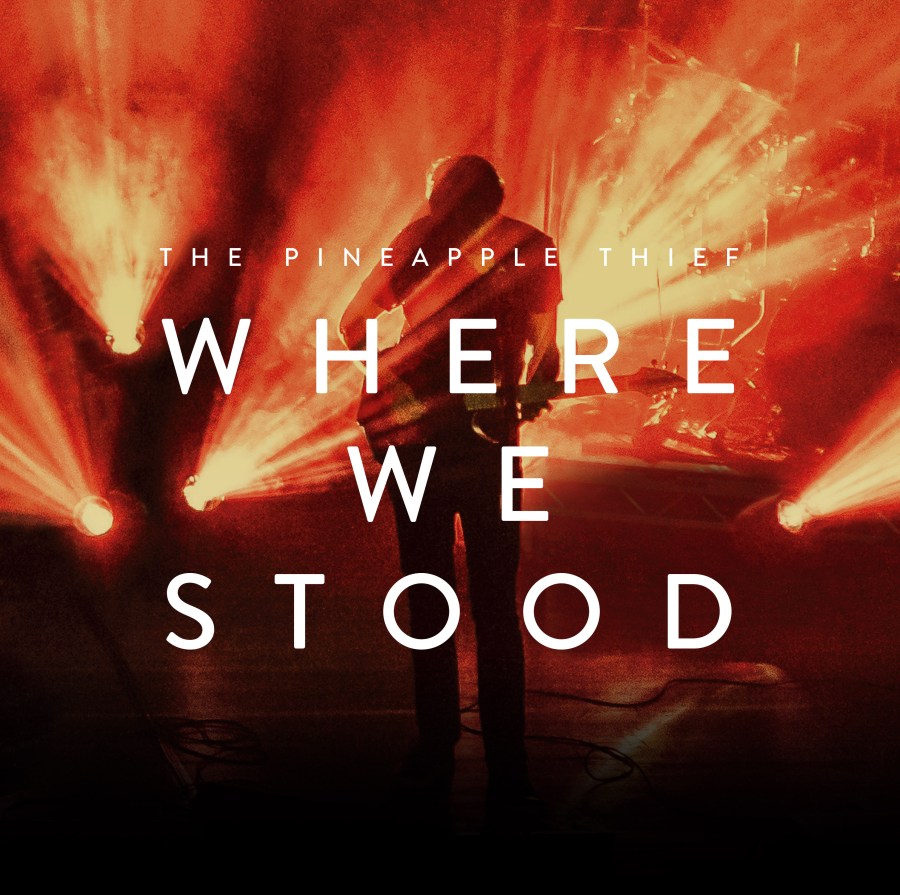
Rick’s Quick Takes: The Pineapple Thief, Where We Stood (In Concert)

by Rick Krueger

Today is — well, sort of —  the official release day for The Pineapple Thief’s Where We Stood concert video.  Turns out that, while vinyl and downloadable/streaming audio versions are now available, the Blu Ray, DVD and CD versions have been delayed until early October.  Kudos go to the fine folks at Burning Shed for sending along mp3s of the full concert to folks who pre-ordered in those formats!

After just one listen, I’m mightily impressed.  Back in my eMusic subscriber days, I ran across the Thief via the albums Tightly Unwound and Someone Here Is Missing, enjoying them thoroughly.  A decade ago, high quality new prog was still scarce enough that I absolutely delighted in hearing Bruce Soord and company plowing similar furrows to Steven Wilson in Porcupine Tree.  Unfortunately, the follow-ups All the Wars and Magnolia were, as our head Progarchist put it last year, good but bland.  Thankfully, 2016’s Your Wilderness was a major step back up, as Gavin Harrison’s stylish, tasty drumming slotted in with Soord’s sleek new tunes and moody guitar lines to hypnotic effect.

So Where We Stood is the right move at the right time, capturing the re-energized Pineapple Thief onstage in London, with an enthusiastic crowd egging them on.   Harrison is astonishing and impeccable as always, driving the band with relentless grooves and jaw-dropping fills, locking tight with Jon Sykes’ powerful bass lines.  While Steve Kitch’s keyboards conjure impressive atmosphere, Darran Charles and Soord seamlessly slide from badass surf music riffs to full-on metal chording, inspiring Soord to new heights of vocal power and expression.  This Thief rocks hard, with guts and class, in the service of first-rate songs from throughout their checkered career.

I’m optimistic that the visuals of Where We Stood will match the excellence of the music; in my opinion, the chance to see Gavin Harrison weaving his percussive magic in close-up is gonna be worth the wait all by itself.  Plus the Blu-Ray also includes Your Wilderness, 8 Years Later and bonus acoustic tracks in 24/96 stereo and surround.  If you haven’t ordered this baby yet, what are you waiting for?


King Crimson, Sailors’ Tales (1970-1972) and Earthbound (Expanded)

by Rick Krueger

Autumn is coming; can a Big Box Set o’ King Crimson be far behind?  In recent years, we’ve seen multiple-disc, multiple-format bundles based on Larks’ Tongues in Aspic, Red, Starless and Bible Black, and THRAK, along with a package focused on the 1980s albums (Discipline, Beat, Three of a Perfect Pair).  Each set has yielded an surfeit of riches: the 40th anniversary stereo and surround mixes of the studio albums; album rehearsals, outtakes and alternate mixes; and (for my money, the best part) more live performances, on both audio and video, than you can shake a stick at.

Robert Fripp has called the period covered by Sailors’ Tales (1970-1972) King Crimson’s “interregnum.”  After Ian McDonald, Michael Giles and Greg Lake left the original band, Fripp and lyricist Peter Sinfield struggled to assemble a Crimson that would stay together long enough to record and tour.  In the Wake of Poseidon (1970) mixed players and ideas from the 1969 band with new material and musicians, including stunning saxophone work from Mel Collins.  Lizard  (1971) spun in a more avant-garde direction; the cream of British free jazz players sat in, but vocalist Gordon Haskell quit before the album was even released.  (Is this why Yes’ Jon Anderson sings lead on one track?)  For Islands (1972), a solid line-up finally coalesced: Fripp, Collins, vocalist Boz Burrell (taught to play bass parrot-fashion for touring) and drummer Ian Wallace.  This Crimson proved ferocious live, but as they downplayed the new album’s pastel romanticism in favor of straight-up blues/jazz improv, friction mounted again.  Sinfield was forced out; the remaining quartet fell apart, then did a contractual-obligation US tour (documented on the bargain live album Earthbound), then tried to reform, then broke up for good.

No wonder Fripp basically disowned this era of Crimson for years; it took his 1990s reconciliation with Collins and Wallace, the release of multiple 1971-72 concerts through the King Crimson Collectors’ Club, and Steven Wilson’s revelatory remix of Lizard to ultimately change his mind.  With the current Crimson regularly performing music from all three albums (and Fripp and Collins both tearing up these selections onstage), the time is ripe for the rest of the world to find out why.

Thus, Sailors’ Tales.  As spelled out in the DGM press release:

  • 3 CDs feature Steven Wilson and Robert Fripp stereo mixes of In The Wake Of Poseidon, Lizard and Islands plus additional tracks.
  • 6 CDs feature the Islands line-up’s early concerts from Germany (new to CD) and the UK (1971).
  • 9 CDs feature live recordings (several new to CD and/or previously unreleased in any format) from the 1972 US tour, including a new stereo mix of Summit Studios and an expanded Earthbound.
  • 3 CDs feature auditions for the Islands band and two further, as yet, unidentified concerts from 1972 (all previously unreleased).
  • 3 Blu-Ray discs contain the main studio albums in 5.1 Surround Sound, recent stereo editions mixed by Steven Wilson and Robert Fripp, 30th anniversary masters of the original stereo albums mixes (all in 24/96 hi-res), plus extensive additional material with each disc also featuring a complete alternate album and a further selection of additional, related studio/live material in hi-res.
    • The Lizard Blu-Ray also contains the audition material from CDs 19/20.
    • The Islands Blu-Ray also contains the following concerts in stereo: Zoom Club (4 shows), Marquee Club, Plymouth, Glasgow, Detroit all from 1971.
  • A 4th, Earthbound Tour Blu-Ray disc features an expanded version of the original album, Summit Studios gig in Stereo and Quadraphonic (newly mixed), the “Schizoid Men” sequence from the Ladies of the Road album, 2 newly discovered concerts in hi-res stereo and every existing soundboard concert recording from the 1972 US tour: Wilmington, NYC (2 shows), Chicago (2 tracks only), Detroit, Jacksonville, Orlando, Pittsburgh, Milwaukee, Peoria, Indianapolis & Denver (2 shows).
  • 2 DVDs feature the expanded Earthbound, Summit Studios, “Schizoid Men,” New York 1972 and the recently discovered live concerts.
  • Presented in a 12” box with booklet, memorabilia, a further downloadable concert, and sleeve-notes by Sid Smith, Jakko Jakszyk and David Singleton.

Too much?  The budget option is a new CD/DVD edition of Earthbound, expanded from 5 to 12 tracks as on Sailors’ Tales, with the DVD also containing Summit Studios and “Schizoid Men.”

Both Sailors’ Tales and Earthbound are available for preorder from DGM and Burning Shed.  Release date is Friday, November 3 — my birthday.  Hmm … anybody feeling especially generous?

earthbound

Hamilton Live On Stage: “Sufficient to Strike Astonishment into Angels”

By Rick Krueger

Hamilton at the Private Bank Theatre, Chicago, August 30, 2017.

On August 31, 1772 (245 years ago today — wild, huh?) a hurricane ravaged the West Indies island of St. Croix.  Seven days later, a orphaned young man living there set the precedent for every newshound who’s camped out in Texas this past week.  He wrote a letter describing his experiences at the heart of the maelstrom, along with the whipsaw play of his emotions in its wake.  “It seemed as if a total dissolution of nature was taking place,” he wrote, “… sufficient to strike astonishment into angels.”

The businessmen of St. Croix were so impressed that they tracked down the letter’s anonymous author, took up a collection, and sent him off-island to be educated.  And Alexander Hamilton emigrated to New York City,  just as the nascent American Revolution began to gather speed.

Continue reading “Hamilton Live On Stage: “Sufficient to Strike Astonishment into Angels””

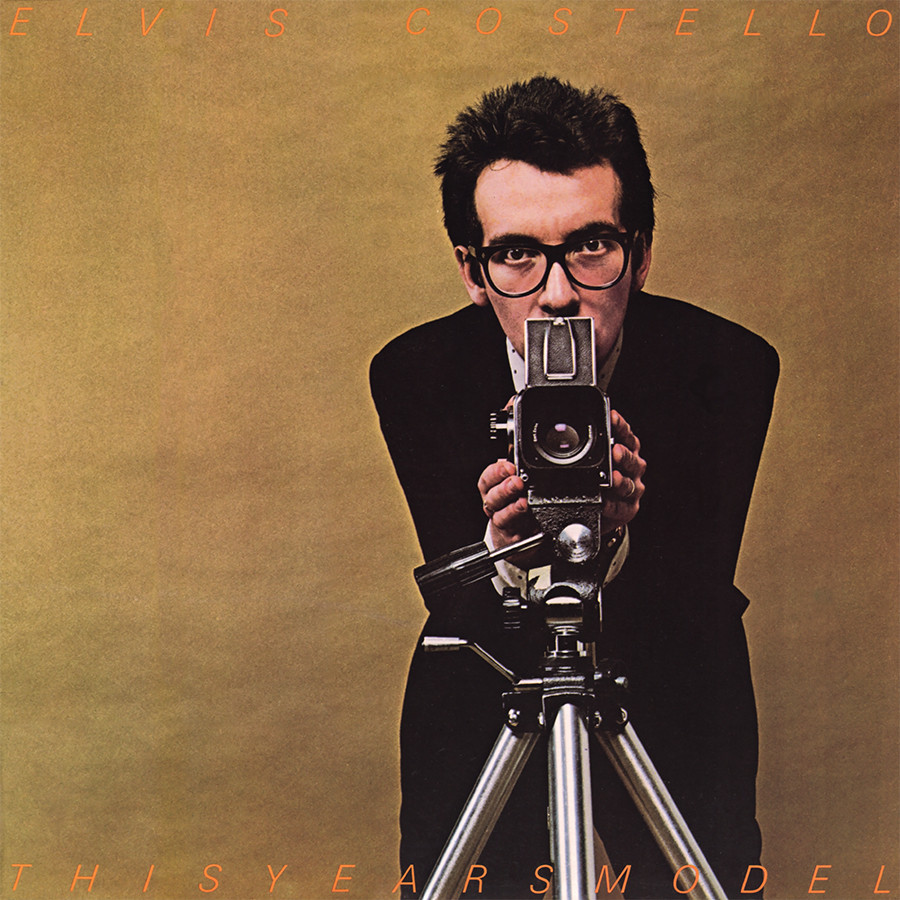
The Albums That Changed My Life: #3, This Year’s Model by Elvis Costello

by Rick Krueger

“The songs are lyrics, not speeches, and they’re tunes, not paintings. Writing about music is like dancing about architecture—it’s a really stupid thing to want to do.” — Elvis Costello, 1983, apparently quoting Martin Mull.

Ouch.

On the other hand, would I have ever even heard of Elvis Costello if it hadn’t been for the rock press?  Let alone listened to This Year’s Model?

Continue reading “The Albums That Changed My Life: #3, This Year’s Model by Elvis Costello”

The Albums That Changed My Life: #2, Rubber Soul by The Beatles

by Rick Krueger

I’ve already written here about how, in late November 1977, this album grabbed me and has never let go.  Rubber Soul is (to paraphrase my previous comments) a sharp, cogent take on the folk rock fad of the time, mixing in flavors of soul, Indian ragas and Baroque elegance, with words matching the music’s new maturity.  It’s the sound of the Beatles downshifting and heading for new destinations, ready to move beyond shaking their moptops to a big beat and basking in the resulting screams.

There are no duds on either the British or the American versions of this album.  The UK Rubber Soul kicks off with “Drive My Car” — an exuberant Stax pastiche, a knowing mutual flirtation sketched in three-part harmony, topped with that goofy “beep-beep-yeah” tag on the chorus.  The US version, in contrast, starts with “I’ve Just Seen A Face” (from the British Help!) — Paul McCartney breathlessly singin’ and strummin’ a tale of new infatuation, a stream of consciousness laced with unexpected internal rhymes. Neither was at all typical of the Fabs; both sound wonderfully fresh, setting the tone for a different kind of Beatles record.

How many changes can you ring on the classic love song?  Rubber Soul shows how far the genre could stretch: surrealism with sitar (John peppering “Norwegian Wood” with non sequiturs a la Bob Dylan); break-ups with a backbeat (Paul’s “You Won’t See Me,” eventually covered with even more swagger by Anne Murray); suffering with added social comment (John’s “Girl,” featuring a chorus that’s just the title word and a deep, frustrated breath).  Ringo Starr does a country heartbreak turn on “What Goes On”; George Harrison glumly protects his personal space on the Byrds homage “If I Needed Someone.”  And this isn’t even including Paul’s earnest “Michelle,” which, if you were an easy listening artist and had already done “Yesterday,” quickly became the next Beatles tune to cover.

But what’s made Rubber Soul my ultimate touchstone for all things Fab is John’s “In My Life.”  It’s hard to top the reflectiveness and wisdom of these lyrics (in fact, I would argue that Lennon’s most famous songs are far less mature).  Every year they resonate more for me:

There are places I remember
All my life though some have changed
Some forever not for better
Some have gone and some remain
All these places have their moments
With lovers and friends I still can recall
Some are dead and some are living
In my life I’ve loved them all

But of all these friends and lovers
There is no one compares with you
And these memories lose their meaning
When I think of love as something new
Though I know I’ll never lose affection
For people and things that went before
I know I’ll often stop and think about them
In my life I love you more

Set to a lovely mid-tempo lope, with George Martin’s getting his Bach on for a gracious piano interlude, “In My Life” is evidence enough that, after Rubber Soul, both the Beatles and rock music would never be the same.   Listen to the album here:

Other Favorites by the Beatles: Well, the whole catalog, really.  But other favorites among the favorites are (as I’ve mentioned before), A Hard Day’s Night, Revolver, Abbey Road, and whatever Beatles album I’ve listened to last.

Related Favorites:

The Byrds: Essential Byrds (compilation); There Is A Season (box set); Sweetheart of the Rodeo.  Inspired by A Hard Day’s Night, the Byrds added Dylan, folk and country to the mix and made magic.  “Turn Turn Turn” is another song I never tire of hearing.

Cheap Trick: Heaven Tonight; At Budokan.  The Fab Four (pure pop version) of the late 1970s.  With added harder rock and wacky stage moves.

The Chipmunks: The Chipmunks Sing the Beatles. The first album my parents ever bought me.  Apparently I was tired of The Sound of Music.

Marshall Crenshaw: Marshall Crenshaw; Field Day,  The pride of Berkley, Michigan, replete with Beatlemania stage credentials.

The Smithereens: Blown to Smithereens (compilation); Meet the Smithereens (cover version of the complete U.S. album Meet the Beatles).  The Fab Four (pure pop version) of the late 1980s.


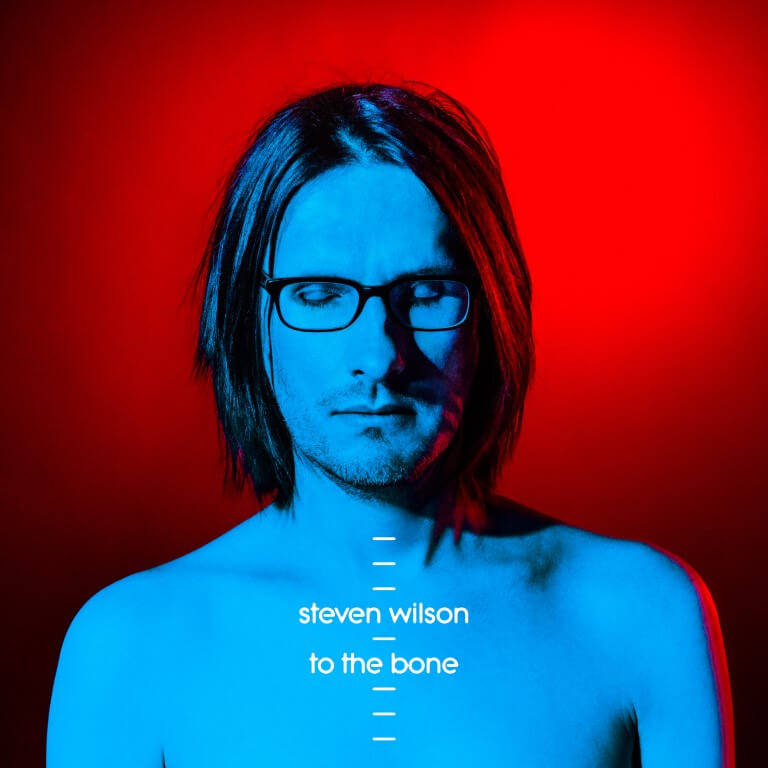
To the Bone by Steven Wilson

by Rick Krueger

“Rain all the truth down, down on me/Rain down so much you make a sea/A sea we can sail then sink like a stone/Down to the truth, down to the bone.”

To the Bone isn’t any sort of “prog turned pop” betrayal.  I don’t think it’s Steven Wilson’s masterwork either; Porcupine Tree’s In Absentia and Deadwing and the stunning Hand. Cannot. Erase. remain my favorites, along with the compelling concert video Get All You Deserve.  I do think that To the Bone is pretty special, though.  An accessible yet ambitious set of songs that compels repeated plays, it ably showcases Wilson’s immersive grounding in rock and pop of all stripes, his ongoing quest to extend that tradition, and his continued lyrical growth.

Continue reading “To the Bone by Steven Wilson”

Bruford, Seems Like A Lifetime Ago, 1977-1980

Bill Bruford re-releases the music of his marvelous 1970s “rock group with a jazz sensibility” on October 27.

Titled Seems Like A Lifetime Ago, 1977-1980, the 8-disc box set features Bruford in collaboration with Dave Stewart (Egg, Hatfield & the North, National Health) on keyboards,  Jeff Berlin (a fine American jazz-rock bassist) and Allan Holdsworth (Soft Machine, UK) & ‘The Unknown’ John Clark on guitar.  Mostly instrumental, the music featured occasional vocals by Annette Peacock and Berlin.   The limited edition box will include:

  • DVD 1: Feels Good To Me: 5.1 surround sound and original 1978 mix remastered
  • CD 1: Feels Good to Me: 2017 remix from original masters
  • DVD 2: One of a Kind: 5.1 surround sound and original 1979 mix remastered.
  • CD 2: One of a Kind: 2017 remix from original masters – previously unreleased: outtake of Five G
  • CD 3: Gradually Going Tornado: Remaster
  • CD 4: The Bruford Tapes: Remaster: Bonus track: Manacles
  • CD 5: Live at the Venue: Previously unreleased. Recorded in London 1980.
  • CD 6: The 4th Album Rehearsal Sessions: Previously unreleased: 18 rehearsal sketches of new material.
  • 16-Page 12-inch booklet
  • Sid Smith essay with new interviews with producer, engineer, band members, eyewitnesses and others.
  • Previously unseen archive visual material.
  • Complete band date sheet with contemporary critical reaction.
  • 2 x black and white 10” x 8” band photos.
  • 1 x A3-size colour poster accompanying Live at the Venue
  • 1 x signed numbered certificate of authentication

The only thing not included in the box is the Rock Goes to College video of the band with Peacock on vocals, still available here.   Following the collapse of Bruford the group, Bruford the drummer rejoined Robert Fripp for the 1980s version of King Crimson.

This is exhilarating music from a band that burned, driven all the while by Bill Bruford’s elegant polyrhythms.  30 years on, Bruford was still playing in 19/8 and making it look easy:

Seems Like a Lifetime Ago, 1977-1980 is available to pre-order at Pledge Music and Burning Shed.   More about the box set, including interviews with Bruford, other band members and remixer Jakko Jakszyk, at TeamRock.

The Albums That Changed My Life: #1, Brain Salad Surgery by Emerson Lake and Palmer

by Rick Krueger

I’ve been seriously collecting recorded music (on vinyl, cassette, compact disc, DVD and Blu-Ray) for just over 40 years.  As you do, I’ve organized my collection in various ways.  For about the last 15 years, I’ve separated my favorites, regardless of genre, out into their own storage unit.  It looks like this as of today:
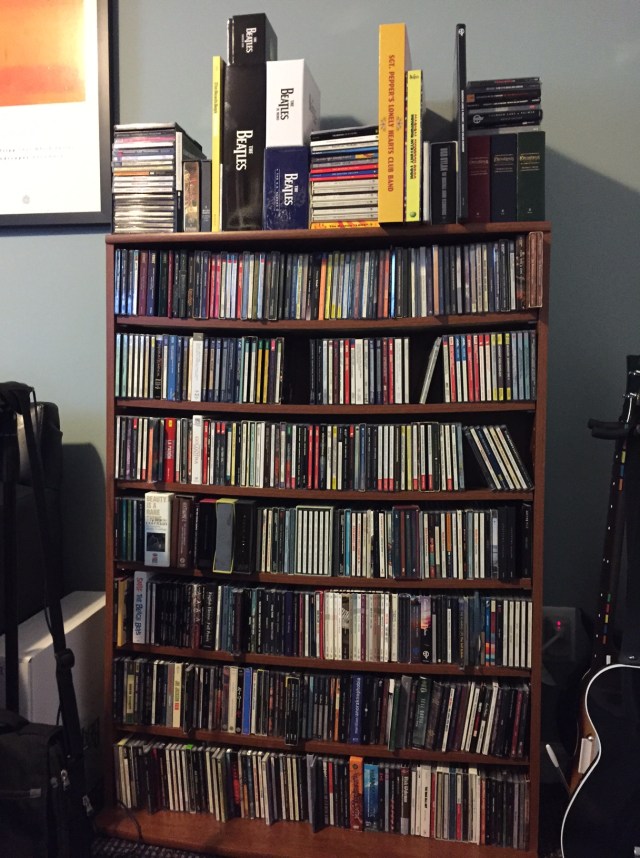
IMG_3523I used to refer to what’s on the top shelf — my very favorite recordings — as “the music I would save if the house caught on fire.”  Never mind that: 1) people matter more than stuff, and; 2) there’s no way that, if the house caught fire, I could actually pull it off.

Ultimately, it occurred to me that a better name for that top shelf’s contents is “the music that changed my life.”  In retrospect, every one of the albums perched there set me off in fresh musical directions and shaped what I listen to most, what I choose to collect, and even my vocation as a professional church organist and volunteer singer.  Sounds like a blog series in the making …

I plan to focus on one album in each post, starting with what I heard earliest and working forward.  I hope to distill what I love about the album, and reflect on how it’s influenced my listening (and my playing) over the years.  I’ll also list my other favorite albums from the same artist, along with selected faves in the same vein from other musicians.

Given how much I’ve written about Emerson Lake & Palmer here, it’s probably no surprise that, while Works Volume 1 was the first ELP album I bought, Brain Salad Surgery was my real gateway drug into progressive rock.   For starters, I’d already heard “Karn Evil 9, First Impression, Part Two,” “Jerusalem” and “Still … You Turn Me On” over the Detroit airwaves.  What was this stuff?  Utterly bizarre titles, a giddily deployed spectrum of musical colors colliding with each other, seemingly at random (harpsichord, accordion and wah-wah guitar in the same ballad?) and more keyboards in five minutes than in some bands’ entire recorded output — after assimilating the bombast of the Works 1 material, I had to check it out!

I was flabbergasted.  Brain Salad Surgery defined eclecticism for me, sweeping up an astonishingly broad range of styles. On the first four tracks, ELP attacked a hymn (“Jerusalem”), a contemporary classical concerto movement interrupted by an extended tympani cadenza (Alberto Ginastera’s “Toccata”), a lyrical ballad with oddball instrumental touches (“Still …”) and a 12-bar boogie with music hall lyrics and an utterly wild piano solo (“Benny the Bouncer”).  And that was just the warm-up for the epic “Karn Evil 9.”  Over the course of three impressions, split into four tracks by the side change, the band garnished their core sound with rare solo electric guitar from Lake, manic piano trio jazz, Emerson’s steel drum synthesizer (quoting sax giant Sonny Rollins’ “St. Thomas,” as I later discovered), gonzo military marches powered by Palmer, and a loose anti-war narrative that castigated modern politics and religion, only to succumb to absolute rule by sentient supercomputer.   Mind.  Blown.

I later came to understand why Brain Salad Surgery was where some longtime ELP fans got off the bandwagon.  Compared to more direct albums like their debut and Pictures at an Exhibition, this one goes over the top without looking back.  The dizzying musical whiplash, the often-obscure lyrics, knockabout and messianic by turns (Lake’s first collaborations with original King Crimson wordsmith Peter Sinfield), the aggressive high-velocity playing — it could all seem like Keith, Greg and Carl had taken the hype too seriously, and were about to vanish up their own backsides in their pursuit of world domination.  Given the arc of their career after the massive Welcome Back My Friends world tour, you could even argue that’s what happened.

But for me, the reckless abandon of Brain Salad Surgery is the secret of its appeal.   ELP’s music here is a mite undisciplined and overstuffed, sure — but it’s also virtuosic, tightly structured, fearless, and exhilarating.  Those qualities, held together in suspension by the trio’s undeniable musical chemistry, have made this album compelling listening for me for the last 40 years.  Not only do I play it again and again, I’ve grabbed almost every CD re-release over the years (including Jakko Jakszyk’s oddly askew 2014 remix). Plus, instead of settling into the status of beloved novelty, Brain Salad Surgery whetted my appetite for more music like it — not just prog, but jazz, jazz-rock, modern classical music — even folk ballads!  And every once in a while, when I need a particularly powerful organ prelude or postlude for Sunday morning, it’s still a blast to pull out all the stops and dive into “Jerusalem.”

Listen to the latest re-release of Brain Salad Surgery here:

More Faves by ELP: Tarkus, Trilogy, and Works Volume 1.  Plus Encores, Legends and Paradox, a Magna Carta tribute album from the 1990s; this features Robert Berry, John Wetton, Glenn Hughes and James Labrie on vocals, with members of Dream Theater, Yes, King Crimson, Magellan and Emerson’s buddy Marc Bonilla laying down backing tracks.

Still There’ll Be More: I have 100+ prog and prog-related discs on my favorites shelf, from proto-proggers like The Nice and Procol Harum to 21st-century giants such as Neal Morse, Steven Wilson and Big Big Train.  Here are the ten albums that are probably the closest to my heart, and that opened the doors widest for future exploration:

Bruford, One of A Kind

Robert Fripp, Exposure (combined with RF’s 1979 in-store Frippertronics concert at Peaches Records in Fraser, Michigan)

Genesis, Foxtrot and Wind & Wuthering

King Crimson, In the Court of the Crimson King and Red

Porcupine Tree, Deadwing

Transatlantic, SMPT:e

UK, UK

Yes, Close to the Edge