
Now available via Bandcamp!
Dave Kerzner pays tribute to Yes with all-star lineup
Now available via Bandcamp!
Now available via Bandcamp!
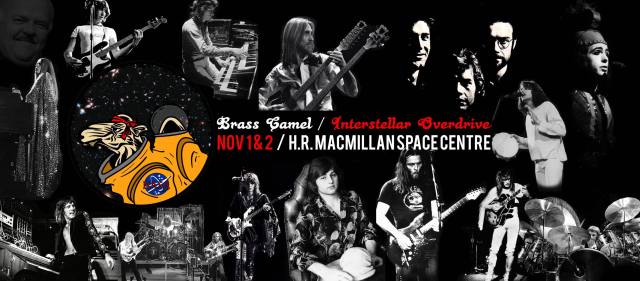 Daniel James’ Brass Camel honours progressive rock legends tonight, underneath the unreal visuals of the HR MacMillan Space Centre’s 360 degree Star Theatre: Pink Floyd, King Crimson, Genesis, Yes, Rush, and more!
Video from the rehearsals is viewable here and here.
Buy tickets here.
Get the DJBC band’s new album here and also on iTunes.
Dave Kerzner’s In Continuum has unveiled “Crash Landing,” which features Steve Hackett of Genesis fame, and also Jon Davison of Yes, who sings on it with Kerzner.
It’s a prog dream come true! The excitement builds for the Acceleration Theory release…
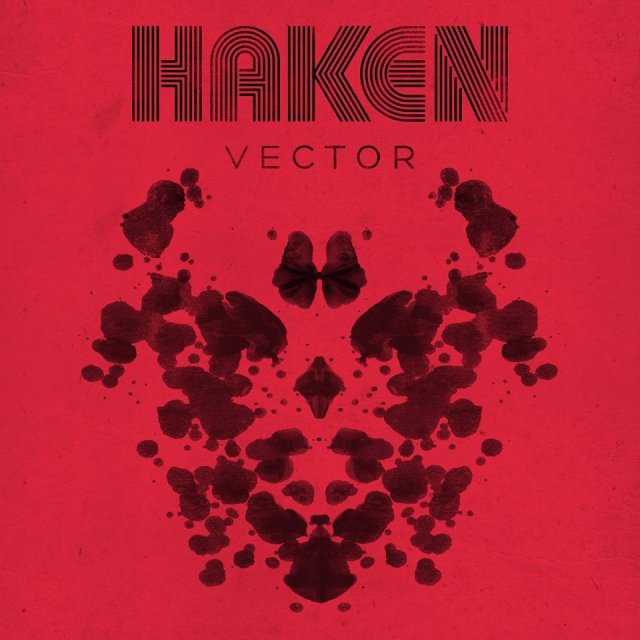
It took me a few listens before I truly found my way into Vector, the new studio offering from Haken.
And then I realized:
It’s the musical blot!
Genesis pun intended. Allow me to explain…
I was really looking forward to this album, because as I listened to L-1VE, their brilliant live album from earlier this year, I became convinced that, with Rush now retired, it is Haken that reigns supreme.
Haken’s ability to play with such complexity and virtuosity live, in such a compelling and spirited way, embodies that living “spirit of radio” that Rush had been able to offer live for so many decades.
L-1VE reminded me of Exit… Stage Left, in that it was a perfect overview of the band’s career, as well as definitive proof of their being today’s live band without equal.
At any rate, I was baffled by Vector at first, because initially it didn’t seem to be musically or lyrically coherent.
But the breakthrough came for me when I read the Man of Much Metal’s review of it, wherein he put forth the thesis that Vector is “an understated and clever homage to every single previous incarnation of the band within the music.”
In illustration of this thesis, he averred that Affinity can be heard within “The Good Doctor,” The Mountain within “Puzzle Box,” Aquarius within “Veil,” and Visions within “Host.”
This immediately rang true for me, as I realized each song indeed marked a “vector,” or definite trajectory, in fact audible in previous manifestations of the band.
In my mind, I added my own perception of the teleological spirit of Restoration in “A Cell Divides,” and of the jaw-dropping response induced by L-1VE (with its dazzling live display of unmatched technical musical ability) in the instrumental “Nil by Mouth.”
While the Vector album, on the one hand, thus didn’t have the overall coherent feel that comes from a spatio-temporally undivided live performance (which is what the career overview of L-1VE records), on the other hand, its fragmentary studio snapshots of discretely engineered musical styles did supply quantum musical “blots” of a Haken offered via a more scattershot distribution.
Thus, like the “ink blot” on the cover, you can see the Haken you want to see, if only you look more closely.
As for what Haken is overall, who knows; it is as if the band is saying, “It is up to you to perceive it; we are not going to decide it in advance, to fit some marketing categories or any other reductive schema.”
Look within the music, and you will see what is there.
And as I understand the point of this exercise, it is not so much “to project your own meaning” onto the music, but rather to be an active participant in the music itself, along with Haken.
Just as they themselves won’t reduce the musical experience in advance, so too do they invite you not to insist in advance that your musical experience be able to be put in a nice and neat little box.
So, instead they have given us quite the little puzzle box on Vector.
I believe I have solved it.
Not a musical box, but a most satisfying musical ink blot.
If anyone has read the attacks below, posted on Progarchy, that are assaulting the latest from both Roine Stolt and The Tangent, I just want to encourage people to ignore the ranting and raving, and to actually go and listen to the music and lyrics instead.
Stolt releases a song called “Lost America” and suddenly some heads explode at Prograchy. Hey guys, calm down. How about you actually listen to the song? Is it too much to thoughtfully digest what an artist offers, before pronouncing premature rash judgment?
The music to “Lost America” is itself not too bad. Musically, there is nothing offensive. I admit the track doesn’t do much for me, because musically it has nothing too innovative or elaborate to get me excited. But, the guitars are great, and it’s still pleasantly enjoyable to listen to, nonetheless.
Continue reading “Lost Progarchy: Methinks Thou Doth Protest Too Much”

Maybe you have seen a Pink Floyd laser light and music show at the Planetarium, long ago. But what about this genius idea? A live band prog extravaganza at the Planetarium!
Daniel James’ Brass Camel is putting on a show in Vancouver (tickets now available) with the ultimate in prog rock visual accompaniment. I saw their August 18th show in Vancouver, as an eleven-piece band (including horns and backup singers), at the Fox Cabaret, where they played almost all the tracks from their incredible new album (soon to be available online for digital download), played to the hilt, along with some Sturgill Simpson, Parliament, and Led Zeppelin tunes. The show was a top-notch display of meticulous musicianship.
I can therefore recommend that you don’t miss this future chance to see Daniel James’ Brass Camel live, now celebrating their new release in the grandest of style. The Fox Cabaret show had a volume level that was too loud for such a small venue, so I am hoping they’ll take a page out of Steven Wilson’s playbook and set the volume level at optimal human range for the Planetarium. If you saw Wilson the last time he was in Vancouver, you’ll know what I mean: he does a perfectly crafted multimedia show, with no earplugs required, as he sets the volume level at just the right setting, in order to fulfill every audiophile’s dream. (By the way, Wilson returns again this year to Vancouver.)
Having to use earplugs at a musical event is always a sad situation, just as it would be ridiculous to have to wear a blindfold or sunglasses at a Planetarium show. The promise of prog rock music is that it enhances our sensory experience, not dulls it. I am betting that this November 2nd show will be not just one small step in the right direction, but rather one giant leap for all prog-kind. (Why aren’t more prog bands doing this genius idea??? In any case, Daniel James’ Brass Camel is leading the way.)
The last time I spoke with Daniel, he was trying to secure a set of tubular bells for the November 2nd event. It sure sounds like he’s getting ready to do this right and give Wilson a run for his money! Prog right on, wayward sons.

The Vancouver prog-funk ensemble that calls itself Daniel James’ Brass Camel has conspired to take you on a trip through the universe in Vancouver’s only 360 degree star theatre. Underneath mindblowing visuals, DJBC will be performing a swathe of progressive rock classics by such artists as King Crimson, Pink Floyd, Rush, Genesis, Yes and more. They will be joined by a handful of special musical guests who will join the Camel and lend their talents to this progressive extravaganza.
Alcoholic beverages and light snacks will be available before the show and during the short intermission on the planetarium’s Star Deck.
Doors at 7:30
Performance 8:15-10:30 (15 minute intermission)
H.R. MacMillan Space Centre1100 Chestnut St, Vancouver, BC
V6J 3J9

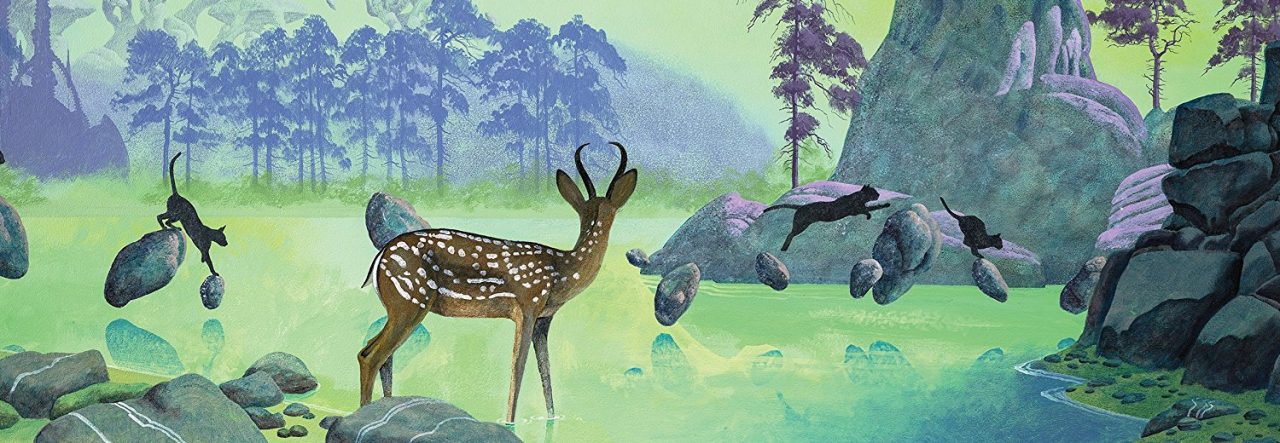
The idea for ‘Friendship’ came to me because of an old photo of me as a child. I found this old photo at my parents’ house, depicting me standing on top of this really tall treehouse in a glade near our house. Although I of course remembered it as being really high up in the tree tops as a child, this picture proved that it really was! As I reminisced about the treehouse I started thinking about my childhood friends with whom I built it. We were the best of friends and we spent so much time together in this little village where I used to live. This of course made me think about all the friends I used to have, these relationships where you hung out all the time, went through childhood together, grew up and knew everything about each other and then all of a sudden, for some reason, disappeared from each other’s lives. This phenomenon of falling out with someone is still a mystery to me, but I’ve learned to accept it, much like the separation of death it’s just a part of life and the nature of our course of life, I guess. So this is a collection of songs about and for all of my friends, dead or alive, past and present. I chose to base the stories around the treehouse in the glade, not because all of my memories are from there, but rather that it’s the place that made me think back on all of this.
Musically, what can I say? This is prog rock, but I want to be free to move in whatever direction the music wants to go and I happily go exploring where it wants to take me. Even though there are a few softer songs and sections, most of the album turned out to be a rocker; a collection of hard rock songs with lots of tricky parts, some heavier moments and some downright jazzy elements too!
Track listing:
1. Ghost of Vanity
2. Friendship
3. They Fade
4. A Treehouse in a Glade
5. Stone Cold
6. If You Fall, Pt. 2
7. Crown of Leaves
8. Slow Dancer (Bonus Track)
9. Past Generation (Bonus Track)
10. Friendship (Utopian Radio Edit) (Bonus Track)

A Farewell to Kings was released on Mercury/Polygram on August 29, 1977.
Neil Peart wrote in the Tourbook:
The musical entity that is Rush is not an easy thing to define. Where many have foundered, there is no reason to assume that I will fare any better, except perhaps that I have access to the actual facts, and some inside information on the motivations. We have always done our utmost to elude any convenient classifications, in spite of those who must affix a label and assign a function to everything in sight, whether they really fit or not.
It may be that the only term loose enough to encompass anything of the concept of Rush, is simply “progressive rock”, for it is to this ideal of enjoyment, integrity, and freedom of expression that we have dedicated ourselves. Our music is aimed at the head, at the heart, and at the abdomen. We can only hope that it finds its mark in yours.
Prog on!
Is it heresy for me to be enjoying Haken’s new live album — L-1VE — more than any other live album released this year, including BBT’s Merchants of Light?
In any case, I am looking forward to Haken’s forthcoming new release, and the tour with Bent Knee and Leprous, more than any other this year.

Vector will be available as a limited edition 2CD mediabook (including instrumental versions), a gatefold vinyl 2LP + CD, a standard CD jewelcase & as a digital download.
Track listing:
1. Clear
2. The Good Doctor
3. Puzzle Box
4. Veil
5. Nil By Mouth
6. Host
7. A Cell Divides
Haken are inviting fans to submit their own version of the Rorschach test ink-blot image which graces the album’s cover, and one winner’s art will be picked by the band to be etched into every vinyl copy of Vector. Submissions are open now, closing on Aug. 10, and can be sent to: drrex@hakenmusic.com

AMG gives a stellar rating to Southern Empire, Civilisation:
Southern Empire happily abuse a smorgasbord of progressive influences: the epic structure of Transatlantic, the lithe complexity of Yes, the grandiosity of Rush, and the catchy modern sheen of Haken. As such, the art of Civilisation is not so much in its unique sound, but rather its composition and execution. The bulk and heart of the album are in its two centerpieces, “Cries for the Lonely” and “The Crossroads.” Adventurous, bold songwriting drives these dynamically written tracks of progressive rock that freshens up the sounds of the 70’s with a bright layer of vigor and spirit. Their length is used expertly to showcase a variety of styles and moods that reflect the flow of a soundtrack. An audacious keyboard-driven instrumental section naturally progresses into a bombastic call-and-response of choral and main vocals before moving onto a touching violin and guitar solo, none of it sounding forced or unnatural.
The strength of the compositions is boldened by spirited performances. Vocalist Danny Lopresto is gifted with a strong baritone full of appropriate drama and grandiloquence. He’s joined by the rest of the band, all of whom join in the various styles and layers, such as the canon employed in “Goliath’s Moon” and the choral arrangements on “Cries for the Lonely.” The guitars regularly erupt in excellent solos and keep the attention with deft plucking and the liberal application of hooks . Furthermore, the album is filled with a variety of less common instruments and effect, applied as befitting the flow of the music. Just listen to the hand percussion used to a salsa-like effect on “Crossroads,” the funky wah-wah on “Goliath’s Moon” and the sporadic but effective use of flutes to evoke melancholy.
The bookends to the album don’t reach the middle tracks’ quality, though they are never less than enjoyable. Opener “Goliath’s Moon” has an odd start as its initial verse is played twice, which is like reading the same story twice considering the sci-fi narrative of a lost diamond, but the track soon picks up steam with a compelling vitality and dynamic use of the vocal range. Closer “Innocence & Fortune” comes on the heels of a tiring hour of strong music and initially suffers from languidity, but finishes strong with a very Yes-like Mellotron ditty and a triumphant burst of choir and symphony. The great flow across the album doesn’t suffer from these shortcomings, which are minor in the grand scheme of things. And as if these words of praise have not been enough, Civilisation sports an excellent production from the hand of keyboard player and band creator Sean Timms (ex-Unitopia). The sound is bright, clean, and crystal clear, with each instrument audible separately even when the compositions become crowded (frequently on “Goliath’s Moon”). The bass pulses genially, the drums are clear and natural, and the various extra instruments are mixed in perfectly and dynamically, to the point where you no longer notice just how natural it sounds.
 Progarchy