
V was such a great album. I’m really looking forward to the next one from Voyager! Here’s a foretaste:
Author: Time Lord
progarchy.com
Steven Wilson: “Space Oddity” Live
Some GoPro cameras captured SW, the band and Ninet Tayeb performing Space Oddity at the Eventim Apollo last week (27th Jan) as a tribute to the late David Bowie. Thanks to Lasse for editing it together.
From David Bowie to Blackstar
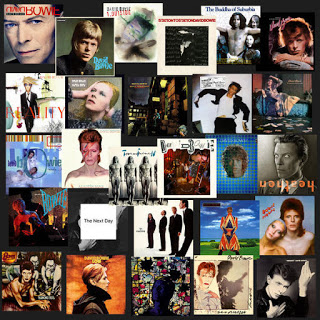
Astounded by Sound has an excellent collection of reviews and rankings of all of Bowie, including some spot-on thoughts about Blackstar:
There are no other remaining and widely popular musicians of Bowie’s sadly rapidly depleting generation who would be capable of making a parting gesture as potent and startling as Blackstar, it’s that simple. The songs on Blackstar that deal with mortality and impending death form an artistic statement that has few parallels in popular culture, let alone music. For a while at least it is inevitable that the “non-death” songs will be overlooked, but they are an important part of what I’ve little doubt will be seen to be in years to come as one of Bowie’s best albums.
I can’t get over how experimental and totally prog Bowie’s last release is! It’s awesome. Chorus angelorum te suscipiat, et cum Lazaro quondam paupere æternam habeas requiem!
“Moment of Betrayal” — Astonishing new Dream Theater track!

Billboard has the exclusive premiere of the audio track “Moment of Betrayal” so go click on the link and go take a listen. Nice guitar solo just after the 4:00 minute mark.
The double album is a multicharacter story that’s divided into two acts. It was inspired by co-founder/guitarist John Petrucci’s love of science fiction and such franchises asGame of Thrones, Star Wars and The Lord of the Rings, but also from an observation he has made about modern-day society.
“I was thinking of all of the things now that people used to do that they don’t do anymore because they’re automated or done by robots: lots of jobs, self-driving cars coming right around the corner,” he explains. “My thought was, ‘What would happen if with all the advances in technology in music that music [became] all artificial?’ ”
Billboard is exclusively premiering the first vocal track from act two, “Moment of Betrayal.” The song is about Gabriel communicating to his brother Arhys that he has a plan that he thinks can save them, “but there’s a betrayal theme that’s going on in the story that comes to a head,” says Petrucci.
Critchley on Bowie’s Vision of Love

Simon Critchley on “Nothing Remains: David Bowie’s Vision of Love“:
The word “nothing” peppers and punctuates Bowie’s entire body of work, from the “hold on to nothing” of “After All,” from “The Man Who Sold the World,” through the scintillating, dystopian visions of “Diamond Dogs” and the refrain “We’re nothing and nothing can help us,” from “Heroes” and onward all the way to “Blackstar.” One could base an entire and pretty coherent interpretation of Bowie’s work simply by focusing on that one word, nothing, and tracking its valences through so many of his songs. Nothing is everywhere in Bowie.
Does that mean that Bowie was some sort of nihilist? Does it mean that his music, from the cultural disintegration of “Diamond Dogs,” through the depressive languor of “Low,” on to apparent melancholia of “Lazarus” is some sort of message of gloom and doom?
On the contrary.
…
Concealed in Bowie’s often dystopian words is an appeal to utopia, to the possible transformation not just of who we are, but of where we are. Bowie, for me, belongs to the best of a utopian aesthetic tradition that longs for a “yes” within the cramped, petty relentless “no” of Englishness. What his music yearned for and allowed us to imagine were new forms of being together, new intensities of desire and love in keener visions and sharper sounds.
Best of 2015: Symphony X — Underworld

The Man of Much Metal has a really great review articulating why Symphony X’s Underworld deserves to be among his top ten for 2015.
I couldn’t agree more! The MMM totally nails down so many of the reasons why I included it on my own list of the top albums for 2015.
But the MMM’s review does seem a bit rushed. Certainly, I agree with him about the epic stature of “To Hell and Back” (which is the track that really grabbed my attention for this album, because up until I heard it I wasn’t warming up to the odd numbered tracks on the album — namely: 1, 3, and 5 — but when “To Hell and Back” came up as #7, I was immediately captivated and willing to re-listen to the entire album again and again until it grew on me in its totality, odd numbers and all). But I do think the MMM missed his golden chance to mention how it is really the last three tracks of the album that take things to a whole new level.
To my ears, tracks 7 through 11 (the last half of the album) are the absolute best. After the epic-length “To Hell and Back” (9:23), we get a bit of a breather with “In My Darkest Hour” (4:22), since it is shorter than the final three tracks which follow it. But then the unexpected fun really begins.
“Run With the Devil” has a killer riff that sounds like one that The Winery Dogs would toss off when operating at their finest. When I have time to listen to only one track from this album, this is the one I pick. It is mind-blowing in its virtuosity.
“Swan Song” fooled me, with its title, into thinking it was the album’s final track. Its epic length (7:29) and epic vocals and epic sense of conclusion and finality had me thinking that nothing could top such an amazingly operatic song as an album closer. But then Symphony X pulls out an even more epic album closer…
“Legend” never fails to instantly excite me, and it’s because the way it starts off totally sounds like Rush. In fact, the last time Rush sounded this good, it was the 80s! So, it’s even Rushier than Rush.
Yes, I like how “Legend” starts and ends in that classic Rushy vein. But even better, everything in-between is totally awesome as well, as Symphony X shows off also how they are truly their own band. Yet, in my mind, I take the song as a secret tribute to Rush, because of the pinnacle lyric: “The legend never dies.”
Symphony X, in their finest hour. The legend never dies, indeed!

Ariana Lies Down on Broadway
Killer band, killer songs, killer voice:
 Progarchy