soundstreamsunday: “Sons of Pioneers” by Japan

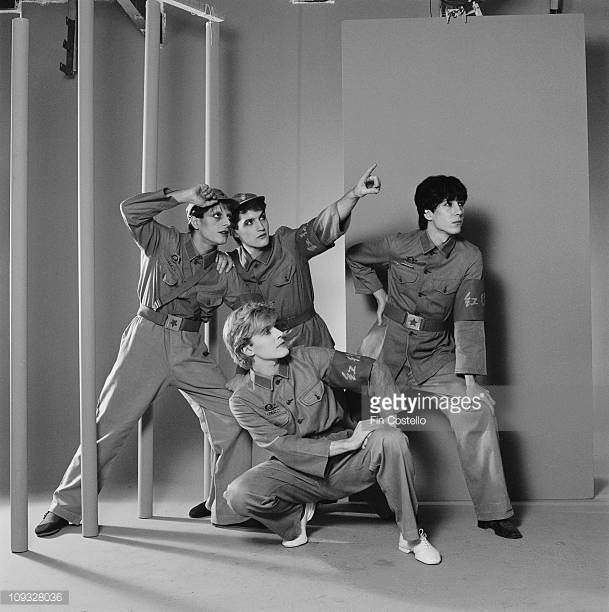
japantindrum2A British post-punk band could grow into just about anything in that fertile ground of the late seventies, and Japan proves the point, as over its short record-releasing career (1978-1981) the band moved from a funk punk glitz unit to new pioneers of progressive art rock.  You can see the steam rising off the entire five-album catalogue, the creative engines driving full tilt, inevitably towards early breakdown.  If the end came too soon there’s one more record, 1991’s self-titled Rain Tree Crow, that seals the deal: together, Mick Karn, Richard Barbieri, and brothers David Sylvian and Steve Jansen were among the most unique musical collaborators of their era, and should be in any discussion of Talking Heads or King Crimson from this same period, as bands who pushed forward and influenced all musical directions.  In its progression of fashion and music, Japan functioned as an interlocutor, a not-so-missing link, between New York Dolls-style punk and Tears for Fears-style new wave, a Roxy turned Crimson, an achieving Guns’n’Roses cum Duran Duran.

“Sons of pioneers are hungry men,” intones Sylvian in the nuanced Ferry-esque croon he’d been developing since 1979’s Quiet Life, the band’s third album.  I have no idea what this lyric means. But…I like it and its pure sonics and the way Sylvian so naturally handled a lyric as a shaped sound.  “Sons of Pioneers” comes from their last work as Japan, Tin Drum, an album charged with atmospherics, and further demonstrating the contributions and importance of each member, although Mick Karn’s gorgeous playing is a particular show stopper.  His expressive command of the fretless bass pushes and pulls “Sons of Pioneers” across its landscape, as the song takes its time unfolding, enjoying its own groove.  I’m including the live (from the posthumous live record, 1983’s Oil on Canvas) and studio versions because they both kick ass in their own spacious and patient ways, although there is an urgent edge to the live performance.  The concept-y concert footage shows a superlative Japan in its swansong, Jansen with his world beat and Barbieri sino-spacing out the proceedings on keyboards, Karn transporting himself magically sideways and Sylvian, dapper glam hand ever in pocket, delivering the riddles.

soundstreamsunday presents one song or live set by an artist each week, and in theory wants to be an infinite linear mix tape where the songs relate and progress as a whole. For the complete playlist, go here: soundstreamsunday archive and playlist, or check related articles by clicking on”soundstreamsunday” in the tags section above.

White Willow, Future Hopes

by Rick Krueger

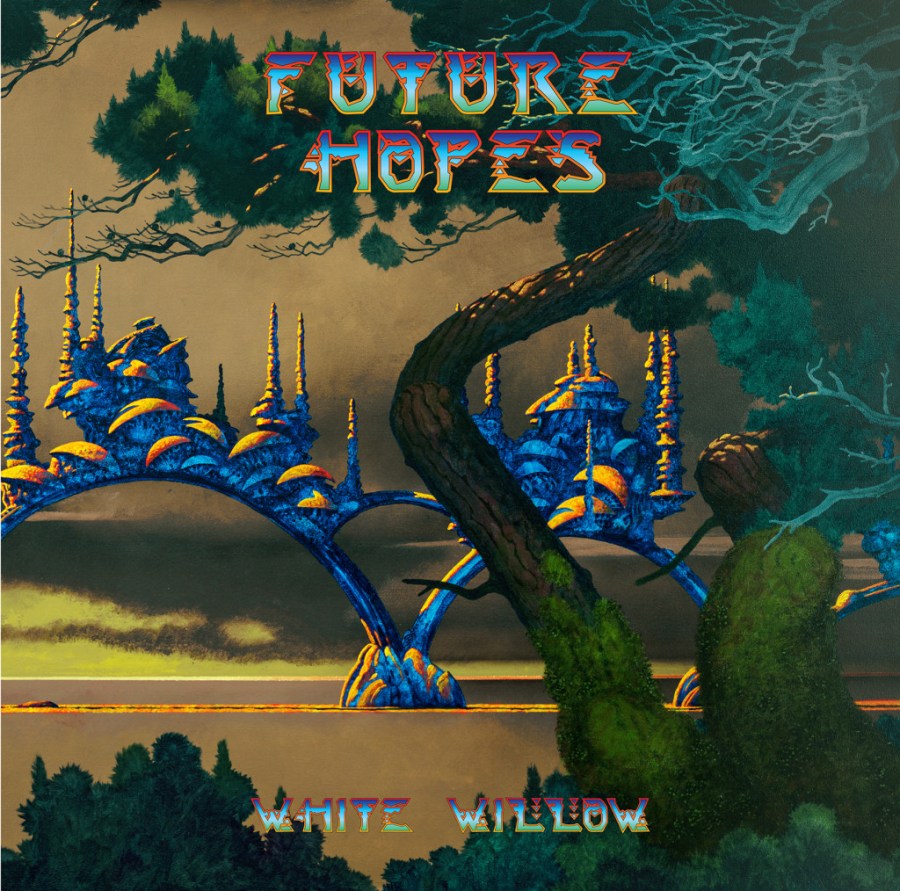
The only White Willow album I’d heard before their new effort was 2011’s doomy Terminal Twilight.  Gorgeous, Gothic stuff, but it didn’t leap out at me as anything special.  Future Hopes, however, is a gripping album, unpretentious in presentation (Roger Dean cover notwithstanding) but wonderfully ambitious in scope and sonics.  It starts in darkness, then doggedly journeys toward the light — and it carried me along from beginning to end. Continue reading “White Willow, Future Hopes”

Sgt. Pepper: It was 50 years ago today …

by Rick Krueger

It’s official: Sergeant Pepper’s Lonely Hearts Club is now my 5th-favorite Beatles album, determined scientifically as follows:

Continue reading “Sgt. Pepper: It was 50 years ago today …”

Slowdive: Things New and Old

unnamed-31Reviewing Slowdive’s eponymous new album, their first in 22 years, Clash’s Robin Murray made a statement bound to pique the interest of progarchists:

“It feels at times like early King Crimson, or Pink Floyd’s post-Syd/pre-Dark Side nexus. It’s the sound of a band forgetting who they were, and embracing who they could become.”

That second statement is undeniably true. Slowdive (released May 5 on the Dead Oceans label) is unmistakably the work of the same quintet that disbanded between 1995 to 2014. But it’s not a reunion record of rehashed old ideas. It would also be correct to say the band’s music has more in common with Floyd than, say, punk rock. Among their signature showpieces is a majestic, slow-burning cover of Syd Barrett’s “Golden Hair.” But Lark’s Tongue in Aspic? Other listeners can judge.

Guitarist/songwriter Neil Halstead grew up in a home where orchestral music was preferred to pop, and that influence is strongly apparent in tracks like the stirring “Catch the Breeze” (1991). While Slowdive can’t be classified as prog, their body of work has occupied spaces progarchists can appreciate: ambient, avant-garde, dream pop, and experimental, all under the broader classification of shoe-gazing. In this vein no other band sounds like Slowdive.

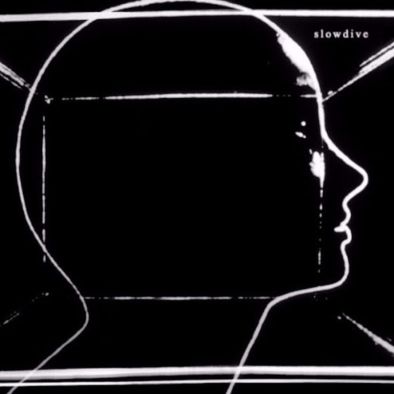
The cover art for Slowdive features a frame from Harry Smith’s 1957 avant-garde animated film, Heaven and Earth Magic. Composed of cut-out figures set in motion, the narrative includes a sequence involving a female patient sedated for a dental procedure. The darkened profile depicts her state of semi-consciousness, or perhaps heightened awareness. Or both.

Shoe-gazing refers not to the contemplative state of the listener (though it could) but rather the guitarists staring down at the array of effects pedals used to achieve other-worldly sounds. None are better at this than Slowdive’s Halstead and Christian Savill. On the new record that prowess is everywhere present.

But Slowdive also contains a refined attention to detail and form. The pace of the songs is faster. Nick Chaplin’s bass and Simon Scott’s drums thunder out front instead of being obscured by clouds of guitar effects, e.g. “No Longer Making Time.” And instead of a metronomic build-up common in earlier work there are tempo and time changes, e.g. “Don’t Know Why” and “Go Get It.” But as on previous records Rachel Goswell’s voice moves through the mix and around Halstead’s vocals like a spirit, e.g. “Sugar for the Pill,” the album’s emotional epicenter.

The closer, “Fallen Ashes,” may be a preview of things to come. Showcasing Scott’s abilities with laptop software, it embellishes and pushes a hypnotic piano riff to sublimity à la Jonny Greenwood.

Overall, Slowdive is familiar but with more sculpted contours and sharper pin pricks than in times past — a welcomed development.

All of this works from a context of two-decades’ old material still very much in view, still relevant, still captivating. I had the great fortune to catch Slowdive in Carrboro, NC at the next-to-last date on the North American leg of their current tour. Blending half the new album with old material, Slowdive overwhelmed the audience with canyons of sound.

I spotted a few fellow 50-somethings in the music hall. But more than a few of the audience weren’t even born when this Thames Valley gang first started making music as teenagers. Having fallen quickly out of fashion years ago with a press enamored to Britpop and cool Britannia, then beckoned back to life by an emerging cult following, Slowdive have a word for souls fearing rejection without redemption: No, this is what we do, and done well time will vindicate it.

After opening with “Slomo” from the new album the band followed with “Catch the Breeze,” with Savill, Goswell, and Halstead leaning toward the floor, wailing guitars swelling to orchestral heights.

The breeze it blows, it blows everything

And I, I want the world to pass

And I, I want the sun to shine

You can believe in everything

You can believe it all…

During the rapturous finale I glanced to my left. A couple of people were actually weeping. Heaven and earth magic, indeed.

Slowdive at Cat’s Cradle, Carrboro, NC, May 10, 2017. Photo by the author.


Section 43 Turns 50

country-joe-2
The past is the push of you, me, all, precisely the same,
And what is yet untried and afterward is for you, me, all, precisely the same.
I do not know what is untried and afterward,
But I know it will in its turn prove sufficient, and cannot fail.
~ Walt Whitman, from Song of Myself, Section 43.


Unlike bluegrass, where one can point to Bill Monroe’s “Mule Skinner Blues” (1940) as the discrete start of a new musical genre, progressive rock’s emergence was gradual. With Revolver and “Eight Miles High” the boundaries of pop music were expanded; 1967 would see the arrival of free-form or fusionist jam tracks likes Pink Floyd’s “Interstellar Overdrive,” Buffalo Springield’s “Bluebird” (the hard to find long version), and Jefferson Airplane’s 24 minute epic “Spare Chaynge” (pared down to its last 9-1/2 minutes for After Bathing at Baxter’s). 

Fifty years ago this month Country Joe & The Fish entered the studio in San Francisco to record their first LP. The last track of side one may be the most proto-prog recording of the ’60s. “Section 43” reminds us that prog rock got its biggest push from the counter-culture’s psychedelia and acid rock. Whereas the aforementioned jam pieces are largely improvisational, this multi-part mini-epic displays as much attention to form as freak out.

Now, I have a confession to make. I had never heard “Section 43” until a few weeks ago. In 1967 I was a first-grader, and the greatest rock band in the world was The Monkees. When I later watched the Woodstock documentary I associated Country Joe with the Vietnam war gallows humor of “I Feel Like I’m Fixing to Die Rag.” I didn’t look into the band further. It wasn’t until I watched Jack O’Donnell’s documentary on the Summer of Love,  Revolution, that I caught the music on the soundtrack and went on a quest to know who performed it. Thankfully, the person who posted a print of the film on YouTube was ready with the answer.

Watching the film I thought I might be hearing some previously uncovered Floyd track. The Farfisa organ and bass line put me in mind of Rick Wright and Roger Waters. Upon learning it was Country Joe & The Fish my mind was blown — and impressed.

The piece follows a verse-chorus-verse-verse-chorus structure. The choruses build tension waltzing slowly through minor and dissonant chords. The first and third verses showcase interplay between Barry “The Fish” Melton’s Gibson SG and David Bennett Cohen’s keyboard. The middle verses are bisected by what Richie Unterberger calls “an unexpected, almost circus-like atonal passage.” Up to that jarring break our ears are treated to a bracing harmonica solo from bassist Bruce Barthol, as salient on that instrument as with the heavy strings, while Gary “Chicken” Hirsh’s cymbals crash and tom-tom’s dance all around.

But it’s Melton’s note-bending, Near Eastern inflection on the second guitar solo that’s the highlight of this track. Country Joe McDonald? Why, he wrote the thing, and his ringing hollow-bodied Gibson keeps the whole contraption aloft.

The band opened with “Section 43” on the final morning of the 1967 Monterey Pop festival, an event memorable for Pete Townshend smashing his guitar and Jimi Hendrix setting fire to his. But Rolling Stone rated “Section 43” among the 15 greatest musical moments captured on film. Not so much for the shots of the band themselves (though Melton’s army jacket and blue jean combo would be a look emulated on school buses for years to come). It was the yawning, scratching youth summoned from slumber by Country Joe’s yell, and stumbling to the stage front that were the real stars of the clip.

Barthol’s harmonica solo isn’t present in this version. Country Joe blows the last dying notes on the harp as the camera cuts to the tapping feet of a sleepy and spacey young woman, too tired or too high or perhaps too deeply moved to clap, but whose bleary-eyed, Mona Lisa smile tells us that we have might have just passed a key signpost on the road to Proghalla.


Tim Bowness Lost in the Ghost Light

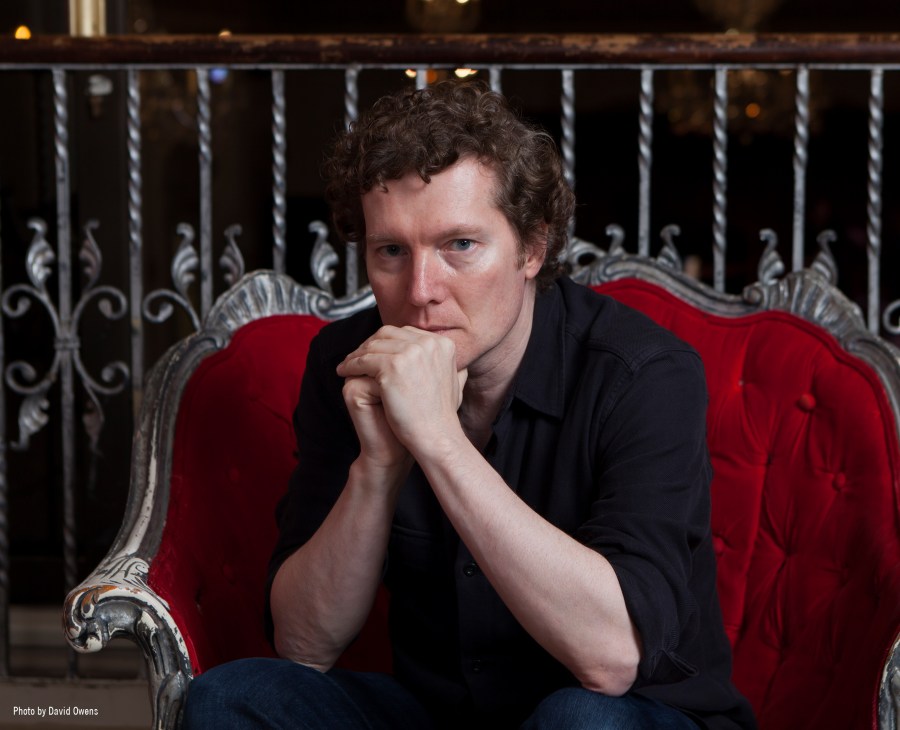
Years ago, when I was 16 I found an organization that helped with my curiosity about progressive rock, it was called the Classic Rock Society, they were based in Rotherham (a short bus ride away from the small village I lived in at the time) and they met on a Wednesday night in a pub. Beer and prog, all within a short distance from my front door, what was not to like?

One night at the pub talking about prog music in 1995 a friend lent me an album by a band I’d never heard of called No-Man, the album was Flowermouth, and it’s mix of shifting sounds and emotive vocals was my first introduction to the works of Mr Steven Wilson and Mr Tim Bowness, and I was hooked.

Luckily I got to see Porcupine Tree not so longer afterwards, but despite following No-Man and Tim Bowness solo work, it took me slightly longer (nearly 20 years in fact) to see Tim live, with Henry Fool at Eppyfest in 2014, followed quickly by seeing him at the Louisiana in Bristol in 2015.

Continue reading “Tim Bowness Lost in the Ghost Light”

Two more from the Elephant


Finally I have unpacked the trunk of album reviews that backed up last year, and this reviews catches up on two albums Bad Elephant released back in October last year, and which are worth having a listen to, before they unleash the new Tom Slatter album on the unsuspecting world.

bem035-album-cover

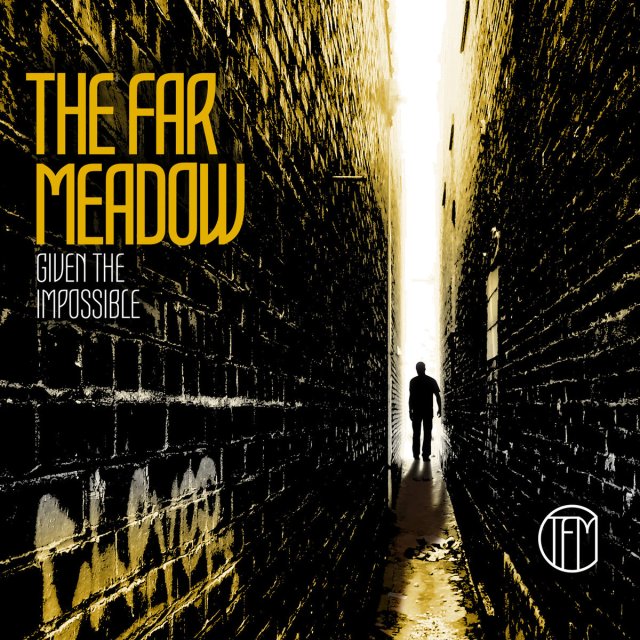
The Far Meadow: Given the Impossible


Formed back in 2014 this is the first album on Bad Elephant from London based 5 piece, The Far Meadow and was released back in October last year.

As is common with so many of the wonderful artists signed to Bad Elephant, the band defy categorisation, veering from traditional progressive sounds to folk and back with a dazzling array of performances and sounds that make this an excellent album to listen to.

Continue reading “Two more from the Elephant”

Two different continents, two different styles

2016 has been a random and rather crazy year for me, I started the year ostensibly living on my own in a one bed rented flat in Bedminster, and now find myself at the end of the year living with the love of my life, and three cats in a flat that I now own on the edge of Bristol with wonderful views over the countryside and hills to Dundry, however the move (which I may have alluded to previously) has been the most stressful move I have ever done, and as a result I have received albums from bands over the year that I may have been lax in getting finally reviewed and updated here.

Again I apologise for this, and to paraphrase John Lennon, ‘Life is what happens whilst your busy making other plans’

I don’t do these reviews professionally, like the hugely talented Progarchy team of which I am but a small cog in a mighty wheel, we all do this for the love of the music, and if just one person buys a record and loves it based on my words then I feel like I’ve done a good job. But enough about me!

Here then is a round up of two releases from the opposite sides of the world that have made it past my door and which I feel you guys should really get into your ears!
napiers

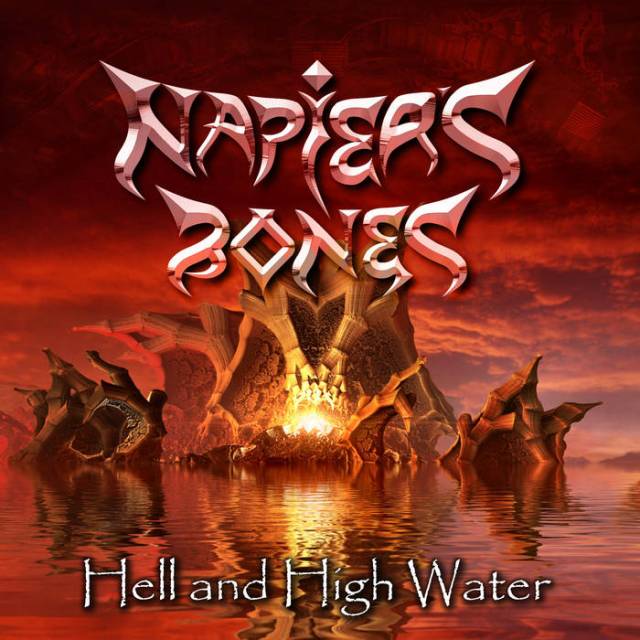
Napiers Bones: Hell and High Water

https://napiersbones.bandcamp.com/


Released back in March, and building on their two previous cracking albums 2014’s The Wistman Tales and 2015’s Tregeagles Choice, this talented duo of Nathan Jon Tillet and Gordon Midgely focus squarely on storytelling and the classic big prog sound.

Their latest opus Hell and High Water is split into two distinct concepts, the first three tracks focuses on s paranormal investigator and is based around the ruined Holy Trinity Church of Buckfastleigh (the Napiers Bones boys love building on existing mythology and weaving it into their wider storytelling, this really roots the music and gives them something to build on), whilst the final 4 tracks are all based around the flood legends that have cropped up throughout history and takes us to Yorkshire and Lake Semerwater.

Their albums with tales rooted in geographical and local mythology are ripe for a guidebook!

The first song cycle focuses on a Paranormal investigator and the mysterious Squire Cabell and Buckfastleigh Holy trinity, and weaving in the contemporary obsession with reality TV, the constant search for something else beyond the pale and human scepticism and the need to answer every question, creates an intense and dynamic story.

The opening track An Air of Mystery is powerful classic rocker with some great vocals from Nathan, whilst Broadcasting live has some fantastic instrumental sections and great guitar and keyboard work, considering this is the work of a duo, and is totally home produced this doesn’t sound like it, and their musical skills are fully up to their ambition to realise the concept.

Like it’s predecessor Tregeagles Bones, the first song cycle is performed as much as a drama as a song, and Nathan’s performance and Gordon’s music is perfectly judged and brilliant executed. The finale, the 10 minute epic No Return is reminiscent of the powerful story cycle albums by Ayreon, and wraps the story up in true style, with some beautifully performed atmospheric keyboard parts.

Onto the second part of the album, this is an album of contrasts and the two different concepts on display here, show two sides to Napiers Bones, and are a subtle blend of both the dark and the light.

The 4 part song cycle that makes up the second half of the record with it’s mythology reflects the best of folk rock, and the multilayered and musically complex No Room at the Inn is another one of their beautifully executed story songs, pulling together some fantastically haunting keyboard sounds and Nathan’s passionate vocals.

The wonderful Rain Down with it’s fantastic lyrics and great musical moments leads into the closing A Wake in Yoredale which rounds off the second part of this majestic album.

Napiers Bones are in their nature story tellers and they use their music to facilitate and take us with them on their tales, years ago you could imagine them sat in low roofed pubs trading tales for tipples, now you can take them with you and engage in their immersive songwriting.
uvtraveller

UVTraveler: Stormchaser

www.uvtraveler21stc.com


American heavy progressive rock duo Randy Sepe and Wade Greenwood recently released this, their second album (following up 2014’s debut UVTraveler) and it takes their blend of progressive and classic rock into another dimension.

I know fellow Progarchist Brad Birzer refers to me as the English progmaster, and I will admit that is where my interest in the genre was originally piqued and where my first love lies, but there is lots of exciting new prog coming from all over the globe, and to my mind UVTraveler are one of the best the states has to offer.

Producing a fine blend of classic prog whilst sitting on the harder and heavier side of the fence, they mange to pull the two influences together to create a musical union, and with the title and cover art, is there a homage going on here to Deep Purple/rainbow guitarist Ritchie Blackmore?

In fact these influences run through the music as well, with the powerful and brooding Waiting for an Answer having some fantastic vocals from Wade that are reminiscent of Ronnie James Dios work with Black Sabbath in the early 80’s.

This doesn’t mean they are mere copyists however, after all most musicians are influenced by someone else, and it’s how you use that influence and weave it into your art that shows your mastery of your craft.

Sepe and Wade are talented enough to build elements of the heavier end of metal into prog and retaining their own musical identity that was forged on their debut album (which is also well worth a listen)

They are also masters of the blend of light and dark with If (based on the Rudyard Kipling poem) providing a contrast to the opening power of the first two tracks, with a more classily acoustic led piece that showcases Sepes versatility and again acts as a springboard for Wades impressive vocals, proving that like all the best singers he can turn his hand to the softer side of music without compromising his sound.

With guest musicians on the album fleshing out the sound, with the power of Michael Schiavo on bass and Greg Annunziata on drums, the opening rocking Deaths Call is a calling card for the album, and the rest of the tracks more than deliver on the opening promise.

The 70’s vibe runs through this record like a groove in vinyl, and tracks like a reworked version of their own When the Sun gets in your Eyes has a power and swagger of its own, whilst the closing duo of Calm before the…. provides an technically complex melodic instrumental introduction to the closing title track Stormchaser (with a nice play on words there as well, who says modern albums aren’t structured in a well thought out manner) which with it’s big riffs and fantastically catchy chorus brings the big heavy prog bands of the seventies to mind again, however this is no copy, more an honest homage blending the best of UVTraveler with some fantastic nods to bands like Led Zeppelin or Deep Purple.

There is no curse of the second record here for Randy Sepe and Wade Greenwood, indeed they have taken all the elements that made their first album so good, and built on them, progressing their sound, and refining their style into another cracking slice of heavy prog.

soundstreamsunday: “Live in Japan 1993” by David Sylvian and Robert Fripp

sylvianfrippFinding abandon in structure is what rock is about, but it’s rarely approached with such intentional power as on the live sets that Robert Fripp and David Sylvian played in Japan in 1993, which make up the album Damage and the film presented here, Road to Graceland: Live in Japan 1993. It’s not surprising that one of the great live albums in rock would come from a duo whose very distinct songwriting and voices meshed with such ease, but the precious vein they mined yielded such a small set of work and such little attention — after all, art rock/pop in the early 90s was in a far different place in the popular consciousness than it had been a decade earlier — that the record is nearly invisible today even if you’re fairly well-acquainted with the careers of both men.  This is neither In the Court of the Crimson King (or Discipline) or Gentleman Take Polaroids (or Rain Tree Crow), but a striving towards something that summed higher, capturing two artists with deep histories and still in their prime.  Fripp’s work here, as always, is masterful; a guitarist whose technical ability is matched by a uniquely creative sound and spirit and generosity, he creates space for Sylvian’s profoundly expressive voice and writing.  Sylvian, in turn, doesn’t fill the frame either, yielding his significant presence when necessary to the outstanding band he’s playing with.  This is my favorite pairing of Fripp with a vocalist, because as much as I like the work he did in King Crimson with Adrian Belew in the 80s and John Wetton in the 70s, he and Sylvian have a chemistry that gets to the center of their strengths, and, appropriately — given Fripp’s brief but incendiary participation in the Berlin Trilogy — summons the work of Eno and Bowie.  With Fripp familiars Trey Gunn and Pat Mastelotto, and Michael Brook on additional guitar, the band kills, in a performance as intimate and deep as the emotions and moods that Sylvian and Fripp stir.

soundstreamsunday archive and playlist

soundstreamsunday: “Warszawa” by David Bowie

bowieenoForty years on it seems like it must have been inevitable, obvious even, the crossing paths of Iggy Pop and David Bowie and Brian Eno and Robert Fripp, in service to Bowie’s Berlin Trilogy.  In Act Two of their collective careers, they became in the late 1970s the center of a wheel spoking to progressive rock, art rock, post punk, and new wave, the albums coming out of Bowie’s residency in Berlin among the richest, most genre-defying rock records created, documents of a grasp catching up with its reach.  “Warszawa” is from 1977’s Low, the second Berlin collaboration (after Pop’s The Idiot, for the trilogy is really a quintet, taking into account the records Bowie produced for Iggy during this period) and a document of Bowie’s dissolving spirits.  Here is where he throws the hammer at the mirror, where all his past characters like Ziggy and the Thin White Duke are shown the door.  The sound is fresh, with Eno, coming off his work with Cluster, applying broadly-stroked synth washes straight from the school of Moebius and Roedelius, encouraging Bowie to approach the music with deliberate freedom.  The result, like on the song “Sound and Vision,” is raw and buoyant.  It can also be wild and studied, as on the constraint-driven “Warszawa,” an exercise in composition employing  Eno’s planned accidents and oblique strategies.  In it, as on much of the album, you can hear an origin story of bands like U2 and Echo and the Bunnymen and Joy Division/New Order, and a second-wind promise Bowie himself would continue to fulfill, off and on, for the rest of his life.

soundstreamsunday playlist and archive