Exercises in Futility

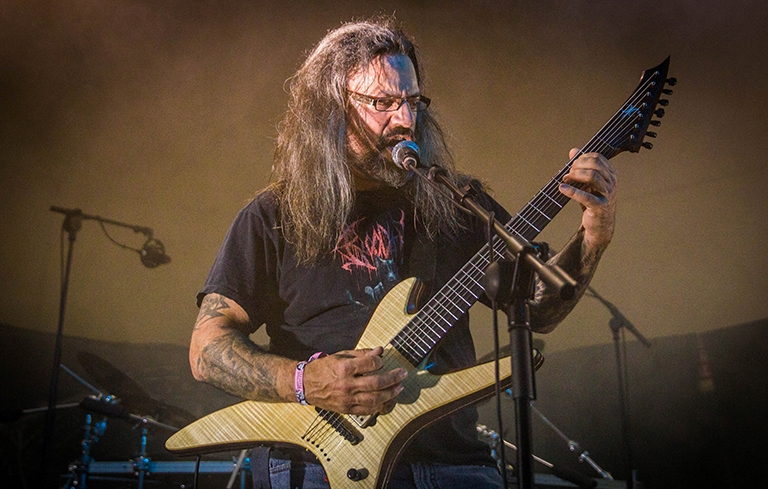
When that punk coarseness is braided with some outside influences, black metal becomes something more. Whether it’s ‘In the Nightside Eclipse’, ‘Nemesis Divina’ or the stunning ‘De Mysteriis Dom Sathanas’ — it’s crassness with sophistication, that has elevates the genre to unusual heights. Exercises in Futility is not completely rooted in the 90s, but they channel that very sensibility, and same crudeness with atmospheric elegance.

Mgła mellows that black metal fury, almost like they applied some post-metal filters to a Burzum sound. With that constant strumming interleaved with adequate doses of tremolo picking and blast beats, the sound here becomes more streamlined. In short, there are no jarring temporal switches, but more tempting progressions. It’s not an all-out melodic assault like Dissection or Watain, but a more contoured, and structured aggression. But, quite like the black metal greats, Mgła is also moving the genre forward, beyond the confines of its Norwegian creators.


S. Bollmann [CC BY-SA 4.0], via Wikimedia Commons

Pleiades’ Dust

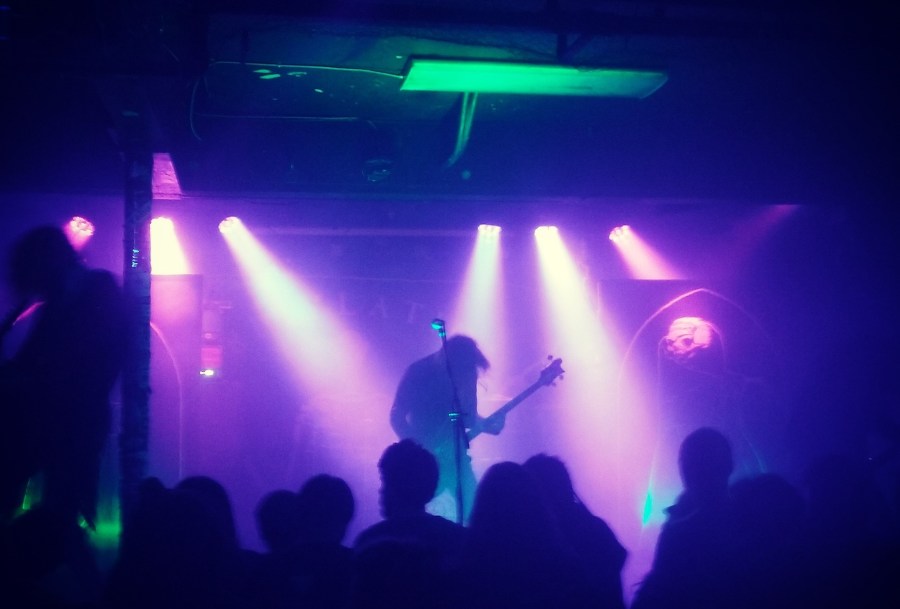
There are bands which reinforce your conception of a symphony, and then there are the ones which broaden them. Gorguts is willfully rooted in that second category. Luc Lemay’s compositions are intimidating, and at the same time curiously captivating too. It might take a while to comprehend this level of discordance. But, quite like Meshuggah, or early Slayer, Gorguts is forging new neural pathways. In other words, they are creating a totally new classification for what we call an elegant symphony. Subtly, but effectively influencing how we perceive music itself.

If Obscura is too intimidating, then Pleiades’ Dust might be that ideal prescription, something that helps us mere mortals comprehend this transformative force.


Rubén G. Herrera [CC BY-SA 2.0], via Wikimedia Commons

Metal Moments, 2018 Edition

“I live my life a quarter mile at a time. Nothing else matters: not the mortgage, not the store, not my team and all their bullshit. For those ten seconds or less, I’m free.” – said that guy from ‘The Fast and the Furious’. But it applies to all sorts of fanatics, whether it’s music or cars. Try living a concert at a time – and for those ten seconds of fast and furious deathly riffs, you are free. For some, a year can be simply about those collective 10 second memories.

Few months ago on my way to a Neurosis concert, I actually ran into their bassist Dave Edwardson. For a second it was difficult to believe. Fifteen feet away from crossing each other, I just stopped and looked at him. He noticed that puzzled look on the guy wearing Vader T-shirt, and simply acknowledged with a nod and a friendly smile. If this was a fortunate accident, running into Thomas Gabriel Fischer at an L.A. Koreatown Denny’s is what some might call a windfall. And this was the morning after we saw him perform a full Celtic Frost setlist. “Circle of the Tyrants” played live – as good a metal moment as it can get.

Entombed was among the most stunning live experiences of 2017, but was sort of quickly eclipsed by this year’s Easter Weekend tryst with Mayhem. Watching De Mysteriis Dom Sathanas playing out live – is as good a life moment as it can get?

But it’s not always just about epic moments, sometimes it can be epic with a touch of weird. After all metal sub-culture resides right at the fringes of civic society. For instance, Krisiun opening for Suffocation was an absolute high, but watching these death metal greats at a Salsa bar was a tad unusual. Outside the venue it was a richter scale 5.5 earthquake — walls vibrating and shutters rumbling with every dissonant note. The venue was simply not built for death metal. Well, if this was just whimsy, Dying Fetus show was positively bizarre. Midway into their setlist, Sean Beasley said — “Everyone’s welcome on stage, let’s f*** this sh*t up”. Of course, after that announcement, stage diving was off-the-charts! It was like watching an extreme metal video, people swarming on to the podium, but only this time it is unscripted. Madness went on till the event organizer came on stage and pleaded.

Unexpected moments can also sometimes leave a deeper mental imprint, and they need not be Dying Fetus level audacious. It can be just about drinking À Tout le Monde beer (Megadeth beer) and crashing a Red Fang show, even though you have tickets for Armored Saint. Or headbanging to Mastodon in an open air arena, while enduring some pacific northwest drizzle. Or all those moments when you are reminded, metalheads are fortunate for affordable tickets, and thoroughly spoiled for getting to experience legends like Paradise Lost and Morbid Angel up-close at small venues.

But there are rare disappointments too, like the new Amorphis record, and how deeply detached it is from their Black Sabbath roots. Or that moment when you read about the next leg of Slayer’s “final” tour once again passing through town – but this time only with a slightly different set of opening bands. But, highs outweigh the lows, thanks to engaging conversations and stunning riffs.

Metal X-mas and a Heavy New Year to all!

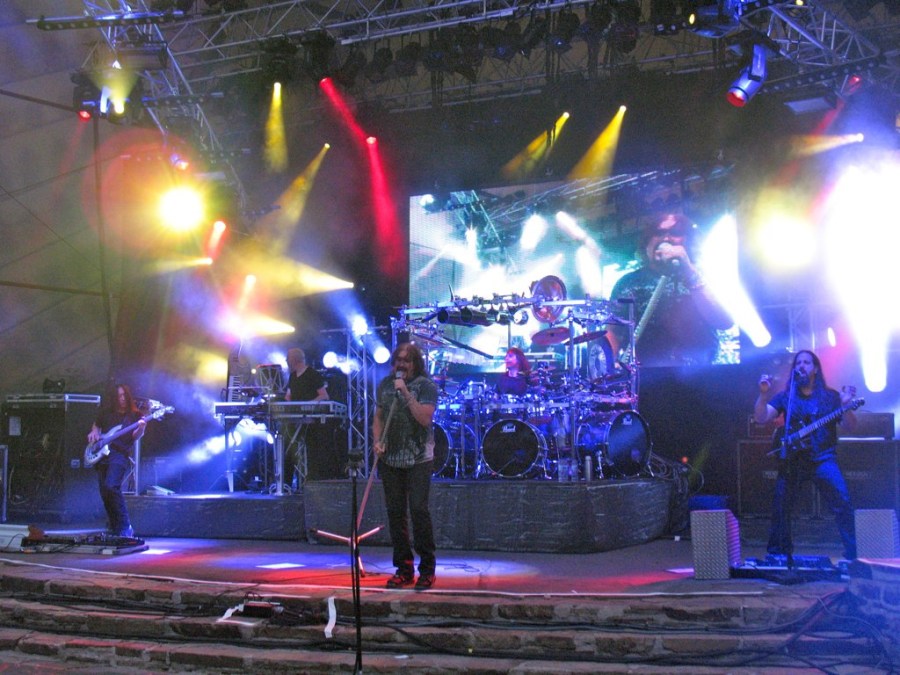
[New Video] DREAM THEATER – Untethered Angel

Looks like they are sticking to the tried-and-tested — sound!

Stéphane Gallay [CC BY 2.0], via Wikimedia Commons

Brave New World

Today marks 45 years of The Wicker Man! Did you love this classic?#horror #classichorror pic.twitter.com/he3nzRzThB

— Famous Monsters (@FamousMonsters) December 6, 2018

Quoting a post on Progarchy:

“For a song named after the early 70s British horror flick, The Wicker Man might seem deceptively upbeat”

Mahesh Sreekandath's avatarProgarchy

Superficial differences aside, ‘Brave New World’ is quintessentially Iron Maiden. Those cultured references to English literature, sober yet deceptively dark overtones, and compositions almost bordering on progressive metal. Not to mention the galloping bass lines, rich melodic riffs and operatic vocals – basically, all Iron Maiden signatures are exhibited here.

For a song named after the early 70s British horror flick, The Wicker Man might seem deceptively upbeat. But, Brave New World, the title track is a tad disturbing —“Dying swans twisted wings, beauty not needed here.” — seems to mirror Aldous Huxley’s own dystopian vision.

Accessible, and threateningly catchy choruses – “Nowhere to run, nowhere to hide, you’ve got to kill to stay alive” – illustrates one of those reasons why Iron Maiden is still that dominant heavy metal life form on this planet. How a whimsical – “Is this a new reality. Something makes me feel that…

View original post 317 more words

Decibel Metal & Beer Fest: Los Angeles

Decibel Link


Looking forward to L.A. But earlier this year, a fellow Progarchist at Philladelphia:

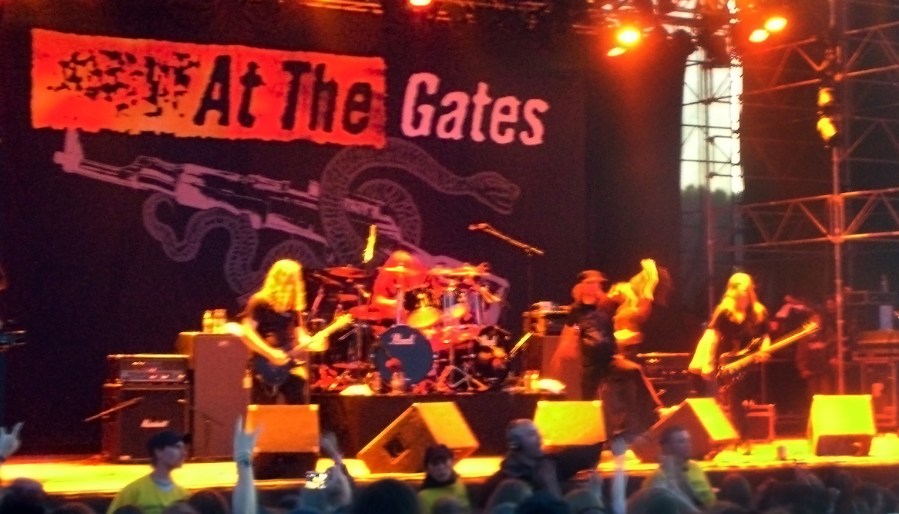
Except for some metalheads and lost travellers, an otherwise crowded Philadelphia streets were absolutely deserted by Sunday. At the Gates on Easter Eve and those picturesque Old City images on a drizzling Sunday morning – Decibel fest Day 2 had the best of preludes.


Iron Maiden

Almost 40 years!

Actually I went back and read the ‘The Rime of the Ancient Mariner’ because of Iron Maiden, didn’t pay much attention to that chapter during middle-school years. Nor would I have bothered about Aldous Huxley’s works or the Greek mythology of Icarus, or paid attention to Winston Churchill’s famous WWII speech. The list is endless. Folklore, history, culture, mythology – Iron Maiden discography was probably better than all the high school textbooks, combined. So, if not for this band, some of us metal-heads might be even less civilized. Guess its music at its entertaining-enlightening best.

The band also fits the ‘gateway drug’ definition, accessible and yet heavy. Extended exposure simply leads to obsession with heavier sounds. Steve Harris bassline along with that dual guitar harmony, quite an enticing blend of grind and melody – innocent minds hooked forever.

Listening to “Strange World” or “Running Free” is actually like time travel, to simpler days, when we weren’t buried beneath ten thousand metal sub-genres. I am not advocating romanticism for good ol days. But, sometimes it’s just healthy to head-bang to “Wrathchild”, instead of three dozen time signatures per sec inhumanity.

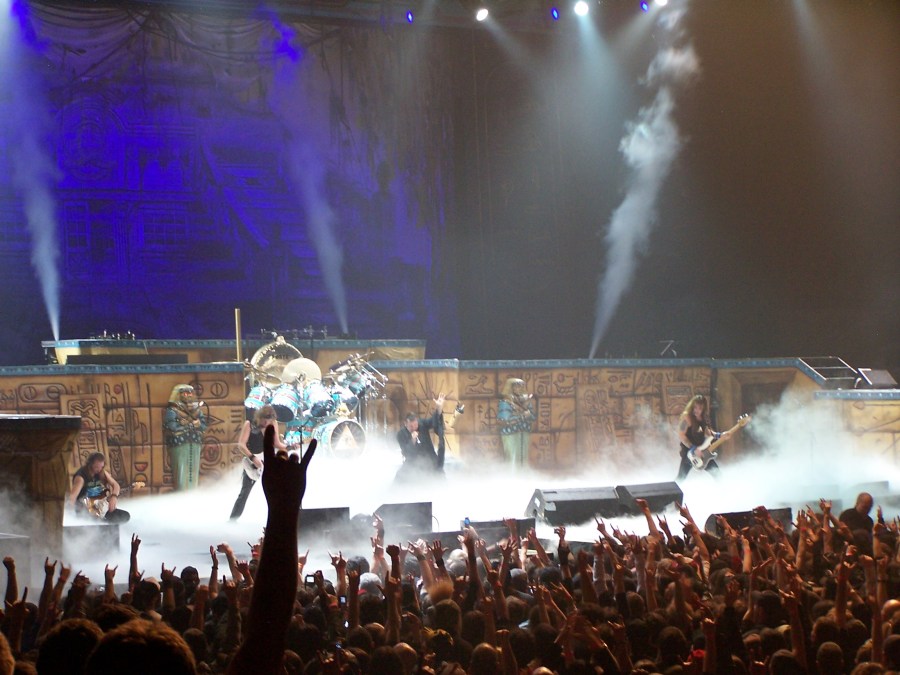
My first Iron Maiden concert was probably the most brutal one too, took a lot of bruises to reach the second row. Not to mention, the dizziness due to tropical summer and alcohol induced dehydration. But, even during the encore, the energy was off the charts. Not every day you get to hear a thirty five thousand strong coordinated chant — “Hallowed Be Thy Name” — “Hallowed Be Thy Name”…. Steve Harris and Bruce Dickinson both just stood there, stunned at this spectacle. You can tell this was unique; these heavy metal veterans were completely overwhelmed by the response. At least for me, in spite of the countless concerts over the years, this remains one of those vivid heavy metal moments.

De-fexxx666 [CC BY-SA 3.0 or GFDL], from Wikimedia Commons

Lightning Round Reviews: November 1-9, 2018

In case you hadn’t noticed, the last quarter of 2018 has put paid to any perceived drought of new releases & reissues.  Capsule reviews of what I’ve been listening to since the first of this month follow the jump; albums are reviewed in descending order on my Personal Proggyness Perception (PPP) scale, scored from 0 to 10.

Continue reading “Lightning Round Reviews: November 1-9, 2018”

Psychologists and Death Metal

Ran into this Scientific American article on Death Metal.

“Those positive emotions, as reported by death metal fans in an online survey that Thompson and his team conducted, include feelings of empowerment, joy, peace and transcendence. So far, almost all of the anger and tension Thompson has documented in his death metal studies has been expressed by non-fans after listening to samples of the music.”

Probably, psychologists should be studying the non-fans, on why they are unable to decipher that grand symphony.

From a related Progarchy post.

The most complex of patterns is comfortably buried beneath a wall of rich chaotic sound. So, in spite of being substantive, intellectually and physically demanding, the uninitiated simply may not have the ear. We can appreciate the textures and the grand symphony only with some ability to abstract away that pulverizing sound. Actually mandates higher levels of cognition – sort of the mark of an ageing and civilized genre.


By Äppelmos [CC BY 3.0 ], from Wikimedia Commons

Still Life

Another anniversary.

Still Life released on October 18th, 1999.

Below write-up is eleven years old, and slightly edited for my present sensibilities. But the album is still timeless.

Opeth’s ‘Still Life’ – that perfect arrangement of death, progression and blues. Always listen to this record uninterrupted from “The Moor” to “White Cluster”, the band simply extends the boundaries of progressive death. There is always that one album which defines the artist and forms the cornerstone of their whole music. But with “Still Life”, Opeth has pushed their own creativity to insane heights — of near impossible emulation.

Here the band actually transcend the normal decorum of mathematics, high (means progressive) and low (means death metal) mixed together isn’t a big nothing. Akerfeldt must have been simultaneously strung up on Alcohol and grass when he wrote ‘Still Life’. Mind you, the record doesn’t hit you hard, instead it methodically seeps into every iota of musical nerve and gets ingrained there. Been listening to this band for over fifteen years and can convincingly claim this is the pinnacle of their prog death years.

“Still Life” has an ambiance which perfectly blends contrasting elements — those dank deathly growls, progressive riffs, bluesy folk acoustic melody, and clean vocals. It’s a sort of a real life musical analogy to Speedball – in other words, these songs simultaneously stimulates and depresses your brain. The beauty of this torment is simply beyond comprehension.

Lyrics are mostly grim, and when combined with the growls create an ambiance of a cold winter morning – probably spent in retrospection about lost life. It might be illegal to make music this inscrutable; it’s not easy when you are unable to comprehend how melancholy “Benighted” can effortlessly transition into the aggressive “Moonlapse Vertigo”, and end in a mournfully poetic “Face Of Melinda”. When the guitar slowly fades, you wonder if it can get any better.

Traces of early black metal are still felt in the last two tracks; otherwise the record sticks to good progressive death and progressive metal. One of the high points is the sheer quality of riffs that literally form the backbone. Compared to their early works, Still Life has lot more clean vocals and acoustic guitar, and integrates even more of a number of transitions between the textures they usually exhibit. This was also a quantum leap in terms of production quality and can perfectly satiate the musical appetite of any progressive metal fanatic.

Could never confront the idea of reviewing ‘Still Life’; no vocabulary prowess can do justice to such a complex form of musical expression. A rather obvious infatuation with this music might just heave me into a cavalcade of clichés, which I have hopefully refrained from ’til now.


By Grywnn [CC BY-SA 4.0 ], from Wikimedia Commons