
In Concert: “And Toto, Too?” “Toto, Two!”

Toto at Frederik Meijer Gardens Amphitheatre, Grand Rapids Michigan, August 24, 2018.

Toto’s sold out my local outdoor shed twice in the past three years.  Last time through, they stacked the deck, playing plenty of hits and radio favorites.  This year, with the anniversary compilation 40 Trips Around the Sun to flog, they took more chances with a deep-cut setlist, a semi-acoustic storytellers interlude, and extended displays of their fearsome chops.  Riding a fresh wave of Internet love, they could do no wrong for the hyped-up crowd.

And the same held true for me; I’ve always had a soft spot in my heart (and possibly my critical faculties) for Toto.  A posse of Los Angeles studio aces melding Steely Dan’s shuffles, Boz Scaggs’ blue-eyed soul, crunchy proto-Van Halen guitar and proggy synthesizer fanfares, with the mission statement (from founding drummer Jeff Porcaro in Rolling Stone) “craft is content”?  No wonder rock critics hated their guts, especially when when they got triple platinum sales out of the box.  Their goal was to make sleek, catchy pop with a touch of musical ambition, get on radio and move records — not bare their souls, change the world, or even necessarily write sensible lyrics.  There’s an odd,  appealing purity to that aim, no matter how calculated the strategy.

Top 40 radio courts a different sound these days, but Toto still has a knack for the killer hook; kicking off, new songs “Alone” and “Spanish Sea” were every bit as engaging as the singalong version of “Hold the Line” and Toto IV’s “Lovers of the Night” that they framed.  Following spirited takes of tracks from forgotten-stepchild albums like Tambu and Turn Back, the band lit the fuse on Kingdom of Desire’s funky instrumental “Jake to the Bone;” guest keyboardist Dominique “Xavier” Talpin (subbing for founder David Paich) and guitarist Steve Lukather stoked their lengthly solos to the boiling point, while synth whiz Steve Porcaro and the rhythm section (Shem von Schroeck on bass, Shannon Forest on drums, Lenny Castro on percussion) simmered underneath.  Building on the momentum, “Rosanna” was a foregone, happily welcomed conclusion to the first half, with singer Joseph Williams (the John Williams’ son!  Really!) and sax man Warren Ham helping bring the crowd to their feet.

The storytellers interlude — with everyone sitting on stools and Lukather playing acoustic guitar — had its charms, even though the six selections (including Porcaro’s “Human Nature” from Michael Jackson’s Thriller) were truncated to keep things moving.  Ramping up again, the band dove deeper into their catalog, holding the audience’s attention even through obscurities like the Dune soundtrack’s impressive “Desert Theme”.  But in the end, past was all prologue; the moment Lukather shouted, “Are you ready for that song?” and Castro and Forrest launched the polyrhythms of “Africa,” Meijer Gardens went joyously, deliriously nuts.  It was gonna take a lot to drag 2,000 fans away from that moment; they were all in — dancing, singing along, clapping during Castro’s exhilarating solo, chanting back and forth vocals with Williams, responding with a full-throated standing ovation.  Hard to beat an extended moment of pop ecstasy like that — even if you’re frightened of this thing that you’ve become.

One quick and grungy cover of Weezer’s “Hash Pipe” later (sadly, without Rivers Cuomo or “Weird Al” Yankovic in sight), Toto was done, the crowd went home happy, and my streak of satisfying shows in 2018 was unbroken.  Check out another review of the show, with an extensive photo gallery, here.

Setlist:

  • Alone
  • Hold the Line
  • Lovers in the Night
  • Spanish Sea
  • I Will Remember
  • English Eyes
  • Jake to the Bone
  • Lea
  • Rosanna
  • Storytellers interlude:
    • Georgy Porgy
    • Human Nature
    • Holyanna
    • No Love
    • Mushanga
    • Stop Loving You
  • Girl Goodbye
  • Lion
  • Dune (Desert Theme)
  • While My Guitar Gently Weeps
  • Make Believe
  • Africa
  • Hash Pipe


— Rick Krueger

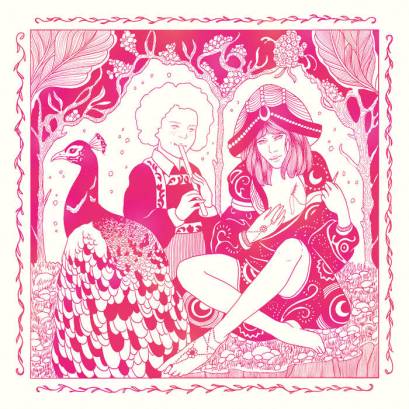
Bon Voyage: Melody Prochet’s Fantastic Journey

a1708157068_16

This summer saw the long-awaited second release from Melody’s Echo Chamber: Bon Voyage arrived after five stop-and-go and, at times, tortuous years. On its June 15 release date Melody Prochet (vocal, guitar, synthesizers, violin, viola) wrote on her Facebook band page,

Today is a day life forced me to give up waiting for… ‘Bon Voyage’ is a little monster I hope will find it’s home in some of your hearts and…if not soothe, will resonate somehow positively…

So it comes down to listeners interacting with this beast, a theme-park ride of a record, while the artist, one imagines, pulls the covers over her head. First off, it is little, clocking in at a compendious 33 minutes. But given its twists and turns, its density and scope, the brevity of the work allows repeat listens to work out its strange but satisfying logic.

As I told a friend: I can’t imagine a Syd Barrett or Brian Wilson or Todd Rundgren or Wayne Coyne not really liking this record.

Prochet (b. 1987, Puyricard, France) began working on her sophomore project and releasing tracks (e.g. “Shirim”) in 2013. Rumor has it she threw away some of the material. Then last year she was involved in an undisclosed accident resulting in serious injuries. Her fans despaired until Bon Voyage was dropped in time for the summer solstice.

Melody’s Echo Chamber (2012) was readily classified as “psych pop.” But for those who tire of musical taxonomies Bon Voyage is as open borders as they come. The opening track “Cross My Heart” begins with composite acoustic guitar chords followed by a swelling string arrangement, a mid ’60s Wilsonish verse, then a beat box section folding into a flute and percussion-driven jazz passage embellished with some fanatical bass lines. The lyrics here, as throughout the album, flow freely between English and French. We’re escorted back to the opening chords for a reprise of the main (?) verse and a riff-laden, cinematic flourish.

As soon as “Breathe In, Breathe Out” drops a power rock groove the listener’s head-bobbing is interrupted by a trance section before the track accelerates again to its finish, the opening themes reworked but almost unrecognizable in the sonic whiplash.

Prochet cites composer Olivier Messiaen (1908 – 1992) as a favorite, and perhaps what we catch on this record are flecks of his emphasis on color and unusual time signature.

The first of two foci on this record is “Desert Horse,” pairing a dark Middle Eastern groove (including on old Black Sabbath riff) with a bright but plaintive chorus,

So much blood
On my hands
And there’s not much left to destroy
I know I am better alone

…except the isolation that birthed this record finds its emotional epicenter in the epic “Quand Les Larmes D’un Ange Font Danser La Neige.” Ironically it’s among the more conventional and readily accessible tracks on the album, even at seven minutes. Imagine the Bee Gees not taking that disco detour…

[spoken word] …it comes through the window like a whistle or a whisper under the bed and little children think that the monster —

Angels, aching
Keep smiling
Ain’t no karma, only love
To punish those with rotten heart

Good to have Melody’s Echo Chamber back — and this creature on the loose.

“Eight Miles High” — Three Views

The Byrds’ “Eight Miles High” was released as a single on March 14, 1966, eventually reaching number 14 on Billboard’s Hot 100 chart.   Influenced by Indian sitar master Ravi Shankar and John Coltrane’s Africa/Brass album, it was one of the first (if not the first) glimmerings of psychedelic rock.  And thus a progenitor of prog?  I think so.

Check out three views of this pioneering tune for yourself.  First, a Byrds promo appearance lip-syncing for an unknown TV show.  Note David Crosby’s brilliant outfit, complete with Russian hat:

Of course, “Eight Miles High” has been covered numerous times.  Back in 1988, it was the one of the key tracks on To The Power of Three, the collaboration of Keith Emerson, Carl Palmer and Robert Berry.  How Eighties is this?  Check out Berry’s headless Steinberger bass!  Emerson’s keytar!  Palmer wielding a Dynacord electronic drum controller at the front of the stage!  Plus the, uh, dancers “playing” snare drums in the background.  Goodness!  (Though it does serve as a reminder that Robert Berry releases his posthumous collaboration with Keith Emerson, 3.2: The Rules Have Changed, on August 10.)

Three years later (ouch) in 1991, “Eight Miles High” was one of the cover tunes on Dave Stewart and Barbara Gaskin’s album Spin.  Since their 1981 version of Lesley Gore’s “It’s My Party” had snagged number one on the British single charts, Stewart and Gaskin had been bringing a thoroughly proggy attitude to the synth-pop duo format.  Spin is no different, mixing quirky originals with fresh takes on Rufus Thomas’ “Walking the Dog,” Joni Mitchell’s “Amelia,” Bob Dylan’s “Subterranean Homesick Blues” — and the Byrds.  One bonus feature of the album: the precocious pre-Porcupine Tree percussion of Gavin Harrison.  Check out the spectacular drum fill that kicks off this version!

Dave Stewart and Barbara Gaskin’s new album Star Clocks, featuring “eight Dave Stewart originals alongside a cover of an iconic 1960s song,” is out on August 17.  Pre-order it at Burning Shed.

Bonus track: Stewart & Gaskin’s samurai/Beach Boys/cathedral bells version of “It’s My Party,” with special guest video appearance by … Thomas Dolby?

— Rick Krueger

In Concert: On the Road with Utopia

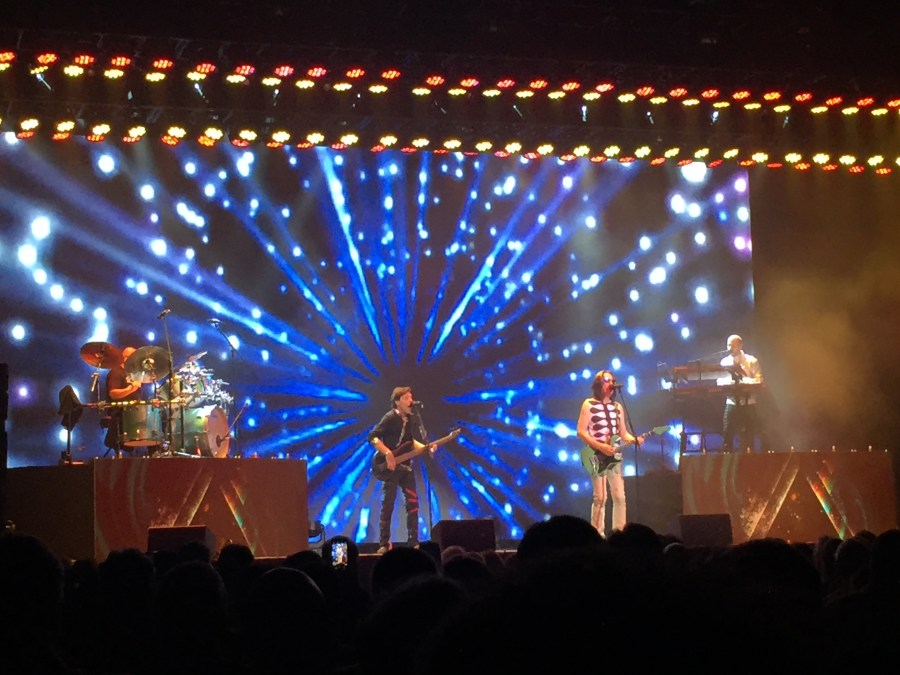
Todd Rundgren’s Utopia, 20 Monroe Live, Grand Rapids, Michigan, May 15, 2018.

Thirty minutes into their opening set, Utopia had played just three songs — the entirety of the sprawling “Utopia Theme”, a five-minute instrumental chunk of the half-hour epic “The Ikon” and the extended progressive soul workout “Another Life.”  Todd Rundgren seared and soared on guitar; Kasim Sulton dexterously laid down the thunder on bass; Willie Wilcox channeled the jazz drumming greats he grew up on; and tour keyboardist Gil Assayas adeptly covered piano, horn and synth parts originally done by three people.  All that, plus pin-sharp four-part harmonies.  No wonder that Rundgren’s first words to the audience were, “we call that ‘The Blizzard,’” before Utopia stepped “out of the notestream” with a hard-rocking take on The Move’s “Do Ya.”

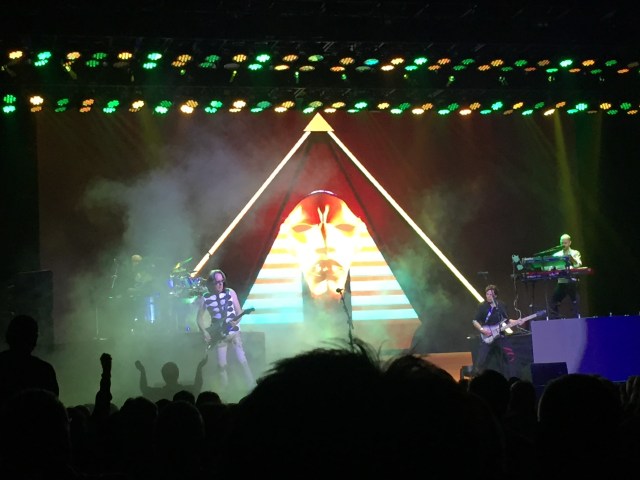
Surprisingly for a tour marketed to fans of classic pop-rock (their first in 33 years), the first half of Utopia’s show leaned on proggier repertoire; the precision-tooled flurries of notes kept coming, whether packed into tight unison licks or splattered across plentiful solo slots.  There were lots of stellar vocal moments too: Rundgren traveled effortlessly across his multi-octave range on “Freedom Fighters” and “The Wheel”; Sulton played a genial McCartney to Todd’s acerbic Lennon on the gritty “Back on the Street” and the yearning “Monument”; and the choral build of “Communion with the Sun” fit perfectly with the giant pyramid & sphinx projected on the back screen.  All in all, impressive, well-wrought stuff, performed with enthusiasm and landing with maximum impact.

IMG_4883.JPG

Continue reading “In Concert: On the Road with Utopia”

Remembering the Genius of Porcupine Tree

2018 release
The 2018 release.  2 CD/1 Blu-ray from Kscope.

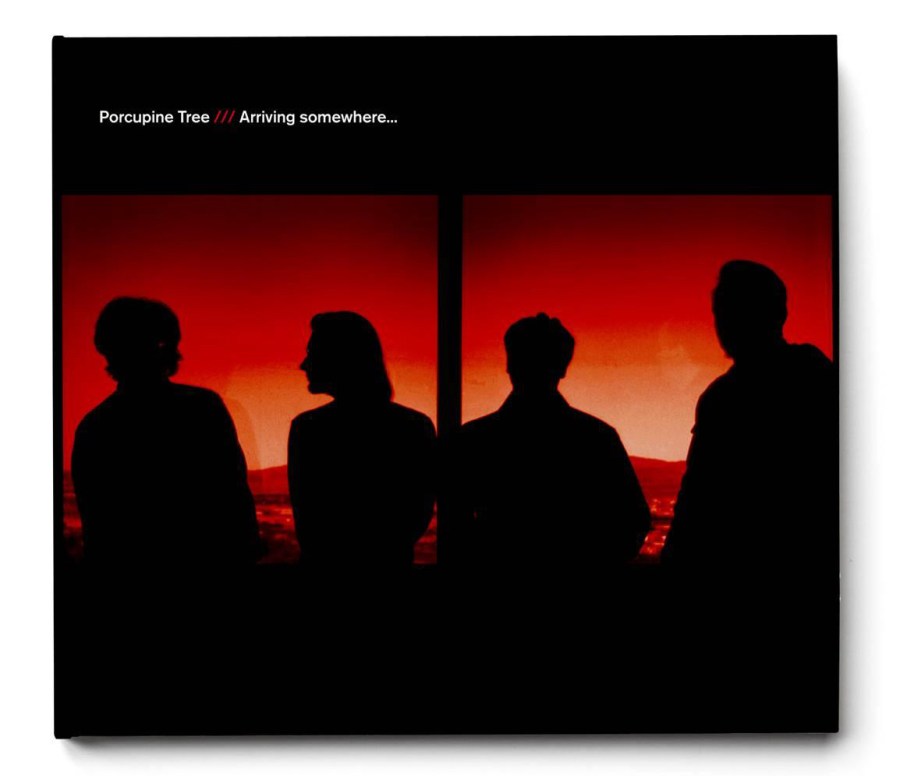
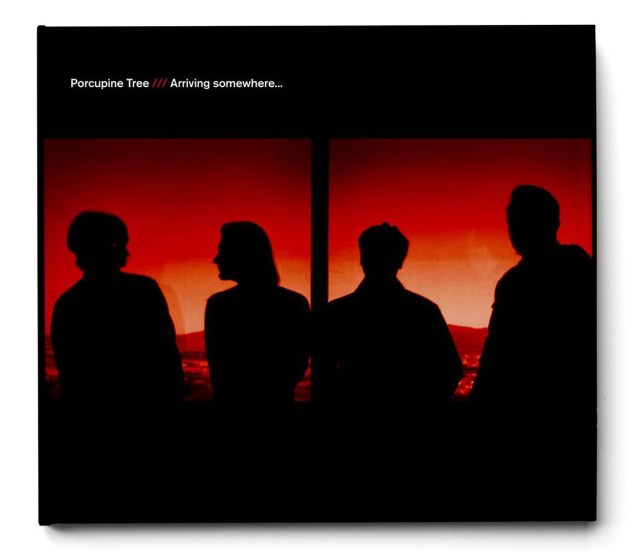
Porcupine Tree, ARRIVING SOMEWHERE. . . (Kscope, 2018).  2 CD/1 Blu-ray package.  A re-release of the 2007 title on DVD.

Though it originally came out over a decade ago, Porcupine Tree’s ARRIVING SOMEWHERE . . .–its live show from Chicago, October 11-12, 2005–has just been re-released by Kscope in a very nice 2 cd/1 blu-ray book.

When it first came out on DVD in 2007, I had purchased it immediately. Of all the concerts I own on varous forms of video, ARRIVING SOMEWHERE . . . has been in constant play, rivaling only Rush’s TIME MACHINE and Talk Talk’s LIVE IN MONTREUX for most played.

Now, having it on CD and blu-ray reminds me yet again how incredible Porcupine Tree was in the first decade of this millenium. Admittedly, between 2001 and 2010, I was rather obsessed with the band. To me–all pre-2009 and, thus, pre-UNDERFALL YARD–no other band had reached as far and as perceptively as had Porcupine Tree. The band seemed the perfect fusion of prog, pop, and psychedelia–in its music as well as in its lyrics.

Continue reading “Remembering the Genius of Porcupine Tree”

Rick’s Retroarchy — Procol Harum, Still There’ll Be More: An Anthology, 1967-2017

Take a Dylanesque verbal collage by lyricist Keith Reid; marry it to instantly appealing melody and harmony — passionately sung and played by R&B pianist Gary Brooker, drawing equally on Baroque grandeur (Bach’s “Air on the G String”) and dramatic soul (Percy Sledge’s “When A Man Loves A Woman”).  Then garnish with Matthew Fisher’s Hammond organ counterpoint.  The result: “A Whiter Shade of Pale,” Procol Harum’s first single, a defining hit of 1967, and one of progressive rock’s most influential precursors.

You can argue Procol Harum (Brooker, Reid, drummer B.J. Wilson and a shifting supporting cast — notably Fisher and guitarist Robin Trower) never topped their debut, either artistically or commercially.  But they made excellent music for a decade, with reunions every 12-15 years after that — thirteen fine albums that consistently engaged the mind, gut and heart. The latest installment in Procol’s current reissue campaign, Esoteric Recordings’  Still There’ll Be More: An Anthology, 1967-2017 , is the long-overdue box set this band richly deserves.

Continue reading “Rick’s Retroarchy — Procol Harum, Still There’ll Be More: An Anthology, 1967-2017”

soundstreamsunday: “I Can See Clearly Now” by Johnny Nash

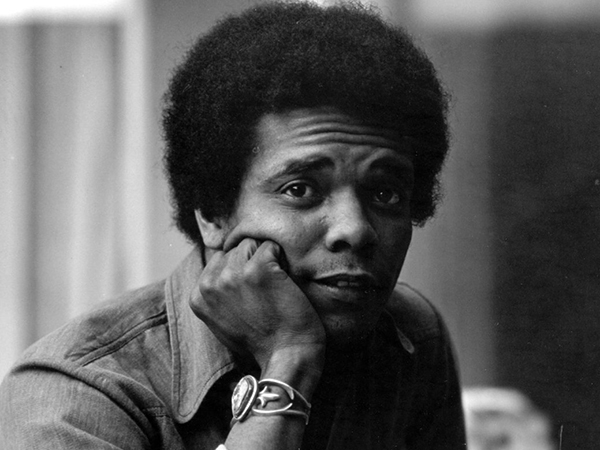
johnnynash1Four months after Bill Withers hit number one with “Lean on Me,” Johnny Nash climbed to the top of the charts with the rocksteady/reggae pop of “I Can See Clearly Now.”  Unlike Withers, who seemed to appear out of nowhere, Nash had maintained a fairly solid chart presence since 1957, and by November 1972, at the age of 32, he was also a seasoned veteran of the biz side of the music biz, creating his own label and signing pop acts like the Cowsills.  He traveled to Jamaica in the late ’60s in an attempt to bring rocksteady to the U.S., for a time working with Bob Marley and the Wailers.  In a sense the sessions weren’t successful, illustrating the difference between Nash’s American AM-radio “hit” perspective and the maturing album-oriented FM-radio vision that Marley, and Chris Blackwell of Island Records, had for reggae.  And yet the association was significant for both Nash and Marley, taking them to London in early 1972 in an attempt to break reggae outside of Jamaica.  It was in England that Nash recorded his best album — relying heavily on Marley’s songwriting and the musicians that made up the Wailers and the Fabulous Five — and where Marley and the Wailers would meet Blackwell.

It’s hard to imagine a greater musical uplift than “I Can See Clearly Now.”  With that title and the refrain “it’s gonna be a bright, bright sunshiney day,” there’s more than a hint of Nash’s commercial reach, but he was clearly inspired by his work with Marley:  the tune’s simple reggae backing and the sincerity of the performance saves it from the treacly precipice.  When the bridge — itself a grand gesture — gets keyboardy and spacey it feels like there must have been something going on in the studio to fit the song, with its monumental groove and smile diminishing whatever adversity might be at hand.  This is a song about happiness in the moment, the rain lifting, and seeing the obstacles for what they are.

soundstreamsunday presents one song or live set by an artist each week, and in theory wants to be an infinite linear mix tape where the songs relate and progress as a whole. For the complete playlist, go here: soundstreamsunday archive and playlist, or check related articles by clicking on”soundstreamsunday” in the tags section.

Hamilton Live On Stage: “Sufficient to Strike Astonishment into Angels”

By Rick Krueger

Hamilton at the Private Bank Theatre, Chicago, August 30, 2017.

On August 31, 1772 (245 years ago today — wild, huh?) a hurricane ravaged the West Indies island of St. Croix.  Seven days later, a orphaned young man living there set the precedent for every newshound who’s camped out in Texas this past week.  He wrote a letter describing his experiences at the heart of the maelstrom, along with the whipsaw play of his emotions in its wake.  “It seemed as if a total dissolution of nature was taking place,” he wrote, “… sufficient to strike astonishment into angels.”

The businessmen of St. Croix were so impressed that they tracked down the letter’s anonymous author, took up a collection, and sent him off-island to be educated.  And Alexander Hamilton emigrated to New York City,  just as the nascent American Revolution began to gather speed.

Continue reading “Hamilton Live On Stage: “Sufficient to Strike Astonishment into Angels””

The best musical tribute to Chris Cornell so far…

Back in March 1994, shortly after Soundgarden’s masterful Superunknown was released, Melody Maker‘s Everett True wrote a detailed and often insightful piece about the band on the road (in Tokyo, specifically). Chris Cornell spoke openly with True about his struggles with depression and fear:

“I write songs best when I’m depressed,” Chris tells me. “No one seems to get this, but Black Hole Sun is sad. But because the melody is really pretty, everyone thinks it’s almost chipper, which is ridiculous. Fell On Black Days is another one. Like Suicide is a perfect example.”

We’re they inspired by specific events?

“Fell On Black Days was like this ongoing fear I’ve had for years. It took me a long time to write that song. We’ve tried to do three different versions with that title, and none of them have ever worked. Someday we might do an EP…

“It’s a feeling that everyone gets. You’re happy with your life, everything’s going well, things are exciting – when all of a sudden you realise you’re unhappy in the extreme, to the point of being really, really scared. There’s no particular event you can pin the feeling down to, it’s just that you realise one day that everything in your life is F—–!”

Exhibit A for a “chipper” version of the huge hit is this snappy, big band-ish, “are you kidding me?” version by Paul Anka (yes, the same Paul Anka who wrote the lyrics to Frank Sinatra’s “My Way”—one of the very few Sinatra songs I find annoying, even revolting). And in the past few days, understandably, there have been a number of singers and bands playing the song as a tribute to Cornell, who took his life on May 18th, after a reportedly ragged show at Detroit’s famous Fox Theater.

Continue reading “The best musical tribute to Chris Cornell so far…”

Ulver – The Assassination Of Julius Caesar

New music from Norwegian experimentalists Ulver is always something to savour, and its diversity might surprise you. 2016’s cryptically-titled ATGCLVLSSCAP was mostly instrumental and partly-improvised, veering from ambient to intensely atmospheric post rock and back again. Their latest release is a quite different proposition, however.

The Assassination Of Julius Caesar channels progressive, pop and electronica influences to utterly glorious effect. Repeated listens variously bring to mind Pure Reason Revolution, Anathema, New Order, Propaganda, early Simple Minds and Massive Attack, amongst others (a list of musical reference points that will have a few Progarchy readers salivating, I’m sure).

It’s difficult to pick out highlights in an album of such consistently high quality, but right now I’m particularly enamoured by the expansive dark groove of Rolling Stone (at over 9 minutes, the album’s longest track), the elegant pop of Southern Gothic and the achingly beautiful chorus in Transverberation.

I’m calling it now. One of the best albums of 2017.