Progressive rock + Mussorgsky = symphonic prog epic. That equation has appeared to work out well at least twice in prog rock history. Like Emerson, Lake, and Palmer before them, Fireballet, an American band inspired by their talented cousins across the pond, gifted to the music world a progressive spin on one of the Russian master’s classic compositions. But there’s more here than Mussorgsky! So, without further ado, here’s my brief take on each of the songs:
“Les Cathedrales”, a ten-minute piece reminiscent of a medieval fairy tale (thanks in part to some spoken word lyrics), opens with a beautiful symphonic flourish of keys and synth (courtesy of Brian Hough and Frank Petto). There is a clear Genesis/Happy the Man vibe throughout the song, but also a fun twist: Ian McDonald (who also produced the album), makes a brief guest appearance on saxophone.
The next two pieces – “Centurion” and “The Fireballet” – feature more superb work by the two keyboardists and from guitarist Ryche Chlanda. Despite their shorter lengths, both songs manage to fit complex melodies and fun counterpoint into (relatively) smaller packages.
“Atmospheres” is the shortest and gentlest piece on the album, reminiscent of the soft opening to Genesis’s “The Musical Box.” It is a welcome break from some of the more frenetic moments of the previous three songs.
The title track nearly lives up to its grand namesake. Opening with the same melody as Mussorgsky’s masterpiece, the band then add some interesting percussive and synth touches for a more progressive spin on the original. Furthermore, this version of the classic piece includes vocals, and lead singer Jim Cuomo is at his best here, ranging from a soft Jon Anderson to a screaming David Byron or even Ian Gillan. Each musician shines on this one, however, and overall it is a solid tribute to one of “The Five.”
One would like to believe an album produced by Ian McDonald with an epic title track would certainly be destined for success. But, alas, it was not to be. Fireballet may not be as renowned as Modest Mussorgsky, but Night on Bald Mountain would certainly be a worthy addition to any prog lover’s collection.
The Harmony Codex – the seventh album by Steven Wilson – is a genre-spanning collection that represents the apotheosis of a life spent fully absorbed in music.
While The Harmony Codex nods to records from Steven Wilson’s recent past, at times echoing the paranoid rumble of 2008’s Insurgentes, the crystalline electronics of 2021’s The Future Bites and the expansive storytelling of 2013’s The Raven That Refused To Sing (and Other Stories), here he has managed to create something entirely unique, a record that exists outside of the notion of genre. And although The Harmony Codex is a record made with spatial audio in mind, it’s not one that needs an elaborate sound system to lift you out of body – two speakers and an open mind will do just fine.
Released on September 29th. Tracklist:
1. Inclination (7.15)
2. What Life Brings (3.40)
3. Economies of Scale (4.17)
4. Impossible Tightrope (10.42)
5. Rock Bottom (4.25)
6. Beautiful Scarecrow (5.21)
7. The Harmony Codex (9.50)
8. Time is Running Out (3.57)
9. Actual Brutal Facts (5.05)
10. Staircase (9.26)
Watch the video for the track “Economies of Scale” below:
Unless otherwise noted, title links are typically to Bandcamp for streaming and purchasing, or to Spotify/YouTube for streaming with a additional purchase link following the review.
First off, the triple-disc elephant in the room: the Neal Morse Band’s An Evening of Innocence & Danger: Live in Hamburg. Morse, Eric Gillette, Bill Hubauer, Randy George and Mike Portnoy deliver exactly what the title says, plowing through the NMB’s most recent conceptual opus with the added excitement of rougher vocal edges and elongated opportunities for face-melting solos. Welcome deep cuts at the end of each set plus the heady mashup encore “The Great Similitude” heat things up nicely. The band’s delight in being back in front of a transatlantic audience comes through with (sorry not sorry) flying colors. Order from Radiant Records here.
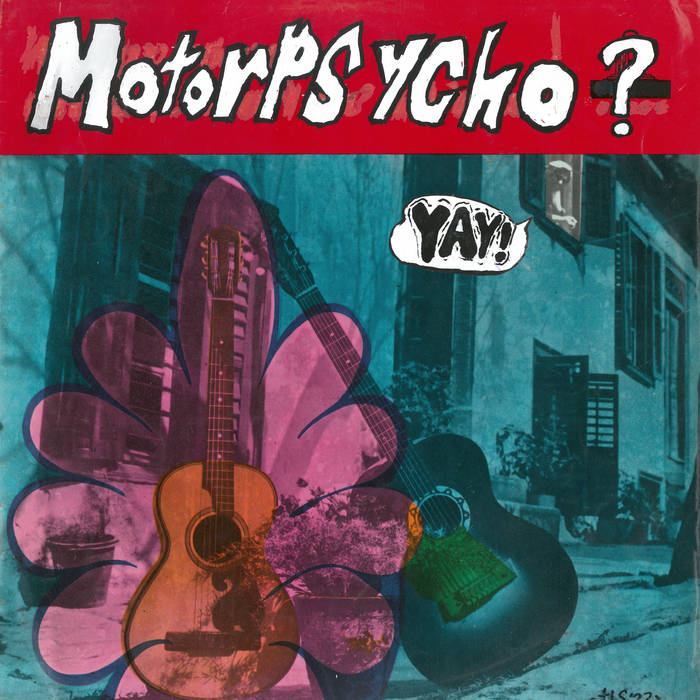
Motorpsycho, on the other hand, cools things down on their new, palindromically titled Yay! This time around, Bent Sæther, Magnus “Snah” Ryan and Tomas Järmyr back off the booming drones, steering into light acoustic textures and Laurel Canyon vocal harmonies for a fresh, intimate variation on their spiraling neopsychedelia. Even with titles like “Cold & Bored” and “Dank State (Jan ’21)”, the results are inviting and exhilarating. (And don’t worry — the band’s penchant for the long jam is alive and well on more expansive tracks like “Hotel Daedelus” and closer “The Rapture”) My favorite from this crew since 2017’s The Tower.
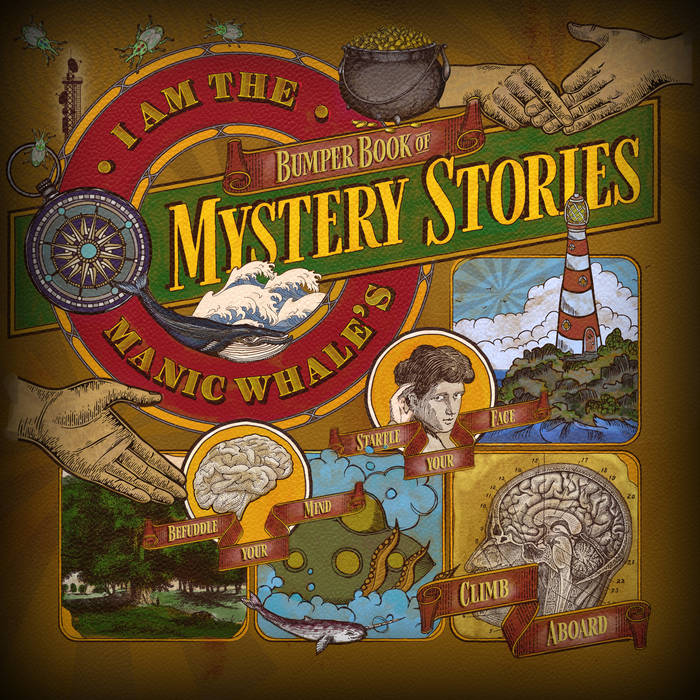
And, seconding Russell Clarke, I heartily recommend I Am the Manic Whale’s Bumper Book of Mystery Stories. Dialing down the snark of previous albums and turning up the atmospherics, it’s a thematically linked suite of veddy veddy British melodic prog vignettes engineered to thrill and disturb. Michael Whiteman and his jolly compatriots seem absolutely delighted to creep you out on “Ghost Train”, send your head spinning on “Erno’s Magic Cube”, and drag you into headlong adventure on land (“Secret Passage”), sea (“Nautilus”) and outer space (“We Interrupt This Broadcast . . .”). I felt like a kid again!
Meanwhile, Greta Van Fleet come slamming back with Starcatcher. With the polished studio sound of 2021’s The Battleof Garden’s Gate well and truly ditched, Frankenmuth, Michigan’s finest get down and dirty here, launching one ferocious rocker after another and mounting a stairway to . . . somewhere? on the trippy single “Meeting the Master.” Yeah, GVF still wear their influences on their capacious sleeves, and sometimes feel a bit inside the box for all the Kiszka brothers’ ecstatic caterwauling. But getting the Led out to Generation Z still strikes me as a worthwhile mission, and to see these young’uns keep the flame alight is all an aging rocker could ask for. Order from GVF’s webstore here.
Moon Letters, Thank You From The Future, 2022 Tracks: Sudden Sun (4:19), The Hrossa (6:19), Mother River (4:32), Isolation and Foreboding (6:34), Child of Tomorrow (5:27), Fate of the Alacorn (7:06), Yesterday Is Gone (6:47) Players: John Allday (keyboards, vocals), Mike Murphy (bass, vocals), Kelly Mynes (drums), Michael Trew (vocals, flute), Dave Webb (guitar)
Moon Letters offer what could be called standard classic progressive rock. It is guitar, drums, and synth heavy, and the vocals are harmonized in a quintessentially late 60s and early 70s fashion. Gentle Giant is certainly an influence, and “Thank You From the Future” definitely has that sense of playfulness in the music and vocal arrangements. I hear elements of the Moody Blues, Genesis, and maybe even a little Procol Harum as well.
One might be surprised to hear that the band hails from Seattle, as the music reminds me more of English classic prog than of American progressive rock. Thank You From the Future is the band’s second album, following up 2019’s Until They Feel the Sun.
The band has a science fiction and fantasy influence. I’m pretty sure the band’s name comes from the moon runes in J.R.R. Tolkien’s “The Hobbit,” and “The Hrossa” is a reference to the alien species that live on Mars in C.S. Lewis’ “Out of the Silent Planet.”
Dave Webb’s guitar has a slight Steve Hackett flair to it, especially in the sustained notes. That alone adds a Genesis influence, although Genesis isn’t the first comparison that came to my mind when listening to Moon Letters. But in listening closely to the guitar, Hackett is clearly an influence. Hackett is my favorite guitarist, so that’s a win in my book. The opening to “Yesterday Is Gone” is particularly delightful in its proggy sustained guitar. The sparse guitar notes and licks interspersed between the lyrics throughout the song really elevate the track.
Thank You From The Future is an upbeat entertaining nod to classic prog with modern sensibilities. The album does tend to sound a bit uniform in style, and a little variety would have been nice. But it’s a short album (by today’s prog standards, at least) at 42 minutes, which is a good length for this sort of record. The guitar work is what sets this record apart for me, as I’m sure it will for many of our readers. That’s worth the price of admission by itself.
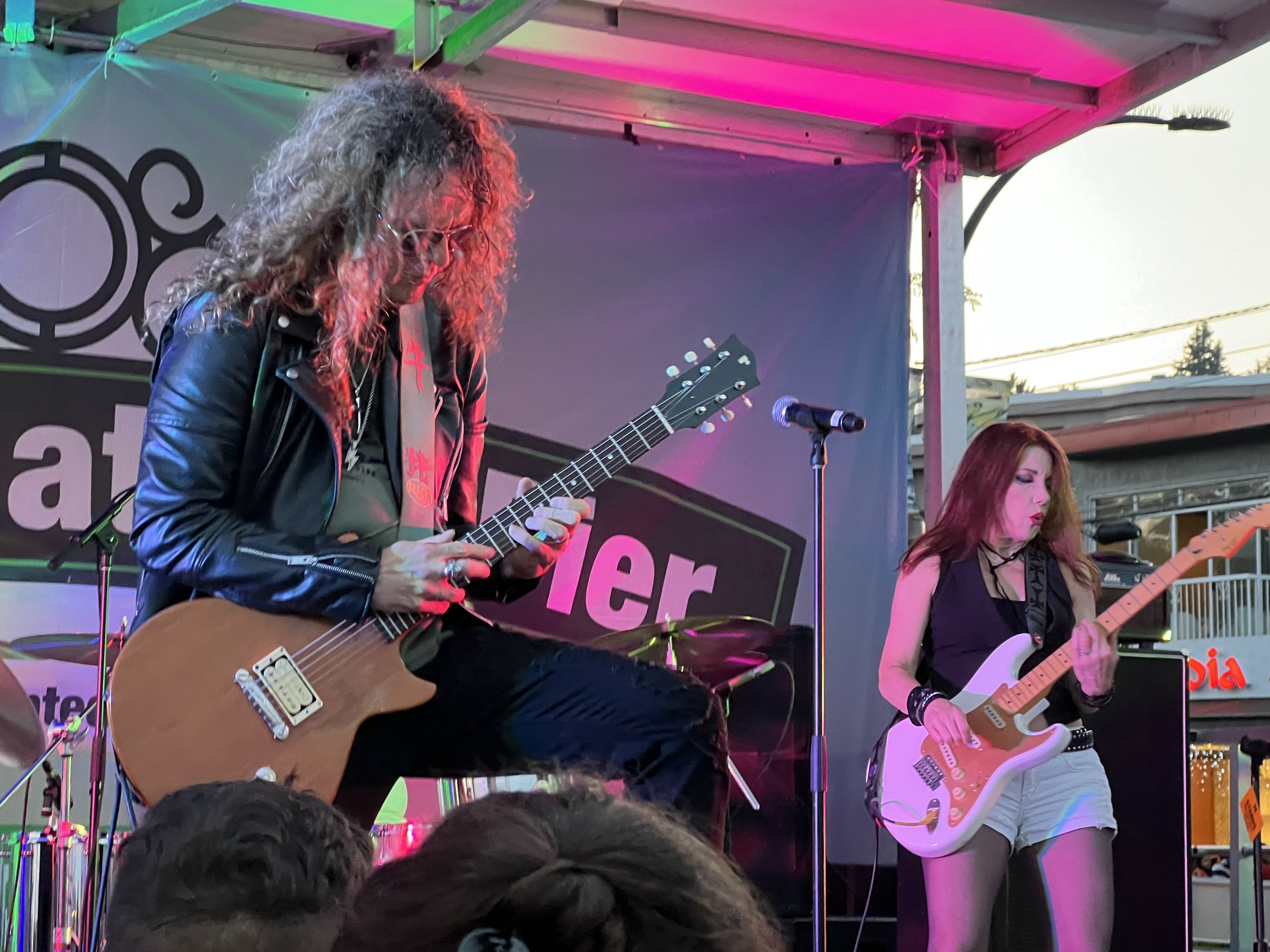
Rock and roll icon Lee Aaron and her crackerjack band played an unusual gig last night in White Rock, British Columbia. Not only was it a free concert played outside by the beach, it was also played for a hometown crowd, since Aaron now resides in the area. She joked to the all-ages crowd that they probably recognized her from shopping at Canadian Tire.
Aaron’s voice remains as mighty and as impressive as it has always been. The sound mix allowed us to hear her vocal gifts loud and clear, with many nicely timed echo effects for dramatic emphasis. Aaron’s husband John Cody played thundering drums; Dave Reimer played propulsive bass lines and sang soulful backup; and superstar guitarist Sean Kelly flew in from Ontario to wow the crowd with his virtuoso shredding and glam-inflected backup singing, snarling, and pouting.
My sister lives in White Rock and, regular beachgoer that she is, has a paddleboard strapped to the roof of her car. So she easily drove us down the hill from her place, and used her special resident parking savvy to find us a most convenient car spot around the corner from the beach.
The concert venue was at the west beach, which has a nice little patch of grass overlooking the water and sand, separated from the area only by a fence and train track. That means the concert, which started at the magic hour sunset timing of 8:30pm, was adorned with the beautiful lighting of the open sky and the soothingly expansive ocean vista. Some people watched from boats in the water, others on the grass in front of the stage, and still more looked on from beachfront restaurants or home-front terraces.
I was pleasantly surprised by how excellent the concert was. Aaron played a full arena-sized set of eighteen songs, ninety minutes long, including an encore. The musicianship was impeccable and the concert versions of the songs had remarkably palpable enthusiasm added to them. You could tell the band was comfortable in the setting and having a blast playing the gig.
Aaron’s multiple decades of experience showed that there’s no pro like an old pro. She strutted and danced around the stage, singing her sweet little heart out. Happily interacting with and gazing into the eyes of the fans crowded around the stage, she even dedicated one song to the teenage girls up front jumping up and down all night.
She frequently strapped on a guitar, throwing mighty superhero kicks into the air as she roared around the fretboard. I was continually amazed by how incredible she sounds when playing live.
Aaron remarked to the crowd that if, that evening, she could inspire just one girl there to write songs and get into rock and roll, then her mission was accomplished. I would be surprised if she failed at this goal, because her show was undeniably exceptional and inspirational.
I noted that the crowds of young girls coming to dance in front of the stage only increased over the evening, and that they were the first ones to hold up their phone camera flashlights as lighters. This illuminated Aaron’s ballad intimacies, well-timed for after the sunset.
On balance, the concert wasn’t a parade of old hits from the 1980s. Aaron noted to the crowd that she has released six new albums since 2016. (That impressive half-dozen includes a Christmas album, as well as a superb live disc from Germany on both a CD and a DVD, which I would highly recommend if you read this review and wish you could see a show. The recorded evidence backs up my assertion that Lee Aaron is still shining brightly in the rock and roll pantheon.)
For last night’s set, Aaron played two songs from Metal Queen (1984), two from Lee Aaron (1987), four from Bodyrock (1989), two from Some Girls Do (1991), one from Fire and Gasoline (2016), three from Diamond Baby Blues (2018), two from Radio On (2021), and two from Elevate (2022).
When it comes to the studio versions, I can play favorites with many of the songs. But when hearing them live—because they each reach new elevations with the spontaneous gusto the band adds when singing and playing them—it’s hard to pick out highlights. In the moment, your favorite song is the one you are both seeing and hearing right then.
That said, my sister’s favorite was “Metal Queen,” and mine was “Lady of the Darkest Night,” for unavoidably nostalgic reasons.
Lee Aaron still passes the live music test with flying colors. It’s not rock and roll at its finest unless it’s the full sensory experience, and it’s hard to top an oceanside setting. Last night, by storming the beach scene of the unique White Rock, Canada’s one-and-only Lee Aaron truly slayed. God save the metal queen.
Set List:
“Vampin’,” from Radio On (2021)
“Hands On,” from Bodyrock (1989)
“Black Cat,” from Diamond Baby Blues (2018)
“Elevate,” from Elevate (2022)
“Powerline,” from Lee Aaron (1987)
“Lady of the Darkest Night,” from Metal Queen (1984)
“Diamond Baby,” from Diamond Baby Blues (2018)
“Nasty Boyz,” from Bodyrock (1989)
“Sweet Talk,” from Bodyrock (1989)
“Some Girls Do,” from Some Girls Do (1991)
“Sex With Love,” from Some Girls Do (1991)
“Fire and Gasoline,” from Fire and Gasoline (2016)
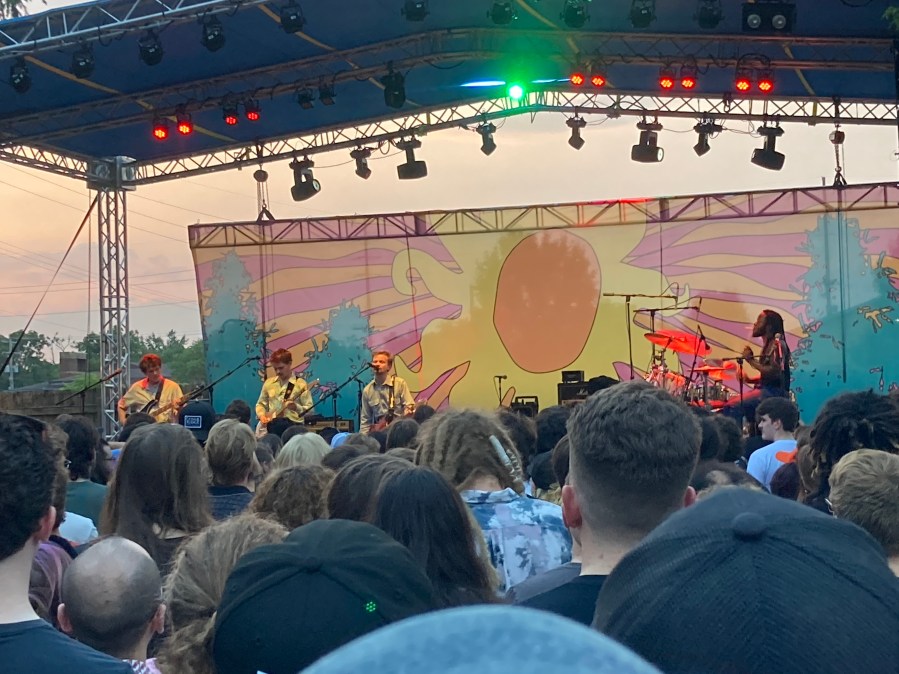
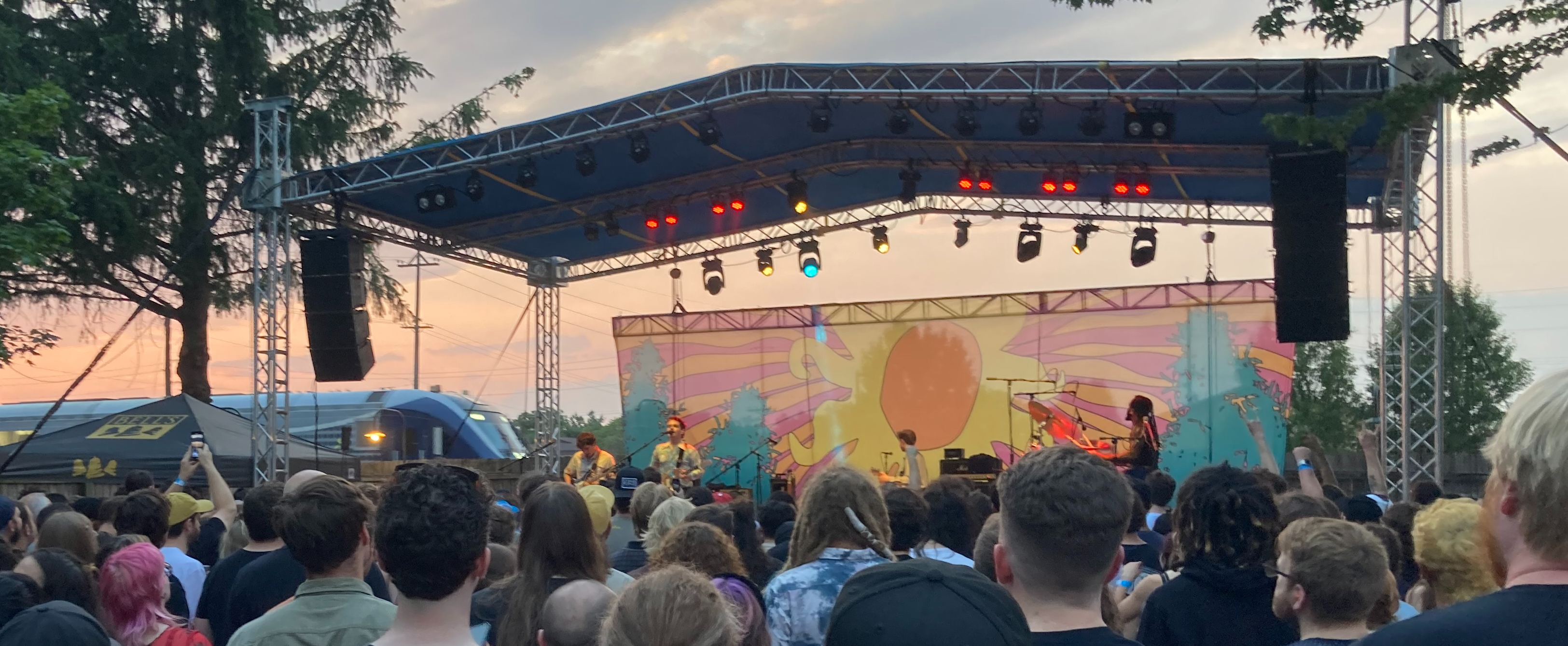
black midi with Circuit des Yeux, Bell’s Eccentric Cafe & Beer Garden, Kalamazoo Michigan, June 30, 2023.
The sludgy, spasmodic riffs of black midi’s opener “953” had crashed to a definitive, screeching halt. The hundreds-strong audience stood happily stunned at the young British quartet’s feral, frenetic onslaught. Cue an Amtrak train passing directly behind the stage, hailing the north side of Kalamazoo with its overblown, howling whistle, right in rhythm. It made perfect sense that guitarist/second vocalist Cameron Picton stepped immediately to the mike and yelled at the top of his lungs, “I [EXPLETIVE] LOVE TRAINS!!!!” just before the band kicked into the taut build of “Speedway.”
black midi’s music sounded like that all night — an unstoppable series of planned accidents that formed weirdly compelling shapes as they unspooled. Sculpting order into chaos, drummer Morgan Simpson’s groove and chops never faltered, no matter how many unpredictable stops and starts in a given song; guest bassist Seth Evans locked down apparently arbitrary pulses with imperturbable style. Guitarists Picton and Gordie Greep bounced off these lopsided foundations in furiously random directions, especially on the highlights from bm’s Hellfire album — ominously creepy funk slamming into a death-metal polka on “Welcome to Hell”, superspeed jazz-fusion counterpoint melting into lounge-lizard ambience on “Sugar/Tzu”, quietly floating chords ramping up to accelerating sheets of thrashy noise on “Dangerous Liaisons”. These guys know their rock history — teasing the Beatles’ “Taxman” before kicking into “27 Questions”, morphing from Metallica’s “Enter Sandman” riff into their unreleased “Lumps” — but they obviously feel bound by none of it when they jam and compose. Which seemed to be a giant part of their appeal to the remarkably youthful crowd; had they ever heard anything quite like this? (A middle-aged geezer like me definitely hadn’t; these guys made The Mars Volta sound normal.)
Hot on the heels of the release of Big Big Train’s Igenious Devices, the band has announced the upcoming remaster and reissue of the late David Longdon’s first solo album, “Wild River,” complete with new artwork.
More from the band:
‘Wild River’, the first solo album from David Longdon has been re-mixed, re-mastered and expanded and will be released on 20th October. It is preceded by a single ‘Always’, which is available now.
‘Wild River’ was originally self-released in 2004 and at that time only a minimal quantity of CDs were produced. Whilst it was briefly available via the Big Big Train website, it has long been out of print. David had always intended to remix and repackage it. However, his sudden death in November 2021 meant that his plan never came to fruition. In a final act of remembrance by his long-time colleague Rob Aubrey, Big Big Train’s engineer since 1994, David’s wishes have now been fulfilled. The album packaging has also been re-designed by Longdon’s friend and collaborator Steve Vantsis.
Sarah Ewing, David’s partner, recalls why he was so keen to revisit ‘Wild River’. “David was really proud of those songs,” she says. “He produced and engineered the album himself, but always felt that the recording, the production and the mix never quite met his expectations. Over the years he became much more skilled at his craft, and had he been alive now, he would have been able to deliver the album the way he always wanted it to be. He’d also always wanted to improve the cover art, but at the time he’d spent all his money on the recording and mixing.”
Wild River’ represented a transitional period for David, both artistically and emotionally. His father, Eric, had passed away in 1994, he had been through a divorce, and he’d auditioned to be the lead singer of Genesis following the departure of Phil Collins. However, after a protracted audition-cum-rehearsal process, he was immensely disappointed to lose out on the role. Which, with hindsight, was a blessing in disguise.
Around this time, XTC guitarist Dave Gregory was playing a session where he first met David. Between XTC projects, Gregory had been recording a version of the Genesis epic ‘Supper’s Ready’ and David, a big XTC fan, offered to sing on it, adding, “I really need to do this.” Gregory was astonished at how quickly David recorded the vocal parts: “Soup to nuts in an afternoon and an evening.” Rather than accepting payment for the session, David invited Gregory to play guitar and Mellotron on the work-in-progress ‘Wild River’. Gregory recalls, “The Genesis experience galvanised him. He was saying, ‘Look, this is what I can do. And I’m gonna f*cking show you’. That was a huge motivation for him. He felt rejected, so had to work a lot harder.”
Big Big Train’s sound engineer and David’s friend Rob Aubrey was asked to remix the album earlier this year. “It still fills me with sadness that he’s gone, but ‘Wild River’ needed to be made available again as it is such a strong album.” The last word on ‘Wild River’ goes to Sarah: “I don’t think it sounds like an album that’s 20 years old; it sounds very immediate and contemporary and that speaks of David’s talent,” says Ewing. “It’s hard for me to be objective, but I hear the younger David and in that regard it’s a beautiful time capsule.”
Unless otherwise noted, title links are typically to Bandcamp for streaming and purchasing, or to Spotify for streaming with a additional purchase link where available.
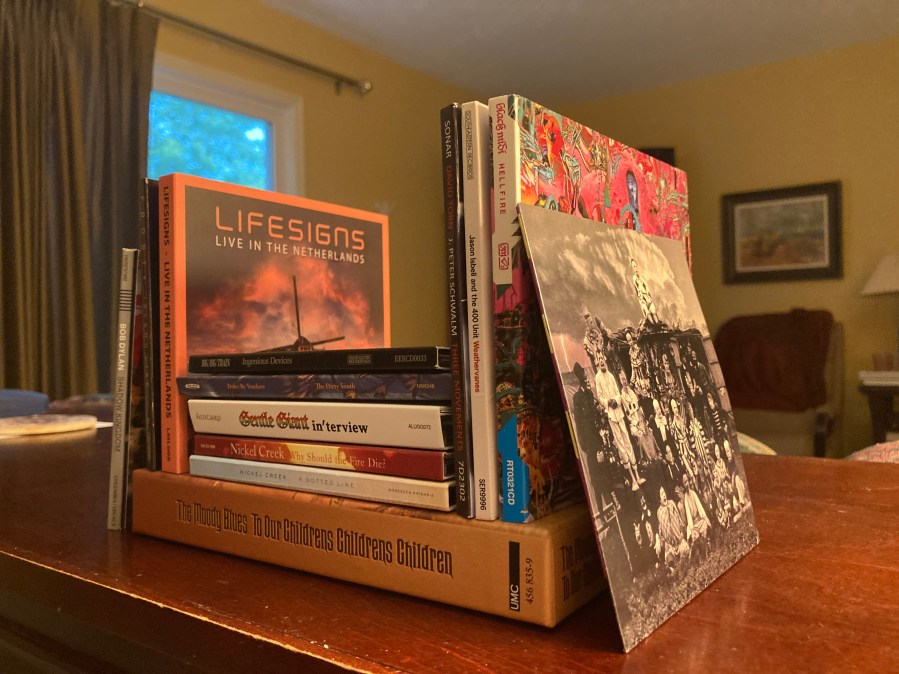
Starting with an obvious choice around these parts: Ingenious Devices proves a winning Big Big Train compilation, featuring Greg Spawton’s life-enhancing explorations of humanity’s drive to expand its reach. Vividly orchestrated reworkings of “East Coast Racer” and “Brooklands” join a remix of Grand Tour’s “Voyager” and a stirring live take of “Atlantic Cable” featuring new lead singer Alberto Bravin; the result is a fresh, vital, thoroughly moving suite of prog epics. Recommended without hesitation!
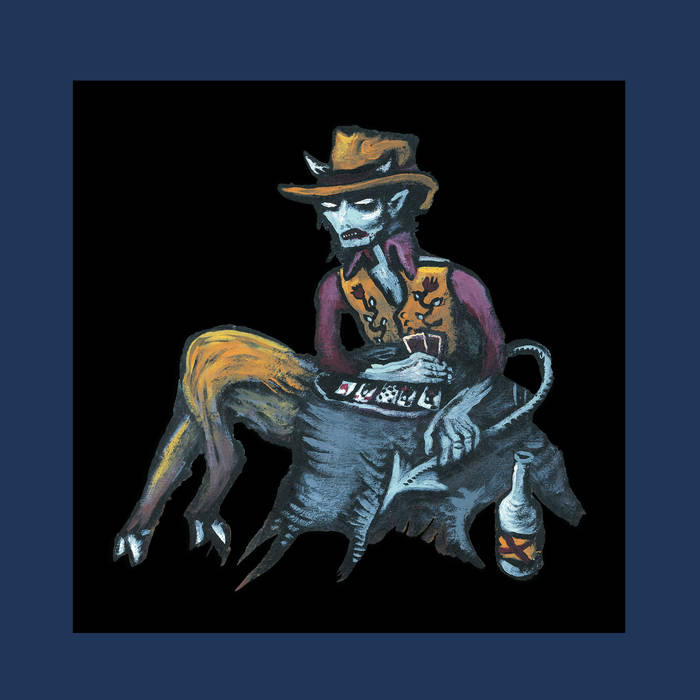
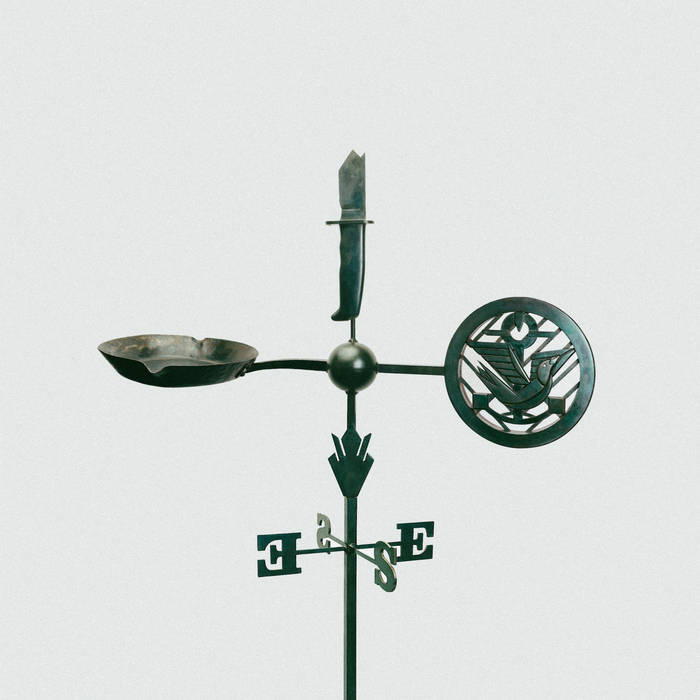
Southern rockers Drive-By Truckers have also reached back — fleshing out their classic 2004 effort as The Complete Dirty South, the double album they originally conceived. Triple-threat guitarist/songwriters Patterson Hood, Mike Cooley and Jason Isbell reel off tale after compelling tale of characters caught in desperate circumstances, torn between bad choices, clinging to vagrant hopes. Their rampaging hard-rock energy, seasoned with delicate country soul balladry, is what elevates the whole concept beyond haunted fatalism to an intense meditation on courage in the face of overwhelming odds. (Having left the DBTs in 2007, Jason Isbell continues to go from strength to strength. His brand-new effort with The 400 Unit, Weathervanes, brings tons of sharp writing and fiery playing to a clutch of deeply empathetic Americana narratives, topped with irresistible choruses and just a pinch of classic rock a la Bruce, The Byrds and Neil Young. Whatever your take on country music, you really shouldn’t miss either of these.)
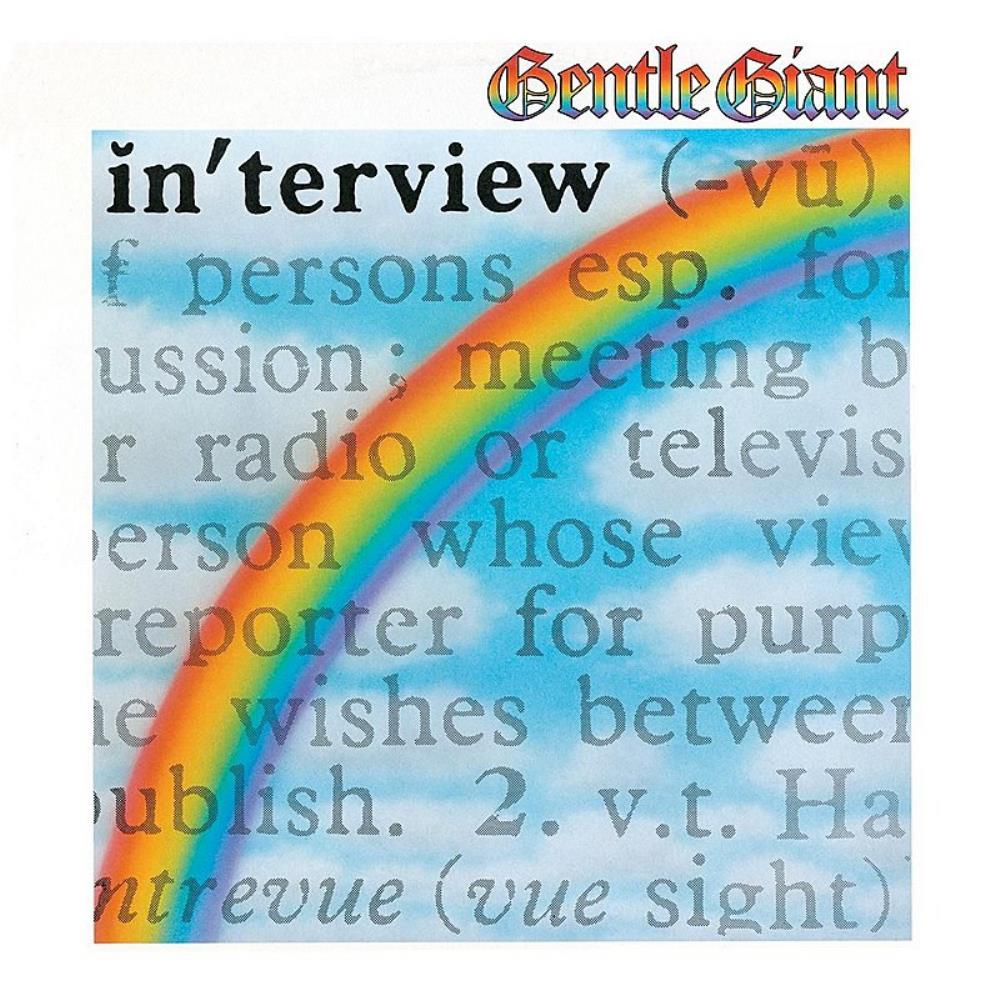
Also on the reissue front, Gentle Giant’s 1976 effort Interview now has a spruced-up, punchy remix from Steven Wilson (available here) that breezily clarifies the British quintet’s counterpoint vocals (“Design”), interweaving instrumental lines (the title track, frenetically funky closer “I Lost My Head”) and multistylistic hijinks (the unanticipated reggae chorus of “Give It Back”). The Moody Blues’ second release of 1969, To Our Children’s Children’s Children, becomes their third vintage set to get the multi-disc box treatment – though it’s only available digitally in the US. While the album proper leans toward studio psychedelia laced with wispy slow-dance tunes and the odd cabaret flourish, the bonus live tracks (including a complete set from the Royal Albert Hall) reveal the Moodies as quite the stomping rock outfit, slipping the leash on the album’s single “Gypsy,” the encore “Ride My Seesaw” and core tracks from Days of Future Passed.
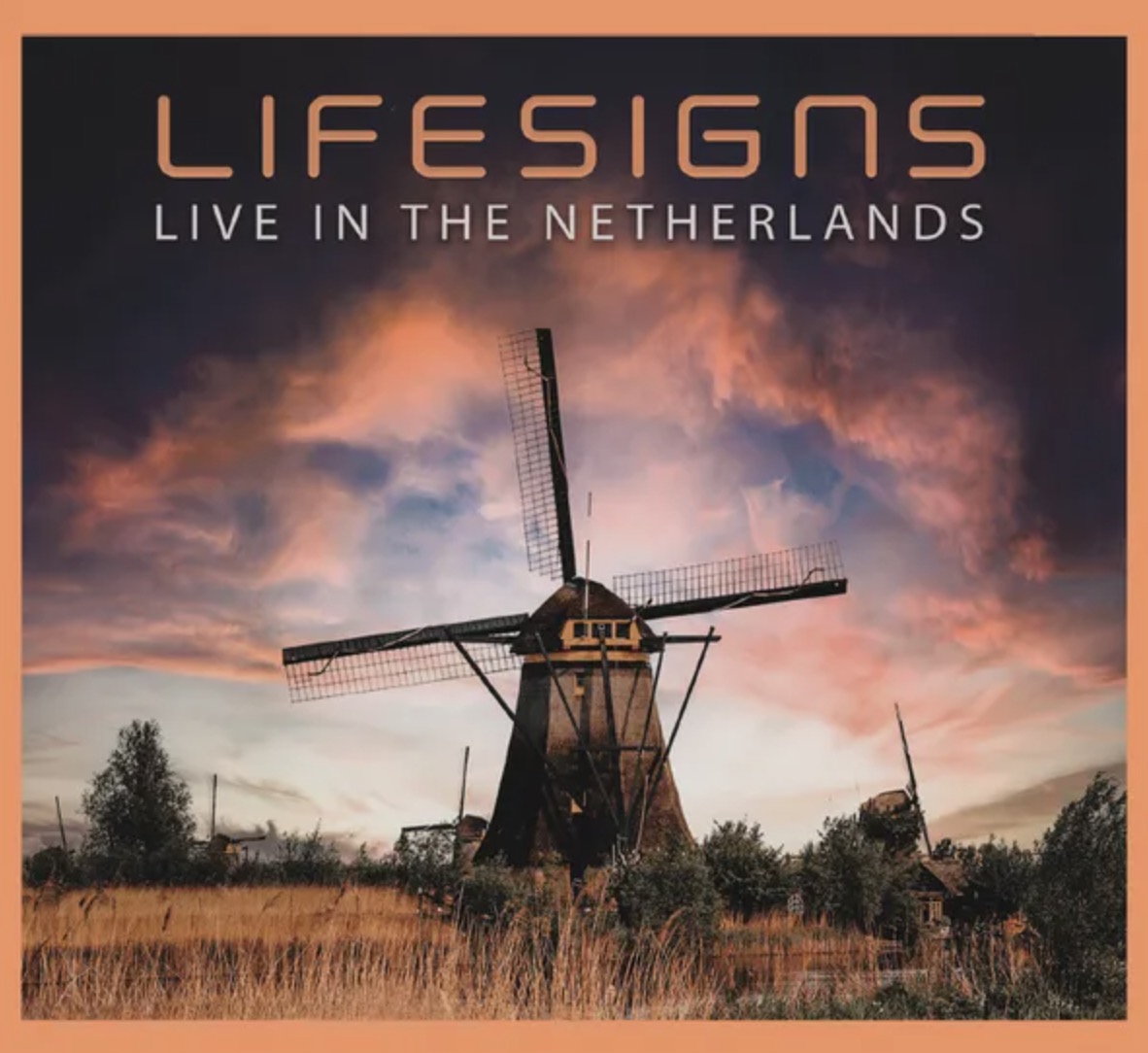
Live releases have picked up again as well. For their concert video debut Island Live (available through Magenta’s Tigermoth label), Jem Godfrey’s tech-forward quartet Frost* reap a whirlwind harvest of monumentally proportioned prog. With bassist Nathan King and drummer Craig Blundell anchoring the jumpy polyrhythms, guitarist John Mitchell and keyboardist Godfrey eagerly splatter as many unhinged solos as possible across devilishly ingenious harmonic structures, singing their hearts out all the while. (Check out a video sample here.) Prefer calmer (though no less extended) sonic voyages? Lifesigns’ Live in the Netherlands should be just the ticket. Leaning on the music from 2021’s Altitude, keyboardist/composer John Young and guitarist Dave Bainbridge prove steady hands on the wheel, soothing the soul as they scale the majestic heights of “Open Skies,” “Ivory Tower” and “Last One Home”. (One other winner from outside the genre: for a 2021 COVID-time video, Bob Dylan fused his recent rummagings amongst the blues and pre-rock vocal stylings to revitalize his vintage repertoire. The unplugged sorta-soundtrack Shadow Kingdom is the winning result; order it here.)
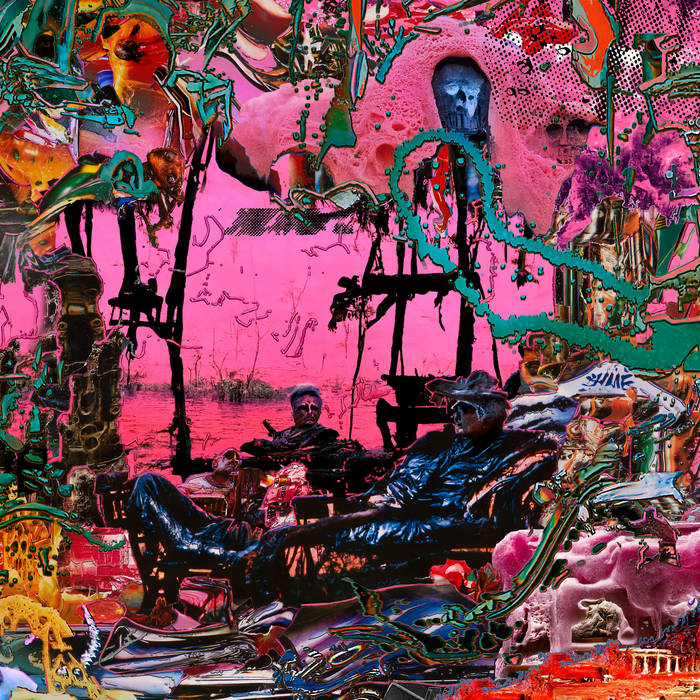
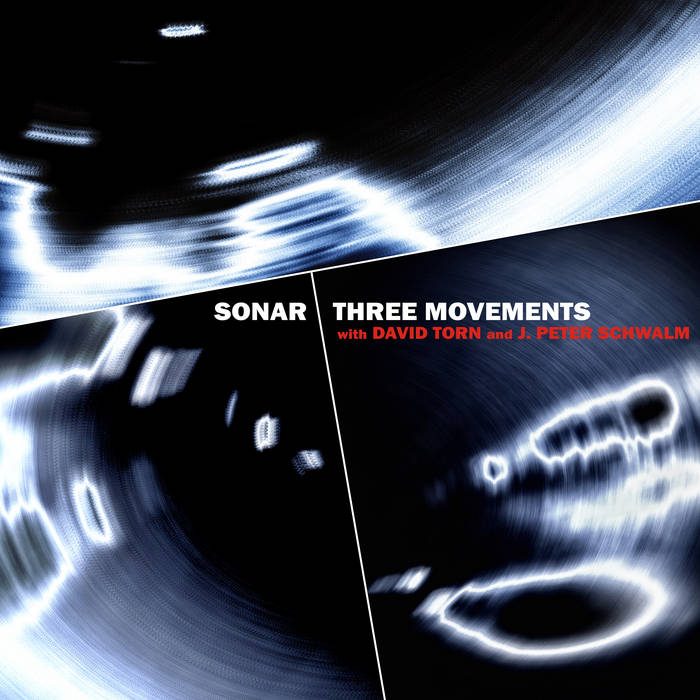
Speaking of concerts, my prep for a recent show by British “post-Brexitcore” bashers black midi included their latest album Hellfire, which hit plenty of 2022 best-of lists in and out of the prog world. A detailed live review is forthcoming; suffice to say that on record, bm’s dense, anarchic musical interaction tracks all too well with their jaundiced first-person lyrical vignettes — it’s postmodern life as absurd, unstoppable apocalypse. A welcome bonus from that concert was meeting Mike Potter, Renaissance man of the Eastern Seaboard — astrophysicist, former recording studio owner and a whiz on keys, woodwinds and vocals too! Potter’s band Alakazam has just released their fourth disc, Carnival Dawn; it’s a heady conceptual effort that stirs equal parts Ray Bradbury and Stephen King into a bubbling stew garnished with ominous Mellotron, creepy clarinet and saxophone, and the wondrously deranged verbal musings of sundry evil clowns. By the pricking of my thumbs, it’s worth a listen — if you dare. And for a coolly energizing dose of order to chase the above chaos, you won’t do better than Sonar’s new Three Movements. Here Stephen Thelen and company harness a genuinely symphonic tension, building up towering rhythmic edifices that reach dizzying heights; at the climaxes, as guests David Torn on guitar and J. Peter Schwalm on electronics launch volley after volley of improvised ambience, the tension breaks, the clouds clear, and you might just hear the music of the spheres!
Happy Canada Day from the good folks here at Progarchy! We hope you’re rocking out with suitable Canuck tunes. But, if you are looking for some new music, why not check out these three albums from the top bands descending from up in the True North?
Brass Camel, Brass
Since they have just completed a magnificent musical tour across Canada, it’s worth drawing the band Brass Camel once again to your attention. I highlighted this album as one of the best last year:
Here’s an obscure one for you, but it will seduce your heart and mind. A genuinely unique mixture of hard rocking funk plus an intricately overlaid tapestry of prog. Dive into this album (the follow-up to their 2018 debut) by sampling the prog cred on tracks like “King for a Day,” “Easy,” and “Last Flight of the Vulcan.” I’d say one of the strongest contenders for Prog Song of the Year is “Last Flight of the Vulcan,” because the way that song takes flight is truly thrilling. As it fades out, you just want it to circle back and never end. The album itself ends perfectly with “Only Love.”
This Vancouver supergroup burst on the scene in 2000, with their debut Mass Romantic. It was unmistakable power pop perfection, announced via the glorious single “Letter from an Occupant,” which featured Neko Case’s impressively soaring vocal trajectories.
Next, two classic albums followed after the requisite time for their consummate craftsmanship to reach fruition: Electric Version (2003) and Twin Cinema (2005).
Then, over the ensuing decades, five more gems were released in a steady stream for the audio enjoyment of the cognoscenti.
This year, the New Pornographers show no signs of senescence, as the glorious disc Continue as a Guest (2023) demonstrates their musical skill to be still of the highest level.
It’s worth the effort to hunt down this album for the art rock masterclass given on standout tracks like “Pontius Pilate’s Home Movies,” “Angelcover,” “Wish Automatic Suite,” and the dazzling title track, “Continue as a Guest.”
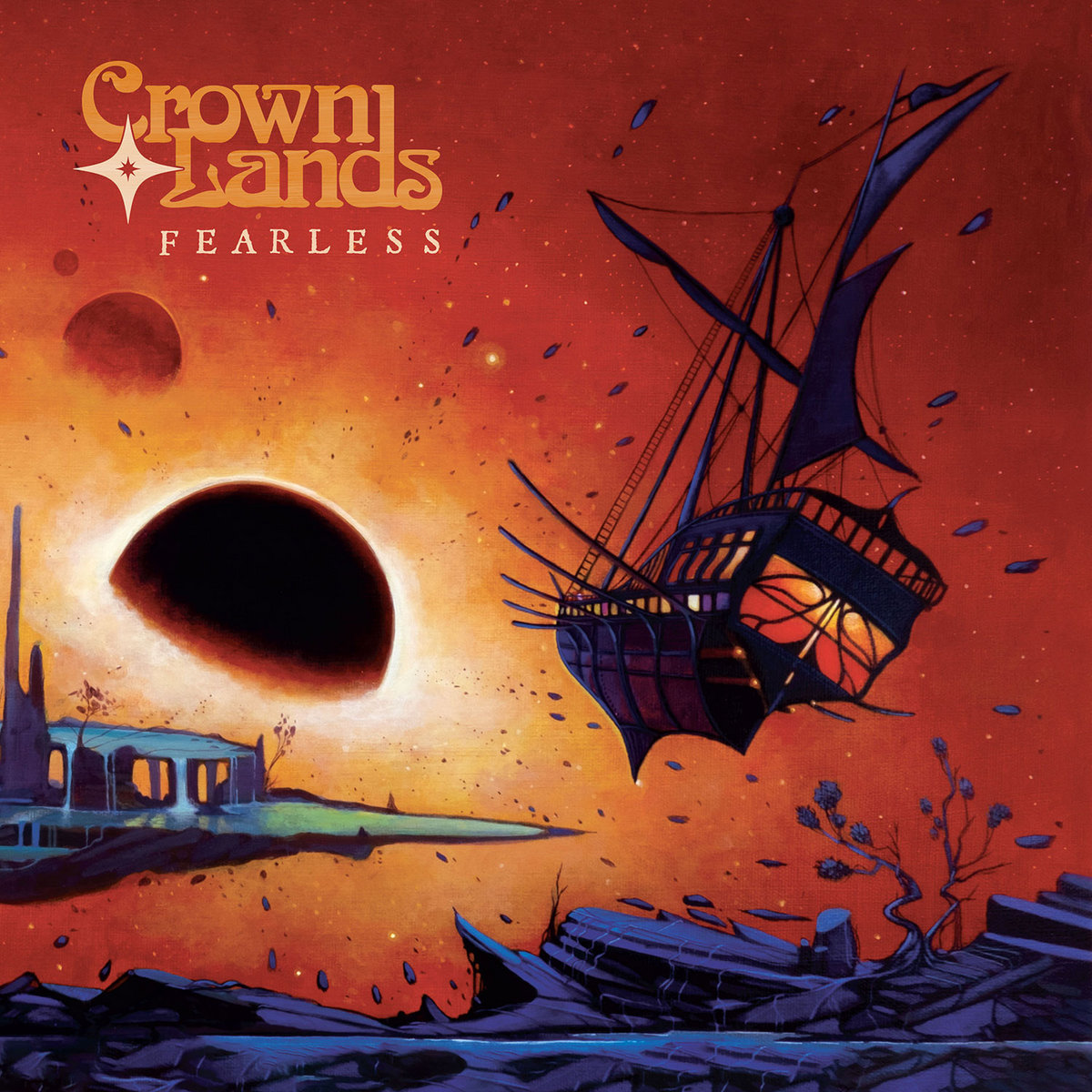
Crown Lands, Fearless(Deluxe)
Last but certainly not least, I have to mention what I already know is the Album of the Year for 2023. It’s the masterpiece Fearless from the mighty Crown Lands.
No other album in my collection has received more repeated listens this year than this one. I alerted you to the lead track, “Starlifter,” back in February. Then, with the release of the whole album in March, it has been in heavy rotation in the succeeding months.
Despite the many top contenders for Prog Album of 2023 that have issued forth since then (such as the perfect-score five-star wonders from The Winery Dogs, Yes, Riverside, Haken, and Tanith), I now have indisputable proof that Crown Lands must be awarded the top prize for 2023. That proof is the Deluxe edition of Fearless that was made available last weekend.
Added to the nine tracks that comprise the Fearless album, we now have eight instrumental versions (so you can do Crown Lands karaoke, or practice playing the musical parts on your own instruments—and the number is eight, because the album track “Penny” is already a guitar instrumental in the tradition of prog palate cleansers like Steve Howe’s “Mood for a Day” or “The Clap”); not only that, we also have seven live versions of tracks from the studio version of Fearless (and it’s seven, not nine, since the album tracks “Context” and “Right Way Back” date back to 2021, and we’ve already witnessed live audio and video versions of those songs in the intervening months).
The Deluxe edition live versions of the Fearless tracks are nothing short of amazing. Usually bands sound worse live than on record. But with Crown Lands, we get versions of the studio tracks that sound even heavier and even more energetic than the carefully produced prog perfection originals.
Somehow, Crown Lands manages to capture on this recording a special energy that they obviously have when they play live. Kevin’s riffs are even darker and more menacing, and the synth sounds punch and crackle with tactile gusto. Cody’s singing is impassionate and immediate, hitting all the high notes and even adding extra sentiment in the heat of the moment. The drum fills are astonishing, as they fly from speaker to speaker and you feel like you are standing behind the kit next to Cody as he kicks out the songs with enhanced verve. Kevin’s guitar solos and bass lines induce ecstasy, which is symbolized by all those bonus fretboard dive-bombing finger slides and power chord zoom blasts.
Fearless (Deluxe): You have to hear it to believe it, and you won’t be able to pick a favorite version of the album—live or studio—since they each have their own special charms. All that the listener can do after hearing Fearless (Deluxe) is to pronounce the winner of Album of the Year for 2023: unquestionably, it has to be awarded to the invincibly fearless and unstoppable Crown Lands.
All hail Cody Bowles and Kevin Comeau! Prog on, eh? Happy Canada Day!
Echo US, Inland Empire, 2023 Tracks: Across The Star (3:50), Echo Us (9:38), Dark Shock (8:35), It’s Time For Winter (3:42), Inland Empire (7:43), Nest Egg (2:09) From The Furthest Memory (1:14), Far Above The Sky (5:20), Solarium (6:33), Singing With You (10:17)
For the first of my ridiculous backlog of albums to review, I bring you a review of Echo Us’ album from the beginning of the year, Inland Empire. You may remember the band from past Progarchy reviews: James Turner’s review of 2014’s XII A Priori Memoriae and my review of 2021’s The Windsong Spires.
My review of InlandEmpire begins similarly to my review of their last record: eclectic, atmospheric, ethereal. Waves of guitar, claps of percussion, strangely spacey vocals. While not a typical rock album, much like The Windsong Spires wasn’t, it does incorporate rock and certainly progressive elements. Electric guitars and clever percussion, along with aptly placed synths, create a wall of sound that draws from myriad musical influences. New age? Rock? Certainly ambient, yet it retains enough melody to keep the album engaging.
The atmospheric elements occasionally take on a Floydian edge. “Echo Us” has some spacey yet rock-hardened tones before introducing some spoken word fragments, much in the way Pink Floyd did on The Wall. The second half of “Dark Shock” features more Floydian atmospherics, with some particularly enjoyable guitar work.
Some elements of the guitar remind me a bit of Big Big Train, as well, which was a bit of a surprise. But overall, their sound is still more atmospheric than traditional prog. The album flows together almost too well, making most of the songs sound a bit the same. Since the music is contemplative and rather ambient, it’s more palatable even if there’s not much variety. The vocals aren’t a strong point, but they’re heavily filtered with various effects, adding a synth-like quality to them which helps them recede into the ambient wall of sound.
Overall “Inland Empire” is a worthy successor to 2021’s “The Windsong Spires.”













 Progarchy