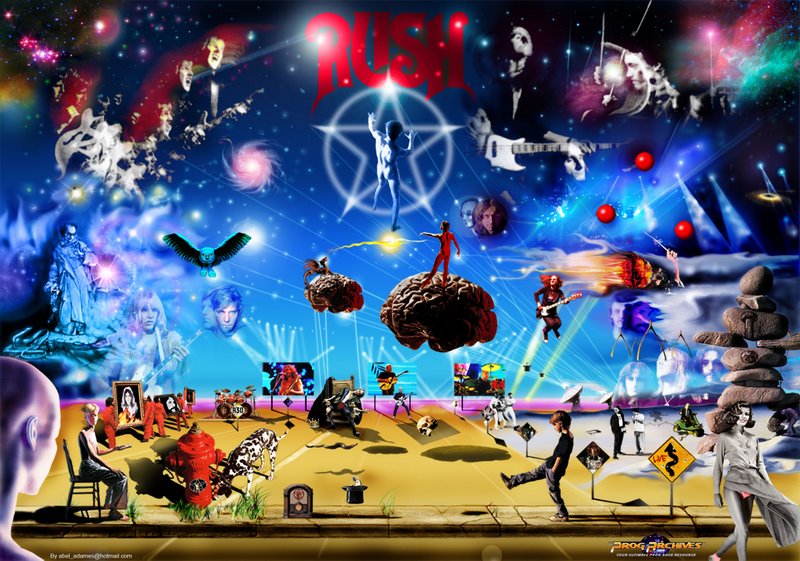
Here are the albums of new music from 2018 that grabbed me on first or second listen, then compelled repeated plays. I’m not gonna rank them except for those that achieved Top Favorite status, which I’ll save for the very end. The others are listed alphabetically by artist. (Old school style, that is — last names first where necessary!) Links to the ones I’ve previously reviewed are embedded in the album titles. But first, a graphic tease …
Voegelin View has an interesting essay published today on Sufjan Stevens’ song “Tonya Harding.” Here’s a sample:
Stevens sees the proper recognition of and response to greatness as being essential to human beings living cohesively with each other. Honoring and defending the truly great individuals—who offend and uplift—allows for brilliant exploits that draw people together in a moment of wonder and appreciation (10-12). It also creates space for sympathy and mourning as the ‘star’ comes up against the burden of imperfection and risk of failure (cf. 39-40). Indeed, greatness isolates so as to reinforce the fundamental human need for community. To not acknowledge or to subvert greatness is to defer these communal encounters and give a society nothing meaningful to hold its members together by.
Finally (and perhaps most importantly), the emphasis on compassion also mitigates the effects of the Trump-like demagogue. As noted above, the latter shares in the quality of being extraordinary and thereby speaks to something profound and true about the human experience. But he is not great. Nonetheless, Stevens asks that he still be met with kindness. For the demagogue’s viciousness and cruelty, like Harding’s greatness, does not extend to his entire person. He too is complex and does not deserve to be hated or laughed at. One may speak out and fight against his malice, but one may not withhold the possibility of forgiveness and welcome. To refuse those is to play into his game of annihilation and leave behind the community one sought to protect.
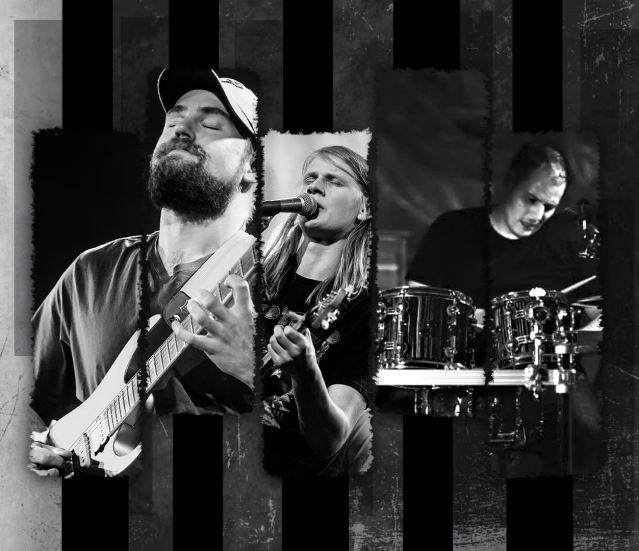
DJ Brass Camel is an amazing band that has already developed a style uniquely their own. They play a very cool blend of proggy funk, but some people may have been wondering why I placed their debut album at #2 on my Top 10 Prog list this year, rather than on my Top 10 Rock list, since one could argue that there is more funky rock on the album than funky prog.
The short answer is that it is a judgment call. For a quick justification, watch the incredible video embedded below, which is the best recorded version of their live playing that I have yet seen. The video, which can be replayed again and again, bottles their magic so that you can see for yourself the delicious progginess with which they infuse their music. The nimble riffing is simply fantastic, and you can see their magic recipe includes sweet doses of Moog and Rickenbacker. There are beautiful little moments when their playing takes on what I call “the Rush aesthetic” — that is, the playing is so tight, and then even more wondrously there are sudden subtle insertions of instrumental virtuosity into a little corner of a bar here and there: especially check out the instrumental break that begins at 1:44 below.
The long answer is that this band put on the most incredible prog concert I have ever seen at the Planetarium this year on Nov 2. (Note: because it sold out so quickly, they added a second show on Nov 1 which I was unable to see because I had to be teaching a class; in retrospect, I should have required my students to go to this masterclass in prog instead!)
I saw some pretty unbeatable concerts this year — Sloan, Lake Street Dive, Haken, Leprous, Bent Knee — but this concert was on a completely different level. DJBC rented the Planetarium at the Vancouver Space Centre, projected cosmic visuals cycling on the dome, and played note-perfect version of some of the greatest songs in prog, moving through a jaw-dropping set list:
DJ Brass Camel: Live at the Space Centre (Nov 2)
Pre-show social with wine and beer
Set One:
Watcher of the Skies (Genesis)
Xanadu (Rush)
Time/Breathe reprise (Pink Floyd)
Buenas Noches (DJ Brass Camel original instrumental)
Tarkus Eruption (ELP)
Long Distance Runaround (Yes)
21st Century Schizoid Man (King Crimson)
Intermission with wine and beer
Set Two:
End shots from Proclamation (Gentle Giant)
Comfortably Numb (Pink Floyd)
Roundabout (Yes)
Dancing with the Moonlit Knight (Genesis)
[The Trees (Rush) — only played on Nov 1]
Starless (King Crimson)
Brain Damage/Eclipse (Pink Floyd)
Encore:
2112: The Complete Epic (Rush)
The band brought in a host of authentic instruments in order to re-create the pristine sounds of the originals. Watching any one of the original bands play these songs on their original tours would have been a priceless experience, but what DJ Brass Camel did was give you an experience equivalent to hearing all these of these superstar bands live together on one night. You had to hear it to believe it, and it sounds almost unbelievable to say it, but the songs sounded just as good as anything the original artists can do live.
The evening began as Daniel came out in a lab coat and announced via a bullhorn: “This is an announcement from Genetic Control — the concert will begin in five minutes.” After everyone finished their drinks and took their seats, the light show began and you heard the keyboard washes introducing “Watcher of the Skies” as Adam Wazonek (a.k.a. “The Wizard of Waz”) began working what would be his evening of magic; you would swear he was Keith Emerson himself later when you heard him play the ELP.
Curtis Arsenault (a.k.a. “Professor B” — and B is for BASS) played every bass line faithfully all night long, which was nothing short of a miracle, and his tone was the most perfect live bass playing imaginable, you could hear all his bass runs so crisp and clean, it was so divine. When you heard him doing those snaking riffs from “Xanadu” in airtight dynamic synchronization with Cole George (a.k.a. “The Governor of Givin’ ‘Er) on drums, the second coming of Neil Peart, you were in Rush heaven.
The band brought in Brice Tabish as guest vocalist to sing a perfect imitation of Geddy Lee on all the Rush tracks. And yes, you read that right on the set list, they did all of 2112 as their encore. Brice’s emotion and expression was so good, he even added something extra to the Rush tunes, evoking passion and pathos in unexpected ways that a longtime fan may have forgotten is at the heart of this music.
Lisa Brady was another great guest vocalist, who came in to do the requisite female vocals on all the Pink Floyd classics. As an added bonus, the band’s shadows were projected from the stage onto the Planetarium dome as they played, and her own elegant shadow danced among the planets and stars.
Speaking of vocalists, the band had planned to bring in another guest vocalist to do Jon Anderson’s vocals on the Yes tracks. But in rehearsals, when guitarist Axel Attal (a.k.a. “Lebanese Lightning”) stepped up to the mic to sing placeholder lead vocals during an early rehearsal, they realized that he himself sounded exactly like Jon. So, in a moment reminiscent of Genesis discovering Phil Collins as their Peter Gabriel replacement, they called up the dude they had hired as their Anderson imitator and told him they no longer needed him for the gig!
J.T. Platt brought his soprano and alto sax skills to the proceedings, and many people I spoke to at the intermission considered “21st Century Schizoid Man” to be one of the highlights. But I think they just said that because it was the last song they had just heard. In truth, every song was a highlight of evening! There was no filler, not even the DJBC original instrumental that they inserted into the concert, because remarkably their own music stood as tall as the greatest hits of prog. Hearing them play their own music side-by-side with the greatest songs of yesteryear, you knew you were in the presence of musical greatness, as they proved themselves worthy to do justice to these sacred songs of prog.
I was prepared for the virtuoso guitar talents of Daniel James, since I had seen the band at an earlier concert, but what I was unprepared for was his unexpected vocal abilities. Previously, I was familiar with him shredding his vocal chords to bring the spirit of James Brown to the funky rock on Camel’s songs from their debut album, but it turns out he has more vocal abilities than he has revealed on recordings yet.
In particular, because of his love for early Genesis, he does an amazing imitation of Peter Gabriel. I think subjectively my favorite song of the evening was “Dancing with the Moonlit Knight” because of his stunning vocal rendition of it, packed with so much power and emotion. But right from the beginning he knocked me out my seat with “Watcher of the Skies” when he came out dressed in authentic Gabriel garb and wielded a tambourine with all the right signature moves.
Objectively, perhaps the finest musical achievement of the evening was the rendition of “Starless” which held together in an amazing way, despite all the dissonance and cross rhythms built into the track. Everything they played that night was difficult for musicians to play, but this one takes the cake, for sure.
Overall, it was the concert of the year for 2018, maybe even for all time, because when could I ever see all those original prog bands on one night in such an intimate setting? The sound and lights were more perfect than they could be at any arena or medium size venue. And why don’t more prog bands do planetarium shows? It was a revelation to be orbiting various planets during “Roundabout” and “Long Distance Runaround” — finally I understood the lyrics, haha! — and it was simply the best theatrical way to complement these songs.
Prog on, DJ Brass Camel. I hope more people will see your live magic soon. In 2018, you gave us a show for the ages. Thank you!
Some people may quarrel with me for calling this a prog album, but in that case I’ll leave you to debate with my fellow editor Bryan Morey over the definition of prog.
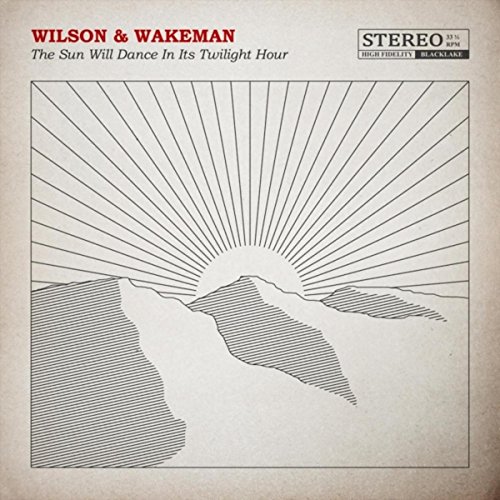
Damian Wilson’s singing with Headspace has been part of some of the most interesting prog of recent times. Headspace’s All That You Fear is Gone (2016) is a prog masterpiece. So, for me, Damian’s highly distinctive voice will always be freighted with my memories of that glorious album.
And if you’re Adam Wakeman, well, for crying out loud, as the son of Rick Wakeman, you are basically born as forever prog royalty. So, there can be no way this is not a prog album. QED.
Okay, seriously now: Perhaps the most progressive thing about this album is that it subverts our prog fan expectations. It totally strips everything down to the bare essentials of great songwriting, giving the vocals (alternating between Damian and Adam) lots of room to breathe, adding just enough keyboards or guitar (sometimes both), supported only occasionally by strings or the slightest sprinkling of percussion.
It’s like they decided, hey, let’s do a concept album: let’s do — here’s the concept — the opposite of prog.
And, funnily enough, that makes this album more than prog enough for me. Because, man, it is stacked, front to back, with emotionally devastating songs and perfectly calibrated musicianship.
Hey, question: who needs every bar of an odd-numbered time signature jammed full of a thousand weird instruments playing 32nd notes? Answer: no one, if you can deliver the emotional goods just with a powerfully simple song.
I have to confess that for me “The Last American Hero” and “Blackpool Clip Joint Racket” (tracks 1 and 4) are not the strongest of the album’s songs, a fact which kept me from getting into this album right away, if only because they occur so up front.
But they are surrounded by a number of superb and moving songs. “On This Battlefield” and “Always the Lonely One” and “Laugh In Time” and “Better Than That” (tracks 2, 3, 5, and 6) are clearly nothing other than perfection in songwriting and performance. They each captured my heart immediately.
Yet it is track 7 that I find most moving of all. In “Red Socks,” Damian tells the affecting story of how his heart was crushed at a young age, and it becomes a universal human story thanks to the poignant simplicity and emotional power of the way he unfolds the tale of his nascent inner life.
From there on to the end, the last three songs (tracks 8, 9, 10) continue on at the level of the preceding three tracks (tracks 5, 6, 7). “Shining a Light on a Miracle” and “Tried and Tested” and “The Sun Will Dance in Its Twilight Hour” are all lovely and uplifting.
Indeed, “lovely and uplifting” is how I could also describe the music of Yes. But while, yes, more is more, sometimes also less is more, no?
Wilson and Wakeman prove that less is more on this album.
[Warning: I ramble a lot in this. My third (out of 4) semester of grad school just ended, and I needed to write something about prog.]
What does it really mean for rock music to be progressive? This question has risen in my mind over the last few days as I have been at my job at my university’s archives working on processing some records from the 1970s related to the university’s radio station. There is a lot of talk in the records about the station and many others in Chicago playing progressive rock. I’ve come across lists of the most popular music to play in radio stations across the country, and I was a little surprised to see names like Yes and Emerson, Lake, and Palmer present.
Other documents from the time loosely defined progressive rock as a genre of music that was forward looking. It also appears that there were whole radio stations in Chicago, on both AM and FM bands, dedicated to playing “progressive” rock. Today there are none. Earlier this year, Chicago lost one of it’s two remaining “classic rock” stations, which were known to occasionally play prog such as Rush, Pink Floyd, and even Yes. The “oldies” station (WLS FM) is playing more music from the 70s these days too.
The fact that there were multiple stations whose explicit purpose was playing “progressive” music suggests that the genre was popular. But just how popular was it? If we go by best-selling albums between the years 1969-1979, then we would have to assume that it wasn’t very popular at all. [This analysis would be a lot more fair if I delved deeper into the charts and looked at top 40 from that time span too, but stick with me anyways.] In that time frame, over 140 different albums topped the charts. Of that number, only 9.5% of them could be called “progressive” rock. That’s only 14 albums, which I shall list in chronological order: Continue reading “Is Prog Rock Really Progressive?”→
This is the official music video for the song “Be The Light” featuring special guest Steve Rothery (Marillion).
This song is from the forthcoming debut sci-fi concept album “Acceleration Theory” available for pre-order from http://sonicelements.bandcamp.com
Video created by Christian Rios, Christine Leakey & Dave Kerzner
Green Screen Visual Capture by Erik Nielsen
Live footage shot by Joel Barrios, Erik Nielsen, Hal Feldman & Matt Urban at ProgStock Festival 2018 in Rahway, New Jersey
Starring: Gabriel Agudo & Leticia Wolf with Dave Kerzner, Matt Dorsey, Randy McStine, Fernando Perdomo & Marco Minnemann
Mixed by Chris Lord-Alge
Additional Mixing & Mastering by Dave Kerzner
Produced by Dave Kerzner
Executive Producers Hal Feldman & Dave Kerzner
Recorded by Dave Kerzner, Marco Minnemann, Matt Dorsey and Fernando Perdomo
Audio Editing by Andrew Gonzalez & Dave Kerzner
Audio Music Performances:
Gabriel Agudo – Lead Vocals
Leticia Wolf – Lead Vocals
Jon Davison – Vocals
Dave Kerzner – Keyboards, Vocals
Steve Rothery – Cameo Guitar Solo
Randy McStine – Guitar
Fernando Perdomo – Guitar
Matt Dorsey – Bass
Marco Minnemann – Drums
Music written by: Dave Kerzner, Randy McStine
Lyrics by: Dave Kerzner
Special thanks to Ewa Karolina Lewowska, Chris & Tom Lord-Alge, Gavin Lurssen, Steve Rothery, Jon Davison, Nick Davis, Simeon Spiegel, Erik Nielsen, Hal Feldman, Leticia Wolf, Gabriel Agudo, Matt Dorsey, Marco Minnemann, Randy McStine, Fernando Perdomo, Sherri Nahan, Jay Kerzner, Daniel & Leah, Jerry Ewing and everyone at Prog Magazine, Larry Morand and everyone at Cruise To The Edge, Thomas Palmieri, Ann Rinaldi and everyone at ProgStock.
International progressive rock outfit UMÆ have previously launched two singles via PROG Magazine and Prog-Sphere.com, and coming today exclusively via Progarchy is the third single from the upcoming full-length debut “Lost in the View.” A new single titled “Drift” can be streamed below.
Vocalist and guitarist Anthony Cliplef, guitarist and backing vocalist Guðjón Sveinsson, and drummer Samy-George Salib have gathered a line-up of guest musicians for the debut album, with singer John Wesley (solo, Porcupine Tree), guitarist Eric Gillette (Neal Morse Band, Mike Portnoy’s Shattered Fortress), keyboardist Adam Holzman (Steven Wilson, Miles Davis), and bassist Conner Green (Haken) being the most prominent names.
About “Drift,” Anthony Cliplef commented: “I wrote the outro section years ago, on guitar. The outro and the rest of the song remained as two separate pieces for a long time, until I coincidentally played them back-to-back. From there, this became the seed of another track which Guðjón and I would collaborate on. I had lyrics for the outro, which were never used, however, the melody was still viable. We ended up putting in an ebow line using that very melody I had in mind, which G’s string arrangement would echo towards the end. In this track, Conner returns on bass, with an inspired bass line, brilliantly reflecting some of the vocal melody in the verses, and bolstering the building power of the outro. Jamison Smeltz, lays down an amazing sax solo towards the end, backed by a powerful string arrangement and rising tension on all instruments.“
Guðjón Sveinsson adds: “Compared to the previous singles, this track displays more of the melancholic feel that is strewn around the album. Building up from stripped down verses to a grand ending, it gives off a range of related, yet distinct emotions.“
“Lost in the View” is to be launched on January 3rd. Stream “Drift” below, and visit UMÆ’s official website for more information. Follow the band on Facebook and Instagram.
Following up on this announcement (along with previous announcements of shows in London and Germany), Robert Fripp commented:
the countries being visited (although not extensively) are: Germany, UK, (likely) Holland, Poland, France, Switzerland, Spain, Italy, Mexico, US, Canada, Brazil, Argentina and Chile. This assumes the world doesn’t get much crazier than it is already, noting that it will.
The exact timing of announcements for shows has to be agreed with the different promoters in different territories. We are also playing festivals, which have their own schedule. Some show-dates and contracts are still being finalized. This means that we cannot announce a full list. We do however insist that the first announcement comes from the DGMLive website, and that we have at least a week in advance to sell Celebration packages where they exist (it is not normally possible at festivals).
More tour date announcements are coming in 2019.
And yes, I ponied up for a Celebration Package in Chicago. Lord willing, I’m ready and raring to hear the Mighty Crim for the 9th time next September!
David Mitchell, the author of Cloud Atlas, has just written a truly remarkable and insightful piece in the Guardian about Kate Bush and her musical achievement. His discussion of Kate’s masterpieces is so good that every Kate fan will delight in it and find themselves rushing to listen again to these beloved albums.
Every word of Mitchell’s essay rings true. His memories of youthful, pre-Internet encounters with Kate’s music are so beautiful, they will remind you of special scenes from your own life. I was also thrilled to find him conclude his piece with this exhilarating interpretation of “Under the Ivy,” one of my very favorite Kate songs of all time:
I can’t help but interpret “Under the Ivy”, a B-side from the Hounds of Love era, as a kind of self-portrait or “meta-song” about the Kate and her oeuvre that have existed “away from the party” of musical fashion since the start of her career. Her music is secluded “under the ivy” and yet it invites you to join it, almost coyly: “It wouldn’t take me long / to tell you how to find me … ” Both Kate’s wariness of celebrity and her oneness with music and sound are recalled by the lines: “I sit here in the thunder / The green on the grey / I feel it all around me / And it’s not easy for me / To give away a secret / It’s not safe.” Yet she does give away secrets: they’re just coded, in extraordinary songs like this one.
Fans want more of what we loved the first time, yet we complain if things feel repetitive. Kate is a mighty exception to all this, as rare as a yeti. Her fidelity to her ever-curious, ever-morphing muse has won her a body of fans who hold her songs as treasured possessions to be carried through life. By dint of never having been in fashion, she has never fallen out of fashion. By taking bold artistic risks that she navigates with ingenuity and wisely chosen collaborators, the albums Kate made in her late 40s and 50s equal and surpass the songs recorded in her teens and 20s that made her famous. To any artist in any field, her example is a hope-instilling exhortation to evolve, to reinvent, to reimagine what we do.
Note that Mitchell has written the introduction to a print edition of Kate’s lyrics which is published by Faber & Faber: How to Be Invisible.
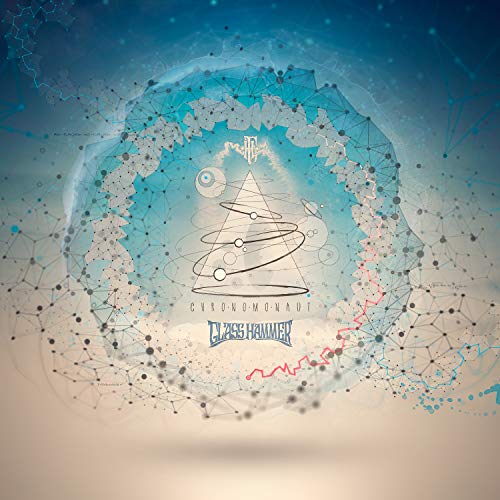
Oh, I don’t care what your favorite Glass Hammer album is. This one is mine!
Chronomonaut is a magnificent achievement. I was not prepared to love this album as much as I do. But truly, resistance is futile. This is quite simply, in my opinion, the finest prog statement Glass Hammer has ever made.
And they were albe to make it because, rather than be complacent or predictable, they decided to take risks and blaze an adventurous trail instead. Not only that, they dared to face, head on, their fans’ own penchant for nostalgia, by choosing to confront it in themselves as well, and to overcome and transform it by means of an unexpected, thoughtfully coherent artistic reckoning.
The two tracks that instantly won me over were “Roll for Initiative” (propelled by the mightiest bass playing I have heard since Chris Squire) and “Blinding Light” (with its truly fantastic horn arrangements, which I now think should become a Glass Hammer signature).
Soon enough I was quickly subdued by the devastating thematic track “The Past is Past,” and then the totally rockin’ “A Hole in the Sky,” and then the righteously sprawling album closer “Fade Away.” What feats of musicianship, what joys to savor!
Further still, sprinkled like extra treats at an already lavish banquet, are the quirky instrumentals which stand out with exceptional prog cred, as independently stimulating in their own right: “Clockwork,” “It Always Burns Sideways,” and “Tangerine Meme.” I always look forward to each one of them, and I dare anybody to call such fascinating tracks “filler.”
Finally, Susie’s vocal contributions add another dazzling dimension to the whole proceedings, with the diverse scenes painted by “Twilight of the Godz,” “1980 Something,” and “Melancholy Holiday” constituting definitive proof of the musical richness that Glass Hammer can pack into one glorious album.
If you haven’t picked this one up, don’t miss it. One of the year’s most thrilling albums awaits you. You will find resistance is futile: you will be air drumming, or playing air guitar, and saluting Glass Hammer as you join in the rockin’ republic of prog.