Gord Downie, 1964-2017

by Rick Krueger

In August of 2016, my wife and I vacationed in Stratford, Ontario — one of our favorite places to visit, due to its internationally acclaimed theater festival and its lovely riverside parks.  Picking up local classic rock stations as we crossed into Canada, I noticed lots of talk about The Tragically Hip’s upcoming concerts in London and Toronto.

I’d heard of The Hip, but never got into them — partially because I’d moved away from metro Detroit, where good Canadian bands could easily score airplay and well-attended shows.   I was surprised at the amount of hubbub around this tour; it was only after we returned to the States that I learned the reason for the buzz.

The Hip’s lead singer and lyricist, Gord Downie, had been diagnosed with glioblastoma multiforme, the worst kind of brain cancer, late in 2015.  After finishing the 2016 album Man Machine Poem, the band decided on one last go-round of Canada’s hockey rinks, winding up in their Ontario hometown of Kingston in front of 6,700 fans in the local arena, thousands more on the surrounding streets, and a national audience on CBC.

Honestly, the music of The Tragically Hip is little more than well-executed, basic rock — lots of Rolling Stones and John Mellencamp grooves ranging from competently shambolic to tightly locked in.  The secret sauce was Downie’s surreal, shamanistic lyrics.  Stirring together a underdog outlook, the perspective of Canadians from the “great wide open” and random streams of consciousness (sometimes improvised live as the band rocked on — sperm whales were a recurring theme), they were fascinating precisely because they were sharp yet ambiguous, complex — even openly, defiantly confused.  At their best (in my view, on the album Fully Completely and the compilation Yer Favourites) the group was pretty compelling.

Gord Downie passed away last night at the age of 53.  To say he leaves behind a grateful nation is not an exaggeration.  You can see and hear what Geddy Lee had to say about The Hip last year as the farewell tour wound down here, and read a well-wrought appreciation of Downie’s take on Canadian identity here.  Banger Films (the folks responsible for the Rush documentary Beyond the Lighted Stage) have completed a film about The Hip’s final days, Long Time Running; it’ll be streamed on Netflix starting November 26.  And check out the Yer Favourites compilation below.  I especially recommend “Fiddler’s Green,” Fifty-Mission Cap,” “Courage (for Hugh MacLennan),” “Fireworks” — and if you only have time for one track, the fierce “At the Hundredth Meridian.” 

“If I die of Vanity, promise me, promise me
That if they bury me some place I don’t want to be
That you’ll dig me up and transport me
Unceremoniously away from the swollen city breeze, garbage bag trees
Whispers of disease, and acts of enormity
And lower me slowly, sadly, and properly
Get Ry Cooder to sing my eulogy …”
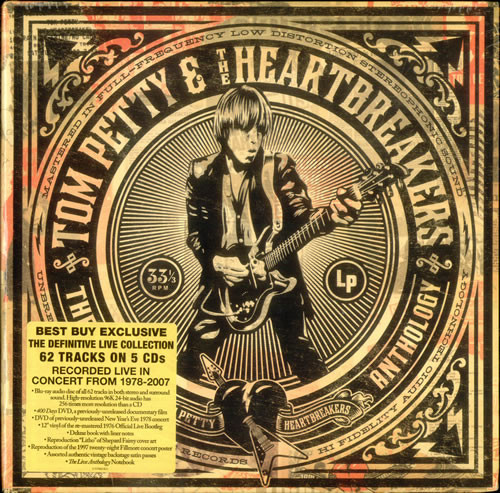
 

Rick’s Retroarchy: Tom Petty & the Heartbreakers, The Live Anthology

by Rick Krueger

When I heard that Tom Petty had died, I dug into my Closet Full of Box Sets and pulled out this baby.  Released in 2009, it came in two versions: a four-CD set with 48 tracks (still available at a super-bargain price) and the Best Buy-only version with an extra CD, one of the first 96K/24 bit audio Blu-rays that included all the songs, two DVDs (a 1978 concert and a 1994 documentary), a replica of a 4-song vinyl promo EP from 1976, various and sundry tchotchkes, and a ludicrous price tag.  Guess which one I bought?

Listening to The Live Anthology again over the past week, Petty’s songwriting struck me again as solid, unpretentious and down to earth; it hasn’t resonated that strongly in my life, but that doesn’t mean it isn’t worthwhile and well done.  A lot of my favorite moments on the set come when TP quiets down and pours himself into the forms of classic country and folk.  Songs like “Wildflowers” (which feels like an obscure Carter Family tune), the beautiful, hushed lullaby “Alright for Now” (the closer for the four-CD set), and the agrarian hymn “Southern Accents” skip overblown, Springsteen-style myth-making and just communicate — plain-spoken, deeply felt, lovely.

And then there are the Heartbreakers.  Back in my college days, I used to read Stereo Review regularly, mostly for Steve Simels’ rock reviews — agree or disagree, they were always opinionated and entertaining.  Truer words may have never been written than Simels’ New Jersey-style summation of TP & the HBs’ work on Damn the Torpedoes: “Dese guys is good.”  On the evidence of The Live Anthology, they stayed that way for more than 30 years.  Always in sync, almost telepathic at times, Petty, guitarist Mike Campbell and keyboardist Benmont Tench weave elegant, immersive webs of rock, blues, and R & B over a variety of unflappable, grooving rhythm sections.  Whether it’s the Byrdsy power pop of “I Need to Know,” “Even the Losers” and “The Waiting,” mega-hits a la “Refugee,” “Runnin’ Down a Dream” and “Free Fallin’,”  extended jams like “It’s Good to Be King” and the previously unreleased “Melinda,” or a head-spinning range of cover tunes (a surf instrumental version of “Goldfinger”?  Booker T & the MGs’ “Green Onions”?  Van Morrison, Conway Twitty and the Grateful Dead?), the band always sounds lean and soulful, consistently in the moment, listening for the inherent magic and then doing what’s needed to make it happen.

For a while in the late 1990s and early 2000s, Petty rented out our local arena to get ready for his US tours.  Now I kind of regret that the closest I got to hearing him live was serving beer at one of the concession stands for his 2008 Grand Rapids show.  (There are soundproofed plastic flaps over the arena entrances; plus, I served a lot of beer that night.)   For people like me who missed the chance, The Live Anthology is an eloquent testimony to what the man and his band could do at their best.  Listen to the complete deluxe version here:


soundstreamsunday: “I’m So Tired” by the Beatles

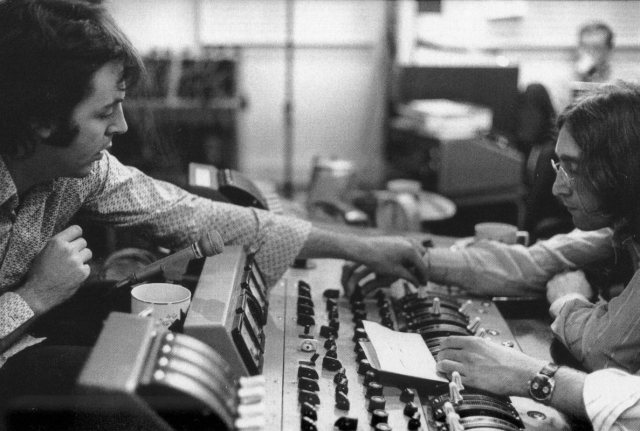
paul john mixing white album 68Released in November 1968, the White Album did a Pollock on all the principles of freedom the Beatles had been shaping since 1965’s Rubber Soul kicked off their long, disciplined freakout, and splattered the canvas with every elementary Beatle colour: rock and roll, British music hall, folk-and-pop, country, novelty songs, in no apparent order or thematic unfolding.  In its elemental, revelatory mess and as a rock double album it bears resemblance to Dylan’s Blonde on Blonde (1966) or even Hendrix’s Electric Ladyland (released just the month before), and if you took the long view you could, I suppose, think of it as part of the strengthening trend in the late 1960s towards the belief in rock music as art.  While The White Album may not be a lot of things to otherwise die-hard Beatles fans, it is very definitely Art.  Self-conscious Pop collage.  If the grinning nods-and-winks of yore are replaced by the dour four studiously not having a good time together during these last years of their existence (or perhaps merely shrugging the veil of idolatry), the music gives the lie to this not being good for the rest of us and for popular music in general across the timeline of centuries.  That Abbey Road and its blueprint for rock’s next steps was still in their future is almost impossible to believe.
“I’m So Tired” is a late Beatles-era Lennon masterpiece, a song of yearning and uncertainty.  Its central line,  “I’d give you everything I’ve got for a little peace of mind” is both a call of desire for Yoko Ono and, in its cultural context, maybe the expression of the need to cool off for a bit, get some bearings amidst the drugs and money and politics and war and bullshit.  This is what makes great songs.  And of course it doesn’t hurt that there’s a lazy kind of rhythm to it, torch ballad sway giving way to hard rock march in the B section.  Twice through and out, nothing to it really, but in its barely 2-minute glory it contains in its molecules everything the Beatles were and would be.

soundstreamsunday presents one song or live set by an artist each week, and in theory wants to be an infinite linear mix tape where the songs relate and progress as a whole. For the complete playlist, go here: soundstreamsunday archive and playlist, or check related articles by clicking on”soundstreamsunday” in the tags section.

soundstreamsunday: “Can I Sit Next To You” by Spoon

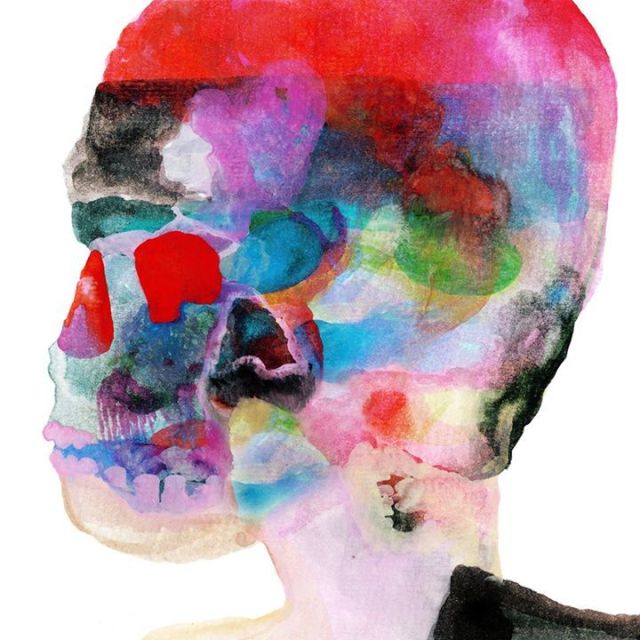
spoonThe connections are clear, right? Michael Karoli’s cousin and girlfriend were the cover models for Roxy Music‘s album Country Life (1974); Spoon names itself after a song by Karoli’s band Can; and if Spoon isn’t America’s Roxy Music then I’m buying a ticket to Cologne and getting this all figured out for good.  Spoon is the rock art band of the moment and of many previous moments, their career now in its twenty-somethingth year.  Released this spring, the band’s latest, Hot Thoughts, along with LCD Soundsystem’s American Dream, gives the lie to what is otherwise a general truism: rock bands are a young person’s game.  A killer set of songs with a sustained, youthful definition, Hot Thoughts makes me search my brain for other great rock records made by folks who are my age.  A real, original rock record.  With guts and balls and great songwriting and absolutely no fat.  Not something worthy of elder statesmen or something celebrated by NPR for the maturity of its grizzled veterans, but damn, something that makes you want to dance and call out its lyrics without having much of a history with the band (and I don’t).

When Britt Daniel sings “I’ve been working on a plan, yeah” on “Can I Sit Next To You” he makes it feel like the most important words ever uttered.  Part of this is his voice, which as rock vocals go is, as my 10-year-old would say, “savage, yo” (really).  A mix of John Lennon, Iggy Pop, and Lee Mavers, Daniel can do falsetto soul back-to-back with a nasal/glottal/punky growl.  This was the territory of the giants of early 70s British rock as it morphed into pub and punk, the White Album (yeah and maybe some Marvin Gaye…and Can…) in one hand and a lager in the other.  So, everything is a hook but all the hooks have a Martin-esque depth of detail, flourish, and care, and a slightly shifted off-ness that makes it a slow, satisfying grower.  When in the middle of the song the bulbs pop and the keyboards go eastern psychedelic, it opens the horizon and we’re getting a thumbnail funk view of the Arabian Peninsula.  Sick — maybe the Cure would have thought of this but wouldn’t have been so economical, and there is whiff of “Fascination Street” lingering in the background.  Jim Eno’s boss kick drum brings it back to old school, and if you’re like me you’re waiting for that crazy keyboard bit one more time, and it does come, hallelujah.  With all it makes me think about, still…this is a conjuring music, an act of devotion not imitation.  Song ’bout kicks and the lengths you might go to.

soundstreamsunday presents one song or live set by an artist each week, and in theory wants to be an infinite linear mix tape where the songs relate and progress as a whole. For the complete playlist, go here: soundstreamsunday archive and playlist, or check related articles by clicking on”soundstreamsunday” in the tags section.

Bob Dylan, The Bootleg Series: Trouble No More, Volume 13 / 1979-1981

by Rick Krueger

I’m not a hardcore Bob Dylan fan, but I admire quite a bit of his work: the early folk music, leading into the groundbreaking electric stuff (basically what’s in The Original Mono Recordings box set); Blood on the Tracks and Desire; the recent run of “old guy plays the blues” albums that started with Time Out of Mind.  I’m also grateful that Dylan’s music has midwifed some of the most resonant work by highbrow rock writers like Greil Marcus, Clinton Heylin and Michael Gray, along with poet Christopher Ricks’ masterful Dylan’s Visions of Sin.

To top all that off, Dylan’s Bootleg Series is, in my mind, one of the best-curated rarities/reissue series from a major artist.  Every volume has been at least an interesting listen for me, and I consider the last two releases, The Basement Tapes Complete and The Cutting Edge 1965-1966 (as well as Volume 4, The ‘Royal Albert Hall’ Concert) downright essential.

I also remember, as a college freshman, reading Jann Wenner’s review of Dylan’s Slow Train Coming in Rolling Stone.  Wenner knotted himself into a human pretzel trying to reconcile the free-spirited, hippie picture of Dylan he had built up for himself with a new album of — shudder — “born-again Christian” music.  It was unintentionally hilarious.

I’d argue that Slow Train Coming was really more of an “lost Old Testament prophet” kind of record — and thus in line with Dylan’s long-term aesthetic.  It wasn’t a masterpiece, but it was quite good — and there were occasional fine songs on the other “Christian” albums, especially “Every Grain of Sand” from Shot of Love.

Thus, Trouble No More: The Bootleg Series, Volume 13 /1979-1981 is definitely on my want list.  8 CDs plus 1 DVD of live and unreleased studio material, to be issued (like King Crimson’s Sailor’s Tales) on my birthday, November 3.  I really need to find some long-lost rich relatives!

More info here.

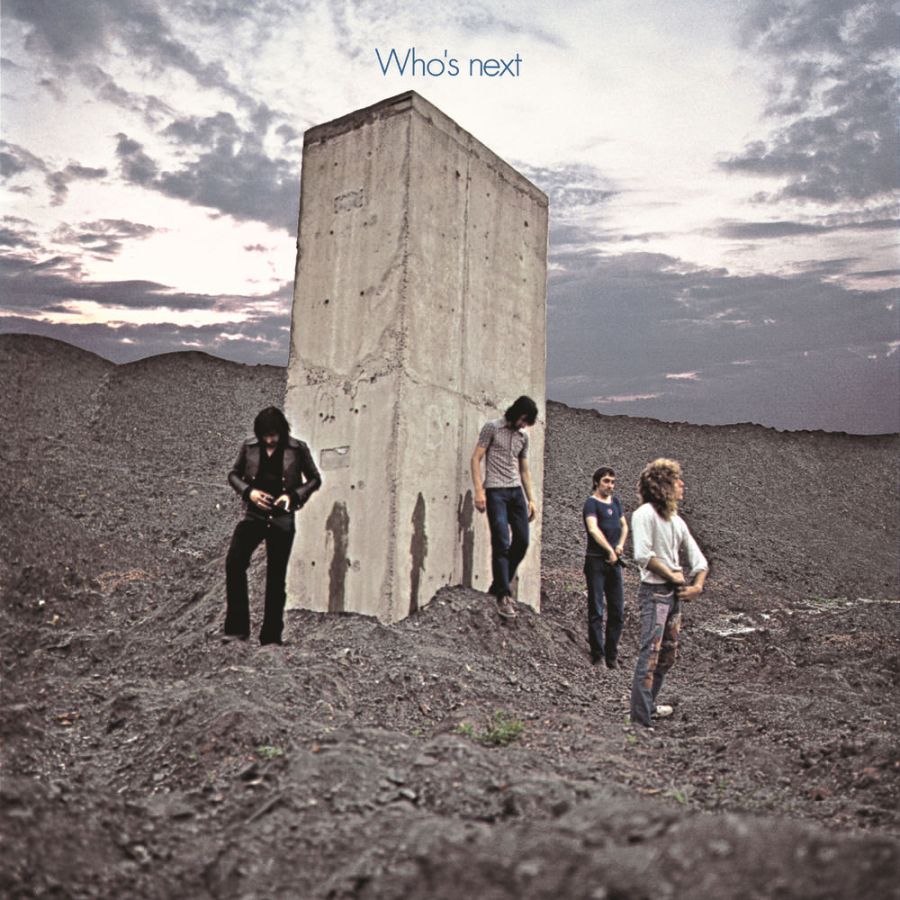
The Albums that Changed My Life: #4, Who’s Next by The Who

by Rick Krueger

“Rock ‘n’ Roll might not solve your problems, but it does let you dance all over them.” — Pete Townshend of The Who on Good Morning America, 1978.

From the 1960s through the early 1980s and beyond, Michigan loved The Who.  The only place their first single “I Can’t Explain” was a hit in the USA was Detroit.   Flint’s Holiday Inn became infamous as the hotel where, according to legend, Keith Moon drove a Lincoln Continental into its swimming pool on his 21st birthday.  Their 1975 show at the Pontiac Silverdome briefly held the record for largest indoor concert.

So it wasn’t as if I hadn’t heard songs from Who’s Next before I went to college in 1979; at that point, “Baba O’Riley,” “Behind Blue Eyes” and “Won’t Get Fooled Again” were inescapable on FM radio.  But it was at the end of my first term away from home that the 1971 album became something more to me.

Continue reading “The Albums that Changed My Life: #4, Who’s Next by The Who”

The Albums That Changed My Life: #2, Rubber Soul by The Beatles

by Rick Krueger

I’ve already written here about how, in late November 1977, this album grabbed me and has never let go.  Rubber Soul is (to paraphrase my previous comments) a sharp, cogent take on the folk rock fad of the time, mixing in flavors of soul, Indian ragas and Baroque elegance, with words matching the music’s new maturity.  It’s the sound of the Beatles downshifting and heading for new destinations, ready to move beyond shaking their moptops to a big beat and basking in the resulting screams.

There are no duds on either the British or the American versions of this album.  The UK Rubber Soul kicks off with “Drive My Car” — an exuberant Stax pastiche, a knowing mutual flirtation sketched in three-part harmony, topped with that goofy “beep-beep-yeah” tag on the chorus.  The US version, in contrast, starts with “I’ve Just Seen A Face” (from the British Help!) — Paul McCartney breathlessly singin’ and strummin’ a tale of new infatuation, a stream of consciousness laced with unexpected internal rhymes. Neither was at all typical of the Fabs; both sound wonderfully fresh, setting the tone for a different kind of Beatles record.

How many changes can you ring on the classic love song?  Rubber Soul shows how far the genre could stretch: surrealism with sitar (John peppering “Norwegian Wood” with non sequiturs a la Bob Dylan); break-ups with a backbeat (Paul’s “You Won’t See Me,” eventually covered with even more swagger by Anne Murray); suffering with added social comment (John’s “Girl,” featuring a chorus that’s just the title word and a deep, frustrated breath).  Ringo Starr does a country heartbreak turn on “What Goes On”; George Harrison glumly protects his personal space on the Byrds homage “If I Needed Someone.”  And this isn’t even including Paul’s earnest “Michelle,” which, if you were an easy listening artist and had already done “Yesterday,” quickly became the next Beatles tune to cover.

But what’s made Rubber Soul my ultimate touchstone for all things Fab is John’s “In My Life.”  It’s hard to top the reflectiveness and wisdom of these lyrics (in fact, I would argue that Lennon’s most famous songs are far less mature).  Every year they resonate more for me:

There are places I remember
All my life though some have changed
Some forever not for better
Some have gone and some remain
All these places have their moments
With lovers and friends I still can recall
Some are dead and some are living
In my life I’ve loved them all

But of all these friends and lovers
There is no one compares with you
And these memories lose their meaning
When I think of love as something new
Though I know I’ll never lose affection
For people and things that went before
I know I’ll often stop and think about them
In my life I love you more

Set to a lovely mid-tempo lope, with George Martin’s getting his Bach on for a gracious piano interlude, “In My Life” is evidence enough that, after Rubber Soul, both the Beatles and rock music would never be the same.   Listen to the album here:

Other Favorites by the Beatles: Well, the whole catalog, really.  But other favorites among the favorites are (as I’ve mentioned before), A Hard Day’s Night, Revolver, Abbey Road, and whatever Beatles album I’ve listened to last.

Related Favorites:

The Byrds: Essential Byrds (compilation); There Is A Season (box set); Sweetheart of the Rodeo.  Inspired by A Hard Day’s Night, the Byrds added Dylan, folk and country to the mix and made magic.  “Turn Turn Turn” is another song I never tire of hearing.

Cheap Trick: Heaven Tonight; At Budokan.  The Fab Four (pure pop version) of the late 1970s.  With added harder rock and wacky stage moves.

The Chipmunks: The Chipmunks Sing the Beatles. The first album my parents ever bought me.  Apparently I was tired of The Sound of Music.

Marshall Crenshaw: Marshall Crenshaw; Field Day,  The pride of Berkley, Michigan, replete with Beatlemania stage credentials.

The Smithereens: Blown to Smithereens (compilation); Meet the Smithereens (cover version of the complete U.S. album Meet the Beatles).  The Fab Four (pure pop version) of the late 1980s.


soundstreamsunday: “State Trooper” by Bruce Springsteen

bruce_springsteen - EditedIn 2014, Bruce Springsteen covered Suicide‘s “Dream Baby Dream” on his album High Hopes, revealing common roots among artists you wouldn’t normally associate, and further illustrating Springsteen’s connections to the New York art punk scene of the mid and late 70s.  His association with Patti Smith, through her interpretation of “Because the Night,” cross-pollinated rock and punk in a critical cultural moment.  Then in 1980 Springsteen and Alan Vega of Suicide struck up a friendship while both were recording their respective albums in NYC, and he lent Suicide much-needed support when their second album elicited nothing but stony silence from their label execs.  He later likened Vega’s voice, admiringly, to an exhumed Elvis.  Springsteen’s rise to bona-fide-and-sanctified rock star in the mid 80s tends to mask that his rock and roll roots were essentially punk, street, to the degree that the nickname he earned early on in his career never sat well with him.  He read in Elvis and the Sun brethren an unseating of authority.  He was seduced, romanced by rock’s exalting of the everyman, and he built his songs from a society of sympathetic blue collar and rural down’n’outs that appeared fully sketched on record.  This was and is his art.

“State Trooper” from Springsteen’s Nebraska (1982) most immediately links his work and Suicide’s, the acoustic blues rock stutter as lean as the song’s words, here exercised in relative economy (compared to, say, “Thunder Road” or “Blinded by the Light,” or, god forbid, “Rosalita”).  The lo-fi slapback echo combined with the aesthetic of the cassette multitrack Springsteen was experimenting with to make demos — which he then decided to release rather than flesh-out with his E Street partners — smacks strongly of cheap electronic processing and a reaching towards Suicide’s elemental synthesizer rock.

Both Springsteen and Vega were writing characters deeply steeped in rock’s first wave, but the innuendo is gone, so that Suicide’s Frankie Teardrop and the first person of “State Trooper” — who’s holding on to that thing that’s “been bothering me my whole life” — share a spinning endgame.  “Mister State Trooper, please don’t stop me…” is a plea to limit the damage that’s grown out of control, the high-pitched yawp at the conclusion, overloading the mic and my circuits, forever linking Springsteen and Suicide in a stylistic rock’n’roll entirety consisting of a road, a car, probably a gun, and not much time.

soundstreamsunday presents one song or live set by an artist each week, and in theory wants to be an infinite linear mix tape where the songs relate and progress as a whole. For the complete playlist, go here: soundstreamsunday archive and playlist, or check related articles by clicking on”soundstreamsunday” in the tags section.

After the Silver Cord is Loosed: Armageddon

IMG_20170727_103348
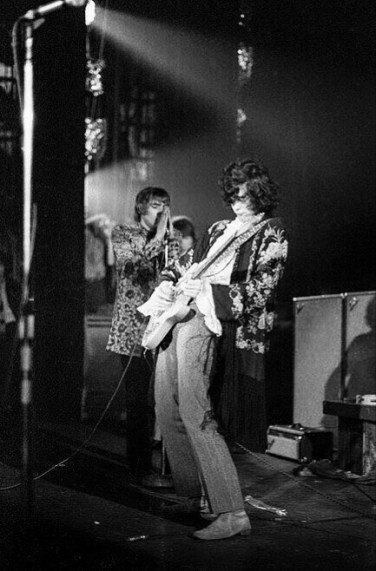
Nearing the end: Keith Relf (left) and Jimmy Page, 1968

In July 1968 an exhausted Keith Relf handed the keys to the Yardbirds to Jimmy Page, the last of the triumvirate of ground-breaking guitarists to grace the seminal rock band. Relf and drummer Jim McCarty had tired of the road and, in some measure, rock itself, and wanted to do something in a folk vein. For them the frenetic rock scene had run its course.

In October of that year Page took the New Yardbirds (himself plus John Paul Jones, Robert Plant, and John Bonham) to Olympic studios in London. Over 36 hours they hammered out Led Zeppelin, the biggest shockwave in rock history, the culmination of Chuck Berry’s rock n’ roll thunder, recaptured by Jeff Beck’s dangerous and deviant guitar a couple of years earlier, the climax of every frenzied dance ending in sweat-drenched pony-tails and bobby socks blackened by the gym floor.

Page proudly wore his old band on his paisley sleeve: “Communication Breakdown” brandished the proto-punk of Roger the Engineer; “Dazed and Confused” bore the same structure of the Yardbird’s cover of Jake Holmes’ original (credit where it’s due), including a mirror of Page’s guitar break from the BBC version of “Think About It”; “Black Mountain Side” was the Near Eastern-inspired complement to “White Summer”; and the slow burning blues tracks (“You Shook Me” and “I Can’t Quit You Baby”) harken to the Yardies’ roots.

The final Yardbirds salute, the over-powering “How Many More Times,” opens with a cocksure shuffle after the manner of Clapton-era “Smokestack Lightnin’,” then rolls through a Beck-style bolero into not one but two Samwell-Smith-inspired rave ups that bookend a surreal break: a bow drawn over Page’s heavily distorted ‘dragon’ Telecaster — the schoolgirl catching her breath and picking herself up from the dancefloor.

Oh, Rosie…

Seeing Jefferson Airplane in 1967 and hearing Jack Casady’s Homeric bass solo, Page thought to himself, “This is the end of the world.” No. Led Zeppelin was the end of everything. All rock music since January 1969 is post-Zeppelin. Even Led Zeppelin had to become post-Zeppelin to maintain its dignity. The virus exploded; the DNA of countless, nameless concert halls, honky tonks, and juke joints spread through the atmosphere, reconfiguring itself in other forms: folk rock, metal, punk, fusion, techno, roots rock, grunge, etc.

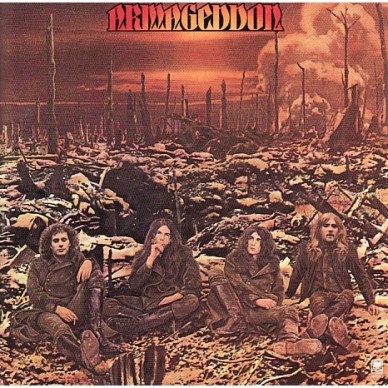
Not the least of these was progressive rock, which is where Keith Relf turned up in 1974 when he formed Armageddon. In addition to Steamhammer’s speed riffer Martin Pugh and bassist Louis Cennamo, Florida native Bobby Caldwell — veteran of stints with Johnny Winter, Rick Derringer, and the Allman Brothers (“Mountain Jam”) — took a seat at the drum kit.

armageddonArmageddon (1975) is an aptly titled foray into the post-Zeppelin musicscape. But the album isn’t a detour unto itself. It looks at the past and present musically, and to the future lyrically. Pugh’s riffs are contemporaneous with Houses of the Holy and Physical Grafitti. Prefiguring later developments in prog rock, the music pulls back from the inclusion of multiple themes and motifs, settling into a groove, often one with funk and fusion elements, and extending the passage with subtle alterations. This is particularly evident on the blistering opener, “Buzzard,” as well as “Last Stand Before.”

Relf’s voice isn’t as deep and prominent as on the old Yardbird’s tracks. A lifelong asthma sufferer (it’s painful to watch Jeff Beck mimic Relf puffing on an inhaler), Relf was basically down to one lung by this stage of his ill-fated life and career. But this didn’t thwart his signature harmonica work, and when the instrument makes its appearance toward the end of tracks it comes with the harrowing apocalyptic authority of seven trumpets blowing.

Rock and roll, moving your soul

Took a few as well

On the line, out of time

Shooting stars that all fell

Oh Lord, do something, gotta slow it down

It’s coming on too fast, can’t take it

Feel like I’m gonna drown

Gonna stand and face it, but I need you near

Through the darkest hours, I’m calling

Sometimes I think you don’t hear me calling

Hear me calling


Awareness of the consummation and transformation of all things pervades the album. From the shimmering “Silver Tightrope,”

I thought I saw the candle-bearers

On their way to the beyond

Beckon to me from the future

To come and join the throng

I stepped upon the silver tightrope

Balancing beliefs

And wings unfurling with a new hope

I left behind my griefs


Even the darker “Buzzard” includes a promise,

But the meek will stand

Understanding nature

Seeing far beyond the plan

Take their place in time

Take their place in timeless structure

The end of this present life came quickly and unexpectedly for Keith Relf in May 1975, as he was the victim of an accidental electrocution while working with ungrounded sound equipment in his basement. When the Yardbirds were inducted into the Rock n’ Roll Hall of Fame his wife and son accepted the honor on his behalf.

This post-everything world doesn’t last forever. In the meantime Armageddon occupies the already/not yet space with tight arrangements, subtle time changes, and expert chops from all its participants. And Relf proves the humblest instrument of ages past works in this context, creating a confident work one can take on a long drive — keeping an eye on the speedometer — in the direction of Proghalla.

soundstreamsunday: “Ghost Rider” by Suicide

suicideIt’s not until it works its witnesses into a state of ecstatic frenzy, as if reading a preacher-inflected text so self-aware it reaches ascendancy, that New York rock satisfies itself and its audiences.  It’s a city of distillations and self-regard, and so in its great contribution to rock and roll, New York puked up a revival so dazzling in its love for rock’s foundations it sometimes barely reads as the punk it became known as (or maybe a common idea of punk): there is no rejection, it is all embrace.

Suicide played rock and roll, and even as they coined the term “punk” — or at least early-adopted it from Lester Bangs to describe what they were doing — in their world that meant you visited the monuments and tore them down to find what was left in substance, not shadow.  It was an intentional act of art, constraint-driven, that Martin Rev and Alan Vega followed in the rock they made.  And they made it howl.

The pulsing drone riff of “Ghost Rider” leads Suicide (1977), the culmination of seven years of paring and refining and filtering the pure rock spirit.  That Suicide did this as a duo with synth and drum machine was revolutionary to the point of riot-inducing, and to this day sounds outside a point in time.  Suicide denied time, even to the degree that Vega claimed he was far younger than his 39 years.  It was no nostalgia trip, Suicide’s rock and roll, even though that trip hung heavy in the air: this same year the retro band Sha Na Na debuted on TV, though they too had been around for a while, hocking the schlock of 50s rock, that shadow that Suicide made it their business to avoid.  Both were needed but only one was important.

soundstreamsunday presents one song or live set by an artist each week, and in theory wants to be an infinite linear mix tape where the songs relate and progress as a whole. For the complete playlist, go here: soundstreamsunday archive and playlist, or check related articles by clicking on”soundstreamsunday” in the tags section.