
|
|

|
|
|
|
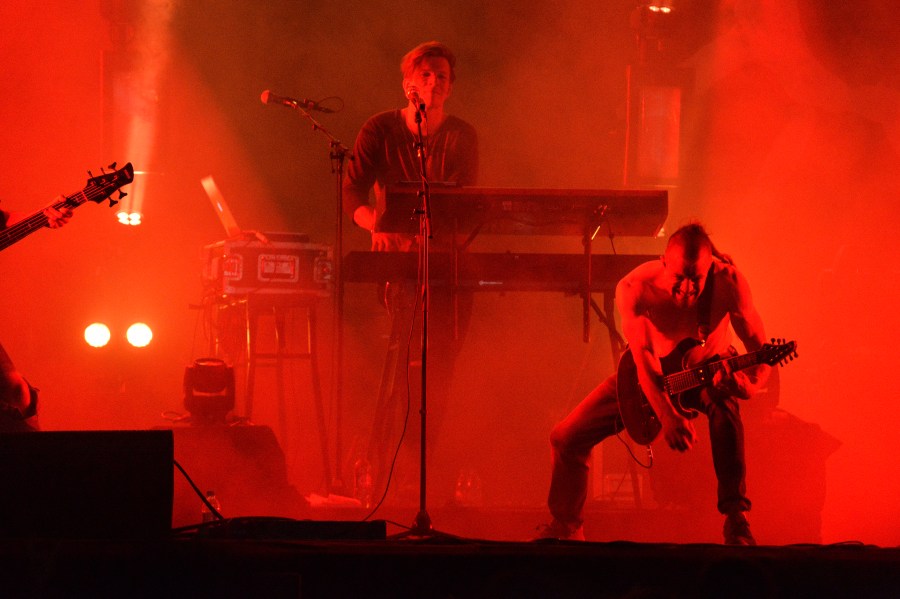
So, Pain of Salvation makes a grand return to their metal roots — album does manage to pack more than adequate amounts of dissonance and melody. ‘The Beatles’ like undercurrents still remain intact. In short, along with caustic riffs and coarse vocals, we get more than subtle glimpses of blues rock — vividly expressed through the same old characteristic Pain of Salvation torment.
Drums run a tad out of phase with hardcore punk like riffs — effortlessly blending into those matching vocal screams — add those precise temporal switches and the rare combination of aggression with progressive metal harmony is complete.
Heavy and mellow – discordant and melodic – In the Passing Light of Day integrates not just sonic contradictions, but emotions uncomfortably fragile for heavy metal – “You’re watching me slowly slip away, Like the passing light of day, Watching our colors turning grey, Like the passing light of day”
Rated 5/5 – for that unparalleled experience.
Image Attribution:
By Selbymay [CC BY-SA 4.0], from Wikimedia Commons
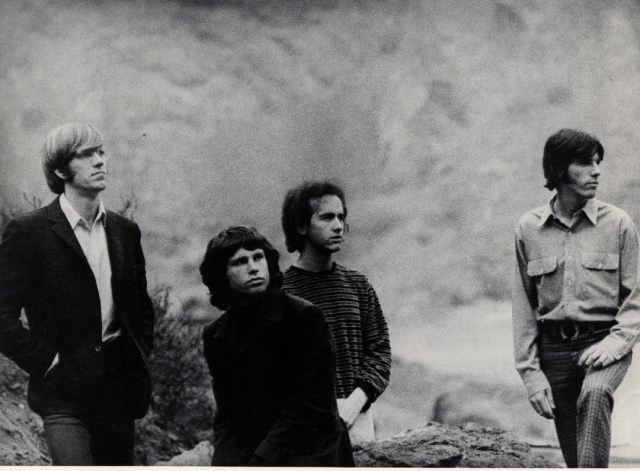 The Doors built its finest work around straight-ahead rock’n’roll, adding a whirling, baroque jazz samba momentum from the alchemy of keyboardist Ray Manzarek, guitarist Robby Krieger, and drummer John Densmore, all schooled in the post-bop cool permeating, by the mid-1960s, the many stripes of a blossoming California pop music scene. Jim Morrison brought the goods of fame, an impassioned thunderhead vocal whether singing his own lyrics or Krieger’s (the band’s most successful writer), and a hip pin-up beauty boosting the band’s pop darling status. (There is great irony here, as the New York Factory crowd crowed over Morrison’s veneer — with appropriate Warhol-esque fascination — and Morrison himself did everything he could to make and then deface his pretty boy shell, revealing the rot within, in one of rock’s most infamous stories of self-creation/immolation.) At the core of Elektra’s push to advance American rock in the wake of the British Invasion, the Doors — along with label mates Love, the Stooges, and the MC5 — subverted from within, using their musicianship and Morrison’s undeniable charisma to chart a course for a freedom in pop music that contained the seeds of both progressive rock and punk. In this they were like the Velvet Underground, although their east coast analogue never achieved anywhere near the popular impact of the Doors (V.U.’s influence notwithstanding).
Of their six studio albums with Morrison, all of which have their strengths, the self-titled debut is the Doors’ most cohesive LP. Released in the first days of 1967, it counterpointed the hippie cheer of the Sgt. Pepper era, playing to rock’s shadowy furies and heavily influenced by the day-glo punk creep of Love, a band greatly admired by Morrison and which, although still months away from its masterpiece Forever Changes, had already taken the dive into the seamy pop noir that Los Angeles inspired in those who saw desperation in greater relief the brighter the sun shone. It was a darkness with extreme definition, fascinating to both Arthur Lee and Jim Morrison, and the Doors came out of the gate startlingly fully formed in concept and execution, with Manzarek’s keys and Krieger’s unusual, flamenco/finger-style guitar conjuring a smooth jazz carnie ride driven by Densmore’s muscular but lithe drumming. Nothing else sounded remotely close to the Doors, thanks in large part too to producer Paul Rothschild and engineer Bruce Botnick, who used the studio as if they were recording a jazz group, attaining a clean, lively separation absent from the period’s rock recordings. Chalk this up to Elektra’s genius and artist-first philosophy.
Krieger’s “Light My Fire” was the band’s first great success, although its shortened radio single eviscerates its midsection, which contains one of rock’s great guitar solos and instrumental interplay that made its artists’ statement clear: this wasn’t the Wrecking Crew or session players, but a group intent on pushing limits as a band, as if that in itself meant something. Even the simple final line — “Try to set the night on fire” — Morrison treats as life or death (to this day few singers can build towards and deliver the final utterance of a song as Morrison could). More revolutionary for its time than it now might seem — and diminished by Oliver Stone’s clunky telling of its creation — “Light My Fire” and the first Doors record as a whole established the notion of a rock group as artistically independent from its record company, a sea change in American music in the late 1960s. For all of the attention focused on Jim Morrison’s histrionic deterioration and Ray Manzarek’s eulogizing of the Lizard King, the Doors were a cooperative, artistic effort that continues to influence, and haunt, rock groups that hew the edge.
soundstreamsunday presents one song or live set by an artist each week, and in theory wants to be an infinite linear mix tape where the songs relate and progress as a whole. For the complete playlist, go here: soundstreamsunday archive and playlist, or check related articles by clicking on”soundstreamsunday” in the tags section.

Five days of listening to Six Degrees of Inner Turbulence, another couple of days with Octavarium — no doubt, with this band mind is always in a great place. But, “just when I thought I was out…Bryan pull me back in”. Black Clouds & Silver Linings is the last Dream Theater album I thoroughly enjoyed. Always play it from start to finish – like how all progressive albums should be explored. On top of their usual run-of-the mill complexity; we get to hear some grungy riffs, narrative vocals, extended melodic passages and a violin. Essentially, it’s another astonishing display of Dream Theater School of craft.
Years ago I used to be a regular at this metal bar. The place had two categories of head-bangers — ones who resented Dream Theater, but admired Tool. Then there was the faction obsessed with the former, but at best indifferent towards Tool. Most of the Dream Theater critics were tripped by that brazen exhibitionism. Usual complaints include: they take themselves too seriously, or the band is mostly about Rudess and Portnoy sharing time slots whenever Petrucci takes a break. LaBrie is awfully off-pitch was also a rather popular opinion. Myung was generally spared from these searing insightful dissections.
Perpetually warring metal tribes aside, Tool is also a lot about that brazen self-indulgent exhibitionism. As much as these bands differ musically, they do share that striking quality. So it’s merely a question of choice – of your brand of pretentiousness. My preference is obvious, but more crucially, Dream Theater tickets are affordable.
Image Attribution:
————————
By dxburbuja [Public domain or Public domain], from Wikimedia Commons
I recently wrote a tribute to Colin Tench over at the Dutch Progressive Rock Page. I also reviewed his two most recent albums, which he released under the Colin Tench Project banner. While I only ever “spoke” with him via email, he was great to interact with. He was so supportive of Progarchy, which we greatly appreciated. It was truly sad to see him go.
Read my full tribute and review over at the DPRP: http://www.dprp.net/reviews/2018-020/.
RIP Colin.
“Wither” is one of Dream Theater’s better ballads. John Petrucci wrote it as a way of conveying the writer’s block he sometimes experiences in writing music. I’ve found that it makes an excellent theme song for my graduate school experience. Soul crushing, to say the least.

Flav Martin & Jerry Marotta Release Debut Album Soul Redemption
Peter Gabriel’s rhythm section of his classic line-up, Jerry Marotta and Tony Levin, reunite for the backbone of this album!
Soul Redemption is the debut release from singer/song writer Flav Martin and drummer Jerry Marotta. The duo harmoniously blends modern adult rock with traditional world pop. Whether performed in a cafe in Italy or on the polo fields of Indio, these songs would feel comfortably at home in either environment.
Soul Redemption is a harmonious blend of modern adult rock and traditional world music.
Continue reading “Jerry Marotta & Flav Martin: SOUL REDEMPTION”
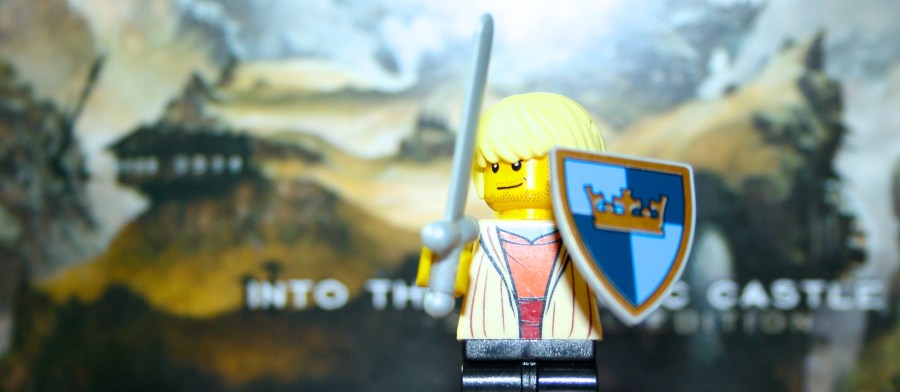
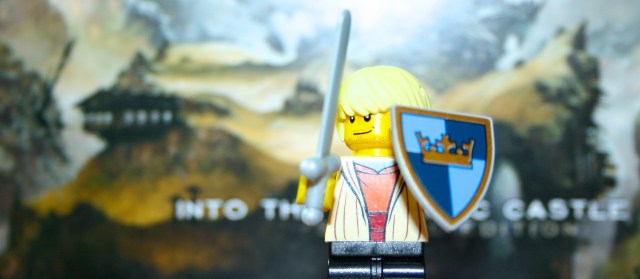
As much as I love all things Arjen Lucassen, nothing of his has hit me quite as hard as Universal Migrator Part I. I’m sure it has to do with the fact, in large part, that Ayreon takes the overall story of the blind minstrel from Arthur’s court from high fantasy to high science fiction with this album. It serves as a wonderful transitional album, essentially moving Lucassen as well as us from Ayreon 1.0 to Ayreon 2.0.
(For what it’s worth, I think we’re living in Ayreon 4.0, but that’s a post for a different time.)
Continue reading “Second Spring #5: “One Small Step” by Ayreon”

What would you do if your drummer and bassist quit? The remaining members of Perfect Beings — vocalist/keyboardist Ryan Hurtgen, keyboardist Jesse Nason and guitarist Johannes Luley — upped the ante. Their goal became “a four-sided double vinyl album with four continuous compositions that cover one side of each album,” with Luley on bass and sessioneer Ben Levin on drums.
Adding to the degree of difficulty, Perfect Beings’ second goal was avoiding the dead spots some listeners (including me) find in their obvious model, Yes’ divisive Tales from Topographic Oceans. I’m happy to say the band’s superb new album Vier (German for “four”) succeeds on both counts. It’s sound is spacious and elegant, but it’s not about style over substance, The music is thoroughly, consistently enticing; something marvelous is always happening, and the band’s sense of invention seems inexhaustible.
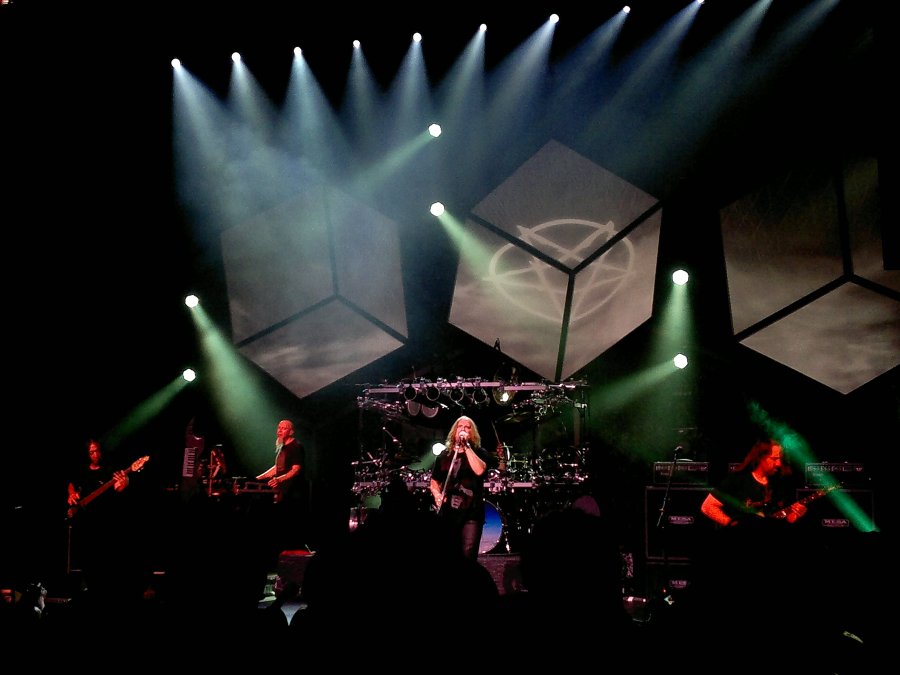
From classical music to thrash metal, all within six degrees of musical separation. For Dream Theater, channeling this stunning wealth of influences is nothing novel. But, a concept album clocking 96 minutes and without any weak moments is extraordinary.
Covering the full spectrum from Overture to catchy choruses — “Are you justified, Are you justified —- Justified in taking, Life to save life” — they comfortably elevate progressive musicianship to stratospheric levels. Layered passages with grinding riffs and complex time signatures — that sheer jazz like drumming with adequate doses of coarse and clean vocals. These drawn out compositions simply demand our undivided attention.
Within a world of carefully orchestrated concept albums, this level of spontaneity with elaborate structural progression is uncommon. In short, brazenly intricate and yet restrained, Dream Theater composes a rare aesthetic blend of metal and prog mindset. Musically and emotionally complex, Six Degrees of Inner Turbulence is a progressive epic even without attempting to be one.
Featured Image : Shot by yours truly (San Francisco, circa 2012)
 Progarchy

