TesseracT, Live at the Red Flag, St. Louis, MO, October 21, 2023 Opening acts: Alluvial and Intervals TesseracT Setlist: Natural Disaster, Echoes, Of Mind – Nocturne, Dystopia, King, War of Being, Smile, The Arrow, Legion, The Grey, Juno Encore: Concealing Fate Part 1: Acceptance, Concealing Fate Part 2: Deception
Hot off the heels of the release of their best album to date, TesseracT lit up St. Louis last night – quite literally. You’d be hard-pressed to find a band with a more interesting and atmospheric lighting setup. Between the strobes and the many light bars set up along the stage, the band creates a unique stage vibe with their light show. But I’m getting ahead of myself.
I’m a toddler TesseracT fan, having really only dug into them with the release of the brilliant livestream turned live album PORTALS in 2021. I’ve been aware of them since at least 2015 with the release of live album Odyssey. I would always give their records a chance, but at the time I didn’t really get it. I suppose the combination of my maturing tastes and the release of PORTALS perfectly coincided, and TesseracT have since become one of my favorite bands. I was very excited for the release of their latest album, War of Being (yes, I need to review it). With tickets pretty affordable, even for premium balcony seats at a small venue, I decided this show was not to be missed.
I hadn’t been to a show at the Red Flag before. It’s essentially a rectangular-shaped club with the stage on one of the long sides and a balcony on the back side and the left-hand short side. I got there early and was able to get a spot just to the left of the sound booth. I generally dislike these club-type shows because you have to stand for 4 hours, but the balcony had seats and a rail with a little table, so it was a super chill spot to watch the show, and the view was absolutely perfect.
The venue is in St. Louis’ midtown next to Saint Louis University. As such I figured there would be more options for food. Nope. The only two restaurants near the venue had stated closing times of 7pm on a Saturday, which is beyond lame, but even lamer was they were both closed by 6:15 because they sold out of food. So if you ever come to the Red Flag for food, don’t come hungry. Clearly I should have planned better, but come on. You expect food to be available near a concert venue on a weekend.
The guy behind me in line had a Soen shirt on, and after I had a run-in with a praying mantis that dropped onto me from the tree above, I struck up a conversation with him. Turns out he was from Chile in the US temporarily on business and had driven down from Milwaukee primarily to see Intervals, one of his favorite bands for a long time but that he had never had a chance to see. He also had a balcony ticket, so we hung out for the rest of the night chatting about prog and metal. It was great to meet you, Sebastion. I told him I always meet somebody cool at these prog concerts, and he commented about how chill prog and metal fans tend to be. I saw this in action when part of the crowd turned into a mosh pit multiple times during the night and every time someone fell down, the others in the pit immediately picked them up and made sure they were ok.
I was unfamiliar with both Alluvial and Intervals, but both put on solid performances. Alluvial could be described as more death metal, and as such I didn’t understand a single word of the vocals. But the band played heavy and tight and brought a solid energy to the room.
Intervals really surprised me. They are an all-instrumental melodic progressive metal band with some djent influences. They reminded me a lot of Polyphia. They played a blend of their old and new music, and even that reflected the changes Polyphia has made, with the older music being heavier and the newer far more technical. Intervals is the brainchild of lead guitarist Aaron Marshall, who can really shred. Sadly they had some tech issues multiple times. At one point, their entire sound went dead, so the drummer used it as a chance for an impromptu drum solo. Then during another song Marshall’s amp went dead. There wasn’t much he could do while his techs worked to fix it, so he played his solo anyways even though nobody could hear it. Despite the setbacks, they put on a solid show and are definitely worth checking out.
The stage was cleared for TesseracT, leaving them with a clean workspace, much appreciated I’m sure by the barefoot Amos Williams (bass). The stage setup featured a lineup of vertical light bars behind the band and several light boxes at the sides of the stage and around the drum kit. These were used to great effect throughout the set, along with the overhead lights and the smoke machine. Despite being a small stage, the clean layout and lighting made it seem much bigger.
The band jumped right into it with the first two tracks off their latest album, both of which are heavy and full of energy. These songs gave vocalist Dan Tompkins a great opportunity to show the range of his voice and the heavier edge that the new album has compared to their last few records.
Despite playing for only about one hour 15 minutes, the band played songs from every album, and every one was expertly performed and equally well received by the excited crowd. The band even got my lazy butt out of my balcony seat. The setlist on this tour includes “The Smile” and “The Arrow” played back-to-back for the first time. Those songs close off 2018’s Sonder, and they sounded fantastic live. That album also was well represented at the show with “King” and “Juno” getting played.
Some bands have musicians that stand out with flamboyant and virtuosic performances, but TesseracT’s members work together to create a wall of sound. The technicality is on full display when you watch the fingers of lead guitarist Acle Kahney, rhythm guitarist James Monteith (who looks like he’s 7 feet tall), and bassist Amos Williams. But they aren’t particularly showy about it – they let the music speak for itself. Williams is probably the most mobile of the band aside from Tompkins. Jay Postones is also a machine on the drums.
Due to the wall of sound style of production TesseracT uses, the band uses sequencers to fill out the background of their sound. The result is their live shows sound very similar to their albums, which is a win in my book.
The vocals are also heavily layered on the records, and you can hear those backing tracks in the live show too, which gives Tompkins some wiggle room if he isn’t feeling a particular note on a particular night. He easily has one of the best voices in the business. His range is impressive, and he has added new styles of distorted vocals on both the new album and in the live show. That was most pronounced on the tracks from the new album. My favorite is “Legion,” which I think may be my favorite TesseracT song overall. The performance certainly grabs your attention on the record, and it was equally impressive live. He hit some very high notes on that song, and the distorted vocals on the track are some of his best.
His banter with the crowd was also solid, giving him a firm command of the stage and the crowd. He mentioned the long five-year gap between albums, promising that it wouldn’t take that long for them to make a new album. He also hinted at a return to the US and St. Louis next year for another tour.
The light show certainly adds to TesseracT’s overall stage presence. If you’ve watched PORTALS or seen them live, you know what I’m talking about. The lighting often makes the band stand out as silhouettes, which furthers the idea of TesseracT’s sound coming from the whole rather than any one player. It can make it a little difficult to see clearly at times, but the total result is an impressive headbanging affair.
My only complaint would have to be with the length of the setlist. I definitely wanted more. Sure, it was a long night with two opening bands, but I really wanted to hear more from TesseracT. I was surprised to see how many people left after the band walked offstage after “Juno.” They gave it a minute or two before coming back on for an extremely heavy closer of “Concealing Fate” Parts 1 and 2. Even though it may have been short, it was a solid set. Every song was stellar, and the band played their heavier moments. With a longer set, I would expect some more extended atmospherics from the band, as we saw on PORTALS.
Overall I had a blast seeing TesseracT, as well as their openers Alluvial and Intervals. This was the first concert I’ve been to this year, and it didn’t disappoint. If you get a chance to see them on this tour, don’t miss it. The prices are reasonable, and the performance is stellar. They’re touring the western US and then the southern states over the next few weeks before traveling back to Europe for some shows in early 2014 and then a tour leg in Asia and Australia.
I get into trouble and I hit the wall No place to turn – no place at all I pick a number between one and two And I ask myself what would Julius Caesar do?
Bob Dylan, “My Own Version of You”
Shortly after Bob Dylan barked out those couplets to the audience at Grand Rapids’ DeVos Performance Hall, he answered his rhetorical question with another recent tune: “I prayed to the cross and I kissed the girls and I crossed the Rubicon”. So it was no surprise that, on a night where the 82-year-old icon genially lorded it over his band and a capacity crowd, another historical JC crept into the setlist too . . .
But let’s rewind. Hitting the stage in a black sequined suit and white hat, Dylan planted himself behind a baby grand piano and promptly dispelled any expectations of a by-the-numbers night of bygone hits. The opener was recognizable as the 1970s deep track “Watching the River Flow” — but only just. Words were stretched out, scrunched together and slurred, melodies recast on the very edge of speech, the original flowing folk song juiced up by jumpin’ R&B from the backup quintet. To top it off, Dylan took all the solos — ranging from inspired rhythmic riffs to maddeningly repeated three-note licks (the kind you played in grade-school piano duets) that occasionally locked in with the band’s chords. The message was clear: “I’m doing whatever I want with these songs tonight. Keep up.”
To their credit, Dylan’s crew did just that, with style to spare. Whether on electric or stand-up bass, long-time musical director Tony Garnier’s pulse was always squarely in the pocket; guitarists Bob Britt and Doug Lancio’s sturdy strumming kept the songs plowing forward, even when their boss pulled back on the melodies and rhythms. With the vehicle in motion, utility player Donnie Herron piled on the colorful trim — floating pedal steel guitar, countrified fiddle, sprightly mandolin. And drummer Jesse Pentecost, the newest band member, gave it all a kick in the pants, changing and chopping the grooves of every tune from Dylan’s latest album of new material, Rough and Rowdy Ways. Nothing was straight off the record: slow blues spread out into shuffles; crawling ballads shifted up a gear to more fluid tempos; the whimsical meditation “Key West (Philosopher Pirate)” turned into film noir, darkening on a dime during an ominous, reharmonized refrain. If details got lost in the roar of the journey, it proved an exhilarating ride. (And Dylan was digging it — late in the set, he introduced the band members by name, which apparently only happens when he’s in a good mood.)
Dylan proved equally daring on a relatively obscure selection of vintage tunes, taking the reinventions of this year’s live-in-studio Shadow Kingdom even farther. “I’ll Be Your Baby Tonight” careened from free-tempo intro to Little Richard stomper (complete with Jerry Lee Lewis piano glisses) to a hard-braked burlesque finale. “To Be Alone With You” got the full honky-tonk treatment, courtesy of Pentecost’s loping backbeat and Herron’s cry-in-your-beer filigree. Given the nature of the night, the biggest surprise wasn’t that Dylan’s fundamentalist calling card “Gotta Serve Somebody” cropped up as a rockabilly-flavored rhumba; it was that the only cover of the set, Chuck Berry’s “Nadine”, was played and sung absolutely straight (and garnered as much applause as anything else)!
Though I’ve gotta say the biggest kick for me was the relaxed finale: “Every Grain of Sand”, one of Dylan’s numerous farewells to whoever or whatever threatened to cramp his style over the decades. A final fruit of his evangelizing years, it proved a graceful closer for the evening, a benediction of sorts on the rapt audience, complete with Bob’s only harmonica solo of the night after the final lyrics:
I hear the ancient footsteps like the motion of the sea Sometimes I turn, there’s someone there, other times it’s only me I am hanging in the balance of the reality of man Like every sparrow falling, like every grain of sand.
At which point, Bob Dylan carefully hobbled to center stage, stood there bathed in applause, smiled, and — the very embodiment of Boomer noblesse oblige — took leave of the 2,000 mere mortals before him, off to future stops on his latest imperial progress.
Unless otherwise noted, title links are typically to Spotify or Bandcamp for streaming, with a purchase link following the review.
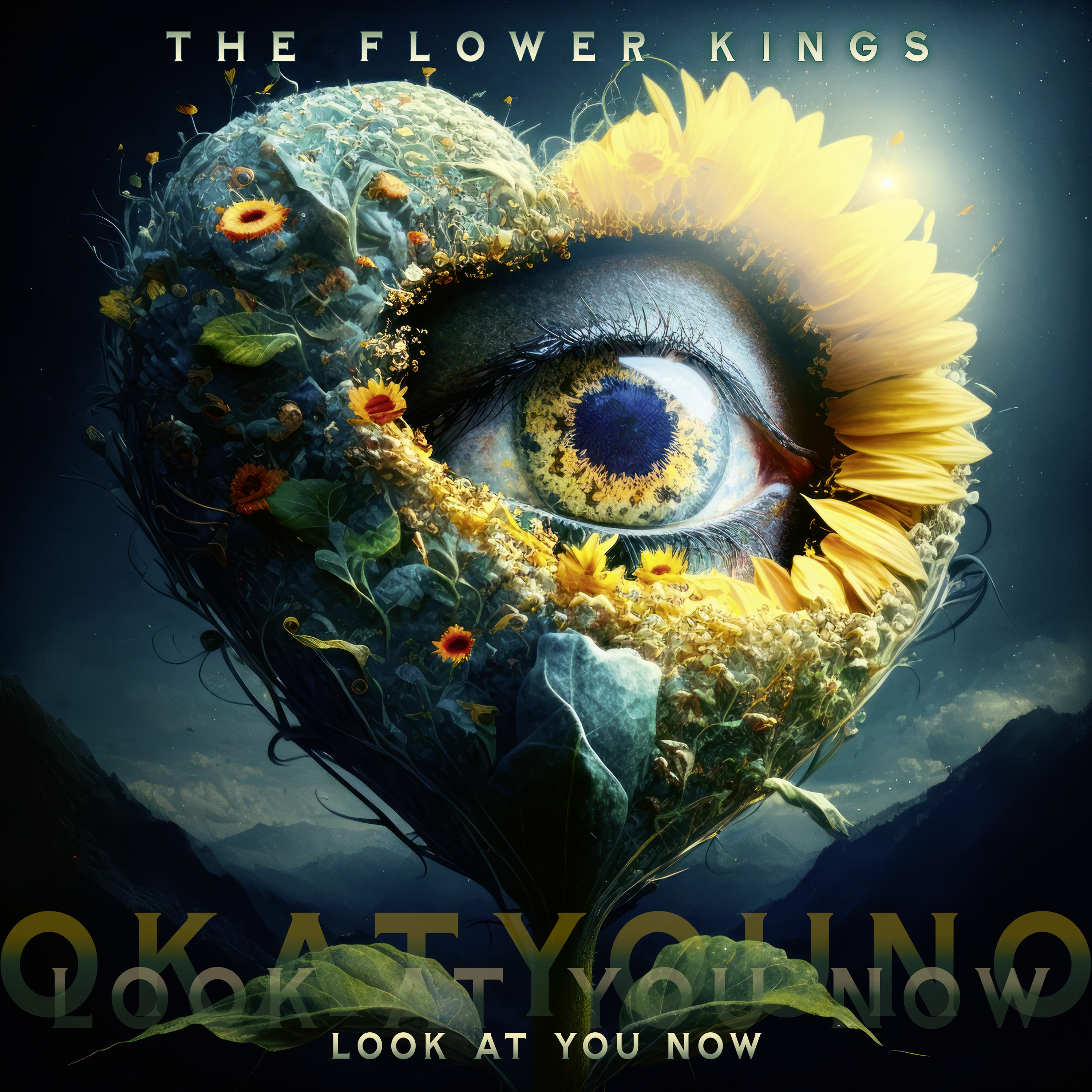
The Flower Kings, Look At You Now:The Stolt brothers — Michael on bass, Roine on almost everything else — vocalist Hasse Fröberg and drummer Mirko DeMaio crank up that progressive-psychedelic roundabout, and what comes out the chute is yet another spellbinding album-length suite. Snippets from the past and fresh in-studio invention lock together seamlessly; from the merry-go-round kickoff “Beginners Eyes” and the Beatleish “Hollow Men” through renaissance pastoral “The Queen” and blues-edged workout “Scars”, to the closing workout (cinema showoff vamp “Father Sky” into bolero build “Day for Peace” into the closing title epic), TFK don’t miss a trick, evoking vintage Yes and Genesis while always leaning into their own unique, up-to-the-minute spin. This is easily the equal of recent double-disc standouts 2020’s Waiting for America and last year’s By Royal Decree, on track to be one of my favorites at the end of the year. Order from Burning Shed here.
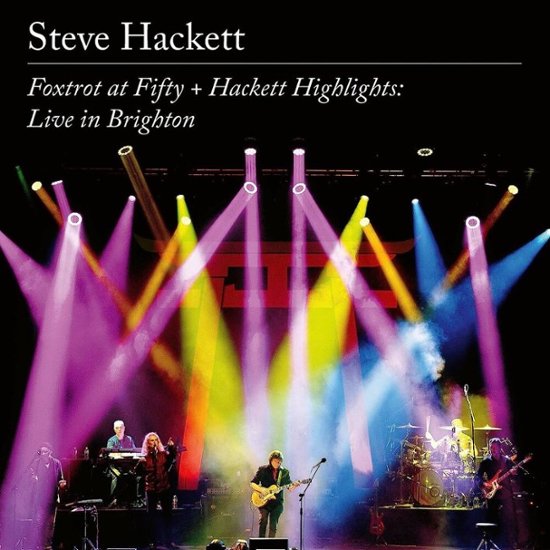
Steve Hackett, Foxtrot at Fifty + Hackett Highlights – Live in Brighton: Yep, this is Hackett’s eighth live album since he made “Genesis Revisited” a regular feature of his live set and rejuvenated his international touring career. But doggone it if he doesn’t make this latest set make worth our while yet again! Leading off with a refreshed solo repertoire (blending in vintage throwbacks “A Tower Struck Down” and “Camino Royale”) that provides new showcases for his talented band (Rob Townsend and Roger King’s wind/keys duet on “Ace of Wands”, Jonas Reingold’s fleet-fingered solo spot “Basic Instincts”), Hackett proceeds to blow out Brighton’s doors with an inspired romp through Genesis’ 1972 breakout album. Especially noteworthy: singer Nad Sylvan, at his personal best on “The Devil’s Cathedral”, “Watcher of the Skies” and a taut, compelling “Supper’s Ready” — well, really all through the night. I thought I might have actually seen Hackett enough (four times!) in the last decade, but this release has me eager to catch this show when he returns to the States next spring. Order from Burning Shed here.
Bruce Soord, Luminescence:Just a songwriter and his gear (plus the occasional electronica and orchestral seasonings); on break from The Pineapple Thief, Soord descends into the postmodern maelstrom, in search of an evasive inner tranquility. A placid, brooding first half of string swells (“Dear Life”), slinky acoustic funk (“Lie Flat”) and pensive melodic sketches (“So Simple”) gathers momentum, only to hit a stalled-out sense of desolation (“Instant Flash of Light”, “Stranded Here”) — which gives Soord’s concluding pleas for human connection (“Read to Me” and “Find Peace”) a vulnerability that chills to the bone, even as it cracks open all the feels. Spacious, shimmering and seductive (kudos to Soord and mastering engineer/TPT bandmate Steve Kitch), Luminescence’s stoic gaze into the heart of darkness packs a serious emotional depth charge. Order from Burning Shed here.
The Who, Who’s Next / Life House (Super Deluxe Edition):Who’s Next is an album that changed my life, and over the decades, it’s developed a reputation as one of rock’s finest moments. But Pete Townshend remains haunted by his original, unrealized post-Tommy concept of The Life House — a gathering place for the outcasts of a nightmarish virtual reality, with rock music as the saving sacrament of a splintered counterculture. Thus, this behemoth box: two discs of impeccable Townshend demos; three discs of session outtakes and singles; two complete, ferocious live sets; and an immaculate spatial audio remix of the final product by (of course) Steven Wilson. Even with exhaustive liner notes and a graphic novel version included, the Life House storyline simply refuses to cohere. But listening to The Who as they wrestle with the throughline, then pitch it away and just slam into “Baba O’Riley”, “Behind Blue Eyes” and “Won’t Get Fooled Again”, you hear the fragments of one man’s overweening ambition transmuted into a furious, majestic rush of sheer hard rock glory. Order from The Who online store.
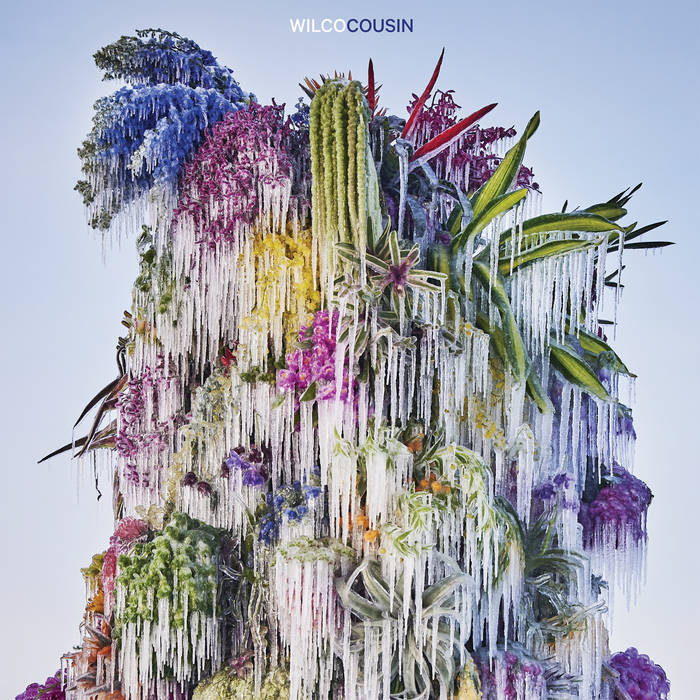
Wilco, Cousin: 2022’s Cruel Country (my top favorite album of last year) interrupted Wilco’s work on this excursion back into art-pop, made with Welsh multi-instrumentalist/co-producer Cate Le Bon as sidekick. Here Jeff Tweedy’s elusive, folky reflections are splattered with spectral atmospherics and thick blobs of tonal texture; workouts like technicolor opener “Infinite Surprise”, the sunnily chaotic title track and the Wild West gallop of “Meant to Be” sit side by side with morose elegy “Ten Dead”, baroque/dance crosscut “A Bowl And A Pudding” and the compelling meander “Pittsburgh”. The proceedings here lean a bit to the downtempo side, but it’s great to hear Tweedy and his merry crew of cutting-edge players revisit the experimental approach of their Yankee Hotel Foxtrot/A Ghost Is Born era, with the gains of the decades since then thoroughly integrated. Few American bands offer such solid work on such a consistent basis. Order from Wilco’s online store.
Steven Wilson, The Harmony Codex: On which Wilson decides not to pay homage to one particular musical style, bringing his magpie/studio boffin tendencies fully to the fore. Digging into the resources of vintage synthesizers, SW leans on mood more than movement, warming up the temperature from the glacial electronics of The Future Bites a bit, spinning trippy webs of sound braced with a percussive snap. As he flicks through a dizzying array of genres, there are plenty of hypnotic moments (the 1970s spiritual jazz/fusion of “Inclination” and “Invisible Tightrope”, pop nugget “What Life Brings”, imaginary Bond theme “Rock Bottom” with Ninet Tayeb, the langorous switched-on Bach/spoken-word melodrama of the title track), but it can also feel like Wilson is channel-surfing for its own sake; the focus of his best work is only intermittently there, and shorter tracks sometimes peter out instead of paying off. Still, as far and wide as The Harmony Codex wanders, there’s lots to catch the ear as it rambles, and it’s already rewarded repeated listens for me; Wilson remains an artist well worth checking out and reacting to. (So, yeah, Time Lord and I have very different opinions here. And, in line with de gustibus non est disputantum, I’m down with that.) Order from Burning Shed here. (BTW, thanks to the Burning Shed crew & the Royal Mail for getting my copy across the pond to my mailbox in 6 days!)
With the release of The Harmony Codex, it’s now official. Steven Wilson is a member of The Academy of the Overrated.
I’m not talking about him as technician. He is indisputably a technical wizard who can create amazing sonic experiences. Beyond his own work, he is well known as someone who remixes classic albums and creates the best audio soundscapes.
But as a musician and songwriter he is vastly overrated. Sure, he’s a great instrumentalist, just as he is a great technician and arranger. But after releasing two stinkers in a row—The Harmony Codex and The Future Bites—we must admit that his only two works of genius—The Raven That Refused to Sing and Hand Cannot Erase—are total outliers.
Everything else he has done, whether solo or in a group, has always struck me as abominably overrated. There’s something lacking in the vast majority of his work. Set aside his only two brilliant albums and his work as an audio consultant. Everything else is just pretty good, but yet consistently soulless and pretentious.
How then could he produce two brilliant albums? Well, a stopped clock can be correct twice a day. But a better analogy for Wilson would be a perpetual motion machine that finds a true groove only twice in its lifetime of operation.
His soullessness and pretentiousness is magnified to intolerable degrees on The Harmony Codex and The Future Bites. The latter album was pretty bad, but The Harmony Codex is even worse. Take the spoken word nonsense on the title track, which then reappears on “Staircase.” It’s devoid of any meaning except pretension. Hey Steven, actual brutal fact: you alone dreamt up this album, and really it’s boringly bad.
It’s hilarious to me how many people in their reviews give this new album the benefit of the doubt and profess faith in how much better it will sound after more listens. Hey people, that tactic didn’t pan out with The Future Bites, and it’s sure not gonna happen with this one.
There are no songs here. The only moments of promise are the “love it all” catharsis in “What Life Brings,” and the one minute of awesome bass playing around the half-way mark of “Staircase” (but that killer bass work only lasts for a single minute; instead of wisely building on it to an album crescendo, Wilson blows it and decides to end the disc with repetition of the sophomoric doggerel from “The Harmony Codex”).
The diminishing reappearance of Ninet Tayeb on this album also demonstrates that Wilson is secretly operating according to an invisible template. Despite his desire to be original, he just keeps on being an unoriginal version of Steven Wilson. (Even his trademark falsetto is getting old.)
But if he were to do another homage to classic prog, like Raven it would paradoxically become original (because paradoxically it takes real skill to pay truly noble tribute to one’s betters). Instead he gets stuck on dumb ideas for the sake of originality: “Guitars are boring. Let’s do everything with synths instead.”
The failed attempt here at a real prog instrumental (“Impossible Tightrope”) goes nowhere, despite Wilson’s attempt to walk the tightrope of pleasing his prog fans (but nonetheless finding that task impossible). This illustrates what is perhaps most galling: the fact that Wilson consistently self-sabotages his best self. Instead of working within a recognizable idiom, he tries too hard to be original. But face the music: Wilson hasn’t reinvented music; he has just ended up being soulless and pretentious again.
The actual brutal fact (I repeat the phrase, so that we now get to the plurality alluded to by the “Actual Brutal Facts” track) is this: The Harmony Codex is garbage that nobody will be listening to fifty years from now—unlike the masterpieces that Wilson regularly remixes, and that he has failed to learn from.
Sure, The Harmony Codex sounds really nice. And Wilson is a master of marketing and promotion. But there is no songwriting here, other than “What Life Brings,” which feels like Wilson included it for perverse reasons: i.e., to show he could write songs like he did on Hand Cannot Erase if he wanted to, but he has decided not to. But like the three pretentious periods gratuitously inserted into that album’s official title, Wilson sabotages his own creative potential.
The Harmony Codex is just an exemplary audio demo record: i.e., what the sales dude at the stereo store puts on to demonstrate how good this stereo and speakers sound. But don’t savvy shoppers bring their own disc to play anyway? Because the cool demo record is something completely different from your favorite album. The former demo makes a good audio impression, but the latter classic disc is what you are actually buying the stereo for: i.e., what achieves its true purpose, beyond the superficial wow-factor of novel synth sounds.
What if Wilson actually tried to make an album that sounded unmistakably inspired by Yes or King Crimson, but crafted and adorned with state-of-the-art 21st century audio tricks? It would be Nirvana.
Instead, we now have two shitty albums in a row. They do nothing but highlight the fact that alleged prog emperor Steven Wilson has nothing going on beneath all the vapid talk about how wonderful is his kingdom of sounds. What a waste.
Unless otherwise noted, title links are typically to Bandcamp for streaming and purchasing, or to Spotify/YouTube for streaming with a additional purchase link following the review.
Neal Morse, The Dreamer – Joseph, Part One: For his latest rock opera a la 2019’s Jesus Christ the Exorcist, Morse and his studio sidekicks swerve toward hard-hitting blues-rock; the usual “Overture” and the narrative tracks “Burns Like A Wheel” and “Gold Dust City” are stuffed to the brim with chunky organ and grunged-up wah-wah guitar work. Wailing vocals from the cast of Christian Progressive Rock stalwarts who play Jacob, Joseph’s brothers and his Egyptian captors slot right in; even the power ballads (“The Pit”) have more grit this time around! And while the second half of the album is stylistically slicker (complete with classical chorale “I Will Wait on the Lord”), the hooky closer “Why Have You Forsaken Me?” pulls all the musical threads together, with Morse’s emotive portrayal of Joseph setting up intriguing possibilities for Part 2 — which, given his extravagant productivity, shouldn’t be too long in coming. Order from Radiant Records here.
Tu-Ner, T-1 Contact Information: Power trio improvisation that takes no prisoners, from another eerily luminous satellite band orbiting the gravity well of King Crimson. Trey Gunn and Pat Mastelotto formed one of Crimson’s most ferocious rhythm sections in the early 2000s, also recording together as TU; here Mastelotto clatters away merrily on his sonic smorgasbord of drums and percussion, while Gunn unleashes the deepest, fattest bass licks known to subwoofers. Above and around the Rhythm Buddies’ brutalist bedrock, Markus Reuter (who’s worked with Mastelotto in the duo Tuner and the trio Stick Men) unleashes slashing, swooping touch guitar lines and dark, brooding soundscape clouds — and when Gunn joins him on the higher end, sparks really fly. Always arresting, intermittently galvanizing, but the track titles (or this review for that matter) can’t really give you a feel for what this sounds like. In other words, you’ve gotta hear what Tu-Ner do to believe it.
Richard Wright, Wet Dream: In case you ever wondered exactly what keyboardist Wright brought to Pink Floyd, his 1978 solo album has it in spades. On tracks like “Mediterranean C” and “Drop In from the Top” lush, floating chord progressions set up open-ended jams by guitarist Snowy White and sax legend Mel Collins; Wright’s reedy voice spins out languid vignettes of detachment and disillusion such as “Summer Elegy” and “Holiday”. All thoroughly gorgeous (especially in this immaculate new Steven Wilson remix), occasionally funky, ineffably melancholy — and not terribly urgent in isolation. Still, you can hear the breathing space that Floyd lost as Wright faded into the background and Roger Waters began repeatedly kicking his audience in the head on The Wall. Order from Rhino Records here.
Ultravox, Quartet [Deluxe Edition]: Speaking of immaculate Steven Wilson remixes: this is his third in a series for the British new wave quartet. Regrouping after early personnel changes, Ultravox struck a quirky vein of New Romantic post-punk on 1980’s Vienna, then pursued cutting-edge Krautrock on the follow-up Rage in Eden. Connecting with legendary producer/5th Beatle George Martin, frontman Midge Ure, violinist/keyboardist Billly Currie, bassist Chris Cross and drummer Warren Cann aimed straight for the charts; Quartet is as pure of a pop album as they ever achieved. The UK singles “Reap the Wild Wind,” “Hymn,” “Visions in Blue” and “We Came to Dance” have an irresistible mix of rock drive, synth-pop color and devil-may-care melody, and the album tracks slot right in; the whole thing’s overripe and melodramatic in the most appealing way. Plenty of extras in the 7-disc box too, with b-sides, rarities, rehearsal tapes, studio monitor mixes and an intense live set all included. Order from the Ultravox store here.
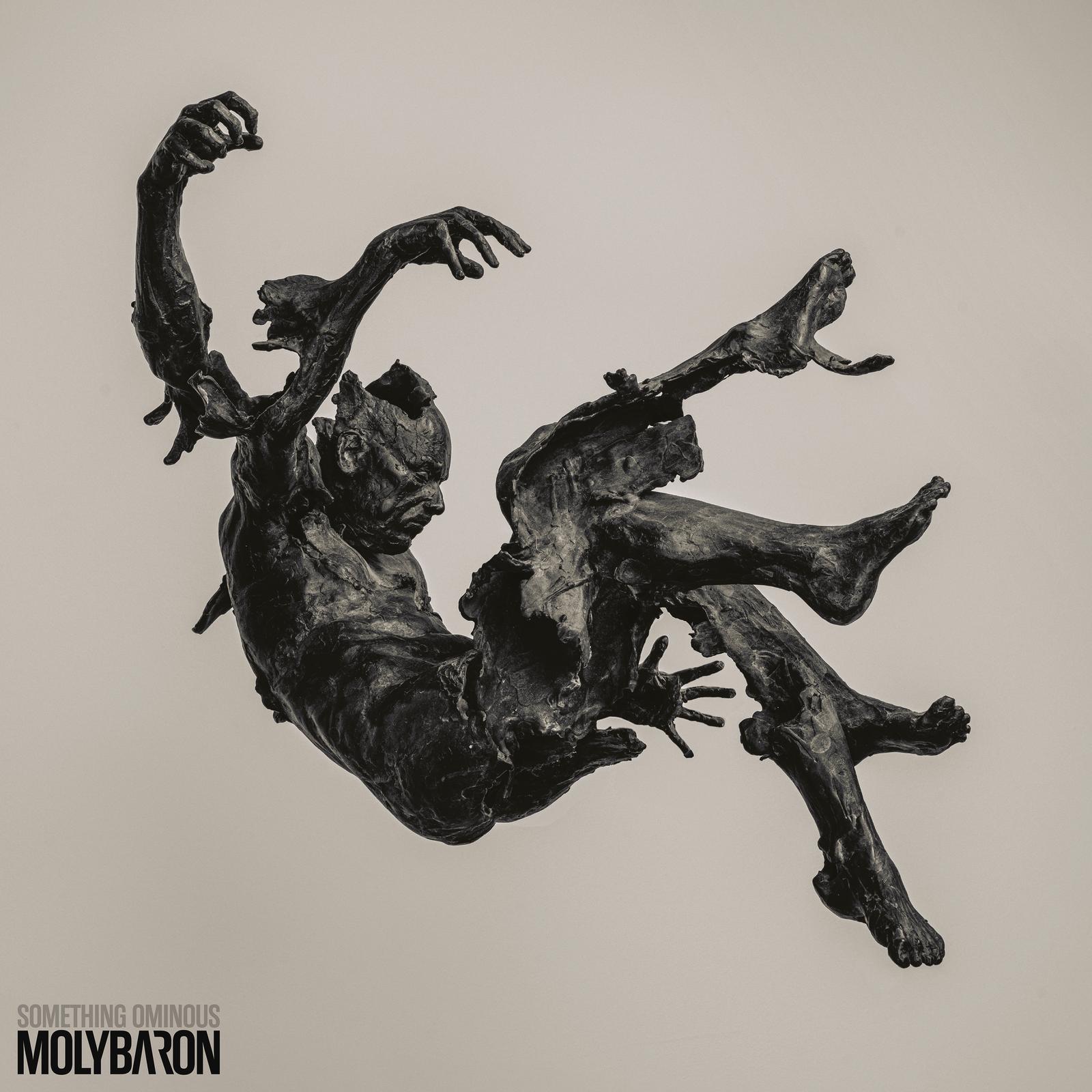
Molybaron, Something Ominous, Inside Out Music, September 15, 2023 Tracks: Something Ominous (4:05), Set Alight (3:25), Billion Dollar Shakedown (3:38), Breakdown (3:16), Anyway (4:14), Daylight Dies in Darkness (4:06), Dead On Arrival (3:21), Pendulum (3:34), Reality Show (4:17), Vampires (3:45) Players: Gary Kelly (vocals/guitar), Sebastian De Saint Angel (bass), Camille Greneron (drums), Florian Soum (lead guitar)
Molybaron have become one of the most intriguing bands in prog metal over the last few years. Formed in Paris in 2015, the band is led by Dublin-based vocalist, guitarist, lyricist, and composer Gary Kelly. With a voice and vocal styling that stands apart from most others in the genre, Kelly shines on this record with his playful and aggressive performance.
Something Ominous is remarkably fresh and engaging. It’s heavy, gritty, riffy, and catchy. I loved 2021’s The Mutiny, but some of the lyrics were very political, something I’ve complained about regarding other artists in the past. Beyond the politics, Kelly’s lyrics incorporate a lot of cultural critique. Even if I may have disagreed with some (certainly not all) of his points, I found the music and his performance too good to keep me away. Something Ominous is a major step forward lyrically. The politics is still there, but it’s more of a critique about how everything sucks and how the powers that be are turning us (the people) against each other. There’s also some open and raw emotional moments, like on “Breakdown,” which looks at the struggles of emotional and mental health.
There were multiple points on the album that reminded me strongly of Muse, if Muse played heavier rock and metal (they came close on “Won’t Stand Down” off last year’s We The People). I could probably come up with other comparisons, but that might water down how unique Molybaron are. No one else sounds quite like them. Their overall sound is punctuated by a loud and driving bass and layers of guitars playing both crunchy and soaring tones. But, again, it’s Gary Kelly’s performance that truly sets the band apart. His voice is unlike any other singer I can think of, and he mixes up the way he sings on different tracks and sometimes multiple times in a single song. It keeps the album trotting along at an enjoyable pace, and at points it brings a smile of sheer musical joy to my face.
“Billion Dollar Shakedown” is scathing in its critique of the elites running/ruining society, and Kelly’s vocal acrobatics make this an absolute blast to blast. There’s a slight hip hop influence to the singing on the verses, but you can understand the lyrics just fine. The chorus is sung in a very fun up and down way that is angry yet playful at the same time. The guitar solo towards the end is heavy metal heaven (or hell).
The narrator on the verses on “Billion Dollar Shakedown” takes on the part of the ones in charge, and it’s done with a healthy dose of sarcasm. I particularly appreciate what I think is a critique of years of pointless Covid lockdowns that didn’t save anybody, as well as other more general nonsense in modern society:
Shut your eyes shut your eyes, forget what you see Control the narrative, bury the lead Gaslit, triggered, terrified You’re a danger to your neighbor get the f*** back inside.
Shoot em down shoot em down, resist temptation You’re next in line for some cancellation Big Tech, laws, manufactured consent Professional suicide for those who dissent!
Kelly writes about his lyrics overall,
In general, a lot of my lyrics tend to focus on mental health, drug and alcohol abuse, but I also write about political corruption, collusion between state and corporate media, big Pharma, big tech and systematic censorship. This new album explores aging and the acute awareness of time passing by the anticipation of losing the ones you love, lingering regrets about precious time spent on unimportant things, the fear of being old and alone.
“Breakdown” looks at mental breakdowns and how overwhelming they can be. The song opens with some simple piano chords before quickly pounding into a bombastic shout of, “Cuz it’s another f***ing breakdown!”
Maybe tomorrow I’ll find happiness An antidote for this emptiness Carry the weight of tomorrow’s fears Deep inside my belly all these years
Lying here staring at the sky above From the bottom of the hole I’ve dug Another day of solitude Alone, alone
Cuz it’s another f***ing breakdown Breakdown
I’m losing everything I’m losing everything
Doc tells me I’ll feel better if I learn to take a breath But the lunatic inside my chest, has a grip as cold as death Maybe one day I will be alright Or maybe it was all just a waste of time
It’s a refreshingly honest and deeply personal take on these issues. Having artists be open about this can help with reduce the stigma, especially for men.
“Daylight Dies in Darkness” shows off a more contemplative side of Molybaron. It starts with quiet electric guitar strumming followed by heartfelt vocals from Kelly that soon take on a sense of desperation: “Father I’ve come – do you remember I’m your son?” The song slowly swells until it takes on a heavy brooding metal riff and guitar solo in the last quarter. It’s a ballad of sorts, but not in any kind of sappy romantic way. It’s a ballad of melancholy, and it shows Molybaron excels with emotional songs as well as they do with bombastic metal.
Every song on this short (38 minutes) album is worth playing on repeat. The tracks I’ve highlighted are the ones that have jumped out at me in the early days of playing the record on repeat, but the others are just as good in their own ways. I haven’t enjoyed a new album as much as this one in a while. Molybaron may not be your typical prog metal band – if anything they could be considered accessible. Yet their music and themes remain complex, even if packaged in 3-4 minute tracks. Something Ominous is a must listen, and it’ll find its way near the top of my year-end best-of list.
Progressive rock + Mussorgsky = symphonic prog epic. That equation has appeared to work out well at least twice in prog rock history. Like Emerson, Lake, and Palmer before them, Fireballet, an American band inspired by their talented cousins across the pond, gifted to the music world a progressive spin on one of the Russian master’s classic compositions. But there’s more here than Mussorgsky! So, without further ado, here’s my brief take on each of the songs:
“Les Cathedrales”, a ten-minute piece reminiscent of a medieval fairy tale (thanks in part to some spoken word lyrics), opens with a beautiful symphonic flourish of keys and synth (courtesy of Brian Hough and Frank Petto). There is a clear Genesis/Happy the Man vibe throughout the song, but also a fun twist: Ian McDonald (who also produced the album), makes a brief guest appearance on saxophone.
The next two pieces – “Centurion” and “The Fireballet” – feature more superb work by the two keyboardists and from guitarist Ryche Chlanda. Despite their shorter lengths, both songs manage to fit complex melodies and fun counterpoint into (relatively) smaller packages.
“Atmospheres” is the shortest and gentlest piece on the album, reminiscent of the soft opening to Genesis’s “The Musical Box.” It is a welcome break from some of the more frenetic moments of the previous three songs.
The title track nearly lives up to its grand namesake. Opening with the same melody as Mussorgsky’s masterpiece, the band then add some interesting percussive and synth touches for a more progressive spin on the original. Furthermore, this version of the classic piece includes vocals, and lead singer Jim Cuomo is at his best here, ranging from a soft Jon Anderson to a screaming David Byron or even Ian Gillan. Each musician shines on this one, however, and overall it is a solid tribute to one of “The Five.”
One would like to believe an album produced by Ian McDonald with an epic title track would certainly be destined for success. But, alas, it was not to be. Fireballet may not be as renowned as Modest Mussorgsky, but Night on Bald Mountain would certainly be a worthy addition to any prog lover’s collection.
The Harmony Codex – the seventh album by Steven Wilson – is a genre-spanning collection that represents the apotheosis of a life spent fully absorbed in music.
While The Harmony Codex nods to records from Steven Wilson’s recent past, at times echoing the paranoid rumble of 2008’s Insurgentes, the crystalline electronics of 2021’s The Future Bites and the expansive storytelling of 2013’s The Raven That Refused To Sing (and Other Stories), here he has managed to create something entirely unique, a record that exists outside of the notion of genre. And although The Harmony Codex is a record made with spatial audio in mind, it’s not one that needs an elaborate sound system to lift you out of body – two speakers and an open mind will do just fine.
Released on September 29th. Tracklist:
1. Inclination (7.15)
2. What Life Brings (3.40)
3. Economies of Scale (4.17)
4. Impossible Tightrope (10.42)
5. Rock Bottom (4.25)
6. Beautiful Scarecrow (5.21)
7. The Harmony Codex (9.50)
8. Time is Running Out (3.57)
9. Actual Brutal Facts (5.05)
10. Staircase (9.26)
Watch the video for the track “Economies of Scale” below: