This year has seen a bonanza of quality progressive music. I have probably listened to more great albums this calendar go-round then in any recent year. This list is, of course, totally subjective and based on my own predispositions towards symphonic, orchestral, and melody-hooked prog. There was such a plethora of wonderfully creative work in 2017 that I am increasing the list from the usual Top Ten or Top Twenty to a whopping 40 best.
And though ## 40 – – 21 are being categorized as only “honorable mentions” they still deserve your attention. All of the following releases are so good that on any given day (just not today) they might well “crack the ceiling” and wind up on my official TOP TWENTY (coming later this week). And now, in descending order from number 40 to number 21 are this years:
As you all happily know, Timelord has announced his top albums of 2017 already. When he did, I was a bit surprised. Wait, is it that time of year already? What about albums that come out in December? The more I thought about it, the more I thought Timelord was absolutely right to announce his top picks. Not much is going to happen this month, and, even if something does come out, it will be hard to measure against what already exists. Should something come out and shake up my list, I will, of course, be happy. For any thing that could possibly shake up this list would have to be really, really good.
And, as you also happily know, Tad Wert took a unique perspective on his top picks, focusing on the live releases of the year rather than on the studio releases. Bravo!
Unlike 2012-2016, this is the first year that I found actually easy when ranking. That is, picking and ranking has been relatively easy. As some of the other progarchists have said over the past half decade, so much prog had come out in any previous years that it felt like “taking a sip from the fire hose.”
This year, 2017, just feels different. The quality definitely outdid the quantity.
Before starting rankings, though, I would be dead wrong not to mention two critical things.
Our Fearless Leader, Jerry Ewing.
First, God bless, Jerry Ewing, and his glorious PROG magazine. For a time there, we all thought the ship was gone, our captain lost at sea in a corporate hurricane of insanity and avarice. Then, Ewing emerged—and stronger than ever. Congratulations, Jerry. Long may you lead our little platoon of prog-loving weirdos.
Second, may God bless, Tim Hall (Kaylr). I never actually met Tim, but I really appreciated his views on everything. He was always intelligent and prudent, and our loss is heaven’s gain. Tim, if you can, please say hello to Hendrix, Morrison, Emerson, Lake, Squire, and all of the other greats of the last half century. And, say hi to my dad, my grandparents, and my daughter, Cecilia Rose, as well. Someday, brother, someday. . .
If you’re missing King’s X, then this one will satisfy your craving. Ray Luzier (KoRn) is on drums, George Lynch (Dokken & Lynch Mob) is on guitar, and Doug Pinnock (King’s X) is on bass and vocals. This is their second album, and it is much more varied in its music styles than their debut. I never was into Dokken, but George Lynch’s guitar work is killer -especially on “Breakout”.
9. Big Big Train – Grimspound
I give Grimspound the edge over its sister album, The Second Brightest Star. What a great collection of tributes and vignettes of everything that is good about Great Britain. Using small details to convey big ideas is really difficult, but BBT are masters and make it look easy.
Hearing this album was what really confirmed me — a fourth-generation American of German ancestry and Lutheran upbringing — as a lifelong, diehard Anglophile. As a unlooked-for bonus, it reopened a vocational path I had taken for granted, if not outright abandoned, as I trained to become a musician.
“Wait a minute,” I hear you say to the first point, “every single album you’ve written about so far is by a British artist or composer!” Point taken. Throw in my love for the work of Charles Dickens, J.R.R. Tolkien and Shakespeare (as well as the adventures of Sherlock Holmes), and you might consider my opening sentence an overstatement. But hear me out.
Ukrainian progressive rock outfit Obiymy Doschu has launched their new album entitled “Son” (Ukrainian for ‘dream’), and the band’s singer and songwriter Vladimir Agafonkin tells us about it, but also about the meaning of the band’s name, and more. You can read our review of the album here.
What made you go for the name Obiymu Doschu?
Obiymy Doschu means “Rain’s Embrace” in Ukrainian. This name reflects the melancholic, lyrical, autumnal feel of the music. At first, we wanted to use the English name, and write English lyrics, but eventually decided to write songs exclusively in Ukrainian. It’s an incredibly beautiful, mellow sounding language that fits this kind of music perfectly. Besides, we strive to write deep, meaningful poetry for our songs, and this wouldn’t be possible with a non-native language. It’s better to do your very best for a narrow audience than to be mediocre for a wider one.
How do you usually describe your music?
It’s a unique emotional blend of progressive rock with neoclassical, neofolk and post-rock elements, heartfelt Ukrainian lyrics and lush, beautiful string arrangements.
What is your writing process like?
It usually starts with a short musical idea, typically played on an acoustic guitar, which then very slowly expands and grows with new layers, details and meaning over many years — both as a result of individual writing and band member collaboration. We never rush the writing process. Most of the songs on our new album “Son” were perfected over a decade, with core song melodies and lyrics appearing first, and string arrangements last.
Who or what is your inspiration, if you have any?
Musically, we draw inspiration from modern progressive rock bands such as Opeth, Porcupine Tree, Anathema, from darker bands such as Katatonia and My Dying Bride, from neoclassical composers such as Max Richter, from unconventional bands such as Tenhi, The Gathering and Sigur Ros, but also from Ukrainian folk music. As for the meaning of our songs — we draw inspiration from everyday struggles we face as human beings, exploring basic feelings such as love, loneliness, compassion, regret, hope.
What is your favourite piece on the new album “Son” and why?
Each and every song is my favorite piece — I can listen to them all over and over. But personally I’d like to highlight “Zemle moya myla” (“My dear land”), a love ode to my country. It holds a very important message and connects to me on a very deep level. Ukraine went through a lot of pain and struggle over the last few years, but many people still hope for the best and persevere, working on a better future, no matter what happens. We strive to be among them.
What makes “Son” different?
It’s rare for a rock band to put so much effort and care into music — we worked on it for 8 years, spent 2 years just recording it in 7 different studios, involved 15 musicians including a string quartet on most songs, and patiently worked extremely hard on it despite a very high risk of never reaching a sizable audience.
Today’s listeners tend to focus on easily digestible content, and writing long, conceptual, complex works such as Son is out of fashion. But we still do it because we deeply love what we do, and will continue despite all odds.
What should music lovers expect from “Son”?
It’s a complex, beautiful, emotive, meticulously crafted record with lots of wonderful melodies, great instrumentation and unique Ukrainian charm. We’ve put our souls into this album and it shows. Even if you don’t understand a word, give it a chance.
What kind of emotions would you like your audience to feel when they listen to your music?
We want them to feel connected to us. To feel that even in their deepest feelings, with all the pain they went through, they’re not alone, and there is always hope, and there is beauty.
Which do you like most, life in the studio or on tour?
We don’t tour much. We’re not yet known enough to tour productively, and for Ukrainian bands, it’s usually strongly unprofitable and also draining. It’s also not easy to organize — everyone in the band has day jobs and families to take care of. But we try our best to turn the rare concerts we do into unforgettable experiences.
The studio process is very different, but it’s incredibly rewarding and enjoyable — when you see the songs you wrote slowly gaining shape with the help of many talented musicians and engineers, when the songs start to come together, it’s such a joy. You feel like those are the moments that are worth living for.
Pick your three favourite albums that you would take on a desert island with you.
Some of my most beloved albums (many of them progressive rock/metal) are not meant to be listened to over and over again, but there are albums that you can listen to forever and never get tired. Those are the kinds I’d take on an island with me.
Death Cab for Cutie — Transatlantism
Sigur Rós — Ágætis byrjun
The Gathering — How to Measure a Planet?
For more information about Obiymy Doschu visit the band’s official website.
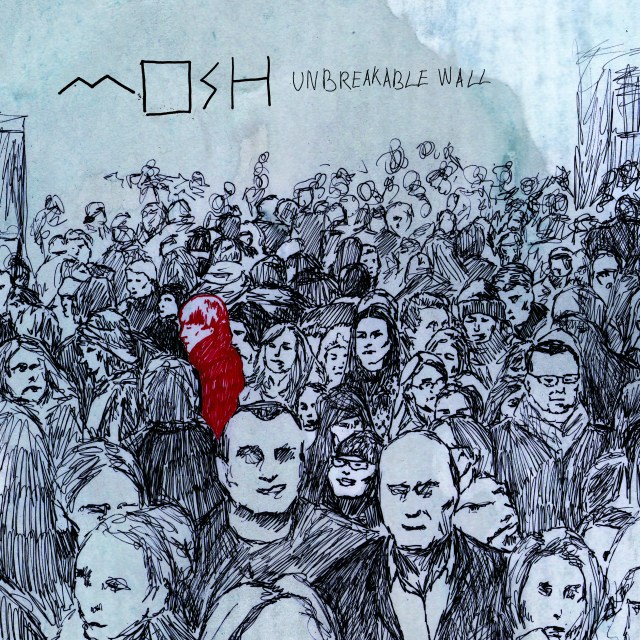
“Unbreakable Wall” is a debut release from Mosh, an Israeli musician who “pours the human experience in all it’s rage, sadness, and happiness into his music as he explores universal themes of inner conflict, relationships with others and relationships with government.”
Speaking of the sound of “Unbreakable Wall,” it has a very solemn, jazzy feel that is brought some brightness in the form of Mosh’s vocal melodies. Due to amount of range Mosh possesses he is able to single handedly change the mood, or evoke some otherwise unseen emotion, in the various points of his songs. The effect of this is seen excellently on the track opening song “Keep on Moving,” where he begins the song with some low-register singing and then during the chorus he extends himself into a melody that would trip most vocal chords of the average rock singer. Throughout the song his constant change of singing, to all out bawling, to quiet talking makes the mood of the listener swing with the hymns. The instrumentation on the track and throughout the song is also superb and helps create the perfect backdrop for Mosh’s vocal expertise. Of special effect to this is the harmonica solo, courtesy of Roy Rieck.
Passionate performance on the lead single “Fish Us” sets the tone for the more mellow and emotional delivery both vocally and instrumentally, what tells about how far “Unbreakable Wall” goes when it comes to diversity. The mood of “All I’ve Got” is a fair bit optimistic than the previous song. The song has an acoustic guitar in it, and some other instruments. Mosh’s awesome voice shows in this song and his guitar abilites do as well. “One Way Out” is a mood-changer; stylistically it almost borders with the 1970s funk music; it comes with a catchy groove that makes it one of the highlights of the record. Warm vintage sound of electric piano in “You’ve Reached My Arms” and psychedelic vibe evolving around Mosh’s and Zoe Polanski’s vocals bring “Unbreakable Wall” to new heights. The instrumental work in “Save Me” serves as such a beautiful background for Mosh’s vocals, leading to some of his best performances on the album.
Overall, “Unbreakable Wall” is a pleasant listen, and perfect alternative rock offering from a musician that clearly knows what he wants to achieve.
In the last few years, David Eugene Edwards has taken Wovenhand — soundstreamsunday #85 — in an increasingly heavy direction, towards drone metal underpinning an utterly unique and dead serious frontier circuit preacher mysticism. The drone as tribal, the ancient tool of ascension to the Common One, and so Wovenhand’s thunderous droning riffs on 2012’s Laughing Stalk and 2014’s Refractory Obdurate relate to themes steeped in Native American and old time music, eastern desert whirlwinds and western desert stoner rock. It is a vast music carrying a mad sensibility:
In its gothic-ness and existential riddles the music of Wovenhand is tied to bands like Siouxsie and the Banshees, early Cult and, going further back, Popol Vuh. The masters of acoustic and electrified devotional drone and chant music, Florian Fricke’s Popol Vuh were for decades known mostly for their Werner Herzog film soundtracks and often, mistakenly I think, identified as New Age. The krautrock revival of the 1990s put them on a proper map and made their records — ranging from drifting synth meditations to acoustic chants — widely available, while their celebration by bands like Opeth (who often play Popol Vuh prior to coming on stage) have given them a certain hip cred.
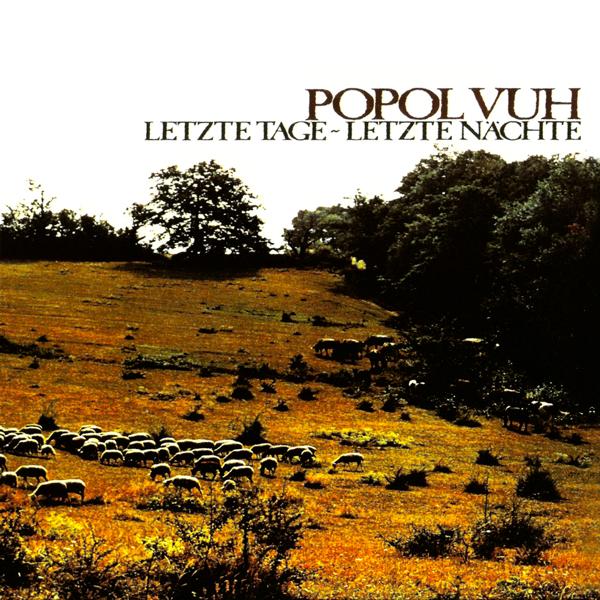
By the mid-1970s Popol Vuh’s association with fellow Munich-based rock band Amon Duul II opened their music to harder electric exploration, and when drummer/guitarist Danny Fichelscher left ADII to join Popol Vuh following Connie Veit’s departure (Veit played on Popol Vuh’s stunning classic, 1972’s Hosianna Mantra), he brought with him the Teutonic heaviness that was ADII’s stock-in-trade. What followed was a string of records where Fichelscher gave form, importantly, to Fricke’s east-meets-west devotional exercises. Among these albums was 1976’s Letzte Tage Letzte Nachte, an electric monument joining dark guitar figures with Popol Vuh’s trademark mantras. Renate Knaup, also from ADII, contributes vocals along with Dyong Yun, the band’s primary singer. “Oh wie nah ist der Weg hinab,” though, is an instrumental, and is representative of the shadows and light found in the set. Darkness builds and thunder cracks, and then the storm breaks, the world made new. There is an intended spiritual drama unfolding here, as it does in Wovenhand’s music, and, wordless as it is, the message is clear.
soundstreamsunday presents one song or live set by an artist each week, and in theory wants to be an infinite linear mix tape where the songs relate and progress as a whole. For the complete playlist, go here:soundstreamsunday archive and playlist, or check related articles by clicking on”soundstreamsunday” in the tags section.
Remember Neil Young’s Archives Volume 1? Released in 2009, it was a comprehensive, though not exhaustive, box set of the man’s music from 1963 to 1972 — 137 tracks, 47 previously unreleased. If you ponied up a three figure sum (guilty), you could get the set in DVD or Blu-Ray format, and have multiple visual gimcracks to click on and view while the music was playing. Some of these were quite cool; my favorite was a candid camera video of Young pestering a New York City record store clerk.
Since then, Young has occasionally promised further Archives installments — but given his multiple interests and projects (along with his propensity to change his mind), it wasn’t surprising that nothing followed. That is, until yesterday, when www.neilyoungarchives.com went live. The site will ultimately provide audio/visual access to more than 900 recordings by Young from 1963 to the present, whether solo or with his collaborators through the years — Buffalo Springfield, CSNY, Crazy Horse and The Promise of the Real, among others. Songs and albums are searchable, and everything is also accessible via the “timeline” or “file cabinet” formats used for Archives Volume 1.
In the FAQ section of the new site, Young and his collaborators go into great detail about their proprietary “Xstream by NYA” format, claiming to offer up to 20 times more audio data than the 320 kilobytes per second of high-quality mp3 files. Listening to Young’s live Time Fades Away as I type, my streaming rate has ranged from 1600 to 1800 kbps. It’s an impressive-looking stat, but given the basic grungy sound of the album, it’s hard to hear any substantial difference — especially since my sound system is a solid performer, but nowhere near audiophile territory.
Of course, there’s no such thing as a free lunch; to quote the Archives FAQ, “all content and songs on NYA are free for a limited time only. After that, access will require a subscription. Duration and cost of subscription are still TBD, but we can tell you that the more users we have the cheaper it will be.” At least right now, you can log in through Facebook or Google and avoid setting up yet another online account. Since my interest in Young’s music basically extends through the Rust Never Sleeps era, I’ll hopefully have enough time to listen to the music of his “Ditch trilogy” period (when he made Time Fades Away, Tonight’s The Night, and On the Beach) before the subscription model kicks in. [Note: according to a “Welcome to Neil Young Archives” email I’ve received, my free trial period lasts until June 30. Plenty of time then!]
In the meantime, the Archives website provides a window of opportunity to hear a seminal artist’s music for free. If you have any interest in Young’s work, it’s worth checking out.
The Dear Hunter first caught my attention when I saw them open for Coheed & Cambria and Porcupine Tree in 2009. Imagine a group of hardcore punk rockers who’ve raided their parents’ record collections, only to be captivated by the Beach Boys and Queen records they’ve found. It was hard-driving, deeply melodic, richly textured, over-the-top melodramatic, way impressive stuff.
Since then, I’ve happily followed TDH’s career, enjoying their Acts I-V concept albums, but more drawn to unrelated projects like their Color Spectrum EP set. This new EP, their first self-released project, distills what makes Casey Crescenzo and company’s music special into just 25 minutes and 6 “all killer no filler” tracks.
As always with these guys, if your attention drifts, you might think you’ve accidentally stumbled into a completely different song. For example, the agile Latin groove and warm, open-hearted verses of opener “The Right Wrong” slam directly into a stratospheric chorus of shreddy vocals, simultaneously putting the hardcore hammer down, then morphing into and out of a giddily rocking bridge in a flash. “Blame Paradise” encompasses a seriously badass beat, a off-kilter opening riff, call and answer vocal patter over surf-music guitar, an unstoppable harmony chorus, a spooky instrumental bridge, an ominous vocal/synth duet, and an atonal dead-stop finale. Whew!
“Beyond the Pale” slows things down in a riveting ballad that piles on the rich vocal harmonies, unexpected harmonic shifts, and synthesized strings and percussion. When it can’t do anything else, it collapses into stasis, then seques into “Shake Me (Awake),” an utterly glorious Brian Wilson pastiche for the emo generation (with Freddie Mercury-like rhymes and a vaudevillian softshoe bridge to boot).
“Witness Me” aims true at mid-tempo existential yearning, telling its tale through multiple vocal characters, the verses downshifting into a gorgeous synth turnaround before the theatrical chorus, the hardcore holler of the bridge, and the “keep dreaming” electronica-laced fade-out. The closing title track starts softly, climbing through muted verses to a floating chorus as a gently funky beat gains strength. Edgy, ascending guitars build to a big choral climax — only to wrap around to the song’s muted beginning, with a final half-verse just hanging there, suspended in mid-air.
And here’s the thing about The Dear Hunter’s music: as wildly disjunctive as all this sounds, the whole EP flows brilliantly from start to finish. Every new element is a surprise, even a shock, as it kicks in — but almost immediately it feels inevitable and right. This is great progressive punk-pop, made with open-hearted emotion, craft and commitment. When Crescenzo sings and TDH locks in around him, they’ll sweep you along with them, no matter how bumpy the ride gets.
All Is As All Should Be is available for download now on ITunes and Bandcamp. I completely missed the pre-order for physical formats (vinyl and CD), which are already sold out; here’s hoping a second pressing follows soon! The EP is released to streaming services on December 8.

 If you’re missing King’s X, then this one will satisfy your craving. Ray Luzier (KoRn) is on drums, George Lynch (Dokken & Lynch Mob) is on guitar, and Doug Pinnock (King’s X) is on bass and vocals. This is their second album, and it is much more varied in its music styles than their debut. I never was into Dokken, but George Lynch’s guitar work is killer -especially on “Breakout”.
 I give Grimspound the edge over its sister album, The Second Brightest Star. What a great collection of tributes and vignettes of everything that is good about Great Britain. Using small details to convey big ideas is really difficult, but BBT are masters and make it look easy.


 In the last few years, David Eugene Edwards has taken

 Progarchy