An interview with Yes, December 10, 1971

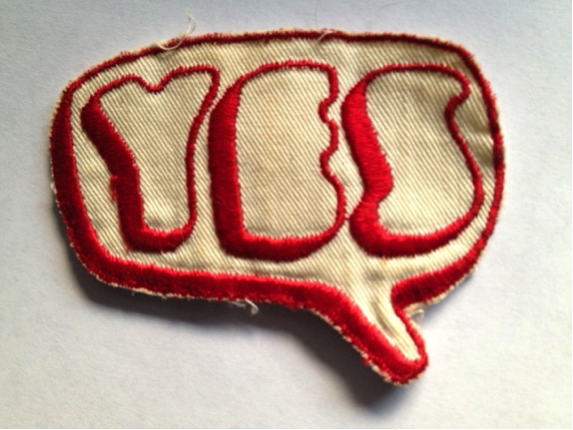
yes patchby Frank Urbaniak

As a sophomore at Lafayette College I became program director of the college radio station, and Larry Fast (Synergy) became the general manager.  We had access to early releases and concert passes in one of the great periods in progressive music.  To generate better distribution for college stations, I published a newsletter called The Rolling Paper that we distributed each month on campus and to all record labels.

We were fortunate to interview our three favorite bands between 1971 and 1973-Yes, Genesis on their first US performance at Lincoln Center, and King Crimson on the second Larks Tongue tour through the Bill Bruford connection with Yes.

We met and interviewed Yes at Dickinson College in 1971.  I had seen Yes the previous summer supporting Jethro Tull ($5) with Tony Kaye and had been blown away by the energy of the band.  By December the Yes album was taking off, and Fragile had arrived that week as an import from Jem Records.  We requested an interview through Atlantic Records, and received a warm welcome from the band members who were delighted that we were holding import copies of Fragile in the US.  For the next several years we were fortunate to have backstage passes to more than 20 Yes shows at area colleges, and later at the big arenas like Madison Square Garden and the Spectrum in Philly during their prime including several shows with Bruford on drums prior to his departure.  We watched the band grow from being third on bills (Yes, King Crimson, Procol Harum ) to headliners for the Close to the Edge through the Tales from Topographic Oceans tour.  Larry built a strong connection with Rick Wakeman through electronics and keyboards, and he went on to build some sequencers for him over the next few years. My connection was forged through and over beer, as Rick and I shared a fondness for brew.  I was but a lightweight while Rick’s consumption of Budweiser was unrivaled and eventually unsustainable.

I thought it would be fun to revisit this interview 40+ years later and have condensed the original piece, but not changed the content. Continue reading “An interview with Yes, December 10, 1971”

Danny Manners Boards Big Big Train

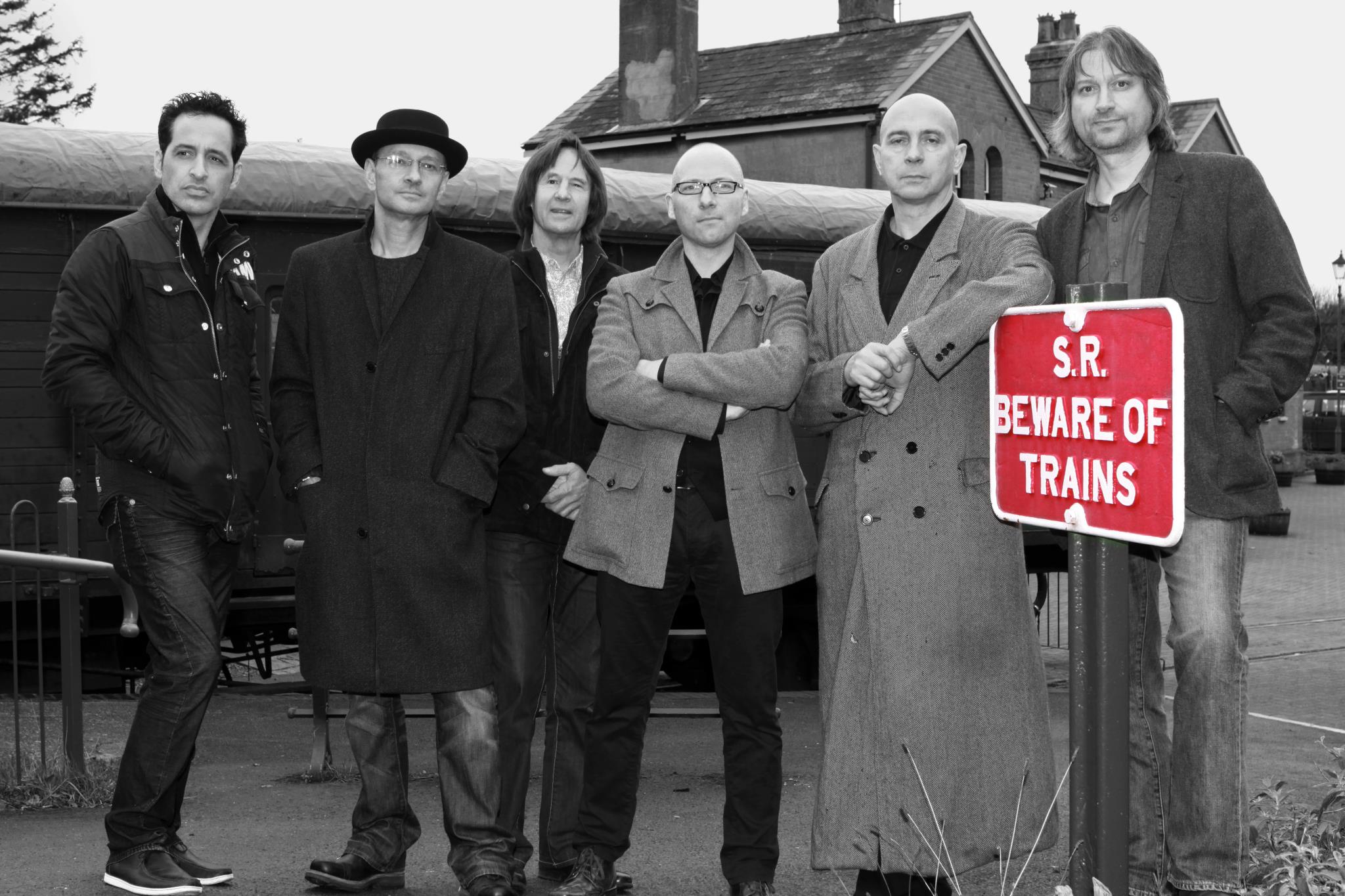
Nick, Andy, Dave, David, Danny, Greg.  Photo by Willem Klopper.
Nick, Andy, Dave, David, Danny, big red sign, Greg.
Photo by Willem Klopper.

Great news today on Facebook from the station master himself, Greg Spawton of Big Big Train.  Bassist and keyboardist Danny Manners has officially become a member of the band, joining Spawton, Andy Poole, David Longdon, Dave Gregory, and Nick D’Virgilio.

Spawton wrote:

We are pleased to announce that Danny Manners has joined Big Big Train as the band’s keyboard player. Danny made a significant contribution to English Electric Part One, playing keyboards and double bass and we are delighted that Danny has accepted our offer to join the band in time for the release of English Electric Part Two on March 4th. Danny’s past credits include Louis Philippe and Cathal Coughlan.

Manners’s training has been mostly in classical and jazz.  He writes of himself at his website:

For those who have stumbled across me: I’m a double bassist, electric bassist, pianist, arranger and composer living in London, England. Starting with classical music as a child and teenager, I worked my way backwards through jazz and finally worked out how to play pop half-decently in my thirties. Along the way I’ve also been involved in improvised and “leftfield” musics. At the moment I’m lucky enough to be doing a little bit of all of these…

He also lists an impressive discography, having played extensively with Louis Phillippe, Louise Le May, Cathal Coughlan, Sandy Dillon, and Muse: http://www.dannymanners.co.uk/albums.html

I must admit, I’m (I–ed., Brad) thoroughly impressed with this addition.  Over twenty years old, beginning with original members, Spawton and Poole, Big Big Train has never ceased to grow, take grand chances, and transform into what is arguably one of the greatest–if not THE greatest–rock band of our era.  With their near collapse after the recording “Bard,” Spawton and Poole have developed the group tremendously with “Gathering Speed,” “The Difference Machine”, “The Underfall Yard”, and “Far Skies Deep Time”.  Their 2012 release, “English Electric Part One”, has received rave reviews and has been labeled the single finest release of 2012 by a number of critics.

To this critic, “English Electric Part One” is not just the best of 2012, it’s the best rock release since Talk Talk’s 1988 magnum opus, “Spirit of Eden.”  Before that, one would have to jump back to Yes’s “Close to the Edge” or Genesis’s “Selling England By the Pound” in the early 1970s or to Dave Brubeck’s “Time Out” to find comparable works of music in the last half century.

It should be noted as well that the engineer for Big Big Train, Rob Aubrey, is the Phill Brown of our era as well.

Finally, Manners has worked with David Longdon before, and–I assume–connected Big Big Train to the famous bassist and keyboardist.

The second part of English Electric will be released on March 4 of this year.  American drummer, Nick D’Virgilio, a full-time member of the band, just finished recording the final drum parts for “English Electric Part Two.”  Additionally, the band will be releasing a limited edition of the full “English Electric” in the fall and the re-imaging of previous tracks on “Station Masters” in 2014.

Hayward on Phish on Genesis on Progarchy

Well, the title isn’t exactly right.  But, hey, the world’s best biographer of the 40th president of the United States likes us.  That counts for something.  In fact, it counts for a heck of a lot.  Thanks, Steve Hayward!

I just yesterday stumbled across the obscure cultural fact that at the 2010 Rock and Roll Hall of Fame induction ceremony, Phish—one of those hippie-jam band successors to the Grateful Dead—opened the proceedings with a dead-on cover of one of the oldest and least accessible tunes ever done by Genesis: “Watcher of the Skies,” from Genesis’s 1972 album “Foxtrot.”   The thing about “Watcher” is that it’s one of those prog tunes that takes a long time to get going, and once you’re finally under way. . . well, let’s just say it’s an acquired taste and leave it at that.  (Though I’ll admit it is a taste I fully acquired in college in the late 1970s.  Must have been all that second-hand smoke. . .)

To keep reading at Powerline (one of the most influential websites in the world. . . yeah, I’m not letting this one go easily), click here.

The Medium Is the Massage (1967)

The Medium Is the Massage

Did you know that Marshall McLuhan recorded a prog album?

And this rare album is now available again as a handsome reissue CD. (I would recommend owning the CD because of the gatefold cover and nifty booklet, rather than simply downloading the MP3 files.)

The album consists of two tracks, each one taking up a whole side of a vinyl LP: track one is 19:21 in length, and track two is 23:15.

You may wish to classify it as Spoken Word Prog, since the focus is arguably on McLuhan’s words. But there is such an interesting blend of music, other voices, and sound effects, that — by design! — the LP seems to defy that categorization. Perhaps it is better simply to classify it as Proto-Prog, because of the date at which it was recorded.

DJ Spooky (who even did a 3:07 remix as an audio abstract of the album) writes in the liner notes for the reissue:

Mcluhan wrote his stunningly prescient monumental work, one of twelve books and hundreds of articles, Understanding Media: The Extensions of Man, in 1964. He followed up with The Medium is The Massage: An Inventory of Effects in 1967. The record you hear arrived after that, but it embodied the same ideas. The baseline subject that would preoccupy almost all of McLuhan’s career was the task of understanding the effects of technology as it contextualized popular culture, and how this in turn affected human beings and their relations with one another in communities. For him, everything was connected. Because he was one of the first to sound the idea that electronic media and pop culture were eerily interconnected, McLuhan gained the status of a cult hero and “high priest of pop-culture”.

Acoustic space, pattern recognition: boundless, infinite play of text and thought — that’s what you need to think about when you listen to this album. The record version of the “Medium is the Massage: An Inventory of Effects” project was meant to embody some of the issues that the graphic design and radical use of new fonts and images to enhance the text of the book and create a dynamic linkage between how the collision of fonts and graphics would work and how they could be represented in sound. The whole thing is presented as an audio collage focused around McLuhan’s own voice reading parts of the book. There are other “character” voices—’the old man’, ‘the Hippie chick’, ‘the Irishman’, ‘Mom’, ‘the little girl’, etc.—who utter McLuhanisms, snatches from Pop culture, and excerpts from Finnegans Wake and The Iliad. Weaving amongst these is a very 1960s selection of jazz, classical, and psychedelic pop musics. This is all topped off with incursions from the recording engineer, backwards tape effects, sped-up and slowed-down voices, ambient recordings, and a whole jungle of other Foley and sound FX. One could argue that the book was as much about the graphics as it was about creating a place where the images could embody the philosophy graphic design that Mcluhan advocated — the record was the audio version of the same process. As Mcluhan once said: “For tribal man space was the uncontrollable mystery. For technological man it is time that occupies the same role.”

The record version of the “Medium is the Massage” presents that as a DJ mix — it presents the entire book as a series of samples, just like a mix-tape.

Think of this record as a collection of some of Mcluhan’s spoken texts recorded, collaged, cut-up, spliced, diced, ripped, mixed, and burned. It’s a mix tape made in a different era — before the rise of digital media files, but it has the same kind of resonance of a mix of any current sound art project one could care to name.

Andy Tillison and Geoff Banks

4006205090_47d7dfd4e7If you’re free for the next 45 minutes, it’s definitely work checking into the Prog Dog Radio Show.

http://myradiostream.com/progdog

Geoff Banks is an excellent radio host, and Andy Tillison is an equally interesting guest.  Banks and Tillison are talking about the nature of progressive rock as well as engaging one another on a variety of topics.  On the nature of Prog: Geoff is arguing that prog is ”music that will stand the test of time.”  It is the classical music of our day.  Andy’s response: Progressive rock is “serious electric music.”

Andy, sounding very much like Owen Barfield or J.R.R. Tolkien of the Inklings stated that his brainchild, The Tangent, is much bigger than himself or a supergroup.  He hopes it will keep going long after he’s retired.

The chat room is especially interesting: Alison Henderson, Blake Carpenter (Minstrel’s Ghost), Sally Collyer, and Matt Stevens are all contributing.

Frost* – Back With A Bang

Jem Godfrey has just dropped a couple of Frost* bombshells on his blog.

First, they’ve just finished working with Magenta’s Rob Reed at Rockfield Studios in Wales on a DVD. The disc features five Frost* songs taken from Milliontown and Experiments In Mass Appeal plus a new song, Heartstrings. Proceeds will be used to fund production of the new album.

Actually, that should be albumS, plural. Jem’s second bombshell is that the band’s new work will be released as two albums, six months apart – the first later this year, the second by Spring of 2014. Apparently, “it’s too big a story to be told over a single hour”!

The core line-up for both albums will be Jem, John Mitchell, Craig Blundell and Nathan King. Various guest appearances are planned, including one from Dream Theater’s Jordan Rudess.

Back at the Crossroads: The Holland Brothers’ Dueling Devils

One of the highest compliments paid to Chapel Hill NC’s Jennyanykind came from an anonymous reviewer of their album, Mythic (1995),dueling devils

Imagine Syd Barrett composing Astronomy Domine in the mid 90s and you’ll get an idea of what this album sounds like. For that reason, it’s an unusual record, since while most rock bands of the last few years have gone for a pumped up version of that grunge folk popularized by folks like Mark Lanegan, Thin White Rope, and the Meat Puppets, Jennanykind have honed in on the stylistic nuances of bands like Barrett’s Floyd and post-Nico Velvet Underground. A subtle difference, to be sure, but one worth exploring and, done successfully as it is here, one that shows it’s possible to look back for your influences and progress musically. Great stuff.

Jennyanykind were led by twin brothers Mark and Michael Holland. In the early 2000’s they disbanded the group and began exploring their individual interests in roots music, with Mark working in the blues idiom while Michael veered in a bluegrass/ragtime direction. Dueling Devils brings the brothers back together, albeit on opposite sides of an imaginary vinyl recording, each with five tracks of three minutes accentuating their oblique approaches to lo-fi music.

Now, why in the devil would a fan of progressive music spend time with what seems to be its antithesis? I would suggest we reconsider what is called “roots” music on its own terms and within its cultural context. For that, we need to a take a trip to the Crossroads.

On the night of July 4, 2005, I found myself on a spur-of-the-moment trip from Tupelo, MS to Clarksdale, in the company of Jeff Spencer, himself an accomplished guitarist. The ride included a two-hour conversation about music, about Eric Clapton and fellow-Mississippian and King’s X guitarist Ty Tabor, among others. We left the “hilly country” at 7:00 pm and crossed the Tallahatchie at 8:00 (both referenced in Charley Patton’s blues masterpiece, “High Water Everywhere”) and sailed into the ironing-board flat Delta with distant shacks and brewing storm clouds on the horizon. By 9:00 we reached the Crossroads of legend, the intersection of highways 49 and 61 in Clarksdale. I jumped out of the car just long enough to have my picture made, but once back inside we discovered mosquitoes swarming by the dashboard light. We found ourselves swatting our way out of Clarksdale.

I asked how far it was to the Dockery Plantation, where Patton and, later, a young Robert Johnson had once entertained. “That’s Ruleville,” said Jeff. “I can take you if you want to go.”

Ruleville was another 45 minutes or so out of the way, and in the pitch blackness of a rural Mississippi night there would have been nothing to see. But what I had seen was enough to establish in my mind the environment into which the bluesmen of old had emerged. To a desolate and desperate place of gang labor and shared misery these men stood out as perverse and irresistible individuals, as showmen and shamans. To a culture that moved to the rhythms of call and response, the bluesmen broke all the rules and concocted a style of performance that, to borrow a phrase from folklorist Cece Conway, was “inimitable and unapproachable.” The blues — with variations of ragtime, jazz, and gospel mixed into the musical mojo bag — was designed to never be fully replicated. This was the work of possessed individuals, griots, spell-binding artists, intent on evoking frenzy and amazement. Two generations before Hendrix, Patton was playing his elaborate syncopation behind his head. It was not popular music, strictly speaking.

To illustrate, I’ve recently been listening to “This Is a Low” from Blur’s Parklife album. It is a cultural gem, composed around a nautical map on a handkerchief and the British Shipping Forecasts. It expresses an English band’s homesickness on the road. And it is pop music to the core, with a big, stirring chorus meant to be accompanied by tens of thousands of Brits in Hyde Park, arms raised. It’s the stuff of football supporters’ cheers.

But with the blues we honestly don’t know what the actual roots sounded like. We just make out enough of Patton, or the Bentonian craftsman Skip James, through a blizzard of crackles and pops on the best digital transfers. What we should hear in those sides are works of extraordinary eclecticism. We should hear the hedges being pushed over. We should approach them the way the original listeners found them.

To revisit these idioms, as the Holland Brothers invite us to do, is to return to the beginning of a music that packed a universe of originality into sides limited by three minutes of wax space. Every slide, every pull-off, every microtonal inflection is a dare. “See if you can do this.”

Mark Holland’s songs clearly emulate Patton. Recorded in stereo, he double tracks his voice (e.g. “My Baby Say She Coming”) to get the same disquieting effect of Patton’s original recordings (did Patton have a ghost voice? were his recordings haunted by demons?). He captures the energy of the Dockery frolics of old on “Coldwater Blues,” a rounder that takes him from one end of the South to the other. “Bic Lighter” works from a minor key to tell a story of dependence, where even “light” serves the cause of darkness.

Mark’s strength, both here and with Jennyanykind, is to capture an atmosphere where the veil between the natural and supernatural is rent. Malevolent forces are at hand, but his protagonists persevere and come to a new level of understanding, often at the expense of conventional wisdom (a good example is “Clear Tone Blues” from 2003). The griot was a storehouse of tradition, but his songs often mocked the culture around him.

Michael Holland’s sides pose a different challenge, recorded as they were live, in mono. This heightens the importance of his finger-picking and phrasing (as well as harmonica and kazoo) to emulate the parts of a larger band.  The playful “Dry Bones” draws from biblical characters (Enoch, Paul, Moses, the valley of dry bones in Ezekiel’s prophecy) to show the griot’s awareness of the “light come down.”   He then moves right into Charlie Poole’s rag arrangement of “Leavin’ Home,” a classic American murder ballad.

But his re-do of his own “Peas and Collards” (from an earlier album of the same title) is a swift-moving blues highlight.  It’s about the Southern tradition of eating black-eyed peas and collard greens on New Year’s Day for health and wealth, made ironic by the fact that the South, for most of its history, has lagged behind most of the U.S. in both categories (the original version runs through a bitter litany of corporate interests whom “money loves”: Chase Manhattan, Exxon, the WTO, etc., but not momma or the song’s protagonist).

Whereas Mark’s sides are dark, straight-up blues, Michael’s are lighter; but both elements were found in Patton and other genre-benders from nearly a century ago.

A young Syd Barrett spent time listening to a couple of Carolina bluesmen named Pink Anderson and Floyd Council.  An aspiring, avant garde artist of today  would do well to spend some time recovering some of the essentials with the Holland Brothers.

A Progressive Rock Lexicon (or: How to Talk to a Prog Rocker)

In any field of endeavor, there is a certain language used.  One working in the legal field speaks of briefs, appeals, affidavits, and so on.  A football coach may speak of blocking schemes, blitzes, and pass routes.  And one who flies airplanes may speak of instrument flight rules, crosswind landings, air speed, and fuel mixture.


Alas, those that make and listen to music have their own language.  Of course, those of us involved with progressive rock, as listeners, musicians, producers, etc., usually look at the world a little bit differently.  As such, an alternate language has developed.


Thinking about this, I have come up with a list of a few terms to aid conversation between prog rockers, as well as to help those who would like to speak to us on our terms.  Of course, this list is by no means considered to be complete.  Fellow Progarchists and readers of this site, in the interest of smooth communications, you are not only welcome, but are encouraged to suggest additions.  So, without further adieu, and with tongue firmly planted in cheek, I present to you a brief glossary of progressive rock terms. 


Short song – a song under 10:00 minutes in length.


Unusual time signature – 4/4


Normal Time Signature – 7/4, 5/8, 7/8, etc.


Brick – a unit of measurement for determining thickness.


String Section – a group of musicians in an orchestra whose function it is to emulate a Mellotron.


Dancing – ??????


Pretentious (1) – a word used to describe the critics who accuse prog rockers of being pretentious.


Pretentious (2) – the lyrics from this guy:


Excess – ??????


Air Guitar – what rock fans play.


Air Keyboards – what progressive rock fans play.


Air Bass – Well, a lot of us play this too, especially those of us that are into Geddy Lee and Chris Squire.


Bass Guitar – a stringed instrument typically used in the melodic discourse of a progressive rock composition.  Occasionally used as part of the rhythm section.


Robert Moog – the greatest electrical engineer of all time.


Aaron Copland – a guy who used to write music for Emerson, Lake and Palmer.


Alberto Ginastera – See Copland, Aaron.


Female Prog Rocker – a woman that participates in progressive rock, either through listening or performing.  Most frequently found in Continental Europe, the U.K. and Scandinavian countries.  A North American variant of the species exists but is extremely rare.  Another related variant of the species is the prog rock spouse, defined as a wife dragged into the prog rock scene by an overzealous prog-rock loving husband. 


Consuming alcoholic beverages – rearranging your liver to the solid mental grace.


Seed drill – a tool for precisely positioning seeds in the soil, refined by a man who was preemptively named after the band Jethro Tull.


Composing – the art of multiple musicians in a band sitting around arguing for hours, sometimes very intensely, over whether the next bar is to be in F or F#.


Corporate Attorney – see video:


(it is rumored that they also did some prog rock in the 70’s)


Änglagård — Viljans Öga


Ken DiTomaso from the prog rock band Paper House nails it in his review of Änglagård’s Viljans Öga over at The Daily Vault, where the album made his 2012 End-of-Year List:

Returning after a twenty year break, Änglagård doesn’t skip a beat. This is an album of lengthy instrumental progressive rock that refuses to be modern in any way. Flute, mellotron, hammond organ, and more make this feel like it came straight out of a bygone era. The mood is dark and chilly, but less in a creepy Halloween way and more in a long winter’s night way. It sounds almost exactly like their original output twenty years ago, to the extent that I’d bet some people probably wouldn’t be able to guess which songs were produced then and now if they were all shuffled up. That lack of originality might be a downside to some but it was never what the band was about in the first place, and when it comes to recreating ‘70s prog bliss, they still can’t be beat.

Guitarist Jonas Engdegård tells you how to pronounce the track names here.

1. Ur Vilande
2. Sorgmantel
3. Snårdom
4. Längtans Klocka

Review: Cosmic Danger, “Universe at Large”

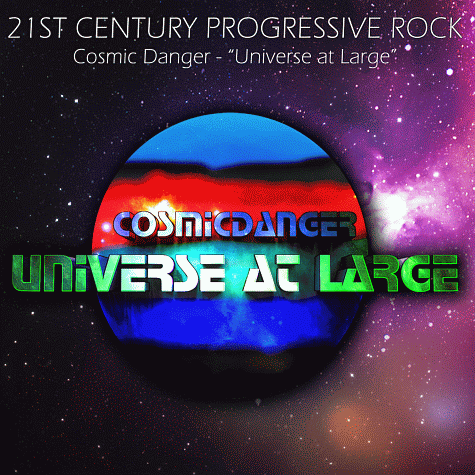
Cosmic Danger - Universe At Largeby Frank Urbaniak

I have listened to Cosmic Danger’s “Universe at Large” several times and I have had mixed reactions on each pass.  The music demonstrates hints of both early Yes and the Rabin /Sherwood years, Camel, Klaatu and Asia and is an interesting but somewhat frustrating listening experience.

There are nine tracks on Universe at Large logging in at about 50 minutes, with a mix of instrumental and vocal tracks.  There is little information online about the band or this album including lyrics or story line.  The quality of musicianship is excellent, but in both lyrics and music the album doesn’t flow well to these ears and the storyline escapes me.

First the good –these guys are exceptional musicians: the guitarist can rip like Howe during The Yes Album days, the drummer is tight, crisp, fast and well-mixed and the keys are always interesting.

The not so good-the name, the cover, the concept of the CD and the lyrics seem a bit too ‘space’ oriented, suitable as a soundtrack for Enders Game but less relevant than other progressive music being released today (BBT, Echolyn).  This isn’t cosmic as in Jon Anderson/Yes, but cosmic as in “we are journeying into space and won’t be back” but the story doesn’t seem very developed.  The bass seems a bit muted.

The mix is puzzling, with excellent drum/keys/guitars, but the heavy reverb and echo on the choruses and effects remind me of a late 80s release like Marc Jordan C. O. W or Yes’s Big Generator.

The first five tracks have vocals with big choruses, giving Universe at Large a strong AOR feel initially. “Champions” starts off the album with a heavy Argent sounding organ and a feel -good chorus suitable for the Olympics, although the words sound a bit hokey: “Champions give all they have, all along”.  “Freedom Flier” also begins with a nice organ riff (Tony Kaye style), and the vocals remind me of Flash/early Yes.  “Skydiving” sounds like a Moody Blues tune with strumming guitars and another heavily reverbed chorus and builds to a frantic conclusion where you can see how proficient these guys are as musicians. “Blue Sky”, the best track on the album, retains the Kim Bullard/Paul DeVilliers (Big Generator) feel with brassy keys and vocals reminiscent of Alan Parsons/Chris Squire.  An excellent guitar solo leads to a nice counterpoint vocal chant of “Blue Sky dawning, Red Sky at night.”

With “Bug in the Wire” the vocals are a bit clearer and ‘grittier’ , sounding a bit like Kevin Moore/Chromakey, with music by Klaatu.  At this point the album shifts to mainly instrumental focus, with “Endless Voyage” one of the most tasteful tracks on the album. “Moon Base Gamma” , the longest track on the album at 7 minutes, loses some of the momentum with some overdone synthesizer effects and cumbersome words about survival at Moon Base Gamma , with the repeating chorus of ‘where is home’ making this sound more like a space opera (think Intergalactic Touring Band).    “Five Year Mission” has a frantic bass/guitar riff and the powerful drumming again demonstrates the proficiency of the musicians.  “Moon Dusk” loses the momentum by concluding this ‘space’ journey with an overlong intro of heavy keyboard effects. Finally the band introduces some  tablas and percussion, but just when the track gets going it abruptly ends with a heavily reverbed chorus briefly chanting the theme from the opening track “Champions”.

In summary, these excellent musicians have produced an interesting but not very original release.  I am unclear as to the message and I am left with an ambivalent feeling about the full album.  While the instrumental tracks are interesting, I think the album would be better paced if some the instrumentals broke up the early vocal tracks to help build the ‘story’.   Certainly worth a listen and because of the obvious talent of the band, I look forward to future releases.

My rating: (out of 10):

Musicianship-8

Production-6.

Pacing-5.

Originality-5

Overall-6.