Metal Mondays: Iran’s Atravan – “The Grey Line”

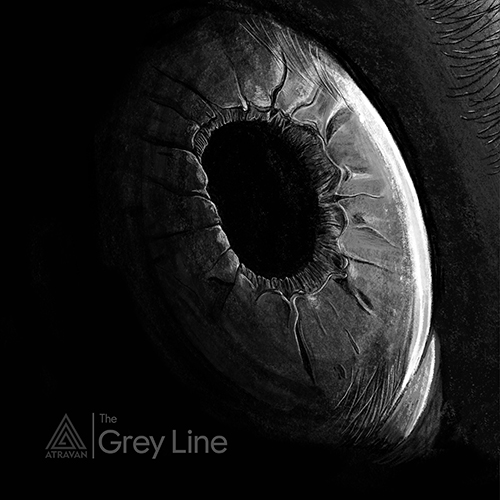
Atravan, The Grey Line, 2021
Tracks: 
The Pendulum (2:35), The Perfect Stranger (6:45), My Wrecked House (6:05), Vertigo (5:09), Dancing on a Wire (6:01), The Grey Line (9:12), Uncertain Future (3:35)
Line-up:
Masoud Alishahi – Vocals
Shayan Dianati – Guitars
Arwin Iranpour – Bass
Marjan Modarres – Piano, Keyboards
Shahin Fadaei – Drums
Pedram Niknafs – backing vocals (tracks 2, 4) 

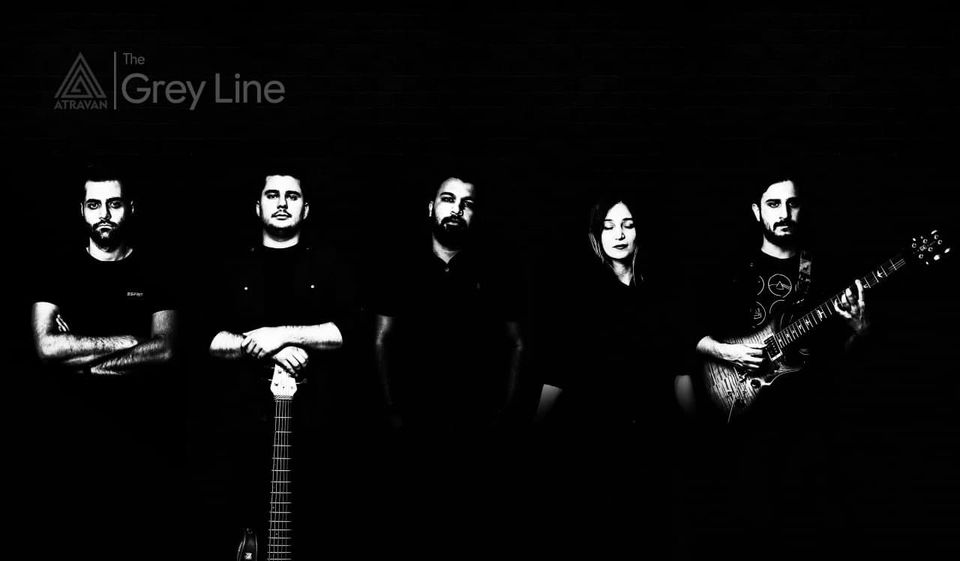
There’s a first time for everything, folks, and I think today’s Metal Mondays review is the first time we at Progarchy have ever reviewed an album from an Iranian band. I know it’s the first time I have. Tehran’s Atravan released their latest album, The Grey Line, about a month ago, and it has quickly become my favorite new release of 2021. It’s absolutely phenomenal.

Atravan can be best described as a progressive metal band with atmospheric elements. The songs are incredibly well-written, with the instruments all played expertly. The bass plays a prominent role – arguably more prominent than the guitars. The Grey Line isn’t particularly heavy, although it has its heavier moments. “Dancing on a Wire” for instance leans on a synth sound with acoustic guitars and soaring vocals. “My Wrecked House” has the same elements, but it has a much heavier sound with heavier drums and electric guitars. By the end of “The Perfect Stranger,” the band is pounding away in full-blown metal.
All of those elements remind me most of Riverside, especially on the aforementioned track. The bass and keyboards also play a central role in Riverside, with spacey guitars layered over the top. There are also moments that remind me of the atmospheric aspects of Porcupine Tree or even Devin Townsend (think “Deadhead”), but Atravan strike me as being rather unique at the same time. Maybe it’s the warmth and depth of Masoud Alishahi’s vocals (yes, the lyrics are in English). Maybe it’s the stunning Floydian keyboards. Maybe it’s the way the band builds a song gently but gradually through the combination of guitars, bass, drums, keyboards, and vocals. The drums are intricate throughout. Shahin Fadaei always plays to whatever the song requires in the moment. Sometimes that requires rapid-fire double-bass pounding, and sometimes it requires a more sedate Nick Mason-style beat. Careful with that axe, Atravan.

The keyboards provide unique sounds throughout the album that set a melancholic and contemplative mood. The opening of the nine-minute title track is all keyboards. The song slowly builds with added vocals before a loud but simultaneously gentle bass takes center stage. The song continues to build with additional instruments picking up. It takes about five minutes before they return to a really heavy sound, but everything works so perfectly that you end up appreciating whatever and however the band plays. None of the songs feel rushed, which is rather surprising in an album that’s only forty minutes long.

The electric guitars on the opening of the final track, “Uncertain Future,” have a spacey Gilmour-esque sound to them. They’re used sparingly as the bass, drums, and keyboards begin to take over. It’s a three and a half minute-long track, yet it still doesn’t hurry. It asks the listener to slow down with it and just enjoy the moment. It’s an instrumental track to help you unwind at the end, even though the album is on the short side. In closing it out this way, Atravan bookend the album, since the opening track was also a spacey instrumental piece that served to warm up the listener for the rest of the record. 

Definitely give The Grey Line a listen. I’m so glad the band reached out to us, because I probably wouldn’t have come across this album otherwise. I certainly wasn’t expecting it to become my favorite album of the year thus far. There’s a lot of 2021 left to go, but Atravan have set a very high bar for everyone else in the prog world to hurdle. Every track on this album is fantastic. I look forward to more from the band in the future. 

https://www.facebook.com/atravanband
https://atravan.bandcamp.com
Apple Music
Spotify
 

In Concert: Todd Rundgren’s Clear Humanity

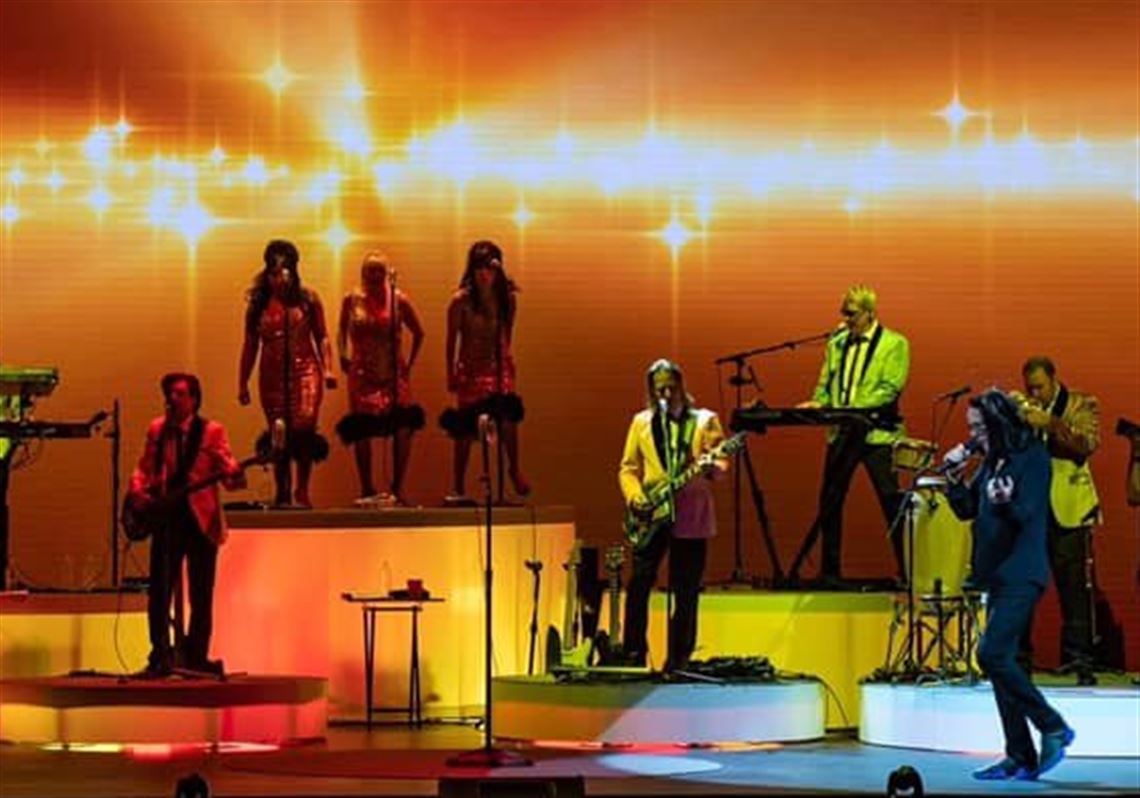
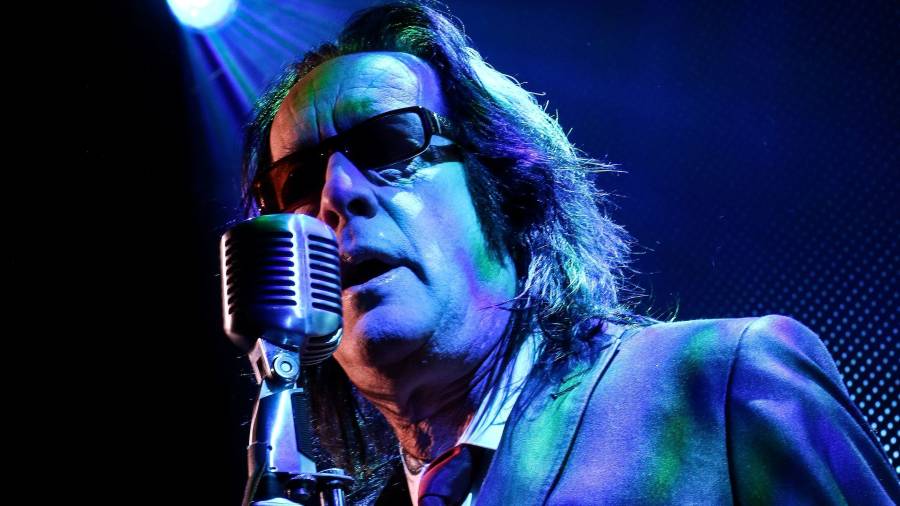
With multiple attempts at a 2020-21 tour yanked out from under him, Todd Rundgren has pulled a fresh concept out of his back pocket in turn. In lieu of a one-off worldwide livestream, Rundgren kicked off the “Clearly Human Virtual Tour” on February 14.

Sporting a setlist focused on the ambitious 1989 album Nearly Human, Rundgren and his 10-piece band (including bassist Kasim Sulton and synthesist Gil Assayas from the 2018 Utopia reunion tour) are now midway through a 25-date residency in Chicago; original talk of limiting each show’s streaming market via “geofencing” quickly gave way to a few visual and verbal nods to a different city each night. Intrigued, I ponied up $40 for February 25’s “Indianapolis” show; for more cash, you could control what camera angle you were seeing, order the usual merch, have your face projected onto video screens the band can see, or even attend in person (the last option subject to being one of 19 people to pay VIP prices, then pass a COVID test within 72 hours of the show).

It’s a great concept: cutting down overhead by staying in one place, Rundgren has added a horn section (Steven Stanley on trumpet and Nearly Human sax man Bobby Strickland), three backup singers (Nia Halvorson, Grace Yoo and Todd’s wife Michele), guitarist Bruce McDaniel and second keyboardist Elliot Lewis to his usual rhythm section of Sulton, Assayas and drummer Prairie Prince. The musical results all night were pretty marvelous, ranging from a smooth purr to a raucous roar, with lots of guts and grace to spare. Pin-sharp after two weeks with the material, the band eagerly powered through most of Nearly Human plus selected classics from the 1970s (the 10-part vocalese in “Can We Still Be Friends” was downright awe-inspiring), a few Utopia tunes and later R&B-inflected gems (with the precision funk of 2nd Wind’s “Love Science” and the slow burn of “God Said” from 2004’s Liars proving especially effective). Rundgren’s occasional forays into lead guitar on his iconic green instrument “Foamy” were spaced out for maximum impact; the rest of the time he stalked the lip of the stage, strutting his stuff while the players did their thing. His obvious delight in his “nebbish as soul man” persona was utterly endearing — and once he shucked his suit jacket to reveal a bit of a pot belly and comfy athletic shoes, you were in on the joke as well.

The only weak link, for this show at least, was Rundgren’s voice. His melodies, especially on his soul material, are fairly fearsome, multi-octave constructions; they require a sturdy vocal instrument, a comprehensive range, consistent breath support, and lots of stamina! On this night, Rundgren’s bottom and top were strong, but a little phlegmy and forced, and the midrange between the two was unsteady to the point of outright disappearance at times — including during the opener “Real Man”. (l’ve had to sing for numerous worship services or concerts with a dry throat, sinus congestion or a cold, and I think that’s what may have been going on. Take it from me, it ain’t much fun.) Previous reports have found Todd in great vocal form on this tour (and Cirdec Songs’ Cedric Hendrix reported that he was up to snuff for the next night’s show); hopefully, this was a one-time glitch that some rest — or maybe hot tea and honey — fixed! And in my book, Rundgren earned “show must go on” bonus points for his perseverance in difficult circumstances.

In short, Todd Rundgren’s come up with an enjoyable cure for the no-concert blues — one that, even on a bit of an off night, was highly effective, impressive and fun! If it’s been too long since you rocked out in your favorite venue, I recommend you check out the remaining livestream dates for the “Clearly Human Virtual Tour” at NoCap Shows.

— Rick Krueger

Setlist:

  • Real Man
  • Love of the Common Man
  • Secret Society (Utopia)
  • Something to Fall Back On
  • Parallel Lines
  • Unloved Children
  • Love in Action (Utopia)
  • Compassion
  • Can’t Stop Running
  • The Waiting Game
  • The Smell of Money
  • God Said
  • Love Science
  • Feel It
  • Sweet
  • Change Myself
  • Can We Still Be Friends
  • Lost Horizon
  • Rock Love (Utopia)
  • Hawking
  • The Want of a Nail
  • Hello It’s Me
  • I Love My Life

Album Review: Morpheus Project’s “Mozaick”

Guest Review by Chloe Mogg

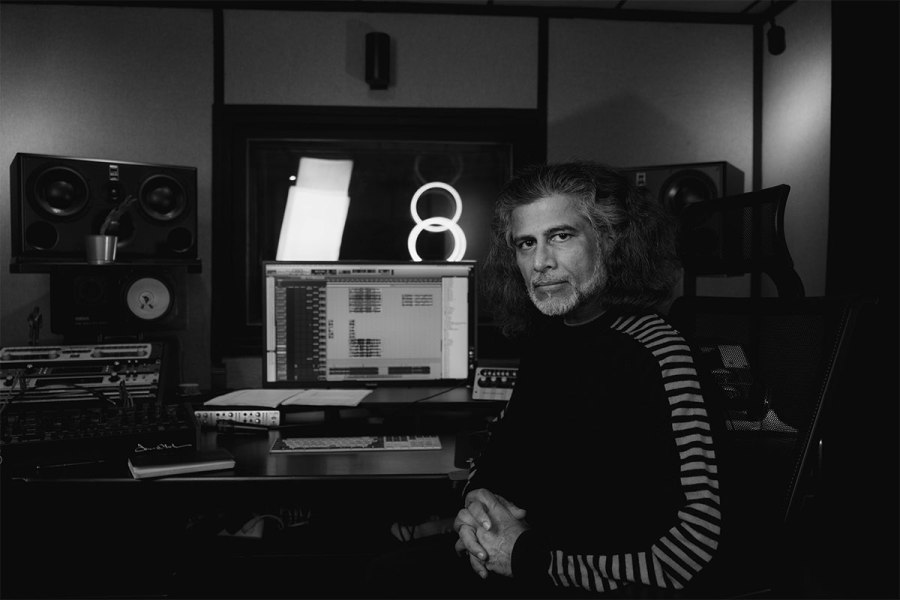
Coated with elements to make this one of the best progressive albums of the year, Morpheus Project are set to release their elevating new album ‘Mozaick’ on March 19th. With previous singles ‘Cry for Freedom’ and ‘Nights to Remember’ on the release, the highly anticipated debut album is an energetic introduction into the mind of musical director Mustafa Khetty. Receiving rave reviews from the likes of Prog Magazine, Scala Radio, Classic FM and BBC Introducing, ‘Mozaick’ is a force to be reckoned with in the industry and issues itself with importance to be heard. 

An expansive release that showcases Morpheus Project’s diversity, the musicianship within the album is breathtaking. Featuring talented musicians throughout the release, Morpheus Project are a collective specialising in creating music without boundaries. Exceeding any expectations and walking with it’s head held firmly high, ‘Mozaick’ has something for everyone. Showcasing Mustafa’s Indian classical roots, a progressive rock side, a realm of experimental juices and fusion thrown into the mix too, ‘Mozaick’ is unapologetic and free-spirited. 

A reflection of Mustafa’s personal endeavours, life experiences and observations as a whole, there’s elements of intimacy within the album that draws listeners in even further. A reflective album that will make you sit and think, ‘Mozaick’ doesn’t follow your typical rulebook – and that’s what makes it even more impressive. 

http://www.mustafakhetty.com

Jarrod Gosling and Cecilia Fage

Album Review: Cobalt Chapel’s “Orange Synthetic”

Cobalt Chapel, Orange Synthetic, Klove Recordings, January 29, 2021
Tracks: In Company (4:27), The Sequel (3:49), Message To (3:18), A Father’s Lament (3:41), Our Angel Polygon (4:32), Cry A Spiral (4:53), It’s The End, The End (5:26), Pretty Mire, Be My Friend (4:04), E.B. (2:15), Orange Synthetic (6:21)

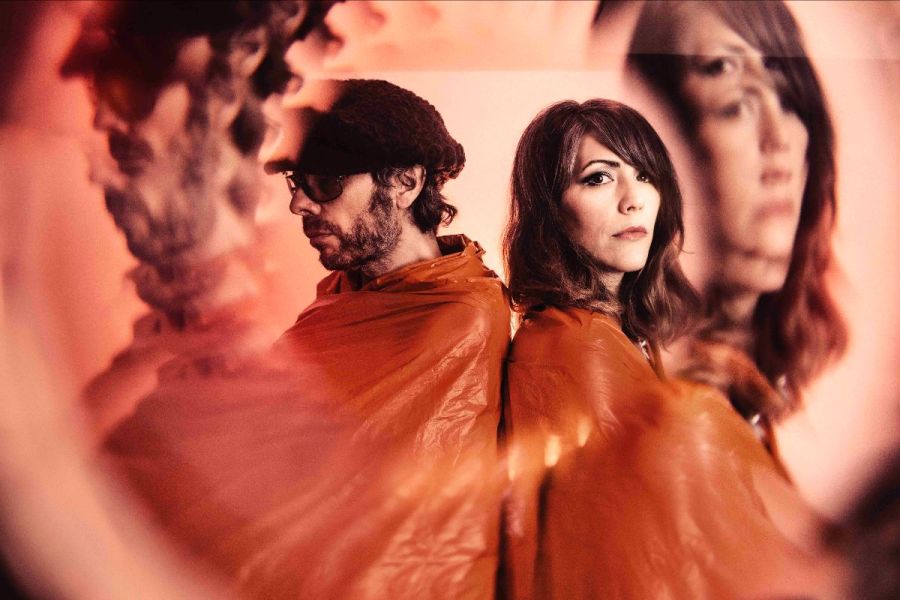
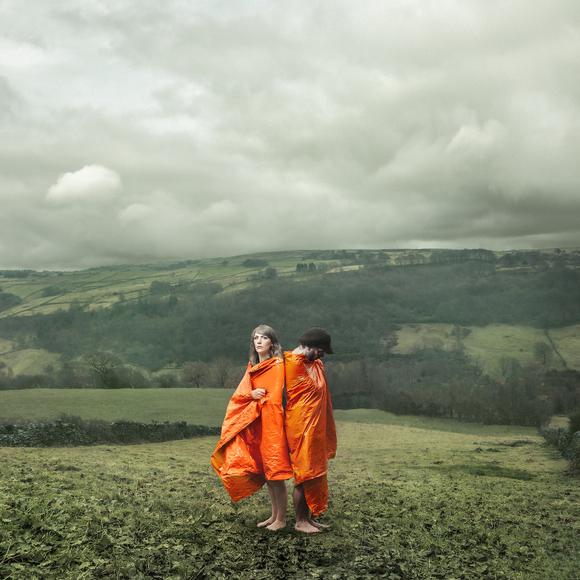
Yorkshire, UK, duo Cobalt Chapel recently released their second album, Orange Synthetic, and it’s a wonderful contemporary progressive take on the psychedelic music of the 1960s. It has fresh production values with lush textures and glowing vocals. So who are Cobalt Chapel? Cecilia Fage (from Matt Berry & The Maypoles) and Jarrod Gosling (from I Monster). Gosling also happens to make the album artwork for Tim Bowness‘ solo albums. 

Fage’s vocals are the clear centerpiece of the album, and her voice is absolutely stunning. It’s treated with some echoey effects that give it a choral feeling, which matches the aesthetic implied by the band’s name. The album sounds fantastic, with the vocals and music clear, clean, and distinct. The various organs and keyboards are the primary musical sounds, with their textures swirling around the listeners head as Fage sings in the center. The guitar, drums, and soft bass complete the psychedelic sound. You’ll be hard-pressed to find a better-sounding album out today. It is mixed very well with everything easy to pick out. Nothing is muddled. You can even make out the clicking of keys or buttons on whatever instrument Gosling is playing at the end of “A Father’s Lament.” There’s a slight hum in the background at that point which makes you feel like you’re in the room with him as he closes out the song. The whole record is really a pleasure to listen to.

There are folk elements to the music, with the album being influenced by Yorkshire itself. The song “E.B.” sounds the most folky, with instruments kept to a relative minimum and Fage’s voice carrying the brief track. Overall though the music retains a psychedelic vibe through heavy use of keyboards and organs, along with very 60s-sounding drums and guitars. The music is much more upbeat than the type of psychedelic music I’m more familiar with, though. It isn’t as spacey, although there are times when it sounds like they’re about to launch into the spacier side of this corner of rock music. They never quite get there all the way, except for on “Cry A Spiral,” which is the spaciest track on the record. Even on that song the ending is heavier and more lush-sounding, ending with a light touch of saxophone and various organs. Melody takes a central position on the album, which is perhaps what makes this album so appealing on repeated listens. You’re left feeling refreshed after listening to Orange Synthetic

If I had to make one complaint, it’s that I would have preferred some longer extended instrumental sections. The end of the first track, “In Company,” breaks into what sounds like it’s going to be a wonderfully psychedelic Floydian soundscape, but then it breaks off suddenly. The second track similarly fades out as it enters an instrumental passage. The third track does the same thing. It drops into the beginning of a 1960s-style psychedelic mood, yet it cuts off after a few brief seconds. At about 43 minutes in length, I think there’s room on the album for some longer musical exploration. They set the listener up for it, but they leave me longing for that instrumental space to breathe.

The title track, which ends the record, is the longest on the album at over six minutes, and it has a longer instrumental passage in the middle that feels much more natural for this kind of music. When Fage’s vocals kick in again after that passage, I’m left satisfied. In that regard the song is the perfect ending for the album. I just wish more of the songs on the album more generously balanced the instrumental side of this style of music with Fage’s beautiful vocals by having more extended musical passages. 

I highly recommend Cobalt Chapel’s sophomore album, Orange Synthetic. It’s a refreshing blend of upbeat psychedelic music with stunningly beautiful vocals presented with choral overtones. The music is accessible, yet complex enough to reward on repeated listens. Cobalt Chapel have masterfully brought the psychedelic sounds of a bygone era into fresh territory for a contemporary audience. 

Buy the album on CD, vinyl, or digital download, including signed copies of physical media: https://cobaltchapel.tmstor.es/#main_menu

https://www.facebook.com/cobaltchapel/
https://twitter.com/cobaltchapel
https://www.instagram.com/cobaltchapel/

What Game Shall We Play Today? Remembering Chick Corea (1941-2021)

You wouldn’t have had your Chick Coreas five years ago. Chick Corea doesn’t have to really dress up in blazer gear to get a wide following. It just goes to show you that it’s not a question of image these days. It’s more a question of the actual music.

Keith Emerson, Keyboard Magazine interview, October 1977

In late 1976, my older brother changed my life by giving me a copy of Keyboard Magazine. It was a pretty amazing periodical: in those days before digital sounds, computers and then-undreamt-of technology became the prevailing medium of modern music, Keyboard focused on the serious fun of playing and listening, mostly in interviews with pianists, organists and synthesists across a broad spectrum of genres, as well as in how-to columns and record reviews. That’s where Chick Corea, who cranked out a monthly “Keyboards & Music” column and whose remarkably frequent albums merited equally frequent cover stories, first caught my eye. And through the album My Spanish Heart, reviewed in that issue my brother gave me, he caught my ear as well.

“Armando’s Rhumba” from Chick Corea’s My Spanish Heart – with Jean-Luc Ponty on violin & Stanley Clarke on bass

More than a decade into his career, Corea had unquestionably paid his dues by the mid-1970s. Born into a musical family, gigging professionally in high school, and briefly pursuing classical studies at Columbia and Julliard, Corea jumped into the jazz world of New York City as both a sideman and a leader of striking originality (as on the seminal 1968 trio date Now He Sings, Now He Sobs). Which is when Miles Davis came calling: playing on Davis’ trailblazing In a Silent Way and Bitches Brew, then launching the avant-garde quartet Circle, Corea consistently sought the cutting edge of the music. But an encounter with L. Ron Hubbard’s Scientology movement abruptly shifted his perspective. As he said looking back,

The concept of communication with an audience became a big thing for me at the time. The reason I was using that concept so much at that point in my life – in 1968, 1969 or so – was because it was a discovery for me. I grew up kind of only thinking how much fun it was to tinkle on the piano and not noticing that what I did had an effect on others. I did not even think about a relationship to an audience, really, until way later.

Chick Corea, Artist Interviews.eu, 1994

That shift was palpable by 1972; in addition to the meditative Crystal Silence (an outstanding duet effort with vibraphonist Gary Burton), Corea was checking out more directly populist idioms. Teaming with bassist and lifelong musical compadre Stanley Clarke, he formed Return to Forever in 1972, traveling with lightning speed from the laid-back Brazilian vibe of Light As A Feather to the audacious jazz-rock suites of 1976’s Romantic Warrior. This version of RTF, also featuring Lenny White’s funky drumming and the flamenco-metal of guitar phenom Al DiMeola, even crossed over to the still prog-immersed shores of Great Britain:

Return to Forever on the BBC’s The Old Grey Whistle Test, 1976
Continue reading “What Game Shall We Play Today? Remembering Chick Corea (1941-2021)”

The Progarchy Interview: Anneke van Giersbergen

Thank you to Anneke van Giersbergen for speaking today with Progarchy.com about her new album, The Darkest Skies Are The Brightest.

Listen above to our conversation about the genesis of the album, each one of its magnificent tracks, and also Anneke’s musical plans going forward. We even ask her about future work with her metal band Vuur

Love Is….

‘You shall love your crooked neighbor / With your crooked heart.’

– W. H. Auden, “As I Walked Out One Evening”

Neal Morse, Pete Trewavas, Mike Portnoy, Roine Stolt

Parallel Universes: Transatlantic’s Dueling Epics

This is probably the only time I’ll have a legitimate reason to use this cool new WordPress feature.

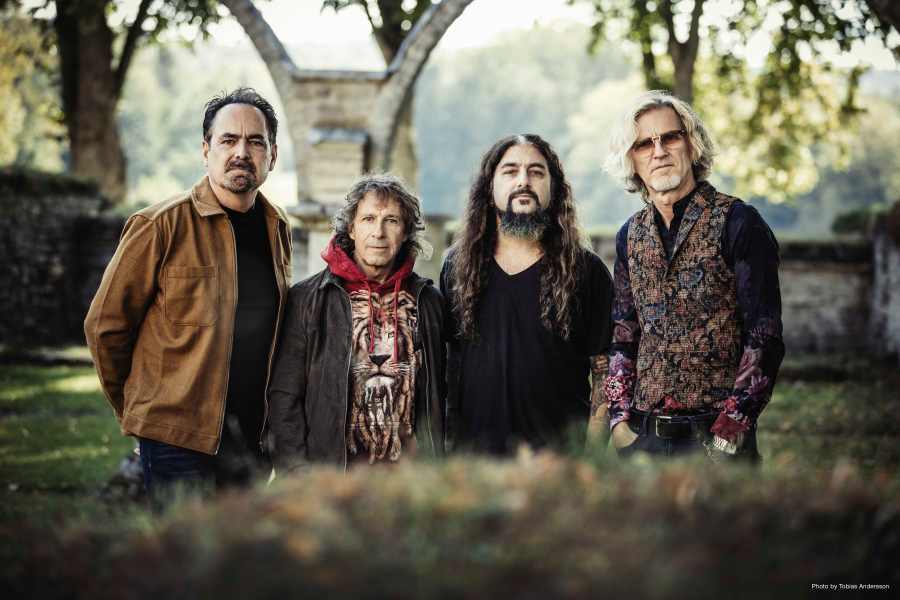
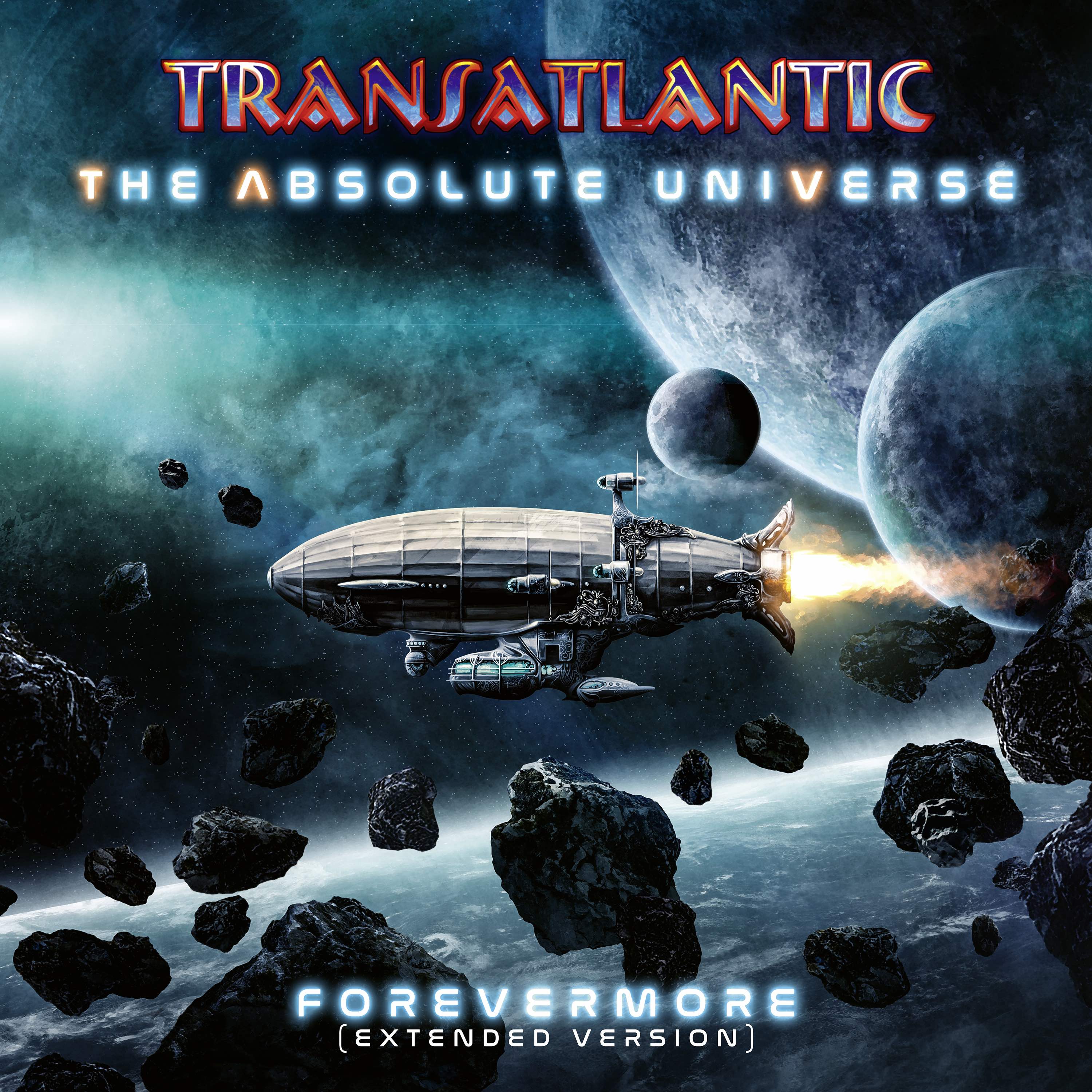
Transatlantic have reached the ripe old age of 21, and with that they’ve released a brand new album. Wait, that isn’t right. They’ve released two brand new albums. Well, no, they haven’t really done that either. What they have done is released two versions of one album: one at ~65 minutes and the other at ~91 minutes. The Absolute Universe: The Breath of Life is the short one, and The Absolute Universe: Forevermore is the long one. For the sake of clarity (both mine and yours), I’m going to refer to the albums as the extended version and the abridged version.

Now why on earth, you may ask, would a band want to release two different versions of an album? Excellent question. I was a bit miffed when Big Big Train did it with Folklore (the vinyl and Hi-Res audio version was longer with some tracks from the Wassail EP and a slightly altered track listing), and I’m a bit miffed that Transatlantic has done it. Apparently the band couldn’t come to an agreement on whether they should release a longer version of what they had written or a condensed version, so they decided to release both.

The abridged version is $9.99 on iTunes, while the extended edition is $16.99, so it’ll cost you just under $30 to buy the downloads. You may need to take out a loan to buy physical copies. And don’t think you can get away with buying just the extended version thinking you’ll just get the abridged version plus some extra tracks. Nope they’ve gone and changed things in the tracks that overlap, so in many ways they’re very different. There’s also a third version on Blu-Ray only that combines the two into a ~96 minute version. Good grief. I haven’t heard that version, nor do I intend to.

If you’re going to buy only one of them, I suggest you buy the extended version. It has a much better flow to it with smoother transitions than the abridged version. Even though it’s longer, it isn’t packed with filler. To my ear it sounds more like a Transatlantic album. There are more songs with Roine Stolt on lead vocals. Yes of course he sings on the abridged version, but he sings less in the second half of that album. That makes the abridged version seem to morph into a Neal Morse album as it comes to a close. “Lonesome Rebel” towards the end of extended version remedies that by restoring some balance. In addition to Roine’s stellar vocals, the mix of wonderful electric and acoustic guitars and vocal harmonies really makes this track stand out.

Continue reading “Parallel Universes: Transatlantic’s Dueling Epics”

Storm of the Light’s Bane

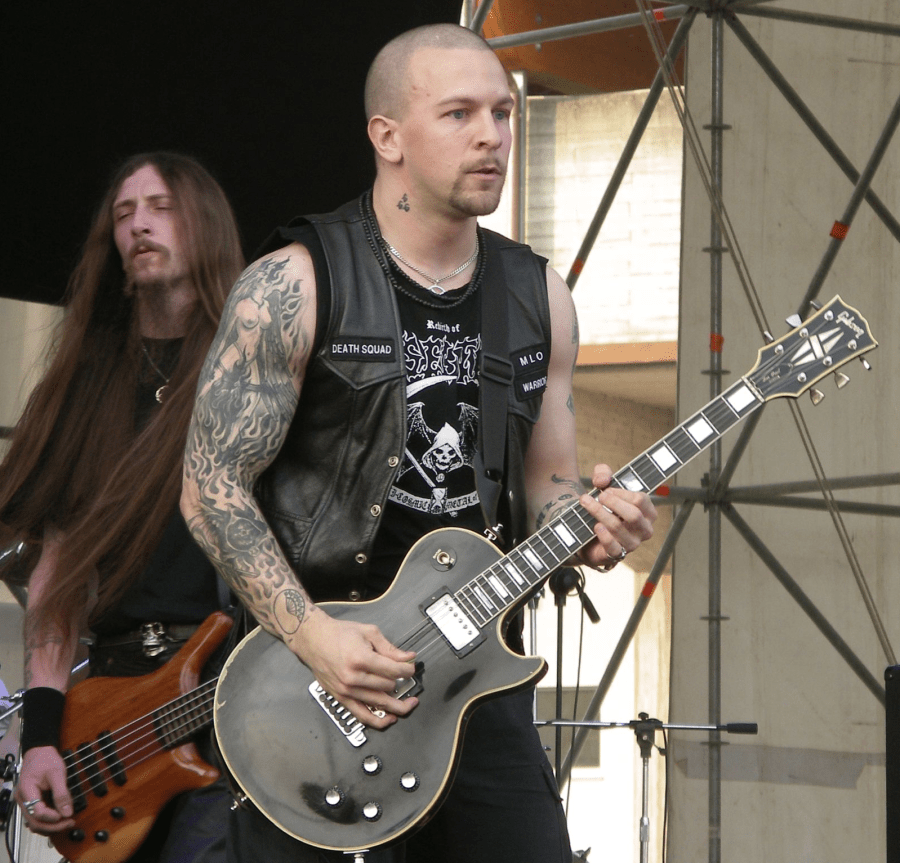
Straddling Gothenburg death and Norwegian black metal, at the margin of what we might term as consonance and coarseness, resides Dissection. Crossing genre and aesthetic boundaries, Storm of the Light’s Bane prods listener into conflicting paths. Responses to this could vary, from a nodding reverence of those exquisite guitar passages, to a chilling silence, or just a morbid mosh-pit. Channeling their Scandinavian contemporaries, Dissection simply shapes their own brand of occult romanticism, often more despondent and atmospheric.

Extending the boundaries of aggression and poetry, these compositions are constantly shifting their contours. Adequately complemented by the drifts in lyrical prose — “I drown in the colour of your eye, for a black heart will only find beauty in darkness“– simultaneously conveys the elegance of an autumn night and dual guitar harmonies. With vocal textures reflecting the gloom in lyrics, Nödtveidt adds a layer of darkness unlike any other. Channeling divergent strands, and yet in perfect harmony, Storm of the Light’s Bane is one of those meticulous crafts. The rare ones illustrating extreme metal in all its glory and quirks. Described in Nödtveidt’s own lyrics — “Forged in blood by tragedy” — album leaves a lasting mental imprint.

Dissection_live_in_2005.jpg: Shadowgatederivative work: Elizabeth Bathory, CC BY 2.0, via Wikimedia Commons

Album Review – Simon Collins’ “Becoming Human”

Guest Review by Chloe Mogg

Simon Collins, Becoming Human, 2020
Tracks: 
1. Into the Fray (1:18), 2. Becoming Human (4:17), 3. The Universe Inside of Me (6:56), 4. Man Made Man (4:32), 5. This is the Time (3:55), 6. Thoughts Become Matter (5:05), 7. I Will Be Waiting (7:27), 8. No Love (4:02), 9. Living in Silence (4:09), 10. 40 Years (4:18), 11. So Real (4:28), 12. Dead Ends (9:06)

No stranger to the music industry due to his music legend father Phil Collins, Simon Collins takes centre stage in empowering album ‘Becoming Human’. There’s no doubt that songwriting flows through his veins, and the latest release from Simon Collins completely confirms this. 

Known for performing in band Sound of Contact, Simon’s solo project was produced by keyboardist and sound designer Robbie Bronniman, and features one of the key players from SoC. Released via Frontiers Records, this refreshing album pays odes to the greats while layering it’s authencity on the table. Crossing through realms of pop, industrial and rock, there’s no need to completely label the sound of this album.

 Having gained support from Prog Magazine and sites across the globe, ‘Becoming Human’ features 12 tracks of progressive music with subtle fragrances of futuristic electronica in it’s mix. Exploring lyrical themes such as personal loss, addiction and the nature of our place in the universe, the relevant album is speaking to thousands across the globe due to the current state of the world. 

Led by leading singles ‘Becoming Human’ and ‘The Universe Indie of Me’, this album is one of those releases that needs constant plays to fully experience it’s journey. A rollercoaster ride through elements of nostalgic prog, there’s nudges to artists such as Vangelis, Genesis, Peter Gabriel and Steven Wilson within the release, while still holding onto it’s authenticity. Commenting both on Simon’s personal feelings, the relatable album is something that can speak to many. 

During these uneasy times for the globe, we’re left questioning what is real, and what it truly means to be a human. ‘Becoming Human’ requires your gaze and will captivate you into a realm of thought-provoking feelings. A true asset in the progressive world, Simon Collins could be as huge as his dad.