This is pretty cool. Earthset, a band from Bologna, Italy, sent me this video and some additional info about a live concert they recently did to go along with footage from the Italian movie “L’Uomo Meccanico,” or “The Mechanical Man.” It’s a science fiction silent film from 1921 that apparently was quite influential in the history of film. Earthset’s music for the film is experimental and atmospheric, but it has its heavier moments to go along with the movie. There’s a lot of interesting guitar work, and I think it’s a cool idea to bring these films back to life with contemporary music.
Israeli alternative progressive rock act SaffeK, led by composer Oren Amitai, has just released an animated music video for the song “Mad,” taken from the group’s recent EP entitled “All Too Human.” In support of that launch, Amitai speaks for Progarchy about his beginnings, starting SaffeK, and more.
Let’s start from your early music beginnings. How did your musical career begin? When did you start playing? Which groups have been your favorites? Please tell us something more about your early life.
I started like many Rock lovers of my age group with the first album of Linkin Park when it was released, I was around 11. I found myself reading Manga with Linkin Park as a soundtrack and just exploding with awe and emotion. Life was felt so strongly and vivid. Quickly after I found out about System of a Down and The Doors, two bands that closed the deal for me – Music is my trigger, I am at another level of existing when the fire of it holds me.
By the age of 15 I was doing my own adaption of Rock on a broken classic guitar. In those years I also got really deep into classic Prog and quickly after I found myself a part of my dream cast prog group made out of my best friends growing up. We named ourselfs Hanagaria (“The Carpentry”) after Dean’s dad carpentry where we used to sit every night. After Hanagaria released an LP we broke up. Dean went on playing Bass in SaffeK and the talented Ilan Barkani from the group also joined me for a couple of years on the drums.
How did you go about starting SaffeK? Who was the most influential when the band started its musical journey?
After Hanagaria broke up I decided to dream my own musical voyage, leading my interpretation of Alternative Prog Rock. The project was originally named “Oren Amitai’s Stitches” but then I got around to the understanding that the name was a teeth breaker so I decided to change it to SaffeK, which means “doubt” in Hebrew. My experience of existeen is summed up in this word and it only made sense that my life’s project will be named the same.
In the beginning, did you have some “fixed” tempo in composing songs or everything was a product of jamming, improvising?
All of SaffeK’s music started out in my bubbling head. I used to work out the main themes and different parts on guitar and vocals and then I went around meeting all of the band members individually, working with them on what I had in mind and using their talent and input in order to mold the best part with them for the song. Then, we went on the extraordinary and exciting sessions of finding out how the imaginary world turns to ecstatic insanity in the rehearsal room.
After the first couple of years I decided to make everything much more down to earth. Today I send out everything ready for everybody without us meeting, including the final draft of the song. Then, when we reach the rehearsal room, those talented basterds bring their amazing approach to the piece and we polish it all and find out what the finished song will be.
How would you describe SaffeK music on your own?
SaffeK’s music is a mash of the ideas and musical influences that made me who I am with a focus on the rock & guitar elements. It’s music that turns me to an animalistic emotional madman. A music that steps on the core of existing for me, pushes the epicness of life is I feel it through music and comes with a message of acceptance to all the other weird souls who wander this earth with me and are confused but at awe as hell.
Tell me about the writing and recording sessions for “All Too Human” EP.
Writing down “All Too Human” was a very deep and emotional journey for me. The E.P describes the main 4 elements in my character that make me suffer as a human, the 4 main features that separates me for the most part of what I feel and describe as divine. In order to really flesh them out I had to venture into my destructiveness and fill myself with the sadness, anger, pressure and alienation. The best part of it, of course, is that I feel that the best way to describe these elements is to burn them out, scream them out, feel them to the maximum effort. And that is what I tried to do with the compositions themselves. The rec sessions were great, great flowing vibe and in awesome happy energetic accomplishment.
What is the most important thing for the structure of your songs? Is it a riff, a melody line, vocal arrangement?
For me the most important thing is the story itself. I have to ask myself all the time if the story makes sense to me, if it works me out emotionally. If you listen to the song and you swim with the journey, not nodding your head going “…What?”.
Besides that, I find that what I usually work around with at first is the melody/riff to start me off. That’s the first thing that moves me.
Recommend us some good progressive rock/metal acts coming from your area.
One of the most exciting, well developed and pecked with originality is Subterranean Masquerade. Their concerts are a must see!
I have to recommend “Bzaat” as well. virtuoso guitar & drums insanity!
Are you also involved in any other projects or bands beside SaffeK?
I used to float around and work with different projects, today I’m focusing on SaffeK as my passion. Otherwise, I work as a teacher at Just Music Academy in Israel and develop productions and mix & master for beautiful people that come my way. I find the work of teaching intense and inspiring. It’s a true beauty to see people transforming their passion and flare into an authentic creation.
So, what comes next for SaffeK?
A new video is coming out in the next few weeks, a work of a lot of great minds which I am very proud of. It’s gonna take SaffeK’s visual presentation to a new level.
Afterwards it’s all about counting down the days till summer when we will release a new album followed by a European tour. Beside that, truly, all we can’t wait for is to see the people, the crowds, what we live for. We can’t wait to break the lonesomeness, the dreadful silence of the music with you.
“All Too Human” is available from Bandcamp here. Follow SaffeK on Facebook and Instagram.
One indication of the absolute glut of recorded music available today: more of what I’ve whimsically labelled “DIY (for Do It Yourself, a la Peter Gabriel) Britprog” is available than ever. With Prog Magazine providing a megaphone and Big Big Train’s international impact paving the way, countless musicians from England have brushed up their chops, dusted off their home recording setups, and churned out self-released albums by the bushel in the past decade. Even as the chances of market penetration narrow in the age of Spotify and live lockdowns, an astonishing number of artists seem compelled to keep plowing the furrows first tilled by Pink Floyd, King Crimson, Yes, Genesis and their sundry heirs. The sheer amount of “meh” music that’s resulted notwithstanding, three recent releases (and a teaser of more to come) indicate there’s still enough fertile soil in that ground to keep yielding fresh harvests.
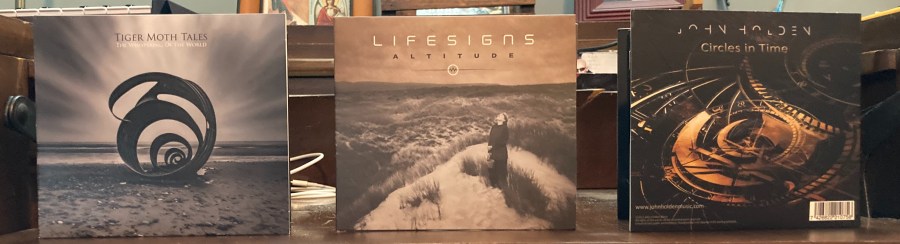
First up: Tiger Moth Tales’ The Whispering of the World from late 2020, for which TMT mainman Peter Jones stripped down both his writing and his usual instrumentation. Working with producers Robert Reed and Andrew Lawson, Jones eschewed multi-sectional tunesmithery and one-man-bandship in favor of a song cycle for voice, piano and string quartet. The result works like gangbusters! From the vigorous, propulsive opener “Taking the Dawn” through melancholy mini-epics like the title track, “Quiet Night” and “Waving, Drowning” to the grave, sweeping pop of “Blackbird” (no, not THAT one, but arguably as affecting) and the closer “Lost to the Years”, every track feels unpretentious, fresh and heartfelt. The semi-classical sonics mesh effortlessly with the compelling songcraft; Jones’ sensitive singing and lush piano playing weaves in and around the light and shade of the strings. Even better, the music proves the right medium for the lyrical message, as Jones narrates a cathartic passage through (in his words) “special or significant moments . . . coming to terms with both losing those close to us and our own mortality and place in the universe.” Sound a bit heavy? Well, yeah — but paired with Jones’ solo Quiet Room Session, The Whispering of the World is a sentimental journey well worth taking. Sample it for yourself, then order it on Bandcamp.
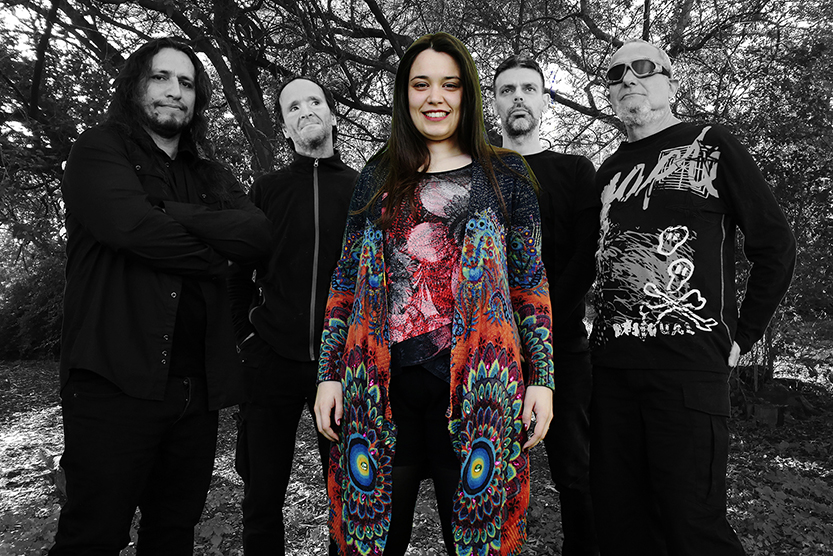
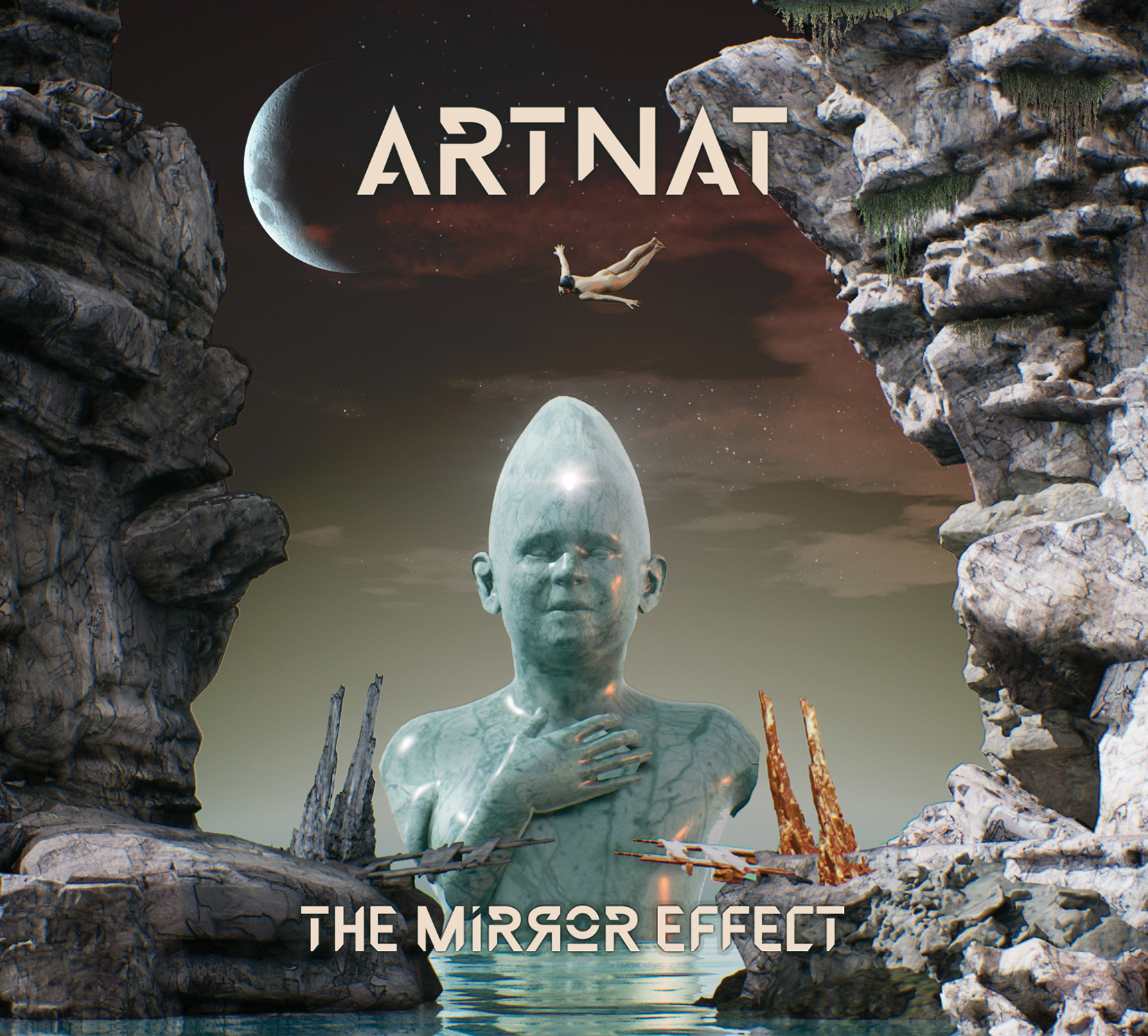
ARTNAT is a new progressive rock band formed by lead guitarist and founder of the known TANTRA prog group from Portugal, Manuel Cardoso. They recently released their first album, The Mirror Effect. The name reflects the continuity in symphonic prog style of music between TANTRA’s music and ARTNAT. With high compositional levels together with wild experimental themes, this is a colorful and multi ambiance work with top-level musicians, but with no technical show off.
Manuel Cardoso says about the project:
Well, after several excellent albums with TANTRA I felt that though in my heart and mind, I just felt like doing the same type of music, obviously with a natural evolution, being the only link to the original group I should use a different name. So ARTNAT just felt right… Mirrored word for an evolving music, like a mirrored dimension.
Still, to me, it’s just TANTRA´s evolution in the 21st century!”
Today the mighty Big Big Train released a new single entitle “Brew and Burgh.” The song is a companion track that will be the final song on the special second CD (or third LP) of their upcoming reissue of 2009’s The Underfall Yard. The song also features an animated film by Love Fagerstedt, who has worked with Rikard Sjöblom in the past.
Happy Friday! Today we’ve got a special review edition of three prog metal, blues, and alt rock albums: What Lies Ahead of Us by Brazil’s Pentral; Loss & Love by El Salvador’s Steady Rollin; and the self-titled debut album by Glasgow, Scotland, duo der Mist. All reviews written by Chloe Mogg.
Pentral – What Lies Ahead of Us – Out May 7, 2021
Pentral are the explosive trio you need in your life. Having released their first single ‘Silent Trees’ from their forthcoming album, the band have gained support from New Noise Magazine, Prog Magazine and many other outlets across the web. “What Lies Ahead of Us” is an exhilarating album that’s best served with a clear mind and your full engagement. Known for creating music without boundaries, this hard rock outfit are heavily influenced by the metal industry too.
“What Lies Ahead of Us” features lyrical content that should never be pushed into the shadows. Speaking about their views on environmental protection, equality and the fight against racism, the important topics that Pentral cover within the album need to be heard. Exploring different relationships between people from mixed background and cultures, ‘What Lies Ahead of Us’ is reality and details what it’s like to be a human in today’s modern world.
From lead single ‘Silent Trees’ and it’s hindu like mantro introduction, to fierce anthem ‘Aiming for the Sun’ – this album is best described as iconic and refusing to sit down. As for stand out tracks, ‘The Shell I’m Living In’ is easily up there with the best on the album. Using an addictive guitar melody to enter the full band arrangement, ‘The Shell I’m Living In’ is fuelled with attitude and hard-hitting drums.
Twelve tracks that could easily cement this outfit with a legendary status, ‘What Lies Ahead of Us’ steals your attention with it’s rebellious aura, yet comforts you in times of darkness. A stand out moment in Pentral’s career so far.
In computer coding, a null terminator is a control character representing the value zero. It can also signify the end of a string of code. At least that’s what Wikipedia tells me. I’m an historian, not a computer programmer. Anyways, that California musician Luke Simpson chose to name his music project after this comes as no surprise when you look at his background. While he studied music in college, he ended up spending a decade as a software engineer, so it seems logical to blend the two into an instrumental album.
Despite the absence of lyrics, Zero Integration is a concept album, and a darn good one at that. Simpson describes the concept,
In the far future, the Catholic Church has developed over the centuries into a galactic government body. Null Terminator is an agent in their employ, flushing out evil wherever it hides in the darkest corners of the cosmos. The recording on this album is a personal reflection by Null Terminator on the process of perfecting himself for service in this eternal project.
The album is a healthy balance of keyboards and guitars, and it has an energy to it that reminds me of an 80s movie where the character is preparing for something while some sort of hype music plays. That isn’t to say the music sounds like it’s from the 80s, although I think Simpson may have been influenced by the synth sounds of the 1980s sort of like Haken with their album Affinity. The production here is definitely contemporary, and the guitars keep the keyboards from dominating. The music can range from that hype-me-up energy to a more foreboding sound, such as on “Invisible Panmechanicosophy.” Say that ten times fast.
Parts of “Transeuphonic Gnosticonduction” could be from a soundtrack to a scene from a sci-fi movie or tv show. It starts off with a rather mysterious ethereal sound before transforming into prog keyboard heaven with touches of early 70s Deep Purple and early Mannheim Steamroller thrown in. It all comes together with the guitar by the end.
There are moments that remind me of ELP and others that remind me of Dream Theater, especially Jordan Rudess-era DT. I think Simpson’s style of keyboard playing reminds me the most of Rudess, if I had to pick any particular player to compare him to. The guitars have a bit of a Petrucci flair as well, and the combo of keyboards, guitar, and bass shredding together definitely gives a Dream Theater vibe, even if it isn’t quite as heavy.
Luke Simpson shows off an incredible amount of talent on this album. The melodies and soundscapes are well-developed without being overworked. The songs tell a story without words. And the beautiful artwork – both the cover art and the other pieces inside the CD’s sleeve packaging – helps further tell that story. If you can make your way through the big words in the tracklisting, you’ll find Zero Integration has a lot to offer.
Normally I wouldn’t even bother sullying this site with a mention of the Grammys, but Pete Pardo over at the Sea of Tranquility put out an amusing and accurate video about how much they suck. He wisely didn’t watch the Grammys, but enough people wanted him to rant about how they disrespected Eddie Van Halen (and Chick Corea for that matter) that he decided to do so. Perhaps his best line is when he goes over the genres and winners – “Best dance recording: who cares.”
The Grammys, which I’ve never bothered to watch, have sucked for a long time, but now they’ve turned into a woke hellscape. They don’t give awards based on talent but rather based upon what meaningless diversity and political boxes an “artist” checks. To hell with talent. In my opinion the best metal album from 2020 was Pain of Salvation’s Panther. Real innovation with lyrics about real issues that all humans face, but why on earth would we want to recognize that and hold it up as something to respect and emulate. What’s truly sad is how many people listen to the garbage the Grammys push on them. Beyonce has won something like 28 Grammys now. That’s absurd. If Bach were alive today, I’m sure the Grammys would hate him. I’ll never forget the demeaning interview someone in the media did with Dream Theater several years back when they were nominated for a Grammy. No effort to do some research beforehand on the most talented musicians in the beginning. And they didn’t even win.
If you read Progarchy regularly then you’re awake enough to already know the Grammys suck, so I’m just preaching to the choir. But enjoy Pete Pardo’s rant anyways:
Shining Pyramid, Tree, December 29, 2020 Tracks: Transmitter C (9:18), Triskel (4:11), Campfire (3:03), Rain (4:58), Like Katriona (10:20), Weird Science (6:15), Joy? (5:32)
London’s Shining Pyramid released their third album back at the very end of December 2020. This follows 2015’s self-titled debut, loosely based on the 1895 Arthur Machen of the same name, and 2018’s Children of Stones. Their latest album, Tree, was my introduction to the band, as they generously sent me a CD to review. I was hooked from the opening electronic notes, which reminded me a little bit of Oak, who I seem to mention a lot around here. The duo is comprised of Nick Adams on guitars and Peter Jeal on keyboards. A page on their website offers a breakdown of the guitars and keyboards used on the album. I’m not a musician, but I found it interesting that Adams used such a wide array of guitars and basses on the record. They all sound wonderful.
Swirling synths set the stage on Tree, but the spacey guitar quickly steps into the spotlight, taking on a Floydian tone with a bit of the late Piotr Grudziński (Riverside) thrown in for good measure. It would be a mistake to describe this album as only ambient, or only atmospheric, electronic, or space rock. It contains elements of those things, but the guitar keeps the album rooted in rock territory, even if the album is on the sedate side of the rock spectrum.
Perhaps what I like most about Tree is the variety it contains, even though it’s only 44 minutes long. The opening track, “Transmitter C,” centers around a very spacey guitar with electronic synth sounds swirling around it. “Campfire” places an undistorted guitar seemingly just behind the bass in the mix, giving it a bit of a distant feel before the keyboards build and take the main spot in the mix. It isn’t particularly atmospheric. The next track, “Rain,” offers an ambient sound centered on a simple repeated piano refrain. That refrain, along with the bass, serves as a framework to support the varying synth sounds that keep the track interesting as it proceeds. Each track on the record sounds unique. They share common elements, but the band approach them in different ways.
My favorite tracks are “Transmitter C” and “Like Katriona.” They’re both the longest songs on the album, allowing the music to build and grow. They also both feature a spacey Floydian guitar tone and appropriately proggy keyboards. These tracks sound the most musically focused and cohesive as well. A fun fact from their website: the ring of sound waves printed on the physical CD was taken from Adams’ guitar on “Like Katriona.” That’s a pretty cool little thing to throw into the physical product.
I couldn’t help but feel a calming sense of peace when I listened to Tree with undivided attention. The music is calm and almost hypnotic at points. Frankly it was just what I needed. It gives you space to reflect, but it does so with interesting musical textures that make you want to return to it. For those into the atmospheric and ambient sides of prog, give Shining Pyramid a listen. They won’t disappoint.
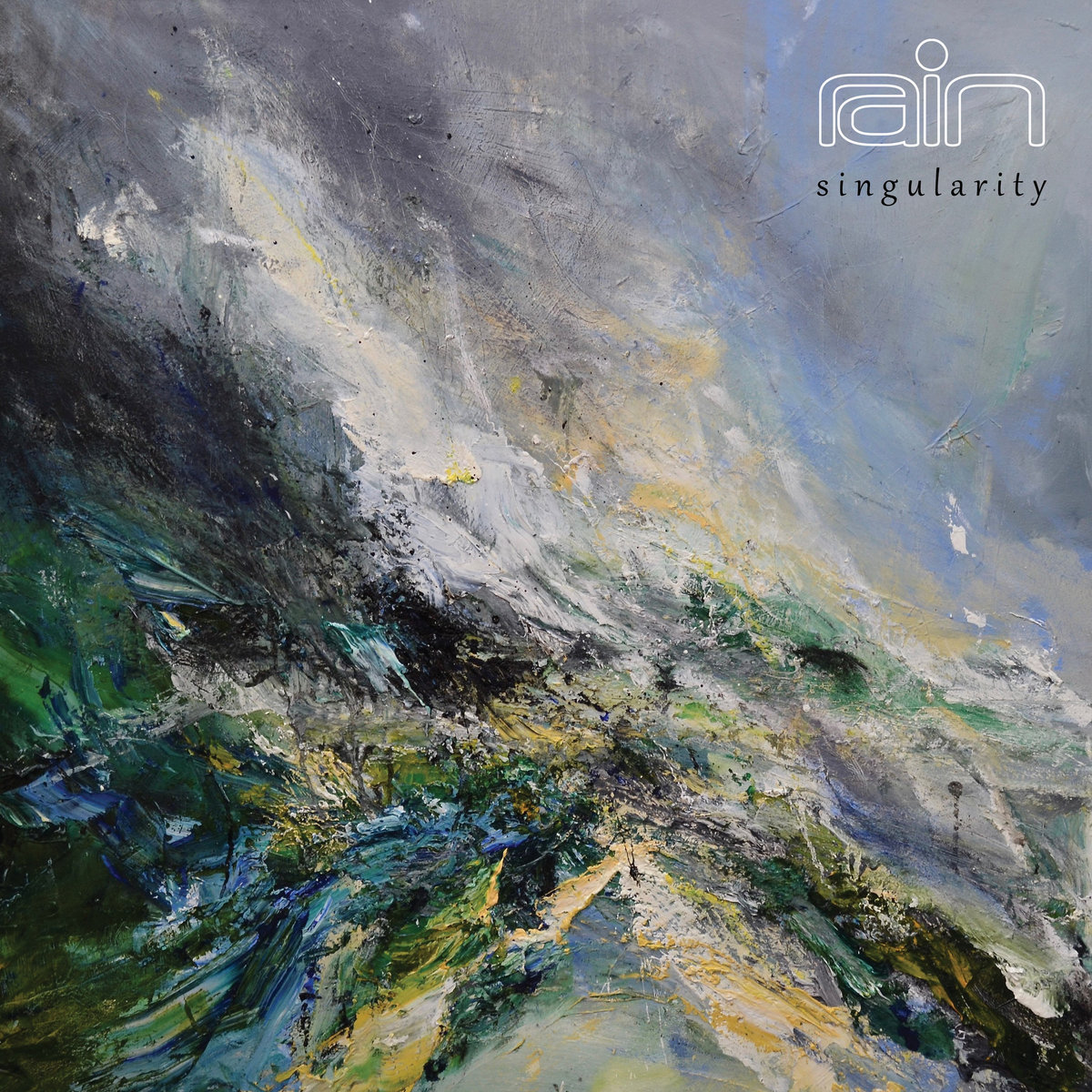
Rain, Singularity, November 23, 2020 Tracks: Devils Will Reign (7:02), Dandelion (7:01), Walkaway (12:51), Magician (11:17), Singularity (9:24) Band Members: Rob Groucutt: Vocals, Guitar, Keys Mirron Webb: Vocals, Guitar Andy Edwards, Drums plus additional instruments John Jowitt: Bass
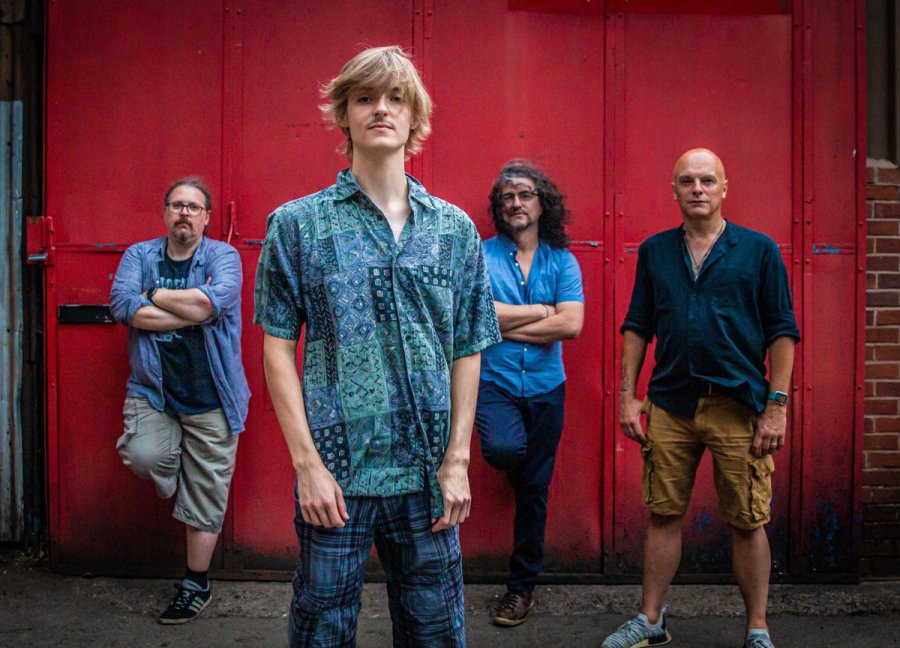
Digging back into the end of 2020, we’ve come across another album from last year that’s not to be missed. UK-based Rain feature unique vocal harmonies, lush musical textures, and compelling lyrics. The band features two well known prog musicians in John Jowitt of IQ, Arena, *Frost, and Jadis and Andy Edwards of IQ and *Frost. Vocals and guitars are handled by Rob Groucutt and Mirron Webb, who both excel on the album. The talents of these four member mesh masterfully on Singularity.
Right from the get-go on “Devils Will Reign” the band makes it clear that they aren’t going to limit themselves to any pre-cut style or expectations. The vocal harmonies are beautiful, and the musical shifts mirror the vocal shifts as the song bounces back and forth between Groucutt and Webb on vocals. The Spanish guitar passage was both unexpected and thoroughly enjoyable. Lyrically they pull no punches, but I’ll leave my interpretation out of it and let you absorb it for yourself.
“Walkaway” sounds like it could be a Haken b-side. It isn’t metal, but it sounds very much like Haken’s quieter moments, particularly on The Mountain. The combination of vocal harmonies and the abrupt way in which they sing the lyrics sounds very similar to Haken. Musically the song is more reminiscent of pre-pop Steven Wilson. Some instrumental passages remind me of Steven Wilson’s “Transience” off Hand. Cannot. Erase. Lyrically the song appears to rail against growing totalitarianism that many western countries are engaging in using the Covid-19 pandemic as an excuse. No conformity here. Rain think for themselves. The vocals take on a layered robotic sound about ten minutes in, which brings in the theme of growing technocracy that appears elsewhere on the album.
Your freedoms are old news And lying is double truth Your freedoms are old news You’re missing the good times
You’re craving human connection A new world is here before you And no one knows what to do – no – Walkaway
“Walkaway” builds to a soaring guitar solo backed by a simple yet prominent bassline. The song then returns to the Haken-like chanting “walk away, hesitate, take a day, isolate, walk away, hesitate…” At just under 13 minutes, the song is epic in the traditional progressive rock sense. It has the space to move through different musical and lyrical themes.
Rain shines with a truly unique sound on”Magician.” I suppose the vocal harmonies are a nod to Gentle Giant, but the varying musical styles the band moves in and out of throughout the song keep it sounding fresh. Lyrically the song seems to tap into that theme of growing technological overreach, and that gets reflected in the music as well through various keyboard sounds. Even the guitar work at points reminds me of a computer with a simple back and forth that could be interpreted as the 1s and 0s of a computer. The guitar takes on a bit of a Robert Fripp tone in those moments.
The final track, “Singularity” is the most atmospheric and experimental song on the album. The vocals again remind me of Ross Jennings from Haken, but the music is much softer with swirling keyboards, airy guitar sounds, smooth jazzy drums, and steady bass. In the second half it start to sound experimental with various sampled sounds and lyrics repeated from earlier in the album – almost as if the band are sampling themselves.
In some ways the final song is a departure from the rest of the album, but at the same time it really isn’t because the band never limited themselves to any one sound. They try different things, and careful listenings will pick up new musical and vocal sounds on repeated listens. I appreciate the band’s courage in their lyrical content. In an era of mass conformity, Rain throw conformity out the window in both their stated words and their music.
Singularity would definitely have made my best of 2020 list had I heard it when it came out. It is incredibly interesting on all levels. The vocal harmonies really lift their sound by adding an extra layer of complexity to their already-complex musical soundscape. This band works really well together, and I hope they continue to release new music in the future.



 ARTNAT is a new progressive rock band formed by lead guitarist and founder of the known TANTRA prog group from Portugal, Manuel Cardoso. They recently released their first album, The Mirror Effect. The name reflects the continuity in symphonic prog style of music between TANTRA’s music and ARTNAT. With high compositional levels together with wild experimental themes, this is a colorful and multi ambiance work with top-level musicians, but with no technical show off.
 Null Terminator, Zero Integration, 2021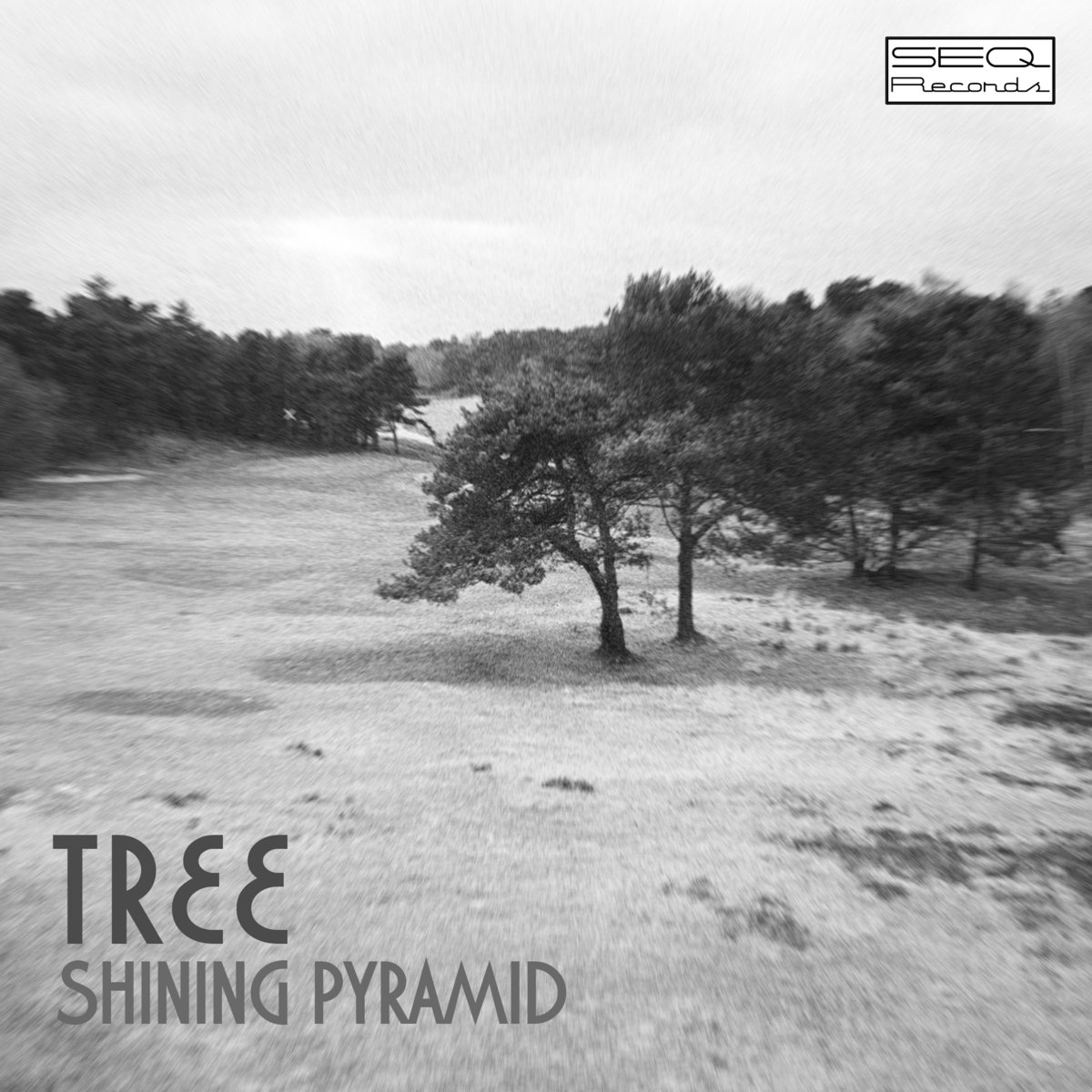

 Progarchy