

Merry Christmas from Progarchy!
By the way, if you didn’t get yours yet, it’s not too late to ask Santa for a copy of the new CD from The Raconteurs, Help Us, Stranger…
In the meantime, here are some Christmas rarities…

Merry Christmas from Progarchy!
By the way, if you didn’t get yours yet, it’s not too late to ask Santa for a copy of the new CD from The Raconteurs, Help Us, Stranger…
In the meantime, here are some Christmas rarities…
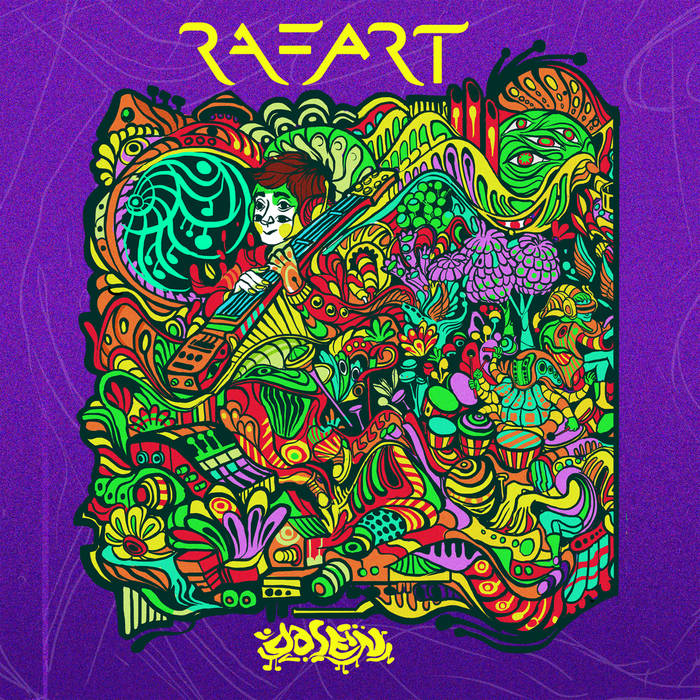 Since it was released in October, I’ve been listening multiple times to Rafart’s new EP, Dasein. Some might remember that I wrote, back in 2014, about Chilean composer and Chapman Stick player Francisco Rafart and his full-length release, The Handbook of the Acid Rider (2013). Since then, Rafart has released two EPs, the all-electronic Get in the Grid (2014), and Dark Night of the Soul (2015), as well as some individual tracks. You can search “Rafart” on Spotify, or find him on Bandcamp, or go to his own web site.
Dasein features guitarists Filipe Saalfeld and Pat Nuño on guitars and Patrick Dalton on drums. Unlike Rafart’s previous releases, two of the four tracks on this EP include vocals. I’ll admit to being partial to the instrumental tracks, but listen for yourself. I would say that the urgency of Rafart’s vocal style adds an interesting additional dimension to his composition and performance.
Rafart presents Dasein as being about his quest for authenticity. The reference of the title is to the concept of Dasein in the thought of German philosopher Martin Heidegger (1889-1976). ‘Dasein‘ (literally “being there”) is the German word for existence, and Heidegger’s best known book, Being and Time (1927) made it into a technical term, in a way that has influenced a wide range of subsequent European philosophy, most famously the stream known as “existentialism.” This reference caught my attention immediately, because his work has influenced my own thinking strongly, and I teach his writings to college students. (Some readers might remember allusions to his thought here and there in my series of posts on The Lamb Lies Down on Broadway.

Rafart is attuned (a nice Heideggerian word) to the way in which my Dasein, my “being-in-the-world,” consists in my having been thrown into the world and enmeshed (before we are even conscious of it) in a matrix of meaning, toward which my most fundamental mode of directedness is care. What this means is that whenever I stop and wonder about my existence, I find that it is already caught up in a complex set of caring relationships, caring about and for other people, caring about projects that I’m engaged in, caring about things (in the general sense, as in “how are things?”). Within that matrix, Heidegger notes that I am usually in a mode of going along with doing as “one” does, doing what “they” (Das Man) expect. This is a sort of “falling” away from authenticity, where my doings might be doings that are authored by me, owned by me, my doings, rather than what they do, or what they expect me to do. To be authentic does not come easily; it is not the default setting. It requires effort, resoluteness. One gets the sense that it is risky, and potentially costly.
 Heidegger draws this understanding of authenticity (and the conviction that most of us are usually inauthentic) from the 19th Century philosopher, Søren Kierkegaard, who is considered the first “existentialist.” Heidegger (unlike Kierkegaard) seems to intend it as if it carries no value judgment, as if it is not necessarily bad to be inauthentic, or good to be authentic. But it has been difficult for many to read Being and Time that way, to say the least. The idea is also deeply complicated by the shadows of Heidegger’s association with the Nazis in the 1930s. But Rafart joins a host of “existentialist” readers of Heidegger, who struggle deeply with their possibilities for authenticity.
So how is this struggle manifest in Rafart’s music? I suppose the reader might expect me to pronounce, however provisionally, on his success at achieving authenticity. But my (hopefully well-informed) suspicion is that it doesn’t work that way. It is, for rather complicated reasons (having to do with the ways in which we are Dasein), always possible for others to look at my doings and to see them as inauthentic; authenticity is never worn unambiguously, “on my sleeve,” as the saying goes. It’s not that one simply cannot tell. It’s not that it is accessible to me but not to you; it’s not unambiguously accessible to me, either. But rather than seeing that as some sort of failure or disappointment at not getting an answer, let’s change the question.
 What happens when I listen to Rafart’s music as, itself, his struggle for authenticity? What if the struggle is right there for me to hear, instead of being something that I try to detect behind, or even “within” the music? I submit to you that if you understand from beginning that the music is the struggle, and not a manifestation, or “product” of the struggle, you will be able to hear it.
You will be able to hear it. Notice that I held back from saying simply that you will hear it. Why? Because this whole “struggle for authenticity” thing can apply to listening just as much as it applies to composing, performing, etc. One may always listen inauthentically. I can listen as “one” listens, or as “they” expect me to listen. I hope that I don’t have to give you a long, boring philosophical argument for this: If my listening is not authentic, if it is not my listening, then am I not listening in a mode that will necessarily miss whatever it is in the music that goes beyond the saying of “one,” or of “them”?
I like Rafart’s composition and playing very much indeed, and I recommend it to you. But what matters most to him, if we take seriously what he has written about his music, is that it is made and shared as authentically as possible. So this is not just the sort of review that one writes when they ask for a review. It is an invitation to accept Rafart’s gift, to listen with open (authentic, if you can manage it) ears, and to risk taking up your own side of the struggle.
Here is a playthrough of a track from Dasein, on YouTube:
Some people think Weather Report is frightful…
But the fire their music brings is so delightful…

Today is the most auspicious date of 21/12, so tradition demands we share our Top 10 Prog Albums of 2019 with you.
So, without further ado, the list below proceeds in chronological order, listing the ten albums that we listened to the most as each successive month in 2019 passed:
Steve Hackett, At the Edge of Light, is a highly addictive disc that can be returned to again and again with much enjoyment. Who would have thought that Hackett — even more so than Gabriel, Collins, Rutherford, or Banks — would become the Genesis member with the greatest longevity and prog productivity? But the facts are inescapable. Denizens of Progarchy must salute the mighty Hackett, who proudly flies the prog flag and who this year delivered one of the most impressive slabs of satisfying musical excellence. Prog on, Steve, prog on!
The Neal Morse Band, The Great Adventure, is one of the greatest things Neal Morse has ever done and one of the greatest concept albums ever. Remarkably, the entire composition can be seen as musical variations on the song “A Love That Never Dies” which is an incredibly impressive achievement: the album is not episodic (a familiar concept album failing) but rather an amazingly integrated artistic whole, one sign of which is the intricately unified musical composition itself.
Big Big Train, Grand Tour, shows that BBT, like the Neal Morse Band, maintains its place at the forefront of prog excellence. It’s not all reruns and remakes of Genesis and Yes, as the cynics could complain about prog. No, prog is indeed a mighty tradition, and we salute the greatest originators and practitioners within that tradition, as we always must. But we also recognize the new originals and finest craftsmen of our day. BBT remains firmly in that camp, and Progarchy was born out of a shared love for their greatness. So, we are pleased to report that this year they continue to have still never wavered. No, they steadily prog on in glory.
IZZ, Don’t Panic, bursts forth with a blaze of early Yes-inspired tribute, and soon morphs into its own distinctive quirky and whimsical prog idiom. The musicianship and wonderful vocals here are a source of never-ending happiness. This album repays repeated listens and firmly established itself on our short list of the most loved.
Whiteside’s Daughter, The Life You Save, is a short but stunning concept album with a highly compelling story about physical and spiritual abuse. Its high impact hard rock is established with perfect guitar riffs and a Southern metal idiom. The terrifying grip of “Abomination, Exorcism” highlights the dramatic crux. The album ends with a climax that could be read either way: hopeful resurrection from the ashes, or tragic demise. In any case, the definitive articulation here is the undeniable power of rock and roll within the economy of real salvation.
District 97, Screens, exhibits D97 from every appealing side of this truly multi-sided and musically accomplished group. While it starts off by showing us the D97 we already know and love, soon it shows the D97 that is still growing greater and more unexpectedly bliss inducing. The track “Bread and Yarn” stages an ambush on the listener’s expectations and, for this reviewer at least, become one of the most thrilling musical adventures of the year. No less than Bill Bruford has endorsed this band’s prog cred, so if you are not yet a listener, then why are you still depriving yourself of so much joy?
Tool, Fear Inoculum, blew us away with its devastating sonic blast. There is so much happening here that must be celebrated. It is not only the greatest thing Tool has ever done, it attains the heights of the greatest and most compelling prog metal of all time. If one album were to be chosen as the favorite of the year (as hard as that is to do with so much excellence this year to choose from), we would most likely ratify the judgment of Progarchy’s Rick K. that Tool has indeed here given us the album of the year.
Opeth, In Cauda Venenum, is another remarkable prog metal achievement. Yet again, here we have another venerable collective of artists who have unexpectedly delivered their finest album to date. The depth and richness of this stunning album will be savored for years to comes. For those who would choose this as their album of the year, the judgment is most understandable. Tool only wins out in our own heart because of the even more relentless heaviness of their metal, whereas Opeth here unveils a tenderly delicate sophistication in many quiet and even jazzy moments.
Flying Colors, Third Degree, offers us their third album which surpasses their second and comes close to regaining the heights established by their first. The bonus track that begins the second bonus disc, “Waiting For the Sun,” is actually our favorite track from the entire panoply. On our playlist, we place it as track one, and then the rest of the album falls into place in regular succession. So, if you do not yet have the special box set edition of this album, you have to get it, because without it you are lacking what is, in our opinion, a magic key for unlocking and opening up your own most proper disposition to the glories of the musical gifts contained within. Besides, you get coasters, and why don’t more bands have collectible coasters for your beer? Megadeth is doing it right, by actually creating their own craft beer, and you would think more prog bands would be open to doing this creative thing. As usual, BBT is already doing it, but alas we cannot obtain their BBT beer in the New World. But we are pleased to report that Megadeth’s A Tout Le Monde beer is most delicious: a formidable saison ale that also looks good on our Flying Colors coasters.
Yes, From A Page, was unexpected in terms of just how much it stunningly measures up to the greatest of Yes’s historical output. The four new studio tracks unveiled here have us convinced that in some alternate corner of the multiverse, Benoit and Oliver are rightly the prime movers of late-era Yes. The vocals and keyboards here are absolutely perfect and an unforeseen source of never-failing delight. Yes is truly one of the greatest prog collectives of all time, and here we have revealed the shining example of two largely untapped sources within the Yes tradition of boundless creativity and musical joy. Well done, gents. To be musically surprised by a band name that has been around this long is a welcome gift. Prog on indeed.
Here are the reissues and live albums from 2019 that grabbed me on first listen, then compelled repeated plays. I’m not gonna rank them except for my Top Favorite status, which I’ll save for the very end. Links to previous reviews or purchase sites are embedded in the album titles. But first, a graphic tease …


Continue reading “kruekutt’s 2019 Favorites: Reissues and Live Albums”
Here are the albums of new music from 2019 that grabbed me on first listen, then compelled repeated plays. I’m not gonna rank them except for my Top Favorite status, which I’ll save for the very end. The others are listed alphabetically by artist. (Old school style, that is — last names first where necessary!) Links to previous reviews or purchase sites are embedded in the album titles. But first, a graphic tease …


For friends, family, health, and (of course) the beautiful gift of music.
Have a blessed Thanksgiving!
 Southern California’s Lobate Scarp, headed up by Progarchy’s very own Adam Sears, recently announced a kickstarter to help fund their second studio album. From spacey album art courtesy of David A. Hardy to well-crafted progressive songs, Lobate Scarp deliver on all fronts. The band has announced that Billy Sherwood and Jon Davison of Yes, and Ryo Okumoto Spock’s Beard are scheduled to make guest appearances. Rich Mouser, whose mixing repertoire includes Spock’s Beard, Transatlantic, and The Neal Morse Band, will once again mix the album, as well as join as a producer. There are multiple pledge levels with different rewards for each level. Definitely check it out: https://www.kickstarter.com/projects/timeandspace/lobate-scarps-2nd-studio-album
It’s a tough world out there for any line of work these days. I can only imagine how tough it is to make a go of it in the music industry, particularly in a genre where the fan base is spread so thinly across the globe. Kickstarters give fans of the genre the opportunity to support their favorite artists. If you haven’t heard Lobate Scarp yet, check out their recent EP and their first album.
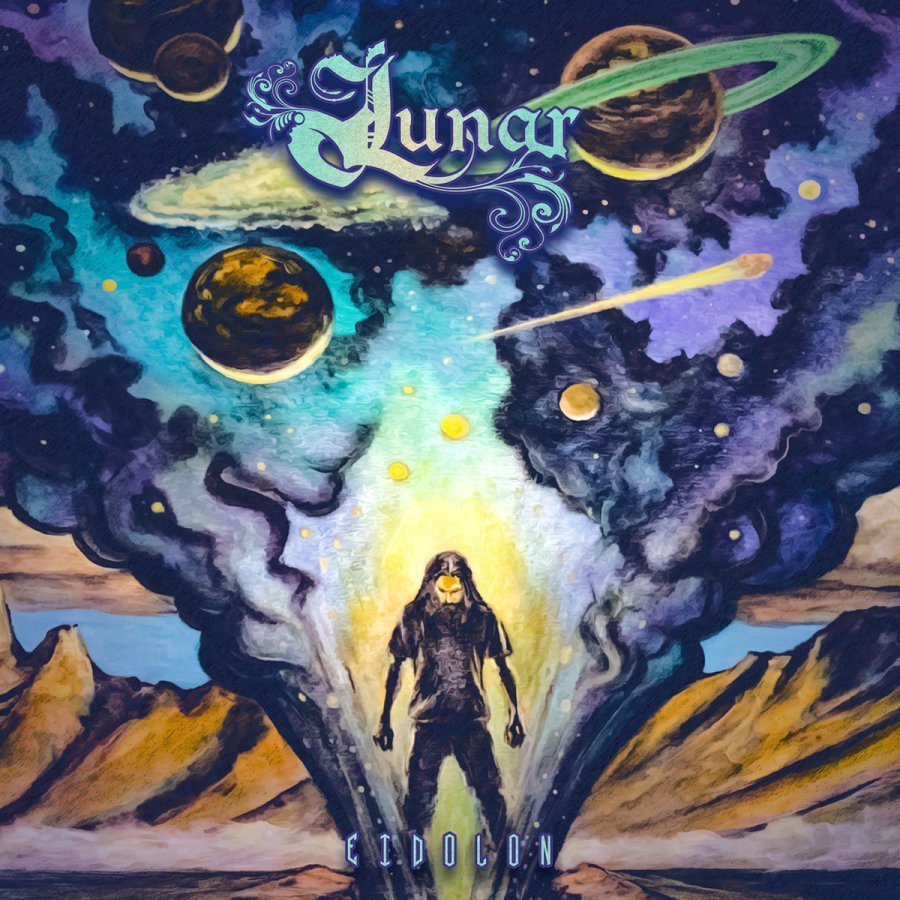
Originality is tough in music, and especially so in progressive metal. So many genres have cross-pollinated over the years that trying to put a unique spin on music usually ends up with going so far off the reservation that coherency can be lost. It’s a shame that “progressive” has become a kind of cliche-ridden sound of its own, hence my temptation is to call Eidolon — the second album by Sacramento’s Lunar — a progressive death metal album. Not in the sense that it uses “prog” tropes, but because it genuinely sounds like a forward step in terms of what can be done with death metal.
I’m not often a fan of likening bands to other bands, because I think unless it’s an intentional throwback or copycat it does a disservice, but the first thing that comes to mind is Opeth by way of Fates Warning and I do not say this lightly. Eidolon has an intensity to it that is organically broken up with occasional clean or melodic sections that never sound out of place; the group — brainchild of drummer and songwriter Alex Bosson — never comes across as hokey or gimmicky.
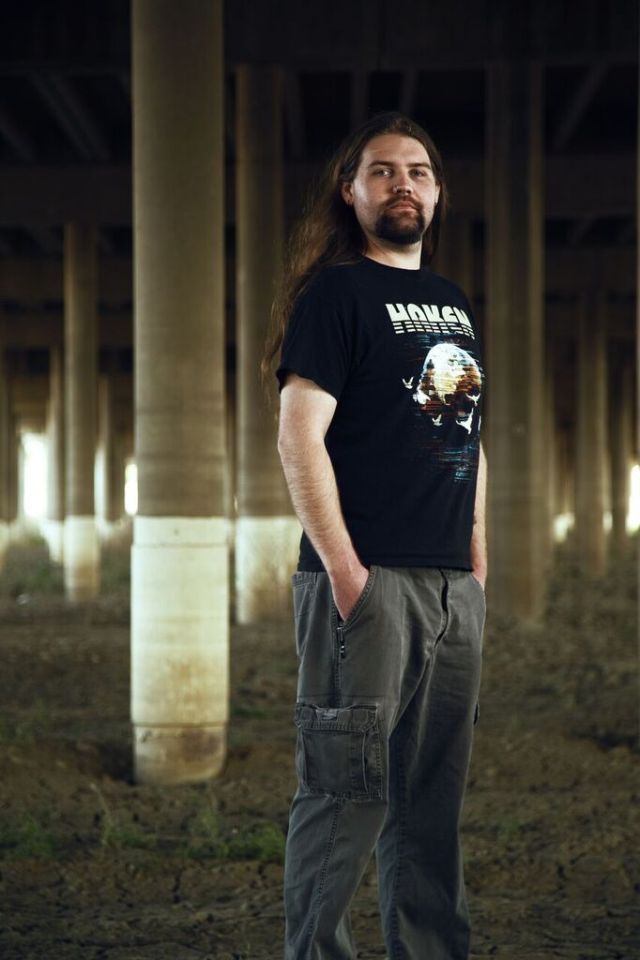
All right, let’s dig in a bit. The musicianship is as tight as any metal release you’re likely to hear this year or any other year. Every member is on top of their game. And speaking of members, the core of the group is comprised of singer Chandler Mogel, bassist Ryan Price, and guitarist Balmore Lemus, along with already mentioned Bosson on drums. Eidolon also features guest contributions from members of Haken, Leprous, Thank You Scientist, Fallujah, and more.
The guitars layer beautifully, with chunky riffs both alternating and occasionally layering beneath more melodic lines. The rhythm section pounds along, with a bass guitar that fleshes out instead of simply sitting at the root notes, even getting plenty of room to shine on its own (which I appreciate) and a drummer that can handle blistering double bass and blast beats right alongside jazzier sections. All the while we have a vocalist who manages to be perfectly understandable when he growls, by death metal standards anyway, without ever losing that sense of intensity and roughness.
One of the best things about (progressive) metal is that feeling of not knowing what to expect next. Sometimes it’s less enjoyable if it feels like the band doesn’t have a grip on what they’re doing and keep taking left turns to the mood, but once again Lunar succeeds by having each song feel like a distinct entity while never losing the tone of the album as a whole. After the two three “proper” songs (after the instrumental intro “Orbit”), the appropriately named “Comfort” comes in with a melodic and prog-rock/jazz inspired beginning, blossoming into a behemoth of a track that puts acoustic guitar and jazz drumming front and center forming a foundation and building to an explosion of a soothing guitar solo courtesy of Haken axeman Richard Henshall.
At this point you might think you’ve heard all of Lunar‘s arsenal, and you would be all wrong and a bag of chips. The very next track, “Potion,” is way more into the prog rock territory, with underlying acoustic guitar melody and jazz bassline carrying it.
The closing 12-minute epic “Your Long Awaited Void” is like a revue of all the best bits of the rest of the album: heavy riffs, clean vocals mixed with growls, acoustic bits, guitar soloing, in addition to cello-laden atmospherics,…
The word “classic” gets tossed around a lot, but I honestly can’t think of a better word for Eidolon. From front to back and top to bottom, this album is both firmly rooted in death metal with a progressive bend while standing alone atop the mountain. It’s equally headbang heavy and enthralling, music to get in the mosh pit and simply sit in awe of. This is required listening, because there’s nothing else quite like it.
Eidolon is out now and is available from Bandcamp. Check Lunar on Facebook and Instagram.
 Progarchy