
The countdown is over.
|

|
|
|

|
|
|

The countdown is over.
|
|
|
|
|
|
|
The Big Big Train website has been superseded by a band logo and a countdown – counting down from roughly 5 days and 10 hours at the time of this post. I sense exciting news from our favorite band! I’m not sure when it started – maybe I’m late to the guessing game. New album? NORTH AMERICA TOUR?!!! I guess we will have to wait and see.
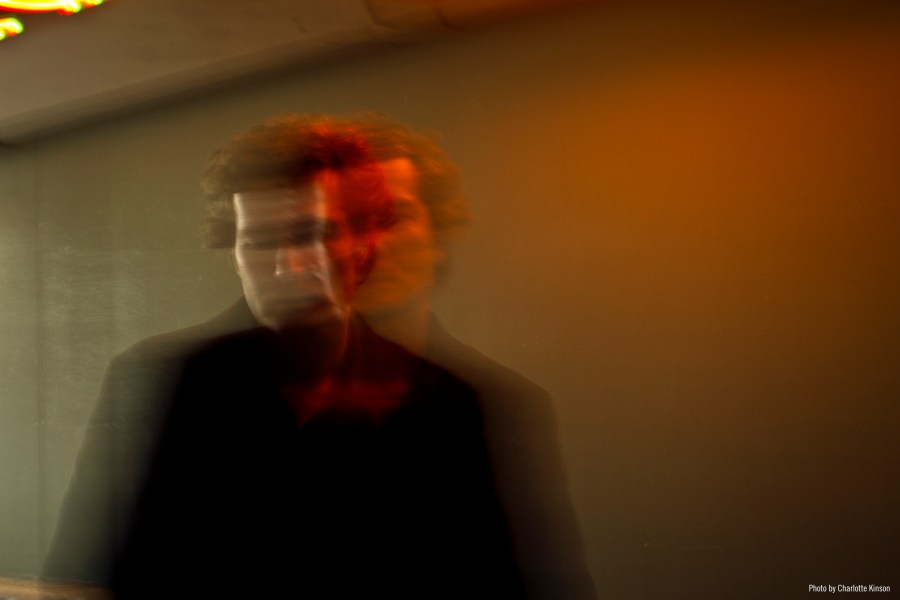
In Part 1 of Tim Bowness’ latest Progarchy interview, Tim discussed his previous solo albums, working again with his first band Plenty, reuniting with Steven Wilson for new No-Man music, and how all this feeds into his new album Flowers At The Scene (released March 1 on Inside Out Music). We dig into the new album in depth below! Note that [brackets] below indicate editorial insertions.
Pulling it back to Flowers At The Scene, it’s interesting what you said about how really, there are some [pieces] that you’re producing, there’s some that you and Brian [Hulse] are working on, there’s some that you and Brian and Steven [Wilson] are working on. It all feels like a unity when I listen to it. Despite the variety of colors, it’s, as you say, it feeds on what you’ve done before, but it goes in really interesting, different directions. Are there any particular songs that you feel are at the core of the album?
I would say you’re right, it does feel like an album. One thing that’s important to me is, I know in this age of streaming and Spotify it’s not particularly fashionable, but I love the album. I’ve always loved the album as a statement. And in some ways, although this album is different from the other albums – I mean, the previous three albums had themes to a degree. Lost In The Ghost Light was a narrative concept album. Stupid Things That Mean The World and Abandoned Dancehall Dreams had linking lyrical themes in a way. This is different in the sense that it’s eleven very separate moods, very separate lyrics, very separate songs. And yet it fits together, I think, in a kind of classic 43-minute album format. And in some ways, I think it’s the album that flows best of all four. There’s something about it that it kind of moves from one mood to another. And yet it holds together.
I suppose the key songs would have been when “Flowers At The Scene” and “Not Married Anymore” were written. And I just felt that Brian and I had been coming up with material that had its own distinct identity. And I also had a certain idea of how I wanted them to sound – and suddenly that was it! And I guess that there’s this [Robert] Fripp line, he would always say that a new direction presented itself. And I think that it’s true, because I’d continued writing material on my own, and I’d continued writing material with Stephen Bennett while I was recording the Plenty album. And although the material was good, it felt like it was gonna be a continuation of Lost In The Ghost Light or Stupid Things That Mean The World.
And I think that it was when I’d written the fifth song with no purpose really – Brian and I just kept on writing together because we were excited by what we were doing. And I think it would have been “Flowers At The Scene”, the title track itself, and I thought, “this is the new direction; it’s presented itself.” And from that moment on, it became a very exciting and immersive project and I said to Brian, “I think this is the basis of a new solo album. And it feels like a fresh direction after the other albums.” And you’re right that, what’s kind of interesting for me is it’s fresh, it’s a reset, but perhaps because of the mood of some of the music and because of my voice, there’s also a sense of continuation.
And certainly one of the things that contributes to it being fresh is this cast of musicians that you gathered, which is really genuinely impressive. So many great names with great work that have fed into this. I was wondering if I could just toss out names and, in a few words, you could try to describe what each of these guys have brought to the music for the album. Starting with Jim Matheos.
Well, Jim’s somebody I’ve known for a few years. He asked me to guest on an OSI album [Blood], probably about nine years ago now. And I really enjoyed it. So the track, which is called “No Celebrations”, felt very different for me; it was very much in that OSI art-metal style, but it accommodated my singing as well. And after that, we carried on communicating together. So occasionally he’s asked me for advice about things, and also we had co-written a couple of tracks that had never been released.
And when I was doing this album, I thought I’d love to get him involved. Because one of the tracks I’d been developing had him on anyway, and he’s an incredibly versatile guitarist. Very, very nice guy, but what people I don’t think are aware of is how versatile his talent is. So his own music can be anything from sort of ambient experimental to metal to classical acoustic guitar. And I knew how good he was as a soloist, and so I got him – really, he was my stunt guitarist on the album on a few tracks. And he did some fantastic work on it.
Peter Hammill. What a legend!
Yeah! Well, Peter’s somebody who when I was growing up, when I was in my teens, he was one of my favorite singers. And as I’ve said to people, what’s interesting with this album is that, probably my five favorite singers when I was 13 would have been David Bowie, Peter Hammill, Peter Gabriel, Kate Bush and Kevin Godley. And I’ve two of them on the album, and it’s an incredible thrill to have that!
Over the years, Peter’s become a friend. We ended up playing on lots of the same albums in Italy, and we got to know one another. And over the years, he’s guested on my work; and we even live in the same small town in England! And so he’s probably my sort of coffee and chat companion, where we’ve put the political and the musical world to rights once a month. And as I always say about Peter, he’s as nice, generous and decent as his music is frightening!
[Laughs] Oh, that’s a great summary!
[Laughs] Absolutely! Cause, you know, you wouldn’t want him to be as frightening as [Van der Graaf Generator’s] Pawn Hearts really, would you?
[Laughs] No, not in the slightest!
It is true; you’d be coughing your coffee up. It’s not good! [Both laugh] So yeah, lovely guy, and we’ve worked on a few things. And the thing about Peter is he is very honest about his opinion. So interestingly enough, I’d asked him to work on Lost in the Ghost Light, but he wasn’t as much a fan of that material. So basically, he works on what he likes. And he’d worked on the Stupid Things That Mean the World album, and I’d played him this album in progress. He’d mixed an album for me as well. There’s a Bowness/[Peter] Chilvers album that’s been unreleased that Peter’s mixed, which is quite an interesting project in itself.
And while I was making the new album I said, “ah, you know, a couple of Hammill-shaped holes here!” And he heard it, and he heard exactly what I wanted, and he really liked the material. One of the tracks he put a great deal into it, there’s a track on it called “It’s The World”. I’d played it to him, and initially I wanted his bite – there’s a real sort of bite in his voice, I wanted this in the chorus. And he said, “Yep, I know exactly what you want; I’ll get it to you. But I tell you what else I’ll give you; I’ll give you guitars, because the guitars on this aren’t working!” And so he completely re-recorded the chorus guitars, and almost went into sort of Rikki Nadir [from Hammill’s proto-punk solo album Nadir’s Big Chance] mode, and did a fantastic job.
So on the track “It’s The World” he’s on kind of backing and lead vocals, and also adds some really ferocious guitar parts. And he made the piece work. So that was an interesting case, where the piece I think was pretty good as it was, but he gave it an extra edge and an extra looseness.
Got it! One of the newer singers on the album is David Longdon. I know you collaborated with Big Big Train on a b-side [“Seen Better Days (the brass band’s last piece)”]. What did David bring?
Well, I suppose I asked him to be on the piece [“Borderline”] and I’d suggested a particular approach to backing vocal which he used. I almost wanted this kind of rich, Michael McDonald/Steely Dan approach. That’s something I wanted: a comfortable bed of David Longdon voice, really, and he gave that. And then he added some flute as a means of contrasting with the trumpet. And he did a beautiful job in both cases, really. So I suppose what he gave was himself, so he kind of knew the places where I wanted him to play, and where I wanted him to be, and with the backing vocal he was effectively re-singing the melody that I’d already sung on the demo.
But with the flute, he performed a really beautiful solo, and it was great! Because although the trumpet was recorded in the outback in Australia – I used a jazz musician, a guy called Ian Dixon, who’s worked with No-Man, he was on Returning Jesus, several tracks on that, and he’s a wonderful sort of jazz trumpet player. And his studio is a tin shack in the outback in Australia! And he said when he recorded it, it was in the middle of the rainy season. So he’s recording that with crashing rain on the tin roof – which I thought was very romantic! And David really beautifully worked with Ian’s trumpet. And to me, it sounds as if the two could be in the room together playing! So they worked very nicely together, and I suppose in that case, I knew what I wanted, and I got what I wanted. But it was still different, the playing, the expression that the two of them had given was entirely their own.
Continue reading “The Progarchy Interview: Tim Bowness, Part 2”
Earlier this year, I questioned whether or not 2018 was going to be a poor year for prog. It seemed like the the progressive rock community took a few months to stop and take a collective breath… but that was only the breath before the plunge. The second half of the year saw many excellent new releases. The following are some of my favorites from 2018, in no particular order (my top two at the bottom of this list are tied for first place).
Following the jump, the reissues and compilations from this past year that:



What new music, live albums, and reissues (deluxe and otherwise) are heading our way between now and Black Friday? Check out the exhaustive (and possibly exhausting) sampling of promised progressive goodies — along with a few other personal priorities — below. Pre-order links are for CDs or combo packages; vinyl editions are frequently available from the same website.
— Rick Krueger


The idea for ‘Friendship’ came to me because of an old photo of me as a child. I found this old photo at my parents’ house, depicting me standing on top of this really tall treehouse in a glade near our house. Although I of course remembered it as being really high up in the tree tops as a child, this picture proved that it really was! As I reminisced about the treehouse I started thinking about my childhood friends with whom I built it. We were the best of friends and we spent so much time together in this little village where I used to live. This of course made me think about all the friends I used to have, these relationships where you hung out all the time, went through childhood together, grew up and knew everything about each other and then all of a sudden, for some reason, disappeared from each other’s lives. This phenomenon of falling out with someone is still a mystery to me, but I’ve learned to accept it, much like the separation of death it’s just a part of life and the nature of our course of life, I guess. So this is a collection of songs about and for all of my friends, dead or alive, past and present. I chose to base the stories around the treehouse in the glade, not because all of my memories are from there, but rather that it’s the place that made me think back on all of this.
Musically, what can I say? This is prog rock, but I want to be free to move in whatever direction the music wants to go and I happily go exploring where it wants to take me. Even though there are a few softer songs and sections, most of the album turned out to be a rocker; a collection of hard rock songs with lots of tricky parts, some heavier moments and some downright jazzy elements too!
Track listing:
1. Ghost of Vanity
2. Friendship
3. They Fade
4. A Treehouse in a Glade
5. Stone Cold
6. If You Fall, Pt. 2
7. Crown of Leaves
8. Slow Dancer (Bonus Track)
9. Past Generation (Bonus Track)
10. Friendship (Utopian Radio Edit) (Bonus Track)
Since his first appearance in English literature, in 1954, J.R.R. Tolkien’s Tom Bombadil has intrigued readers to no end. Could he be an angelic vala gone native, an Adam without sin, or merely an enigma?
With the Bodleian’s new exhibit on J.R.R. Tolkien, some vital and compelling evidence has surfaced. Vala gone native, Adam without sin, and enigma, Bombadil is also the founder of the greatest British progressive rock band of all time, Big Big Train.
Look closely at the Hildebrant Brothers’ depiction of Tom. You, too, will be amazed.
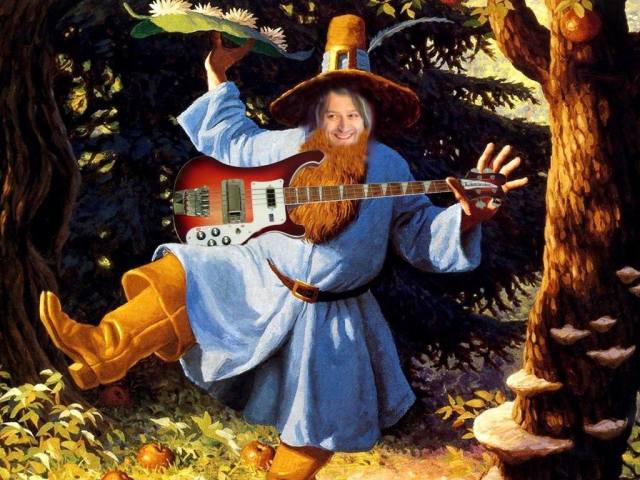
The evidence, of course, had always been there, but most refused to see it. Here’s the most telling passage from The Fellowship of the Ring.
He then told them many remarkable stories, sometimes half as if speaking to himself, sometimes looking at them suddenly with a bright blue eye under his deep brows. Often his voice would turn to song, and he would get out of his chair and dance about. He told them tales of bees and flowers, the ways of trees, and the strange creatures of the Forest, about the evil things and good things, things friendly and things unfriendly, cruel things and kind things, and secrets hidden under brambles.
If this isn’t proof, nothing is.

This week, I had the great and grand pleasure of speaking with Tom Woods and Roie Avin about the state of progressive rock music. As you all should know, Tom Woods is an absolute genius–especially on all matters political, cultural, and economic. That’s his razor-sharp logic side. But, he’s also a romantic and a huge prog fan.
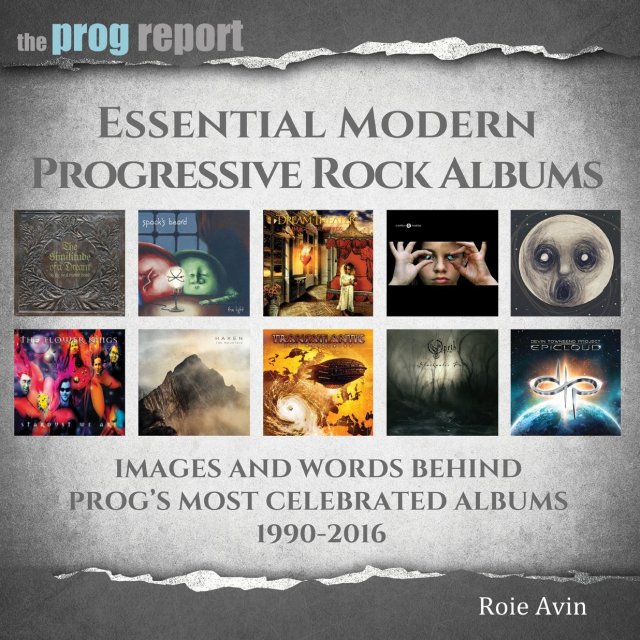
Roie Avin, as you all should know as well, is the founder of one of the best prog sites on the web, Prog Report, and the author of one of the best books ever written about rock or prog, Essential Modern Progressive Rock.
If you don’t own it, you must.
Ok, so a bit of bias here. Tom is one of my three or four closest friends, and, though, Roie and I have never met, I have been following him rather closely for the past five years. The three of us, I think, had a blast. So, here’s hoping you do as well.
https://tomwoods.com/bonus-ep-1204-without-this-music-your-life-is-worse/
2018 is now a month past its halfway mark, and the year is somewhere in its middle age, and it will only continue to age until that fateful day, December 31, inevitably comes.
From the perspective of progressive rock, it’s been a solid year, but not an outstanding year–at least in terms of studio releases. Certainly, those released–from The Fierce and the Dead to Gazpacho to the Kalman Filter to Galahad to 3RDegree–have been excellent, to be sure. But, they’ve been few, especially compared to the re-releases and re-mastered and re-packaged.
Perhaps, 2018, in the end, will prove to be a moment of all of us catching our collective breath. Maybe what the Old Testament called “Selah,” pause.

 Progarchy