2018: Reasons to Be Cheerful …

… If you’re a prog fan, that is.  Some of what’s in the forecast for the rest of the year:

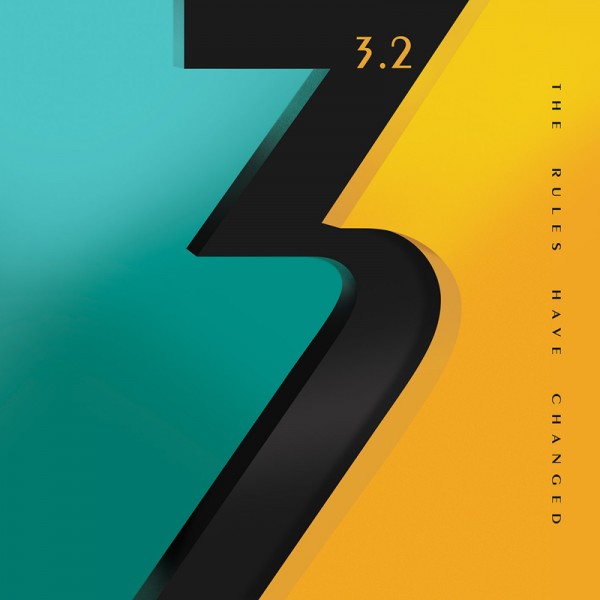
3.2, The Rules Have Changed Robert Berry’s one-man tribute to and posthumous collaboration with Keith Emerson; released August 10.  Details and a teaser track here.

Dave Stewart & Barbara Gaskin, Star Clocks.  I’ll be writing more about Stewart & Gaskin’s music soon; suffice to say it’s some of the best intellipop you’ve probably never heard.  (With Gavin Harrison on drums, no less.) The new album is out August 17; pre-order it and investigate their back catalog at Burning Shed.

The Pineapple Thief, Dissolution.  Bruce Soord and the TPT crew are joined by Gavin Harrison — him again! — as drummer and co-writer.  Released August 31. Details and a teaser track here; check out Sonic Perspectives’ interview with Soord (which hints at a possible 2019 US mini-tour) here.

Soft Machine, Hidden Details.  The pioneer psych/prog/jazz-rock collective is back for a 50th anniversary world tour — and they’re bringing a new album with them!  Three members from the 1970s versions of the band plus sax/flute progger Theo Travis (Robert Fripp, Steven Wilson, David Gilmour) tackle new compositions and a couple of vintage classics.  Released September 9; watch for a Soft Machine retrospective series from me during the run-up. Tour info herepre-order options for the album and a sample track here;

Yes featuring Jon Anderson, Trevor Rabin & Rick Wakeman, Live at the Apollo.  The “unofficial” version of the band (albeit one with two “classic era” members plus the musical mastermind of 90125) weighs in for the band’s 50th anniversary year.  Released September 9 in various audio and video formats; details and a teaser here. 

Coming soon from In Continuum: the debut album by Dave Kerzner’s new supergroup, with contributions from: vocalist Gabriel Agudo (Steve Rothery Band / Bad Dreams); guitarists Fernando Perdomo (Dave Kerzner Band), Matt Dorsey (Sound of Contact) Randy McStine (Sound of Contact, The Fringe) and John Wesley (Porcupine Tree); drummers Marco Minnemann (Steven Wilson, The Aristocrats), Nick D’Virgilio (Big Big Train, Spock’s Beard) and Derek Cintron; and special guests singer Jon Davison (Yes) and guitarist Steve Rothery.  Release date TBA; more info here. 

Coming soon from King Crimson: Based on the liner notes in Crimson’s 2018 Tourbox, we can anticipate: a reissue/revamp of the band’s 2001 album, The ReConstruKction of Light; a related, more exhaustive box focusing on the era of the ProjeKcts and the Double Duo Crimson, Heaven and Earth; and a fresh concert set from the current Crims, Live in Mexico. Release dates TBA.  Meanwhile there have been rumblings from Robert Fripp ruling out Europe for Crimson’s 50th anniversary tour in 2019.  Does that rule in the USA?  Stay tuned …

Coming soon from Marillion: deluxe edition of Clutching at Straws (release date TBA); mass market reissues of the Racket Records live sets Happiness is Cologne, Popular Music (U.S. release in September), Live in Glasgow and Brave Live (U.S. release in November).  Clutching rumors to be found in the Lucy’s Friday Questions group on Facebook; live reissue info is here and here.

Coming soon from Steven Wilson: Home Invasion Live at the Royal Albert Hall, with guest appearances by Richard Barbieri (Porcupine Tree), Mark Feltham (Talk Talk), Dave Kilminster and Ninet Tayeb.  (Oh, and a Bollywood dance company).  Release info for the video TBA;  details here.

Bonus round from the Pink Floyd camp: Nick Mason expects to tour the USA next year with his new band Saucerful of Secrets.  The group’s set of early Pink Floyd classics (from the albums Piper at the Gates of Dawn through Obscured By Clouds) went down a storm in London earlier this summer; they embark on a European tour in September.  More info on the band and Mason’s box set reissuing his solo albums here.

— Rick Krueger
1969: A Blast from the Past

“Well it’s 1969 OK all across the USA
It’s another year for me and you
                                      Another year with nothing to do”  — 1969, The Stooges

I was 7 going on 8 in 1969.  But my brother was ten years older — and Detroit was a prime location to explore rock as it turned psychedelic, then progressive, still with plenty of punk attitude.  Our cousin from Lansing was about the same age as my brother — so they did a fair amount of concertgoing together.

The other day, out of the blue I got a letter from our cousin, reproduced below with my random thoughts interspersed:

Dear Cousin Rick,

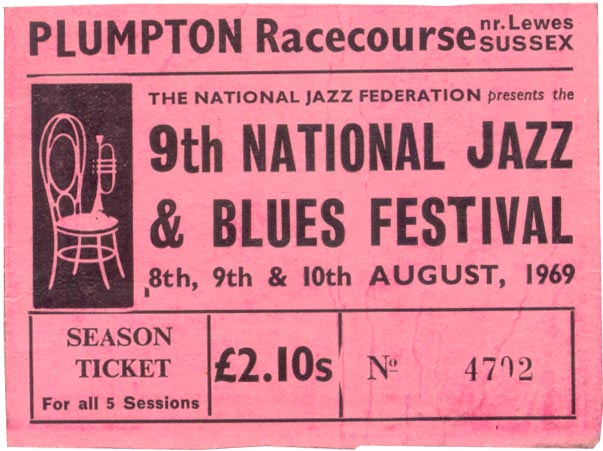
I’m sending along a copy of the program from the festival I attended in the south of England summer of 1969.  I thought you might it interesting.

plumpton festival program(Hmmm … The 9th National Jazz and Blues Festival.  Waitaminute: Pink Floyd?  King Crimson?  Peter Hammill performing solo before the first Van Der Graaf Generator album? Yes?  The Who?  Keith Emerson with The Nice?  Not to mention Soft Machine and Pentangle?  And he was there? Doggone straight I find it interesting.  Please continue, cousin!)

I’d seen both The Who and The Nice at the Grande Ballroom in the spring before.  The Who played the entire Tommy opera both times.  The Nice as I remember had some kind of revolving organ at the Grande.  At the Plumpton fest they closed the show on Sunday backed by a large orchestra.  At the final song the stage opened and a regiment of bagpipers marched off the stage and into the crowd.  Those were heady times.

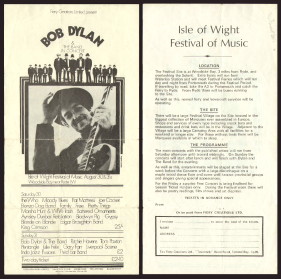
isle of wight 1969There’s also a copy of the Isle of Wight festival flier which I missed as it was the weekend which we were heading home.  Such fond memories.
(Bob Dylan & The Band?  The Moody Blues?  More from King Crimson, The Who and Pentangle?  Stop torturing me, cousin!!!  Actually, no — please continue as I wrestle with envy and wish Doctor Who’s TARDIS was real.)

The day we arrived in London the Rolling Stones played in Hyde Park celebrating the life of Brian Jones who had just passed.  Couldn’t quite get there but almost.  (Another King Crimson show!!)

I’d like to hear more about your music blogging/reviews.    P.S.  We didn’t arrive at the fest until Saturday so we missed all the Friday acts.  Booo!

Fortunately, the sounds of the Plumpton Festival aren’t completely lost in the mists of time; I plan to direct my cousin to Soft Machine’s and Pink Floyd’s sets online, and send him a copy of King Crimson’s set.

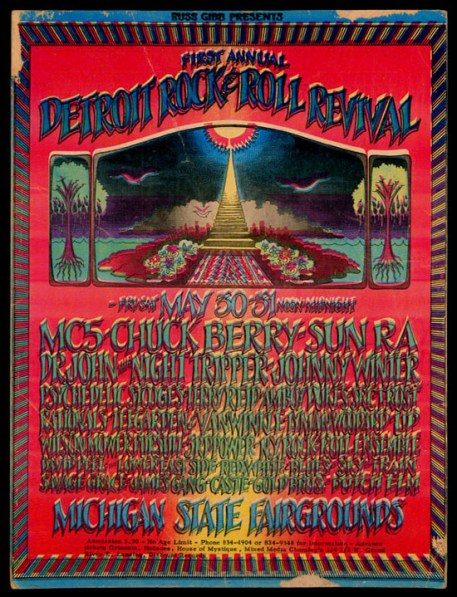
detroit rr revival 1969And talking with my brother later, I heard the story of how he and my cousin somehow got permission to go to the 1969 Detroit Rock’n’Roll Revival (with the MC5, Chuck Berry, Dr. John, The “Psychedelic” Stooges and many more acts) the night before my sister’s wedding.  Maybe I should rethink missing Yes’ 50th Anniversary Tour when it hits Grand Rapids.  Not to mention Wayne Kramer’s MC50 Kick Out the Jams 50th Anniversary Tour and Soft Machine’s world tour coming to Progtoberfest IV
— Rick Krueger

3.2, The Rules Have Changed

After Emerson Lake & Palmer’s late-1970s collapse, the separate members of the trio didn’t stop making music, releasing solo projects, launching new bands — and often working with one (but never both!) of their former colleagues.

The last such project before ELP’s 1990’s reunion was 3, a Geffen Records brainstorm to bring together the post-Lake & Powell Keith Emerson, the post-Asia Carl Palmer and guitarist/vocalist Robert Berry, a hot young gun from Los Angeles in the Trevor Rabin mold.  Aiming for another 90125 (or at least another GTR), the 1988 album To the Power of Three had some solid, intriguing moments — but it wasn’t pop enough to yield a substantial hit, or prog enough to reactivate ELP’s fanbase.  When Geffen cut off tour support and ordered 3 back into the studio for another album, Emerson pulled the plug on the band.

Fast forward to March 2016.   With an archive live release from 3’s US tour stirring fresh interest, Berry and Emerson planned to collaborate on a duo album, updating and re-energizing their sound for an environment where prog of all stripes had found an audience again.  Then, succumbing to depression on the eve of a Japanese solo tour, Emerson killed himself.

Nevertheless, using co-written songs and musical ideas Keith Emerson left behind, Robert Berry (also a classically trained pianist) persisted, playing all the instruments himself for the now-solo project 3.2.  The result is The Rules Have Changeddue for release on August 10 from Frontiers Records.  No less of a progressive music authority than Innerviews editor Anil Prasad calls it “an expertly-executed and performed album that takes the spirit of the first 3 release and propels it into edgier and more adventurous territory, while retaining the melodic qualities of its predecessor.”

I got to meet Robert Berry a couple years back, when his charity band December People (playing Christmas songs in the styles of classic rock and prog artists) toured Michigan for the holidays.  Our brief conversation revealed him as a down to earth guy, with fond memories of his time in 3 and deep respect for Keith Emerson.  Based on the sample track “Somebody’s Watching,” which absolutely captures the sound of the original band at their most daring and delightful, I’m definitely looking forward to The Rules Have Changed, and I wish Berry’s 3.2 project all the success in the world.

— Rick Krueger


Rick’s Retroarchy: Favorite 2017 Reissues

by Rick Krueger

I still have a few more albums to listen to before finalizing my favorite new releases of 2017.  To warm up, here are the reissues from this past year that:

  1. I absolutely had to buy, and
  2. That grabbed me on first listen (whether I’d previously owned a copy or not) and didn’t let go through repeated plays.  Except for my “top favorite” at the end of the post, I haven’t ranked ’em — in my opinion, they’re all equally worth your time.

Continue reading “Rick’s Retroarchy: Favorite 2017 Reissues”

The Albums That Changed My Life: #1, Brain Salad Surgery by Emerson Lake and Palmer

by Rick Krueger

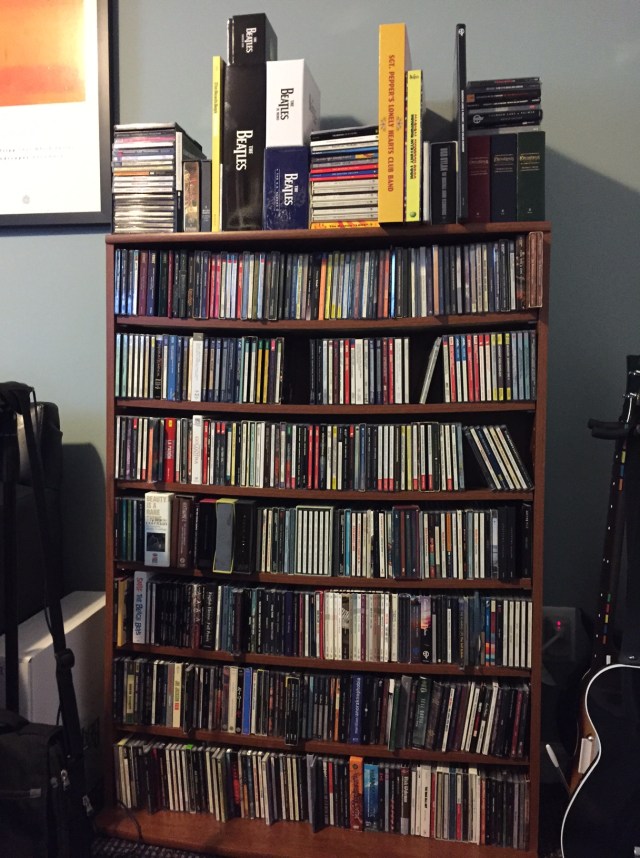
I’ve been seriously collecting recorded music (on vinyl, cassette, compact disc, DVD and Blu-Ray) for just over 40 years.  As you do, I’ve organized my collection in various ways.  For about the last 15 years, I’ve separated my favorites, regardless of genre, out into their own storage unit.  It looks like this as of today:

IMG_3523I used to refer to what’s on the top shelf — my very favorite recordings — as “the music I would save if the house caught on fire.”  Never mind that: 1) people matter more than stuff, and; 2) there’s no way that, if the house caught fire, I could actually pull it off.
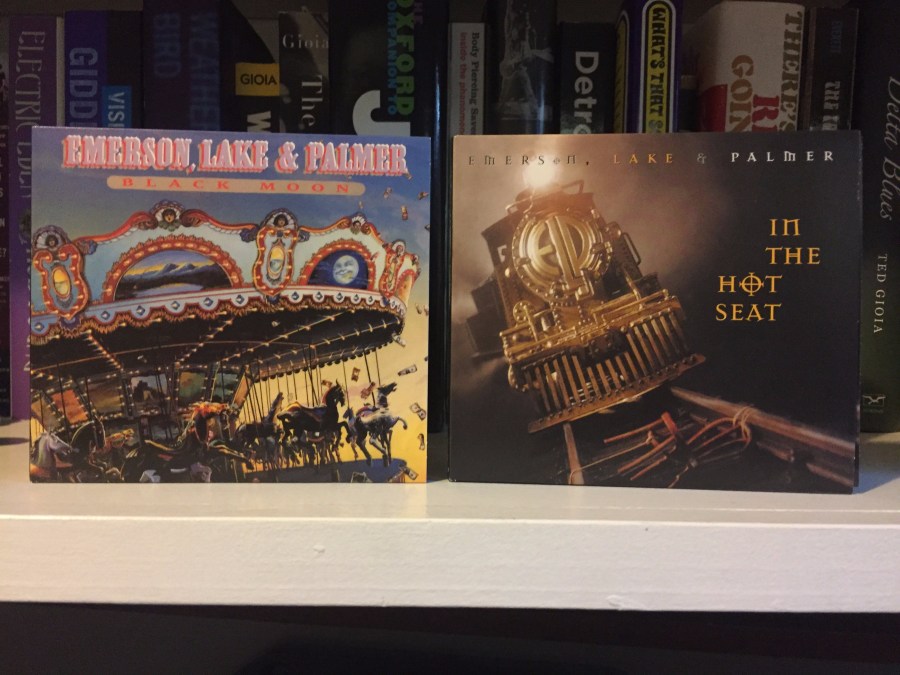
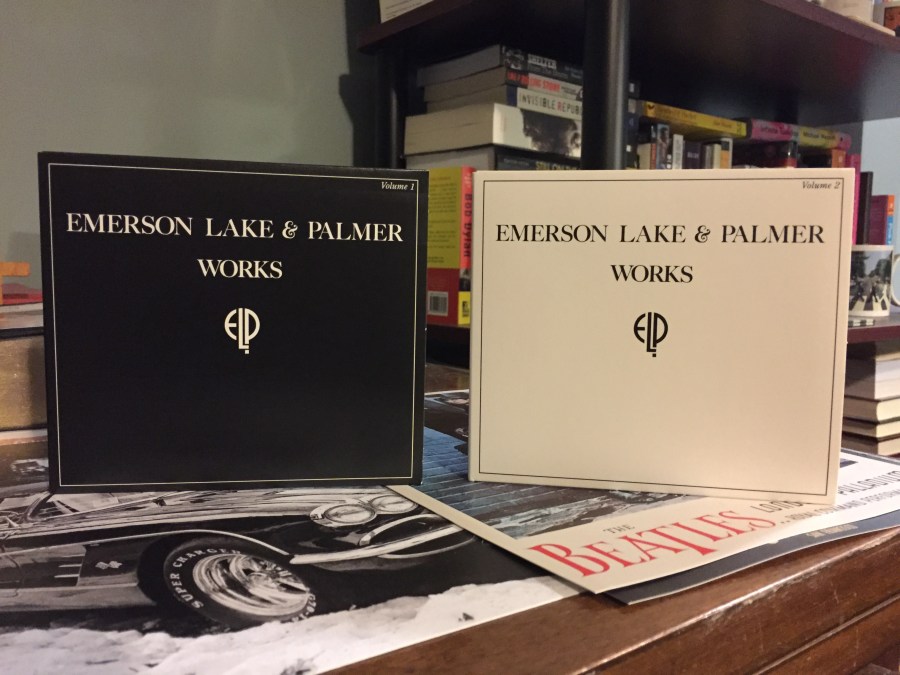
Ultimately, it occurred to me that a better name for that top shelf’s contents is “the music that changed my life.”  In retrospect, every one of the albums perched there set me off in fresh musical directions and shaped what I listen to most, what I choose to collect, and even my vocation as a professional church organist and volunteer singer.  Sounds like a blog series in the making …

I plan to focus on one album in each post, starting with what I heard earliest and working forward.  I hope to distill what I love about the album, and reflect on how it’s influenced my listening (and my playing) over the years.  I’ll also list my other favorite albums from the same artist, along with selected faves in the same vein from other musicians.

Given how much I’ve written about Emerson Lake & Palmer here, it’s probably no surprise that, while Works Volume 1 was the first ELP album I bought, Brain Salad Surgery was my real gateway drug into progressive rock.   For starters, I’d already heard “Karn Evil 9, First Impression, Part Two,” “Jerusalem” and “Still … You Turn Me On” over the Detroit airwaves.  What was this stuff?  Utterly bizarre titles, a giddily deployed spectrum of musical colors colliding with each other, seemingly at random (harpsichord, accordion and wah-wah guitar in the same ballad?) and more keyboards in five minutes than in some bands’ entire recorded output — after assimilating the bombast of the Works 1 material, I had to check it out!

I was flabbergasted.  Brain Salad Surgery defined eclecticism for me, sweeping up an astonishingly broad range of styles. On the first four tracks, ELP attacked a hymn (“Jerusalem”), a contemporary classical concerto movement interrupted by an extended tympani cadenza (Alberto Ginastera’s “Toccata”), a lyrical ballad with oddball instrumental touches (“Still …”) and a 12-bar boogie with music hall lyrics and an utterly wild piano solo (“Benny the Bouncer”).  And that was just the warm-up for the epic “Karn Evil 9.”  Over the course of three impressions, split into four tracks by the side change, the band garnished their core sound with rare solo electric guitar from Lake, manic piano trio jazz, Emerson’s steel drum synthesizer (quoting sax giant Sonny Rollins’ “St. Thomas,” as I later discovered), gonzo military marches powered by Palmer, and a loose anti-war narrative that castigated modern politics and religion, only to succumb to absolute rule by sentient supercomputer.   Mind.  Blown.

I later came to understand why Brain Salad Surgery was where some longtime ELP fans got off the bandwagon.  Compared to more direct albums like their debut and Pictures at an Exhibition, this one goes over the top without looking back.  The dizzying musical whiplash, the often-obscure lyrics, knockabout and messianic by turns (Lake’s first collaborations with original King Crimson wordsmith Peter Sinfield), the aggressive high-velocity playing — it could all seem like Keith, Greg and Carl had taken the hype too seriously, and were about to vanish up their own backsides in their pursuit of world domination.  Given the arc of their career after the massive Welcome Back My Friends world tour, you could even argue that’s what happened.

But for me, the reckless abandon of Brain Salad Surgery is the secret of its appeal.   ELP’s music here is a mite undisciplined and overstuffed, sure — but it’s also virtuosic, tightly structured, fearless, and exhilarating.  Those qualities, held together in suspension by the trio’s undeniable musical chemistry, have made this album compelling listening for me for the last 40 years.  Not only do I play it again and again, I’ve grabbed almost every CD re-release over the years (including Jakko Jakszyk’s oddly askew 2014 remix). Plus, instead of settling into the status of beloved novelty, Brain Salad Surgery whetted my appetite for more music like it — not just prog, but jazz, jazz-rock, modern classical music — even folk ballads!  And every once in a while, when I need a particularly powerful organ prelude or postlude for Sunday morning, it’s still a blast to pull out all the stops and dive into “Jerusalem.”

Listen to the latest re-release of Brain Salad Surgery here:

More Faves by ELP: Tarkus, Trilogy, and Works Volume 1.  Plus Encores, Legends and Paradox, a Magna Carta tribute album from the 1990s; this features Robert Berry, John Wetton, Glenn Hughes and James Labrie on vocals, with members of Dream Theater, Yes, King Crimson, Magellan and Emerson’s buddy Marc Bonilla laying down backing tracks.

Still There’ll Be More: I have 100+ prog and prog-related discs on my favorites shelf, from proto-proggers like The Nice and Procol Harum to 21st-century giants such as Neal Morse, Steven Wilson and Big Big Train.  Here are the ten albums that are probably the closest to my heart, and that opened the doors widest for future exploration:

Bruford, One of A Kind

Robert Fripp, Exposure (combined with RF’s 1979 in-store Frippertronics concert at Peaches Records in Fraser, Michigan)

Genesis, Foxtrot and Wind & Wuthering

King Crimson, In the Court of the Crimson King and Red

Porcupine Tree, Deadwing

Transatlantic, SMPT:e

UK, UK

Yes, Close to the Edge


Rick’s Retroarchy: Emerson, Lake and Palmer in the 1990s

by Rick Krueger

Interviewer: “Would you characterize the new album …  as a reunion? A comeback? Or something else?”

Derek St. Hubbins: “It’s both, really. We reuned and we came back.”

— interview with Spinal Tap, Guitar World magazine, April 1992

When Emerson, Lake & Palmer reformed in 1992, it wasn’t really a surprise.

Since the debacle of Love BeachCarl Palmer had recruited Greg Lake to pinch hit as Asia’s bassist and vocalist for a MTV broadcast from Japan.  Then Keith Emerson had reconnected with Lake, drafting Cozy Powell as drummer for a well-received album that both evoked and modernized the classic ELP sound.  Then a post-Asia Palmer and singer/songwriter Robert Berry had partnered with Emerson in the more commercial (though less successful) AOR band 3.  All the possible pairings had played out: the only other option, as Spinal Tap put it, was to reune.  And at least attempt a comeback.

Continue reading “Rick’s Retroarchy: Emerson, Lake and Palmer in the 1990s”

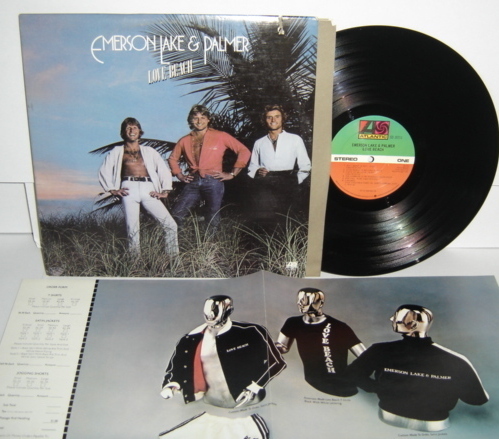
Rick’s Retroarchy: Love Beach by Emerson, Lake and Palmer

by Rick Krueger.  (Third in a series; you can also check out reviews of Works Volume 1 and Works Volume 2.)

My first reaction to Love Beach (purchased at the Grosse Pointe location of Harmony House, after hearing “The Gambler” on Detroit rock radio in November 1978) wasn’t about the music.  It was about the merchandising insert included with the first pressing.  I think my actual thoughts were something along the lines of, “They’re selling satin Love Beach jogging shorts?!?”

Continue reading “Rick’s Retroarchy: Love Beach by Emerson, Lake and Palmer”

Rick’s Retroarchy: Works Volume 2 by Emerson, Lake and Palmer

by Rick Krueger

When I picked up Works Volume 2 (on the day after Thanksgiving 1977, at Hansen’s Music Store in Greenville, Michigan — thanks for taking me along, Mom!), it didn’t feel like a disappointment.  In fact, on first listen it was a nifty change of pace from the orchestral bombast of Volume 1 — 12 shorter tracks, all new to me, exploring the jazz, blues and boogie that only occasionally showed up on ELP’s earlier records.

Continue reading “Rick’s Retroarchy: Works Volume 2 by Emerson, Lake and Palmer”

Rick’s Retroarchy: Works Volume 1 by Emerson, Lake and Palmer

by Rick Krueger

“The word ‘bombastic’ keeps coming up as if it were some trap I keep falling into … when I’m bombastic, I have my reasons. I want to be bombastic.  Take it or leave it.” – Dave Brubeck

What were they thinking?

You’re Emerson, Lake & Palmer, coming off a three-year layoff  — though admittedly, you were at the top of the charts and your game when you downed tools.  To regain your fan base and add to your audience, would you come back with a double album that had one side of material by each band member (with guest players and full orchestras) and only one side of ELP playing together?  And then, would you take a 59-piece orchestra and 6-voice choir on the road with you?  To most people, that would sound like a recipe for disaster.

Continue reading “Rick’s Retroarchy: Works Volume 1 by Emerson, Lake and Palmer”

Remembering ELP: Genuine Art and Beauty

Bruce Frohnen has an essay over at TIC about ELP, arguing that they are “the most important musical group of the rock era.” Here’s part of his argument:

“Karn Evil 9” is not overblown, it is genuinely and intentionally music on a grand scale, combining classical techniques with multiple, interlacing rhythms, and polyphony to immerse the listener in a web of sound that for a time creates its own reality.

“Counterpoint” is a concept (not to say a reality) little understood among most rock musicians; but it was crucial to ELP’s ability to produce sounds that made sense at a level frankly higher than can be achieved in most blues-based music, with its emphasis on a single, simple melody underscored by rhythms deeply rooted in a single beat. At their usual best, Emerson, Lake, and Palmer performed according to a vision of rock music as rooted in the classical past. They produced both direct classical adaptations (“Fanfare for the Common Man” being the most famous) and original compositions that likewise combined modern rhythm and technique with melodic sophistication to create genuine art—pieces of beauty capable of affecting the souls of listeners.