How Mike Portnoy helped revive Bigelf

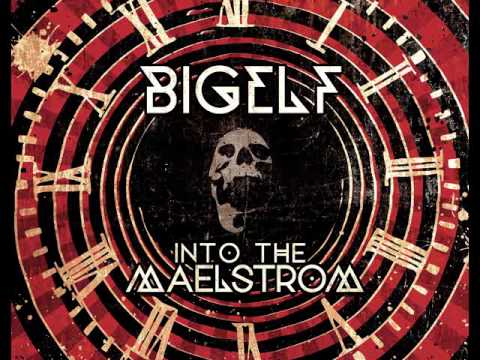
Over on the LAWeekly blog, Jason Roche writes of how the former Dream Theater drummer—currently in about fifty-eight bands or so—helped inspire Damon Fox to revive Bigelf and finish the recently released Into The Maelstrom:

Bonkers and Retro
The newest release from Bigelf

When Los Angeles prog-rock group Bigelf released their 2008 album Cheat The Gallows, momentum seemed to be on their side. After 15 years of slogging it out in the local scene, the group was gaining support slots on arena-rock tours thanks to their brand of catchy pop-rock melodies filtered through ’70s psychedelia.

The truth? “The band was coming apart,” says Bigelf leader Damon Fox, in conversation at the Canyon Country Store.

The band were dealing with financial difficulties and offstage tension. Fox’s marriage was coming apart, and longtime guitarist Ace Mark left the group in 2010 after the death of his father and birth of his child.

With all of these outside factors coalescing, Fox disbanded Bigelf.

“When you get real low, real dark, and the mojo fades away, you’re not feeling your purpose in life,” Fox says. “The Bigelf purpose went away. At that time, I wasn’t interested in what Bigelf had to offer and there was conflict inside the band.”

Elsewhere, drummer Mike Portnoy was simultaneously going through band friction, a very public departure from Long Island prog-rock greats Dream Theater. Portnoy and Fox had bonded when the more well-known group took Bigelf on the road with them, and stayed in touch during the rough times.

A phone call between the two helped Fox revive Bigelf for Into The Maelstrom  – the group’s newest album, which came out yesterday.

Read the entire piece on LAWeekly.com. I’m not very familiar with Bigelf, but will be checking out the new album.

S.T. Karnick’s review of Transatlantic’s latest

transatlantic-kaleidoscope-box-set-cddvd-deluxe-edition-11801-MLB20049782288_022014-OOver a decade ago, American cultural critic S.T. Karnick published a seminal piece on progressive rock and its third-wave vitality in the pages of William F. Buckley’s magazine, National Review.  At the time, he noted especially the greatness of Spock’s Beard.

Karnick is always worth reading, but this (below) will be of particular interest to progarchists–a review of the latest Transatlantic album:

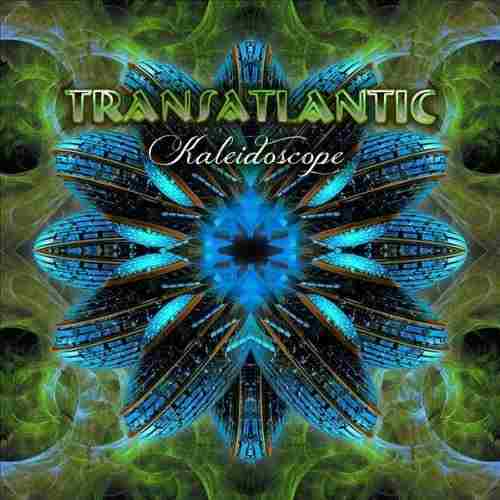
Although progressive rock has had a low profile in the music world since the rise of punk and disco in the late ’70s, it’s still very much alive today, even to the point that there are real stars of this musical style. Foremost among these are the members of Transatlantic, and their latest album, Kaleidoscope, is a production worthy of their major talents. Just as a kaleidoscope creates fascinating images by juxtaposing numerous bits of colors and shapes that contrast with one another, Transatlantic’s Kaleidoscope does so with sounds. Ranging from hard rock to classic rock to folk to classical, the sounds on Kaleidoscope shift and recur in patterns of real beauty.

To keep reading (and you should!), go here: http://www.stkarnick.com/blog/post/transatlantics-kaleidoscope-is-classic-progressive-rock

The Fab Fourth

Mike Portnoy is excited that Transatlantic is becoming something more than just a side-project, but a great band in which all four voices are singing:

This is now our fourth album – we started in ’99, and so we’re into our 15th year. I think we’ve been promoted from side project to part-time band. In the beginning, it was this concept of mine to put together a quote-unquote supergroup of modern prog players. That was the initial thing from the get-go – it was a project.

The second album was kind of an immediate response to how successful the first one was; we wanted to do it again. Then we had a big eight or nine-year hiatus. When we got back together for The Whirlwind, it was like a big secret reunion. People didn’t know about it, so when we finally announced it, it was kind of a big deal.

Now, here we are with the fourth album, and after the reunion and the success of The Whirlwind, we feel like this can be a real part-time band, because our circumstances have changed. When we started this in the late ‘90s, I was obviously still in Dream Theater, and Neal was in Spock’s Beard. Those were our main things, and Transatlantic was definitely a side band.

But here we are in 2014: I’m no longer in Dream Theater – I’m a free agent, doing lots of different things; Neal’s a free agent and is doing lots of different things. So it gives Transatlantic as an entity a little bit more flexibility. I think that’s what’s promoted us from side project to more part-time band.

…  In Dream Theater I did most of my singing. In Transatlantic I sing lead as well as lot of background vocals – same with Flying Colors, and the same with Yellow Matter Custard, my Beatles tribute. And like I said, I did a tremendous amount within Dream Theater. I did a tremendous amount of secondary lead vocals and harmonies, and I wrote a huge amount of lyrics and melodies within the band. You’d think a lot of people would know by now, but I guess not everybody pays attention.

For me, this is one of the great things about Transatlantic, that you’ve got four people singing, four distinct voices contributing to the music. All of my favorite bands have had all four members singing. Obviously, The Beatles are a great example; maybe a lesser example is KISS. In Pink Floyd, you had three of the guys singing; Queen had three of the guys singing. I’ve always appreciated the variety in those bands.

Top Ten… or Top Thirteen?

For my personal Best of 2013 list, I have just posted (over the last few days) an alphabetical listing of my Top Ten:

Big Big Train: English Electric Part Two

Deep Purple: NOW What?!

Dream Theater: Dream Theater

Haken: The Mountain

Holy Grail: Ride the Void

Kingbathmat: Overcoming the Monster

Sound of Contact: Dimensionaut

Spock’s Beard: Brief Nocturnes and Dreamless Sleep

Steven Wilson: The Raven That Refused to Sing and other stories

The Winery Dogs: The Winery Dogs

But, as promised, I am now going to add three more to the list, as three bonus additions, and thus make this a Top Thirteen list.

Why? Well, because this is the year 2013, and also because Black Sabbath released 13 this year (which also happened to be one of Mike Portnoy‘s favorites).

So, stay tuned for #11 on my Top Thirteen of 2013…

Mike Portnoy’s Top Ten

From MikePortnoy.com:

MP’s Top 10 Albums of 2013
(in no particular order):

1. Steven Wilson – The Raven That Refused To Sing
2. Haken – The Mountain
3. Queens Of The Stone Age – …Like Clockwork
4. Biffy Clyro – Opposites
5. Black Sabbath – 13
6. The Ocean – Pelagial
7. Megadeth – Super Collider
8. Fates Warning – Darkness In A Different Light
9. Spock’s Beard – Brief Nocturnes And Dreamless Sleep
10. Stryper – No More Hell To Pay

Mike is right about the Stryper album being awesome metal!

And, in case you missed it, Stryper also released a nicely done retrospective album of re-recordings in  2013.

The Raven That Refused to Sing and other stories (Best of 2013 — Part 9)

Coming in the #9 slot (in alphabetical order) on my Best of 2013 list is the masterpiece from:

Steven Wilson

Also known as “Mr. Prog” — but that title for Mr. Wilson is currently up for debate here at Progarchy.com.

My two cents: A title like “Mr. Prog” should only be bestowed based on an objective standard of measurement: e.g., the sheer quantity of artistic output in a year; i.e., count up all the releases, the remixes, the live gigs, the collaborations, etc. Then, whoever has the biggest total, is “Mr. Prog” — whether you like his stuff the best or not.

Well, I haven’t done the math, so somebody else can tell me who the winner of the title is. (Maybe we will have to make a shortlist: Steven, Neal, Mike, et al.)

By the way, the winner of the math for each year should be called “Mr. Prog” for that year. So it should be an annual award, and not a one-time decision.

And then, if a long-term pattern does emerge (e.g., we have the same “Mr. Prog” year-after-year), that individual can be designated (after years of distinguished service to prog) as “The Godfather of Prog.”

Now that we have that out of the way, let me talk about “The Raven That Refused to Sing and other stories.

I don’t get it when people talk about this album as “cold,” or whatever. Go put on a sweater!

I don’t know what you’re talking about! Because this is the first album by Steven Wilson that has really elicited a deep emotional response from me.

All his previous work has received intellectual engagement from me, and I have noted and admired it all. But this magnificent Wilson disc is the first one that causes my heart to leap at the musical excitement that it generates.

Right from the beginning, “Luminol” elicits a response of joy. As in: Omigosh! Is that Chris Squire running around my living room playing bass? It sure sounds like it! Woo-hoo. We’re having a prog party! Hey, here he comes again…

And the album does not let up from there. It’s just layer after layer of beauty and complexity. For me, this album stands out from all of Wilson’s other work as going above and beyond, as a truly distinguished musical masterpiece.

After all, it ends with the title track, “The Raven That Refused to Sing,” which is simply the most gorgeous and moving song on the album. It possesses a rare quality of unusual beauty that transcends mere musical virtuosity (which is the usual stock-in-trade of prog), and rightly marks this album with the distinction of being an inspired, otherworldly product. How fitting that this gift of the Muses is memorialized in the album title!

Let me end on a controversial note. Brad has slagged this album as “The Tangent lite,” a remark which I shall myself reinterpret as a compliment: i.e., where The Tangent’s “Le Sacre du Travail” may err with the defect of pretentious satirical excess, Steven Wilson’s “The Raven That Refused to Sing” achieves the right aesthetic balance of the golden mean (a sober restraint that some may mistake for “coldness”).

Perhaps the comparison is also apt in other ways. Wilson’s “sad sack” vocals in the past have prevented me from placing his releases in the annual Top Ten upper echelons. I have a similar obstacle with The Tangent presently; the vocals are too histrionic, à la Roger Waters, for my taste. But now, with “The Raven That Refused to Sing,” I find that Wilson’s vocals have been honed to work to perfection, especially on the haunting final track of this distinguished work.

In conclusion, then, because The Tangent is Big Big Train’s evil twin, I must place The Tangent on my Best of 2013 list… but only in the mirror universe.

In this universe, the award goes to Steven Wilson’s “The Raven That Refused to Sing.”

Postscript:

Hey, I may be wrong about all this. I will have to keep listening to all these fine 2013 albums for years to come! Perhaps minds will change. In any event, the conversation at Progarchy will continue. After all, de gustibus est disputandum:

Perhaps the most persistent error in aesthetics is that contained in the Latin tag that de gustibus non est disputandum— that there is no disputing tastes. On the contrary, tastes are the things that are most vigorously disputed, precisely because this is the one area of human life where dispute is the whole point of it. As Kant argued, in matters of aesthetic judgement we are “suitors for agreement” with our fellows; we are inviting others to endorse our preferences and also exposing those preferences to criticism. And when we debate the point we do not merely rest our judgement in a bare “I like it” or “It looks fine to me”; we search our moral horizons for the considerations that can be brought to judgement’s aid. Just consider the debates over modernism in architecture. When Le Corbusier proposed his solution to the problem of Paris, which was to demolish the city and replace it with a park of scattered glass towers and raised walkways, with the proletariat neatly stacked in their boxes and encouraged to take restorative walks from time to time on the trampled grass below, he was expressing a judgement of taste. But he was not just saying, “I like it that way.” He was telling us that that is how it ought to be: he was conveying a vision of human life and its fulfilment, and proposing the forms that gave the best and most lucid expression to that vision. And it is because the city council of Paris was rightly repelled by that vision, on grounds as much moral and spiritual as purely formal, that Le Corbusier’s aesthetic was rejected and Paris saved.

Likewise, when I dispute with my leftist friends about the Dutch and Danish windmills— windmills whose blank and spectral faces are now beginning to stare across my native English woods and fields—we don’t just exchange likes and dislikes, as though discussing the rival merits of Cuban and Dominican cigars. We discuss the visual transformation of the countryside, the disruption, as I see it, of a long established experience of home, and what this means in the life of the farmer, and the presence, as my leftist friends see it, of the real symbols of modern life, which now stand on the horizon of the farmer’s world, summoning him to the realities which he has avoided for far too long. By disputing tastes in this way we are not just striving for agreement. We are working our way towards a consensual solution to long term problems of settlement: we are discovering the terms on which we might live side by side in a shared environment, and how that environment should look in order that we can put down roots in it. Conceived in this way aesthetic judgement is the primary form of environmental reasoning: it is the way in which human beings incorporate into their present decisions the long-term environmental impact of what they do.

Mass x Velocity = Band on Fire

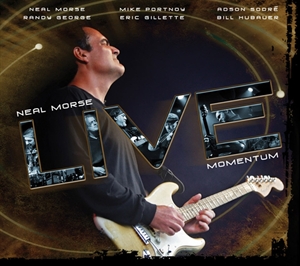
Live MomentumHot on the heels of his Live Momentum Tour, Neal Morse has released a 5-disc set (3 CDs, 2 DVDs) that is a worthy alternative for those of us who didn’t get a chance to see this band live. You always get your money’s worth when Neal is involved, and this release is no exception. The DVDs (available in Blu-ray, as well) and CDs document the entire 3-hour set, and what a performance it is!

Recorded and filmed in HD on October 11, 2012, at the Highline Ballroom in New York City, Neal and the band turn in an incredibly tight, high-energy set for an enthusiastic audience. Neal’s long-time collaborators Mike Portnoy (drums) and Randy George (bass) are joined by Bill Hubauer (keyboards, violin, sax, vocals), Eric Gillette (guitar, keyboards, vocals), and Adson Sodré (guitar & vocals).

I’ve been a fan of Neal Morse since his days in Spock’s Beard – keeping up with Transatlantic and his solo efforts. He is an amazingly prolific songwriter, but of late his work seemed to be suffering from a “sameness”. Then came last year’s Flying Colors and Momentum albums, where it was clear something lit a roaring fire to his creativity. Momentum is his finest solo work since the Question Mark album.

In the liner notes to this release, Neal mentions that he found Hubauer, Gillette, and Sodré through YouTube auditions, so I before I popped in the first DVD, I was a little apprehensive regarding their ability to keep up with Morse, Portnoy, and George. My fears were completely unfounded, as Adson lays down a jaw-dropping guitar solo in the opening song, “Momentum” (you can see the performance of the song in the promo video below). Eric Gillette shines on guitar, vocals, and keyboards throughout the entire show, and Hubauer adds wonderful depth with his keyboard pyrotechnics and fine violin and sax work.

Basically, what Neal put together is a three-keyboard/three-guitar front lineup that is incredibly versatile. Add in their ability to execute complicated vocal harmonies on songs like “Thoughts Part 5”, and this is one of the best live outfits I’ve ever seen. Mike Portnoy is the hardest working drummer in showbiz, and he is obviously having a blast propelling this group through epic after epic. The avuncular Randy George is the anchor on stage, nimbly laying down rock-solid yet melodic basslines, while eschewing the spotlight.

Neal himself is, of course, the center of attention as he moves back and forth between keyboards and guitar, conducting the band (and the audience) from one emotional peak to another. It’s clear he’s delighted with the tight rapport between himself and the band. They are able to shift from a delicate flamenco-style acoustic interlude to crushing hard rock in the blink of an eye and make it look easy.

The set includes four major epics. “Testimony Suite” clocks in at 21 minutes, and it  includes highlights from Morse’s 2003 album, Testimony. Neal is upfront and open about his Christian faith, and it is a genuinely emotional moment for him as he sings this account of his conversion. “The Conflict (From Sola Scriptura)” is 27 minutes long. Initially, I was put off by Sola Scriptura, but this performance illuminated aspects of it that I hadn’t heard before. It’s a beautiful piece.  “Question Mark Suite”, at 21 minutes, is an outstanding distillation of Neal’s exploration of the symbolism behind the Exodus and the Hebrew Tabernacle. After a change of pace with the relatively brief “Fly High” (I would have preferred something like “Absolute Beginner” here; “Fly High” isn’t that strong a song, IMO), Neal and the band wrap up the show with the 33 minute magnum opus “World Without End” from Momentum. It’s an incredible performance that outdoes the original, and leaves the audience yelling for more.

The band fulfills that request with a three-song encore: “Crazy Horses” (yes, the Osmonds oldie!) sung by Mike Portnoy while Neal takes over the drums; “Sing It High” (which features every member taking a solo turn), and finally, “King Jesus”. As the exhausted musicians leave the stage, you can clearly hear a member of the audience call out, “Neal! Neal! Thank You!”

The second DVD disc includes an hour-plus tour documentary. Beginning with rehearsals in Tennessee, we follow the band from their first show in Nashville on October 2, 2012 (which, to my eternal regret, I had to miss) to their last in Chicago on October 12. In the space of ten days, they perform shows in Nashville, Jacksonville, Mexico City, Los Angeles, Seattle, Denver, New York City, and Chicago, all the while practicing and continually refining their parts. It’s a marathon run at a sprinter’s pace. There is video footage of every performance, and much of it is quite good. One definitely gets an appreciation for how much hard work and how many hours it takes to make a live performance look easy. As Mike Portnoy says, “This band kicks ass! I mean, the second gig – it’s tight; a really tight second gig.” Neal himself describes them as “A band on fire”. I can’t disagree.

You can order this CD/DVD set direct from Radiant Records.

Here’s the promo video for “Momentum”:

The Strange Case of … (Best of 2012 — Part 10)

Halestorm

The final album in my Top Ten for 2012 is Halestorm’s The Strange Case of …, on which Lzzy Hale showcases her stadium-calibre rock voice and her split personality (“Mz. Hyde“): just as the album title alludes to Robert Louis Stevenson’s novella The Strange Case of Dr Jekyll and Mr Hyde, the theme here is how a jaded maneater’s tough outer shell (tracks 1-4 and tracks 8-12) encases a true romantic hidden inside (tracks 5-7: the thermonuclear love ballads “Beautiful With You”, “In Your Room”, and “Break In”). This meta-concept album thereby allows Lzzy to showcase her softer side and reveal how her well-rounded, multifaceted rock talent has her destined for mega-stardom.

It’s been a massive year for Halestorm and they’re ending 2012 with a bang! It was just announced that the group and their song ‘Love Bites (So Do I)’ off of their latest album ‘The Strange Case Of…’ were nominated in the Best Hard Rock/Metal Performance category for the upcoming 55th annual Grammy Awards, taking place Feb. 10, 2013, in Los Angeles.

The accolades for Lzzy and her band are well-deserved. Her talent even registered on (my fave) Mike Portnoy‘s radar, as this year Lzzy sang with Adrenaline Mob on their impressive Omertà album, doing guest vocals on the track, “Come Undone” (which is a hilariously deadly reworking of the Duran Duran song).

I had reserved the last slot on my 2012 Top Ten list for Soundgarden’s new album, King Animal. But in the end, the album just didn’t make the cut. Carl has a great review of the album, and his analysis of the lyrics (through the lens of T.S. Eliot!) will no doubt have me revisiting the album in the months to come and reconsidering, since I pretty much paid attention only to the music and not to the lyrics. Hence it was the absence of killer guitar solos on King Animal that led me to give it the boot. That whole anti-guitar solo grunge mentality is too anti-prog in my books, and therefore a fatal flaw.

Don’t get me wrong, I am a huge Chris Cornell fan, but I like his Audioslave oeuvre the best, as well as his solo work. (Where does Soundgarden ever have the left-field magical moments of Audioslave’s Tom Morello guitar solos?) And I note that Carl’s review of King Animal spends way more time referencing great Audioslave moments than it does King Animal! For me, that was just confirmation that I was right to give Soundgarden the boot from my Top Ten.

For a while, The Cult’s unexpectedly amazing 2012 disc, Choice of Weapon (be sure to buy the bonus track version at the same price), was a strong contender for my Top Ten, thanks to standout tracks like “Lucifer”, “A Pale Horse”, “The Wolf”, and “For the Animals”. Only because The Cult is the band from the past and Halestorm is the band from the future do I give the nod to Lzzy over Ian. But both albums are solid, upper-echelon material.

I also toyed with the idea of putting Adrenaline Mob’s Omertà in the last slot of my Top Ten, because it has some tremendously accomplished metal. Mike Orlando’s guitar solos are astonishing, especially when combined with Mike Portnoy’s drumming. But the album is also a mixed bag. I found that I would carve it up into an EP for my playlists, because the only tracks that could consistently hold my musical interest were “Indifferent”, “All on the Line”, “Feelin’ Me”, “Come Undone”, and “Believe Me”.

So Omertà had to get the boot because it wasn’t solid from front to back. Yet by giving the final slot in my Top Ten to Halestorm, I get the best of both worlds — because Adrenaline Mob still gets paid an indirect tribute by way of my choice, thanks to their own recognition of Lzzy’s amazing talent (via “Come Undone”).

Halestorm

2012 has been a great year for music! A big thank you to all my fellow Progarchists for sharing their musical experiences here, thereby expanding my own.

I’ll see you back here on New Year’s Day, when I will reveal the name of my fave EP from 2012 — since EPs do not count towards the Top Ten list, which (in good prog fashion) I always dedicate to the recognition of the best contributions towards the keeping alive of The Art of the Album (and we all know who wins the top title for 2012 in that regard — Best Album of the Year).

Small Fame (Best of 2012 — Part 7)

Another one of the albums in my Top Ten for 2012 is Bend Sinister’s Small Fame.

I was pleased to see that they also made Mike Portnoy‘s own personal top ten for this year.

Together with Rush and Leah, Bend Sinister joins the Canadian artists on my list this year. Like Leah, they are also local talent, located here in British Columbia. (Don’t miss their upcoming show, if you need a good idea for a Christmas vacation destination!)

The band takes its name from that book by Nabokov. (Ha! Reference to The Police there, for the quick-witted.)

I don’t want to put words into his mouth, but I think Carl‘s longstanding complaint with Rush is that their songwriting (not their musicianship) leaves something to be desired. (I assume he is talking about their most infamous four- and five-minute forays, not their prog masterpieces. Out of respect, I won’t name names here, but feel free to pile on in the comment box below with your own nominations. Rush does have some real stinkeroos, which are of course handily eclipsed by all their best and greatest.)

The great thing about Bend Sinister is that they are superb craftsmen of song. Above all, their talent at songcraft shines forth magnificently with this wonderful release, Small Fame.

For those would say that there is not enough prog here for their tastes, I would only point to “Quest for Love,” which proves that Bend Sinister could be as prog as they want to be, any time they would choose. But what I admire about them is how they always put their musical talents in the service of truly excellent songs. In other words, if someone wanted to complain, the complaint would have to be the opposite of Carl’s quarrel with Rush: be more prog!

Well, I will leave it to Bend Sinister to be just what they want to be. Because what they are is amazing. They could be full-on crazy prog, if they wanted to be. But arguably they are something much, much better than that.

Masters of the song.

A Different Kind of Truth (Best of 2012 — Part 6)

Van Halen

Mike Portnoy, in an interview with iDrum magazine, made an interesting remark about all the guys in the supergroup Flying Colors; namely, their running joke during the writing process:

We almost felt like the Village People! I’m the metal guy, Neil Morse the prog guy, Casey McPherson the pop guy, [Steve] Morse the country guy and Dave LaRue the funky guy!

I feel the same way about the supergroup team here at Progarchy. In addition to our shared loves, we also have our distinctive tastes. Me, I’m the metal guy; Brad Birzer is the prog guy; Carl Olson is the jazz guy; Kevin McCormick is the classical guy…

Continue reading “A Different Kind of Truth (Best of 2012 — Part 6)”